Saturday, 15 September 2018
Ride along: "Wajib"
The Palestinian writer-director Annemarie Jacir continues to address the Middle East's various issues without recourse to piety, handwringing or speechifying. Her breakthrough When I Saw You, which reached UK screens in 2014, was a coming-of-ager - set in the 1960s, titled after a Ronettes song - which followed a young boy falling in with PLO fighters much as the protagonists of Quadrophenia and This is England fell into their own turbulent subcultures. Her follow-up Wajib - more contemporary, but no less informed by on-the-ground, lived experience - takes the form of an odd-couple road movie, uniting two men in a comically low-key mission. The men are father and son (and played by real-life father and son Mohammad and Saleh Bakri), who've taken it upon themselves, over one day in the run-up to Christmas, to hand deliver the invites for a family wedding to their fellow Nazarenes. For the characters, it's a means of reconnecting: the son, with his manbun and red trousers, is visiting from Italy, where he's cultivated a very different worldview to that of his mildly conservative schoolmaster pa. For Jacir, their odyssey will be something else: a way of opening a window onto the people and places the pair pass among.
Wajib's very evident project is to show the day-to-day life of this region, underreported and often overlooked as it has been by filmmakers keener to make grand social statements and political tracts; on its travels through Nazareth's winding backroads, the camera will note erratic litter collections and blocked plumbing, kids playing on the floor with toy diggers, women getting their hair done, and a good deal of fond, familiar conversation. It's not that the religious and sectarian conflict isn't there: the boys' progress is impeded at one point by a funeral procession, and stops outright after an argument started by dad's objection to the fact the father of his son's girlfriend has been hailed as a hero by the PLO. It's just that there's so much else going on for Jacir to capture, chiefly the sight of people trying to make better, happier lives for themselves and their loved ones, building bridges rather than blowing them up.
You will therefore find it either a slight limitation or - more likely - a quiet strength that Wajib proceeds on this quest in the sure and steady gear of any other postman completing their round, meandering from one doorstep and one encounter to the next. Up until the finale - where an argument that has been brewing for ninety minutes spills out of the car and into an adjacent lay-by - Jacir has a nice, often funny way of de-escalating, instructing editor Jacques Comets to cut ahead whenever events threaten to become too heated or ugly. (In this generally smooth, easy drive of a film, this would be the filmmaker tapping her brakes.) There are serious family tensions to be resolved here, but the plot's one bombshell - dropped around the halfway point - proves to be typographical, true to the agreeably minor key Jacir is operating in.
Even here, the film adheres to the hiccupy rhythms of regular life, although if the supporting cast come to work from briskly etched postcards - proffering a few quick words here and there before we move on to the next stop - Jacir coaxes considerably more from her leads. The two Bakris have an easy, recognisable dynamic, dad embarrassing son, son wincing, dad not minding or apologising in the slightest; together, they embody those generational differences and diverging attitudes with which one suspects many Palestinians negotiate these sometimes troubled, sometimes just busy or gridlocked streets. Perhaps we shouldn't gender the film's achievements unduly, but you have to admire any female filmmaker who elects to spend the duration of a shoot working in and around a car carrying two farting, bickering blokes. Yet the diffuse light coming through this windscreen, and the poignant closing movement, are signs that Jacir is actually rather fond of and attached to these men; her film, a personally delivered love letter to them and their city, is its own touching gesture towards calming another centuries-old, often overheated conflict.
Wajib is now playing in selected cinemas, and streaming via Curzon and the BFI.
Friday, 14 September 2018
"Escobar" (Guardian 14/09/18)
Escobar **
Dir: Fernando León de Aranoa. With: Javier Bardem, Penélope
Cruz, Peter Sarsgaard, Julieth Restrepo. 123 mins. Cert: 15
Until recently, any biopic of druglord Pablo Escobar starring
Javier Bardem and Penélope Cruz – especially one directed by well-regarded
social realist Fernando León de Aranoa (Mondays
in the Sun) – would have presented as a major event. Perhaps Netflix’s Narcos has reduced any such project’s
thunder. After lukewarm responses at last year’s Venice and Toronto festivals
(where it premiered as Loving Pablo),
the biopic we’ve ended up with has had to assume an alias, a development that might
have brought a crooked smile to its elusive subject’s face. The film sneaking
onto UK screens this weekend as the bluntly no-nonsense Escobar is not without interest, sweep or colour, but bears signs
of high-level, edit-suite indecision over what sort of movie it wants to be.
It’s alluring product, inexactly cut.
De Aranoa’s film claims greater authenticity than 2014’s
Benicio del Toro oddity Escobar: Paradise Lost – it draws on a memoir by one of Escobar’s flings – but it feels
ungallant that our narrator, TV anchorwoman Virginia Vallejo, should be framed
as such a vapid, hair-tossing entrypoint; all Cruz can do is work the myriad
wardrobe changes while delivering heavily accented exposition. Vallejo’s
brutally rude awakening permits de Aranoa to address the finer points of
Escobar’s enterprise, yet any idea of a cool, unsparing overview has been
hijacked by producers craving more sensation for their bucks. Intelligence gathering
gets interrupted by grunting sex and grisly violence; an impromptu plane
landing is one of several points where events tesselate with last year’s more
confidently packaged American Made.
Bardem strives commendably to hold it together, surviving the twin burdens of prosthetic belly and shaggy Maradona perm to make this Escobar a distinct, semi-fascinating monster. A muttering schlub (with conspicuously flabby backside) who briefly became the Americas’ most wanted, he’s capable of making truly horrific rape threats – and still we miss him whenever the focus changes. Had de Aranoa followed his Pablo more committedly into the darkness, Escobar might have merited full ticket price. Instead, you feel the suits leaning on their director’s shoulders, touting K-Tel compilations and requests to jolly the carnage along. The results are a very mixed bag, its virtues muffled by breathlessly recounted non-sequiturs and lurching tonal shifts of a kind Narcos has finessed over several hours.
Escobar opens in selected cinemas today.
The wanderers: "Down to Earth"
The entirely unpersuasive Dutch documentary Down to Earth is the movie equivalent of those newspaper features in which name writers with the resources to follow their nose and hearts lecture us workaday drones on the advantages of returning to the land. It comes from an understandable place, but each of its points arrives with a resistible side order of head-in-clouds naivety, insufferable smugness or editorial hectoring. The directors, and our narrators, are Renata Heinen and Rolf Winters, a real-life couple who, after self-diagnosing some unspecified urban malaise, took the life-altering decision to uproot their young family and relocate to nature for a year, a process that apparently involved loading up their truck and travelling the globe in search of the spiritual guidance that might aid us in making this transition. It is a not unfamiliar trajectory: head for the wilderness and wisdom and joy shall be yours, a path followed many times before Richard Briers and Felicity Kendal set out in search of The Good Life, and followed many times in their wake. As a cinematic quest, however, it's been pursued here with an almost wilful lack of rhyme or reason, and a near-complete absence of detail as to what this pair are escaping, and where they might be headed. One minute Heinen and Winters are soliciting the advice of a Native American chief, the next they're pow-wowing with Kenyan tribal leaders; scenes filmed in Japan rub up against footage from the Outback and the Amazon. How did they get there? Magic carpet? Or did their Land Rover sprout wings? These questions sorely needed answering within the body of the film, because - as it is - the answers involve either a substantial carbon footprint or an impossible leap of journalistic faith.
Strangely, the Heinen-Winters clan don't actually seem to have done or documented much in the way of day-to-day living on the ground, being too busy jetting to the next destination, where the locals visibly greeted them, and treated them, like the hallowed white Westerners they are. They have, however, spent a lot of time recording sub-Godfrey Reggio imagery of their travels: sand dunes and sundowns, silhouettes of planes passing over arid desert landscapes, contrasted with stock-looking footage of overworked metropolitan feet, and intercut with much gawping at tribal ritual that rarely gets explained to the viewer, completely negating the film's announced purpose as a tool for re-education. (Allow me to propose a new title: Koyaanisketchy.) The pity is that Down to Earth should have emerged at a moment where consumer capitalism sits more or less fully exposed as the unfair, one-sided, draining shell game it possibly always was; the film's reported success on ultra-liberal home turf speaks more than anything else to a widespread longing for alternative ways of life. Yet these alternatives surely have to be viable for all, and informed by a measure of practicality and common sense, not simply patched together from the variable soundbites ("Poverty is wisdom") these New Age tourists scatter before us like confetti. There is value in seeking out and listening to others, as Heinen and Winters do here, but any even vaguely successful overhaul of the status quo requires a degree of self-interrogation missing from Down to Earth. I spent most of these ninety minutes wanting to ask the blonde pre-teens sporadically glimpsed being dragged along in their parents' wake whether they'd enjoyed twelve months of being rushed to airports at 4.30am in support of mummy and daddy's thesis, or if they'd rather have been sat in front of Netflix with a Twix.
Down to Earth opens in selected cinemas from today.
Thursday, 13 September 2018
The book thieves: "American Animals"
After a decade of TV work, British writer-director Bart Layton broke through with 2012's The Imposter, a documentary study of a French con artist that earned its theatrical run by being shot and edited like a mystery thriller. His follow-up American Animals presents like a mirror image in several aspects: this is a heist movie, albeit one that blurs the distinction between fact and fiction as early as its opening credits, with the erasure of the third and fourth words from the standard disclaimer "This is based on a true story". Taken together - and cinema programmers should note they tessellate in several respects - these two features propose that Layton has an unusually sharp eye and ear, not just for a gripping yarn, but for nascent amorality, characters who mean to lie, cheat and steal. If he can resist the well-paying lures of streaming and cable, his ultimate destiny may be to make the 21st century's most pertinent and probing film on the subject of modern politics.
For now, however, we have the tale of a quartet of alienated, bored and blustering Kentucky college kids who, in 2004, had the less than clever, not terribly well thought-through idea of attempting to filch rare first editions of Audubon's Birds of America and Darwin's On the Origin of Species from their position under lock and key in their campus library. The gag - and, to a degree, the tragedy - underpinning the film their actions have inspired is that these were no Zuckerbergs, no Winklevi, no bright shining scions of American learning, rather ordinary, somewhat lumpen souls with not too much discernible wisdom between their ears, unable to distinguish right from wrong, yet raised to believe - as many entering the collegiate system have been - that they were in some way special, perhaps even untouchable. What unfolds is something like Michael Bay's Pain & Gain as undertaken by creatives with book smarts.
Something like a postmodern Rope, too. Layton's boldest formal conceit - one that I think mixes things up rather brilliantly - is to puncture his dramatisations of the crime and its fallout with talking-head testimony from the students, their nearest and dearest, and anyone else who came to be involved. Initially, this might seem a little dutiful: the intervention of a filmmaker keen, in this moment of fake news, to show his working, provide references, underline the veracity of what we're watching. Layton is more Errol Morris than he is Wikipedia, though, and gradually these interjections come to introduce notes of (credible) uncertainty. The same conversation is alleged to have taken place in two separate locations; key details - the colour of a scarf, the age and ethnicity of the fence the would-be thieves sought out - are shown to diverge.
The tactic gestures, very slyly and cannily, towards the questionable character of Layton's witnesses. These kids don't strike you as greatly shiftier than the relentlessly dissembling subject of The Imposter, but they fall somewhere between disorganised and utterly unreliable as narrators of their own story; heaven only knows what they must have been like as criminals. Their contributions do, however, complicate the narrative line in a way that works to the film's advantage as a thriller. We can remain pretty certain these boys will make a hash of the raid itself, but we never really know - up until the point where they themselves know - how they're going to make a hash of it, and how big a hash it will be. (The answer, when it's revealed: pretty big.)
There's a faintly satiric aspect to the storytelling, and it is that strain of satire that often presents whenever an outsider is invited to cast an eye over callow American youth. For all their First World privilege, Layton's animals belong to the genus doofi ridiculosum. Here is a species of young male whose representatives' first response upon arriving in Amsterdam is to spark up a joint and follow their hormones into the red light district; who fall into the same argument the hoods in Reservoir Dogs did as to who among them will assume the supposedly feminised codename "Mr. Pink"; who struggle, flappy-handed, to pull on the plastic gloves that might prevent them from leaving traces of themselves behind at the scene of their crimes.
Layton correctly senses there are several gaps here that require bridging, not least that between the quote-unquote masterplan in the students' heads - envisioned here with the wondrously precise choreography of Vegas stage magicians - and how the heist unfolded on the ground on the day in question. Practically the entire second half is a run-up - at first nervy and tentative, then panicky and desperate - to the crossing of a red line: the overpowering of the school's librarian, at which point petty larceny tips over into something more disturbing. I'm among the very few who laughed at Pain & Gain, but the misanthropic Bay would surely have made the librarian some shrill grotesque who got what she was deemed to deserve; Layton, however, casts the redoubtable character actor Ann Dowd, who suggests a slightly snippy but devoted public servant, trying to retain some dignity even as she watches the books disappear.
Bridging those gaps allows the film time to distinguish levels of culpability, as any good judge should. The naif Spencer at least has the nous to point out Reservoir Dogs is a flawed template for would-be criminality, as everybody dies at the end; Barry Keoghan's natural air of watchfulness seems a better fit in this role than it was among the laboured cruelties of last year's The Killing of a Sacred Deer. (You can at least credit that this plain-faced aspirant artist might have wanted the Audubon for the inherent beauty of its pictures, rather than the money.) No such defence is possible for Evan Peters' Warren, a walking study in crassness, alternately wasted and washed out, as if he'd only been let out of his basement dwellings to wreak havoc on the world: a performance that reaches its apogee in a spectacular final-reel projection of bile. A smart touch, too, to call on Blake Jenner to play landed gymbunny Chas, reminding us (as Jenner does) that this is the same milieu we found Richard Linklater unapologetically celebrating back in 2016's Everybody Wants Some!!.
The film's success is that, for all its clever-clever futzing around with genre, form and audience expectations, it does still work as straightahead thriller. You can feel your insides knotting as these brats approach the library they've been staking out, again as they make a getaway every bit as haphazard as you feared it might be, and yet again as the authorities' dragnet pulls ever tighter. Even here, there are directorial grace notes, ripples, even wormholes to be spotted and admired. If the countercultural soundtrack at first seems incongruous for a film set in 2004, you soon realise that is likely deliberate: there are echoes in these songs of what an America in renewed, youthful bloom hoped to be, visions that provide sharp contrast with the jaded, selfish cashgrabs these 21st century boys are intent upon. And as real and fictional Spencers appear to catch one another's eye either side of the heist, American Animals creates a continuum - initially jolting, then strangely touching - between the main action's Leopold-and-Loebs-in-waiting and the rueful, reflective, varyingly compromised thirtysomethings they became. Dare I say: you wouldn't necessarily have to have snaffled a rare Darwin to recognise the road the pair find themselves travelling on.
American Animals is now playing in cinemas nationwide.
Brief encounters: "Cold War"
It's now very clear that something snapped into focus for the writer-director Pawel Pawlikowski after 2011's The Woman in the Fifth, a sprawling project that cut him adrift in a relatively unfamiliar country clutching a story he didn't entirely know what to do with. The corrective to the creative funk he'd slipped into in the years following 2000's Last Resort and 2004's My Summer of Love was not to go big, but instead fashion loaded miniatures, starting with 2013's Ida, a return to first principles - home turf, a mother tongue, the 4:3 ratio cineastes of a certain age were raised on - which opened to glowing reviews and appreciable box-office, and eventually went on to win the Oscar. Where Ida was founded on religion, Pawlikowski's new film Cold War has music in its heart and soul, which may make it a more approachable proposition yet. It opens in the Poland of 1949, where we find an Alan Lomax-like figure, Wiktor (Tomasz Kot), doing the rounds of muddy, snowy villages in a van with two sidekicks, collecting folk songs that have been passed down through the ages. The recording, it transpires, is no mere caprice: Wiktor is the conductor at a new musical academy established by the Communists in an abandoned stately home, where his aim is to assemble an ensemble that might best represent the nation at home and overseas.
Already, there is much evidence of Pawlikowski using his spare, pared-down frames to get at something bigger. We spend barely ten minutes inside the Academy building, yet it is swiftly established as a symbol of post-War reconstruction, a means of reasserting national identity after the obfuscating smoke and myriad other horrors of the Nazi occupation. (The songs Wiktor is set to collect in his day job are as much survivors as the people who sing them.) It will also be the site of a new romantic beginning. During the audition process, Wiktor's eye lingers an extra beat or two upon Zula (Joanna Kulig), a combative young prole with a smoky, ballroom-ready voice. Initially, she presents as merely "the one with the fringe", trailing intriguing rumours that she may once have done for her own father, yet something clicks between the pair. A star is born, and a potential svengali - yet mid-20th century European history runs along very different lines, setting these two star-crossed lovers on divergent trajectories. As they spend the next decade bouncing around like pinballs - sometimes together, more often apart - we're given cause to wonder: can you ever really be a star in a system that privileges the collective over the individual? Is it possible for people to live happily together on a continent busy putting up walls and bringing down curtains?
Big questions, surprisingly small movie. Cold War raises and resolves these issues within ninety minutes, organising its field research via considered stylistic choices. The Academy frame - there may be a droll pun here - and Lukasz Zal's monochrome photography serve as authorial acknowledgements of the way the movies shaped the way we saw life as it was lived in this particular moment. Yet more so than homage, what you notice is the remarkable precision with which Pawlikowski uses his square canvas. When Wiktor first puts Zula through her vocal paces in his quarters, a painting of a black-clad, impossibly single-looking figure haunts the top-right corner of the image; more generally, the filmmaker uses 4:3 to arrange his players in Jancsó-like rows and groups that suggest the place of individuals within history, and to concentrate his light sources on the exact right spots. One of the reasons critics have warmed to Pawlikowski's homecoming films - in a way we never quite did to the unravelling The Woman in the Fifth - is that they're just so neat, reassuring us there will always be a cinema to speak of (and write about) so long as handsome people can be lined up before a lens. More so than The Artist, more than La La Land, Cold War is the closest any 21st century release has come to matching the look of the ideal "classic movie" cinephiles (and presumably cineastes) have on perpetual play in their heads, which is an achievement in itself, and presumably accounts for the preponderance of five-star reviews. (It's no coincidence that our lovers should eventually reunite in 1950s Paris, where the very idea of this classic cinema was being decided upon.)
So why did I walk away from Cold War a shade underwhelmed? Firstly, because the emotion held within these films should spill over into the audience; in this respect, this work of extraordinarily alluring surfaces suffers by comparison with its predecessor. Much of the Wiktor-Zula romance plays out off-camera, before the cry of action and after the call of cut, which is risky: Kot and Kulig pull some of what's been elided into view, and make their rare moments of intimacy count, but the emotions written into Cold War seemed to me to run fast, which is not the same as deep. Ida, which achieved near-perfect balance and weight, felt at every turn grounded, if not by its recurring shots of mantel-wearing nuns trudging through heavy snow on the road to enlightenment, then by the heavy secrets these characters carried around within them. Cold War, by contrast, makes a motif of filming its largely passive leads being carried away on some current, fluvial or political: the unromantic, mooring business of how and why these characters travel from here to there and back again has been deemed surplus to requirements. This sweeps us up in the onward rush of history Pawlikowski intends to describe, certainly, and furthermore gathers material guaranteed to make one's head spin and heart race: I frequently found myself succumbing to the film's charms, lying back and thinking of Poland. It is, however, but an eye-catching fling, all over before it's really started, too much the miniature to get its hooks into the grand themes and passions it longs to embrace. Pawlikowski, who dedicates the film to his parents, might well ask: isn't any amount of time spent with a loved one too short? Isn't life? To which I would respectfully respond: yes, but isn't it the job of cinema to stop time, spin it out, even reverse it? When we hand over our money to the cashier, aren't we paying to put this rapidly ridiculous world on hold for a while?
Cold War is now playing in selected cinemas, and is available to stream via Curzon Home Cinema.
Wednesday, 12 September 2018
From the archive: "The Sessions"
Where Silver Linings Playbook, the 2012-13 award season’s foremost US indie talking point, bedevilled its lovers with crises of the mind, The Sessions – adapted by writer-director Ben Lewin from the autobiographical writings of the late journalist Mark O’Brien – concerns itself with matters of the flesh: here, we have a protagonist inhibited from the neck down, and desperate to try a little tenderness.
Having contracted polio as a child, O’Brien was confined to an iron lung for the remaining thirty years of his life, pushed around – on his rare days out – by a rota of carers on a hospital gurney. We find Mark (John Hawkes) living in ultra-liberal Berkeley, California in 1988, where he’s starting to work through certain feelings he’d long come to suppress – chiefly, his fear of dying a virgin. His inquiries will bring him into contact with Cheryl (Helen Hunt), a sex surrogate assigned to him for a series of what are euphemistically described as “body awareness exercises”: six sessions, designed to cover all the bases from light petting to full intercourse.
A case study knocked into broadly cinematic shape, The Sessions has dropped onto our desks at a particularly apposite moment. Lewin’s film premiered at Sundance last January, yet it now emerges in the wake of a Paralympic year in which the world was encouraged to see those with disabilities as people first and foremost. Under the covers, Mark and Cheryl could be any guy-and-gal coupling tentatively embarking on their first time out; what you come away remembering isn’t the withered Hawkes’s thrusts or contortions, but O’Brien’s thoroughly unimpaired voice, alternately wry, sardonic, a little naïve, yet endearingly romantic.
Lewin has come up with a reliably funny way of describing those ins-and-outs of intimacy that cannot be shown in a Fox-backed movie: having Mark recount – or confess – the knotty particulars of these sessions to an initially laidback priest (William H. Macy, making a welcome return to the big screen) who soon realises he’s taken on more than he first assumed with this particular parishioner.
This is still very much a 15-rated handling of this material, offering little to shock or challenge the broad-minded viewer. Sunlight pours in on the lovers in the well-appointed motel room they adjourn to, and the sex act itself is reduced at one point, with the barest trace of irony, to inserts of kittycats and hands passing through long grass: something nice, not nasty. There’s little of the grit of 1992’s Hunt-starring The Waterdance, where the paralysed characters’ frustration couldn’t be so easily assuaged.
The Sessions instead takes its lead from the blithely, agreeably matter-of-fact Cheryl, a woman who, even as she’s removing her clothes, is briskly delineating the difference between a sex surrogate and a sex worker, and schooling her guileless client in the rules of breastplay (“if you touch one, you can generally touch the other”). The attention Lewin’s camera lavishes upon Hunt – going full-frontal, where Hawkes is coyly reduced to a neck peeping out from medical equipment or bedsheets – is presumably why The Sessions is making a stronger showing in the Best Actress category than anywhere else.
That’s a mite unfair on Hawkes, particularly as the film is at its sketchiest whenever Lewin attempts to open (or balance) out O’Brien’s perspective in contrasting Cheryl’s work routine with her strained, underwear-on relationship with a closed-minded fiancé (Adam Arkin). Still, it’s unusual and encouraging to see an American film this relaxed around the idea of intimacy: it’d make a swell date movie, neatly but affectionately negotiating what consenting adults might get up to behind closed doors, regardless of any mental issues or physical limitations.
(January 2013)
The Sessions screens on Channel 4 tonight at 1am.
Sunday, 9 September 2018
For what it's worth...
Top Ten Films at the UK Box Office
for the weekend of August 31-September 2, 2018:
1 (1) Christopher Robin (PG) **
2 (2) Mamma Mia! Here We Go Again (PG)
3 (6) BlacKKKlansman (15) ****
4 (3) The Meg (12A) ***
5 (new) Searching (12A) ***
6 (4) Incredibles 2 (PG) ****
7 (new) The Happytime Murders (15)
8 (5) The Equalizer 2 (15)
9 (9) Hotel Transylvania 3: A Monster Vacation (U)
10 (8) Mission Impossible: Fallout (12A) ***
(source: theguardian.com)
My top five:
1. American Animals
2. BlacKKKlansman
3. Puzzle
4. Upgrade
5. Cold War
Top Ten DVD sales:
1 (new) The Guernsey Literary and Potato Peel Pie Society (12)
2 (1) Rampage (12)
3 (2) The Greatest Showman (PG)
4 (3) Peter Rabbit (PG)
5 (new) Ghost Stories (15) ***
6 (5) Ready Player One (12) ***
7 (4) A Quiet Place (15) ****
8 (6) Jumanji: Welcome to the Jungle (12)
9 (8) Mamma Mia! (PG) *
10 (7) Coco (PG) ***
(source: officialcharts.com)
My top five:
1. Custody
2. A Quiet Place
3. Avengers: Infinity War
4. The Rape of Recy Taylor
5. Ghost Stories
Top five films on terrestrial TV this week:
1. Gladiator (Saturday, C4, 10.30pm)
2. Masaan (Monday, C4, 1.55am)
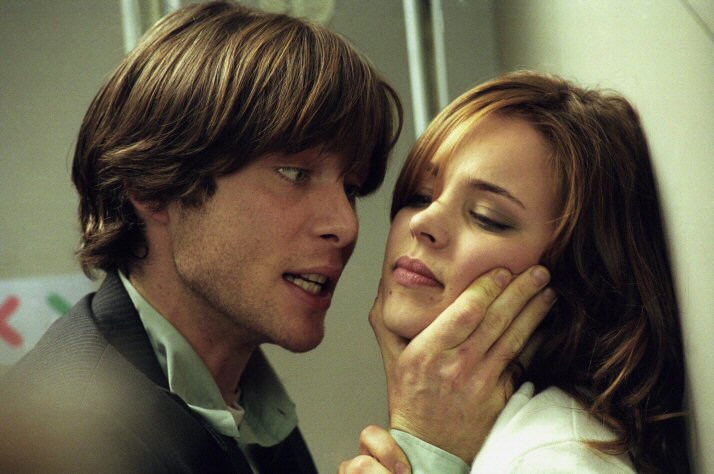
3. Red Eye [above] (Friday, C4, 12.35am)
4. Spotlight (Saturday, BBC2, 9pm)
5. The Sessions (Wednesday, C4, 1am)
2. Masaan (Monday, C4, 1.55am)
3. Red Eye [above] (Friday, C4, 12.35am)
4. Spotlight (Saturday, BBC2, 9pm)
5. The Sessions (Wednesday, C4, 1am)
Subscribe to:
Posts (Atom)