Thursday, 8 January 2015

Vermeer time: "Girl with a Pearl Earring and Other Treasures from the Mauritshuis"


Ben Stiller one week, Frederick Wiseman the next: seems everyone's going to the museum before the administrators have the doors closed for good. With Girl with a Pearl Earring and Other Treasures from the Mauritshuis, the team behind the In Search Of... series - which did such a good job explaining the appeal of Haydn, Mozart and Beethoven to tin-eared neophytes like myself - dip both a toe and a brush into the artworld: a celebration of/promotional tool for the recently reopened gallery in The Hague, it uses the Mauritshuis's most famous inventory item as a Trojan horse to access Vermeer's life and work, and the institution's many other highlights of 17th century Dutch representative art. (The competition for tourism bucks is getting so fierce it may well be that, sooner or later, every gallery winds up with a documentary crew dashing around it, compiling the images that might attract art lovers to cinemas worldwide before being repackaged for sale in the gift shop.)

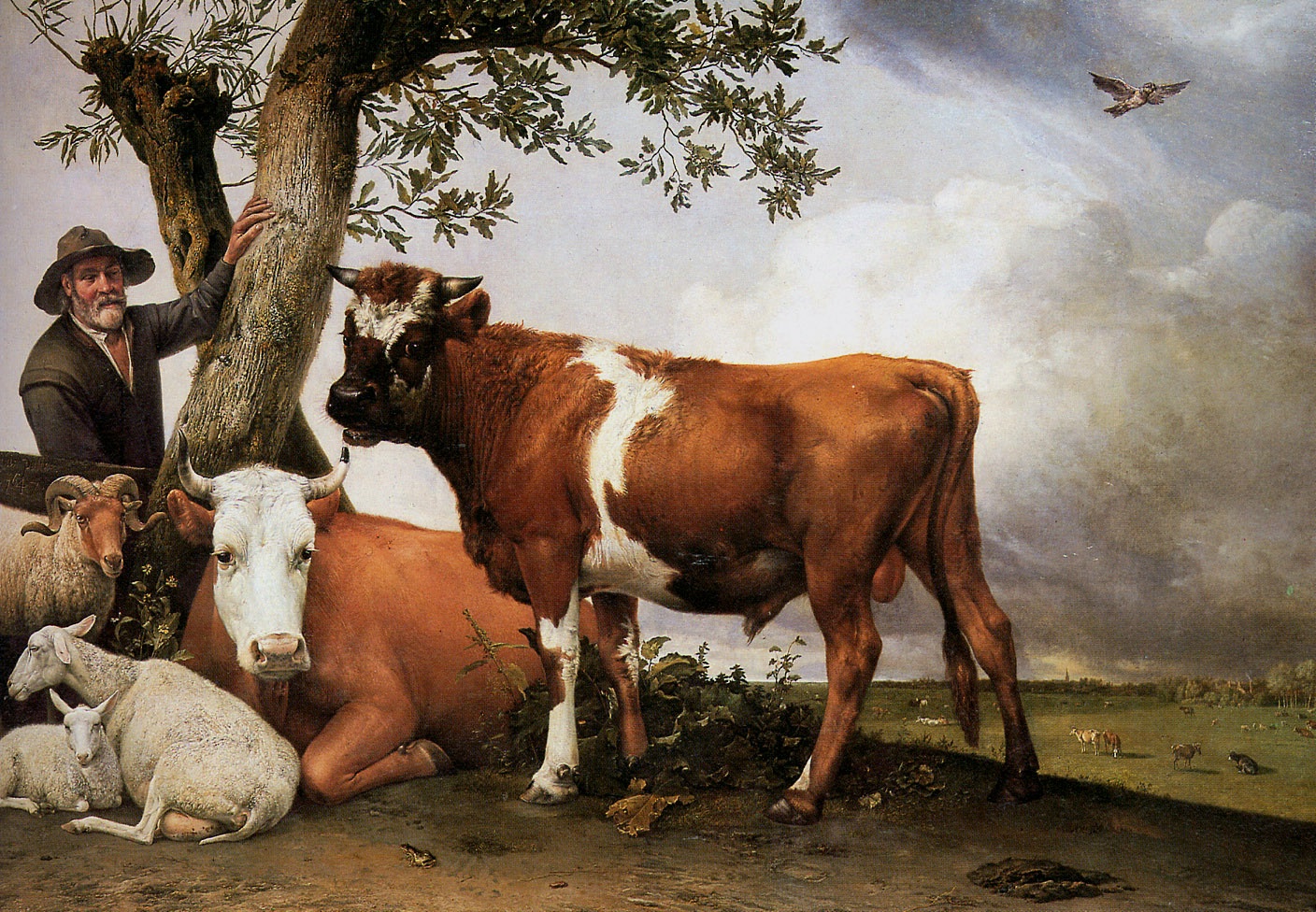
It's bolstered by producer Phil Grabsky's typically sturdy, time-honoured approach: a close attention to each item under scrutiny, backed up by perceptive textural analysis delivered in talking-head format by curators, critics and Tracy Chevalier alike. Most agree that the Girl's appeal centres on an idea (possibly ideal) of female beauty: even the unschooled eye can appreciate how approachable she is, certainly in comparison with, say, the million-miles-away Mona Lisa - something to do with either the subject's watery eyes and parted lips, or the manner in which she appears to "pop out" from her jet-black surrounds. (The discussion of the painter's rare handling of light chimes absolutely with the hands-on demonstration of last year's Tim's Vermeer.) It could have been as fatally dry as the critic who expires before Vermeer's "View of Delft" in Proust's À la recherche du temps perdu, but the filmmakers keep finding ways of making their eminent scholarship connect with layman and connoisseur alike, not least via frequent dabs of humour: picking out the lovingly rendered cowdung in the corner of Paulus Potter's "The Bull", for example, or having our narrator note, just after the revelation that Vermeer's wife Catharina Bolnes produced fifteen children, that "Johannes also found time to be a painter". Didn't he just.

Girl with a Pearl Earring and Other Treasures from the Mauritshuis screens in selected cinemas on Tuesday 13th.

Sunday, 4 January 2015

For what it's worth...


Top Ten Films at the UK Box Office   
for the weekend of December 26-28, 2014: 
 
 
1 (1) The Hobbit: The Battle of the Five Armies (12A) **
2 (new) Exodus: Gods and Kings (12A) ***
3 (2) Paddington (PG) ****
4 (new) Annie (PG)
5 (3) Night at the Museum: Secret of the Tomb (PG) **
6 (4) Dumb & Dumber To (15)
7 (new) Unbroken (15) **
8 (5) Penguins of Madagascar (U) ***
9 (6) The Hunger Games: Mockingjay - Part 1 (12A)
10 (7) P.K. (12A) ***

(source: theguardian.com)
 

My top five:   
1. The Green Ray/Le Rayon Vert [above]
2. Kon-Tiki
3. Guys and Dolls
4. The Theory of Everything
5. Enemy


Top Ten DVD rentals:  
 
 
1 (1) Guardians of the Galaxy (12) **
2 (2) The Inbetweeners 2 (15) ***
3 (3) Mrs. Brown's Boys: D'Movie (15) *
4 (4) Transformers: Age of Extinction (12)
5 (5) 22 Jump Street (15) ***
6 (7) Edge of Tomorrow (12) ***
7 (6) The Expendables 3 (15) 
8 (8) Godzilla (12)
9 (10) Bad Neighbours (15)
10 (9) Hercules (12)
 
(source: lovefilm.com)
                                 
 
My top five:  
1. A Spell to Ward Off the Darkness
2. The Guest
3. Sin City 2: A Dame to Kill For
4. Diplomacy
5. Finding Fela


Top five films on terrestrial TV this week:   
1. Dog Day Afternoon (Saturday, ITV1, 11.45pm)
2. The Searchers (Saturday, five, 3.55pm)
3. Ferris Bueller's Day Off (Friday, C4, 12.10am)
4. Hue and Cry (Saturday, BBC2, 6.30am)
5. The Titfield Thunderbolt (Saturday, BBC2, 7.50am)

Mis-Taken: "Dying of the Light"


"You will be prone to over-reacting, wild mood swings... that kind of thing," declares a trained medical professional to Evan Lake, the CIA veteran he's just diagnosed with early-stage dementia. As Lake is being played by Nicolas Cage, you and I might have already accepted that as something of a given. Given dad specs, a grey rinse and a mangled prosthetic ear (the result of nasty pre-credits torture in Beirut), and working under once-serious director Paul Schrader, Cage might just have seen something legitimising in Dying of the Light's central role: that of a man gathering what remains of his memory to jet off first to Bucharest (quickly surpassing Toronto as the Kingdom of Fabled Taxbreaks) and then Kenya (or a version thereof) in pursuit of his erstwhile torturer, a terrorist who's subsequently gone into hiding with anaemia.

Schrader's script thinks it has a clever idea in asserting some equivalence between these two variously labouring workhorses, but on screen it translates to a lot of arthritic shuffling around sludgy-looking car parks and farmers' markets. The film's internal movement has been a source of public conflict between producers and director, who - as with last year's The Canyons - presumably had some grand vision for this project the raw material was always unlikely to sustain. Yet the recut version bowing in cinemas and on demand this weekend suggests even the moneymen didn't really know what to do with it: what we get is a film that has the brisk running time of some Taken-style thriller, but gets choked up with leaden exposition where all the punch-ups and chases ought to be. Nobody can do anything with Schrader's big showdown, which is resolutely about a couple of ailing blokes sitting in a room and wondering what they've come in here for, although here Dying gets vaguely intriguing: Lake's dementia is evidently meant to stand for the cultural-historical amnesia of any number of American operatives blundering out into the field.

Such tantalising nuances, alas, are blown away by an utterly crass final act, which suggests either substantial reshoots or that Schrader is a hopeless director of action - either way, it's hard to see anybody getting their money's worth. Like many of the star's recent projects, Dying of the Light achieves a kind of dynamism whenever Cage has the werewithal to lose it: Lake's stroppy reaction to being forcibly ejected from the CIA's Langley headquarters, and to the poor waiter insisting he extinguish his cigarette in a Bucharest restaurant, will surely be added in due time to the ever-growing YouTube showreel of Classic Cage Flip-Outs. The rest, so cackhandedly executed it sticks the wrong accent on Irène Jacob's first name during the closing credits, deserves to be discarded altogether.

Dying of the Light is now playing in selected cinemas, and is also available on demand.

My Top 20 Films of 2014, 10-1


10. Leviathan
Of all the year's lengthy films aspiring to the standing of great novels (Nymphomaniac, Norte, the End of History, Winter Sleep), this Russian titan was the one that to me felt the most complete and satisfying in its storytelling.

9. Next Goal Wins
Not just a rare notable football movie, but a magnificent group portrait of people getting better. If Roy Hodgson had gathered the England squad together to show them this, rather than allowing them to drift away to film their Subway and Head & Shoulders promotions in the weeks before the World Cup, maybe the players would have come away from the experience with some sense of why this beautiful, chaotic, exasperating, persistently silly game actually matters so much to many of us.

8. A Touch of Sin
As brilliant (and unsparing) a portrait of modern China as Leviathan was of modern Russia.

7. The Lego Movie
Because, sometimes, when our corporate overlords put their resources in the right hands, even they can get things awesomely right.

6. How We Used to Live
I'm a sucker for this sort of archive-collage, granted, but even so, this collaboration between director Paul Kelly, writer Travis Elborough and the band Saint Etienne provided one of the loveliest hour-and-a-bits I had watching movies in 2014. 

5. Lilting
Along with Ida, the year's best response to prevailing movie maximalism: a small but faultlessly sincere and immeasurably honest weepie, using its few effects to better render its characters' deep-seated emotions. Great performance by Ben Whishaw, too.

4. Mr. Turner
2014's richest, most finely detailed spectacle, and - just pipping the Browns in Paddington - its most cherishable definition of national character. Although, Pollyanna that I am, I still wish Leigh had swapped the last two shots around, the great miserable bastard.

3. Inside Llewyn Davis
A good year for the Coens: their amanuensis Noah Hawley fixed up and fortified Fargo's somewhat suspect plotting in his TV offshoot, in the process reminding us of what we've really always cherished about these filmmakers - though they did plenty of that themselves, in this wry, fond, very funny late-period display of empathy for all those fate leaves out in the cold. Best cat of the year, too.  

2. 12 Years a Slave
Kudos to Steve McQueen, and - at the other end of the seriousness spectrum - to Barry Shitpeas, for pointing out the film's hitherto unnoted debt to Horrible Bosses: "After twelve years a slave, I just don't think he could stick it any more."
 
1. The Raid 2
In truth, there wasn't one standout release for me this year - as opposed to 2013, when I responded to Before Midnight in much the same way everybody else did to Boyhood in 2014 - and any of the top six could have found themselves at number one. So I've gone with my gut: this rock 'em, sock 'em action compendium/masterclass was the most exciting experience I had in a cinema this year, and consequently the closest I've come in some considerable while to handing in my critical faculties and becoming an unapologetic fanboy.

Thursday, 1 January 2015

My Top 20 Films of 2014, 20-11


20. Under the Skin
An obvious outlier, and one I sense I really need to experience for a second time before deciding on any definitive placing: on a first pass, I found its singularity of vision both hugely impressive and challenging in the extreme. I'm tempted to take the copious anecdotal evidence that suggests it disturbed and alienated so many as proof of its exceptionality: whether you dug it or not, it was clearly capable of having the most potent effect, and I wonder whether anyone who walked out or backed away from its particular frequency at an early stage simply missed the more affecting notes sounded in the denouement.  

19. 20 Feet from Stardom

18. Frank

17. Moebius
The year's most berserk movie, yes, but also its best sustained black joke.

16. Ida
These pellucid images achieve more in 4:3 than Christopher Nolan ever dreamed of doing in IMAX.

15. The Overnighters
An extraordinary and finally devastating snapshot of where we are now.

14. Life Itself

13. 20,000 Days on Earth
And I'm not really a Nick Cave fan. This was, nevertheless, an elevating response to the dispiriting doominess of Cave's previous screen work (The Proposition, Lawless): a crisply composed, illuminating, often wryly playful documentary unfolding of the many reasons an artist gets out of bed in the morning - and stays awake at night.

12. Noah
For much of the year, I found myself championing Aronofsky's Biblical epic in generally defensive terms - something to do with the ambitious battiness of its conception. However, a second look, in the immediate aftermath of Ridley Scott's far more prosaic Exodus: Gods and Kings, pointed up just how shrewd the writer-director was in the handling of his hot-potato source material. Aronofsky is willing to go along with the story for the extraordinary images it yields (how many directors could resist taking a crack at the Creation?), but at a crucial moment - around the time Russell Crowe's very able seaman puts his family, two-by-two, into lockdown - he starts interrogating the idea of unquestioning faith, and the extreme measures such faith leads some to take, in a way 2014's lesser congregation-courters (God's Not Dead, Heaven is For Real) simply wouldn't countenance. (Within this director's body of work, Crowe's Noah initiates the obsessive line that begets Pi's mathematician protagonist and Requiem for a Dream's addicts: after a while, you wouldn't choose to follow these guys anywhere.) In so doing, this ark achieved an unexpected - and, to these eyes, genuinely impressive - balance between belief and scepticism, or to put it another way, between critical thinking and astounding spectacle. 

11. The Golden Dream
Any post-Cowell reality show contestant lazily reaching for the word "journey" to describe their only moderately choppy passage into the first-world public's gaze should be obliged to watch every last minute of Diego Quemada-Diez's remarkably affecting immigrant song. Now, this - this is a journey.  

My Top 10 for the year will follow tomorrow.

My Least Favourite Films of 2014


10. I Origins
Nonsense with knobs on; best remembered as the film that cast Michael Pitt as a brilliant scientist called Ian, and then had to hand him a pair of Intelligence-Signifying Spectacles to back up the claim.

9. Miss Violence
The fag end of the Greek New Wave, of interest solely to masochists.

8. Common People
DaveCam's Big Society: The Movie. As a critic, you take no particular joy in kicking well-meaning community projects like this; you just have to sit there, suck up the interminable tweeness, try not to swallow your own fist along with it, and then let it die a flailing death at the box-office.

7. The Anomaly
Because this year, Noel Clarke had a go at a sci-fi.

6. Blended
An unhappy reunion for Adam Sandler and Drew Barrymore, shambling around an African holiday resort amid flatulent non-gags, charmless child performers and horrible racial stereotypes.

5. Mrs. Brown's Boys: D'Movie
Just d'ont.

4. Third Person
In which Paul Haggis went from Crash to car crash. If I could remove one image from my memory banks this year, it would be that of hunky writer/Haggis surrogate Liam Neeson grinding between Olivia Wilde and another unfortunate girl in a Parisian nightclub. 

3. 3 Days to Kill
Even this year's "good" Luc Besson production - Lucy - might only be considered good in the context of Besson's recent, sewage pipe-like output. Here, he returned to churning out abject crap, this time with McG at the helm and Kevin Costner trying out the Neeson role of Poundland Jack Bauer. Even the audiences it was pandering to turned their backs on it.

2. Think Like a Man Too
Honking non-com persisted in pitching itself roughly two hundred decibels above average viewer tolerance. Gave us the sight of Kevin Hart dancing to a Pitbull song in his underpants. Couldn't even spell "Two" right.

1. Almost Married
At last, that STD-based romantic comedy we were all waiting for.

God complex: "P.K."


Playing a visitor from another galaxy in Bollywood's big Christmas 2014 release P.K., Aamir Khan unveils the strangest human form exhibited on screen for some time. In his breakthrough film Lagaan, Khan appeared squat but resolute; his body was exactly that of a working-class Everyman staying close to the ground he refused to be budged from. A decade and a half on, and at least part of that body has been made subject to the now-standard movie star inflation. Khan's shoulders, abs and glutes - amply showcased after his character touches down naked in the Rajasthan desert - would have made Arnie in his bodybuilding prime look on with envy. Above the neck, however, this pale, pop-eyed, jug-eared figure can't help but resemble Mr. Bean, Ed Miliband or any other figure of comedy: the pieces don't seem to fit together at all.

Fortunately, this offkilter presence is of a piece with the rest of a rough-hewn star vehicle that seeks to explore just how peculiar and interchangeable our lives and customs - and especially our belief systems - really are: Khan's P.K. (it apparently sounds like "tipsy" in Hindi, which suits his altogether spacey demeanour) at one point stumbles into a workshop used for the manufacture of religious icons, and he suddenly seems entirely at home amid the mix-and-match jumble of arms, legs and disproportionate torsos. The film thrown up around him is something like E.T. meets Derek: its plot is a silly, sometimes flagrantly sentimental construction that nevertheless provides a framework within which Khan and writer-director Rajkumar Hirani can explore certain personal concerns.

After the remote he needs to summon his spaceship is stolen, and his efforts to retrieve it are met with a shrugging string of "God only knows", the very credulous P.K. starts a search for this errant God fellow here on earth, handing out flyers to rush-hour commuters and sticking up missing-persons posters bearing the heads of various elephant deities, a move that quickly sees him dubbed a lunatic by all but curious TV reporter Jaggu (Anushka Sharma). This quest will prompt some of the usual Bollywood broadness: wherever he goes, P.K. is followed not just by Jaggu, keen to land herself a promotion by snagging an out-of-this-world scoop, but by the kind of cheap, farting synth theme that used to accompany Vic Reeves' more outre kicky-leg dances on the Big Night Out.

Yet it also cues jokes that are a touch sharper and certainly more daring than the norm, not least because they have organised religion, in all its forms, squarely in their sights. After making a cash donation at a church and getting nothing - earthly or spiritual - to show for it, P.K. proceeds to the nearest police station to file a complaint; later, he's seen flipping over a maternity ward's worth of naked newborns in a bid to find the label that might identify which creed they've been born into. Naturally, he finds none - but the gag sets up a later sequence in which our hero parades individuals in traditional Hindu, Muslim, Sikh, Jain and Buddhist dress before his nemesis and asks him (and us) to identify which one's which. The punchline is that they're all wearing somebody else's garb. Faith is arbitrary, the film keeps pointing out; we should regard one another as people first, and worshippers only in passing.

Hirani previously made the wondrous Lage Raho Munna Bhai, an oddly profound light comedy about a mobster stalked, consequently driven crazy, and then inevitably pacified by the spirit of Gandhi. In P.K., you sense him getting altogether more serious and searching: in his quest to expose what he dubs "wrong numbers" - those shonky connections between man and his gods, and between man and his fellow man - P.K. will take down a self-appointed guru (Saurabh Shukla), who's previously been responsible for separating the Hindi Jaggu from her Pakistani Muslim boyfriend, and has taken delivery of that missing remote for use as one more glittering tchotchke among many.

Beneath the surface tweeness, the film is clear-eyed about the likely consequences of such a project: P.K. gets a slap from Jaggu's father after turning a common-or-garden rock into a profitable shrine simply by adorning it with a splash of red paint. (The hardliner's response has been echoed in certain sections of the Hindi press: "Do not question religion. It's a matter of faith.") And while P.K. is perhaps just a shade too innocent to integrate it as the third-act punch it really wants to land, it's a bold move on Hirani's part to make a fundamentalist terror attack a critical moment in what's ostensibly an end-of-year entertainment. Like its leading man, then, its pieces don't always fit together smoothly, but it has more than you might expect going on up top: beneath the robes of idiot comedy, P.K. is asking a lot of pertinent questions about the things we continue to believe in.

P.K. is now playing in cinemas nationwide.