Tuesday, 14 January 2020

Suspect device: "Bombshell"


For one thing, Bombshell is another instance of how modern movies are now being routinely scooped by modern TV. Last summer, the American cable network Showtime debuted The Loudest Voice, a detailed and nuanced seven-part account of the downfall of gropey Fox News chief Roger Ailes, overseen by Tom McCarthy and Alex Metcalf, with episodes directed by Kari Skoglund, Scott Z. Burns and Stephen Frears among others, and anchored by Russell Crowe's heavyweight performance as the disgraced media mogul. The movie version of this tale, written by Charles Randolph and directed by Austin Powers's Jay Roach, is a 105-minute gloss composed in the image of those recent Adam McKay projects (such as 2015's The Big Short, which Randolph wrote) in which liberal Hollywood attempts to address contemporary American iniquities by being incredibly arch and knowing, bordering on supercilious: cue much talking to camera, crisscrossing narration, an insanely scattershot editing strategy, and a weird reliance on comedy performers for a subject that demands to be dwelt upon with the utmost seriousness. In some future academic text, these McKay-Roach hybrids of harsh fact and crowdpleasing, lawyer-appeasing dramatic licence will come to be referred to as something like Big Mess Movies, partly as they go so eagerly to the state we're in, partly because of the haphazard way they've been thrown together. It must be hard to settle on a consistent tone or formulate a coherent argument when you're running around trying to capitalise on a Twitter hashtag.

The Loudest Voice made Ailes himself our entry point into the Fox News sharktank, the better to demonstrate how this shuffling hamhock of a man stamped an especially toxic vision on the world and its women. Bombshell splits its perspective, altogether awkwardly, between the women who took Ailes down - three practically identical blondes who collectively represent the closest Fox News ever got to a recognisable house style. To differentiate, as we must: Charlize Theron is the shrewd Megyn Kelly, the lawyer-turned-anchorwoman who became the focus of Trumpian ire after subjecting the then-candidate to actual journalistic scrutiny during a 2015 televised debate; Nicole Kidman the veteran Gretchen Carlson, an avatar for the Fox News audience in her baseline prissiness (but also the first of these women to open legal proceedings against Ailes); Margot Robbie, meanwhile, plays "Layla Pospisil", a composite for all the fresh meat pumped through the Fox News machine over the years. Looking at Theron's eerily Botoxed transformation into Kelly, the vicious haircut Kidman is stuck with for the film's first half, and the emphasis Roach places on Robbie's dresses and legs (Ailes's specific field of interest, but the camera's too), you could be forgiven for concluding that Bombshell's approach to this story will be largely cosmetic. (It's evident not just around the women: John Lithgow's jowly Ailes has the unmistakable air of Fat Bastard about him, and Richard Kind has to act his way out of old-man latex as Rudy Giuliani.) What this frantic dressing-up can't entirely conceal is how hypocritical the movie feels on a scene-by-scene basis. Bombshell holds a mirror up to the American corporate entertainment media - lest we forget, Fox News isn't a source of news so much as bellowing fakery akin to WWE wrestling - and really sees no more than showbiz itself, its own failings and prejudices, its own worst behaviour.

There are moments when Roach's film cuts through its own noise and lands something close to a point: an impassioned speech in which Theron-as-Kelly questions the point of a sexual harassment tipline to which Ailes has access, or an atypically becalmed interlude showcasing the testimony of actual harassment survivors. Yet in the main, there's just too much noise to have to cut through. Roach is relentless in his wheeling-on of new characters, and while it's admirable that so many prominent players would sign on to nail their colours to the mast, it's a movie, not a pep rally, and it leaves important stories being shouted out. He's just weird and defensive in his constant flinching in the direction of gags. When Kelly wonders aloud how a man of Ailes' advanced years could still be horndogging, and her segment producer (Rob Delaney) shrugs "Viagra?", it's not just that it's a limp joke, it's a limp joke that undercuts the point. And so the whole construction starts to look flimsy at best: if what it's showing us is as bright and colourful as cable news itself, what it's doing comes to feel deeply suspect, and it may well be telling the the Academy - generally a sucker for Big Mess Movies - saw through it, shutting Bombshell out of the Best Picture category for which it was so clearly gunning. (It's certainly damning that an electorate of grown adults found Todd Phillips' Joker a more substantial proposition.) McKay's Mess Movies are forgivable messes because they've had a lot of useful info to disseminate: they're essentially long reads poured into the wrong format. Through to its bizarre happy ending that finds deus ex machina Rupert Murdoch (Malcolm McDowell) steadying the good ship Fox ahead of the Trump election, everything about Bombshell is off: manically jabbing the air and jumping around, beholden to a wayward editorial line that amounts to "Look over there!", this wannabe hardhitting artefact of our #MeToo moment never for a minute throws off the look of calculated distraction.

Bombshell opens in cinemas nationwide this Friday.

Monday, 13 January 2020

On demand: "Ee.Ma.Yau/R.I.P."


For some while now, friends and colleagues have been pointing me in the direction of the Malayalam director Lijo Jose Pellissery, citing him as arguably the freshest new talent in all Indian cinema. To date, his work has gone underscreened in the West: even last year's action-packed Jallikattu, a genre pic involving a runaway buffalo that drew breathless admiration from those who caught it on the festival circuit, played on one UK screen for one week only. Part of Pellissery's freshness derives from his singular locations, and the way he frames these locations: as Ee.Ma.Yau's opening panorama of a funeral procession passing along a beach suggests, he has a knack of finding widescreen images amid the smallest, most out-of-the-way towns and villages. For a while in the film that follows, Pellissery seems just to be soaking up the atmosphere. Vavachan (Kainakary Thankaraj), an ageing, rotund mason regarded as something of a legend in his native Chellanam, returns to the closeknit household he shares with his wife, daughter, son and daughter-in-law. A curry is to be prepared with the unfortunate duck the mason has brought home from market; the ladies retreat to their rooms to talk amorous adventures over the phone with friends; dad, clocked off for the day, gets firmly in his cups. Pellissery mikes and mixes the wind blowing through the trees surrounding this property in such a way that you feel you're right there, waiting for your own tea - and you can't fail to spot the great immediacy of this cinema, the sense that everything on screen is happening spontaneously, even when it has to have been rehearsed. All the more wrenching, then, when papa suddenly drops dead, and an ordinary evening in Chellanam gives way to a long 24 hours of ritual.

That opening procession turns out to have been Vavachan's idealised vision of his own last rites: watching its abstract geometric shapes passing against the horizon, some may wonder whether Anton Corbijn's video for Joy Division's "Atmosphere" passed Pellissery's way at some formative moment. Either way, it is only a vision, romanticised, self-aggrandising, misleading; Ee.Ma.Yau's real interest lies in the thousand tiny, often fraught steps required to bring a man to his final place of rest. The bulk of the film follows Vavachan's heavyset son Eesi (Chemban Vinod Jose) - a real chip off the old block - as he enters into an exhausting night of negotiation with tipsy doctors and nurses, printers rushing to run the funeral details, coffin salesmen, interlopers to whom the deceased owed money, a priest who suspects foul play, and a houseful of wailing women. There is, one should note, an element of after-hours stress and horror about all this: that Pellissery was headed for Fantastic Fest with Jallikattu is evident from a single mid-mourning close-up of the deceased's jaw falling open, and the final act can lay legitimate claim to being the most jawdroppingly chaotic funeral ever put before a camera. (Quite something, given the competition.)

More generally, Ee.Ma.Yau plays out as procedural, instructive, funny (especially upon the arrival of an amateur clarinettist keen to play his part in what are already pretty cacophonous proceedings) and perhaps reassuring, too: a more realistic vision of people gathering in the wake of tragedy to do what needs to be done, even if that simply involves the binding of a dead man's jaw. That sense of collective endeavour - that just as it takes a village to raise a child, it will take similar numbers to bury an old man - factors into the supporting parts, which are uniformly strongly written, cast and performed. There's something Altman-ish (to A Wedding, Pellissery effectively appends "A Funeral") about the way you feel the movie could go off in any direction - towards the kids making out on the beach, the workmen who spend the whole movie playing cards, or the gravedigger whose own fate will be rerouted by Vavachan's demise - and come back with an interesting or enlightening story. Around the halfway mark, I even found myself wondering: what would now happen if the mason came back to life - or if he returned to the action as a ghost of some kind? The model of a cinema thrown wide open to the elements, there is ample evidence here of Pellissery's very great promise - and for a film marked from its title on down for death, there isn't a frame that doesn't spill over with messy, joyous, wholly compelling life.

Ee.Ma.Yau is now streaming on Amazon Prime.

Sunday, 12 January 2020

On demand: "Amazing Grace"


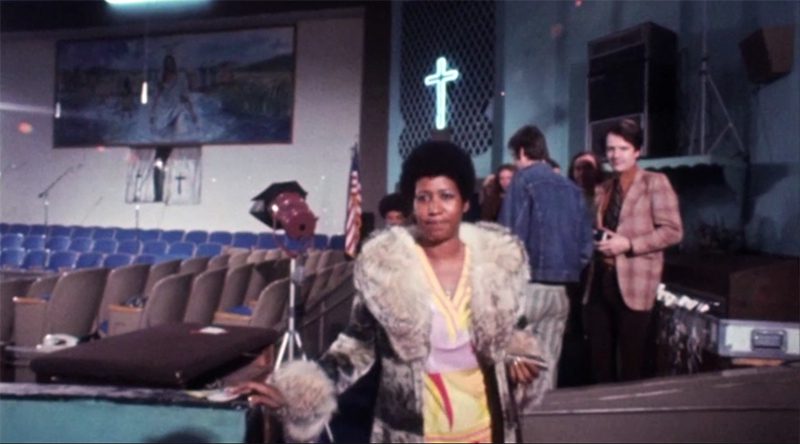
Two notable examples of found-footage documentaries crossed the Atlantic in 2019. I've already sung the praises here of Apollo 11, fashioned from the treasure trove of recordings NASA itself made of the 1969 moonshot; Amazing Grace, for its part, bumps us forward three years to 1972, when Aretha Franklin entered L.A.'s New Temple Missionary Baptist Church to record the gospel songs of her youth over a two-day session. She was followed by a documentary crew headed by the director Sydney Pollack, charged with assembling the images and sounds into something that would meet that great post-Woodstock demand for live music docs. Yet a technical issue - a screw-up with the synch sound, doubly calamitous given the rigorous handclapping going on in the pews - meant the footage languished in a vault until Franklin's passing in 2018, whereupon producer Alan Elliott was inspired to go back and take another look at it. Possibly some NASA folk were called in at that point, yet - however it was achieved - a fix was found, allowing transcendent sound and authenticating image to be pieced together into a film that has more or less the same effect as the Apollo doc. This is a film that lifts you up. (You'll be going some if the home viewing experience matches the collective awe some have described taking hold upon watching Amazing Grace in a cinema, though even on my screener copy, the sound was exceptional. You dread to think what Aretha's ghost might have done to Elliott and co. if it wasn't.)

"Amazing Grace" went on to become the biggest selling gospel album of all time upon its release later in 1972, so Elliott's film has nothing to prove, or really to sell: it's an unusual live-performance movie where the focus of attention isn't specifically there to put on a show, rather to do a job, that of an artist under contract. Aretha makes a low-key entrance in a nondescript smock with a splash of eye shadow, barely addresses the swelling congregation who've turned out to see her - saving her voice for the stratospheric high notes that follow - and takes two or three songs before she seems to warm up to the task she's set for herself. Once she does, though: sheesh. We are gathered here in the presence of God to witness an artist at something like her creative peak doing whatever she wanted and having the monumental talent to back it up. If this heathen onlooker feels obliged to note he still prefers pop Aretha to gospel Aretha, I can imagine it won't just be hardcore fans who get a thrill from hearing the singer stamp her authority on such tried-and-tested standards as the title track and "What a Friend We Have in Jesus". (It's the same heady rush I get from hearing the Aretha version of "What a Fool Believes": a great song, comprehensively restructured and rephrased to accommodate a vocal range the size of the Rocky Mountains.)

There remains some lingering mystery as to why this assignment was turned over to the faintly staid Pollack, who doesn't strike you as either a gospel or a soul man. This latter possibly accounts for the lack of adventurousness in the raw material Elliott has had to work with: after an opening establishing shot that situates the church in the heart of the L.A. freeway system, we hunker down inside the church, the camera coverage limited to the occasional pan over a wide-eyed and swaying congregation (including, on night two, a conspicuous pair of Rolling Stones, showing up to pay homage). Pollack was drawn here, as we are drawn here, for one reason alone - to hear an angel sing - and perhaps we shouldn't be too surprised, then, by the fact he and his crew found themselves rather rooted to the spot once Aretha materialised: they didn't want to miss a thing. A defiant instruction, handed down from on high to all this century's wannabe divas, was preserved in the footage Pollack and Elliott landed upon, and it goes something like this: be this good, and not only can you get away with throwing the odd hissy fit, but people will come back to you forty years later, and do everything within their power to assist you in spreading the Word. The final words we hear Aretha sing in Amazing Grace are "My soul is satisfied", and the smile on her face suggests she wasn't at all faking it. Not a bad couple of days in the office, all told.

Amazing Grace is available on DVD through StudioCanal, and to stream via Amazon Prime. 

Saturday, 11 January 2020

For what it's worth...


Top Ten Films at the UK Box Office 
for the weekend of January 3-5, 2020:

1 (1) Star Wars: The Rise of Skywalker (12A)

2 (2) Jumanji: The Next Level (PG)
3 (new) The Gentlemen (18) **
4 (3) Little Women (U) ****
5 (new) Jojo Rabbit (12A) **
6 (new) Andre Rieu: 70 Years Young (U)
7 (4) Frozen II (U) **
8 (6) Spies in Disguise (PG)
9 (5) Cats (U)
10 (7) Playing with Fire (PG)

(source: BFI)

My top five: 
1. La Dolce Vita

2. Long Day's Journey Into Night
3. Little Women
4. The Kingmaker
5. Uncut Gems


Home entertainment Top Ten (DVD/Blu-Ray/Download): 

1 (new) It: Chapter Two (15) **

2 (5) Angel Has Fallen (15) **
3 (23) Star Wars: The Last Jedi (12) ***
4 (1) Once Upon a Time... in Hollywood (18) ***
5 (2) The Lion King (PG)
6 (9) Rocketman (15) ***
7 (3) Fast & Furious: Hobbs & Shaw (12) **
8 (7) Spider-Man: Far from Home (12) ***
9 (6) Aladdin (PG)
10 (4Toy Story 4 (U) ***

(source: officialcharts.com)

My top five: 
1. The Farewell

2. By the Grace of God
3. Animals
4. Yves Saint Laurent: The Last Collections
5. Pain & Glory


Top five films on terrestrial television:
1. Notting Hill [above] (Sunday, five, 10pm and Friday, five, 11pm) 
2. Little Men (Wednesday, C4, 1.40am)
3. National Treasure (Sunday, C4, 3.40pm)
4. Ocean's 11 (Sunday, five, 5.45pm)
5. The Angry Birds Movie (Sunday, five, 1.50pm)

Pressure drop: "Uncut Gems"


Some career progressions are utterly unforeseeable. Consider, if you will, the Safdie brothers, New York-based indie tyros who deal in shakedowns and stress tests rather than movies per se. Already much admired in France, the pair broke through in the UK with 2014's Heaven Knows What, a naturalistic study of junkie life that was at once admirably uncompromising and in places close to unwatchable. They picked up a star in the adventurous Robert Pattinson for 2017's Good Time, a grungily hopped-up Of Mice and Men update demonstrating a jittery energy that drained away come the final act with the introduction of recent cinema's most irritating supporting character. Now they have a Netflix deal, from which emerges this week's Adam Sandler vehicle Uncut Gems. What gives? It's true that the Safdies are developing something akin to a popular touch - both Good Time and Uncut Gems could be sold as thrillers of a kind, and they've never quite made anything as terminally insufferable as their regular collaborator Ronald Bronstein's Frownland, a migraine that assumed cinematic form - but Safdie films remain altogether agitated and agitating; they need glowing write-ups far less than they do a prescription for Xanax. You wouldn't necessarily have these directors pegged as the great white hope of the US indie scene, as many now frame them, but it's a development that speaks to the perversity of the moment: these guys have become the patron saints of a generation of cinephiles who can't sleep because they're too busy checking Twitter to see whether 45 has lobbed a nuke at somebody.

Uncut Gems is so restless it nearly makes Good Time seem soothing. It begins with a sweep over an Ethiopian mining accident, then emerges via a colonoscopy into the life of one Howard Ratner (Sandler), a jewellery trader with both a polyp and a rocket up his ass. An habitual sports gambler, heavily in debt and juggling a wife (Idina Menzel) and mistress (Julia Fox), Ratner has pinned all his hopes on the sale of rare black opals found in the wake of that mining accident. The trouble - as signalled by the fact that prologue is seemingly styled after that of The Exorcist - is that the rocks would seem to come with a curse of some kind. The Safdies establish an ominous mood with the early scenes in Ratner's salesroom: it should be his stronghold, this carefully secured, widely surveilled bolthole, except the directors deliberately cram it from the off with as many bodies as possible - passing rappers and basketballers, assorted kooks and goons - and get them to lean all over the display cases Howard has specifically instructed them not to lean over. To watch a Safdie film, again, is to expose yourself to varying levels of discordant noise: the raspy voices of non-professional actors shouting over the top of one another in long, heavily improvised scenes, background street sounds that New Yorkers grow up with but which become deafening when pumped through Dolby surround, Daniel Lopatin's droney electro score filling in whatever gaps are left. It's completely immersive, but what the unqualified raves for Uncut Gems aren't telling you is that you'd do well to keep mufflers close at hand for some of it.

Unlike mumblecore's more genial graduates, plotting smooth passage towards mainstream assignments, the Safdies seem to be conducting an experiment to see just how abrasive and cacophonous a movie can be before it turns audiences off altogether. (They may be doing in all seriousness what the comedian Stewart Lee only jokes about: putting together schtick that whittles their audience down to the one person who gets their work absolutely.) Flaunting its own rough edges, Uncut Gems was always unlikely to set the box-office alight, which is why the Safdies have sought sanctuary with Netflix, and possibly explains the casting of Sandler, the most Marmitey of performers: presumably the thinking was that if you sat through not just one but two Grown-Ups movies, Uncut Gems should be a breeze. There is, granted, a residual fascination in watching Sandler drill down into a physically and morally flabby character: Howard Ratner is a genuinely funny and pathetic creation, with a tendency to pitch even his small talk ten decibels too loud, a tic that meshes perfectly with what the Safdies are attempting to achieve. This is a great anchoring performance - on screen, shit-eating grin in place for almost the entirety of these two hours - and my suspicion is that Uncut Gems would be straight-up aggravation without a star of his calibre in place. (Another telltale sign of perversity: for once, Sandler is the most welcome presence on screen.) It is, I should underline, pretty aggravating as is. 

It strikes me that the Safdies, like young boys stretching rubber bands to see how far they can go, are hellbent on turning out pulpy B-movies at auteur length that threatens to become punishing: I begrudgingly tagged along with Good Time, certain as I was that absolutely no good could come from the actions of everybody involved in its bankrobbing plot, and I felt some resistance to the new movie even before the directors insisted on Sandler doing an entire chaotic scene in a jersey that hadn't had its sales tag removed. (As with the wafer-thin mint Monty Python fed Mr. Creosote, this was a stress too far.) As with Good Time, there's not much of a payoff after all this squirming and suffering, either. The brothers are too busy sustaining their buzz, sharpening the cut-and-thrust of individual scenes, to think much of where anything is headed - which makes me wonder what the purpose of their cinema is, beyond the generation of a certain abstract movement and empty sensation. There remains something interesting in their determination to go against the grain of so much contemporary American cinema, to rattle rather than reassure: at a generous push, you could say the Safdies are using the stresses induced by capitalism - the shit the system puts us through - to in some way critique it. Yet we live in a world which now offers a thousand free ways to give yourself headaches and heart palpitations; I can't understand for a minute why anyone would pay to have them induced on a night off.

Uncut Gems is now playing in selected cinemas, before streaming on Netflix from January 31.

Wednesday, 8 January 2020

In memoriam: Sue Lyon (Telegraph 08/01/20)


Sue Lyon, who has died aged 73, was an American actress who entered cinema folklore aged 14 when she beat out a reported 800 applicants for the role of Dolores Haze, the adolescent focus of the middle-aged Humbert Humbert’s attentions, in Stanley Kubrick’s 1962 adaptation of Vladimir Nabokov’s novel Lolita.

Lyon’s performance as a flirty student on a 1959 episode of The Loretta Young Show caught the eye of a director looking to skirt the book’s paedophilic implications – and ease a hot-potato project past the censors – by casting a Lolita who might pass as physically older than the 12-year-old conceived in prose by Nabokov. Lyon’s Lolita proved central to the film’s queasy, provocative tone, retaining a knowing innocence in the face of her onscreen suitors’ frantic projections.

Though technically too young to see the X-rated feature when it opened, Lyon soon became the postergirl for a new, permissive American cinema, appearing on billboards in an indelible pose – heart-shaped sunglasses lowered, strawberry lollipop suspended between open lips. Few at the time noticed this image was but another projection, an ad man’s fantasy found nowhere within the film itself.

The performance earned her the Promising Female Newcomer prize at the 1963 Golden Globes, a brief pop career (lending her vocals to Nelson Riddle’s cash-in composition “Lolita Ya-Ya”) and a gift of two pink Persian kittens care of onscreen mother Shelley Winters. Even the generally acid gossip columnist Hedda Hopper was impressed, remarking “Sue Lyon is the arch prototype of an instant star”.

Yet Lyon subsequently found roles harder to come by, struggling with manic depression, a turbulent love life, and a not unjustified sense that Hollywood abandoned her once the nymphet image no longer matched with reality. In a 1967 interview, she was already facing up to the challenges of sustaining a career in a town where such images are paramount: “To be pretty and to stay pretty are two different things. You can’t take anything for granted, and it’s foolish to think you can.”

She was born Suellyn Lyon in Davenport, Iowa on July 10, 1946, the youngest of the impoverished James and Sue Karr Lyon’s five children. Her father died when she was ten months old, leaving her mother, a hospital administrator, to raise the family singlehandedly. In the late 1950s, the Lyons relocated to L.A. in the hope that young Sue’s apple-cheeked, all-American looks might support them. She modelled for the JC Penney catalogue, and in 1960 was named “Miss Smile” by L.A. County dentists.

After Lolita, she was notable (and very shrewdly cast) as the lissom teen tempting Richard Burton’s priest in John Huston’s film of The Night of the Iguana (1964), landed her biggest payday in John Ford’s unusual, female-led drama 7 Women (1966), and held her own opposite George C. Scott in The Flim-Flam Man (1967).

She lost out to Faye Dunaway during casting for Bonnie and Clyde (1967), but landed roles in the Sinatra vehicle Tony Rome (1967), the TV remake of Arsenic and Old Lace (1969) and as the stunt biker’s wife in the biopic Evil Knievel (1971).

A retreat into cocktail waitressing followed once the roles dried up, though she appeared on TV in Police Story (1978) and Fantasy Island (1978). Her final screen credit came as a newswoman in the lively Jaws rip-off Alligator (1980).

She married five times: to the Blade Runner screenwriter Hampton Fancher; to the photographer and football coach Roland Harrison; to Gary “Cotton” Adamson, then an inmate at Colorado State Penitentiary serving time for robbery-murder; to Edward Weathers; and to the radio engineer Richard Rudman. She is survived by Nona Harrison Gomez, a daughter from her second marriage.

Sue Lyon, born July 10, 1946, died December 26, 2019.

Extremely loud and incredibly close: "1917"


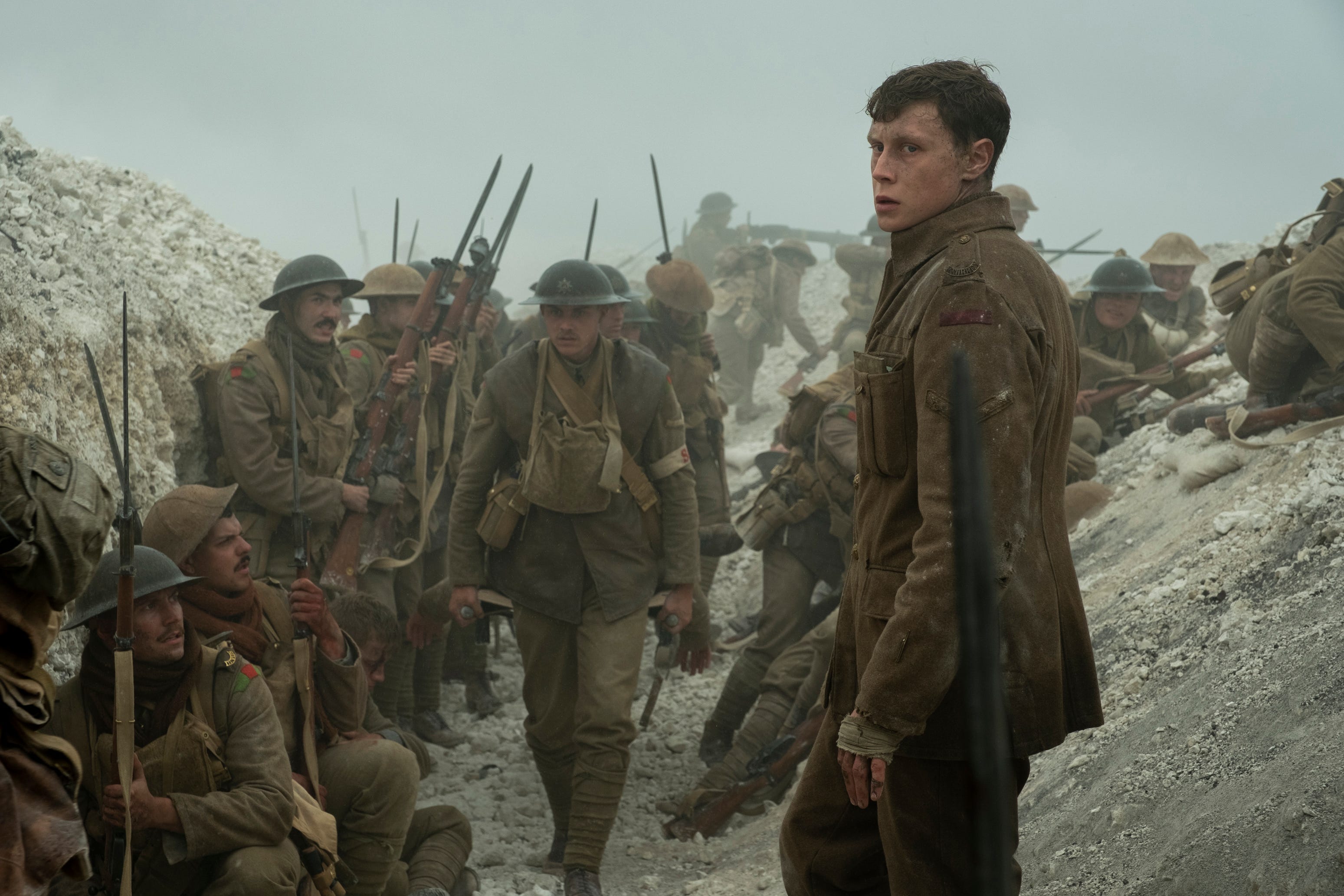
Shouldn't we have got 1917 in 2017? Instead, you'll remember, we got Christopher Nolan's Dunkirk, much-admired and widely seen at the time, but also a film to which absolutely no-one - not even your dad - has returned in the years since: once with that movie was quite enough. It tackles an earlier conflict, obviously, but Sam Mendes' 1917 is otherwise much the same kind of film: it finds an A-list Brit director using a combat narrative (in this case, drawing on Mendes's grandfather Alfred's memories of WWI, written up by the director with the Scottish screenwriter Krysty Wilson-Cairns) as an opportunity to flex his technical and logistical muscles. If there's a key difference, it may be that 1917 simplifies what's gone before. Where Nolan, like a general standing over a tablemap of disputed territory, made WW2 subject to his signature narrative manoeuvring, Mendes remains at ground level and plots a single, straight line. A film shot to appear as one long, unbroken take, 1917 follows two British grunts (garrulous Dean-Charles Chapman and the more reserved George Mackay) as they're dispatched through the trenches and across no-man's-land to deliver a message on which the fate of several battalions - not to mention the Chapman character's older brother - hinges. The Nolan movie was conceived as a triptych, and we were meant to admire the way its panels finally connected up: it was clever, but - like so much else in its maker's back catalogue - a touch chilly. 1917, which sets its sights on being the Run Lola Run of war movies, wants to be immersive and experiential, an urgent 21st century update of All Quiet on the Western Front. It's men on a mission, on a deadline. Ready, set, go.

In almost all other respects, the two movies are brothers-in-arms. In both films, war is essentially reduced to the business of a videogame: these stories could only have been envisioned like this in an era where a proliferation of YouTube channels has normalised watching other people working their way through levels of Call of Duty. If I preferred 1917 to Dunkirk, that's only because it makes a more engaging videogame to watch than the tricksy, glitchy strategy game Nolansoft issued two years back, but watching Chapman and Mackay navigating a walkway in a collapsing bunker or tightrope-walking their way along the handrail of a partially submerged bridge really is indistinguishable from the experience of watching a pal or young relative take a pass at a stretch of Doom or Tomb Raider. Hollywood may finally have found a way to set antiquated global conflicts before middle-schoolers who'd comprehensively turn up their noses at textbooks; you can well imagine history teachers lowering the blinds and putting DVDs of Dunkirk and 1917 on at the start of term to prime their classes in what a World War was actually like on the ground. Yet the be-here-now immediacy these films trade in strikes me as a double-edged sword. For every youngster who'll come away from 1917 horrified (ew, gross, he put his hand through a dead German's decaying chest!), there'll be another - almost certainly a teenage boy, exactly who recruiters will be targeting when it all kicks off again in the Middle East - who'll find it cool and exciting, like a Bourne movie without all that boring national-security talk.

The reason for such a misreading would be that in focusing so exclusively on the present, both Dunkirk and 1917 allow the viewer to lose sight of any context or perspective. These are very much movies of this fraught, hyperaccelerated historical moment, when our aim is to push onwards, try and process a barrage of information before the next news alert breaks, and hopefully emerge intact; they're far less concerned with reflection than action (and reaction). On some level, it's as though Mendes has assembled his thespian crack troop - up ahead of the leads, familiar faces serving as course markers: Messrs. Firth, Scott, Cumberbatch and Strong - to work through the traumas of 2017 and beyond. Pushing combinations of buttons on his directorial joypad, Mendes gets Chapman and Mackay to duck, scurry and lurch as required, but the actors simply don't have the time, amid this most illustrious of Tough Mudders, to do anything more than a light sketch of these characters; the camera running behind or alongside them, meanwhile, barely has chance to capture these avatars' faces, let alone record the scared, plucky, flesh-and-blood individuals they might represent. Great, you might say (as many colleagues have): here's a motion picture in the truest of senses, stripped of all that baggy exposition, gunning hell for leather down the home straight. Yet these seem like strange failings in a film that intends to press upon us the grave consequences of war. I began to long for some form of peace, or at the very least some of those hard-earned pauses for thought directed into the great war movies; instead, Sergeant Mendes keeps blowing his whistle to send Chapman, Mackay and his indefatigable DP Roger Deakins back over the top.

That uncertain perpetual motion will yank you through 1917 as it did me, but the determination to turn the whole film into a setpiece squashes any real or lasting dramatic impact: it all comes at you thick and fast and as weightless as the camera itself, and so it's simply very easy to start shrugging much of it off. (Mendes has to overuse Thomas Newman's swelling strings to underline the pivotal moments.) Hot from last weekend's Golden Globes - where it won surprise Best Picture and Director gongs - it's bound to win more awards in the weeks ahead: its momentum is such that no-one's going to stop it galumphing all the way up the red carpet, and its achievements are very easily measured. (It does succeed in looking like a single, unbroken take, and that will be enough to wow the Academy voters who haven't seen Rope, Russian Ark or Victoria, which I'm willing to guess is quite the number.) Yet these will be awards for sporting excellence rather than creative endeavour - like hanging a medal around the neck of an endurance athlete who's just completed the 3,000-metre steeplechase on an especially uneven track. An anti-war statement drowned out amid the bombast of a blockbuster, 1917 is more likely to move you physically - it jolts you, shakes you up - than emotionally, and as with Dunkirk, that's because it covers a lot of ground without ever seeming to gain much in the way of the harsh, instructive life experience that was central to the war movies of old. As anybody who's reported for duty at the multiplex week in week out these past few years might tell you, the cinema may just be fighting a losing battle on that particular front.

1917 opens in cinemas nationwide on Friday.