Sunday, 8 July 2018

From the archive: "The Box"


A stranger shows up on your doorstep, scarred from a lightning strike yet otherwise respectable in appearance. He hands you a box with a button on top, instructing that two things will happen should said button be pushed: one, someone somewhere in the world - someone you don't know - will die, and two, you will receive a million dollars in cash for your troubles. ("Tax free," the stranger adds, with a flourish.) Would you push it? Such is the quandary facing married couple Cameron Diaz and James Marsden in Richard Kelly's new thriller The Box, adapted from Richard Matheson's short story Button, Button. It's 1976 when the mysterious Arlington Steward (Frank Langella) arrives on their doorstep, on the very day Diaz's Sartre-teaching schoolmarm learns her contract is being terminated, and Marsden's NASA engineer has his application to join the astronaut pool turned down. More precise yet, it's Christmas, which means we could read the couple's new toy as the ultimate test of goodwill to all men: initially prepared to push the button if it comes to it, they have second thoughts upon learning that, once deployed, the box will be removed from them and passed onto someone they do not know - thus putting themselves at risk.

We could equally read The Box as a way of bringing the distant horrors of overseas warfare, whether Vietnam, Iraq or even the Cold War, with its own weapons of mutually assured destruction, squarely back home: push a button, soldier, and somebody you've never met perishes. (It makes perfect sense that Langella should come to this from playing Nixon - his character's name doubly significant in this militaristic context - and that Marsden should be so riled by a waiter sending a peace sign his way.) Certainly the world Matheson and Kelly set out is one showing significant signs of trauma even before the box shows up. Diaz has lost several toes in a childhood accident; Marsden fails the astronaut exam on his psych evaluation; there's a sudden onrush of nose bleeds. Even those who aren't dying here are hurting in some way. After 2006's sprawling, uncontrollable Southland Tales - which squandered some of the goodwill this filmmaker had earned with Donnie Darko - it's clear Kelly intends this as a more focused and considered piece of storytelling; he's working his way through that phase of self-indulgence M. Night Shyamalan is still labouring in. (Certain scenes in The Box, involving a motel swimming pool with supernatural properties, recall Shyamalan's mystical misfire Lady in the Water.)

Still, there's no denying the film remains a somewhat erratic experience. Kelly badly fumbles his material after an intriguing first hour, stumbling into an interlude in a celestial library that shifts the narrative onto a higher plain when it might have done better to keep at least one foot on the ground. Where the best material here (the loving recreation of a busy 1970s household, the shadowy presence of National Security agents) apes Spielberg, the least convincing aspires towards Kubrick: Marsden, we discover, has been working on a Mars exploration project with none other than Arthur C. Clarke, and 2001 looks to be the inspiration for the library's multiple-choice stargates. I'd still be tempted to see The Box for the unified ominousness of its first hour - that hard-to-achieve sense that every scene, no matter how throwaway it seems, is somehow key to the whole; that sense that transforms even a humdrum conversation about turning off the Christmas tree lights at night into a matter of life and death. If the middle act drops the ball - and the box, come to think of it - then the tough choices Matheson and Kelly leave their characters with really do stay with you: the film doesn't all work, but it offers few easy ways out of its central conundrum.

(December 2009)

The Box screens on BBC2 tonight at 10.55pm.

Saturday, 7 July 2018

From the archive: "Populaire"


In the interests of full disclosure, and by way of bolstering the recommendation that follows, Populaire is the kind of light, silly, candy-coloured fluff I generally react to as if it were asbestos. (One precedent: 2003’s all-grinning, Ewan McGregor/Renee Zellweger-starring pastiche Down with Love, which absolutely went down like mesothelioma.) What writer-director Régis Roinsard has achieved here is to bolster this throwback kind of romcom with elements of a very leftfield, knowingly daft sports movie – thereby broadening its appeal beyond girly girls to viewers of all stripes and persuasions.

It’s 1958, and mousy ingénue Rose Pamphyle (Déborah François) has just landed her dream secretarial position within the offices of dishy insurance nabob Louis Echard (Romain Duris). Rose has a very specific skillset – speed-typing – which Louis fosters by entering her into a regional touch-typing competition, installing her in his bachelor pad, and encouraging her to peck out passages from Stendhal and Flaubert, much as Henry Higgins got Eliza Doolittle to roll tongue-twisters and marbles around her mouth.

A deal of sorts is bashed out – he gives her confidence, and receives in return a better PA, some respite from the emptiness of his life, and distraction from a lingering wartime trauma – but we’re given cause to wonder whether this trainer-fighter relationship can develop into anything more: My Fair Lady may have ended happily, but Rocky didn’t end with Sly Stallone taking up with Burgess Meredith.

Roinsard packs each frame with the surface pleasures one has come to expect from this subgenre: co-ordinated colours, period detail (here extending to a serious fetish for the ribbons and ringers of manual typewriters), choreographed dance numbers to songs that will probably sound far less obscure to a home crowd.

There’s even a love scene that pays daffy homage to Jimmy Stewart and Kim Novak’s hotel-room tryst in Vertigo, and if you were determined to be grumpy about Populaire, you could say its sexual politics – that this shrewish klutz of a girl needs to be tamed and trained by the men in her life – have been imported in more or less uninflected from the Hitchcock era. (That said, the Fifty Shades of Grey phenomenon would seem to suggest this master-and-servant obsession endures even today, and not only among men.)

What elevates it above the conventional is a cast of performers best known for somewhat more challenging work, who hone in on the feeling lurking beneath the bright hues and knowing smiles and thereby move us beyond the flagrant artificiality of the premise: the presence of Bérénice Bejo from The Artist – a film that achieved precisely that – as Louis’s erstwhile sweetheart is significant, in this respect.

The rangy Duris, looking sharper in suits than any of the Mad Men, comes to invest his usual shark-like smirk with an appealing, weathered ruefulness. And François – as The Page Turner and The Child suggested, a far more capable actress than the wispy gamines the French traditionally foist upon us – gives a softness that could so easily signify vulnerability or submissiveness the vivid shape of promise yet to be realised; her determined typing face is a thing of beauty, and a joy whenever Roinsard has the good sense to cut back to it.

Those competitive dactylography set-pieces – and no, I can’t believe I’m stringing these words together, either – are given hustle and zing, but Populaire’s real charm lies in the character business that comes in between, invested as it has been with real tenderness and genuine chemistry: perhaps only a French filmmaker and actors could so successfully transform an attempt to relieve the onset of RSI into a moment of seduction.

(MovieMail, May 2013)

Populaire screens on BBC2 tonight at 1.20am.

From the archive: "The World's End"


After the underperformance of 2010’s Scott Pilgrim Versus The World – which, despite what the fanboys insisted, never quite managed to work out the problems inherent in its source material – Edgar Wright has returned to the UK to pick up that genre-spoofing thread he initiated with actors Simon Pegg and Nick Frost, first on TV’s Spaced, and then on film with Shaun of the Dead and Hot Fuzz.

Perhaps it’s no coincidence that The World’s End should itself concern a reunion: one where the participants are picking up older if not always wiser, in search of good times that may have long gone. Its five heroes are men in their late thirties who’ve temporarily put their desk jobs and other responsibilities on hold to return to their (fictional) hometown of Newton Haven; there, they mean to finish the epic pub crawl their teenage selves couldn’t handle.

This mission has been initiated by self-styled “legend” Gary King, the only one among the five not to have settled down, and after a run of decidedly not-Wright solo ventures (How to Lose Friends and Alienate People, Paul, A Fantastic Fear of Everything), it’s a considerable relief to have the funny Pegg back among us in the role.

Ever since Spaced, Wright has known exactly how to regulate Pegg’s willingness to play blokey, prattish or clueless: what follows depends on us seeing past “King Gary”’s lairy asides and adolescent recklessness and understanding that this pub crawl is his own (typically, but not wholly, misguided) 12-step plan to get what passes for his life back on track – and something even an imminent apocalypse isn’t going to stop.

This last plot turn (and near-identical titling) suggests some crossover between The World’s End and the similarly chummy This is the End, but – as in Shaun and Fuzz – Pegg and Wright have come up with a very British take on this material. Where the Seth Rogen joint could afford to kill off Rihanna before its first act was out, The World’s End relies on less starry but still familiar faces who add new and varied comic notes, pull out subtleties in this script, or simply make unusually convincing drunks. (One recurring joy: Eddie Marsan’s pished face.)

Clearly, the pub crawl is undertaken in the shadow of mortality – we’re told early on that Gary’s mum has recently passed away – and the first act involves these almost middle-aged guys striving to work through long-suppressed traumas and personal grievances. By the time the film becomes a robot-invasion movie after 40 minutes, we’ve had more funny or affecting character business than there was in the entirety of Pacific Rim – or could be made out beneath the deafening snark and masturbation gags of This is the End.

From here on out, The World’s End essentially becomes a series of variants on that epochal scene in An American Werewolf in London where the outsiders get frozen out by strange locals, as updated via last year’s cheeky, Shaun-inspired Irish monster mash Grabbers, where (again) a planet-threatening invasion had to be thwarted by folk who’ve got themselves ever so slightly tipsy.

It’ll be the film that confirms Wright as among the most inventive action directors currently working: as opposed to the dull widescreen clanking going on elsewhere this summer, The World’s End stages properly grabby, tactile, close-quarters fight scenes, carefully edited to preserve both the splatter (the robots leak inky blue blood, which may soothe the squeamish even as it ups the potential for “Big Society” subtexts) and such quasi-musical flourishes as Gary’s attempt to negotiate one robo-assault without spilling his pint.

Every set-up has its pay-off, right through to a final reel in which Gary comes, almost inevitably, to pick a philosophical fight during a lock-in with our new overlords, a sequence that cues both a terrific punchline, and an unimprovable closing-credit song. If it sometimes gets broad, that may be a reaction to the nerdily niche Scott Pilgrim, and not necessarily a bad thing – even so, it’ll still hit the spot with those who grew up listening to the Soup Dragons, and anyone who’s ever questioned why most modern pubs look so similar. And it’ll make for a knockout drinking game when the DVD finally staggers out.

(MovieMail, July 2013)

The World's End screens on Channel 4 at 10.25pm tonight.

Thursday, 5 July 2018

For what it's worth...


Top Ten Films at the UK Box Office 
for the weekend of June 29-July 1, 2018:

1 (2) 
Jurassic World: Fallen Kingdom (12A) ***
2 (1) Ocean's 8 (12A)
3 (new) Sicario 2: Soldado (15)
4 (new) Tag (15)
5 (new) Sanju (15) **
6 (3) Hereditary (15) **
7 (new) Adrift (12A)
8 (new) Patrick (PG)
9 (4) Deadpool 2 (15) **
10 (5Solo: a Star Wars Story (12A) ***

(source: theguardian.com)

My top five: 
1. The Piano

2. Whitney
3. The Deer Hunter [above]
4. Vagabond
5. Ryuichi Sakamoto: Coda


Top Ten DVD sales: 

1 (3) The Greatest Showman (PG)
2 (new) Finding Your Feet (12)
3 (1) Fifty Shades Freed (18)
4 (2) Black Panther (12A) **
5 (new) The Shape of Water (15) ****
6 (4Darkest Hour (PG) **
7 (new) I, Tonya (15)
8 (6) Coco (PG) ***
9 (7) Jumanji: Welcome to the Jungle (12)
10 (8) Early Man (PG)

(source: officialcharts.com)

My top five: 
1. Sweet Country

2. Lady Bird
3. The Shape of Water
4. 120 Beats Per Minute
5. Game Night


Top five films on terrestrial TV this week:
1. The World's End (Saturday, C4, 10.25pm)
2. Populaire (Saturday, BBC2, 1.20am)
3. The Bourne Identity (Saturday, ITV, 10.20pm)
4. The Box (Sunday, BBC2, 10.55pm)
5. The Last Boy Scout (Friday, ITV, 10.45pm)

"In Darkness" (Guardian 06/07/18)


In Darkness ***
Dir: Anthony Byrne. With: Natalie Dormer, Emily Ratajkowski, Ed Skrein, James Cosmo. 100 mins. Cert: 15

Here is, by some distance, the rummest film of the week – and possibly the summer entire. It’s partly been conceived to demonstrate writer-producer-star Natalie Dormer can do elfin resilience, like Audrey Hepburn in Wait Until Dark, yet swallowing what’s going on around her may require not just a pinch of salt, but the whole damn mine. Dormer’s Sofia is a blind pianist making her way in London by scoring lurid thrillers; she ends up in one after her absurdly glam neighbour (Instagram queen Emily Ratajkowski) takes a fatal header off an upstairs balcony. It transpires the deceased was – ahem – a Serbian warlord’s daughter, who’d – come on now – secreted a much-sought USB stick in our heroine’s pocket.

So yes, it’s ridiculous: so ridiculous that when Ed Skrein, as the conflicted hitman tailing Sofia, informs wild-eyed employer Joely Richardson that his quarry is blind, it yields the mirthful response “Seriously?”. The movie keeps tipping us these knowing poundstore-Hitchcock winks, sending on first the ever-dependable Neil Maskell as an incongruously chirpy detective chomping his way through the contents of the catering truck, then James Cosmo as a wheezy repository of exposition. Somewhere in between, it puts into play a rare poison known as Liquid Gold, possibly named after the deadly “Dance Yourself Dizzy” hitmakers. By the time our heroine is revealed as less innocent than first thought, we can’t say we haven’t been primed.

Anthony Byrne, previously confined to TV (Peaky Blinders, Ripper Street), directs with a snickering, off-the-hook glee that gets the film past odd lulls in narrative energy: punching up sound and lighting effects, he makes space for Skrein to toss ne’er-do-wells into oncoming traffic, and finds fetish items everywhere. Despite solid location work, the whole owes nothing to reality; instead, it creates its own universe, where the usual bylaws of logic and gravity are suspended, it almost makes sense that the dancer from the “Blurred Lines” video is playing a Serbian warlord’s daughter, and a filmmaker can just about get away with repurposing war crimes for thrills and spills. Very trashy, very silly, not unenjoyable on some basic level.

In Darkness opens in selected cinemas tomorrow, ahead of its DVD release on Monday. 

1,001 Films: "The Killing Fields" (1984)


Oliver Stone (as is his wont) was to blow the liberal conscience-movie out of the water in the mid-1980s with Salvador - wherein those investigating the latest atrocities of American foreign policy were a comedy double-act straight out of a Hunter S. Thompson novel - but he'd never have been able to do that without Roland Joffé's The Killing Fields having been the Oscar-winning film that it was two years before. It opens with the Vietnam conflict spreading into surrounding areas like an especially pervasive cancer, and New York Times reporter Sydney Schanberg (Sam Waterston) being dispatched - along with interpreter Dith Pran (Haing S. Ngor) - to tour Cambodia; there they come to witness one act of neo-colonial cowardice after another, and wind up staying behind even after the Khmer Rouge take to the streets and senior American officials start fleeing the scene. An account of a country submitting to internal chaos, it is by necessity a little shapeless, but - written by Withnail's Bruce Robinson - finally human, four-square and upstanding in the best David Puttnam tradition, to the point where it can only really end with Lennon's "Imagine". The one big surprise is that it should play so evidently as a love story between two men, complete with tearful parting in the rain, a second half in which Schanberg is haunted by his former partner's absence, and a (genuinely emotional) final-reel reconciliation. 

Waterston's leftie nice-guy persona is both challenged and set in stone here: he's interestingly tetchy, and at least a little self-absorbed to begin with, as though Schanberg's beard was both irritating and insulating him. He's well matched with the late Ngor, the thespian equivalent of a one-hit wonder (though he lives on in Simpsons folklore as the actor whose Academy Award Homer attempts to pass off as his own); admirably, Dith Pran is shown offering his own baleful perspective on events, rather than merely translating everything into English for the benefit of the white man and his white audience. I suspect an American studio production would have stuck to Schanberg's viewpoint come what may, but in fact Pran's second-half expose of the Khmer's Orwellian project (forcing its citizens to un-remember pre-revolutionary Cambodia) arguably results in The Killing Fields becoming a stronger 1984 film about Nineteen Eighty-Four than Michael Radford's honourably bleak Nineteen Eighty-Four adaptation. Three decades on, the real question here - and it's a question that points to the direction the movies might be going in - is this: how did Roland Joffé go from the abhorrence of suffering displayed here to the grim torture porn of 2007's Captivity? Is that what the modern American cinema does, turn people into sadists? Or are these but two sides of the same coin: that the Joffé of Captivity was already present here, and that where once he lingered over boneyards and dismemberment to make a point, now he does so to make a buck?

The Killing Fields is available on DVD through Optimum, and Blu-Ray through StudioCanal.

Wednesday, 4 July 2018

Where do broken hearts go?: "Whitney"


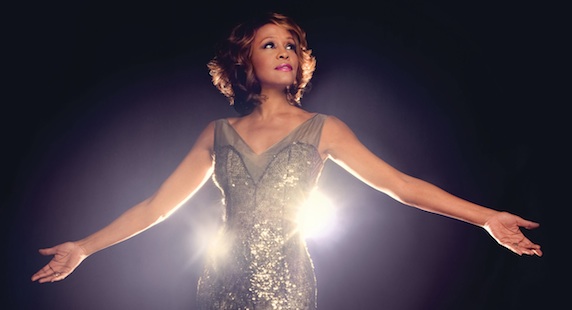
One of these days, someone will make a film about the life of Whitney Houston that opens not with sombre notes of foreboding, but the pure sugar-pop rush of the intro to "How Will I Know" or the key change that takes "I Wanna Dance with Somebody" to a whole new level - something of what drew us to the singer in the first place, rather than the sorry facts that have since entered the public domain. Perhaps it's too soon; perhaps we're all still in the mourning phase. Last year's Whitney: "Can I Be Me" - overseen by Nick Broomfield and Rudi Dolezal - was the independent inquiry into the singer's demise, arriving at the conclusion that the singer's mounting dependency issues and eventual suicide in 2012 were consequences of the power struggle that opened up between Houston's manager (and reputed lover) Robyn Crawford and her bad-boy ex Bobby Brown, alleged to have plied his spouse with drugs as a way of controlling her during his philandering. A year on, and we have Whitney, a rival, more authorised-seeming project, directed by documentary maven Kevin Macdonald (One Day in September, Touching the Void) as an Amazon Prime production, with input from those family members who snubbed the Broomfield film, and a title that aligns it with a movie memorial-monument like Asif Kapadia's Amy.

There is, and possibly could only ever be, some crossover in the films' sprawling patchworks of archival footage: the same clip of the singer's aunt Dionne Warwick performing "Walk on By" serves to establish the roots of this dynasty, while a baseline of good showbiz behaviour is again laid down using highlights of the teenage and twentysomething Whitney cutting such a modest and charming figure on the U.S. chatshow circuit. Yet the two films' fields of inquiry differ noticeably. Broomfield, as Broomfield does, went sniffing around the fringes of the singer's entourage, and suggested external forces might be to blame for her eventual demise; Macdonald brings us closer to Whitney's already somewhat troubled lineage, and the difficulties she faced within a rapidly changing entertainment industry. This is, in short, the inside story, setting its camera at one point to roam around Whitney's spooky, now mausoleum-like retreat in the snowy New Jersey woods, and encouraging a generally confessional tone that yields one major last-reel revelation/talking point.

Getting the family on side opens up new angles of investigation. From the singer's siblings, we learn just what it felt like to see your mother - singer Cissy Houston - driving away on a regular basis to fulfil some new showbiz obligation, and to find out that your father - Whitney's sometime manager John - had tapped the home telephone as a means of controlling the emotional fallout from his philandering. (Your inner pop psychologist makes a note: well, hello Bobby.) Robyn, in some ways the closest the Broomfield film got to a hero, clearly had a complicated relationship with this Godfearing clan: Whitney's brother (and sometime backing singer) Gary Garland-Houston spits out the words "opportunist" and "lesbian" with much the same barely veiled contempt. And this Whitney does seem a shade happier around Bobby than she was in the previous doc, though that may just be a consequence of Macdonald inviting Brown himself to say his very terse, very curt piece; even so, it still seems very odd, and most psychologically telling, that the singer should have hooked up with him at the same Soul Train awards where she was booed and he was feted to the rafters.

In this narrative, it's Houston's own brothers who supplied her with the drugs, as a way of maintaining that fifty-kilowatt smile over increasingly punishing tour and recording schedules. The family is thus placed within the context of the global entertainment business, and the viewer is invited to reconcile - as Whitney herself never could - the poised star on the talkshow sofa with the glum soul caught in behind-the-scenes camcorder footage: the haunting image Broomfield alighted upon, of the multi-millionaire singer sitting disconsolately at her make-up table, turns out not to have been the anomaly it was presented as. In recent decades, our screens have been awash with personalities who've had no qualms whatsoever about abandoning whatever they once stood for and reconfiguring themselves as that most saleable yet hollowest of concepts, the international brand; these exemplars of the 1% have enjoyed the near-unprecedented success that follows from persuading pliable consumers that selling out is no biggie, all part of the circus, if not the circus itself. (The Houstons present as the tragic mirror-image of the Kardashians, the clan who best calculated the rewards a shameless age offers those prepared to wash their dirty linen in public.)

Macdonald charts Houston's rise and fall within the wider selling of American culture: his Whitney emerges from niggling montages of MTV idents, Coke and McDonald's ads, Reagan announcing "America is working", the 24/7 razzle-dazzle that can conceal all manner of rottenness and human weakness besides. A generally sombre film gets its biggest (albeit most rueful) chuckle when former Arista Records CEO L.A. Reid claims that - despite all the newspaper reports, despite the ample physical evidence that his star employee was wasting away - he simply had no idea his million-dollar advances had been ending up in the pockets of drug dealers: as good an illustration as any of what we might call implausible deniability. (As is often the case these days, we're left wondering whether those we have elevated to positions of power are horribly calculating or just horrendously ignorant.) In places, Macdonald overreaches: odd flickers of protest footage in the montage seemingly want to link Whitney's decline to the Black Lives Matter movement, a topical yet tenuous connection weakened by the fact his subject enjoyed considerable privilege, and that her death was ultimately, for all the chains of causality these films have set out, self-inflicted.

Yet he's more engaged with the music than was Broomfield, in part because he can use it to bolster his argument. We spend much of these two hours watching to see exactly where it all started to go sour, or just where the singer began wrapping herself in protective quotation marks. A campy live performance of "I Will Always Love You" from 1994 signals encroaching boredom, a transition from fresh-faced star to semi-disinterested diva; thereafter, that heavenly voice becomes secondary to onstage stunts - macking with Brown, or ushering on the couple's toddling, clearly reticent offspring Bobbi Kristina to share the limelight for a number or two. (There may be no words for the pendant-tragedy of Whitney's daughter, a sadness born of sadness: Macdonald confines his to a single, stark information card before the closing credits.) By the time this once graceful performer is caught burping on camera while a sweaty, twitchy Bobby is denying he ever slept with Lil Kim, something's clearly gone awry: here is the kind of celebs-gone-wild video that would nowadays spread like chlamydia, and it's a testimony to Whitney's people that we never saw it at the time. (One way to escape the image that's been constructed for you is, of course, to trash it completely.)

As suggested by the subtitle of Broomfield's film - and a revealing clip here in which Houston, at the peak of her powers, complains to her ma about the carefully manufactured rise of choreographer-turned-singer Paula Abdul - this was a tragedy of authenticity above all else. What remains so jolting about Whitney's first TV appearance on The Merv Griffin Show in 1983 - a clip both docs seize upon, and which Macdonald very poignantly uses to bookend the rise and fall - is its utter, unimpeachable sincerity, that of a good Christian girl who believes absolutely in every word and every note of what she's belting out. Whitney is the story of how that sincerity came to be compromised and eroded, by celebrity, riches and the people around her. Strange to think that this toothsome, wholesome figure was undergoing the same agonies as Kurt Cobain - another of Broomfield's studies in accursed success - but we might now see both as canaries in the coalmine of an increasingly corporate business, grist to a mill, unable to survive the cultural shift that saw pop's carefree dressing-up game replaced by cruel mechanisms. What Macdonald's film shares with Kapadia's Amy is an underlying sense that, whether we consumed or enabled their subjects, we were in some way to blame for their demise; but revisiting this death in particular at our moment of endless snark, constructed realities and fake news, the simpler truth - and the greatest tragedy of all - may be that we no longer deserved her.

Whitney opens in cinemas nationwide from Friday.