Friday, 8 June 2018
Mad world: "The King of Hearts"
This week's reissue of King of Hearts returns to circulation a lost film from a generally underregarded director: Philippe de Broca, the Frenchman whose journeyman career was coming to an end just as I started covering film in the 1990s. (I retain fond memories of his crossdressing 1997 swashbuckler Le Bossu, with Marie Gillain.) This knockabout WW1-set comedy from 1966 has the kind of vivid plot points and images that some will doubtless half-remember from late-night TV screenings, though my feeling was that it works rather better as a series of such moments (a baby elephant waving the white flag with its trunk, a fresh-as-a-daisy Geneviève Bujold tightrope-walking into a lover's bedroom) than as an organised whole. For the record, this is the one in which a kilt-wearing Alan Bates plays a Scots Guardsman sent in to secure a small French village being wired up by the Germans to explode after their retreat; once his presence is twigged, he takes refuge in the local asylum (where he earns the titular title in a card game) and initiates the events that see the inmates replacing the fleeing villagers in the roles of barber, fire chief, bishop and brothel madam. The unifying gag - lapped up on the U.S. college circuit, upon the film's first release, by those students striving to rebuild the world amid the turbulence of the late Sixties - is that, despite appearances, polite society and mad, impolite society aren't so very far apart; the stance may still strike a chord with anyone looking on in 2018.
One reason for its disappearance over the past half-century might be how fundamentally unfashionable the film was even at the time: certainly, it's hard to imagine the Cahiers critics of 1966 putting something as whimsical-sentimental as this on their cover over, say, Made in U.S.A or La Religieuse. The framework is actually closer to our own Ealing: an absurd, pointedly satirical conceit, worked through with the assistance of faces who would have been as familiar to the French audiences of the time (Brasseur, Serrault, Brialy) as Stanley Holloway or Sid James were to the denizens of the ABC. As an early interaction between a plump German officer named Hamburger and his bratty, moustachioed adjutant Adolf establishes, however, it is very broad, with a lot of unfocused cavorting, and approximately ten new eccentrics being ushered on with each new scene. (It's a little bizarre to witness Bates, then shaping up as a serious, heavyweight thesp, succumbing to more or less the same wobbly-headed mugging George Clooney slips into whenever he does comedy.) Clearly, de Broca was not a filmmaker for whom less was more: I was never quite certain whether the film was suffering from a lack of controlling intelligence, or if that lack of control was precisely the point, and if you have to wonder, a film probably isn't doing its job. A matter of taste, then - there will be those who come away reasoning that French comedy is as obvious a contradiction in terms as Truffaut once pronounced British cinema - but if you were after a movie that stood as a definition of the term carnivalesque, well, have at it. I'll just be standing over here, that's all.
King of Hearts returns to selected cinemas from today, ahead of its DVD release on July 16.
Thursday, 7 June 2018
Wacky races: "All the Wild Horses"
The documentary All the Wild Horses makes a feature-length virtue of the kind of eyecatching leftfield event that would merit a five-minute segment on Trans World Sport back in the day. Its subject is the Mongol Derby, an epic seven-day horse race across the largest landlocked country on Earth, arranged by Bristolians, yet cleaving to the route of the first Mongolian postal system - a route designed by Genghis Khan, on what was presumably one of his less bellicose mornings. Riders aim to pass through forty stations en route, selecting a new mount at each from the wild horses corralled there, an element that adds extra chaos to what's already a pretty formidable challenge. The horse whispering involved in these handovers grants director Ivo Marloh time to sketch those personalities gathering for the 2012 competition. There is a plucky young American returning after a time penalty demoted her from first to second the previous year; a pair of Irish jockeys, who spend much of their screen time cursing furiously at their steeds; a black South African greeted by the locals as though he were the first black man ever to reach Mongolia; and a Norwegian whose aim is simply to survive the contest with all her limbs intact ("There's only been one amputation so far"). Enterprising cinema managers may wish to pause the projection after a half-hour to allow punters to place bets on who will cross the finish line first.
In the dust towards the rear is the underaddressed issue of social standing, and who gets to the start line. This Derby's entrants are a lofty mix of fund managers and company directors, drawn from a class who can afford the £400 deposit (before travel and accommodation costs); the British contingent sport accents plummier than Christopher Plummer sucking on a plum in Plumtree. Only the presence of dedicated vets and medical staff reassures us this event is more socially responsible than the Gumball Rally, last decade's overseas jolly of choice for the Henry-and-Henrietta set. That reservation aside, it makes for a hell of a spectacle, one that lends itself to the same big screen that supported myriad Westerns: a hell-for-leather charge across uneven, unpredictable, uncovered ground - with no course markers, straying riders frequently run into packs of camels and get bogged down in sand dunes - which has to be reined in by sundown every night, lest the competitors fall prey to wolves. (It makes the Grand National look like a pony trek.) Marloh does a bang-up job of charting exactly where the runners and riders are at all times - the film is a small model of captioning, which lends the action something of the very specific thriller charge of, say, episodes of 24 - and the physical and psychological toll this event exacts.
A judicious editorial strategy reveals how this race is increasingly a fraught balancing act, a matter of taking much-needed rest, recuperation and fluids at every station without giving whatever advantage you have away. Getting to station 40 upright, without succumbing to dehydration, sunstroke, fatigue or general delirium would be tough enough in itself; getting there before your rivals another thing entirely. (How those original posties managed it, in an era before fructose bars and energy drinks, is a mystery the film never troubles to investigate - though we must assume there was a reason their employer wasn't known as Genghis Khan't.) Essentially, all Marloh is describing here is a straight line - a brisk canter from point A to point B - yet he and his camera team go some distance above and beyond in staying one step ahead of the leading contenders, catching in passing such suffering, endurance, camaraderie and good sportsmanship, not to mention such sterling commitment from the concerned-looking medical professionals dotted en route, that his film can't fail to hook us on some level. I suspect most viewers won't leave All the Wild Horses racing to sign up for next year's event - but you'll almost certainly walk away understanding the compulsions, and admiring the fortitude, of those who do.
All the Wild Horses opens in selected cinemas from tomorrow.
Wednesday, 6 June 2018
On demand: "Nothing Like A Dame"
Nothing Like A Dame is documentary as coffee morning, with all the cordiality and conviviality that implies. A year or so back, the thoughtful filmmaker Roger Michell (Notting Hill, Changing Lanes) had the bright idea of asking to sit in on one of the occasional get-togethers Britain's pre-eminent thespian dames - Joan Plowright, Maggie Smith, Judi Dench and Eileen Atkins - have deep in the Sussex countryside, from where "they put the world to rights", as an opening title card frames it. Although there is a poignancy about seeing Plowright, now almost totally sightless, being guided to and from the patio - there are inevitable rain delays, forcing the ladies to come inside from the garden in which they first assemble - and indeed about Smith's mid-filming request for a nap, the film's subjects are survivors who've come more or less intact through fifty years of showbusiness, and have the tales to prove it.
Their conversation roams far and wide, as conversations between old friends tend to do: the ups and downs of a life in the spotlight, the ebbs and flows of their own careers, the vagaries of ageing, a sidebar on Kim Philby, for some reason, and some illuminating discussion of key roles from the repertoire. Atkins, an unconventional ingenue, says she was never asked to play Cleopatra, which she took as a personal slight; Plowright turned the part down, out of fear; Dench took it on, while wondering why on earth anyone would case a "menopausal dwarf" as this classical beauty; Smith, more of a wallflower back then than she clearly is nowadays, also accepted the part - but in a production touring the wilds of Canada, about as far from the National (and the apparently poisonous pen of theatre critic Caryl Brahms) as one might flee.
Here, then, is an illustrious ensemble of players who each bring different qualities and experiences to the table, and the film's pleasures are those of affectionate, civilised dialogue: we're being let in on cherished memories, polished quotations, valued wisdom, long-rehearsed in-jokes. Smith, deferring to Plowright's late husband, describes a style of acting as "pre-Laurence", suggesting that actors might lend their names (or perhaps see themselves lending their names) to particular ages of man, like precious metals or stones. Olivier - the lynchpin of 20th century British thesping, our granite-stiff Brando equivalent - inevitably casts a large shadow. Dench recalls being dragged as a schoolgirl to see Henry V as a matter of national pride, while Smith reveals Lord Larry questioned her vowels during the shooting of 1965's Othello, which now seems a bit rich coming from a man operating under several inches of blackface.
Mostly, however, Nothing Like A Dame is as much a gal-pal movie as, say, Girls Trip or this week's Bollywood release Veere Di Wedding. What's quietly touching here is the sketch Michell's camera makes of what therapyspeak compels us to describe as a support network: a quartet of women who've nudged and nurtured each other through an industry that has been known to turn performers - and actresses in particular - against themselves and one another. The passing filmmaker has only to sit them down, give them the odd smart prompt, and watch them go - but their interactions reveal facets of these personalities that movielovers may not have seen, or which have become eclipsed by the nature of the work: Smith is so switched-on and lemon-sharp (on Plowright's revelation she is both a Lady and a Dame: "You'll just have to grapple with it, Joan") that one has cause to rue anew the doddery roles tossed her way. (This may just be one of the limitations of cinema - and more specifically, post-Downton British cinema - when set against the vast complexity and variety of life.)
There's only one disagreement in these 77 minutes, over the matter of whether a young woman should be more or less susceptible to falling in love - not even these dames, with their combined age of 342 years, have completely figured that one out. It is surrounded, however, by a considerable wealth of anecdote to be seized upon and savoured as one might hot buttered scones, including an amusingly counterhistorical account of March 1968's anti-war sit-in in Trafalgar Square, organised by Vanessa Redgrave and Tariq Ali in solidarity with similar protests breaking out across Europe: after seeing Redgrave, playwright John Osborne and eventually her own husband Julian Glover carted off by police, Atkins decided to stand up, dust herself down and walk home by herself, stopping off only to pick up crumpets for that night's tea. In the two years of waffle, flannel, bile and blather that have followed the EU referendum result, I don't believe I've heard anything more hearteningly English than that.
Nothing Like A Dame is available on iPlayer, ahead of its DVD release on June 25.
Sunday, 3 June 2018
For what it's worth...
Top Ten Films at the UK Box Office
for the weekend of May 25-27, 2018:
1 (new) Solo: a Star Wars Story (12A) ***
2 (1) Deadpool 2 (15) **
3 (2) Avengers: Infinity War (12A) ***
4 (3) Sherlock Gnomes (U) **
5 (new) Show Dogs (PG) *
6 (4) I Feel Pretty (12A)
7 (6) Blade Runner: The Final Cut (15) ****
8 (11) On Chesil Beach (15)
9 (14) Peter Rabbit (PG)
10 (5) Life of the Party (12A)
(source: theguardian.com)
My top five:
1. 2001: a Space Odyssey
2. A Cambodian Spring
3. The Sound of Music
4. Raazi
5. Pandora's Box [above]
Top Ten DVD sales:
1 (1) The Greatest Showman (PG)
2 (new) Coco (PG) ***
3 (new) Three Billboards Outside Ebbing, Missouri (15) ***
4 (new) The Post (12) ***
5 (new) The Commuter (15)
6 (2) Jumanji: Welcome to the Jungle (12)
7 (new) Insidious: The Last Key (15)
8 (3) Pitch Perfect 3 (12)
9 (5) Star Wars: The Last Jedi (12) ***
10 (7) Deadpool (15) ***
(source: officialcharts.com)
My top five:
1. 120 Beats Per Minute
2. The Square
3. The Ice King
4. Journey's End
5. The Mercy
Top five films on terrestrial TV this week:
1. The Spectacular Now (Sunday, BBC2, 11.15pm)
2. Up in the Air (Sunday, BBC1, 11.35pm)
3. Shrek 2 (Saturday, BBC1, 6.05pm)
4. Rocky (Saturday, ITV1, 11.15pm)
5. The Cabin in the Woods (Saturday, five, 3.10am)
2. Up in the Air (Sunday, BBC1, 11.35pm)
3. Shrek 2 (Saturday, BBC1, 6.05pm)
4. Rocky (Saturday, ITV1, 11.15pm)
5. The Cabin in the Woods (Saturday, five, 3.10am)
Fightbacks: "The Rape of Recy Taylor"
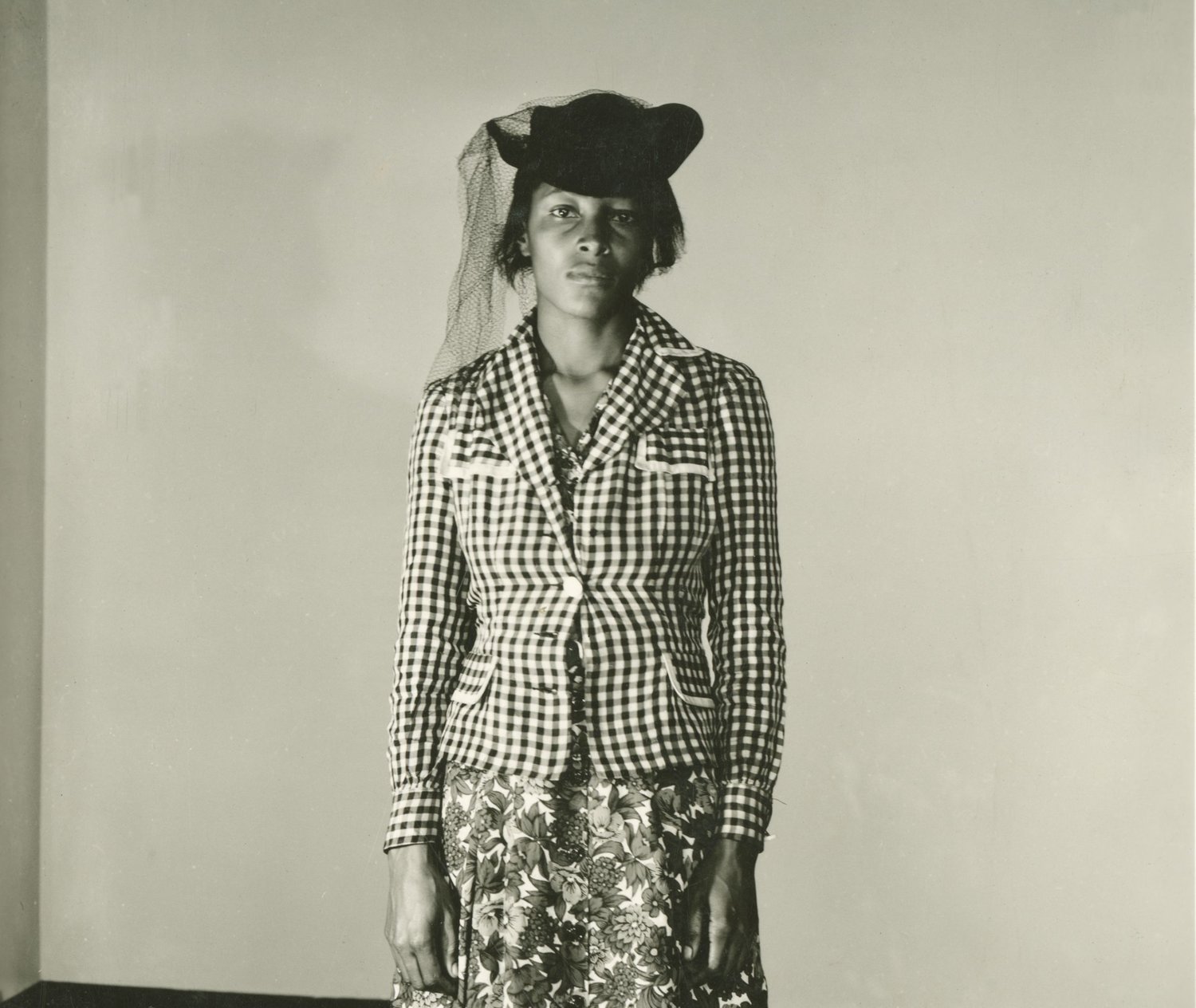
It is an uncompromising title - The Rape of Recy Taylor - and a generally dolorous episode: the story of a 24-year-old African-American wife and mother (given name pronounced "Reece-y") who, while returning home from church in rural Alabama one night in September 1944, was kidnapped, raped and mutilated by a carful of white boys who'd been circling the area. Nancy Buirski's documentary account leaves us in little doubt as to the stigma and shame that were attached to the victims of these crimes. Alma Daniels, one of the two Taylor siblings called upon to talk newcomers through these events, recalls seeing her father cradling a shotgun on the porch that night ("We thought they were going to kill her"), and the response of local law enforcement besides: Abbeville's jovial sheriff advised the family not to talk about Recy's ordeal once she was returned to them. What's unusual, and what makes Buirski's film a rather more buoying experience than it might at first seem, is that the family did talk - and to no less a figure than Rosa Parks, discovered here a decade before the Montgomery Bus Boycott, in her role as investigator for the NAACP.
As Crystal Feimster, the Yale professor whose research and insight helps shape the narrative, phrases it: "[Rosa] didn't come out of nowhere". There is a sense that via this one story, which might also be approached as what we now call an origin story, Buirski is attempting to connect some of the more disconsolate dots of black history, and thereby construct a continuum between America in 1944, the America of the Civil Rights era, and America as it is today. One set of connectors would be the Taylors themselves. This is a story of black bodies, and where those bodies fit - where they've been allowed to fit - into the landscape of a post-slavery South, a story about the way those bodies became a site of fascination for Caucasians who were doing everything they could to regulate African-American movements. Yet, more stirringly, it's also the story of how one young woman's trauma came to be weaponised - how Recy Taylor's battered and bruised body became a totem pole around which a community rallied.
Buirski very eloquently describes how Recy's cause came to be taken up by Parks and the NAACP and translated into damning headlines - first in the so-called black press, then in the mainstream media outlets of 1944 - which heaped pressure on the establishment to re-examine this case. After a commendably sensitive first act, the film gains a sudden momentum while describing this movement - partly, as you realise, because Buirski is describing the beginnings of a process by which black citizens realised (if they hadn't already) that they didn't have to take such oppression lying down, and that they had as great a right as anybody to give public voice to their concerns and complaints. There is an instructive dignity about Robert Corbitt, Recy's brother, and a man who, having carried this atrocity around with him all his life, now gets to put his lived experience, calmly and persuasively, on the record.
We're left in little doubt about what this family found themselves up against, whether that be the overwhelming whiteness of the grand juries assembled to hear this case, or the fact Recy's assailants hailed from well-connected families (and would go on to be hailed as war heroes). Buirski's intelligent use of clips from "race movies" - those early motion pictures geared towards chronicling the black experience - helps to illustrate that which cannot be shown or seen, or which might not be fathomable in the 21st century: as the author Danielle McGuire suggests, this may be a chapter in a bigger story about movement, and the ability of African-Americans to pass through public spaces unmolested. Yet the documentary retains a tight, careful focus: Buirski takes a small, sorry truth about the realities of life in the American South, relays the bare narrative bones with skill, and imbues the whole with the understated power of a light in the dark. Her film is both an index of what's been overcome, and a lesson in overcoming, whatever obstacles may remain between society and full social justice.
The Rape of Recy Taylor is now playing in selected cinemas.
The space between our ears: "Solo: A Star Wars Story"
Spare a thought this summer for Phil Lord and Christopher Miller. Three years ago, this duo of leftfield comic thinkers, flying high after the success of resuscitating 21 Jump Street and making The Lego Movie, were appointed to oversee the pick of the new Star Wars spin-offs: the Han Solo origin story. The talent Lord and Miller assembled to aid them in their quest - Woody Harrelson, Donald Glover, Phoebe Waller-Bridge - suggested we were in for a smart, self-reflexive romp, perhaps the Lucasfilm equivalent of Marvel's gleeful Thor: Ragnarok. And then something unfortunate happened. The directors' signature larky approach was deemed to be going against the grain of the approved screenplay by Lawrence Kasdan and son; soon after, they were relieved of their duties, although they retain token exec-producer credits on the released film. That film opened just after Lord and Miller saw The Last Man on Earth, the inventive sitcom they along with star Will Forte midwifed onto the Fox network, cancelled after four seasons, with nothing of the outrage that greeted similar news about the same network's Brooklyn Nine-Nine, and little hope of a Netflix reprieve. Entertainment has become a cruelly serious business; there's scant time or place for messing around when franchise megabucks are on the table.
The Solo that has finally landed among us - initiated by Lord and Miller, finished up by dependable insider Ron Howard - is some distance closer to Lucasfilm's own Ant-Man: it's basically fine, seeing off any production choppiness with a brisk, breezy professionalism, but still suffers from that cinematic form of string theory that insists there must be a livelier telling of the same story going on in a universe just one or two parsecs over. (Our New Blockbusters have their every choice trumpeted so widely and loudly that sometimes we leave the cinema with echoes of what might have been ringing in our ears.) For starters, you'd hope that the Lord/Miller Solo would have been a more colourful experience: Howard's first act, describing our Han (Alden Ehrenreich)'s progress from street thief to hired gun, is shot through such murk that slumming cinephiles might start to wonder whether they're accidentally walked into an unusually far-out Béla Tarr movie. (The cinematographer, surprisingly, is the usually reliable Bradford Young, who shot Arrival.) Matters get a shade brighter once we're out in the country - where our hero falls in with a band of mercenaries led by Harrelson's Beckett, and takes delivery of the Millennium Falcon - if never perhaps as funny as one might have hoped. Its wittiest idea is asking the acerbic Waller-Bridge (Fleabag) to voice a sarcastic droid - and even she gets blasted to bits after a run of good scenes, the latest example of the way these movies expend huge amounts of money converting hot talent into not much more than orbiting space junk.
I had reasonable fun with it, while understanding more or less why the tag of disappointment has been placed around the film's neck - and if you find it absurd that a film that made $100m in its opening weekend could ever be considered a disappointment, well, that's the business nowadays. (An aside: box-office albatross though Ehrenreich seems to be - Beautiful Creatures, Rules Don't Apply, now this - it really isn't his fault. The kid has the lines and the moves and, perhaps most crucial of all, some aspirational hair; he does a good a job as anybody could walking in those big shoes Harrison Ford left behind; and still doofi like Nick Jonas and Kevin Hart are bound to be bigger stars globally. Truly, nobody knows anything.) More likely Solo's so-so commercial performance speaks to a jadedness among spectators, or the saturation of the marketplace. 2018 has so far brought us Black Panther and Infinity War and Deadpool 2, and the calendar has only just reached June, which strikes me as a problem of abundance. Our event movies used to be actual events, anticipated months, if not years, in advance by an audience starved for such sensations; but nowadays they roll up with the humdrum regularity of your weekly Ocado delivery.
Howard at least gets this one to move, which makes it an improvement on 2016's drearily nerdy Rogue One, but the film has next to no narrative muscle tone: it's a rush, sometimes a gabble, of incident - trench warfare, a poker game, some kind of slave rebellion - which scarcely seems connected in any way. No hope, therefore, of attaining the dramatic weight the main Star Wars throughline has accumulated; instead, Solo passes smoothly and enjoyably over your synapses, destined to be forgotten even as you sit with it, like the distant details of the games you played with these action figures back when you were seven years old. Lord and Miller might have made a joke out of that randomness, that transience, but Howard goes at it with the earnestness of a father reading his children a bedtime story: it's why Solo stays just this side of likable, which you couldn't say of every recent franchise entry, but he can't tell us anything we didn't already know or couldn't already have guessed about this character. (One - admittedly reductive - reading of Solo: Disney spending $250m on the story of how a kid ended up behind the wheel of his first ride. Put it like that, and you can see why some consider it overkill.) Our bigger movies used to reach for the skies, the better to take us places beyond our wildest dreams; now they reach behind themselves, like couch potatoes grubbing behind the cushions for loose change, in search of images their audience has become too lazy to imagine for themselves.
Solo: A Star Wars Story is now playing in cinemas nationwide.
Saturday, 2 June 2018
Master and servant: "Filmworker"
The cult of Kubrick endures. We've already had the thoughts of producer Jan Harlan on working with Stanley, and an entire Jon Ronson documentary on the many boxes of notes the filmmaker left behind in his wake. Filmworker, a functional new documentary by Tony Zietta, comes at Kubrick from the perspective of an employee and potential apprentice. Its subject is Leon Vitali, a jobbing British character actor (and Look In cover star for this work on TV's The Fenn Street Gang) on whom Kubrick first called to play Lord Bullingdon in 1975's Barry Lyndon, then - upon seeing the actor's curiosity for the art and craft of making movies - recruited to serve as his personal assistant. It was Vitali who found Danny Lloyd to play Danny Torrance in The Shining, which would be enough in itself to secure a place in cinema legend; yet he also played a part in the mammoth logistical operation required to convert Beckton Gas Works into Vietnam for 1987's Full Metal Jacket, and became full-time Kubrick staff during the years of seclusion between that project and Eyes Wide Shut.
Early on in Filmworker, an effects shot from the newly reissued 2001 - the teenage Vitali's introduction to Stan the Man - is used to describe the process whereby the actor fell into this director's orbit, but much of what follows suggests Vitali was more like a moth drawn to an especially volatile flame. Kubrick's temperament and on-set behaviour has been so well-documented over the years that some of this testimony will hardly come as a surprise. The director could be brusque with actors, and drove at least one of his collaborators towards a full nervous breakdown; at one point, Vitali compares his former boss to Gordon Ramsay for his effusive effing-and-jeffing and tendency to get in his underlings' faces; and at every turn, this decidedly pre-Time's Up production defers to its subject's position that such behaviour could be tolerated or excused because the work it generated was across-the-board great.
Zierra finds yet more evidence of the meticulous attention to detail that made Kubrick's films what they were and are: his camera alights upon page after page of the notes the filmmaker passed down to Vitali and his fellow minions. Yet the Kubrick-Vitali story (bromance?) risks appearing as absurd to non-devotees as a Film Twitter rewrite of Fifty Shades of Grey: as framed here, it's ninety minutes of dominant Stanley punishing ever-pliable sub Leon with reams of instructions on colour grading and cleaning his personal screening room. Hardcore Kubrick auteurists will doubtless be sated, but Filmworker has a major limitation in Zierra's rough-hewn images - slapped together from a series of interviews with Vitali and other Kubrick associates - which pale further still when set alongside the crystalline precision of the clips from those films Vitali has spent the best part of four decades polishing up.
It is, in short, a work about great works of cinema that has the look of a common-or-garden DVD extra, basic in its combination of archive and talking heads, and prone to exactly the kind of disorganisation and fuzzy thinking Kubrick couldn't tolerate: what feels like the most revealing material here - on Vitali's relationship with his cultured yet distant father - is tucked away in the final half-hour, where it's afforded roughly the same editorial weight as the poor quality DVDs issued by Warner Bros. in the immediate wake of the master's passing. By then, Filmworker has provided, in its own, haphazard fashion, an effective reflection of the sometimes fraught push-me-pull-you of collective creation. You'll likely come away in little doubt that Kubrick was a nightmare to work for, and with your own thoughts on whether or not those nightmares were worth it. ("So, it's a happy ending?," Zierra can be heard asking, somewhat optimistically, late on.) You may, however, also be left wondering whether a documentary on such a towering, complex figure needed a tyrant of Kubrick's standing, or at least a firmer critical hand on the tiller, to bring Vitali's anecdotes into the sharper focus Kubrick deserves - and would surely have demanded.
Filmworker is now showing in selected cinemas, and is available to stream through Curzon Home Cinema.
Subscribe to:
Posts (Atom)