Saturday, 29 October 2016

"Let's Be Evil" (Guardian 28/10/16)


Let’s Be Evil **
Dir: Martin Owen. With: Kara Tointon, Elizabeth Morris, Elliot James Langridge, Isabelle Allen. 82 mins. Cert: 15
 
Prolific Brit producer Jonathan Willis here attempts a teen-oriented tweak of the science-gone-wrong theme of his 2013 success The Machine, describing the doomed Posterity Project, a program that sequesters America’s best and brightest youngsters underground. While their twentysomething handlers uncover the project’s deadlier glitches, director Martin Owen applies plentiful visual gloss: a first-person shooting style necessitates intricate, Peep Show-like eyeline-matching, and the effects work is unusually sophisticated. Yet there’s no dressing up some desperately ordinary stalk-and-slashing, and the budget undermines the worldbuilding: ex-EastEnder Kara Tointon heads a roster of phony US accents, and while “Kids in America” gets repeat plays, surely nobody here ventured much beyond Amersham.

Let's Be Evil is now showing in selected cinemas.

Thursday, 27 October 2016

Delayed delivery: "Bridget Jones's Baby"


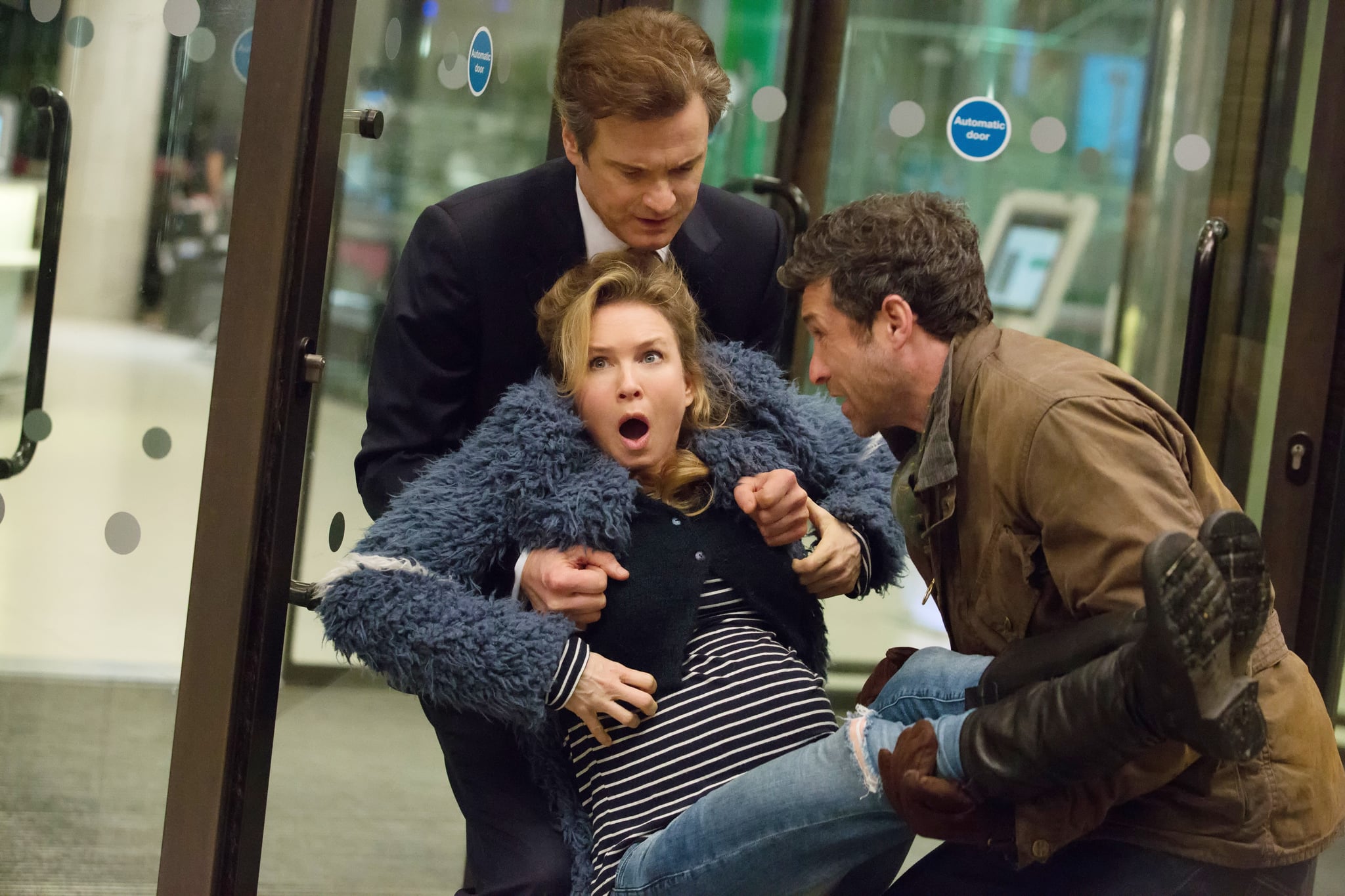
I bailed on this franchise a month or so before those planes struck the Twin Towers, so I'll keep this relatively brief. I can only surmise that the huge popular success of Bridget Jones's Baby, and its generous critical reception, has something to do with a residual fondness for that stable Working Title world full of nice, white, heteronormative types whose aim in life is to land well-paying jobs in the media before settling down with someone of a similar shade. (Ladies and gentlemen, here is the one sector of the "liberal elite" that doesn't find itself demonised in 2016.) As the title flags, the aspiration third time around extends to procreation of a sort. The central question here is whether Bridget can see herself bringing new life into the world with one of two suitors: a pearly toothed dotcom billionaire (Patrick Dempsey, a touch cutprice for the role), whom Bridget meets while glamping at a music festival headlined by Ed Sheeran and a David Dickinson lookalike (they couldn't even get Dickinson); and Colin Firth's Mark Darcy, the human-rights lawyer who's grown only more constipated with age, such that he now resembles a distant relative of Charlie Higson's Ralph in those bucolic Fast Show sketches. (Dude's so uptight it's a miracle he's capable of ejaculating anything other than steam; our gal's obsession with this tombstone-straight dullard is a mystery another fifty Bridget Jones movies couldn't explain.)

As for Bridget herself, she continues to be rubbish at everything - dithery in love, terrible at her job, barely able to stand upright at the best of times; in her now-digitised diary, extracts of which are flashed up on screen at regular intervals, she's cretinously prone to substituting the number zero for the letter o, which left me even more worried for the child - making this one of the few romantic comedy franchises to be aspirational about everything but its heroine, and yet we're still meant to be nice around her, I think, and cheer her accidental successes. (Is this that feminism everybody's talking about nowadays?) Somewhere deep down in the pallid DNA of this latest entry, I could detect stirrings of a regional variant of Trainspotting's coruscating "It's Shite Being Scottish" monologue - an entire film cursing the crapness of being English (the awful music and awkward dancing; the inherited sexual cringing; the lousily limited choices in work and love), but all of the above elements have been reframed as essential parts of a raucous girlie-night-out celebration: what Bridget Jones's Baby has to say for itself, ultimately, is that It's Great Being Shite and English.

Director Sharon Maguire chops up an already patchwork script, multiply rewritten over several years (hence, presumably, Dickinson), and flies its "highlights" into the audience's gaping maws like a mother playing aeroplane. Not one but three Sheeran songs! Jokes about - or, at least, references to - The X Factor and hashtags! Some random men getting their bums out! C'mon, you know you like this! I bet you even like the scene at the "London Media Show" where Bridget mangles the polysyllabic name of the one non-Caucasian performer (the terrific stand-up Nick Mohammed, who deserves better than this) to have been granted a speaking part, don't you? Don't you? Look: "Gangnam Style"! We are presumably hellbent as a society on getting to experience Bridget Jones's Hot Flush and then Bridget Jones at the Best Exotic Marigold Hotel, and I wouldn't doubt for a second there would be an audience for those films, but that audience should be very careful what they wish for: once Madame May finally gets round to invoking Article 50, every British movie will be bound by law - good old English law, drawn up by sexy English lawmen like Mark "The Spark" Darcy - to look and sound exactly like this.

Bridget Jones's Baby is now playing in cinemas nationwide.

Monday, 24 October 2016

I remember Notts: "NG83: When We Were B-Boys"


If Central Television had been entrusted with an episode of The Hip Hop Years - doubtless hosted by Grandmaster Tony Francis - it might have turned out something like NG83: When We Were B-Boys. The NG of the title is the Nottingham postcode; '83 the year in which the breakdancing craze first took hold among rival crews on the Midlands city's streets, as it did elsewhere. If the interviewees in this engaging indie documentary - a joint effort by Claude Knight, Luke Scott and Sam Derby-Cooper - are to be believed, the scene at Rock City's weekly Saturday Afternoon Jam was not a million miles away from the more strenuous and frenetic activity dramatised in West Side Story.

The filmmakers catch up with this scene's main players, now in their forties and beyond, several still clinging to their original boomboxes. There's Shane Meadows soundalike Karl, presently a postman who has to get up at a time he once used to come in at; there's Barry, a.k.a. Audiotron, a treasure trove of information located bodypopping in a bedroom overloaded with collectibles, from era-specific mixtapes to the casings of household burglar alarms; and there's Tommy, whom we learn has fathered 14 kids, and who doesn't so much rock or drop the mic as talk it into a state of exhaustion. Representing the erstwhile homegirls is Annie, a.k.a. "Lady McD", whose story is underpinned not by the nerdy facts the guys proffer, rather some altogether painful emotions.

In the main, though, the tone is fond, relaxed: Knight, Scott and Derby-Cooper believe, not unmistakenly, that you can learn as much about someone from how they make cups of tea for the camera crew - or from the very fact they make cups of tea for the camera crew - as from any subsequent sitdown and chinwag. These are characters you'd happily spend a couple of hours down the pub listening to - which may be one reason the film keeps orbiting certain Notts hostelries - and they keep producing amusing, diverting anecdotes between them: a fraught excursion to give a breakdancing demonstration in Beirut, a domestic dispute over a patch of lino (essential streetdancing kit) belonging to an ebullient soul known to everyone as "Dancing Danny".

A little more structure or focus on the competitive nature of British breakdancing arguably wouldn't have gone amiss, but the filmmakers have unearthed a wealth of VHS footage to plug some of the gaps. These now grainy, wobbly images not only commemorate specific locks and pops - a competition-winning one-handed headspin inspires awestruck reminiscence - but a particular moment in UK street culture, both faraway and so close: a point where was a British Home Stores (bearing its full name) in every shopping precinct, where our youth traded in packs of Bensons and Classic bars rather than bitcoins and snark, and - just perhaps - where there existed a community spirit that has subsequently come close to extinction.

The cautionary second half considers how these once highly flexible individuals have come to negotiate the years since, and while the Karls of this scene have committed to family and full-time employment (with a little DJing on the side), others have clearly struggled to fill their Saturday afternoons: petty crime, heavy drinking and chronic loneliness begin to enter the frame. B-Boyism suddenly starts to resemble as much a paradise lost as those Northern Soul nights held just up the road at the Wigan Casino, for what ultimately reunites the film's subjects is a tragedy - albeit one reframed as a celebration upon the selection of the right, evocative tune. In the end, we're left to conclude this was just a passing scene - which is why West Side Story became a classic, and Breakin' II: Electric Boogaloo never did - but it's been documented with affection and sensitivity here: the same affection and sensitivity a Barry or Tommy would surely reserve for a white label 12", or the right pair of trainers.

NG83: When We Were the B-Boys opens in selected cinemas from Friday.

Friday, 21 October 2016

For what it's worth...


Top Ten Films at the UK Box Office   
for the weekend of October 14-16, 2016:
 
  
1 (1) The Girl on the Train (15) *
2 (new) Inferno (12A) **
3 (new) Storks (U)
4 (new) Miss Saigon: 25th Anniversary Performance (15)
5 (2) Bridget Jones's Baby (15) *
6 (3) Miss Peregrine's Home for Peculiar Children (12A)
7 (4) Deepwater Horizon (15)
8 (5) The Magnificent Seven (12A) **
9 (6) Finding Dory (U) ***
10 (new) American Honey (15) *** 

(source: theguardian.com)

My top five:   
1. I, Daniel Blake [above]
2. Queen of Katwe
3. In Pursuit of Silence  
4. Tharlo
5. Under the Shadow 

 
Top Ten DVD rentals:  
   
1 (1) Captain America: Civil War (12)
2 (3) The Jungle Book (PG) **
3 (4) The Nice Guys (15) ****
4 (5) Alice Through the Looking Glass (PG)
5 (2) Mother's Day (12) 
6 (7) Batman vs. Superman: Dawn of Justice (12)
7 (6) The Guv'nor (15)
8 (new) The Take (15)
9 (10) The Huntsman: Winter's War (12)
10 (new) Kung Fu Panda 3 (PG) ***

(source: lovefilm.com)
                                   
My top five:  


Top five films on terrestrial TV this week:   
1. Downfall (Sunday, BBC2, 11.20pm)
2. Rogue (Saturday, BBC1, 12.20am)
3. Notorious (Saturday, BBC2, 2pm)
4. The Great Beauty (Saturday, C4, 1.10am)
5. Renoir (Saturday, BBC2, 2.05am)

"Ouija: Origin of Evil" (Guardian 21/10/16)


Ouija: Origin of Evil ***
Dir: Mike Flanagan. With: Elizabeth Reaser, Henry Thomas, Annalise Basso, Lulu Wilson. 99 mins. Cert: 15

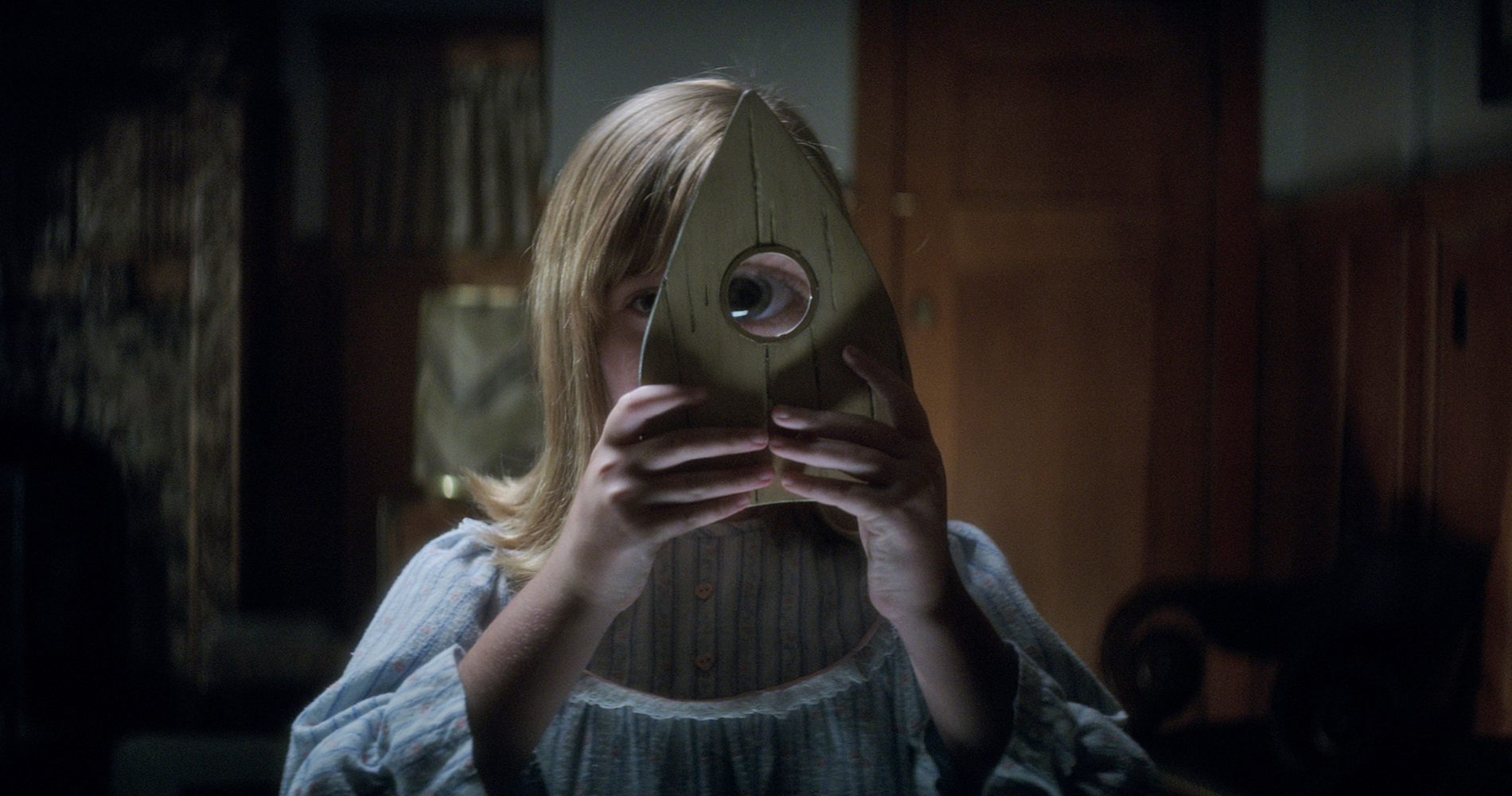
2014’s Ouija, a rapidly forgotten exercise in crash-bang-wallop horror, was chiefly of note as a business proposition, born of that deal struck between Michael Bay’s Platinum Dunes outfit and boardgame nabobs Hasbro to convert the latter’s products into movies. Still, it was cheap enough to turn a profit on wide release – $103m on a $5m budget – and so, this Halloween, we’re offered a prequel that claims to fill in some of the devil board’s backstory. “The spirit world is unpredictable,” its phoney occultist heroine Madame Zander (Elizabeth Reaser) informs us. The movie business, as we know very well, is not.

For all that, Origin of Evil – directed by Mike Flanagan, the emergent talent behind 2011’s unsettling Absentia – does just enough to climb over the low bar of expectation. Granted, there’s nothing new about its premise – fake psychic learns a lesson about messing with the dark side – and Flanagan has to resort to a 1960s milieu, all kinky boots and intermittent “groovy”s, to distinguish his film from the 1970s-set Conjuring series. Single mom Zander seizes upon this new toy to jazz up her act; what she doesn’t expect is for her youngest Doris (Lulu Wilson) to become an altogether amenable host for passing spectres.

Flanagan’s been sent on the movieland equivalent of a coffee run here, so you can forgive him for amusing himself as he goes: dusting off the old Universal logo, reviving those cigarette burns used to alert projectionists to reel changes. If nothing quite matches Ti West’s retro exercises (House of the Dead, The Innkeepers), at least Flanagan’s trying. Yes, he works his soundtrack over, but with co-writer Jeff Howard he sets so much weird narrative running – mom’s thwarted relationship with priest Henry Thomas, unresolved paternity issues, Doris’s overnight grasp of Polish – that he doesn’t have to rely on loud noises to grab the attention.

Arguably he’s caught trying too hard. The final movement doesn’t tie matters up so much as spiral further outwards into schlocky incoherence. Still, that’s one way of upending formula: this time, the Ouija itself seems a minor player, less obligatory product-placement than a springboard for ideas, both wayward and workable. It’s still no scarier than any other branded content, and perhaps only the most lukewarm slumber party would truly need it. Yet if you were to ask whether Origin of Evil offers a better quality of timewaster than its predecessor, my finger would hover inexorably over the YES option.

Ouija: Origin of Evil opens in cinemas nationwide today.

"Keeping Up with the Joneses" (Guardian 21/10/16)


Keeping Up with the Joneses **
Dir: Greg Mottola. With: Gal Gadot, Isla Fisher, Zach Galifianakis, Jon Hamm. 105 mins. Cert: 12A
 
The umpteenth runout for the old suburban-squares-versus-sexy-superspies plot unfolds in predictable fashion. Isla Fisher and a newly svelte Zach Galifianakis commence curtain-twitching with the arrival of glam neighbours Jon Hamm and Gal Gadot; covers are blown in modestly budgeted action setpieces; everyone exits feeling shortchanged in the laughter department. The shopworn conceit begs lampooning, yet director Greg Mottola – seeking a return to the studios’ better graces seven years on from Adventureland – plays matters blandly straight. The leads huff and puff accordingly, but Michael LeSieur’s dull-edged script squanders their timing, more concerned with reducing the actresses to their lingerie than with raising anything other than the very occasional snicker. 

Keeping Up with the Joneses opens in cinemas nationwide today.

Wednesday, 19 October 2016

From the archive: "Jack Reacher"


Having been cast out of the profitable summer season after 2010’s costly flop Knight and Day, Tom Cruise has since been busy imposing himself upon the Boxing Day slot with films that bear the credit “Tom Cruise in a Tom Cruise production”. Last year’s Mission Impossible: Ghost Protocol just passed muster, but 26/12/12 brings us the trickier proposition of Jack Reacher, based on the Lee Child bestseller One Shot. Cruise may very well have presented the project to Paramount as their opportunity to match Fox’s inexplicably successful Taken franchise – and you can’t help but think that series’ towering lynchpin Liam Neeson would be more immediately convincing as Child’s six-foot-five ex-Special Forces op than the still-boyish, smirking, unavoidably tiny Cruiser.

The change of title necessitates a full twenty minutes of exposition, in response to the early question “who is Jack Reacher?” Some familiar answers come in. He’s a maverick, by all accounts, who doesn’t trust authority and simply refuses to play by the rules; he’s apparently built like the proverbial outhouse, and harder than Sean Bean on steroids wielding a titanium mace. Then on walks Top Gun, sniffing around a sniper attack in downtown Pittsburgh that has left five unrelated people dead, and rather undermining the build-up.

Christopher McQuarrie, making a comeback of sorts sixteen years on from writing The Usual Suspects and twelve years after directing The Way of the Gun, makes something queasily compelling out of the initial attack, viewed through the sniper’s crosshairs, before cutting around the death of a mother who dies shielding her child, either to secure the 12A rating or appease viewer sensibilities in the wake of Sandy Hook. Still, this is very much a Tom Cruise production, and the level of control being exercised is often unintentionally hilarious. 

Reacher’s introduction involves a lady emerging from his rumpled bedsheets and redressing herself – that’s right, folks: he’s a lover and a fighter – while every other scene features a bevy of young women batting their eyelashes at him, from casual bar pick-ups to Rosamund Pike, reduced to wide-eyed breathiness as the D.A.’s daughter-turned-damsel-in-distress. One of her encounters with Cruise showcases the most gratuitous display of male toplessness outside of a Twilight movie – though this show of star muscle gets objectionable whenever it asks the girls to stand round cooing at Reacher beating another of his foes to a pulp.

Just when you think the movie can’t get any campier, out of the shadows steps a one-eyed Werner Herzog as chief villain The Zec, who apparently chewed off three of his own fingers in a Siberian prison camp to avoid losing them to gangrene. A weirdly passive antagonist, sitting around in the background while his minions get on with the real dirty work, Herzog has no business being here save to make the cinephiles slumming it in the back rows of the Odeon chuckle; still, maybe the paycheque will help fund his next expedition, and future Jack Reacher sequels will see Cruise facing off against Bela Tarr or Michael Haneke.

Like so much about the Cruise career, everything is played insistently straight, yet the star’s steely determination to reassert his own stardom, his own overpowering masculinity, leaves us with an invulnerable hero who’s just impossible to root for, and whose relentless, sub-Arnie wisecracks get very tiresome very quickly. It doesn’t help that all the eye-gouging, woman-beating and incidental racism makes it an uncomfortable 12A, at best – even before you factor in the gun fetish that leaves the film looking dodgy indeed in the light of recent events. Maybe the Boxing Day crowd will indulge Tom one more time – but I’d seen enough of Jack Reacher long before the utterly generic final shootout, which isn’t a terribly good sign for a putative franchise-builder. In Cruise’s iron fist, Child’s filling pulp has been reduced only further: to over-extended nonsense.

(December 2012)

Jack Reacher is available on DVD through Paramount Home Entertainment; a sequel, Jack Reacher: Never Go Back, opens in cinemas nationwide on Friday.