Friday, 12 December 2025

For your consideration: my Critics' Circle votes 2025


Director of the Year
1. Alain Guiraudie, Misericordia
2. Paul Thomas Anderson, One Battle After Another
3. Neeraj Ghaywan, Homebound

(Honourable mentions: Ryan Coogler, Sinners; Dominic Arun, Lokah Chapter 1: Chandra; Steven Soderbergh, Black Bag.)


Screenwriter of the Year
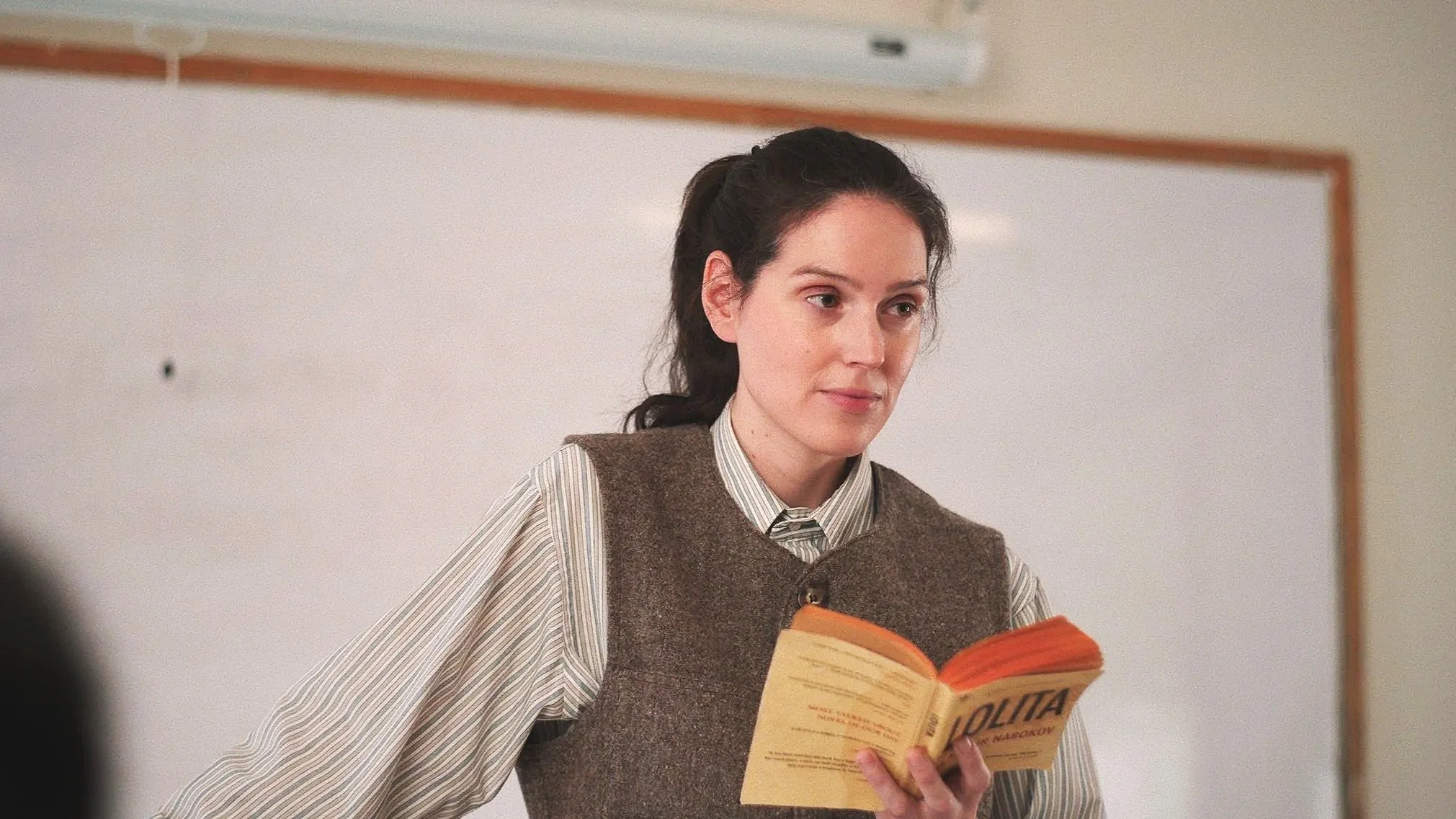
1. Eva Victor, Sorry, Baby
2. Nia DaCosta, Hedda
3. Derek Cianfrance and Kirt Gunn, Roofman

(Honourable mentions: David Koepp, Black Bag; Tom Basden and Tim Key, The Ballad of Wallis Island; Zach Cregger, Weapons.)


Actress of the Year
1. Jennifer Lawrence, Die My Love
2. Eva Victor, Sorry, Baby
3. Danielle Deadwyler, 40 Acres and The Woman in the Yard

(Honourable mentions: Emily Bett Rickards, Queen of the Ring; Julia Garner, Weapons; Cate Blanchett, Black Bag; Sally Hawkins, Bring Her Back.)


Actor of the Year
1. Joaquin Phoenix, Eddington
2. Channing Tatum, Roofman
3. Mohanlal, Thudarum

(Honourable mentions: Tim Robinson, Friendship; Daniel Day-Lewis, Anemone; Kentucker Audley, Christmas, AgainMiles Teller, Eternity; Tovino Thomas, Narivetta; Michael B. Jordan, Sinners.)


Supporting Actress of the Year
1. Kirsten Dunst, Roofman
2. Shirley Henderson, I Swear
3. Carey Mulligan, The Ballad of Wallis Island

(Honourable mention: Naomi Ackie, Sorry, Baby; Nina Hoss, Hedda.)


Supporting Actor of the Year
2. Russell Crowe, Nuremberg
3. Josh Lucas, Queen of the Ring

(Honourable mentions: Jacob Elordi, Frankenstein and On Swift Horses; Prakash Varma, Thudarum; Benicio del Toro, One Battle After Another; Sean Bean, Anemone; Tom Burke, Black Bag; David Jonsson, The Long Walk; Lucas Hedges, Sorry, Baby; Delroy Lindo, Sinners.)


Breakthrough Performance of the Year
1. Eva Victor, Sorry, Baby
2. Robert Aramayo, I Swear
3. Miles Caton, Sinners

(Honourable mentions: Chase Infiniti, One Battle After Another; Kalyani Priyadarshan, Lokah Chapter 1: Chandra; Posy Sterling, Lollipop; Aneet Padda and Ahaan Panday, Saiyaara.)


Breakthrough British/Irish Filmmaker
1. Tom Basden and Tim Key, writers, The Ballad of Wallis Island
2. Sophie Compton, co-director, Holloway
3. Victoria Mapplebeck, director, Motherboard


British/Irish Performer of the Year
1. Robert Aramayo, I Swear
2. Frank Dillane, Urchin
3. James McArdle, Four Mothers

(Honourable mentions: Posy Sterling, Lollipop; Sally Hawkins, Bring Her Back; Michael Fassbender, Black Bag.)


Young British/Irish Performer of the Year
1. Scott Ellis Watson, I Swear
2. Alfie Williams, 28 Years Later
3. Tegan-Mia Stanley Rhoads, Lollipop


The nominations for the 46th London Critics' Circle Film Awards will be announced this Monday at 11am on the LFCC YouTube channel, with the awards to follow on February 1, 2026; my top 20 films of 2025 list will run on this site at the end of the month.

Thursday, 11 December 2025

Master and servant: "Pillion"


A surprise arthouse hit to conclude a year otherwise lacking in them, Pillion turns out to be something like Alan Bennett's Cruising. Writer-director Harry Lighton has done to Adam Mars-Jones's novel Box Hill what his surname suggests, trimming its fingernails, softening some of the harsher humiliations, and coming up with a cosyish Britcom centred on an unlikely-to-utterly mismatched couple. Unworldly gay Colin (Harry Melling) can't believe his luck one Christmas after swaggering biker Ray (Alexander Skarsgård) gives him instructions to meet him round the back of the Bromley Primark. What follows, however, is less coming together than outright collision. On one side, the limit-pushing subcultures (biker, sub-dom) within which Colin prostrates himself before big man Ray, desperate for somewhere to belong; on the other, the English suburbia in which Colin was raised, settled, staid and sedate, conventional if not conservative in its thinking. Ray - tall, moviestar-chiselled, rarely seen without the leathers that lend his shoulders only further heft - strides into the latter like Iron Man walking into a prime-time BBC sitcom: he can only ever turn heads. But he's fundamentally a bit of an arsehole, even for a dom. In the pub where the two first meet, he obliges Colin to pay for his crisps, like a tuckshop bully. Invited round to Ray's flat, Colin is both surprised and oddly thrilled to learn he'll be cooking dinner himself; he's even more thrilled after his host invites him to stay the night, albeit curled up on a rug at the foot of Ray's bed. It is, to say the least, a curious situation for a young man to find himself in, yet the charm of Lighton's film resides in its gentle assurance that people get themselves in curious situations all the time. Colin and Ray's arrangement, such as it is, is no more curious than Colin's day job (traffic warden) or chosen hobby (barbershop quartet); some people just invite the world's onlookers to scream wanker! at them. Certain folks may even get a kick out of it.

That we don't harass Colin so is down to the way Pillion has been couched, carefully yet skilfully, as a leftfield love story, a gaining of wisdom that doubles as bruising suburban fairytale: Colin as the wide-eyed princess to Ray's alluring yet forbidding prince. There's not much to Lighton's film beyond two people striving to figure something out - or, more specifically, one person trying to figure the other out. (It may well become to queer audiences what 2002's Secretary and, to a lesser degree, this January's Babygirl were for the straights: a popcorn-friendly way of broaching all that powerplay business, at once salty and sweet.) But sometimes that's all a movie needs, particularly when you have the right actors in place. The funny-faced Melling proves exceptionally game, twisting himself into ever more uncomfortable positions, physical and otherwise, and in most of them the butt of the joke. By contrast, Skarsgård - 200 pounds of impermeable Nordic granite - is playing some version of his public image, an abstraction or ideal. We learn next to nothing about Ray - even the Karl Ove Knausgård tome we see him reading speaks more to actor than character - rendering him what he is to Colin, an altogether obscure object of desire. There's nice work, too, from Lesley Sharp and Douglas Hodge as Col's ma and pa, both a model of parental tolerance and reassurance for matinee viewers that this is respectable homegrown drama rather than any of that Fassbinder/Frank Ripploh filth. Lighton has a measure of mischievous fun with this particulars of this subculture: a sylvan awayday takes in a bare-assed man in a puppy mask, Jake Shears from the Scissor Sisters and four more invitees bent double over the trestle tables. (Today's the day the teddybears have their picnic.) Yet this is one of those Britfilms where the relative smallness of everything works in its favour: it allows Lighton to keep a tight focus on two actors who've absolutely understood what this material is about. There are still, apparently, involving love stories for the cinema to tell; there are still, clearly, original ways for a director to film desire, longing and sex. Let's just say Pillion is the 2025 release on which those newfangled intimacy co-ordinators would have been busiest and most needed.

Pillion is now playing in selected cinemas.

Tuesday, 9 December 2025

Fairytale of New York: "Christmas, Again"


Santa hats off to any distributor attempting to vary our festive moviegoing diet. (I mean, seriously: there are people paying to inflict
Elf on their kids again?) Last year, the tenacious folks at Bulldog gifted us the well-reviewed indie Christmas Eve at Miller's Point; this Christmas, they've dug further and indier still. The sole feature credit to date for writer-director Charles Poekel, Christmas, Again drew fond notices on its original US release back in 2014, yet went unscreened on this side of the Atlantic for understandable reasons: it boasts no especially prominent names or faces (unless you happen to be well-versed in the oeuvre of Kentucker Audley, one of 21st century indie cinema's true believers), a largely observational, low-octane dramatic approach, and only scrappy, stop-start bursts of action. Its indieness is most apparent in the sympathy Poekel demonstrates towards the footsoldiers of the festive season: those working in retail as the big day approaches. It would be reductive - not to mention tonally imprecise - to label this Clerks with fairylights, but that's not too far off the mark situationally. A prologue introduces the three-person staff of a trailer selling Christmas trees on a humdrum Brooklyn thoroughfare; they hang out, wind one another up, try to catch forty winks, make some rudimentary scratch. Much like the needle-shedding trees remaining at this late stage in proceedings, Audley's Noel (yes, the name does come up) appears more than faintly left behind: his friends live elsewhere, his loved ones have moved on, and any party plans have had to be postponed so as to take up the night shift - the night shift - on this particular stall. "Christmas sucks," shrugs one passer-by, which is not a sentiment you're going to hear during your fifteenth rewatch of The Polar Express. Funny thing is: like a baleful short story, it almost all feels true. Twenty minutes in, I conceded the possibility Christmas, Again may well have been shot around an actual street-corner stand, and that filming would have been stopped whenever paying customers interrupted Poekel's actors.

The sighing resignation of that titular again stands as a rebuke to the condescending (not to mention inaccurate) actually in Love Actually: Poekel's romantic subplot - concerning a mystery lady (Hannah Gross, the Julia Stiles lookalike who later turned up in Netflix's Mindhunter) who keeps returning to this particular spot on the planet - wouldn't be unrecognisable to Richard Curtis, though it's also hardly the stuff of Hallmark holiday movies. At one point Noel finds her blitzed on a park bench with one shoe missing and gum in her hair; for all the mistletoe scattered around the frame, the pair's interactions seem as likely to peter out as they are to blossom into something meaningful. For stretches, the pursuit of love is secondary to the graft involved in actually selling Christmas trees: that again is also an acknowledgement that there are those for whom this period is much like any other, to be worked through or otherwise endured. Poekel makes evocative use of his sparsely populated locations - we quickly grasp everyone's home for the holidays - and, as shot by Sean Price Williams, the tinsel and fairylights keep it from desolation and despair. Noel's befuddled interactions instead seem to take place in some surreal, drolly funny limbo, where you might at any moment be confronted by someone who wants the Obamas' Christmas tree (how very 2014), or a playboy-slash-operator-type who wants a stout Douglas fir to attract the ladies, or a philosophical Slav who comes on like a dimestore Jonas Mekas. At the centre of all this is a quietly lovely performance from Audley, a plaidshirted, hangdog David Arquette, whose zonked Noel is never quite on the same schedule as the perky joyseekers congregating around him, a man appointed king of a jungle he longs to escape. The film starts to sneak up on you between the point where you first get past the absence of conventional Christmas-movie wassailing and that where some (marginally) grander plan comes together for the put-upon protagonist; stay the full course, and your reward is a gorgeous, modulated coda. Worthy of revival and investigation - and far better for the spirit than sitting through Home Alone again.

Christmas, Again opens in selected cinemas from Friday.

Friday, 5 December 2025

For what it's worth...


UK box office Top Ten (for the weekend of November 28-30, 2025):

1 (1) Wicked: For Good (PG)
2 (new) Zootropolis 2 (PG)
3 (2) Now You See Me: Now You Don't (12A)
4 (new) Westlife - Royal Albert Hall (PG)
5 (new) Pillion (18) ****
6 (3) The Running Man (15) **
7 (4) Nuremberg (15) ***
8 (new) The Fifth Step - NT Live 2025 (15)
9 (5Predator: Badlands (12A) **
10 (8) A Paw Patrol Christmas (U)

(source: BFI)

My top five:
5. L'Atalante

  
DVD/Blu-Ray/Download top ten: 

1 (1) Wicked: Part 1 (PG) **
2 (3) The Grinch (U)
3 (4) Jurassic World: Rebirth (12) **
4 (11) The Naked Gun (15) ***
6 (5) F1 The Movie (12) ***
7 (9) Superman (12)
8 (8) The Roses (15)
9 (2) Nobody 2 (15)


My top five: 
1. The Curse of Frankenstein


Top five films on terrestrial TV this week:
1. Memoria (Wednesday, Channel 4, 2.05am)
2. Psycho (Monday, BBC Two, 11pm)
3. Funny Face (Wednesday, BBC Two, 1.45pm)
4. BlacKkKlansman (Tuesday, BBC One, 11.40pm)
5. King Richard (Saturday, BBC Two, 11.30pm)

Divas and divebombs: "Sunset Blvd." at 75


Billy Wilder's Sunset Blvd. was to 1950 what Robert Altman's The Player was to 1992: a wicked-mischievous director using a murder-mystery framework as a means of getting beyond the iron gates and showing us how Tinseltown really operates. Spoiler alert: it's even more fucked-up than you may have thought. The dead man is hack writer Joe Gillis (William Holden, chasing gigolo charm with a shot of alcoholic self-loathing), found floating facedown in a swimming pool, one more Hollywood casualty. The mystery is how he got there, which Gillis narrates himself. Over his final weeks - which Wilder and fellow scribes Charles Brackett and D.M. Marshman Jr. describe in flashback - he gets an education in how the movie business of 1950 works: agents who spend their days on the golf course, producers who feed cherished passion projects to the machine, hoping they'll come out as saleable Betty Hutton softball musicals, burnt-out talent banished to the Hollywood Hills, whether to be abused and exploited or to have their eccentricities indulged by a coterie of hangers-on. One such case in point: Norma Desmond (Gloria Swanson), siren of the silents, whose drive Gillis pulls into while fleeing his creditors. Norma has a glowering manservant (Erich von Stroheim, who in real life directed Swanson in 1929's Queen Kelly, quoted here), a pipe organ in the parlour of her mansion and - by way of extra Gothicness - a dead monkey lying in state in one of the bedrooms. (Bubbles, anyone?) As the blithely unfazed Joe assumes the role of Norma's new pet, entrusted with writing her long-imagined comeback vehicle, and thereafter moves from kept man into terminal codependency, the Austro-Hungarian Wilder - at this point relatively new in town - began to poke around in the Tinseltown shadows, bringing a fresh, wryly critical eye to an industry that had proceeded largely unchecked for the better part of fifty years. It was analysis of a sort: Hollywood forced to look at itself, to confront its own illusions and delusions.

No sight here is weirder - and more compelling - than Swanson, giving some of the most idiosyncratic line readings in the whole 1950s canon ("Cut away from ME?"); one of the enduring fascinations of this performance is trying to parse how much of it Wilder directed and how much the actress made herself undirectable, so determined to launch a real-world comeback that she shot off from this script at quite some tangent. In some respects, Swanson's choices are apt, and you understand why the savvy Wilder might have nodded them through: it's a rare example of a silent-era performance, wild-eyed and trembling, in a sound movie. One reason Norma Desmond faded away is that, like so many silent-era stars, she couldn't (and can't) move on. (And we can't take our eyes off Swanson, whether out of admiration or fear.) But then this is also an all-timer script, another from that run of Wilder miracles finding wit and wisdom in deeply unhealthy relationships: between man and bottle in The Lost Weekend, the press, public and the truth in Ace in the Hole, vulnerable hearts and cold, hard capitalism in The Apartment. The wisdom here isn't exclusively about the business, though there's plenty of that ("A dozen press officers working overtime can do terrible things to the human spirit", "Funny how gentle people get with you once you're dead"); it also pertains to any feckless, nihilist, self-sabotaging man, about women deranged by vanity and insecurity, what happens after the spotlight moves on and all people want you for is your car. Exiled from a world that considers them long-dead, Joe and Norma are trapped in a mansion that seems ever more like a chintzy mausoleum: old movies, old moviestars (the bridge night is still a jolt, haunted by ghosts of Hollywood's then-recent past), old cars, old songs. What year is this? (The dangers of nostalgia in both art and life: David Lynch borrowed the minor character name Gordon Cole for Twin Peaks, and would circle back this way for Mulholland Dr.) Over subsequent decades, brand Sunset has become a whole lot less weird: a point of reference for lesser films, the basis of endless Hallowe'en costumes and drag acts, eventually even an Andrew Lloyd Webber musical. In its original state, Wilder's most expressionistic film, it remains a skinprickling synthesis of horror and noir: a projector-beam Rebecca, gossip with claws, a real dream-factory nightmare.

Sunset Blvd. returns to selected cinemas today.

Shining light: "Cover-Up"


The documentarist Laura Poitras has developed a neat line in biographical profiles that also function as loaded commentary on American social and political life. 2014's Citizenfour tracked down the exiled Edward Snowden at the moment he'd become public enemy number one and thereby started to tackle the paranoia and skewed priorities of 21st century American doctrine; 2022's All the Beauty and the Bloodshed paid fulsome visual tribute to photographer Nan Goldin before turning the camera on the Sackler affair. The form is probably too elegant to be described as turduckenish - one meaty story slipped inside another, offering viewers something extra to chew over - but that's also what's going on within Poitras's latest Cover-Up. Here, the filmmaker uses a series of sitdowns with Seymour Hersh - veteran New York Times and New Yorker correspondent, prickly thorn in the side of US governments since Vietnam - to reflect upon the mounting issue of trust in the media. "It's complicated to know who to trust," states Hersh early on, effectively establishing the film's agenda before he turns a sharp eye on those filming him: "I don't even trust you guys." A certain tension persists between subject and observer(s). Poitras had been attempting to pin Hersh down on film for twenty years; ever-wily, the journo only agreed on the condition Poitras was accompanied behind the camera by Mark Obenhaus, the seasoned producer with whom Hersh had previously collaborated on several TV projects. In the interviews that followed, Hersh sometimes snipes at the filmmakers or himself - critical is what he is, speaking out what he does - but he reserves his most ferocious opprobrium for a wider press corps he regards as constitutionally incurious, cowed into writing what they're given and told rather than digging around or following up. Not once does Cover-Up invoke the name of the current inhabitant of the White House; the interviews were likely wrapped well before November 2024. Nevertheless, you may be getting some feel for how Poitras and Obenhaus's film speaks to the present moment.

For much of its 117 minutes, Cover-Up straddles two time periods simultaneously. The bulk of it concerns the past, in as much as the past can ever truly be considered the past: though blessed by a reporter's 20:20 recall, Hersh's war stories and field reports otherwise run a sorry gamut, from the My Lai massacre to the indignities of Abu Ghraib. As pristine and evocative as Goldin's photography, the archive footage lays all the brutality and the bloodshed out before us once more; the history is interpolated with Hersh's scribbled or typed notes and finished articles, the most damning quotes he ever took. The maxim that has sustained him over these fifty-odd years is "get out of the way of the story" - let your sources speak for themselves - a technique most potently borne out in the immediate wake of My Lai, in the words of mother lamenting what the U.S. Army had done to her child: "I gave them a good boy, and they made him a murderer." To the cinema, Hersh's recollections bring multiple elements: the inbuilt momentum involved in making a case against the murderous, whether at ground or state level, and the horror of the things he learnt, heard and saw on his travels ("Every day was another thirty years on my shoulders"). Just below that wearied surface, however, there is also a certain glee at pissing off the powers-that-be, in refusing to let them have everything entirely their way: "Every book I did got people mad." Here is a man who plainly relishes a challenge - who, indeed, sees the challenge good journalism represents as fundamental to Western democratic life.

Which returns us to the present, where Poitras found Hersh - now a silver-haired elder statesman - still asking questions and filing copy. (He's interrupted in the middle of one interview by a phone call from an editor, checking a phrase or two.) With the initial introductions made, an especially trenchant cut around the forty-minute mark reveals the area Hersh is focusing on today: Gaza, a process that involves fielding calls from anonymous sources with reports of Israeli bullets in Palestinian children's bodies. Hersh is Jewish himself: if he has anything like an origin story, it's the regret he feels for not asking his father, a Lithuanian Jew, about the murder of the latter's brethren by Soviet troops. The work is ongoing, because it's hardly as if there's been any let up in atrocities; the difference is that Hersh now mostly operates outside of conventional media structures. (At the time of filming, he has a Substack.) A certain amount of journo-fetishism remains visible in the film: the scribbled-over legal pads Hersh uses, footage of the NYT newsroom in its Watergate-era heyday, its reporters caught with sleeves rolled up and pipes in mouths. As with Poitras's Goldin doc, however, any hero worship is kept in check. The Hersh we meet here is stubborn and short-fused, often caught openly furious at the state of things; it's left to the viewer to realise these really aren't bad reasons to get into reporting, especially when combined with intelligence, rigour, an ability to admit (and learn from) your own mistakes and shortcomings - honesty, in brief - and a code of ethics that hasn't been bought out or otherwise compromised. Cover-Up was only ever going to get glowing reviews, stressing the importance of a robust and fearless press at a time when those in positions of corporate and political power would rather we be replaced by some combination of PR and AI. That shouldn't discount what the film's saying, though. Asked why he's repeatedly circled back to exposing state violence, Hersh remains typically resolute: "Because you can't have a country that does that. You just can't."

Cover-Up is now playing in selected cinemas, before streaming on Netflix from December 26.

Break on through (to the other screen): "When You're Strange: A Film About The Doors"


Before Todd Haynes on The Velvet Underground, there was Tom DiCillo on The Doors, in the form of 2009's newly revived When You're Strange. It comes as something of a surprise to discover that the indie spirit behind 1995's no-bullshit Living in Oblivion was this into a group like The Doors (man), but it's nothing compared to the disappointment this viewer felt upon witnessing a filmmaker proceeding to guzzle down several quarts of Morrison-brand Kool Aid. To quote Johnny Depp's low-energy, too-cool-slash-hungover-for-school narration: "Morrison is both innocent and profane... a rock 'n' roll poet... dangerous and yet highly intelligent. No-one has had this exact combination before." Well. Tempted as one is to blow immediate and deafeningly loud raspberries at all of the above, let me instead be generous and concede that Strange is probably the best film that anybody could make about a band that would otherwise only have endured in the form of student-dorm posters and a mockable Oliver Stone movie. Set against the documentaries of many hours made about The Beatles, Dylan, even Status Quo, these 85 minutes really do tell you all you need to know about The Doors. Between all the grainy archive footage you could ever hope to see of the band noodling away in concert, DiCillo makes a few choices of his own. These are mostly montages of Seventies nipples and bushes, and a framing device recreation of beardy hitchhikers racing into the desert upon hearing of Morrison's passing; the (hardly watertight) idea is that this narrative was always speeding this way, that Morrison's career trajectory was only ever a death drive. Not for the last time here, we run up against a fundamentally po-faced, humourless, late-adolescent idea of pop, and there's only so much a motion picture can do with it.

A litmus test is provided early on, with a snapshot of the Billboard chart that saw "Light My Fire" (6'30" in its original cut!) installed at #1 when The Association's in every sense preferable "Windy" (2'54", ironically) was at #3. Come out on the wrong side of that juxtaposition, and you can only snort at such soundbites as drummer John Densmore's claim that The Doors were exactly the right band to combine rock 'n' roll with jazz (as if rock 'n' roll wasn't enough in itself), and the revelation that Morrison's Lizard King poem was originally going to occupy the entire first side of an album, until the label bosses intervened. (The Doors: a band so awful they have you siding with management.) Mostly, it's the usual goggle-eyed tripe about Morrison being a poet-messiah-Lizard King-godhead, barely stopping to examine the copious hints he might also have been a grotesquely indulged, barely sober bore with a most Sixties tendency to treat women offhandedly at best. (A reminder: your narrator for the evening is Mr. Johnny Depp.) The performative controversies are duly noted, inviting interpretation as either proof of anti-establishment credentials or the kind of shock tactics bands resort to so as to distract from the tedium of the songs: the F-word that got them fired as Whisky A Go Go's houseband, the singing of the word "higher" on primetime TV, Jim getting his winky out to stick it to The Man. I feel obliged to point out there were bands from around this time and place - the Beach Boys and the Byrds, the Mamas and the Papas and the Monkees, Thunderclap Newman and The Lovin' Spoonful - who were unabashedly pop, devoid of comparable pretension, and who would be a whole lot more fun to listen to and learn about. Move on, boomers. Move on.

When You're Strange: A Film About The Doors is now showing in selected cinemas.