Wednesday, 16 March 2022

On demand: "Ninjababy"


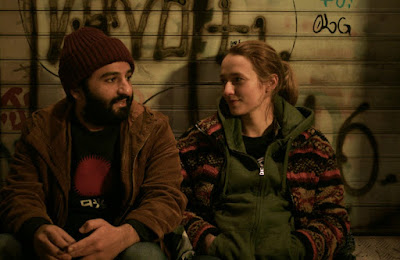
The Norwegian comedy Ninjababy is Messy Women: Unplanned Pregnancy Edition. Our cartoonist heroine Rakel (Kristine Kujath Thorp) presents her messy credentials early, being seen - gasp! - having a poo (and graffiti-ing the toilet wall while she does); she tells her flatmate she once slept with a guy because he smelled like butter; she also lets slip she hasn't had a period for six months. This is the kind of everyday bodily detail Rakel is prone to shrug off in her ongoing pursuit of a good time; you, me and co-writer/director Yngvild Sve Flikke (adapting Inga H. Sætre's graphic novel Fallteknikk) know better, of course. (The film's called Ninjababy because the baby in question creeps up on the protagonist.) From the off, Flikke finds disarmingly funny rhythms to tell this tale. If it's not the way she cuts between scenes - unpredictably, even recklessly, in ready sympathy with Rakel - it's the way her characters talk within them: awkwardly at first, struggling to find the words that match their inner selves, then with no filter whatsoever. Told that he may be the father, despite having used copious birth control at the time, aikido teacher Mos (Nader Khademi) blurts out "That's a twist"; when Rakel lets on her plans to have an abortion, the best Mos can manage is "That's another one". (The sequence lands as it does because of Khademi's essential Mos-ness: how many Moses have you known who haven't been ever so slightly dopey in some way?) There's another twist still: Rakel is in fact six-and-a-half months pregnant, which means it can't be Mos's baby, and carries her some crucial distance past the legal limit for termination in Norway. Oopsie.


On paper, the story is that of a young woman learning to live with the consequences of her own actions - to finally see something through, perhaps to grow alongside the handful of cells in her belly. The danger would be if Ninjababy leant into the reap-what-thou-sow conservatism lurking at the heart of this premise: if it proved punitive rather than forgiving, and thus emerged as readymade for appropriation by the latter-day religious right. The good news for the rest of us is that Flikke, plainly, gives zero fucks whatsoever about placating those cranks and gasbags. Rakel is rather stuck with a problem she doesn't want (as she shrugs to her own half-sister, a potential adoption candidate, "I'm just trying to get rid of it"); as illustrated by her disastrous effort to crash a prospective parents' group, she's wholly scornful of New Age mommy culture. Flikke uses those rhythms to mix and mess this story up: her finger's not wagging so much as tickling us and flipping the bird to everybody else. For one thing, Rakel's own doodles come to life, advising her like Jiminy Cricket did Pinocchio: these can be as blunt as black-marker etchings on a lavatory wall, or as (comparatively) sophisticated as the stopmotion cutout used to visualise sex during childbirth from the foetus's perspective, which really will be one in the eye for any pearl-clutchers out there.

I whisper this, deep as we are into this particular awards season, but Kujath Thorp actually struck me as a more convincing messy woman, both in the fumbly flashbacks and the present-day misadventures, than The Worst Person in the World's headgirl-ish Renate Reinsve. She's something like Kimmy Schmidt if the latter had spent her captivity nurturing a deleteriously confrontational attitude to the world, a desire to do the thing that is not done in polite society. Flikke has great fun dressing her up for meetings with medical pros and adoption officials, only to watch as time and again the character blurts out some utterance that kills any constructive conversation dead. There's one curious plot omission: Rakel's own parents, neither mentioned nor seen. It's as if to formulate an alternative model of parenting, the film decided to write pre-existing structures out of the picture altogether. (The two can co-exist!) And even with that choice, Ninjababy can't help but tumble into one more conventional narrative cycle: the last-reel dash to the maternity ward that precipitates a big decision. Otherwise, it remains a film not of grand gestures but passing, appreciably casual observation; the biggest decision Rakel takes is reached on a bench outside the hospital on a dreary, nothingy sort of afternoon. That's truer to real life than anything in, say, Mamma Mia!, a phenomenon Ninjababy gleefully razzes en route to its destination. Flikke's trick is to shepherd all this bungled, shuffling, humdrum and yet recognisably human interaction into a worldview you could well label feminist, affirming as it does a woman's right to choose as late in the day as she likes with an exasperated sigh and a few colourful epithets. The movie creeps up on you, too.

Ninjababy is now available to stream via All4, and to rent via Curzon, Prime Video and YouTube.

Little arithmetics: "Spider-Man: No Way Home"


This latest
Spider-Man trilogy will go down as Marvel's Most Improved. 2017's Spider-Man: Homecoming was generally nondescript, failing to answer the question of why we were doing this again while wasting such talents as Michael Keaton, Marisa Tomei and Donald Glover; rapidly promoted director Jon Watts was struggling to find his feet in the face of an onrushing Hollywood juggernaut. 2019's Far from Home was nimbler and livelier, in part due to the nascent goofy chemistry of its young leads Tom Holland and Zendaya, and a far smarter deployment of Jake Gyllenhaal in the guest villain role. It was still largely empty and throwaway, and certainly not the absolute must-see the receipts hinted at, but it was also a nod in the direction of what these event movies used to be, and still could be: two hours' pleasurable diversion, offering acceptable levels of bang and fun for your buck. That film concluded with the cliffhanger unmasking of Spidey as plucky, put-upon high-school graduate Peter Parker. Spider-Man: No Way Home, which had just about hoovered up every last dollar in the world economy by the time I caught up with it this week, has to tie up that throughline while simultaneously re-introducing the multiverse conceit sketched out in 2018's Spider-Man: Into the Spider-Verse (an animated spin-off from the main thread, but another step forward). In short - and this is doubtless the main reason the film has skyrocked past the $1bn mark since its release in December - it is The One With All The Spider-Man (and Several Key Villains Besides). My beloved Coventry City held their annual Legends Day last weekend, an annual event to which former players are invited so as to walk one further lap of honour before cheering fans at half-time in a match involving the current squad. Spider-Man: No Way Home is that, if the event had a $200m budget and immediately recognisable Anglo-American actors in the place of Dele Adebola, Greg Downs and John "The Flying Postman" Williams.

Getting everybody in place necessitates an elevated level of narrative jiggery-pokery and an hour's worth of exposition; there are also several of those playground takebacks that left the later Avengers movies looking dramatically flimsy. The revelation of Spider-Man's identity is brushed off inside reel one by a blind lawyer who'll presumably shapeshift into a dragon or something in MCU Film #57; our grumpy old friend Stephen Strange (Benedict Cumberbatch, understandably amused to be the last man standing of the Avengers old guard) is called upon to cast a spell that will make everybody - including the audience - forget what they've already been told. These films cannot possibly stick around in your head - if they do, you have too little else going on in there - because they're constantly overwriting themselves as they go along. There's almost nothing sticky about them; Watts might just as well have trained his camera on a script meeting for two and a half hours and watched the Tipp-Ex being passed round like a ceremonial pipe. With all these getouts and cheats, the suspicion persists that both writers and hero have it far too easy (which is why the peril in these films is perennially moderate-to-mild). Given the identifiably blue-collar Peter Parker of the comics, it really does suck that this one should have inherited a whole bunch of useful kit from Tony Stark. (Suckier still, his chauffeur: Jon Favreau, retained to give comfort to any poor sap still in mourning for Iron Man, is again encouraged to improvise his dialogue, and again demonstrates why he should have been forced - at gunpoint, if necessary - to remain squarely on book.) The biggest of these getouts, the multiverse, isn't especially original - or at least it's only original within the context of the MCU - and involves irksome throwbacks to impossibly minor figures in movies you've long since forgotten about, if you've seen them at all. One might also detect an undercurrent of arrogance here: it turns out this is a Super-Spider-Man movie, one that uses its vast resources to rewrite not just itself but the Spider-Man franchises of the past. 

Yet it also - and here's where No Way Home held and even vaguely charmed me - opens a door to an acknowledgement that those earlier Spider-movies gave themselves some good, in some cases very good ideas to play with. Yes, a measure of nostalgia wafts in through it, but it's certainly better stage-managed here than it was in, say, Ghostbusters: Afterlife, a film that was dying on its arse long before it reached out to some crusty old fossils to save it. Watts directs the intersection of Spider-Holland, Spider-Garfield and Spider-Maguire with a touching humility: there's no ego on display, wherever you look in the frame. The film's funniest joke is that these different iterations of the same character like one another - really like one another! - seeing in their other selves not rivals but potential playmates. It's very sweet, and not untypical of what has been a broadly sweet-natured outshoot from the vast, hydra-headed Marvel machine. It's also a sign of how Watts comes back this way to embrace and celebrate the creativity of those who've gone before him. His penultimate scene - set in a donut shop, for extra frosting - even goes so far as to suggest the makers of 2004's The Butterfly Effect were on the right lines after all: stick a Marvel logo in front of that trash classic, and it too might have cleared a cool billion (all right, a hundred mil) in ticket receipts. Watts has become an easy target for Film Twitter's hardcore cinephiles, as the least renowned of the now-multitudinous names tethered to the MCU bandwagon. I'd rather save my ire for those more experienced filmmakers who've pocketed millions for themselves while churning out films that look this much like used dishwater. Watts is a lightweight, but these films are at their best when they're being lightweight - when they're fooling around, rather than labouring to convince you that the very fabric of the universe is at threat in a 12A-rated movie that will just as likely have its reality overturned in a sequel or reboot a few years down the line.

Sure, he could do with switching an actual light on here or there: the narrative reliance on Stark Industries hardware - observed cluttering up the back of these frames like unshiftable Herbalife product - means this is a largely lab- and basement-based Spider-Man movie, largely devoid of the stirring swing Sam Raimi brought to his spider-verse. (I can't be sure from the finished film that any of it was actually shot on location in New York.) But when Watts reaches for light relief - be that Strange's exasperation at Parker's youthful scuttling ("this is why you'll never have kids") or the old Spideys having to explain their presence to new Spidey and associates - it really does function as relief, a scene or two of respite from the relentless, grinding, noisy spectacle of the middle-ranking theme-park movie. (One reason for my general resistance to these things: you really have to want a movie to clank about.) The emotion of the Raimi Spider-Men - which may have been the emotion of the post-9/11 moment, when even a Nickelback song could strike sensitive ears as semi-profound - gets a little muffled beneath the chicanery set over it. You'll have to have a vivid memory of the Garfield years to know precisely why his Spidey tears up upon rescuing Zendaya's MJ. (This far into postmodernism, nothing is as direct or as fresh as it once was.) But for most of these two-and-a-half hours, Watts applies himself to his task like a capable mathematics student sat before a reasonably demanding logistics puzzle. There's a reason this particular trilogy ends with credits scrawled on workbook graph paper: it's been an equation that needed untangling and reformulating before being balanced and cross-checked and submitted for (demonstrably widespread) approval. Those of us more at ease with words and pictures than numbers will have forgotten most of its workings by the time our keys are back in the front door, but if nothing else, No Way Home finally made me understand just why nerds are so into this stuff.

Spider-Man: No Way Home is still playing in selected cinemas, and is now available to rent via Prime Video and YouTube.

Monday, 14 March 2022

On demand: "Harry Birrell Presents Films of Love and War"


To answer your first question: Harry Birrell was an amateur cameraman from Paisley who, upon his death in 1993, left behind a treasure trove of 400 cine films (each preceded by a "Harry Birrell Presents" logo) shot over the course of the 20th century. Depending on your outlook, Birrell was a member of either the Golden or a deeply unlucky generation: born in March 1918, in the final months of a War that claimed his father's life, he came of age in a world gearing up for a scarcely less costly sequel. His short films, newly anthologised over the 90 minutes of Matt Pinder's 
Harry Birrell Presents Films of Love and War, illustrate this transition perfectly. After some late Thirties postcards of young men and women frolicking by the Serpentine, painted in those glorious now-faded pastels of early colour film stock, the Birrell oeuvre moved onto stock scenes of the soldiering life: training in the snow of Dunbar and Hamilton, exercises in the countryside, a brief respite on the Isle of Arran, and then - as the conflict kicked off in earnest - images from far beyond the Highlands and islands. It quickly becomes apparent that Birrell was exactly the kind of romantic and visionary who comes into their own upon taking delivery of a camera: his back catalogue is awash with delirious sunsets and landscapes that position their photographer as a fighting sibling to Robert Flaherty or the Murnau of Tabu. (He declared Gone with the Wind, which he caught while on leave, "marvellous": think of the sunsets in that film of love and war, and you can see exactly why it spoke to him so.) Pinder, recognising just what's been handed to him here, affords Birrell the last of the opening credits and the first of the closing credits as director of photography.

The question is how this 21st century production goes about framing its raw material. We hear sporadically from Birrell's granddaughter Carina (a producer here), still picking over the circumstances of her own existence. Mostly, though, Films of Love and War unfolds in montage, with Birrell's images narrated by Richard Madden, reading from the filmmaker's diaries and letters home. What's striking about these is their plainness of expression: it's Birrell speaking directly to his emotions at any given point. The images, meanwhile, are speaking eloquently for themselves, and generating their own historical momentum. They'd do for any wartime melodrama Harry and his beloved Anne might have snuck away to see at the pictures: to see that, you need take only one look at the blues of the Indian Ocean soldier boy crossed to get to his eventual posting alongside the Gurkhas in Burma. The arterial scarlet spraying from the necks of those animals sacrificed during a welcoming ceremony would be as vivid, were Pinder not wise enough to tone down these images for a contemporary audience. As Carina wonders over images of corpses encountered on the battlefield: did Harry have a hand in these deaths? With the act of discovery comes the possibility of discovering something you might not like. (It was a simpler time, but also a less filtered time.) Nevertheless, taken as a whole, the Birrell films mesh into a captivating self-portrait of a young man testing himself and his limits, and making the camera a confidant in this process: shutter open, eyes wide. One quibble: this is 20th century footage subjected to 21st century editing rhythms, and you may find yourself - as I did - wanting certain images to linger a little more than they do, for whole reels to play out at their own pace. Even from these selected highlights, though, you gain a valuable understanding of a generation of working-class Brits who only got to travel because of the War - and of one man in particular, marvelling at the new frontiers opening up before him, the beauty and horror of it all. Harry Birrell really did sign up and see the world.

Harry Birrell Presents Films of Love and War is now streaming via the BBC iPlayer. 

Sunday, 13 March 2022

On demand: "Misha and the Wolves"


Misha and the Wolves
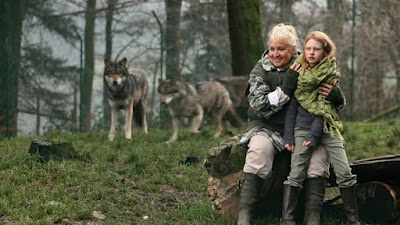
 is a film not of two halves but three equally intriguing thirds. If you turned off 30 minutes into Sam Hodkinson's documentary, you could go to bed convinced you'd heard quite the war story. The story is that of Misha Defonseca, a Belgian woman who, at the end of the last century, wound up in a small Massachusetts town, where she was gradually coaxed by regulars at the synagogue she attended into letting slip something of how she'd arrived there. What they heard was astonishing: that, as a young girl, Misha had spent months walking across Nazi-occupied Europe on a quest to find the parents from whom she'd been forcibly separated. Her flight through the countryside - a tactical manoeuvre, designed to keep herself away from the chaos and carnage then unfolding in the continent's cities - has the distinct air of fairytale; Hodkinson stocks the first third of the film with verdant woodland imagery that only intensifies when we learn how Misha befriended (and briefly ran with) a wolfpack in the woods. The Misha we see on screen is a poised, intense-seeming blonde, and her recollections are backed up by those who helped get this story out to the wider public: a local publisher who watched as Defonseca's memoir became a literary phenomenon, a radio DJ who devoted several hours of airtime to this tale. Oprah and Disney start circling - and then the wheels on this bandwagon start wobbling, one reason you perhaps won't have heard this particular story before.

What Hobkinson has grasped is that this is a story about storytelling, and competing accounts of the same events; the precedents in terms of filmmaking wouldn't be Claude Lanzmann or Marcel Ophüls, but Errol Morris or Bart Layton, documentarists who've been unafraid to frame their work along generic thriller lines. (If you haven't twigged by now, Misha Defonseca wasn't who she claimed to be - and Hobkinson pulls off one sly coup de cinéma in revealing his poised, intense onscreen Misha is actually an actress hired for the purposes of impersonation.) This retelling sets out into hugely sensitive terrain: it has to invoke the Holocaust, and it knows full well that to cast doubt on any aspect of the Holocaust is to lay oneself wide open to accusations of anti-Semitism. (The increasingly sceptical publisher - Jane Daniel, who isn't an actress - seems to have anticipated as much in hiring an actual survivor, Evelyne Haendel, to investigate Misha's claims.) It gets trickier still if you view the film through a post-MeToo lens, for here is a story where the smart course of action was not to believe a self-described survivor - or at least to apply the most rigorously sceptical eye to what she was saying. The moral of the film is that human life is, and has always been, varied and complex; sometimes individuals do wild and inexplicable things. 

Yet, to Hobkinson's great credit, that film bowls along, as if it has no concern greater than telling its own fascinating story well. Those talking heads are the most conventional element of a work that otherwise encompasses filmed reconstructions of Misha's progress, multiple hairpin twists, and copious multimedia archive, including clips from a 2007 film adaptation for which Defonseca herself ventured out on the publicity trail. (Say this for her: whoever she was, whatever she was up to, she was sure committed.) Hobkinson hits his storybeats with a real crispness. We get almost exactly half an hour on Misha's original story, a half-hour on the counternarrative that led to her being exposed, and then half an hour on the fallout, which may be even more remarkable (and sadder), because it cuts to the heart of why this individual did as she did, and carries us to a reckoning with the events of WW2 that proves all the rougher for coming so late in the day. The nagging thing is that there remains a glimmer of truth in Misha's initial account of herself, if you care to read it as a metaphor for a young girl being thrown to the wolves. (If she'd written it up as fiction, she'd have been fine.) Yet Hobkinson senses we might be lulled into seeking redemption where perhaps there isn't any: that's why he brings on a historian to rubbish any suggestion this "memoir" was an aging woman's attempt to make right the wrong of her actual childhood ("I think it's nonsense"). All I'll say is this: you'll likely be turning Hobkinson's film over in your mind for hours, if not days, after you've seen it. And I've not seen many better illustrations of an idea that powered Paul Thomas Anderson's Magnolia, a mighty fiction that premiered as l'affaire Defonseca was playing out: that we may be through with the past, but the past sure as hell isn't through with us.

Misha and the Wolves is currently available to rent via Prime Video and YouTube; it will screen as part of BBC4's Storyville strand later this month.

Friday, 11 March 2022

For what it's worth...


Top 10 films at the UK box office (for the weekend of March 4-6, 2022):

1 (new) The Batman (15) ***
2 (1) Uncharted (12A)
3 (2) Sing 2 (U)
4 (3) The Duke (12A) ****
5 (4) Death on the Nile (12A)
6 (5) Dog (12A)
7 (6) Spider-Man: No Way Home (12A) ***
8 (8) Belfast (12A) **
9 (new) Ali & Ava (15) ****
10 (11) Gangubai Kathiawadi (15)

(source: BFI)

My top five:
1. The Godfather: Part II
2. The Godfather: 50th Anniversary

 
DVD/Blu-Ray/Download top ten: 

1 (1) The King's Man (15)
2 (3) Encanto (U) ***
3 (4) Dune (12) **
4 (5) No Time to Die (12) ***
5 (2) House of Gucci (15)
6 (6) Ghostbusters: Afterlife (12) **
7 (new) West Side Story (12) ***
8 (11) The Suicide Squad (15) *
9 (8) Venom: Let There Be Carnage (15)
10 (7) Paw Patrol: The Movie (U)


My top five: 
1. Annette
4. Censor


Top five films on terrestrial TV this week:
1. Boyz N The Hood [above] (Friday, BBC1, 12.05am) 
2. Queen of Katwe (Sunday, BBC2, 10.15am)
3. Ali (Sunday, BBC2, 10pm)
4. Once Upon a Time... in Hollywood (Saturday, C4, 9pm)
5. Pride & Prejudice (Saturday, BBC2, 4.45pm)

Lights out: "The Batman"


T.S. Eliot ventured that a man might measure out his final days in afternoons and coffeespoons. Those of us in the 21st century's cheap seats could feasibly do likewise with Spider-Men and Bat-Men. The Batman, which will lop three more hours off your life (pre-film ads are back in a big way, one notes), hews to that established superhero trend that insists each new iteration of intellectual property be darker and grittier than the one before - some going, given that the Nolan Batmen led to one malcontent opening fire in a crowded movie theatre and pre-empted the real-life death of its chosen Joker. Just one reason for the abject suckiness of most modern multiplex movies has been their willingness to prey on and - in some extreme cases - actively mess with the mental equilibrium of anyone in their vicinity, much as there were certain One Direction songs written to exploit the insecurities of their target demographic. (Late capitalism for you: if you can't speak to the best of your audience, hone in on its weak spots.) If it's not the flimsy allusions to trauma (from an industry that has imprinted more actual trauma than most), it's the continual effort to deny us the satisfaction of a decisive happy ending - because everyone behind the scenes will be working overtime to resell us on a second or third movie two years down the line. What are all those teaser trailers if not carrots held up before a captive audience of donkeys? (The movies, when they come along, are often wielded as sticks.) It's not just that franchise filmmaking has warped storytelling in such a way as to deny us one of storytelling's fundamental pleasures; it's that we the audience cannot ever achieve catharsis or basic closure. No wonder everybody's unhappy nowadays. The Batman has presumably been titled The Batman because it's thought previous Batmen weren't good or lasting or serious enough; again, I wonder whether our bigger movies haven't just become projections of the insecurities of modern movie creatives, who fear they're not good or lasting or serious enough. Once upon a time, studio movies good and bad were sent out into the world with confidence enough to lift the audience out of the void for a couple of hours. These days, everything about them feels horribly temporary, even a superhero movie running roughly the length of The Ten Commandments. We've been set to wallowing in a very expensive, deeply neurotic mire.

Possibly my generation was spoiled by 1989's Batman, a summer pantomime for all the family during which Tim Burton took his source about as seriously as it needed taking. (When that franchise got darker and grittier, it arrived at the flagrant kink of 1992's Batman Returns: there was still a healthy measure of fun involved.) The Batman, by contrast, is heavy weather from the off: a twenty-minute prologue establishing and restating and frankly overemphasising the degree to which the rainlashed streets of this particular Gotham City have been overrun by murder and mayhem. Vast sections of the screen will be plunged into an inky darkness, from which sporadically loom drawn and sombre faces; given the modern multiplex's determination to keep some form of lighting on for health-and-safety reasons, you'll likely be hard-pushed to make out anything beyond basic shapes. Our new Batman is Robert Pattinson, and his voiceover goes straight in with the weary anomie ("this city is beyond saving"). This, at least, is an improvement on the diary entries we see him compiling in frenzied close-up, with their air of rejected Evanescence EP titles ("NOCTURNAL ANIMALS", "PUSH MYSELF"). Another of those honking blockbuster scores - an assault on any eardrums that survived The Zimmering of Dune: Part One - pauses only for a plaintive lament by... Nirvana. Even the Riddler's puns prove deathly. Again: it doesn't seem all that long ago that our pricier movies offered some form of escape from the stresses and strains of the present moment. Nowadays, egged on by those mirthless gasbags who are making so much of modern life flatly insufferable, we get clinically depressed comic-book fantasias, hellbent on making Threads or certain Bergman movies look like Romy and Michele's High School Reunion.

If escape is out of the picture - pleasure, too - then how about relief? The Batman at least spares us its hero's origin story, now so tattered from overuse that 2017's The Lego Batman Movie (still the century's best Batman movie) could poke amusing holes through it. The writer-director, Matt Reeves, made himself useful to his studio paymasters by finding new points of entry into potentially outmoded IP: using cameraphones to zhuzh up the monster movie in 2008's Cloverfield, revisiting the Planet of the Apes films from the simians' perspective. He does something comparable here, plugging the established Batman characters into one of those murder-mystery conspiracies that have returned to fashion in the wake of Knives Out and TV's Only Murders in the Building. Yet he's borrowed a lot to get his A plot going: the rain and cyphers are pure David Fincher, as many have noted, while Paul Dano's Riddler has a predilection for Saw-like torture devices (darker! grittier!) and a MAGA-like worldview that indirectly connects The Batman to the universe of 2019's Joker. On the sidelines, meanwhile, you keep catching glimpses of the latter-day event movie's baked-in thespwaste. Why trouble to glue Colin Farrell (as the Penguin) into so much latex that he resembles Elias Koteas, when you could just cast Elias Koteas? (It's another of the film's unnecessary agonies.) Zoë Kravitz's Catwoman scampers through a post-#MeToo subplot - investigating the myriad, yes, traumas wreaked on Gotham's women by its most powerful men - but rarely rises above the status of narrative sidepiece; even at three hours, the film affords her no room to swing. There's a flicker of respite in Reeves' conception of this Batman as a thinker as well as a doer - a figure more in line with such serial predecessors as Arsène Lupin and Fantômas than the stone-cold, heavily armoured sociopath Christian Bale essayed for Nolan. Pattinson, as washed out as he ever appeared in his last franchise (and with far dourer hair), plays the man behind the mask as benumbed but not insensate. Yet with each new grimace, I wondered where the Rob who seems such a giggle in interviews had gone. Why won't the movies put that guy on screen? Isn't that what a star system is for?

Everyone's basically operating within the confines of a three-hour migraine, a manifestation of that logistical headache Reeves took on upon taking delivery of this property. How do you reopen Wayne Manor to the general public, so soon after the generally revered Nolan films? How do you put all these characters back in play in such a way as to guarantee further instalments still? (This plot, inevitably, turns out to be another placeholder - more distraction to tide the fanboys over until the next unit of heavy superhero content drops like a stone off the Warners conveyor belt.) These big franchise movies have famously been no fun to shoot - one reason Pattinson has pursued the career trajectory he has over the past decade - and can't have got any easier to make with the addition of Covid protocols. To his credit, Reeves has managed to get much of that grind up on the screen here; The Batman turns out to be something like a whistleblower of a superhero movie, entirely (perhaps even honourably?) upfront about the miseries involved in its own manufacture. This is a film about a joyless, thankless task - the cleaning up of a city that is from the start beyond saving - which never feels like anything other than a joyless, thankless task, whether to make or to watch. The late-capitalist fatigue in its bones is palpable and keenly felt; for once with these things, it's not a put-on or a pose. Maybe it's my own weariness, but I couldn't take against it as I did the Nolan Batmen; at two hours or two hours 20 - a non-director's cut, which may be all these bloated follies need: just one rigorous production executive - this plot might even have started to take on some measure of urgency. It's still damning that all this energy and all these resources should have been spent on a film that at no point quickens the pulse - a deadening would appear the preferred effect - and which can in the end be boiled down to a single, sorry image: the grime-smeared remnants of an election poster bearing the slogan "For A Brighter Tomorrow". To appropriate Stuart Maconie's immortal one-line review of Robbie Williams' "Let Me Entertain You": in your own time, mate.

The Batman is now playing in cinemas nationwide.

Wednesday, 9 March 2022

Life in a northern town: "Ali & Ava"


Ali & Ava
 marks a return to form for writer-director Clio Barnard after 2017's tinny and unpersuasive Dark River: a crowdpleasing multicultural romance between protagonists of a certain age, serving up social realism with a lighter, gentler touch. The plot's all there in the title, carved onto the screen like lovers' names on a tree. Ali (Adeel Akhtar) is a Pakistani Muslim landlord in a picturesque hilltown on the periphery of Bradford; Ava (Claire Rushbrook) the white primary school teacher he offers a lift to in a torrential downpour. This is a new beginning for folks who'd possibly given up the ghost on companionship. As we join Ali, he's at the tail end of a failed marriage that goes beyond separate beds to separate rooms; later, we learn that one of those rooms might have been converted into a nursery, had tragedy not befallen the couple. Ava has her hands full with a menagerie of children and grandchildren, and that extended family proves the major obstacle standing between her and any happiness: some of those kids are hyper-protective of their late father's memory, while others display residual undercurrents of suspicion and prejudice. Ali is now a common enough name on the UK census for this to be mere coincidence, but any cinephiles in the room will likely be reminded in passing of 1974's Fear Eats the Soul (Ali: Fear Eats the Soul, in some territories), and we all know how that turned out.

That Barnard is more romantic than Rainer Werner Fassbinder should come as no surprise, and it's evident in her initial sketch of Ali as a larky goofball. (Which hasn't always been this viewer's experience with landlords; property management may demand a certain humourlessness.) It makes sense to have cast Akhtar, best known for his comedy work (Four Lions, The Big Sick, Killing Eve). But he's a subtle, insinuating dramatic performer, too. As Ali & Ava proceeds, it becomes clear that Ali's singing and dancing masks a silent heartbreak, and may also be his way of channelling the latent mania everyone around him is prone to succumbing to. (One strength of Barnard's screenplay: a careful, unsensational folding-in of mental illness.) The film's secret is that Ali's not some gadabout, but a man who feels more responsibility than he's letting on; Akhtar absolutely gives him that weight. Rushbrook, for her part, may still be best remembered as the daughter Brenda Blethyn accused of having "a face like a slapped arse" in Mike Leigh's Secrets & Lies; lines like that tend to stick. Here, she's quietly affecting as a woman who clearly never expected to have to relive the first flushes of love - the late-night texts, the explanations of self and circumstances, the sudden proximity to another body - at her relatively advanced age. When Ali smiles at her, years drop off them both; the odometers of their hearts go into reverse. Yet Barnard very cleverly allows their doubts and fears to cloud the second half: we, too, start to wonder whether this love can go much further than the end of the road.

If we relax nevertheless, it's from the knowledge that Barnard is as fond of these characters as she is interested in them. And it's not just Ali and Ava: most of these characters are more open to other cultures and ideas than they realise, or are perhaps willing to admit. Celtic names for a granddaughter are floated over a pint; we hear of Ava's late father, an Irishman who was fine with his offspring's first, Indian boyfriend, but drew a fierce line when Ava started seeing an Englishman. Even the skinheaded son who pulls a samurai blade on Ali after he finds him in his mum's front room is introduced working out to a Bollyrobics channel. Barnard gets to the cognitive dissonance within the British national character - why we've donated £100m in a week for Ukraine while our elected Government is being miserly with visas. (Are we happier paying refugees to stay away?) A more overtly political filmmaker might have pushed harder here, and used this romance if not to drag their audience's noses through the mud then to interrogate their choices. Curiously, this is a post-Brexit film that never mentions the B-word; indeed, the set-up is wholly pre-Brexit. Barnard is working in a long tradition of Plays for Today and Films on Four, dramas that could have been made any time from the 1960s onwards. (I wondered what might have happened had Ava fallen for the Polish plasterer Ali counts as a tenant. Barnard's boogeymen are ghosts - a pair of boots handed down by a fallen National Front footsoldier - rather than the clear and present dangers of Farage and the ERG.) Still, we should be thankful for a film that gets clear of London and the nation's country houses, and at the very least examines the attitudes and assumptions at play elsewhere; and Barnard mitigates against any harshness of judgement by keeping an open heart and mind - exactly the kind of open heart and mind that allows people in the real world to fall in love while pushing fifty. This is a film that you sense has a lot of soft power.

Ali & Ava is now showing in selected cinemas.