Wednesday, 10 November 2021

On demand: "The Beta Test"


The writer-director-performer Jim Cummings has set out his stall as a specialist in the depiction of problematic men. In his 2018 breakthrough 
Thunder Road, Cummings threw body and soul into the role of Officer Jimmy Arnaud, a cop on the verge of a nervous breakdown, leaving us to consider whether having powderkegs in positions of power is ever an entirely sound idea. His follow-up vehicle The Beta Test, which Cummings has co-written and directed with P.J. McCabe, is immediately recognisable as a post-#MeToo proposition, and a product of an industry that's had to have a rapid rethink of long-held assumptions - even, gulp, get honest about who it is and what it's done. The film opens with the brutal, bloody murder of a young woman, and stuffed into its pockets are some of the stories (outrages, really) people in the film business have spent decades quietly gossiping about. Its main event, however, is watching Cummings' Jordan Hines, an affianced executive at an L.A. talent agency, screw up his life upon RSVP-ing to an invite from a VIP club that claims to set its members up with no-strings sexual encounters. The film's subject, then, isn't abuses of power so much as male anxiety in our brave new world. Even before the hook-up, we learn Jordan has been suffering with an ulcer ("an open sore on my insides"), which can't diminish any once he realises this extracurricular dalliance is being used as Kompromat 101, and the woman around him start snarling in his direction. Early on, a business meeting at the agency's offices is interrupted when the building's earthquake detection system is accidentally triggered. "It's a false alarm," Jordan reassures his clients. "It's OK." But the tectonic plates beneath his feet, and indeed the feet of men everywhere, are shifting. Nobody's quite as sure of themselves as perhaps they once were.

Male psychic turbulence is as naught compared to actual female suffering, of course, and while Cummings and McCabe take care to place an example of the latter upfront, I suspect some viewers will likely be unsettled, if not taken aback, by the larky tone The Beta Test subsequently strikes - the very opposite of Ronan Farrow's sincerity, or the starkly appalled tenor of Kitty Green's The Assistant, the movies' first (and thus far strongest) response to l'affaire Weinstein. Yet Cummings and McCabe are diagnostic in their own way: what they're getting at here is why these men (or, if you prefer, just: men) do what they do. Jordan is a unique combination of supreme self-confidence (a belief he belongs anywhere, and has the right to comport himself as he likes) and extreme insecurity with regard to his own status. There are no half-measures with apex predators; either everything goes their way, or everybody's out to get them. As Jordan flails upon being caught with pants well and truly down, "I just feel I have a huge finger hanging over me all the time". As that Pythonesque image indicates, this leaves him open to considerable satiric exploitation, and as a character, Jordan proves all the funnier for having zero discernible sense of humour whatsoever. (His closest cinematic sibling would be Christian Bale's Patrick Bateman in Mary Harron's film of American Psycho.) Here is a man who registers no absurdity while signing Tiger Woods to direct a reboot of Caddyshack "with dogs" - and here you detect Cummings and McCabe diagnosing why it is our bigger American movies now display little-to-no trace of wit. It's because men like Jordan Hines have been calling the shots.

Once you've felt your way into the protagonist's nightmare, the question becomes what else there is here beyond Cummings' ever-committed character work. In Thunder Road, there arguably wasn't quite as much as there needed to be, but the actor was so dynamite to watch that you didn't really mind. The Beta Test is busier from the off, and it eventually warps into a wonky sort of PI movie, dispatching Jordan and his vape pen out onto the mean streets of Hollywood to figure out who might have the dirt on him - and looking on, amused, as he inevitably digs an even deeper hole for himself. This transition is marked by the economy of the best indies: serving as his own editor, Cummings fashions punchy montages of bruising, dubious experience that either drive his point home or push the plot along. Yet there are equally stretches where the film begins to feel a little too scattered for its own good. That early murder is the first of three fatal domestic bust-ups we cut away to, yet they're only tangentially linked to Jordan's plight, and I'm not sure Cummings and McCabe ever quite nail the exact right ratio of character study to plot. Our boy's sorely mishandled quest - a post-Weinstein Chinatown, in which a shamed shamus sets out as much to cover his behind as to uncover any truth - is a wickedly good story idea, but there's not enough of it, or we're too late getting there, hence the film's slightly gabbled resolution. It's often funny, though, not least when you realise all the trouble Jordan thinks he's in would likely blow over if he could just sit still and do nothing. But he's panicked and scrambling, in a town where image management has never been more paramount. Flawed in some respects, The Beta Test does succeed in catching a mood and a moment, and I suspect Jordan Hines will endure as representative of a recognisable early 21st century capitalist type: one who regards the changing world as chaos - a mortal threat, even - because he's incapable of loosening his grip, let alone going with the flow.

The Beta Test is now available to stream via Prime Video, Curzon Home Cinema and the BFI Player.

Tuesday, 9 November 2021

Uneasy lies the head: "Spencer"


I went into
Spencer with great trepidation. If its director, Chile's Pablo Larraín, counts among the most exciting filmmakers working anywhere in the world today, his English-language assignments (the mixed bag of 2016's Jackie, on which he was a late hire; the disastrous Stephen King adaptation Lisey's Story, for Apple TV+) have proven far less satisfying than the material he's developed for himself, in his own idiom. And just on an emotional level, this particular story would seem to demand some form of engagement with that strata of moneyed weirdoes who've conspired to leave the UK the cowed and backward-looking nation it currently is. Beyond that, the film's earliest observers, whether pro or anti, were united in their observation that Spencer is an odd one in itself. It's certainly that. Anyone drawn here by the bingeable sheen of TV's Downton or The Crown is in for a big surprise; I imagine the execs at STX Films took a very sharp intake of breath upon seeing what they'd signed on to distribute. It's odd because it's the work of three forceful creatives who don't tesselate or cancel one another out, but instead keep stepping on one another's toes. For the screenwriter Steven Knight (Locke), this is another self-contained character study of an individual navigating a moment of crisis: in this most illustrious of cases, Diana, Princess of Wales, tracked over one Christmas as she realises her fairytale marriage has become a dead end. For Larraín, it's a prime opportunity to further subvert our expectations of the costume drama, while dabbling in Gothic horror and comedy. For the still broadly underappreciated star Kristen Stewart, it's a shot at the Oscar by playing an unhappy and ultimately doomed public figure. Yet far from the stodgy awards bait I was dreading, Spencer shapes up as a real kittens-in-a-sack movie, eternally unable to resolve its own internal tensions. Any commentary this vaguely bemused viewer can provide can only be provisional; what it really cries out for is a half-hour CNN special in which Harry and Wills Siskel-and-Ebert the shit out of it.

What Spencer gets right, I think, is how this family contrive to make an irksome fuss out of everything. The tragedy of the House of Windsor is that its individual constituents could easily live small, simple lives in nice, normal houses - but they don't or won't, and so just getting from A to B becomes a right royal chore. That's the thrust of the film's opening argument, which takes what should be a brisk introductory sequence (Diana's arrival at Sandringham on Christmas Eve) and diverts it via dead grouses (an augury of things to come), a greasy spoon ("it's Diana!"), impromptu search parties, and a scarecrow who instantly appears better off out of it. When our heroine finally shows up at the appointed destination, late, the doors are shut, and there's no sign of the welcome party that had been on screen five minutes earlier for Her Maj. Lunch will drag on roughly as long as the Civil War, and involve pearls in the pea soup (a great, textured movie image, of the kind Larraín specialises in); Diana can't even get dressed for it without someone barging into her quarters and starting an argument of some kind. (Sometimes, this is the ghost of Anne Boleyn. It's that kind of film.) We've all known rather testy and fractious Christmases, in real life and the movies - Stewart skipped through one in last year's Happiest Season - but this one's on another level entirely, like The Family Stone extended into a greater ordeal yet. As Jonny Greenwood's score, an unholy hybrid of classical and jazz, parps and lurches around each frame, what would in the heyday of the royals be referred to, with all due deference, as pomp and circumstance gets coolly reassessed and recategorised as just the most agonising faff. The Princess maintains relatively normal relations with her sons; to the last, Knight subscribes to the commonly held belief that Diana was a Great Mum. Yet her encounters with the Sandringham staff (Timothy Spall's head butler, Sean Harris's chef, Sally Hawkins' besotted dresser) are governed by a formal awkwardness that is partly that of the characters, and partly that of the film, the result of three different creative drives operating more or less in parallel.

The film never banishes the question marks lingering after these creatives' names; it's one reason why it finally presents as such a question mark itself. (Why this? Again? Why like this?) Stewart, at least, bears up to the dual scrutiny of having to play someone who's all but been canonised as a latter-day saint, and to do so with Larraín's camera probing her nostrils for much of it. She has the right look, and gets the breathy phrasing - that of someone instructed to speak like a princess - just so; it's also fun to watch the dark lines under the actress's eyes come back into play as this Diana stalks the Sandringham estate after lights-out. Still, as with Natalie Portman in Jackie, this is a real curate's egg of a performance: it doesn't help that Stewart never seems old enough to have had kids in the first place. For a good while, she looks like someone who's been shoehorned into a series of outfits and photo ops, rather than an actress inhabiting a role from the inside out. (I guess you could argue Diana herself had the same issues.) After Lisey's Story, with its terminal heavyhandedness, Larraín is busy refining - read: lightening up - his signature expressionism. Somewhere in Knight's script is the idea the royals are, in effect, a benevolent, cosily controlling dictatorship, reliant upon a small army of footmen, domestic staff and actual soldiers knowing their place within households such as these. (A prop that leaps off the screen at you: the sign in the Sandringham kitchens that reads "Keep Your Noise Down - They Can Hear You".) Larraín clocks that - it's why he shows Diana showering in what looks to be a cage, and the curtains in her bedroom being sewn together - but having grown up under an actual dictatorship, he apparently feels free to strike a goofier, more satiric tone: for him, all this is just a very silly way for anyone to have to live their life.

As a result, stretches of Spencer feel tonally closer to the C4 sitcom The Windsors, which has logged several seasons exploring just how silly these people and their frills are, than it does to, say, Stephen Frears' The Queen. Diana waves away her dresser with an exhausted "I want to masturbate". At one point, she ends up talking to a grouse. There is the following exchange: "Do you have access to wirecutters?" "Why do you want wirecutters?" "To cut wire." You chuckle, without really being clued in as to why we're being encouraged to chuckle, and that's the film's major limitation, why it might only function at the level of camp. For whatever reason - whether the threat of the Tower or out of a desire to pull in the royalist crowd (a not inconsiderable demographic, as the tabloid front pages continually demonstrate) - Spencer can't fully admit to its own silliness. It's a film trying to maintain a straight face after farting in chapel; any tears it might wring would be those of someone struggling to suppress a giggle. That rude energy still leaves it preferable to the laughably bland stodge of 2013's Diana, and there might yet be something useful in the project's core weirdness: essentially, Knight and Larraín have restored those critical notes that were purged from the post-Downton heritage drama for easier export, the better to demonstrate that what the media traditionally invites us to view as a lavish ongoing fairytale is actually a most unnatural, more often than not unhealthy situation. Divine right of kings, after all, only leads us to Prince Andrew. It's a three-star movie that probably doesn't deserve to be stuck with that rating, because that would suggest that Spencer is somehow run-of-the-mill. It's really not that, and it's worth seeing for that reason alone - but then you may never have seen a film that comes this close to working brilliantly and which, at the same time, comes this close to failing spectacularly.

Spencer is now playing in cinemas nationwide. 

Friday, 5 November 2021

For what it's worth...


Top 10 films at the UK box office (for the weekend of October 29-31, 2021):

1 (2) No Time To Die (12A) ***
2 (1) Dune: Part One (12A) **
3 (3) Venom: Let There Be Carnage (15)
4 (5) The Addams Family 2 (PG)
5 (4) The Boss Baby 2: Family Business (PG)
7 (7) Halloween Kills (18)
8 (new) Last Night in Soho (18) **
9 (8) Ron's Gone Wrong (PG) ***
10 (6) The French Dispatch (15) **

(source: BFI)

My top five:
3. The Seven Samurai

 
DVD/Blu-Ray/Download top ten: 

1 (new) Paw Patrol: The Movie (U)
2 (9) Space Jam: A New Legacy (U)
3 (new) The Suicide Squad (15) *
4 (1) Fast & Furious 9 (12)
5 (3) Jungle Cruise (12)
6 (2) The Croods 2: A New Age (U)
7 (8) Old (15)
8 (4Free Guy (12)
9 (5) Venom (15)
10 (7Black Widow (12) ***


My top five: 
1. Limbo
5. Pig


Top five films on terrestrial TV this week:
1. The Naked Gun: From the Files of Police Squad! [above] (Monday, five, 11.05pm)
2. Up in the Air (Friday, BBC1, 11.55pm)
3. Charlie and the Chocolate Factory (Sunday, five, 5.45pm)
4. The Cruel Sea (Saturday, BBC2, 2pm)
5. Mission Impossible: Fallout (Saturday, C4, 9.10pm)

Thursday, 4 November 2021

Pimp my riders: "The Harder They Fall"


There have already been Black cowboys and Black Westerns: setting aside advance rider Cleavon Little in Mel Brooks'
Blazing Saddles, the 1990s gave us Mario van Peebles' Posse plus Buffalo Soldiers, a handsome TNT production headed by Danny Glover. It's just that those films weren't ever likely to be asked to open a major international festival - as The Harder They Fall did this year's London Film Festival - and never had the marketing push of a Netflix behind them. This, then, is the Black Western with added flash: the opening credits reveal the producers of Jeymes Samuel's film include Shawn Carter (a.k.a. Jay-Z) and longtime Tarantino facilitator Lawrence Bender, which should offer some further indication of where it's coming from. It starts out with a simple vengeance plot, of the variety that would have done for any number of mid-20th century Westerns: scarred, cheroot-smoking Nat Love (Jonathan Majors) sets out on the trail of Rufus Buck (Idris Elba), the hulking brute who gunned down our hero's parents before his youthful eyes. But soon everyone's getting involved, and Samuel is cranking everything (colour, sound, the size of these cabins and saloons) up some level beyond the norm. Elba stops off at a fruit cart on the edge of Redwood, Texas - the film's chosen dead-end town - and it's not even as if the apples, oranges and leafy greens there look fresh from craft services; their colours pop like the purples and pinks in Nicki Minaj promos. Even channelled through a run-of-the-mill home cinema system, the film's gunshots register like anti-tank shells; a single bullet unleashes a mushroom cloud of splatter. Any residual space on the soundtrack gets filled in with Samuel's own selections of hip-hop, dancehall and dub reggae, while the final shootout cues an Isaac Hayes-style blaxploitation lament. Man's gotta do what a man's gotta do, as Duke Wayne used to spit, but in his directorial debut, Samuel - who trades musically under the alias The Bullitts (and turns out to be Seal's brother) - loads another maxim into the American Western canon: go big or go home.

Rather than some sober reassessment of Black Americans' place in the Western landscape, then, The Harder They Fall is a cartoon - a spaghetti Western sponsored by Cristal, or a Fast & Furious movie with horses instead of cars. It's a fun cartoon, though, and part of the fun is that the money allows it the time and space to relax into this milieu - to enjoy itself, rather than feel like a trespasser in this territory. This isn't a big-sky Western, particularly, but Samuel and cinematographer Mihai Malaimare Jr. (who shot Coppola's Tetro and Paul Thomas Anderson's The Master) draw big frames before inviting everybody over to fill them. Their film may be the first Western to have something of the block party in its DNA, reasoning that since someone's put up the cash for these sets, we might as well hang out on them for a while. (Certain Howard Hawks Westerns had a similar idea.) Self-evidently, this is not the kind of B-movie Western the Van Peebles gang were reduced to shooting circa 1993, rather an expensive-looking venture from the same studio who ponied up for Roma and The Irishman, which is why all its interiors look like Lil Wayne's crib. There's an A-list guestlist: Regina King as Elba's no-nonsense second-in-command, Zazie Beetz as a good-time gal who previously served as Nat Love's squeeze, Delroy Lindo with a magnificent moustache that pins the word "lawman" to his upper lip like a tin star.

It's going for breadth, in other words, and it gets it. (In passing, Samuel trumps John Sturges by lining up fully nine riders across the width of one frame.) In doing so, the movie sacrifices some of the taut urgency of the first-rank Westerns. The script, which Samuel penned with the ever more jawdroppingly versatile Boaz Yakin (Aviva), essentially establishes its final showdown 20 minutes in, then goes searching for chewy character business: King spends seemingly five minutes peeling one of those apples (cherry-red) and another five throttling Beetz, only to let her live anyway. Yet all this business benefits from performers who'd be unlikely even to have auditioned for Western material in the past, and who can now bring new and unexpected notes to proceedings. Elba, one of this century's most variable stars, underplays the villain role nicely, allowing his bulk to do the bulk of his talking, and mostly resting up awhile at the Redwood Hotel, waiting for the supporting players to knock one another off the board. But that's about it for restraint; crash-zooming and split-screening the hell out of the remaining two hours, Samuel mostly appears to have taken his cue from the cocky young gunslinger among Love's gang who describes his quickdraw technique as "lightin' up with the blam-blams". The Harder They Fall is absolutely and unmistakably the work of a director lighting up with the blam-blams, and I reckon you'll know from that whether that need concern you of a Friday or Saturday night.

The Harder They Fall screens in selected London cinemas today, and is currently streaming on Netflix.

Wednesday, 3 November 2021

The small world of Edgar Wright: "Last Night in Soho"


Nerd season continues with
Last Night in Soho, sacred Britfilm magpie Edgar Wright's attempt to retrace the lines of those swinging Sixties London B-movies (everything from Peeping Tom to Repulsion via The Small World of Sammy Lee) with the darker edge of Italian giallo. After the broadly insufferable action pastiche of 2017's Baby Driver, the new endeavour quickly positions itself as Wright's Grown-Up Art Movie, establishing in its opening half-hour some fraught psychic link between vulnerable young women in two distinct eras: country mouse Thomasin McKenzie, who comes up from Redruth to study fashion at latter-day UAL, and her glamorous Sixties alter ego Anya Taylor-Joy, a babydoll nightie being muscled around the West End by charming wideboy-slash-pimp Matt Smith. Her progress facilitates yet another retreat into a familiar, non-Brexity past. "There's just something about the Sixties that speaks to me," shrugs the McKenzie character when quizzed by her tutor about her inspiration; the same would apparently hold true of Wright (b. 1974).

His film has a nice, mostly persuasive understanding of Movie Soho, reassembled via actual locations, crafty sets and that small handful of odds and ends that haven't been gentrified over these past thirty years. (A marble R over a doorway assumes an almost runic significance.) He populates this imagined world with recognisable, evocative faces (Rita Tushingham as McKenzie's grandma, Diana Rigg as a landlady with a past, Terence Stamp as a glowering bloke in The Toucan) and sets their movements to a non-stop cabaret of period hits and near-misses ("Downtown", "Anyone Who Had A Heart", "There's A Ghost In My House"). You do feel something of the excitement of standing on Haymarket a few days after the release of Thunderball. (The reveal of its spotlit billboard serves as the film's early money shot, apparently facilitated by fellow nerd Tarantino.) And yet Last Night in Soho falls comprehensively apart whenever it must return to the real world of student parties and stitching seminars; what it leaves us clutching is more proof of what a callow filmmaker Wright becomes whenever he sets foot outside the comfort zone of his sharp, occasionally insightful comedies.

Viewed from the perspective of the real world, the new film's liabilities are glaring from the off. McKenzie and her fellow students are twentysomethings written by a man pushing fifty; Wright shares the writing credit with emerging team player Krysty Wilson-Cairns (1917), but she's apparently been drafted in to attempt a salvage job on dialogue that, even at its most frowningly expositional, retains an unfortunate comic ring. "We're in the Dead Mums Club," snarks McKenzie's queen-bee roommate Jocasta (Synnøve Karlsen). "Fuck leukaemia." I could never really buy the idea that a sheltered teenage girl in somebody's idea of the present could be this fascinated with London at the time of Tarbymania, either. Baby Driver was at least upfront about the fantasies it was selling, banally male (and banally adolescent) as they were; here, you sense Wright hiding behind his female lead, a goggle-eyed man-child born too late for this era, trying to make up for his tardiness by voraciously consuming those movies set there. What's come out the other end is more flimsy postmodern fetishism: a film informed not by lived experience but memories of better movies, long afternoons spent among the odiferous bagmen of NFT2. Even then, it remains forever vague: just something about the Sixties, rather than anything more specific or vivid.

What's semi-intriguing, and may eventually prove representative, is how Last Night in Soho maps the narrowly conservative sexual politics of our present moment onto its reconstructed past. Those first Soho movies had more than their fair share of monsters and angels, but the better (because grubbier?) titles equally made room for tough broads and weak-willed men. In a film that demonstrates the psychological depth of a sub-Saharan puddle, all Wright and Wilson-Cairns come up with are fluttery butterfly girls, gulping puppets on a string, surrounded by leering, cold-eyed predators and reprobates. It's paranoid, in the way online gender discourse often is, and it generates one nightmare-image of a row of johns in stained white Y-fronts that is so naffly funny it would seem the ideal occasion for a Nick Frost cameo. But it's never convincing and never once scary, no matter how much red light Wright artlessly casts across the frame like a BTEC student making My First Horror Movie, and no matter how desperately hard he pushes his soundtrack cues (spectral half-glimpse: "Always Something There To Remind Me", aha!) Returning to Film Twitter, we find a lively debate opening up as to whether the bulk of Wright's action unfolds within Soho or Fitzrovia, the neighbourhood to the immediate north. It's neither, I would suggest: the bulk of Last Night in Soho actually looks to be taking place around Toytown.

Last Night in Soho is now playing in cinemas nationwide. With thanks to Darren Sugg for the correction.

Tuesday, 2 November 2021

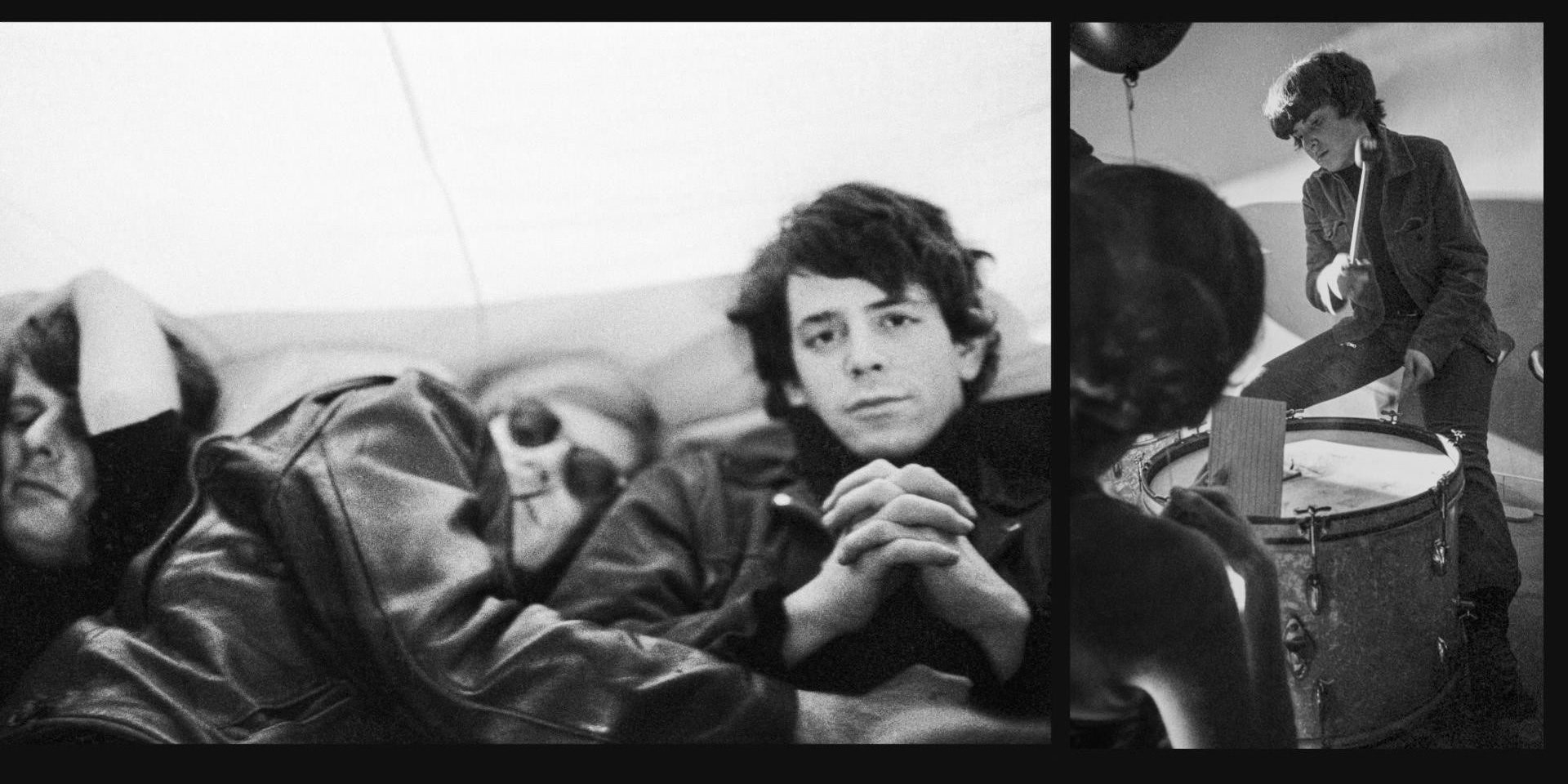
Band of outsiders: "The Velvet Underground"


The record will show that 2021 was an especially illustrious and adventurous moment for the music doc, as name directors of a certain age leveraged their platform to pay homage to the prolific, sometimes tricky outsider artistes who sustained them from a formative age. We've already seen Alex Winter's comprehensive-bordering-on-exhaustive picture of Frank Zappa's wayward genius (
Zappa), and Edgar Wright's lengthy fan letter to all things Mael (The Sparks Brothers); occupying the void between those and Peter Jackson's upcoming, doubtless entirely accessible series on the Beatles' final moments together (The Beatles: Get Back, arriving via Disney+ on November 25), we have The Velvet Underground, Todd Haynes' Apple-sponsored tribute to New York's pre-eminent subterranean lurkers. To document the Velvets - the militant wing of the musical counterculture, led by unsmiling perfectionist-general Lou Reed and his strategist-in-chief John Cale - is also to document a moment of extreme social and cultural turbulence, when pop was placed in forceful yet only briefly lasting contact with the worlds of film, art and literature, not to mention revolutionary politics; it demands a sense of movements running in parallel, observed out of the corner of an eye. Haynes, who rewrote the history of glam rock with 1998's Velvet Goldmine before proving alert indeed to the nuances of American society in his mature-phase masterpieces Far from Heaven and Carol, turns out to be just the man for whom this band had been waiting. From the off, he makes a big, bold choice - split screen - which not only feels instinctively right for a story this fractious but keeps paying off both visually and editorially, juxtaposing images, scenes and people in a manner more reminiscent of gallery art than the Friday night slot on BBC4.

As an organising principle, split screen permits Haynes to bring together and play off contrasting personalities, dissonant sounds and ideas. He can set the malcontent snarl of bored suburban punk Reed against mellifluous, classically educated testimony from (the still extant) Welshman Cale, and numb Warholian portraiture against more frenetic archive; he pits stills versus Super 8, and at one point even makes passing mischief throwing the no-fun bluntness of the East Coast crowd up against the hazier, free-love vibes coming from out West. For this filmmaker, the counterculture isn't one thing, but many things simultaneously: intersectional (as we'd now call it) but also inherently oppositional, like weather fronts colliding - sometimes a genial happening, to use that quaint Sixties term, sometimes a noisy clash. This is the climate Reed's faction thrived in, and Haynes grasps that elements of this story are tempestuous, unpretty, difficult if not impossible to smooth over. The music, for one, which even temporary frontwoman Nico is heard describing as "that noise you hear when there's a storm outside". Reed is confirmed as no great bundle of laughs, needy, demanding-slash-abusive, and brutally summed up by Allan Hyman, a bandmate in the aptly named teen beat combo The Primitives, as "like a three-year-old". (As revisited here, the group's big novelty hit "The Ostrich" sounds newly relentless, even punishing: a Spector-aping riff pushed towards a repetitious extreme by young thugs wielding guitars like weapons, writing a manifesto for metal machine music to come.)

Yet the film is adult enough to set this behaviour - and Reed's stormcloud demeanour - in context, and proves willing to make a case for an art that is difficult and complex, that exists as a result of disparate influences and contradictory impulses. The presence of Amy Taubin and the late Jonas Mekas among the interviewees underlines the importance of having a critical class who are equipped to commentate on such art - who are prepared to get down and dirty with the work under analysis, rather than setting out on some lofty quest for artistic purity. The film adheres to this (recognisably New York) tradition: it's an attempt to figure out this most perverse of back catalogues and - without compromising its woozy, nocturnal mysteries or outsider status - open it up to wider scrutiny. Even if you're no particular fan of the music, with its wild, narcotically enhanced internal mood swings - and at this point, your correspondent must raise a sheepish hand - The Velvet Underground is a hell of a document to look at and listen to, skilfully shuffling clips from the exploding New York demi-monde of Warhol, Jack Smith and Barbara Rubin with the era's thoroughly stolid mainstream music and television formats, the better to highlight just what Reed and Cale were bristling against. (Cherish the condescension of the TV continuity announcer who introduces/damns Nico thus: "Her voice is, um, unusual.")

It's not devoid of that indulgence that factored into the counterculture, and which has returned to dog the progress of name directors moving into the streaming-TV arena. As with the other music docs of this moment, it's arguably a reel too long to be truly essential, and Reed's nihilism - his readiness to walk away from anything and everything - does rather leave the third act as something of a dead end. (If this group stand more or less alone in rock history, it's surely in part because no-one else thought this was any way to sustain a music career.) Yet this story tells us that interesting, eye-and-earcatching things sometimes shoot up in dead ends, and that blind alleys may in fact be exactly the right place to start making a noise such as this. Thirty years of leftfield endeavour has given Haynes has an assured sense of how to inhabit and fill these fringes, and his juxtaposition tactic leaves us not passively revisiting the songs of a director's youth, but making active connections between the film's disparate sources and periods. Could there not be some essential link between the electricity Reed's parents used in a bid to shock the gay out of their son and the La Monte Young-inspired drone his band went on to make on stage and record? "Venus in Furs" and certain lines and images in "I'm Waiting for the Man" (as close as this group got to a pop hit) only amplify this music's essential queerness, its creator's determination to self-identify as an unapologetic freak. Haynes is old and wise enough to recognise this quest wasn't always so heroic or even especially ingratiating, but The Velvet Underground does finally get why this music remains compelling: it was Reed's defiant, unyielding stance, maintained in the face of his parents, non-hip society and any other mook within earshot. I am not such as you; now leave me the fuck alone.

The Velvet Underground is now showing at the Curzon Bloomsbury and the ICA Cinema, and streaming via Apple TV+.  

Friday, 29 October 2021

For what it's worth...


Top 10 films at the UK box office (for the weekend of October 22-24, 2021):

1 (new) Dune: Part One (12A) **
2 (1) No Time To Die (12A) ***
3 (2) Venom: Let There Be Carnage (15)
4 (new) The Boss Baby 2: Family Business (PG)
5 (4) The Addams Family 2 (PG)
6 (new) The French Dispatch (15) **
7 (3) Halloween Kills (18)
8 (5) Ron's Gone Wrong (PG) ***
9 (new) Dear Evan Hansen (12A)
10 (8) Honsla Rakh (12A) **

(source: BFI)

My top five:
1. Scream [above]
4. The Seven Samurai

 
DVD/Blu-Ray/Download top ten: 

1 (1) Fast & Furious 9 (12)
2 (8) The Croods 2: A New Age (U)
3 (2) Jungle Cruise (12)
4 (3Free Guy (12)
5 (6) Venom (15)
6 (14) The Forever Purge (15)
7 (5) Black Widow (12) ***
8 (7) Old (15)
9 (9) Space Jam: A New Legacy (U)
10 (new) Injustice (15)


My top five: 
1. Limbo
5. Pig


Top five films on terrestrial TV this week:
1. The Exorcist (Saturday, BBC2, 10.40pm)
2. Beetlejuice (Sunday, five, 5.35pm)
3. The Addams Family (Saturday, ITV, 1.55pm)
4. Widows (Sunday, C4, 9pm)
5. What We Do in the Shadows (Sunday, BBC2, 10.45pm)