Friday, 20 December 2019

For what it's worth...


Top Ten Films at the UK Box Office 
for the weekend of December 13-15, 2019:

1 (new) Jumanji: The Next Level (PG)

2 (1) Frozen II (U) **
3 (3) Last Christmas (12A)
4 (2) Knives Out (12A) ***
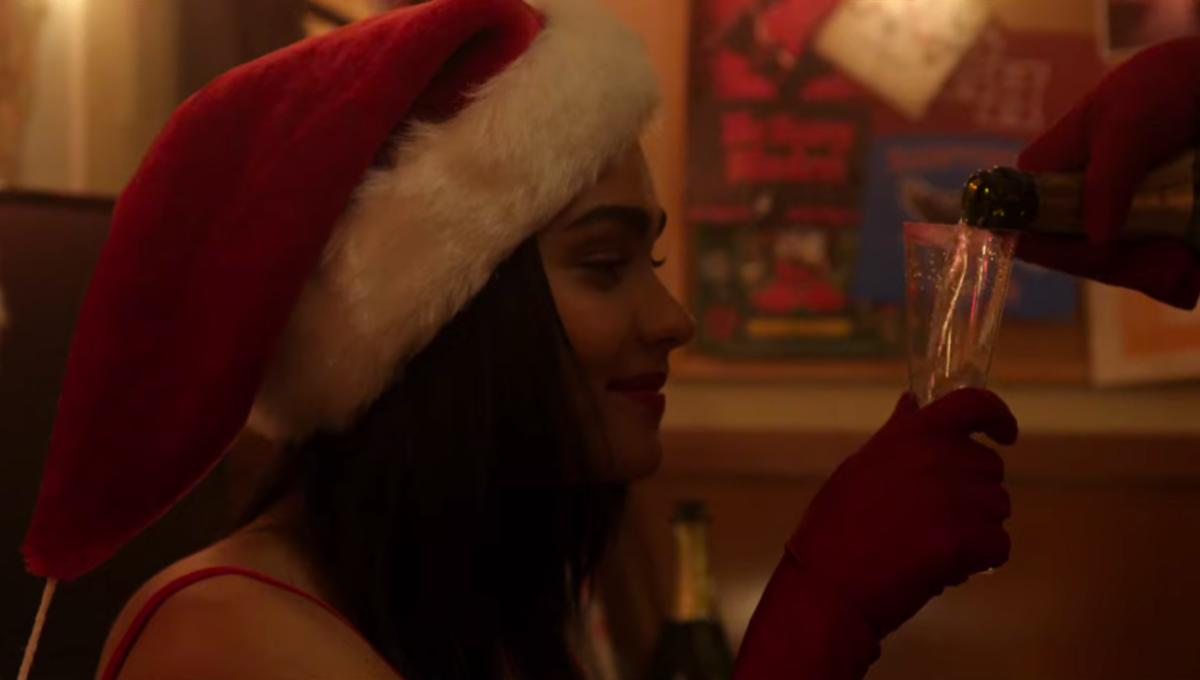
5 (new) Black Christmas (15) [above]
6 (5) Blue Story (15) ***
7 (new) The Nutcracker: Bolshoi Ballet 2019 (U)
8 (6) Le Mans '66 (12A) ***
9 (new) Jak Poslubic Milionera (12A)
10 (re) Home Alone (PG)

(source: BFI)

My top five: 
1. So Long, My Son

2. Eyes Wide Shut
3. The Kingmaker
4. The Umbrellas of Cherbourg
5. Ordinary Love


Home entertainment Top Ten (DVD/Blu-Ray/Download): 

1 (13) Once Upon a Time... in Hollywood (18) ***

2 (2) The Lion King (PG)
3 (1) Fast & Furious: Hobbs & Shaw (12) **
4 (3Toy Story 4 (U) ***
5 (new) Angel Has Fallen (15) **
6 (7) Aladdin (PG)
7 (4Spider-Man: Far from Home (12) ***
8 (5) Elf (PG) **
9 (6Rocketman (15) ***
10 (new) Dora and the Lost City of Gold (PG) ***

(source: officialcharts.com)

My top five: 
1. Yves Saint Laurent: The Last Collections

2. Once Upon a Time... in Hollywood
3. Dora and the Lost City of Gold
4. A Dog Called Money
5. Hail Satan?


Top five films on terrestrial television:
1. Back to the Future (Christmas Day, C4, 2.35pm)
2. Raiders of the Lost Ark (Friday, BBC1, 1.25pm)
3. The African Queen (Saturday, five, 10.45am)
4. The Manchurian Candidate (Monday, BBC2, 12.25am)
5. Toy Story 2 (Monday, BBC1, 1.25pm)

On demand: "The Two Popes"


The Two Popes is what you might call a papal indulgence. Netflix have paired the Brazilian stylist Fernando Meirelles (City of God, Blindness) with a talky script by the emergent British writer Anthony McCarten (The Theory of Everything, Darkest Hour, Bohemian Rhapsody) about a series of meetings that took place at the start of this decade between the then-Pope Benedict (played here by Anthony Hopkins) and Jorge Bergoglio (Jonathan Pryce), soon to become Pope Francis, about the challenges facing the Catholic Church in the first years of the 21st century. Though it develops late on, the initial set-up is every bit that of the sitcom the title promises. After blanking one another at the 2005 election that followed John-Paul II's death, Benedict calls Bergoglio to his Castel Gandolfo summerhouse to consider the path the Church should now take. There, they swap the clerical equivalent of war stories, and we watch two different personalities meeting somewhere in the middle: Benedict a crusty old puffin who has no clue what "Yellow Submarine" is and maintains "change is compromise", Bergoglio the worldly, forgiving moderniser, oblivious to the fact he's being sized up to fill the outgoing pontiff's shoes. That might seem an extraordinary situation, but right from the off, McCarten's editorial line is a jolly "Popes! They're just like us!" Bergoglio is introduced struggling to navigate telephone booking systems and hotel WiFi, and rushes back from these confabs to watch the football; Benedict has a Fitbit-style device that tells him when to get up and stay active. That's quite a nifty device for both bearer and movie, it turns out, in that it prevents any given scene from becoming too static.

You may wonder whether Meirelles himself was wearing something similar during production, given the antsiness of the film set before us. The Two Popes is by some distance the most eccentrically shot of this year's likely awards contenders, a ragbag of wobbly, hand-held close-ups, cutaways to details in paintings, and monochrome flashbacks that establish Bergoglio as something of a romantic figure (drawn into the priesthood after parting from the woman he loved) and exactly the right man for the job. (As in his retelling of the Stephen Hawking story, McCarten is interested in the getting of wisdom; it's just that Meirelles, working for a streaming giant, now has the resources to unscroll that process over the full width of the screen.) All this makes for livelier viewing than one might perhaps expect from an unpacking of Catholic dogma, yet much of it is still talk, and much of that talk is marked by evasion or deflection, a reluctance to address what these men should have been talking about. That circumlocution is, granted, pretty expert, and one derives a certain pleasure from watching two fine actors guiding us up the garden path and round the spiritual houses: Hopkins giving good distracted bluster, a typically precise Pryce countering with wry, self-effacing banter. Yet The Two Popes struck me as emerging from the same cosy corner as Wim Wenders' recent Pope Francis doc, keen as it is to reframe Catholicism as something reassuring and self-regulating. (It's a celebration of the Church's ability to keep its crises in-house.) There's money in such reassurance, as has been proven by the growth of the faith-based movie, and the Meirelles name presumably allows Netflix to better target The Two Popes at the flourishing Latin American market. I'm just not sure those who bore witness in Alex Gibney's expose Mea Maxima Culpa or the characters in Ozon's recent By the Grace of God would entirely agree with the thesis.

The Two Popes is now playing in selected cinemas, and streaming via Netflix. 
On demand: "The Dirty War on the National Health Service"


Context is everything. The Dirty War on the National Health Service, the latest dispatch in journalist-turned-filmmaker John Pilger's ongoing War series (previous entries: 2007's The War on Democracy, 2010's The War You Don't See and 2016's The Coming War on China) received a limited theatrical run towards the end of November 2019, when it might have played as feature-length confirmation of those viral videos posted on social media by NHS staff urging onlookers to vote for anyone other than the party that had spent ten years running their organisation into the ground. Purdah rules meant, however, that it couldn't be broadcast on television until after the election that returned the Conservatives to power with an even bigger majority. Brexit, so deleterious to the nation's wellbeing that it began with the assassination of a sitting MP, resulted in the Government stockpiling bodybags and wound up having a clinical psychosis named after it, was evidently more important in the electorate's eyes than health itself: get it done, they cried anew, whatever the cost, even if it does for you in turn. You therefore watch the contents of Pilger's film with sadder, perhaps angrier eyes now: see the vulture-like private healthcare firms circling a newly vulnerable public sector, the animatronic actors in the dreadful health insurance ads we're all about to see a whole lot more of, the deaths caused by the combo of incompetence and mismanagement at those self-same companies, the empty promises of protection from politicians, the heinous policy of "patient dumping", the final rallying call to concerned citizens, urging us to stand up to the Government, listen to our doctors, and defend an institution for which the prognosis surely has to be bleak now, if not outright terminal. The people may have spoken, but they won't know what they've got 'til it's gone.

For the Australian Pilger, the NHS is (and perhaps always has been, as everything in Britain continues to be) a class issue. Aneurin Bevan's original post-War conception of the NHS was a levelling of the playing field: its aim was to make good healthcare available to slum dweller and city gent alike, and to make sure everyone paid their fair share (by tax) to keep such care available. Decades of capitalism, which naturally disagreed with that thesis, have worn away whatever ringfencing was set around it, leaving us with what amounts to a two-tier system - part-public, part-private - dividing up whatever tawdry spoils can be wrung from healthcare, while ensuring the haves have far better access to quality healthcare provision than the growing number of have-nots. Pilger is even-handed in apportioning blame; the dwindling of the NHS is, in his eyes, every bit as much the fault of the Left as it is that of the Right. We get a concise takedown of New Labour's PFI scheme (illustrated in barbed fashion via a photo of Tony Blair standing side-by-side with Margaret Thatcher) before moving onto the Conservative-Lib Dem alliance that expanded these Ponzi schemes to make their own pals rich, outnumbered the scrubs on our hospital corridors with suits, and looked ever more avidly West. Pilger eventually does, too: what he sees there is grim even by the standards of scare stories from privatised healthcare, namely the uninsured American working classes queuing for hours at an agricultural showground to be inspected like horses. What the film diagnoses is a near-comprehensive failure on the part of all our statesman to take due care of our caregivers. As it touches on the necrotic spread of management consultant culture, the relentless subcontracting, the absurd efforts to replace doctors with apps (overseen by the robotic Matt Hancock) and the general hollowing out of Bevan's original idea, you may find yourself amazed the NHS is still standing even in its current parlous state.

As polemic, the film is effective but rough-edged: Pilger would presumably regard the slickness of Sigma ad campaigns as a marker of inauthenticity, but a touch more finesse in his own rhetorical construction wouldn't have gone amiss. He's especially impatient in his cutting, barely allowing his witnesses to get to the end of their sentences in his rush to set this info before the general public; as a filmmaker, there's still something of the newspaperman about him, rushing to meet a tight deadline. (Similarly, he's a little lax in his labelling: we're offered plenty of doctors among the talking heads - and their manner reassures us they know whereof they speak - but I kept wanting to know more about their experience, where they sit in the system, and the onscreen credits are basic at best.) Pilger isn't above one dirty trick of his own. He doesn't need the split-second he keeps in of the CMO of health app Babylon looking shifty before his cameras rolled; the film's argument against the impersonal form of care his interviewee is peddling is strong enough, though I'll concede that strong, reasoned, principled argument didn't seem to sway many minds at the ballot box last week. The film's real strength lies in condensing a lot of pertinent information into a single 100-minute sit: you'll emerge feeling better informed and, unless you're one of those besuited vultures, appalled at the fact there is no good idea - even a potentially life-saving idea - that our moneymen can't keep their grubby little hands off. Three days before Pilger's film finally aired on ITV - just 48 hours after the election of Boris Johnson - news broke that the Tory promises to protect the NHS made during the campaign were already being dialled back and reneged upon. At the current rate of progress, this war may be over in a matter of months. Happy Xmas. Stay healthy.

The Dirty War on the National Health Service is now streaming via the ITV Hub.

Monday, 16 December 2019

From the archive: "A Most Violent Year"


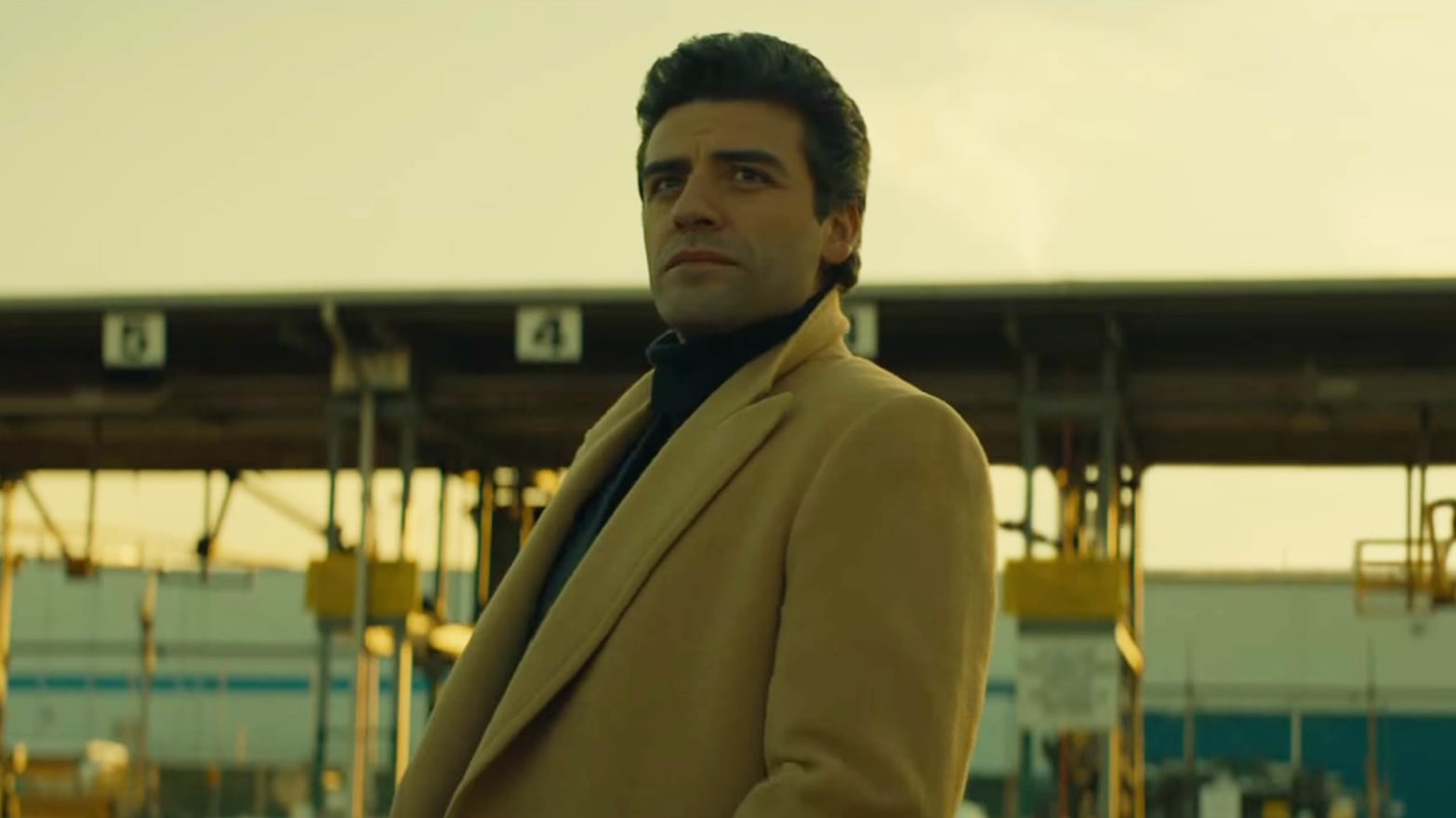
The American writer-director J.C. Chandor has come to specialise in movie explorations of a most contemporary phenomenon: crisis management. His 2011 debut Margin Call found Wall Street bankers trying to steady a company ship in the hours before their bad investments came to light; 2013’s All is Lost saw old-man-of-the-sea Robert Redford faced with a leaky vessel and a gathering storm. With his new film A Most Violent Year, Chandor takes us back to seedy early 80s New York, where we find Abel Morales (Oscar Isaac), an upwardly mobile heating oil magnate facing multiple professional challenges.

I hear your cries. A movie set within the heating oil industry? What next: a big-screen expose of insider trading among Avon ladies? Funny thing: Chandor does just about all he can to make this world come alive, and to stock it deep with cutthroat drama. Morales’ drivers are being attacked by goons employed by some as yet unidentified rival supplier; he has the cops looking into his finances; and he’s trying to close a deal on a processing plant that would mark a step up to the big leagues.

From the script’s slow, steady drip of exposition, we learn that Abel took over the company from his wife’s father, and that he was once a driver himself, hence his quaintly protective relations with his put-upon minions. The drama stems from the realisation he’s not the top dog we initially take him for, rather a struggling middleman. As Abel’s pulled every which way by increasingly ruthless market forces, his ties with his workers will be tested, and brutally severed. Another American dream gives way to American nightmare.

Some claimed All is Lost as a parable of globalisation: the container that ruptured the Redford hull was, after all, transporting cheap trainers from unknown here to untold there. It may therefore be crucial that A Most Violent Year unfolds in 1981, that year when the Reagan administration obtained its mandate. In Abel’s parable, there lies the genesis of corporate capitalism, that big-bang moment when it suddenly wasn’t enough to sell a man a cup of oil to heat his home; now, you had to crush all rivals so as to obtain the monopoly that allows you to charge him more.

All Chandor does is make this destabilisation literal, in the attacks on Morales personnel, and a couple of high-tempo pursuits that are surely indebted to Friedkin’s The French Connection. Echoes of other urban crime movies abound, yet to the frenzied expansionism of the DePalma Scarface and Scorsese’s 21st-century update The Wolf of Wall Street – films very much of their excessive times – Chandor counters with a level-headed, MBA-schooled perspective: we’re closer to the altogether more austere stamping grounds of James Gray (The Yards, We Own the Night).

In cinema, as in the real world, such austerity measures can be a double-edged sword. Bradford Young’s hibernal cinematography – channelling Gordon Willis’ Godfather work – puts the cold back into your bones, and the cast downplay their reactions to the mounting chaos; it never once overheats, and nobody’s going to come away with a “say hello to my little friend” impersonation to work on. The most outlandish character, Jessica Chastain’s Mrs. Morales – pulling strings in Lady Macbeth-meets-Lady Gaga wigs, while pushing her man towards a more extreme position – gets left behind while the plot closes in on one errant driver.

Still, there are plus points, not least another demonstration, after Inside Llewyn Davis and The Two Faces of January, of Isaac’s supreme versatility. His Abel is almost an anti-Scarface (key line: “I spent my whole life trying not to become a gangster”), desperately trying both to save his hide and do the right thing, and coming to realise – as many CEOs have realised in the years since – that the two may be mutually exclusive.

If A Most Violent Year is, like its protagonist, a bit too cool to stir the blood, it’s always seeking out further context for the systemic mess we now find ourselves in: the punchy ending reminds us once again how oil, the lifeblood of American industry, cannot be tapped, pumped or controlled without a good deal of dirty work, and not the least amount of collateral damage.

(MovieMail, January 2015)

A Most Violent Year screens on BBC1 tomorrow (Tue 17) at 11.55pm.

From the archive: "Carol"


Back in 1952, Patricia Highsmith’s The Price of Salt was considered a story that couldn’t be aired or shared easily: a forbidden book about a forbidden love, it emerged only after its author had adopted a pseudonym. Well, things change. In 2015, Todd Haynes can happily sign his own name to Carol, an adaptation that – with no strain, and no small amount of grace – brings the love between two women out into the softest, most flattering winter light, and transforms what was once considered sordid or deviant into a beautiful, many-splendored thing.

It is as much a romance of objects as it is of people; it’s telling that the initial meet-cute should take place in a department store. It’s here where, in her fluster to order a Christmas present for her daughter, unhappily married socialite Carol Aird (Cate Blanchett) leaves a glove behind on the counter of wide-eyed shopgirl Therese Belivet (Rooney Mara). With this Cinderella gesture, these two are united: the woman of the world and the impressionable young thing.

With her hairband and uniform, Mara does indeed look fresh from the seminary, and what follows proves as much education as romance. The film’s first half, heavily weighted towards the Leica-touting Therese’s POV, carries us along on the thrill of a girl’s first major love. Haynes’ camera gazes with wonder at Blanchett, wrapped in Sandy Powell furs and presented as the best present a gal could want: a confidante with supreme self-confidence, an easy way with a cigarette and a cocktail glass, and a snow-dusted house with gifts under the tree.

Yet the most sophisticated gambit in Phyllis Nagy’s fine script – the approach that allows the film to temper adoring innocence with some degree of experience – is to dot this initial courtship with scenes that show Carol alone, and barely holding it together. As divorce proceedings get nastier, the film hints how taking cocktails at four in the afternoon can be a sign of incipient alcoholism as well as sophistication; it keeps reminding us that anything picked up in a department store can be returned within thirty days.

If we come to share Therese’s uncertainty, it’s because we’re never entirely certain what she is to her older lover. A rebound fling? A schoolgirl fantasy? The means to recapturing a lost youth? The trick Haynes pulls off is to show us the mismatch between the images we compose of loved ones in our mind’s eye, and the reality standing in front of us – while allowing just enough lovestruck rapture to permeate each frame for the viewer (and, indeed, the lover) to go along for the ride. Carol could make hopeful romantics of even the most jaded among us.

This very particular tension sustains much of the second half, as Carol and Therese set out for the country as Christmas approaches: two outlaws on the run, bringing us into more familiar Highsmith territory. We’re left to wonder who, if anyone, will get hurt – for the pain Haynes inscribed into 2002’s Far From Heaven surely lurks around the next bend – and what, if anything, this pair will have to get back to as the New Year rolls around.

Even here, though, Haynes deals in pleasure; the sensitivity of adaptation extends to an exemplary attention to craft. Ed Lachman’s cinematography adds an acid candy-cane twist to every Norman Rockwell tableaux; Carter Burwell’s score, the lovechild of Philip Glass and Danny Elfman, strands us, along with these characters, between deadening order and possible fairytale; Judy Becker’s production design and Jesse Rosenthal’s art direction deck out each motel with curtains you want to draw, and bedlinen you want to wrap yourself in.

Nothing is forced; everything is of a piece and a place and a time, as it would be in an especially vivid formative memory, whatever the outcome. The result is a rare movie romance that evinces the best kind of love: the kind that creeps up on you, quietly steals your heart and then – at the right moment, with no more than a simple glance – lights you up.

(MovieMail, November 2015)

Carol screens on Channel 4 tonight at 1.55am.

Sunday, 15 December 2019

For what it's worth...


Top Ten Films at the UK Box Office 
for the weekend of December 6-8, 2019:

1 (1) Frozen II (U) **

2 (2) Knives Out (12A) ***
3 (3) Last Christmas (12A)
4 (new) Les Misérables: The Staged Concert (12A)
5 (4) Blue Story (15) ***
6 (6) Le Mans '66 (12A) ***
7 (re) Gremlins (12A) ***
8 (new) Motherless Brooklyn (12A)
9 (re) Elf (PG) **
10 (5) Charlie's Angels (12A) **

(source: BFI)

My top five: 
1. So Long, My Son

2. Eyes Wide Shut
3. The Umbrellas of Cherbourg
4. Ordinary Love
5. Fiddler: a Miracle of Miracles


Home entertainment Top Ten (DVD/Blu-Ray/Download): 

1 (4) 
Fast & Furious: Hobbs & Shaw (12) **
2 (1The Lion King (PG)
3 (2) Toy Story 4 (U) ***
4 (3Spider-Man: Far from Home (12) ***
5 (13) Elf (PG) **
6 (5) Rocketman (15) ***
7 (6Aladdin (PG)
8 (8) Yesterday (12) **
9 (7) The Grinch (U)
10 (9) Avengers: Endgame (12) **

(source: officialcharts.com)

My top five: 
1. Yves Saint Laurent: The Last Collections

2. Once Upon a Time... in Hollywood
3. Dora and the Lost City of Gold
4. A Dog Called Money
5. Hail Satan?


Top five films on terrestrial television:
1. Brief Encounter [above] (Monday, BBC2, 3pm)
2. Carol (Monday, C4, 1.55am)
3. A Most Violent Year (Tuesday, BBC1, 11.55pm)
4. Logan (Saturday, C4, 9.10pm)
5. Love & Friendship (Monday, BBC2, 11.20pm)

Up on the roof: "Fiddler: a Miracle of Miracles"


Fiddler: a Miracle of Miracles, Max Lewkowicz's docu-celebration of Fiddler on the Roof in all its incarnations, errs a little on the literal side: opening with footage of an actual fiddler on an actual Manhattan roof, it goes on to revisit this story's transition from book to stage to screen to high-school production using the broadly familiar methodology of interspersing archive footage with talking heads. What's interesting and oddly engaging about it is that everybody Lewkowicz calls to testify - ranging from original lyricist Sheldon Harnick to current king of Broadway Lin-Manuel Miranda - is caught trying to figure out how such a niche item (an evocation of shtetl life amid the pogroms of the early 20th century) became so successful and enduring. In the play - first staged on Broadway in 1964 - the fiddler on the roof is cited as an absurd image, one that makes no sense; some of that absurdity continues to hang over United Artists' 1971 film with Topol, directed by a goy (the misleadingly named Norman Jewison), which made its money back at the moment of the New American Cinema, where other lavish late-period studio musicals (Doctor Dolittle, Camelot, Paint Your Wagon) did not. (Truly, it was the chosen one.) The argument the film builds is that Sholem Aleichem's original material existed at the intersection of tradition (or "Tradition!") and modernity, allowing very different audiences to see very different things in it: what preserved a memory of Jewish family life for any onlooking greyhairs was also seized upon as a lightly irreverent celebration of outsiderdom by the longhairs who'd turned out for Hair a few years before. Equally, though, it could just be as one of Hollywood's smartest Jews put it: nobody knows anything.

What Lewkowicz's film makes a substantial case for, however, is that this phenomenon would have been nothing - a novelty hit at best - were it not for the support of committed, capable artists with a deep-rooted connection to this material. Jerome Robbins (born Rabinowitz), director-choreographer of the original staging, only took on the gig after visiting his ancestors' village in Eastern Europe, and seeing firsthand how extensively the Jewish population was wiped out over the century's first decades. Is the play's Jewishness, then, the key to understanding its success? One theory floated here is that Fiddler served as a counterhistory, returning to the front and centre of a stage in late 20th century America everything that the Russians and Nazis purged; that its joyful, l'chaim-ing song-and-dance was meant as a fuck-you to any oppressors still lurking out there. (Could the fiddler on the roof not also be an image of defiance?) That doesn't quite explain why the musical found its way into the high-school repertoire, though - nor why it took off in Tokyo as it did. Maybe it's just Harnick and co-writer Jerry Bock's songs, good enough to have been covered by the Temptations in their late 60s prime, bouncy enough to have been covered by the Australian thrash metal band Yidcore, familiar enough to have been pastiched by Half Man Half Biscuit ("If I were a linesman/I would execute defenders who applauded my offsides"). This viewer would still take the kinkier Yentl over Fiddler, and it's a shame some enterprising distributor hasn't reissued Jewison's movie (last observed in UK cinemas back in 2001) by way of a reference point, but Lewkowicz does a better job of scholarship than might initially be expected from his prosaic framing: you emerge from Fiddler: a Miracle of Miracles convinced a film once thought of as Bank Holiday schedule filler contains almost as many insights and mysteries as the Talmud.

Fiddler: a Miracle of Miracles is now playing in selected cinemas.