Saturday, 10 February 2018

For what it's worth...


Top Ten Films at the UK Box Office 
for the weekend of February 2-4, 2018:

1 (4) 
The Greatest Showman (PG)
2 (2) Coco (PG) ***
3 (1) Darkest Hour (PG) **
4 (5) Early Man (PG)
5 (3) Maze Runner: The Death Cure (12A)
6 (new) Den of Thieves (15) **
7 (6) The Post (12A) ***
8 (7) Three Billboards Outside Ebbing, Missouri (15) ***
9 (8) Jumanji: Welcome to the Jungle (12A)
10 (new) Phantom Thread (15) ***

(source: theguardian.com)

My top five: 
1. Padmaavat

2. Loveless
3. Phantom Thread
4. Journey's End
5. The Cinema Travellers


Top Ten DVD sales: 

1 (new) Kingsman: The Golden Circle (15) **
2 (1) Victoria and Abdul (12A) **
3 (2) It: Chapter One (15) ***
4 (new) Kingsman: Double Pack (15) *
5 (3) Dunkirk (12) ***
6 (21) Fifty Shades Darker (18)
7 (10) La La Land (12) ***
8 (8) Paddington (PG) ****
9 (new) God's Own Country (15) ****
10 (9) Sing (U) ***

(source: officialcharts.com)

My top five: 
1. A Woman's Life

2. Beach Rats
3. Loving Vincent
4. Strangled
5. Blade Runner 2049


Top five films on terrestrial TV this week:
1. The Silence of the Lambs (Saturday, five, 10.30pm)
2. Sleepless in Seattle [above] (Sunday, five, 4.30pm and Wednesday, five, 10pm)
3. School of Rock (Sunday, C4, 2.35pm)
4. The Deep (Sunday, BBC2, 12.40am)
5. Spy (Sunday, C4, 9pm)

Men in war: "Journey's End"


I was going to suggest that Saul Dibb's new screen version of R.C. Sherriff's WWI-set play Journey's End had arrived in UK cinemas at just the right moment, with Dunkirk fever carrying over into the 2018 awards season, and audiences queuing up to watch Gary Oldman huff and puff his way through one of Mike Myers' cast-off fat suits. Then I saw the box-office returns. As it is, this Journey's End will likely be joining James Kent's very fine 2014 adaptation of Vera Brittain's Testament of Youth on that list of recent British war movies whose rejection of triumphalism and refusal to wave flags - coupled, no doubt, to the absence of Harry Styles-level stars - have counted against them: nothing here could be claimed as an advert for the Empire, or a Boris Johnson wet dream. Sherriff wanted us to hunker down in the mud and stench of the trenches, the better to see where nationalism gets us; Dibb - thanks in large part to Kristian Milsted's choice and careful production design, a consolidation of Blackadder Goes Forth's trenchwork - pins us down there, with death and defeat waiting on the other side of the sandbags. No wonder audiences haven't fancied it.

As observed through the lens of Ben Wheatley's regular cinematographer Laurie Rose, this is never an overtly pretty picture, which leaves Journey's End at odds with that prevailing, somewhat flattering strain of post-Downton period cinema. Generically, it may, in fact, lie closer to a horror movie like 2001's The Bunker, establishing its diverse rollcall of personalities - damaged Sam Claflin, avuncular Paul Bettany, fresh-faced Ava Butterfield, pugnacious Stephen Graham - who we're fairly certain won't all come back alive, then showing up the first act's essentially comic concerns (someone's crocuses, pineapple mislabelled as apricots, "yellow soup") as increasingly trivial over the course of the week leading up to the Germans' Spring Offensive. Where Sherriff was working towards a portrait of a generation all but wiped out by the end of 1918, Dibb offers a snapshot of a generation of actors. Unlike the egregious ham-enabling of Darkest Hour, this does feel like an ensemble movie of the old school, setting the wide-eyed rookie Butterfield, rather like the Charlie Sheen character in Platoon, between such dependables as Bettany, Graham and Toby Jones (nicely cast as the droll cook Mason, doing his best with cups of onion tea) and the much-improved Claflin, who's spent the past few years weaning himself off lucrative yet bland hunk roles, and has emerged as a far sturdier presence for it, comprehensively wiping the floor with Tom Sturridge's Hibbert in a manner Sherriff could never have foreseen.

The drama could do with a bit more of his oomph. Entering onto screens that have recently been blasted not just by Dunkirk but Mel Gibson's Hacksaw Ridge, Dibb's film still feels theatrical to some degree, beholden to Sherriff's waiting games and his characters' talk. It is a challenge to make deathly boredom and isolation cinematic, and Journey's End gets only three-quarters of the way there. Once we venture over the top, Dibb is hampered by the kind of budget that doesn't allow for screen-filling carnage (Star Trek-like camera wobbling has to suffice) and his producers' desire for a more commercially appealing certificate; one key death goes unnoticed at the time, and only in the final movement, as a recurring nightmare becomes hellish reality, does the film begin to suggest any real vision of warfare. (Although he's moved squarely into the realms of prestige costume drama - first with the Beeb's adaptation of The Line of Beauty, then 2008's The Duchess and 2014's Suite Française - Dibb has never made anything quite as urgent as his 2004 debut Bullet Boy.) Still, at a moment when he who bellows loudest seems destined to land the commercial and red-carpet spoils, the film's modesty might be considered a virtue: it's a decent, sincere war movie, gathering up tiny, touching, true-seeming scenes and moments as a spooked Tommy might the ammunition he'd spilled while coming under fire. Perhaps it was always doomed, one way or another; you find your sympathies heading its way nevertheless.

Journey's End is now playing in selected cinemas. 

Slow Byrne: "Lies We Tell"


The cobbled together Poverty Row effort Lies We Tell opens with fallen icon Harvey Keitel being chauffeur-driven through the mean streets of Bradford in a car bearing the registration number 1 CEO. Just in case we hadn't already got the idea, director Mitu Misra then cuts to a close-up of Keitel chortling to himself while tearing into bank-fresh stacks of £50 notes... and three minutes later, the character - a hard-drinking, much-philandering Greek businessman - has dropped dead, leaving the actor headed to the airport, and thence the set of those home insurance ads, having presumably pocketed a not incomparable wodge of cash for himself. Left behind to curse his agent is Gabriel Byrne, as the driver whose dumb loyalty to his boss extends to keeping an eye on his glamorous younger mistress Amber (Sibylla Deen, late of Home & Away). Making the moll of Muslim heritage is a new and interesting angle for any crime picture to pursue, and Misra's screenwriters Ewen Glass and Andy McDermott have paid a measure of lip service to cultural specifics, but Amber's fraught domestic life, unfolded on oddly lit soap opera sets, proves far less dramatically credible than anything depicted in the average episode of Citizen Khan.

The main narrative thrust is melodramatic: think Someone to Watch Over Me, albeit a Someone to Watch Over Me relocated to a wonky vision of the North, where any attempts at sophistication or gloss are instantly undercut by the presence of Hollyoaks-level players in supporting roles, Mark Addy (as bumptious comic relief) pissing in Byrne's sink, and higher-than-average levels of distracting background detail. (Particularly choice: a Nando's substitute called Chickano's, and the nightclub apparently called "Score", situated on an unprepossessing industrial estate next to "West Mills Pets", where the entertainment runs to tattooed belly dancers and enforced lady-groping.) As our understandably world-weary white knight, Byrne gamely troops through it all, ensuring at least a few square centimetres of the frame retain an illusion of seriousness: he has half a good scene with Gina McKee as his soon-to-be-ex-wife before some goon pulls out a shooter, but there's not much he can do to rescue the tangent that sees him and Addy going to fly a kite, or a finale that demands he growl at an attack dog on a clifftop. You can admire the entrepreneurial guile involved - that Keitel cameo helped get the film into Showcase cinemas across the land its first weekend, not that it's likely to stick around for a second - but not a single minute ticks by without some element ringing false or just plain silly.

Lies We Tell is now playing in selected cinemas. 

On demand: "The House on Coco Road"


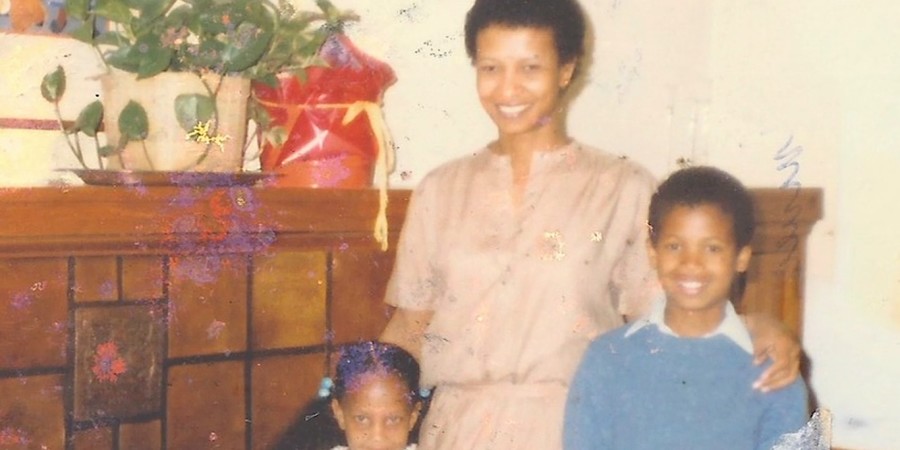
The documentary The House on Coco Road opens with a brow-furrowing pile-up of archive footage, juxtaposing images of American and Grenadan life from 1983, 1999 and 2015, laying the personal alongside the political. The filmmaker Damani Baker apparently discovered these images in a box while helping his mother, the civil rights activist Fannie Haughton, move house, and for some while here, we can sense him sorting and picking through this found footage, attempting to put each frame in order, and to make a greater sense of what they collectively represent. The film that has emerged from this process serves as both a small yet appreciably intimate chapter of black history - a worthy follow-up to Baker's cherishable Bill Withers study Still Bill - and a son's tribute to the mother who raised him right. 

Haughton, a beneficiary of the Great Migration, was raised in South Central in the 1950s, becoming first a student of, then an assistant to, Angela Davis during her time at UCLA; after Davis' arrest in 1970 and America's descent into internal chaos, she took off around the world, eventually - after giving birth to young Damani, and leaving his father - ending up in Grenada at a crucial moment in the island's push for self-determination. It was here that the lawyer Maurice Bishop, head of the revolutionary New Jewel Movement, was encouraging his compatriots to shake off the "Coca-Cola mentality" he felt America had imposed upon the world, and to work towards a more equal society: a dream crushed when President Reagan took Bishop's words and actions for a Soviet-Cuban plot, and sent in troops to quell the unrest in October 1983.

For Haughton, it was a case of out of the frying pan and into the line of fire; for Baker, it's an issue of getting his head around how his family went from sharecropping in the impoverished South via revolutions small and large, successful and unsuccessful, to having the freedoms and leisure time to make movies that get picked up by Netflix and shown around the world. That social mobility is reflected in Coco Road's snappy pacing, which allows it to cover an entire century of movement (and movements) in a little under eighty minutes. It helps that Baker has a ready-made villain in Reagan, the thin-lipped figure of white privilege who (as Governor of California) hounded Davis off-campus, even before (as President) he launched the military operation that sent this particular clan scurrying back to the mainland.

Baker's account of the Bishop uprising, and how it came to an end, is especially valuable, given how little these events have been covered in the movies - but crucially the bulk of the the film's commentary is shared between those women, like Fannie, her friends and neighbours, who spent this turbulent period attempting to make a home and raise a family. Here again, the personal intersects with the political. As suggested by the rediscovery of a "What I Did on My Holidays" essay penned by the young Baker - complete with schoolboy crossings-out and misspellings ("I hurd a lot of gunfire") - there was a formative moment buried somewhere within these reels of archive footage: the point where a wide-eyed imagemaker-to-be first spotted the ways of the Western world, and how those tend to be reported on the homefront.

The image the American news media painted of Reagan at that time was of a great liberator, an extension of his movie cowboy persona, leading the cavalry in to spare the palefaces. ("We got there just in time," he's heard to say during a TV address.) It's an image that perplexed Baker even back then: recalling watching news reports in the wake of his family's return to the US, he laments that "the Grenada I knew was nowhere to be seen". His film, an unusually, distinctively laidback history lesson, provides its own counterimages, not least in the pin-sharp final montage recapping those events this family has lived through, and the myriad other injustices white America has wrought on its black citizens. Yet even here Baker floats a kind of hope: we survived, he notes - now watch me take back the means of production.

The House on Coco Road is now streaming on Netflix. 

Friday, 2 February 2018

For what it's worth...


Top Ten Films at the UK Box Office 
for the weekend of January 26-28, 2018:

1 (2) 
Darkest Hour (PG) **
2 (1) Coco (PG) ***
3 (new) Maze Runner: The Death Cure (12A)
4 (4) The Greatest Showman (PG)
5 (new) Early Man (PG)
6 (3) The Post (12A) ***
7 (6) Three Billboards Outside Ebbing, Missouri (15) ***
8 (5) Jumanji: Welcome to the Jungle (12A)
9 (new) Downsizing (15) **
10 (new) Padmaavat (12A) ****

(source: theguardian.com)

My top five: 
1. Padmaavat

2. A Woman's Life
3. The Cinema Travellers
4. Last Flag Flying
5. The Post


Top Ten DVD sales: 

1 (new) Victoria and Abdul (12A) **
2 (1) It: Chapter One (15) ***
3 (3) Dunkirk (12) ***
4 (new) Peaky Blinders: Series 4 (15)
5 (new) Wild River (15)
6 (2) American Assassin (18) *
7 (new) mother! (18) *****
8 (4) Paddington (PG) ****
9 (6) Sing (U) ***
10 (11) La La Land (12) ***

(source: officialcharts.com)

My top five: 
1. mother!

2. I Am Not a Witch
3. Beach Rats
4. God's Own Country
5. Dina


Top five films on terrestrial TV this week:
1. The Silence of the Lambs [above] (Monday, five, 10pm)
2. Lethal Weapon (Saturday, ITV1, 10.45pm)
3. Looper (Friday, BBC2, 11.05pm)
4. Suffragette (Saturday, C4, 9pm)
5. Elizabeth (Sunday, C4, 11.15pm)

"Den of Thieves" (Guardian 02/02/18)


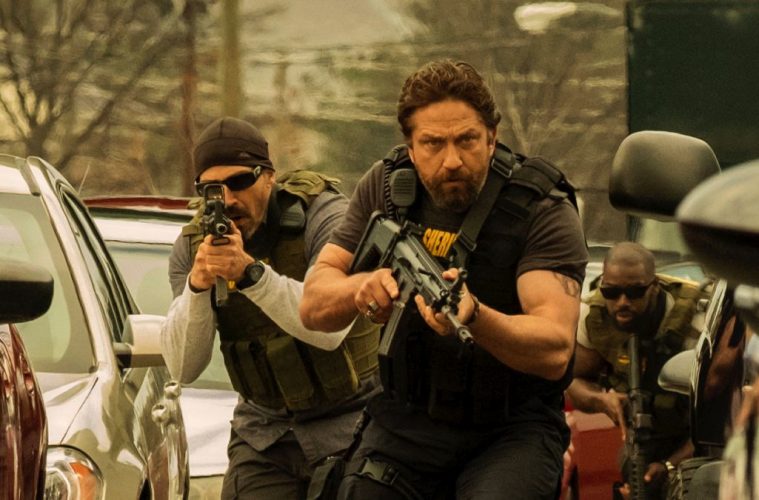
Den of Thieves **
Dir: Christian Gudegast. With: Gerard Butler, Pablo Schreiber, O’Shea Jackson Jr., Curtis “50 Cent” Jackson. 140 mins. Cert: 15

It’s been 23 years since Michael Mann’s landmark L.A. crime opus Heat alchemised pulp into gleaming screen spectacle, raising the possibility an entire generation has gone unaware of the symbiotic cops-and-robbers trope. Writer-director Christian Gudegast here leaps into that demographic gap with a film that falls somewhere between Mann fan art and an extended upgrade of those late-Nineties knock-offs with titles like City of Industry and Body Count. The script, co-credited to Prison Break mastermind Paul Scheuring, outlines yet another mirrored face-off. On one side, jacked and tatted outlaws – headed by Orange is the New Black’s Pablo Schreiber – who have the audacity to steal an empty armoured van for reasons initially unclear; opposite them, jacked and tatted detectives, headed by all-drinkin’, ever-smokin’ bad boy Gerard Butler, some indication of where we are in relation to the film’s obvious inspiration.

It has a few new angles (50 Cent uses Schreiber’s heavies to unsettle his daughter’s prom date), and some of its hand-me-downs remain eye-catching: the decision to shoot L.A. as a living, working environment isn’t remotely original, but appeals nevertheless. Other cribs – like Butler’s relationship with his soon-to-be-ex (Dawn Olivieri), a flat Xerox of Mann’s Pacino-Diane Venora business – yield chuckles, however, and the generally hopped-up, steroidal approach can be seen in an insistence that its antagonists coincide every quarter-hour, in sushi bars, firing ranges, even a shared lover’s parlour. Analogue in its effects, it’s the kind of throwback that may just win over videoshop nostalgists – though they’ll still have to plough through hunks of unleavened cliché, a dumb-as-nuts final flourish, and so much pec-flexing and armed alpha willy-waggling it often resembles a men’s rights bonding weekend more than it does a movie.

Den of Thieves opens in cinemas nationwide today.

Thursday, 1 February 2018

From the archive: "This is 40"


Pete and Debbie, the married couple at the centre of Judd Apatow’s midlife comedy This is 40, were having problems as far back as 2007’s Knocked Up, where they first appeared as a mirror image – or warning from history – to young lovers Seth Rogen and Katherine Heigl. They’ve been in a holding pattern ever since: Debbie (Leslie Mann) running a boutique when she’s not attending to the pair’s two kids, Pete (Paul Rudd) heading up a struggling record label (latest signing: Graham Parker and the Rumour) that constitutes a clear clinging onto his glory days.

Debbie’s the older, by mere days temporally, by light years emotionally: the film opens on the morning of her 40th birthday, though she insists on being referred to as 38, and it will close with Pete’s 40th. In between, it becomes obvious the two love one another, and continue to make one another laugh; yet what the film also observes is a layer of age-specific BS – doubts, fears and neuroses – beginning to settle between them, which has somehow to be swept away before any second or third acts can be embarked upon together.

As suggested by the title, and the casting of his own daughters Maude and Iris as Pete and Debbie’s kids, Apatow is composing a snapshot here, in the tradition of those late 80s/early 90s Ganz-Mandel photo albums Parenthood and City Slickers. This is 40 has a sure feel for the stuttering rhythms of family life: the mealtimes, the homework, the doctors’ appointments, the screaming fits. Amid this, Pete and Debbie struggle to make time for themselves; we spot how quickly they’re obliged to return to mom-and-pop normality after the quickie thrills of a weekend away.

Yet there’s a growing divide between the couple, and the film hits upon what feels like a truth: that, around 40, women’s lives begin to open up, where their men cling stubbornly to a small group of friends, interests, a set playlist of comfortingly familiar, if generally depressive songs. For Debbie, the couple’s lavish L.A. pad becomes a bright new realm of possibilities; Pete just sees the grave wherever he looks. While negotiating some common ground between these perspectives, the couple will hide a potential life-changer from one another – hoping to restore that air of mystery dissipated whenever they walk in on one another’s ablutions.

If you’ve come for Apatow’s trademark pop-culture riffs, they’re all here, including a cherishable one-line description/dismissal of Mad Men. As a director, however, his syntax – jarringly patching in jokes, subplots and other afterthoughts – remains shaky, and trace elements of the incorrigible manboy can be seen in the scene where Debbie is invited to fondle Megan Fox’s breasts before they “go National Geographic”. Still, you could argue this fascination with wobbly bits reflects our enduring bodily urges, and it’s maybe a risk any filmmaker prepared to use their comedy as a probe (rather than just a tickling-stick) faces: sometimes you hit a nerve, other times it’s a sore spot.

That we hope Pete and Debbie can get over these and other humps is finally down to two supremely charming performances. Rudd again willingly and winningly denudes himself of any hint of male vanity as Pete comes to terms with the fact he’s kind of a tool – a nice tool, but a tool, nonetheless. Mann is even better yet, pulling off a terrific switch as Debbie’s nurturing instincts scupper her dressing-down of a kid who’s dissed her daughter on Facebook, then further winning us over with her disbelief at the fact anyone other than her distracted husband could possibly find her attractive.

That the camera often appears more than half in love with her may have something to do with the fact the actress is Mrs. Judd Apatow – but even the Debbie-less scenes serve as evidence of one of too few contemporary American filmmakers actively embracing what it is to grow up, and determining to show us how the accumulation of years might leave some of us older, but not necessarily any wiser. It’s a longish journey – stuck with a static third act, as everybody gathers at Pete’s fortieth to work through their issues over cake – but unusually funny, touching and insightful with it.

(MovieMail, February 2013)

This is 40 screens on Channel 4 tomorrow night at 12.10am.