Friday, 15 December 2017

For what it's worth...


Top Ten Films at the UK Box Office 
for the weekend of December 8-10, 2017:

1 (1) 
Paddington 2 (PG) ****
2 (2) Daddy's Home 2 (12A)
3 (4) Wonder (PG)
4 (3) Justice League (12A)
5 (5) Murder on the Orient Express (12A)
6 (new) The Disaster Artist (15) ***
7 (6) Thor: Ragnarok (12A) ***
8 (7) A Bad Moms Christmas (15)
9 (new) The Nutcracker: Royal Opera House (U)
10 (new) Stronger (15)

(source: theguardian.com)

My top five: 
1. A Matter of Life and Death

2. The Muppet Christmas Carol
3. Mountains May Depart
4. The Big Heat
5. Beach Rats


Top Ten DVD sales: 

1 (1) War for the Planet of the Apes (12) ***
2 (4) Despicable Me 3 (U)
3 (7) Micky Flanagan: An' Another Fing Live (15)
4 (3) Spider-Man: Homecoming (12) **
5 (2) The Emoji Movie (U)
6 (new) Olaf's Frozen Adventure (U)
7 (new) Captain Underpants (U)
8 (8) Beauty and the Beast (PG) ***
9 (5) Paddington (PG) ****
10 (6) Trolls: Holiday (U)

(source: officialcharts.com)

My top five: 
1. An Inconvenient Sequel: Truth to Power

2. Dunkirk
3. 78/52
4. Girls Trip
5. Journey Through French Cinema


Top five films on terrestrial TV:
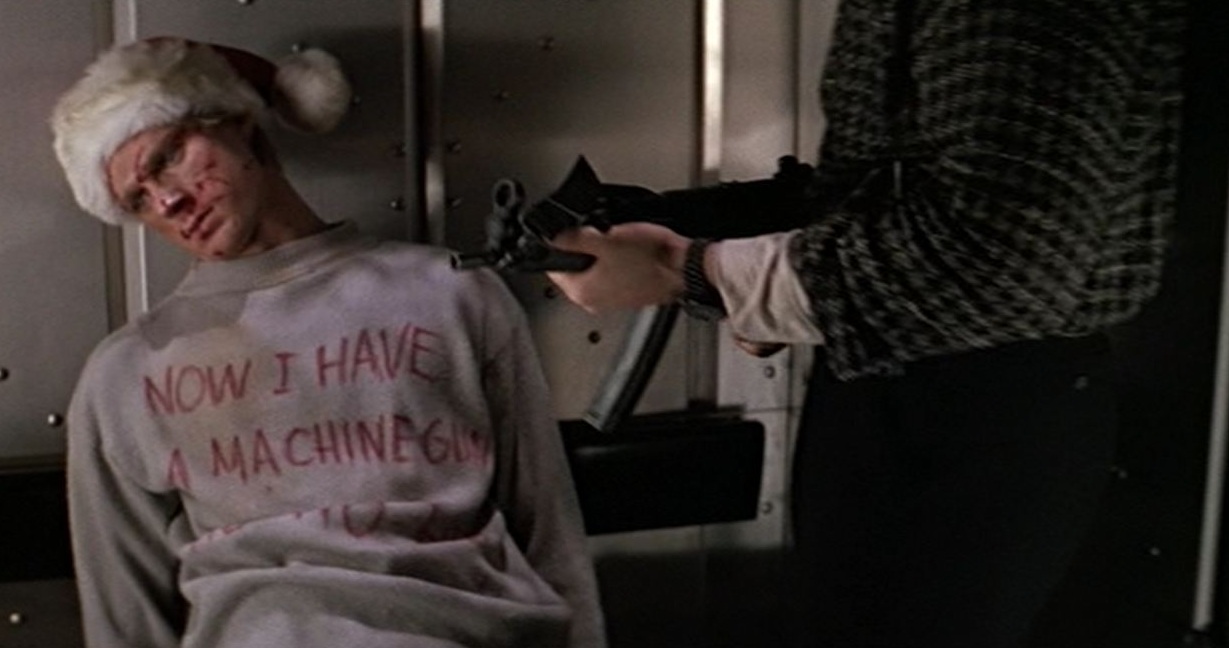
1. Die Hard [above] (Sunday, C4, 10pm)
2. Toy Story 2 (Sunday, BBC1, 2.50pm)
3. Raiders of the Lost Ark (Wednesday, BBC1, 1.45pm)
4. Miracle on 34th Street (Sunday, C4, 5.50pm)
5. Wallace & Gromit in the Curse of the Were-Rabbit (Thursday, BBC1, 3.35pm)

Thursday, 14 December 2017

From the archive: "Star Wars: The Force Awakens"


So here it is, then: the Second Coming. Expectations have expanded stratospherically in the years since JJ Abrams, off the back of jumpstarting the Starship Enterprise, announced he was to take over from George Lucas at the helm of the world’s favourite children’s film franchise, and thereby finish up the grand nine-movie design his predecessor had sketched out. You therefore approach Star Wars: The Force Awakens with a headful of questions. Is it better than the prequels? Surely it couldn’t possibly be any worse? And given that tickets have long been booked, what does it matter?

Would it be so deflating, then, if I said I found Episode VIII much of a muchness? Abrams’ greatest achievement may have been to turn in a feature that tessellates so closely with what’s gone before – and might, in time, assume its rightful place in a nine-disc boxset. A sand dune, a sunset, a certain consistency of desert light: the appearance of all these elements in the opening half-hour is all but guaranteed to make fans feel they’re home again. (One advance on the prequels: Abrams springs us from those boardrooms in which we were stuck hearing deathly debates about tax reform.)

This is plainly no reboot – as Star Trek was – but a renewal, loyal at every turn to the Lucasian interpretation of the universe as a vast intergalactic playground, goodies on one side, baddies on the other, John Williams’ chivvying score insistent upon letting viewers know who to cheer and when to boo. Given that we often have no clear idea why we’re on a particular planet watching something being shot to smithereens, it’s reassuring to know where we are philosophically, even if this Manichean worldview again reduces the actors to action figures.

Force isn’t so revolutionary as to banish franchise cinema’s endemic thespwaste: it’s still full of performers who’ve signed up anticipating the size of the stage, only to realise how limited they are upon it. Enthusiastic ingénues John Boyega and Daisy Ridley – a new Han, a new Leia – at least provide appealingly blank slates, as the Harry Potter leads did before them. Yet baddie Domhnall Gleeson, so open and charming in Brooklyn, looks constipated stalking spaceship corridors in his Triumph of the Will topcoat, while Oscar Isaac – either a new Luke or a new Denis Lawson; Abrams isn’t sure – vanishes amid diffuse plotting.

Even the potentially epochal clash with which Force opens – Jedi elder Max von Sydow versus Empire rat Adam Driver, the knight from The Seventh Seal pitted against Lena Dunham’s loverboy – proves a nothingy affair: Driver, surely now established as among the cosmos’s most idiosyncratic performers, is stuck behind a mask and under robes that render him just another inexpressive baddie in black. (Transpires he’s not even the new Vader, rather helping out a CG Voldemort. Here’s hoping Episode VIII sees Driver enlist Ray from Girls to take up his gripes with some celestial ombudsman.)

Abrams is cannier around the oldtimers: he knows, for one, that reintroducing them too close to the opening fanfare would leave everybody in puddles too soon. We’re instead told upfront that Luke’s gone AWOL, and while Harrison Ford bounds in, it’s at a markedly less convincing speed than he once did; his erstwhile sweetheart Carrie Fisher similarly looks a shade embarrassed to be venturing hokey platitudes about the dark side, so soon after spitting mouthfuls of venom on TV’s Catastrophe.

Nevertheless, their reappearance marks the only time Abrams’ film connects to anything palpably human rather than solely fantastical. Here, we’re allowed to register real time – cruelly different from space-time, or movie time – written into actual, unmasked faces; the performers have aged, even as the film’s target audience has stayed the same, lulled into credulity by forces more powerful than even the Sith.

At its best – most notably in the final third, where the narrative assumes some clarity and, yes, force – Episode VII plays like plainsung fan fiction: a love letter penned by a nerd for the benefit of his fellow forum-dwellers, full of thoughtful throwbacks to earlier, shared nights in the dark. For at least an hour, though, The Greatest Story Ever Told™ felt not greatly more rewarding to me than any attempt to relaunch Coca-Cola as New Coke: introducing certain untested ingredients, pulling others out, ensuring the product sells and slips down as usual.

For anyone showing up simply to see a pricier version of the films of their youth, Force has furry monsters, lightsaber fights and even plans for a bigger Death Star, both clinching evidence of blockbuster bloat and proof no-one within this universe has learnt a thing from history. All this will leave millions happy this Christmas, and after the year we’ve had, only a Grinch would gnash their teeth at that. I hope, though, that the Empire will permit me this declaration of independence: it took half an hour of The Force Awakens to confirm the fact, but it is with equal parts melancholy and sweet relief I can now state that, at a Methuselean 37 years of age, I am now several lightyears too old for this shit.


(MovieMail, December 2015)

Star Wars: The Force Awakens is available on DVD through Disney; the latest episode, The Last Jedi, is now playing in cinemas nationwide, and is reviewed here.
Wednesday, 13 December 2017

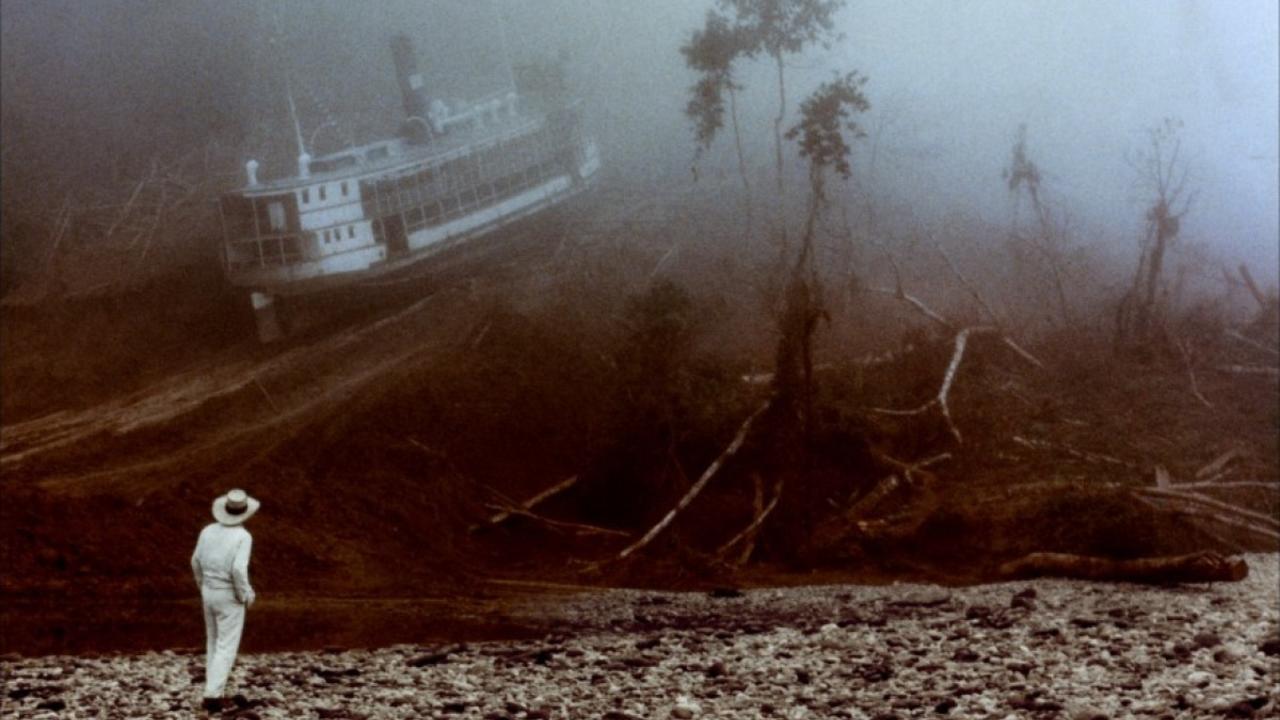
1,001 Films: "Fitzcarraldo" (1982)


Fitzcarraldo has entered movie lore as the film for which Werner Herzog actually pushed a steamboat over a mountain in South America - and, as if that task weren't onerous enough, did so with the quasi-feral chaos of Klaus Kinski at the helm. It might, then, be taken as a companion piece to the pair's 1972 landmark Aguirre, Wrath of God - the kind of project from which it would take lesser mortals more than one decade to recover - only where that production played out like a living nightmare, a hallucinatory bad trip, this follow-up has always retained the air of a beautiful reverie. Kinski plays the entrepreneur of the title - a failed railroad boss turned bigshot in ice production, his name a local derivation of his actual surname Fitzgerald - who vows to bring culture to a small town on the banks of the Amazon by floating an opera house upriver and mooring it thereabouts. This is, naturally, easier promised than achieved: not only does this involve travelling over the aforementioned bump, but also venturing deep into native territory, with the boat's original crew deserting halfway through the voyage, scared of what might lie beyond a certain point. 

Herzog, clearly, never was: his film is as wired as Kinski himself, and as vivid as the actor's toothy grin and shock of blonde hair when caught playing Caruso to the trees. Here is one of the few epics with both a grand design and a sense of the myriad nuts and bolts involved in realising it; a movie that holds a crazy notion and some idea of how one might, if one were so determined, go about it. This director's documentarist tendencies keep kicking in: perhaps realising the film cannot physically go anywhere if certain aspects of production design aren't fulfilled, Herzog turns his camera to the collection of rubber from trees, the casting of propellers, the construction of ramps and pulleys. (No great film has ever shown us more of its working.) Shots of the boat as seen from the shore, and the jungle as seen from the boat, lull us into the belief this is a story more observed than constructed; it remains open to debate whether Les Blank's on-set doc Burden of Dreams supports or debunks the myth. At every stage, it remains an extraordinary (ad)venture - something like Apocalypse Now as remade by optimists - with a real and powerful sense of wonder. Herzog makes his interiors, such as the (mimed) operatics at the beginning, every bit as enchanting as the voyage into the jungle, and gives the key line to Fitzcarraldo's lover, a brothel keeper played by Claudia Cardinale: "It's only ever the dreamers who move mountains."

Fitzcarraldo is available on DVD through the BFI.

Tuesday, 12 December 2017

Chinese way: "Mountains May Depart"


Jia Zhang-ke took a giant leap forwards with 2013's A Touch of Sin, where this previously gnomic filmmaker found the perfect format by which to articulate his concerns about the way the world turns nowadays without exhausting audience patience. Here was a portmanteau comprised of four medium-length tales of ordinary madness from contemporary China - short, sharp, often shocking fragments that, when combined, held a mirror up to the extraordinary changes being wrought on wider society. His follow-up Mountains May Depart, another portmanteau, offers a refinement of this approach: here are three tales, strung out over three decades, in such a way as to describe the direction capitalism might be carrying us all in.

It opens in 1999 - to pointed use of the Pet Shop Boys' "Go West" - with a love triangle between a young woman (Zhao Tao, the love hotel employee from Sin) and two male suitors who represent different positions on the socioeconomic ladder: a mine owner (Yi Zhang), who rather truculently regards our heroine as his property, and a mine worker (Jing Dong Liang), who may well be a better match in the long run, but offers considerably lower prospects. In 2014, we see a poignant reunion between the unlucky loser of this scenario, now settled with wife and child but physically ailing, and his former beloved, who has her own issues with a dying father and young son to attend. Finally, we arrive in 2025 - a time of translucent iPads, and the surest sign of Jia's newfound confidence in his own narrative powers - where we take up the story of this boy (Zijian Dong), who's very much his father's child (he's even named Daole, which transmutes into the classroom nickname "Dollar"), yet striving to resist the pressures placed on the young to become robots and drones in this brave new consumer society. (Tellingly, this last section requires very little CGI: the future, it would seem, is ours.)

Jia's still clearly experimenting with form: the first section comes in Academy ratio, with inserts of fuzzy digital video that you could take to be documentary or behind-the-scenes footage, and the title appears a full forty minutes in, only after this prologue's conclusion. Yet where once this filmmaker seemed ready - around the time of 2008's 24 City - to abandon narrative altogether and float off into the lofty realms of politicised video art, nowadays he appears so much more engaged with characters, actors, people; in these last two dispatches, you can see the making of one of 21st century cinema's great humanists. In both Sin and Mountains, the Cahiers-courting social and architectural theory of yore has been grounded in harsh street realities: it's there in the continued focus on mine workers - recurring motif of New Chinese Cinema: Diao Yinan's Golden Bear-winning Black Coal, Thin Ice might be seen as a stepping stone between the two films - tasked with converting their country into an economic powerhouse while remaining largely disempowered themselves.

Faced with such iniquity, the characters in Sin - from the Office Kitano stable - boiled over with murderous rage. The new film is more rueful, almost Kore-eda-like in its observation of familial rupture: it displays the listless sadness of people being swept down river towards a certain fate. (The flow thus reverses A Touch of Sin, which moved inwards from the coast to the city.) Along the way, you can't miss the sense that things aren't operating as they should, nor the sight of desolate industrial zones being plundered for all they're worth. The title could refer to the way coal reserves are exhausted - or how the landscape itself, being bought and sold with unconscionable rapidity, has become prone to sudden, dramatic change. (Jia's 2006 film Still Life documented those rural villages flooded to make way for the Three Gorges Dam.) Planes are seen to fall from the sky; workers are forced to migrate to make ends meet. No wonder we're all so insecure. As Zhao's heroine says to her boy: "Nobody can be with you all through life." Get used to it, kiddo: this is the modern world.

It may be that Jia hasn't changed, but that the world around him is now revolving at such speed that we've caught up with what he was warning us to all along: what once looked arcane now feels very real. Even so, Mountains folds some hope into its concluding stages: the erstwhile posterboy for slow cinema knows there's a form of resistance to be offered in taking a slow train to spend time with one's loved ones, listening to the music of the past (woven in, as we hurtle from the present to the future, in the manner of the Wachowskis' Cloud Atlas and Sense8) rather than the dictated product of the present, or simply leaving the ever-more-demanding city behind in order to head to what's been left of the country. This filmography is becoming increasingly essential, not just for what it reveals about China, but for what it has to say about any territory where capitalism has come to leave its stamp - which is to say, 'most everywhere. In just a matter of films, Jia has travelled beyond the niche to arrive at the universal: Mountains May Depart is the latest chapter in what's becoming a survivor's guide for all those left at the mercy of market forces.


Mountains May Depart opens in selected cinemas from Friday.

Sunday, 10 December 2017

On demand: "I Called Him Morgan"


There's a fair bit of story going on inside Kasper Collin's documentary I Called Him Morgan, yet for some while, it's not entirely clear whose story it is - that of the I in that title, or that of the Him - and, in the end, there may not quite be enough of it. Through a combination of characterful talking heads and atmospheric archive footage, Collin starts by laying out the tragedy of Lee Morgan, virtuoso jazz trumpeter and breakout star of the Dizzy Gillespie ensemble, who was shot dead, aged just 33, in 1971. The momentum, however, is stalled by cutaways to a straggly loose end: a 1996 cassette recording, retrieved from an overstuffed desk drawer, of an interview Morgan's former wife Helen gave to a teacher at the adult skills facility she attended in later life. In it, we hear Helen talking openly about a tough childhood in the American South (she was a mother-of-two by the age of fourteen), her transition to New York nightlife, and her whirlwind romance with the musician. If it seems as though the two strands have been set on a collision course, it's because these lives were: as jazz aficionados may already know, it was Helen who shot Lee that night at Slug's Saloon.

The bum notes, then, have to be taken alongside the good. The Helen returned to life here is a tough Southern belle - a whizz in the kitchen, a headturner on the streets - but also clearly a woman at least as impulsive as her straying, weak-willed husband: a key biographical detail, let slip in passing early on, is that she once married a man after knowing him for a week. We first get a sense something wasn't right in this relationship around thirty minutes into Collin's film, with the appearance of a photo showing Lee in the recording studio with a large bandage wrapped around his head - a consequence, it transpires, of the trumpeter blacking out during a heroin blowout and coming to rest on a blazing radiator. Helen was the person responsible for cleaning Lee and his reputation up, and getting him back out on the circuit (and, tragically, among other women): as a fellow musician notes, "She needed someone to take care of, and he needed someone to take care of him." (Collin doesn't push it, but we might start to wonder whether this little boy lost became a substitute for those children Helen left behind back in Wilmington - a way of making amends for her earlier actions.) 

The story, it turns out, is one of dependency, and what happens once such dependencies are threatened. If we feel Collin being deliberately coy in withholding this tale's sorry pay-off, we can admire his confident handling of his raw materials. Those same jazz aficionados will surely nod appreciatively at the long, uninterrupted slices of Morgan's oeuvre allowed to play out on the soundtrack, proofs of the subject's genius that also contain melancholy hints of promise lost. The film's limitation is that Collin can only amplify what turned out to be a small, sad, semi-forgotten domestic so much. The obvious corrective would have been to dig a little deeper into Helen's rehabilitation and reemergence into polite society, perhaps at the expense of Lee's rise to prominence: we get there in the closing ten minutes, but by then it feels too little, too late. That cassette recording was apparently the only time Lee's saviour and killer put herself on the record in any form (she died a few months later), sitting opposite an interviewer who clearly didn't realise what he had on his hands: it is undeniably compelling while the encounter unspools, but eventually the tape runs out.

I Called Him Morgan is now available to stream on Netflix.

Saturday, 9 December 2017

2017: The Poll of Polls


Top 10 (closed on December 31, 2017):

1. Get Out, 83 points
2. The Florida Project, 44
3. Call Me By Your Name, 43
4. Lady Bird [UK release: Feb 16], 40
5Dunkirk, 29
5= Phantom Thread [UK release: Feb 2], 29
7. Faces Places [UK release: early 2018 tbc], 28
8. Good Time, 27
9. Personal Shopper, 24
10. A Quiet Passion, 22

Mentioned in dispatches: Moonlight/The Lost City of Z, 20; Twin Peaks: The Return, 19; Zama [UK release: Spring 2018]/Elle, 16; Ex Libris: The New York Public Library [UK release: tbc], 14; Blade Runner 2049/Nocturama/Toni Erdmann, 12; The Post [UK release: Jan 19], 11


Empire: 1. Get Out 2. Blade Runner 2049 3. La La Land 4. Moonlight 5. The Death of Stalin 6. Dunkirk 7. God's Own Country 8. Logan 9. The Handmaiden 10. Call Me By Your Name.

Sight & Sound: 1. Get Out 2. Twin Peaks: The Return 3. Call Me By Your Name 4. Zama 5. Western 6. Faces Places 7. Good Time 8. Loveless 9= Dunkirk and The Florida Project.

Cahiers du Cinéma: 1. Twin Peaks: The Return 2. Jeannette 3. Certain Women 4. Get Out 5. The Day After 6. Lover for a Day 7. Good Time 8. Split 9. Jackie 10. Billy Lynn's Long Halftime Walk.

Film Comment: 1. Good Time 2. A Quiet Passion 3. Personal Shopper 4. Get Out 5. Nocturama 6. Ex Libris: New York Public Library 7. The Death of Louis XIV 8. Faces Places 9. The Lost City of Z 10. Lady Bird.

Little White Lies: 1. Call Me By Your Name 2. Phantom Thread 3. The Florida Project 4. Lady Bird 5. The Levelling 6. Logan Lucky 7. The Shape of Water 8. Paddington 2 9. Get Out 10. Good Time.

IndieWire: 1. Get Out 2. Lady Bird 3. Dunkirk 4. Phantom Thread 5. The Florida Project 6. The Shape of Water 7. Call Me By Your Name 8. Personal Shopper 9. Three Billboards Outside Ebbing, Missouri 10. The Post.

Guardian: 1. Call Me By Your Name 2. Moonlight 3. The Florida Project 4. Elle 5. Get Out 6. The Handmaiden 7. Toni Erdmann 8. Blade Runner 2049 9. A Ghost Story 10. Manchester by the Sea.

Manohla Dargis (New York Times): 1. Dunkirk 2. Ex Libris: New York Public Library 3. Faces Places 4. The Florida Project 5. Get Out 6. Lady Bird 7. Okja 8. Phantom Thread 9. A Quiet Passion 10. Wonder Woman.

A.O. Scott (New York Times): 1. The Florida Project 2. Lady Bird 3. Get Out 4. I Am Not Your Negro 5. Faces Places 6. Phantom Thread 7. A Fantastic Woman 8. Graduation 9. A Quiet Passion 10. War for the Planet of the Apes.

Stephanie Zacharek (Time): 1. The Post 2. Lady Bird 3. The Lost City of Z 4. Personal Shopper 5. Kedi 6. Call Me By Your Name 7. Dunkirk 8. Faces Places 9. Get Out 10. Girls Trip.

Ryan Gilbey (New Statesman): 1. Aquarius 2. Elle 3. Daphne 4. The Work 5. Personal Shopper 6. Call Me By Your Name 7. Moonlight 8. Manchester by the Sea 9. The Other Side of Hope 10. Colossal.

Richard Brody (The New Yorker): 1. Get Out 2. A Quiet Passion 3. Good Time 4. A Ghost Story 5. Slack Bay 6. Phantom Thread 7. Beach Rats 8. Faces Places 9. Song to Song 10. Silvio.

J. Hoberman (Artforum): 1. Drunk (a.k.a. Drink) 2. Zama 3. Streetscapes [Dialogue] 4. The Vietnam War 5. Nocturama 6. Get Out 7. Norman 8. The Florida Project 9. Bombshell: The Hedy Lamarr Story 10. An Ecstatic Experience

Me (here): 1. The Lost City of Z 2. Toni Erdmann 3. Neruda 4. Heal the Living 5. I Am Not a Witch 6. Loving 7. mother! 8. I Am Not Your Negro 9. The Death of Stalin 10. Manchester by the Sea.

Friday, 8 December 2017

For what it's worth...


Top Ten Films at the UK Box Office 
for the weekend of December 1-3, 2017:

1 (2) 
Paddington 2 (PG) ****
2 (1) Daddy's Home 2 (12A)
3 (3) Justice League (12A)
4 (new) Wonder (PG)
5 (4) Murder on the Orient Express (12A)
6 (6) Thor: Ragnarok (12A) ***
7 (8) A Bad Moms Christmas (15)
8 (7) Battle of the Sexes (12A) ***
9 (11) The Star (U) **
10 (new) The Man Who Invented Christmas (PG)

(source: theguardian.com)

My top five: 
1. A Matter of Life and Death [above]

2. The Muppet Christmas Carol
3. Most Beautiful Island
4. The Big Heat
5. Beach Rats


Top Ten DVD sales: 

1 (new) War for the Planet of the Apes (12) ***
2 (new) The Emoji Movie (U)
3 (1) Spider-Man: Homecoming (12) **
4 (4) Despicable Me 3 (U)
5 (5) Paddington (PG) ****
6 (2) Trolls: Holiday (U)
7 (3) Micky Flanagan: An' Another Fing Live (15)
8 (7) Beauty and the Beast (PG) ***
9 (new) Valerian and the City of a Thousand Planets (12)
10 (new) Blue Planet II (E)

(source: officialcharts.com)

My top five: 
1. An Inconvenient Sequel: Truth to Power

2. 78/52
3. Dunkirk
4. Girls Trip
5. Journey Through French Cinema


Top five films on terrestrial TV:
1. Toy Story (Sunday, BBC1, 3.35pm)
2. Headhunters (Sunday, BBC2, 1.05am)
3. Shaun of the Dead (Saturday, ITV1, 11.05pm)
4. X-Men: Days of Future Past (Saturday, C4, 9pm)
5. The Sorcerer's Apprentice (Sunday, C4, 3pm)