Friday, 19 May 2017

"The Secret Scripture" (Catholic Herald 19/05/17)


Jim Sheridan’s handsome yet flimsy melodrama The Secret Scripture (**, 12A, 108 minutes) turns out to be a tale of two actresses, one great, one getting there, neither quite given the script they deserve. Stumbling dishevelled through a decommissioned asylum in Sligo in the early 90s, and thereby delaying plans to convert her long-term residence into a trendy health spa, we’re greeted by no less a figure than Vanessa Redgrave. Making waves in wartime flashbacks, meanwhile, we meet Rooney Mara, fearless and free-spirited, possessed of what chanced-upon court papers describe as “a tempting beauty”, and thus perhaps inevitably doomed to be wronged by the men of her era.

It will come as scant surprise – even less if you’ve read Sebastian Barry’s novel – to discover the two are the same woman, one Rose Clear, as observed at different moments in her life. As doctor Eric Bana settles down to decipher the pictograms and cryptic commentary Rose the Elder has sketched into the margins of her Bible over the years, we get to find out why Rose the Younger was placed under lock and key. Here’s where Mara takes over, as fetching in period garb as she was in 2015’s Carol, turning diverse heads: those of a brooding priest (Theo James), a working lad (Aidan Turner, barely present) and – most excitingly – a fighter pilot (Jack Reynor) she rescues after he’s shot down in the woods.

If this sounds an unusually florid tale for the director of 1993’s In the Name of the Father to be telling, you wouldn’t be wrong. Barry’s scenario, granted, offers its own frowning commentary on organised religion; Sheridan keeps in the priests separating over-affectionate couples at the village dance with a ruler (“Make room for the Holy Spirit”) and Rose overwriting the Book of Job (not a bad choice) once the Church – or at least one of its representatives – betrays her. Yet nobody’s pushing unduly hard: Young Rose’s moderately inconveniencing spell in a Magdalene laundry suggests Sheridan’s ambition lay not in making some scabrous anti-clerical attack, rather gentle matinee fodder.

In fairness, it’s attentively composed. Cinematographer Mikhail Krichman fashions an attractive contrast between this Ireland’s sundappled landscapes and suffocating interiors, while the ensemble brims with welcome faces (Adrian Dunbar, Susan Lynch, Pauline “Mrs. Doyle” McLynn, for Barry’s strain of small-town Catholicism surely fed Father Ted, too). It’s a sign of Sheridan’s standing that, even after a decade in the career doldrums, this much talent still itched to work with him; the pity is that there’s only so much depth this material can provide. Casting light on these pages reveals them as porous indeed: a fantasy of sorts – gorgeous young woman, two-dimensional hunks – wrapped altogether neatly in a hidebound literary device.

The Secret Scripture opens in selected cinemas from today.

Thursday, 18 May 2017

1,001 Films: "Dawn of the Dead" (1978)


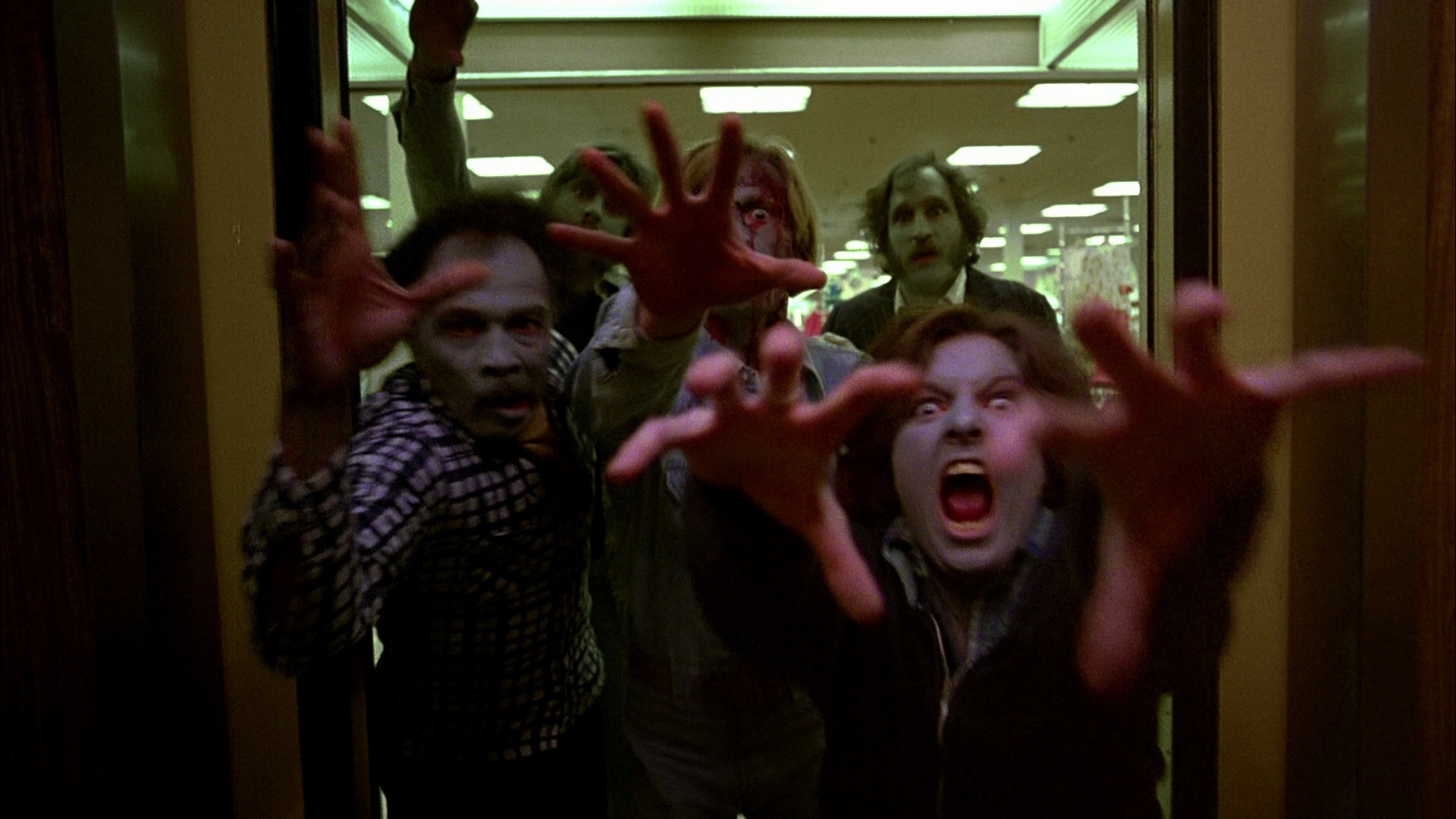
Dawn of the Dead was the second in George A. Romero's zombie series: after a prologue that establishes the extent to which the plague first detailed in Night of the Living Dead has spread, it forces its four heroes - a TV producer and her (clueless) traffic reporter boyfriend, plus a couple of disillusioned taskforce agents absconding from duty - to seek shelter in a shopping mall, around which the undead wander aimlessly, drawn there by some sense-memory of civilisation. As befits its era - the trauma of Vietnam giving way to the greed of Reaganomics - the film is despairing indeed beneath the satirical glee Romero displays while illustrating the effect killing has on his players; it's particularly despairing about the fact that, even in a time of crisis, mankind would be drawn to the self-sufficient grey zone that is the modern shopping centre. As heroine Frannie (Gaylen Ross) phrases it: "You're all hypnotised by this place. It's so bright and neatly wrapped, you don't see that it's a prison."

The Vietnam parallels are certainly striking - overhead shots of bodies lying in the mall's mock-greenery, corpses piling up to the accompaniment of marching-band music piping through the mall's PA - but it also still functions as a straightahead horror movie. Romero always did have a deft hand for sketching fraught, human characters, while the painfully slow response time of the assembled zombies - which could be seen as a liability, as our heroes run past them for a third or fourth time - proves to be a useful suspense mechanism; there's still something dramatic in the way they proceed towards with agonised relentlessness towards their intended victims. The finale, mixing gore with a sharp hit of social comment, sets man not against zombie, but his fellow man, as a biker gang (led by Tom Savini) shows up and starts looting. I'm not sure about the 140-minute director's cut widely circulated in recent years: though there's more sense of day-to-day mall life, it feels baggy, and the tension inherent within the siege set-up begins to seep away as we wait for the denouement; still, in whichever version you see it, it has more ideas than the slick 2004 remake.

Dawn of the Dead is available on DVD through Arrow.   

Tuesday, 16 May 2017

1,001 Films: "The Tree of Wooden Clogs/L'Albero degli Zoccoli" (1978)


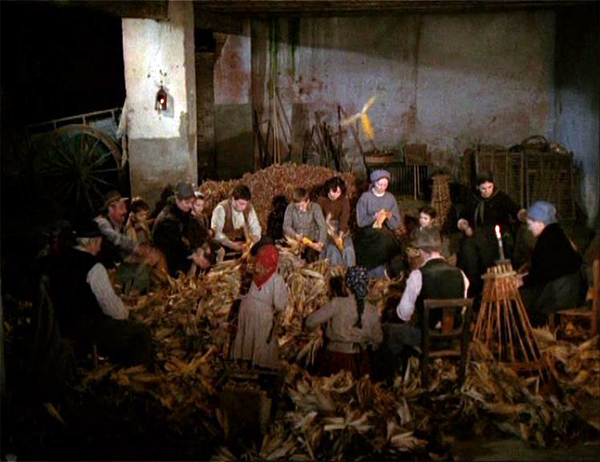
The Tree of Wooden Clogs, Ermanno Olmi's Palme d'Or-winning recreation of 19th century Lombardy life as enacted by latter-day residents of the region, preserves on celluloid - and makes unexpectedly involving - the daily routines of a small community of farm labourers: the harvesting (and the ruses employed to dodge landowners), the rustic childcare, the preparation of food (not for the squeamish, of course: animals were clearly harmed in the making of this film), even how the washing got done. A not untypical subtitle reads "I'm going to spread chicken manure on the vegetable patch." There's also time for a hesitant, chaste courtship, building towards a final section that finds a young couple honeymooning among nuns in the city, but Olmi is chiefly interested in the interaction between grown-ups, their offspring and the animals within this enclave's stone walls; the title refers to a present hand-crafted for a newborn, one which has consequences for the family at the drama's centre. 

It is, indeed, like very little else in cinema - a period movie seemingly unfolding in the present tense - although the time-capsule fascination it exerts could reasonably be compared to spending the day at Beamish, Ironbridge Gorge, or any of those other working historical towns: if anything, this is even more authentic, because the figures in the frame have this life in their blood. (Presumably, they had only to ask their parents and grandparents by way of character research.) This sort of material traditionally appeals to the conservative in us all, offering as it does a return to the simple life, a reconnection with the soil, and a sense of long-lost community. (One of the last lines is a ruefully spoken "There's no faith now, nor respect for one's neighbour".) Yet Olmi's legacy would seem less the prettified, Jean de Florette/Manon des Sources school than Bela Tarr's muddy agricultural epic Satantango (whose characters share the Lombardians' deep-rooted superstition) or subsequent reality-television endeavours where pampered city dwellers are forced to abide by the traditions of the past: projects with some grasp of the hardships that follow from living off the land. For better and worse, this is what it was really like, you feel.

The Tree of Wooden Clogs is available on DVD through Arrow; a Blu-Ray will be released through Arrow Academy on August 7.

Monday, 15 May 2017

1,001 Films: "Suspiria" (1977)


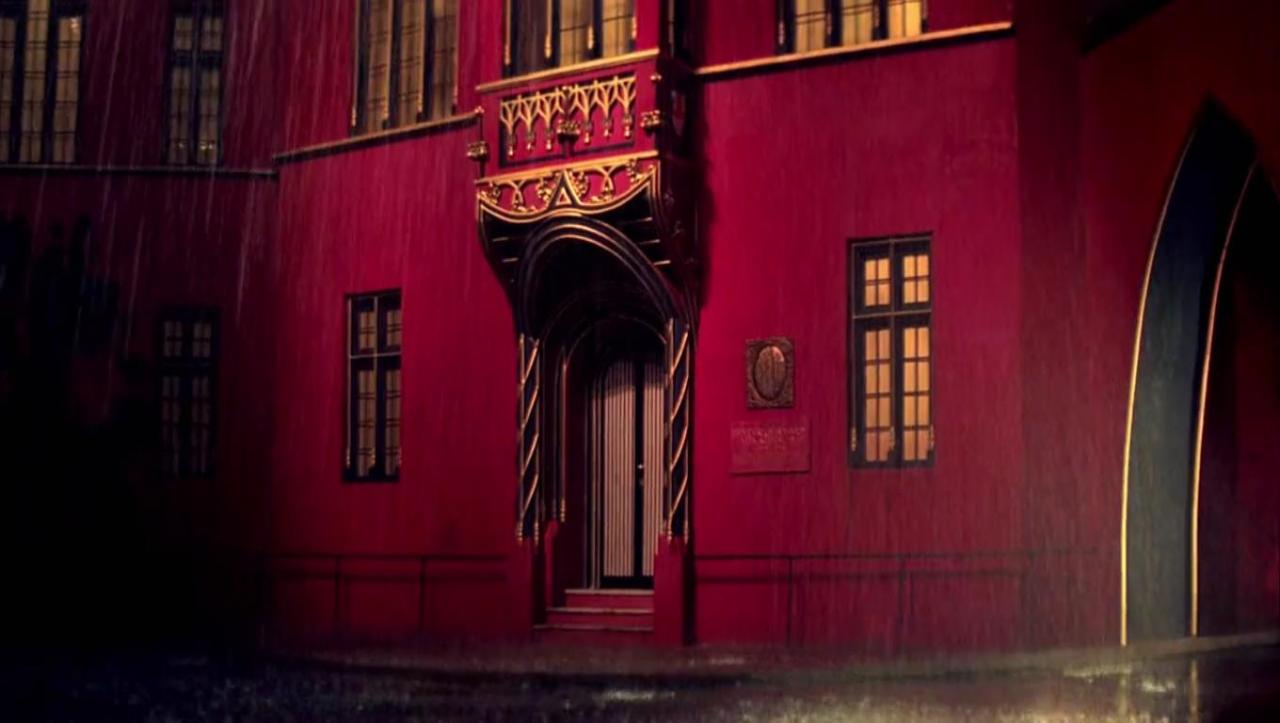
Suspiria has one of the great openings in horror cinema: wide-eyed American ballerina Jessica Harper arrives in Germany in the middle of a stormy night, and has to make her way alone - battling both the elements and a full-blown score - to a dance academy situated in a forest. Within moments of her arrival, two of the pupils have turned up dead - one repeatedly stabbed, pushed through a skylight and then (just to be sure) hanged by the neck; the other, rather mundanely in the circumstances, squished by falling masonry - leaving our already highly strung heroine to deal with a new threat to her nervous system. Perhaps uniquely among European directors of the 1970s, Dario Argento isn't inclined to play the girls-in-dorms set-up for sleaze - everybody in this locker room stays fully clothed - and instead gestures towards movie-buff respectability by casting Joan Bennett (star of Lang's Secret Beyond the Door, which may be a clue) and Alida Valli as the academy's headmistress and dance instructor respectively. Some of the tattiness inherent to the 70s horror movie is present - erratic performances, incoherent translation ("Magic is everywhere. It's all over the world. That's a recognisable fact. Always"), dubbing - but there's ample compensation: Argento's fascination with spooky fascist architecture, bizarrely over-dressed and overlit sets, genuinely disconcerting setpieces (maggots in the ceiling is a creepy one, while the room stuffed full of razor wire bests anything in the Saw movies for directorial cruelty). At full pelt - usually with the nursery-rhyme prog score of Argento's own The Goblins (later just Goblin) pursuing the characters through the night - it achieves the terrifying atmospheric pull of a Grimm fairytale.

Suspiria is available on DVD and Blu-Ray through Nouveaux Pictures. 

Saturday, 13 May 2017

For what it's worth...


Top Ten Films at the UK Box Office 
for the weekend of May 5-7, 2017:

1 (1) Guardians of the Galaxy Vol. 2 (12A) **
2 (new) A Dog's Purpose (PG)
3 (2) Fast & Furious 8 (12A)
4 (3) The Boss Baby (U)
5 (4) Beauty and the Beast (PG) ***
6 (new) Sleepless (15)
7 (5) Their Finest (12A) ***
8 (new) Mindhorn (15)
9 (new) Unlocked (15)
10 (6) Baahubali 2: The Conclusion (Hindi version, 15) ****

(source: theguardian.com)

My top five: 
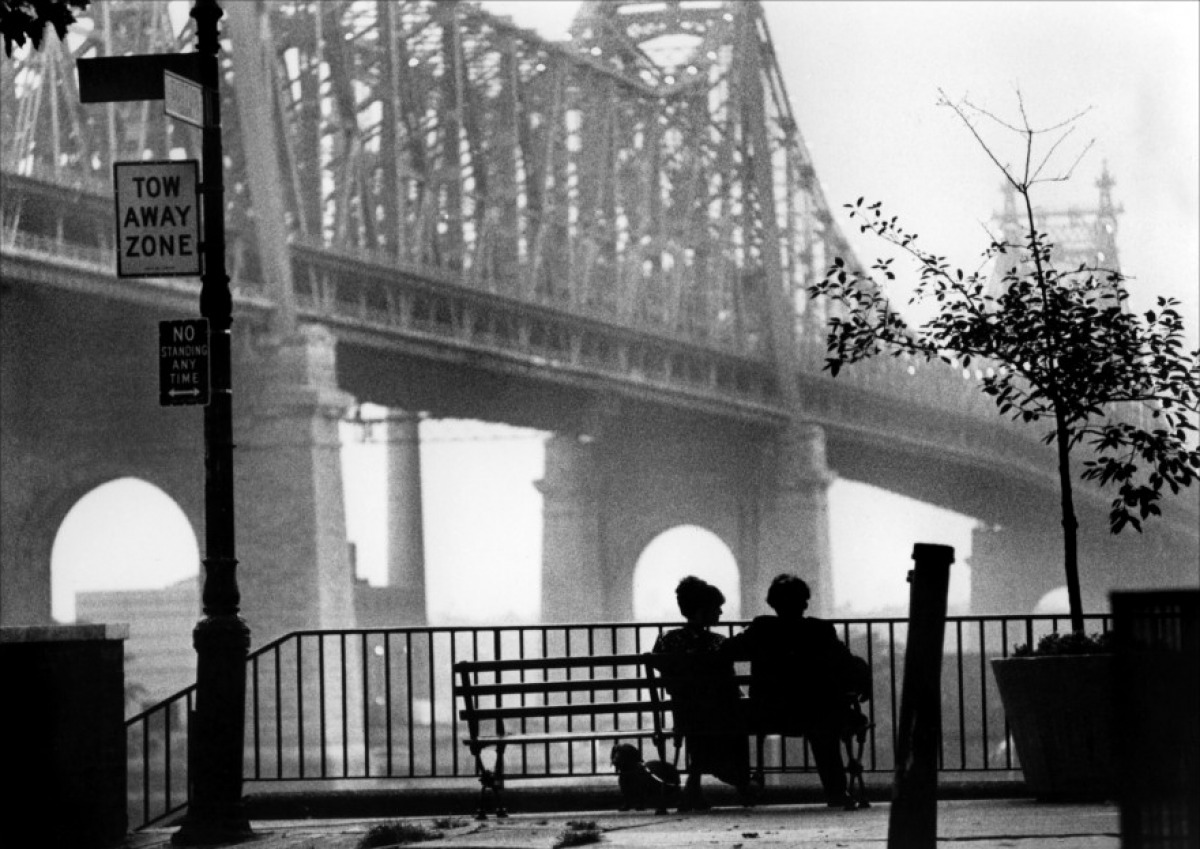
1. Manhattan [above]
2. Heal the Living
3. Jawbone
4. Suntan
5. Baahubali 2: The Conclusion


Top Ten DVD rentals: 
1 (1) Rogue One (12) **
2 (2) Moana (PG) ****
3 (new) Fantastic Beasts and Where to Find Them (12) ***
4 (3) Arrival (12) ***
5 (4) Ballerina (U) ***
6 (6) Trolls (U)
7 (new) A Monster Calls (12) **
8 (7) Bridget Jones's Baby (15) *
9 (8) Miss Peregrine's Home for Peculiar Children (12)
10 (9) The Accountant (15)

(source: lovefilm.com)

My top five: 
1. Manchester by the Sea
2. Silence
3. La La Land
4. The Olive Tree
5. Graduation


Top five films on terrestrial TV this week:
1. 12 Years a Slave (Saturday, C4, 9pm)
2. Memento (Sunday, BBC2, 11.45pm)
3. Hannibal (Tuesday, five, 11.05pm)
4. Fallen (Saturday, BBC1, 11.45pm)
5. The Mask (Saturday, ITV1, 9.50pm)

From the archive: "12 Years a Slave"


Though it might appear on the horizon as A Serious Movie About History, 12 Years a Slave returns time and again to an eternal concern: the struggles of a black man to communicate his experiences, and the experiences of others, within a brutally indifferent framework. Steve McQueen’s film opens with a slave attempting to pen a letter using a sharpened stick and a runny ink drawn from blackberries; it proceeds, with gathering eloquence and force, to elaborate a system determined at every turn to shut its author’s kind up. A young boy separated from his mother is told to be quiet, lest worse punishments befall him; elaborate contraptions are placed over a grown man’s mouth to prevent him from crying havoc; other slaves are stripped bare and lined up before potential buyers, where they stand for hours, as mutely biddable as anything offered up for purchase in your local supermarket.

Though the new film occasionally returns to the artful repetition and ritual that made for such striking sequences in Hunger and Shame, this time McQueen, working with the screenwriter John Ridley, appears more attuned to the audience’s narrative demands: he actively wants us to understand how his protagonist – the real-life figure of Solomon Northup (Chiwetel Ejiofor), husband, father and musician of note in 1840s New York – got here, and why. This isn’t the story of a common-or-garden slave – as ventured in Amistad, where Spielberg’s white characters came to speak in his black characters’ place – but another, potentially more tragic narrative: that of a gentleman brought low. It’s crucial to what 12 Years conveys that Northup should have been fully literate, sensitive enough to feel each lash of the injustice brought down on his kin, and describe it in words that stick and hurt anew.

McQueen frames this passage with a seriousness that, while offering a vital counterpoint to Tarantino’s tongue-in-cheek Django Unchained, can manifest itself as heavy-handedness: it’s perhaps a bit too much for the camera to rise out of the dark hole Solomon first finds himself imprisoned in to show the Capitol building perched only a few thoroughfares away, even if it chimes with the general perception of Washington as a place where a nation’s poorest go unseen by its most powerful. Yet this filmmaker is constitutionally unable to underplay or soft-soap the suffering that was an essential part of this narrative: whether leaving Northup hanging from a tree for several minutes, or charting his final, excruciating descent into black-on-black violence, he looks at it squarely, forces us to confront it, and makes a deeply provocative art from the scars his characters come to incur.

There are flaws here, surely: executive producer Brad Pitt parachutes in out of nowhere as a Canadian abolitionist superhero whose role is to voice the doubts about this system you’d expect a Hollywood movie about slavery to voice. Yet elsewhere, there’s something truly lacerating in the sight of white liberal acting mainstays vying for the title of vilest individual in 19th century America: Paul Giamatti, dropping the script’s first N-bomb as a blabbermouthing slave trader who confesses “my sentimentality extends the width of a coin”, the reliably weaselly Paul Dano as a field manager with the bearing of an over-privileged kid.

The grim joke is that Northup encounters these brutes while on the watch of the relatively benevolent landowner Ford (Benedict Cumberbatch); it’s when the latter is usurped by the more rapacious Edwin Epps (Michael Fassbender), who arrives touting the Bible, the cold eyes of a shark, and the kind of ratty ginger beard directors always ask actors of Celtic origin to grow when their characters are up to no good, that we know hell will soon be unleashed. Through such telling contributions, John Ridley’s screenplay can set out the infrastructure of slavery, and suggest that the plantation class was broadly as dysfunctional as our own corporate banking system. (You can approach 12 Years as a historical entry in the current capitalism-in-crisis cycle, showing how the system’s core values were skewed from the start.)

At the film’s heart, though, McQueen places (and insists upon the primacy of) numerous African-American stories: as short as that of the slave who doesn’t even make it off the boat, as crushing at that of Patsey (Lupita Nyong’o), a creature whose sweetness dooms her to suffer worst of all, or as extraordinary in their arc as Solomon Northup’s itself – though what registers on screen is Ejiofor searching for new ways to nudge the viewer past the Serious Historiness of this project and reconnect us with the specifics of this man’s life, to make personal and intimate what the Mandela biopic, say, intends as Epic. In doing so, something has been created that absolutely merits the sense of importance gathering around it, and which communicates everything this project first set out to communicate. That letter we see Solomon writing at the start of 12 Years a Slave will eventually be burned as a means to self-preservation, but between them McQueen, Ejiofor and Ridley allow its embers to burn longer, brighter and more indelibly than any previous movie on this particular subject.

(MovieMail, January 2014)

12 Years a Slave screens on Channel 4 tonight at 9pm.

Friday, 12 May 2017

On DVD: "Graduation"


The great swells of the Romanian New Wave may have subsided since the late Noughties, but its luminaries soldier on, still trading in that rigorously wrought, socially pointed form of cinematic realism. Graduation is the latest from Cristian Mungiu, who gave us the knotty, gut-wrenching (and Palme d'Or-winning) drama 4 Months, 3 Weeks & 2 Days back in 2007. Where that breakthrough work was a (recent) period piece - allowing us to distance ourselves, in some ways, from the inhumanities it depicted - the new film gains much of its sting from an understanding it is unfolding in the Romania of the here and now: a country where toxic traces of the old corruption and vices continue to linger. At its centre is a family unit coming under threat both from within and without. A stone is hurled through a parlour window within moments of the start; several scenes later, our protagonist - a heavy-set, middle-aged surgeon named, with some degree of authorial irony, Romeo (Adrian Titieni) - receives a phone call that informs him his sole, beloved daughter Eliza (Maria Dragus) is down at the police station, having seen off an attempted rape. 

The girl's shaken but fine, though the broken wrist she incurred during the assault poses a problem, in that it threatens her success in the exam finals she needs to pass in order to get into Cambridge - and thus her chances of getting out of what seems to be generally agreed by these characters as a backward shithole of a country. Dad thus begins pulling strings, initiating several rounds of bargaining: agreeing to bump an elected official to the very top of the liver transplant list, say, in return for the addresses of those who'll be doing the exam marking, so he can go round and plead his girl's case. "Sometimes the result is all that matters," Romeo mutters, yet this huffing, puffing individual makes for an unlikely Machiavelli, possessed as he is of no particular cunning; combine this fact with our knowledge that this is un film de Cristian Mungiu, and any happy ending would seem to be gravely in doubt.

Graduation's theme would appear to be the perils of payback, in both the eye-for-an-eye and you-scratch-my-back senses of the term. Although he moves at a much slower pace, Romeo is something like an arthouse equivalent of all those hyperprotective patriarchs played in latter-day action movies by Mel Gibson or Liam Neeson: desperate to reassert some control over the world that has threatened his girl's innocence, but lacking the special set of skills that would allow him to do so. Instead, he spends the entire first half blundering further into a mire of his own making: taking up his own investigation into the attack, and shruggingly persisting with an affair with one of Eliza's teachers - which may just explain why Romeo's wife has confined herself to her bedroom with headaches, and perhaps why the family's windows are being put through: the sins of the father are being visited on everybody else.

This development carries the film in the direction of Hidden and The White Ribbon, but Mungiu proves even less interested than Haneke in comforting genre frameworks: Graduation's signature scene is the one in which the increasingly fraught Romeo pulls his clapped-out car over to the kerb to retreat into a patch of shrubbery, blubbering as he goes. (For all his bluster, this guy doesn't have any answers, either.) The tone throughout is dryly academic, that of a thesis being worked out, yet we do come to feel the fates of several characters being held in the balance: not just those of Romeo, Eliza and the depressive wife, but of Romeo's elderly mother, the literally jaundiced official, and the potential rapist, too, whoever that might be. Everything's up for renegotiation through the second half, as our hero's questionable decisions come back either to haunt him or hit him in the face.

I wonder whether the whole isn't still one more to admire than to warm to, particularly. As Romeo finds himself isolated on yet another patch of desolate wasteland as events draw towards their close, it can seem as though Graduation's main accomplishments are those of mathematically symmetrical screenwriting, plotting a drawingboard-neat path through the moral maze towards an ironic punchline you may or may not see coming. Still, if the grim urgency that dragged so many of us kicking and screaming through 4 Months has abated in Mungiu's filmmaking over the course of the past decade, it allows us to better spot how every element and encounter along that path serves to deepen or comment upon Romeo's predicament. It's left to a lowly detective to provide the movie's Renoirian epigraph: "Everybody has their weak spot." Ain't that the truth.

Graduation is available on Blu-Ray and DVD through Curzon Artificial Eye from Monday.