Thursday, 15 September 2016

About time: "Baar Baar Dekho"


Baar Baar Dekho is Old Bollywood masquerading as New Bollywood: two young, eminently capable and photogenic stars (Katrina Kaif, Sidharth Malhotra) who've done challenging work in the not too distant past (Phantom, Brothers) find themselves shoehorned into an update of the kind of splashy, colourful, not to mention conventional wedding-based romance their predecessors were skipping through a half-century or more ago. A time-travel element shakes up the chronology a little, granted, but the basic story beats are almost entirely predictable; the title translates into English as a pun on the phrase "Look Again", but the film could just as easily - and, at this stage in summer 2016, almost as resonantly - be called Cold Feet.

Two childhood friends spend the first act on the fast track to marriage. Jai (Malhotra) is a somewhat reticent and insecure physics professor, hunky enough at the blackboard to inspire a high attendance rate among his female students; Diya (Kaif) an artist seen doing not a single creative thing over the course of this two-and-a-half-hour movie. (Despite this, she appears to have an exhibition every ten minutes.) On the eve of his wedding day, Jai receives multiple reminders of the life he might yet lead as a singleton: a move to England (which the bride's father has long ruled out) to pursue a career in numbers and figures that might seem secondary to Diya's far sexier career. 

After an argument, he hits the bottle, blacks out and wakes up ten days into the couple's Thai honeymoon; next day, he wakes to find Diya heavily pregnant in a snowy Cambridge; the day after that, he's standing in a divorce court in the year 2034. As the Sam Beckett of Quantum Leap would say: oh boy. Clearly, something has gone amiss within the space-time continuum that only our brainbox hero can figure out and fix, although Jai's discombobulation at his altogether swift passage into wedded bliss and fatherhood allows writer-director Nitya Mehra (an Ang Lee and Mira Nair protégée) to dramatise the common sensation of time flying beyond our grasp: the one minute, her hero's a dashing young blade around town, the next a greying father of two.

And yet his predicament doesn't really us grip us in the same way, say, George Bailey's in It's a Wonderful Life or Phil Connors' in Groundhog Day did. Part of the problem is that these future-flashes are all but indistinguishable from Jai's previous, picturesque existence; rather than any vacillating young man's worst nightmare, they instead look like scenes from the same pretty picture - and this is a very pretty picture - spliced in in unorthodox places. (Its vision of the far future isn't dystopian so much as a bit rubbish: a couple of guys on those segways people are already twatting about on, and a blight of long, asymmetrical fringes that suggests a Flock of Seagulls revival will kick in circa 2025.)

The fixes Jai must engineer to reverse time are so simple and obvious (don't play around; listen; accept your course) as to fall somewhere between weightless and actively insulting - although I grant that, in the context of modern India, there might be instructional value in having a female writer-director instruct muddle-headed blokes on how to comport themselves around the opposite sex. Still, everything else in Baar Baar Dekho is aligned in such a way as to sell Jai (and us) on the pleasures of domesticity - it's conservative to the core on the subject of what's expected of the good young men and women of India, and invariably bland with it.

We get a couple of good gags: a pandit who conveys remote blessings via iPad, and the burbling Jai's hospital evaluation by a doctor who transpires to be a mental patient (an old joke, but still a funny one). And it's a very promising sign of sweetness on Mehra's part that she at every turn refuses to make Diya the scold an American movie working from this conceit might: she's instead a funny, spirited soul - an obvious catch, whatever Jai's misgivings - who may also be the only woman alive to heat up when she hears her husband calculating square roots. Elsewhere, alas, platitudes prevail: inhabit the moment, enjoy the ride, show up at your son's soccer matches. (Yes, it's one of those movies.) The leads do what they can with this material, but they're acting on a treadmill, one carrying us all rather too smoothly from first-night nerves to happy ever after.

Baar Baar Dekho is now playing in cinemas nationwide.   

Sunday, 11 September 2016

Amazon primed: "When Two Worlds Collide"


Heidi Brandenburg and Mathew Orzel's When Two Worlds Collide documents yet another example of slow, insidious corporate creep. The two worlds in question are identified in the opening instants. First, we're shown around one of the Amazon's leafier stretches, still home to small groups of natives in the year 2007; we then cut indoors to Alan Garcia, then-President of Peru, as he jovially invites visiting representatives of the American Chamber of Commerce to invest in his country - which, even at this early stage in the film, sounds a little like inviting the Esso tiger round for tea. The effect this intervention would have on the environment over the next few years is made startlingly obvious via the kind of images the cinema excels at: what at first appeared fresh and green is soon turned sticky and black, a consequence of the pipeline plumbed in alongside the river to carry local oil deposits north. Legal threats - noting that the free-trade agreement Garcia struck with the US directly contravenes UN rulings on the rights of indigenous people - are overwritten by a more immediate health threat: a quick tour of the local emergency wards finds doctors and nurses concerned by the increased levels of toxins being found in the water supply. It's almost as though accelerated heavy industry isn't very good for communities such as these.

If the directors are picking over issues that have been amply rehearsed in several dozen recent docs, their concerns are no less valid or disturbing when revisited in close-up. WTWC finds its specific focus in the fightback that got under way in 2009, when the tribespeople first organised themselves into a grassroots resistance movement under the leadership of one Alberto Pizango, blocking throughroads, encircling key buildings, and persuading the engineers to close the pipelines. Pizango is the kind of figurehead oft described as "outspoken", but it may just be that his voice needed to be heard louder than most, given that there are no indigenous representatives in the Peruvian congress. What follows is the uneasiest of standoffs, as Pizango gives the greenlight for insurgency, while the well-fed Garcia uses every means at his disposal to break this impasse and ensure business goes ahead as usual. It gets grim: that blackened ground will turn another shade - crimson red - as bodies fall upon it, and the directors have assembled plenty of horrific/gripping footage as this industrial zone is reconfigured into a crime scene. Even those with experience of tooth-and-claw capitalism probably won't believe how far the situation was allowed to go before the arbitration option was floated - but this, Brandenburg and Orzel suggest, is how merciless and violent landgrabs have become in the 21st century, when governments and corporations simply have many more media outlets through which to spin and launder their actions.

The film, clearly, picks its side - but it does so in part to counter the position of the Peruvian mainstream media, whose reports frame the natives as revolting peasants holding the rest of the country to ransom by threatening the nation's prosperity and energy reserves. (The excerpts Brandenburg and Orzel grab from nightly news bulletins provide the sharpest examples of structural bias that I can think of in recent cinema.) Congress, too, plays its part in shutting down the debate, deflecting all responsibility for the pivotal bloodbath onto Pizango, and eventually sending him to fleeing across the rooftops - literally - and into exile. The film benefits from taking a longer view, working to a clear and vindicating arc; it is, also, one of those docs that can usefully focus our attention, consolidating a decade's worth of patchy, inside-page press coverage into one single, punchy, 100-minute briefing from the punchline. Brandenburg and Orzel can show us the impact of corporate aggression and governmental oppression on faces and bodies in a way a photograph tucked deep within the International Herald Tribune couldn't quite, while doing much else to keep the flame of resistance alight: their film explains, with perspicacity and an admirable patience, how long it might take and what it might cost for a people to stand up and make themselves heard - and why doing that might be more important than ever in this day and age.

When Two Worlds Collide is now playing at London's Picturehouse Central.

Friday, 9 September 2016

For what it's worth...


Top Ten Films at the UK Box Office   
for the weekend of September 2-4, 2016:
 
  
1 (new) Sausage Party (15) ***
2 (new) Brotherhood (15)
3 (1) Finding Dory (U) ***
4 (2) Bad Moms (15) **
5 (3) Suicide Squad (15)
6 (7) The BFG (PG)
7 (4) War Dogs (15)
8 (6) Jason Bourne (12A) ***
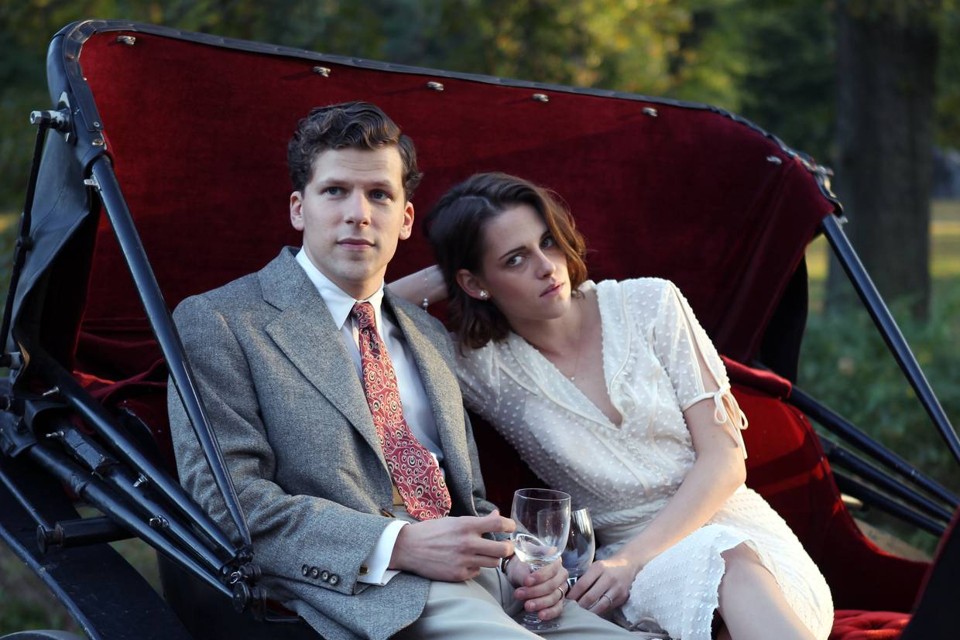
9 (new) Cafe Society (12A) **** 
10 (re) Pete's Dragon (PG)

(source: theguardian.com)

My top five:   
   
1 (new) Captain America: Civil War (12)
2 (1) The Jungle Book (PG) **
3 (2) Zootropolis (PG) ****
4 (3) Eye in the Sky (15) ***
5 (5) Deadpool (15)
6 (4) Eddie the Eagle (PG) ***
7 (6) London Has Fallen (15)
8 (7) Allegiant (12)
9 (9) The Revenant (15) ***
10 (8) The Big Short (15) ***

(source: lovefilm.com)
                                   
My top five:  
1. Embrace of the Serpent
2. The Measure of a Man
3. The Closer We Get
4. Summertime
5. Our Kind of Traitor


Top five films on terrestrial TV this week:   
1. Toy Story 2 (Saturday, BBC1, 5.30pm)
2. United 93 (Saturday, ITV1, 10.45pm)
3. White Elephant (Saturday, BBC2, 2.05am)
4. Mad Max (Friday, ITV1, 10.40pm)
5. Rabbit Hole (Thursday, BBC1, 11.45pm)  

"Hell or High Water" (Reader's Digest 09/09/16)


Here’s the kind of film you could be forgiven for thinking the American cinema had all but forgotten about making: a slowburn thriller aimed primarily at mature audiences. Part of its appeal, certainly, is retro: in location, iconography and casting, Hell or High Water appears very much a Western. Yet it’s also clearly unfolding in the here-and-now, against a backdrop of post-crunch impoverishment – which speaks to the skill with which director David Mackenzie and screenwriter Taylor Sheridan (Sicario) take comfortingly familiar elements, toss in the odd curveball, and shuffle them until old becomes new again.

The catalysts here are Toby and Tanner Howard (Chris Pine and Ben Foster), bankrobbing brothers engaged in a death-or-glory spree through West Texas in the immediate wake of their mother’s death. Motives beyond money-grabbing aren’t initially clear, but the pair have a manner and momentum that makes them fun to watch, and an unusual MO besides: they bury their getaway vehicles in the backyard of the Tanner family farm before laundering their loot through the region’s Native American casinos. They’re possibly just gamblers, and Mackenzie allows us to feel the thrill of beating the house every time.

They’re pursued, however, by one Marcus Hamilton (Jeff Bridges), a dogged Texas Ranger so much of the old school that he fondly uses such terms as “half-breed” to describe his native sidekick Alberto (Gil Birmingham). That Marcus is days from retirement is but one of the comforting elements mentioned earlier; another would be Bridges himself. The minute the actor appears on screen, we know this investigation will take as long as it needs to – Alberto speculates Marcus is dragging matters out just to stay on the job a little longer – and sense it might be enjoyable to stick around and see how it all plays out.

Suffice to say, it is: the narrative is lived-in yet still lively, much like Ranger Hamilton himself, forever working some new angle to get closer to his quarry. For the longest while, Mackenzie seemed no more than an indie gadfly, scraping around for the funds that might sustain his next fizzling experiment. Yet he stepped up with 2013’s Starred Up, that gutsy prison drama that benefitted from the director’s growing feel for both a rundown place and the characters passing through it. (Former prison worker Jonathan Asser’s script unarguably guided his hand.)

He has a comparably sturdy building block here in Sheridan’s script, rich as it is in local colour and vernacular. “Were they black or white?” Marcus asks one witness. “Their skin or their souls?” comes the response. (“I gotta shit like an old goat”, declares Tanner at one point, somewhat less poetically.) Whichever side of the law his camera’s on, however, you can feel Mackenzie enjoying the company of these characters, and these actors.

This may qualify as the century’s lowest-octane chase movie – it keeps pulling over for sundown confabs on front porches and gas-station forecourts – but the relaxed approach allows the characters time to reveal themselves: the brooding Toby emerging as a damaged ladies’ man (seriousness becomes Pine here, after his action-figure Captain Kirk), the wilder Tanner tempering his recklessness with a knowing humour.

There’s so much yammering, in fact, that you begin to wonder if the film’s true subject is talk, and that these robberies were conceived as an excuse for the characters to hang out and shoot the breeze with one another. Certain scenes suggest what might have happened had the much-trumpeted Pacino-DeNiro meeting in Heat taken place not in a coffee shop but a retirement home rec room; as Marcus wonders, when Alberto grouchily orders him to leave his motel suite and watch his sports elsewhere on his own, “Where’s the fun in that?”

At every turn, Mackenzie spots the pleasures companionship can offer when out on the road or facing a tight spot – and the tragedy lying in wait when the bullets finally start flying, reducing free-flowing conversation to pained grunts or, worse still, deathly silence. Yet he’s optimist enough not to leave us with a bloodbath, but a promise of more chat to come – and I suspect the film will have worked charms enough by that point that most viewers wouldn’t mind being present in some form to eavesdrop.

In its big picture – the wide-open skies and endless Main Streets – Hell or High Water might be taken as a throwback to the Americana of Malick or Eastwood, depending on how you cast your vote; yet Mackenzie’s biggest achievement here lies in filling each frame with living, breathing, gabbing people, folk acting not out of greed, rather real, recognisable and – it turns out – basic human need. At a time when our cinemas sometimes feel as though they’ve been overrun by computer-enhanced superheroes, an unshowily analogue, old-hat proposition such as this could well seem thrillingly radical.

Hell or High Water is now playing in selected cinemas.

"Kubo and the Two Strings" (Guardian 09/09/16)


Kubo and the Two Strings ****
Dir: Travis Knight. Animation with the voices of: Charlize Theron, Art Parkinson, Matthew McConaughey, Ralph Fiennes. 101 mins. Cert: PG
 
The artisan animators of Laika Studios (Coraline, ParaNorman, The Boxtrolls) have done much of late to elevate the quality levels of multiplex kids’ fare. Their latest – which looks East, recounting a shamisen-strumming boy’s quest to unpick a tangled family history – fends off questions of cultural appropriation via the refinement and sensitivity of its penhand: it’s less an aggressive play for the Asian market than an affectionate gesture towards it. Avoiding noisy setpieces allows director Travis Knight time and space to fold his enchanted universe into origami-striking shapes, work in more stories-within-stories, and make a thoroughly sincere engagement with the hero’s loss: even the talking monkey sidekick is a (comically) serious, heartbroken presence. The 3D again feels a touch superfluous – or perhaps Laika are too much the aesthetes to exploit its in-your-face properties. Either way, the whole arrives as cherishable proof that it is still possible, amid heightened commercial imperatives, for digimators to push for reflective, affecting art.

Kubo and the Two Strings is now playing in cinemas nationwide.

Sunday, 4 September 2016

Autumn Arts Agenda (ST 04/09/16)


Blair Witch (Sep 15)
Another reboot – and of perhaps the most widely seen and lampooned of millennial movies – but stifle your yawns: this one arrives care of Adam Wingard, whose You’re Next and The Guest positioned him as one of modern horror’s slyest, sparkiest sadists.

Bridget Jones’s Baby (Sep 16)
A delayed delivery. Twelve years have passed since Helen Fielding’s totemic singleton last toppled across our screens – but Renee-Bridget’s back with a swelling belly, adjusting to post-Darcy life with the assistance of new swain Patrick Dempsey. (Seems the lady likes whitebread.)

The BFI London Film Festival (Oct 5-16)
Now in its 60th edition, the festival continues to cherrypick the best of the year’s fests while offering the odd locally sourced coup of its own: Amma Asante’s stately Belle follow-up A United Kingdom opens proceedings, Ben Wheatley’s Free Fire provides the high-octane climax.

The Girl on the Train (Oct 5)
Opening in the same slot Gone Girl occupied back in 2014, this year’s much-fanfared based-on-a-pulp-phenomenon thriller finds Emily Blunt seeing (or imagining?) too much on her nightly commute. The Help’s Tate Taylor directs; just try not to spoil the ending.

My Scientology Movie (Oct 7)
Emerging only after lengthy and understandably careful legal negotiations, here comes Louis Theroux’s reportedly hilarious investigation into the ways and means of the Church of Scientology – which also details how Theroux found himself the star of the Scientologists’ own counter-documentary.

American Honey [above] (Oct 14)
Autumn traditionally favours homegrown filmmakers. Here Andrea Arnold, one of our very best (Fish Tank, Wuthering Heights), expands her canvas, following the trail blazed by a squad of young subscription salesfolk across the American heartland. Cannes reviews were good-to-rapturous.

Inferno (Oct 14)
Yes, they’ve adapted another Dan Brown novel. After the, let’s say, underpowered The Da Vinci Code and Angels & Demons, might third time be the charm? Tom Hanks returns as “symbologist” Robert Langdon; Felicity Jones is new sidekick Dr. Sienna Brooks.

I, Daniel Blake (Oct 21)
This summer’s reissued Poor Cow and career overview Versus further bolstered Ken Loach’s claims to being an eternal Leader of the Opposition. Here’s his Palme d’Or-winning latest, with stand-up comic Dave Johns as a carpenter obliged to negotiate the remains of the Welfare State.

Doctor Strange (Oct 28)
Because there won’t have been a comic-book movie for… ooh, three months. This Marvel item at least holds out the prospect of out-of-the-box casting: Benedict Cumberbatch as a rogue neurosurgeon, Tilda Swinton as an androgynous sorcerer known as “The Ancient One”.

The Light Between Oceans (Nov 4)
Emergent power couple Michael Fassbender and Alicia Vikander topline the latest from Derek Cianfrance (Blue Valentine, The Place Beyond the Pines), an adaptation of M.L. Stedman’s novel about lighthouse keepers who take fateful delivery of an abandoned child. Handsomeness is all but guaranteed.

American Pastoral (Nov 11)
This will surely number among the season’s foremost curios: Philip Roth’s much-admired account of late Sixties social turmoil, as brought to the screen by Ewan McGregor in a double shift as director-star. Incendiary material, undeniably; how will the industrious Scot handle it?

Napoleon (Nov 11)
The year’s most imperious re-release: silent maestro Abel Gance’s four-hour, three-screen 1927 biography of M. Bonaparte, newly scrubbed up and returned to cinematic battle. 2013’s one-off Royal Festival Hall screening demonstrated it can still shock and awe an audience.

Fantastic Beasts and Where to Find Them (Nov 18)
For anyone who’s felt the multiplexes have lacked for magic since Harry Potter put his wand away… J.K. Rowling expands the Potterverse, dramatising the 2001 textbook signed by wizardry specialist Newt Scamander. Eddie Redmayne stars; Hogwarts’ safest hands David Yates directs.

Saturday, 3 September 2016

For what it's worth...


Top Ten Films at the UK Box Office   
for the weekend of August 26-28, 2016:
 
  
1 (1) Finding Dory (U) ***
2 (new) Bad Moms (15) **
3 (2) Suicide Squad (15)
4 (new) War Dogs (15)
5 (new) The Purge: Election Year (15) **
6 (4) Jason Bourne (12A) ***
7 (5) The BFG (PG)
8 (6) Lights Out (15)
9 (3) David Brent: Life on the Road (15)
10 (new) Mechanic: Resurrection (15) **

(source: theguardian.com)

My top five:   
   
1 (1) The Jungle Book (PG) **
2 (2) Zootropolis (PG) ****
3 (3) Eye in the Sky (15) ***
4 (4) Eddie the Eagle (PG) ***
5 (5) Deadpool (15)
6 (6) London Has Fallen (15)
7 (7) Allegiant (12)
8 (10) The Big Short (15) ***
9 (8) The Revenant (15) ***
10 (9) Grimsby (15)

(source: lovefilm.com)
                                   
My top five:  
1. The Pearl Button
2. The Closer We Get
3. Weiner
4. Knight of Cups
5. Midnight Special


Top five films on terrestrial TV this week:   
1. Insomnia (Sunday, BBC1, 11.10pm)
2. Wreck-It Ralph (Saturday, BBC1, 3.15pm)
3. Lone Survivor (Saturday, C4, 9pm)
4. Frances Ha (Friday, BBC2, 11.05pm)
5. Possession (Thursday, BBC1, 11.30pm)