Friday, 10 October 2014
For what it's worth...
Top Ten Films at the UK Box Office
for the weekend of October 3-5, 2014:
1 (new) Gone Girl (18) **
2 (new) Dracula Untold (15) **
3 (2) The Equalizer (15)
4 (3) The Boxtrolls (PG) ***
5 (4) What We Did On Our Holiday (12A)
6 (new) Bang Bang (12A)
7 (new) Dolphin Tale 2 (U) **
8 (5) A Walk Among the Tombstones (15) **
9 (8) Guardians of the Galaxy (12A) **
10 (6) Pride (15) ***
(source: theguardian.com)
My top five:
1. Le Jour se lève
2. Withnail & I
3. Still the Enemy Within
4. Gone Too Far!
5. '71 [above]
Top Ten DVD rentals:
1 (2) The Lego Movie (U) ****
2 (1) The Amazing Spider-Man 2 (12)
3 (3) Captain America: The Winter Soldier (12) ***
4 (4) The Grand Budapest Hotel (15) **
5 (5) Divergent (12)
6 (7) Pompeii (12)
7 (8) The Book Thief (12) **
8 (6) The Wind Rises (PG) ****
9 (10) Rio 2 (U) **
10 (9) Postman Pat: The Movie (U) **
(source: lovefilm.com)
My top five:
1. Moebius
2. The Dirties
3. Omar
4. Edge of Tomorrow
5. Camille Claudel 1915
Top five films on terrestrial TV this week:
1. Dances with Wolves (Sunday, BBC2, 12.35pm)
2. The Game (Saturday, ITV1, 11.15pm)
3. Jurassic Park (Saturday, ITV1, 3.10pm)
4. Vera Cruz (Saturday, five, 1pm)
5. Shine (Saturday, BBC2, 11.50pm)
"Alexander and the Terrible, Horrible, No Good, Very Bad Day" (The Guardian 10/10/14)
Alexander
and the Terrible, Horrible, No Good, Very Bad Day **
Dir: Miguel Arteta. With: Steve Carell, Jennifer
Garner, Ed Oxenbould. 81 mins. Cert: PG.
Here’s a pretty
ordinary Disney response to Fox’s sharper Diary of a Wimpy Kid series: bright yet sensitive pre-teen (Ed Oxenbould, not
quite winning enough) feels dreadful for commuting – via an errant birthday
wish – 24 hours of bad luck onto his nearest and dearest. 75 minutes of
sketches involving car crashes, vomit and escaped kangaroos ensue, followed by
a five-minute affirmation of the family that “steers its ship with positivity”.
The grown-ups grab a few legitimately funny bits, but it makes for strangely
agitating, passive-aggressive matinee fare: perhaps you just have to enjoy
watching rows breaking out more than this viewer does.
Alexander and the Terrible, Horrible, No Good, Very Bad Day opens in Scotland today, and around the rest of the UK on October 24.
"Annabelle" (The Guardian 10/10/14)
Annabelle **
Dir: John F. Leonetti. With: Ward Horton,
Annabelle Wallis, Alfre Woodard. 98 mins. Cert: 15
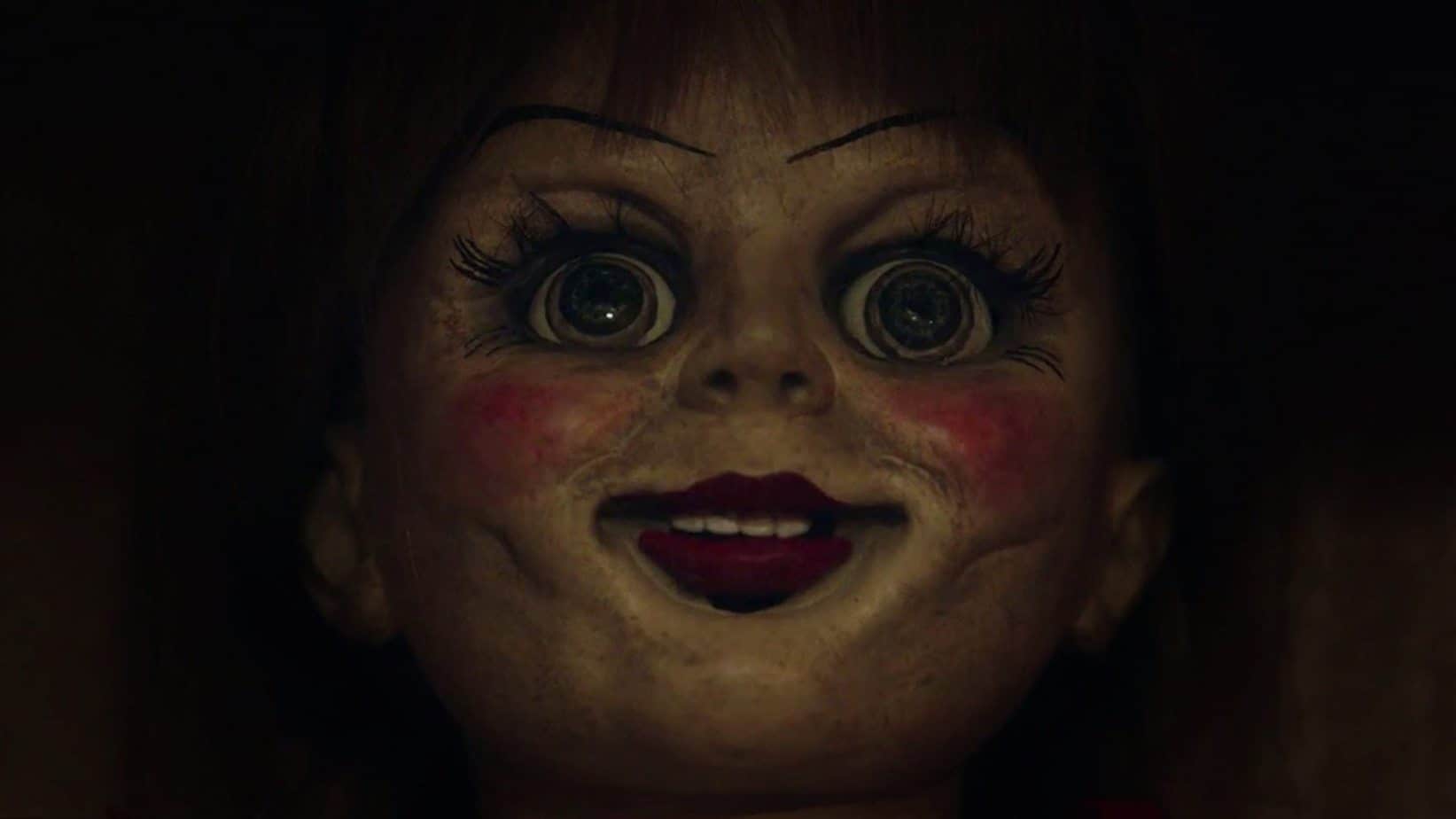
Creepy-faced mannequin Annabelle, the Satanic conduit of choice for last year’s rattly old horror junkshop The Conjuring, here lands her own none-too-original origin story, which cribs from Rosemary’s Baby in tormenting 1970s newlyweds with the spirits of Charlie Manson copyists. (Everything’s secondhand.) Director John Leonetti, cinematographer first time round, knows which buttons to push – shots of fingers nearing sewing machine needles to get everybody edgy, sudden shrieks and thunderclaps for popcorn-scattering – but he’s working around an underwhelming star turn. Annabelle, who takes an hour just to stand upright, will go down as the laziest devil-doll in movie history; compared to her, Chucky’s a Harvard MBA prospect.
Annabelle opens in cinemas nationwide today.
At the LFF: "The Great Museum/Das Grosse Museum"
Cinematic museum tours are becoming all the rage, doubtless in part as our cultural gatekeepers are worried whether funding cuts will leave these fine and upstanding institutions obsolete within a matter of years: these films are one surefire way of preserving both these buildings and their contents for future generations. Following on from the live events beamed into cinemas from the V&A, Margy Kinmonth's dutiful Hermitage Revealed and Frederick Wiseman's typically statesmanlike National Gallery (itself playing in this year's LFF), Johannes Holzhausen's The Great Museum adopts an eccentrically Austrian tactic, knitting together curious tableaux gathered behind the scenes at Vienna's Kunsthistorisches Museum over the course of a few months in early 2013.
What we get is a tapestry of the cataloguing, indexing and restoration required to keep a museum this vast and all-encompassing functioning. Gallery floors are polished or torn up in preparation for the next exhibition; staff meetings reveal tensions emerging in the relationship between the museum as a brand and the museum as an employer of people and a centre for the community; in one gleefully show-offy early sequence, Holzhausen's Steadicam serenely trails an admin assistant on a child's scooter as he navigates the museum's interlocking offices in order to retrieve a single item from the office photocopier. (Given that an earlier meeting has revealed the museum actually turned a healthy profit in the financial year 2012-13, you do wonder why the beancounters couldn't shill out for a second copier.)
These environs have already been toured once recently, as part of the (fictional) romance of Jem Cohen's excellent Museum Hours, but Holzhausen somehow avoids any overlap. Though he's clearly been schooled in that standoffish, clinical Austrian documentary approach that examines the world while wearing white gloves - the school that has given us Ulrich Seidl (In the Basement, also screening at the LFF), as well as Nikolaus Geyrhalter (Our Daily Bread), Michael Glawogger (Workingman's Death) and Hubert Sauper (Darwin's Nightmare) - The Great Museum is far funnier than that might suggest, as rich in banal and bathetic institutional life as the KHM is in diverse artefacts. A blundering elderly donor knocks a vintage hat off a table; a quartet of taxidermists gather at the four corners of a polar bear rug, and wonder where to go next; there's a hunt for moths, a species that might legitimately regard the museum as something of an all-you-can-eat buffet.
The film, admittedly, could serve as a rebuke to any funding nabob caught expressing the opinion that institutions such as these run themselves. One overhead shot of hundreds of rusted coins being sorted for display conveys an immediate sense of the hours and days of painstaking labour that goes into filling cabinets the average visitor is likely to spend a mere thirty seconds in front of. Gradually, The Great Museum reveals its seriousness of purpose: from these very detailed anecdotes, we start to get some idea of exactly what it is to be a museum, and to work within a museum, in the 21st century - to have to compete with other institutions for funding and attention, and to have to worry about such trivialities as branding, and its effects on both the public and the collection. Holzhausen allows us to sit in on an amusingly protracted conversation about the harshness of the font in which a number "3" features on the museum's promotional material: it's both a prime instance of committee-room absurdity and the sort of thing museum chiefs presumably lose sleep over nowadays.
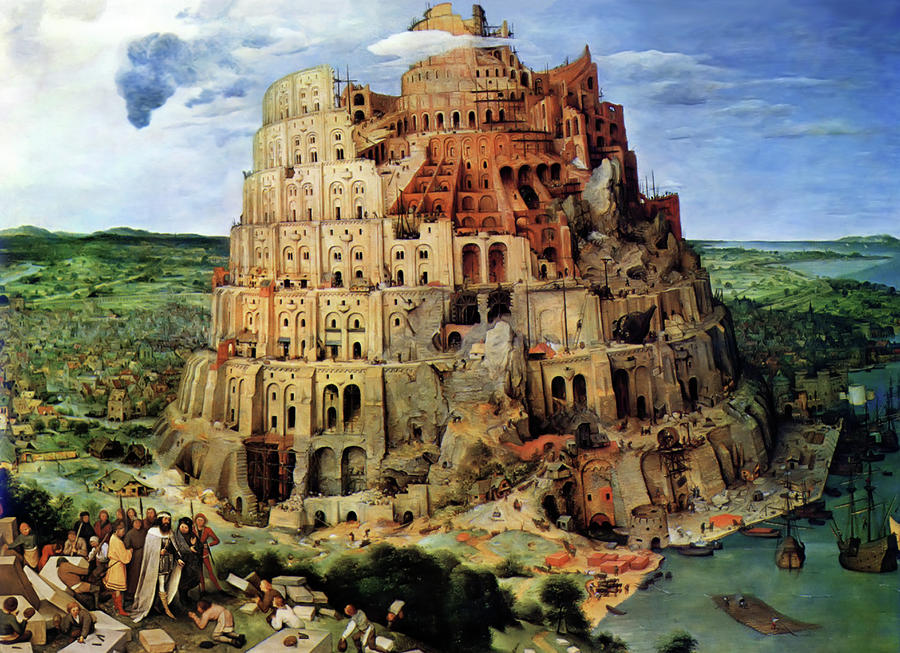
What Holzhausen is documenting, ultimately, is responsibility: this place, and these pieces, have been entrusted to these people, and it's they who have to decide how best to exhibit them. What if you do print that number 3 in Verdana rather than Sans-Serif? And what if you hang that painting on the left, rather than on the right? Would that forge an illogical or untrue connection in the mind of the beholder? Could the glaze of marketing dull, obscure, or - worse - damage the treasures it's being applied to? And at what point does renewal - the process of brushing up so keenly observed and illustrated here - start to impact upon the integrity of what was originally there? These are the questions the KHM staff wrestle with every day, and which Holzhausen has presented us with: from its opening moments to a concluding pan over Brueghel's "The Tower of Babel", this smartly curated film keeps the individuals, the treasures and the institution that houses them in clear and equal focus.
The Great Museum screens tomorrow (Sat 11) at 3.30pm at the Islington Vue, and again on Sat 18 at 1pm in NFT2; it opens in selected UK cinemas from December.
Thursday, 9 October 2014
At the LFF: "Spring"
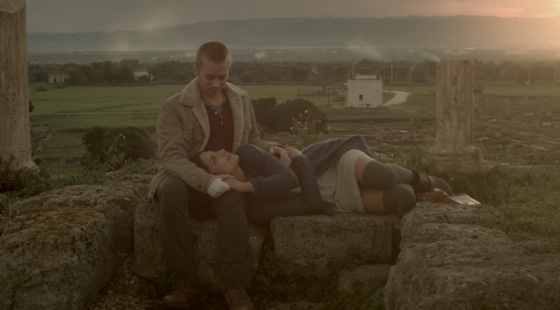
The surprisingly sweet and playful horror movie Spring seems to be heading into Hostel territory, only for writer-directors Justin Benson and Aaron Moorhead to instead navigate a far more scenic and affecting route. This is the trajectory followed by Evan (Lou Taylor Pucci), who after watching his mother die from cancer ricochets almost immediately into a bar fight that leaves him facing police charges; to avoid those, he hops on the first flight to Europe - Italy, to be precise - where he falls in with a pair of bluff British backpackers and then, after they've swaggered off into the film Spring could so easily have been, starts working on the kind of sunkissed Bologna farm rarely seen outside of olive oil ads. It's while tending the crops that he crosses paths with Louise (Nadia Hilker), a too-hot-to-be-true student apparently in town to research the unusual purity of the local gene pool - a big red flag that young men following their dicks have traditionally ignored to their peril in this sort of film.
One wrinkle is that Taylor Pucci - the thinking person's Ryan Gosling, in his best big-screen role to date - makes Evan an entirely likable travelling companion: a good kid (and loving son) who has his reasons for going a little off the rails, and who might still make something of himself if he could only settle down and apply himself. There's something very charming in the way he refutes Nadia's early come-ons and holds out for the prospect of coffee and a real date; he feels like a properly fleshed-out character, rather than a ready-made victim. Benson and Moorhead similarly play a long game - it's a film of slow reveals rather than cheap shocks, which makes for a pleasant change in the week of Annabelle - and their patience and curiosity pays off: as we explore with Evan the picturesque backstreets and byways of this coastal idyll, the filmmakers give themselves space to pursue subtly significant sidebars on the representation of women in Roman art, and the differences between 17th and 21st century attitudes to the female form.
This time out only deepens our understanding of these characters. Nadia may initially appear a temptress, but she's more than a monster; in Hilker's very capable hands, she's a young woman wrestling with who she is and where she came from. The film has a funny way of calling both Evan and us on our expectations and prejudices. When our boy suggests to his aged overseer down on the farm that a pagan animal sacrifice might help pep up an underwhelming harvest, he is instead referred to the anti-fungal spray in the woodshed; the same employer will later - for a wind-up - warn Evan that immigration is coming, and sit chuckling while the gullible prat runs for the hills. Benson and Moorhead revel in these deft tells - we know Evan has bottomed out back home when he's fired from a bar where an unseen character referred to as "Shitty Carl" has found regular employment - yet they also take death seriously, in a way a smirking yukfest like Hostel couldn't, and this only factors into the romance of Spring, and its protagonist's desire to forge lasting, meaningful connections. It heads towards an unusual, progressive-seeming final act, more Before Sunrise than Dawn of the Dead, in which the leads try to work something out rather than put a stake or silver bullet through it. The effect, true to that title, is genuinely regenerative: if your beloved isn't averse to the odd bloody protuberance, it'd make for a great date movie.
Spring screens tomorrow (Fri 10) at 8.30 at the Odeon Covent Garden, and again on Sun 12 at 1pm in NFT2; it will open in selected cinemas from Spring 2015.
At the LFF: "The Creator of the Jungle/Sobre la Marxa"
Once upon a time, there was a young boy who delighted in building treehouses in the forests outside the Catalan village of Agrelaguer. In the early 1990s, the boy - now a greying, bespectacled, middle-aged figure known only as "Garrell" - returned to these forests and began to build anew, this time with a grown man's ambition and skill. Soon, the treehouse had taken on the dimensions of a small city: there were vast wooden observation towers, lakes and streams diverted from a nearby river, and mannequins posed on every footbridge and platform. Jordi Morato's The Creator of the Jungle is less a conventional documentary on this man and his constructions than a meditation on what he was building and why he was building it. Garrell is not around in person to explain his methods and motives - an intriguing absence from the get-go - and so Morato's voiceover has to do the heavy lifting, along with VHS footage shot by Aleix Oliveras, a 14-year-old boy Garrell befriended out in the woods.
In our post-Savile moment, the pairing of a middle-aged loner with Aleix and his bare-chested contemporaries, only some of whom are of age, might set alarm bells ringing in certain quarters, yet rest easy: Garrell's only real relationship is with his immediate environment, and the footage gives off a sense of fun, rather than criminal evidence. We share Aleix's off-camera chuckles when his surprisingly nimble leading man - part Howard Roark, part Tarzan - falls off a rope into a pond, or locks horns with a mountain goat on the set of the pair's camcorder opus Tarzan III. Morato offers just enough of this footage to lull us into this idyll, but even so, we can't help but notice the increasingly frequent intrusions. The construction - which soon towered over the treetops - inevitably attracted curious locals, some of whom damaged Garrell's long-crafted tunnels and fences, and began killing animals for sport; at a certain point, Tarzan III became a personal statement, with our loinclothed hero dodging the unwanted attentions of the civilised world, beating off interlopers with rocks and sticks, and eventually burning this playhouse down so nobody else could get at it.
You think the film might also go downwards from here, spiralling towards the death, destruction and nothingness Werner Herzog so revelled in while concluding the thematically similar Grizzly Man. In fact, in its final act, The Creator of the Jungle moves in the opposite direction - it gets bigger, more awesome, gives us even more to marvel at. This is not, it should be said, a film that burrows inwards: although we hear Garrell shrug several times that he's been lucky to have experienced more good than bad in his life, we're shown and told next to nothing of his life away from the trees, an omission that prompts all manner of questions on our part. Is Garrell really the jolly visionary Aleix's footage presents us with, or is there more to this retreat to the wide open spaces of his youth? Are his constructions outsider art, or just a Sunday DIY project that got out of hand? Without lecturing us or stressing it, Morato has at the very least given us one of the more striking green docs to have come along in a while: the images Aleix captured, and which The Creator of the Jungle now reframes, are themselves a monument to the ways one man not only existed in harmony with nature, but worked together with it to create the darnedest of spectacles.
The Creator of the Jungle screens tomorrow (Fri 10) at 8.45pm in NFT2, and again on Mon 13 at 1pm at the ICA.
Wednesday, 8 October 2014
At the LFF: "Guidelines/La Marche à Suivre"
Over the weeks and months ahead, I predict the hands-off, narration-free scenes-from-an-institution approach will come to appear as hackneyed a documentary tactic as the talking heads used in BBC4 rock primers. The LFF schedule this year offers up two eminent examples of the form in Johannes Holzhausen's The Great Museum and Frederick Wiseman's National Gallery; it also provides us with Jean-François Caissy's Guidelines, which picks its tableaux from the daily life of a Québécois high school - in much the same way Celina Murga's Normal School, which played at the LFF in 2012, did from its Argentine equivalent. (It was Wiseman who arguably initiated this cycle of scholarly observation with 1968's landmark High School.)
To be entirely fair, this National Film Board of Canada production has a specific educative bent: as the title hints, and the opening sequence of a car repeatedly attempting to plough along a flooded road further underlines, Caissy's interest lies in how we get from there (childhood) to here (adulthood), that tricky passage all adolescents must navigate whether they like it or not. The bulk of the film is drawn from those disciplinary and counselling sessions by which the school's administrators attempt to nudge disruptive elements back on the straight and narrow. These isolation sessions have an innate tension and fascination; they reminded me a little of the testimonies in Raymond Depardon's judicial documentary 10th District Court, which caught similar troublemakers a few steps further down the line. Caissy keeps his camera fixed on the pupil under scrutiny: some shruggingly acquiesce to the new paths suggested to them, while others militantly dig in their heels and deny all responsibility for their actions. (You can but wish their teachers all the very best.)
If there's a limitation to this approach, it's that it generates only cursory case studies: we see each student only once before Caissy cuts away to show their contemporaries letting off steam on skateboards or quad bikes, pursuing their own trails into the world. He's possibly more interested in guidelines as a theme or pattern (schoolbuses circulating in the car park, gymnasts and joggers moving in synch) than as anything that might have consequences, good or bad; the film possibly needed just a little more of the narrative impetus of Laurent Cantet's The Class, with its acutely honed feel for how these tensions can develop and dissipate over the course of the school year. Still, Caissy clearly has an eye for clean, striking images that speak to some wider form of freedom or restriction: there are enough of those here to keep you out of trouble for a good hour and a quarter.
Guidelines screens on Fri 10 at 6.15pm at the ICA, and again on Mon 13 at 9pm at the Cine Lumiere.
Subscribe to:
Posts (Atom)