Thursday, 13 June 2013

Man of Steel: Why the British make the best superheroes (ST 09/06/13)


It’s one industry in which the UK is becoming dominant: exporting movie superheroes. And not everyone is entirely happy. The announcement in February 2011 that Jersey-born Henry Cavill would soon be fighting for truth, justice and the American way as the new Superman – joining British Batman Christian Bale (b. Haverfordwest), semi-septic Spiderman Andrew Garfield (b. California, raised in Surrey) and ex-pat X-Men McKellen, Stewart, McAvoy and Fassbender in the fight against evil – sparked reactions ranging from considered handwringing to outright consternation.

The Comic-Con contingent, inevitably, took to the blogs to bemoan this general outsourcing of caped labour; meanwhile, the pundits of reliably unhinged Fox News staple Fox and Friends floated a connection between America’s obesity epidemic and the inability to find homegrown actors capable of squeezing into Superman’s underpants. (As Bale landed Batman off the back of his weight-shedding turn in 2004’s The Machinist, maybe they had a point.) So why have we become the go-to nation for saving the planet?

As Cavill first caught American eyes as the thrusting Suffolk on cable television’s The Tudors, it’s possible that what we’re watching simply constitutes the latest, most spectacular phase of the hands-across-the-Atlantic process that brought many British actors – from Hugh Laurie on House to Damian Lewis on Homeland – to US TV. The characters these actors created were ambiguous, compromised; they chimed with America’s new-found definition of heroism, reshaped by years of bruising, non-fantastical conflict. That clean-cut squarejaw thrust forward by original Superman George Reeves could no longer do justice to the world’s complexities.

And the latest wave of superhero movies – gloomy of outlook, morbidly self-involved: perfect adolescent fare, in most respects – are very serious indeed about the complexity they assume. With their anti-heroes and tangled mythologies, “Shakespearian” is the word most often tossed around with an eye to legitimising what might otherwise resemble expensively ponderous exercises in dressing-up. Standing before the blue and green screens that facilitate these films’ elaborate effects work, performers are obliged to visualise space as though they were on stage – so why not recruit theatrically-trained Brits?

An enduring idea of class may also be crucial here. The wisecracking arrogance common to American Batmen – from Adam West through to George Clooney – is intended as endearing, a manifestation of the nation’s chipper, can-do spirit. In Christopher Nolan’s Dark Knight films, Bale’s champagne-sipping, banker-like Bruce Wayne instead carries aristocratic connotations: we’re meant to notice how only someone this well-off could insulate themselves from the underclasses. Heath Ledger’s Joker and Tom Hardy’s Bane register so strongly in these films because they embody real-world grudges against unsympathetic elites; it’s apt, then, that those representing the powers-that-be have Empire in their DNA.

Naturally, it helps that we’re relatively cheap. Given how much summer event movies are now expected to spend on spectacle, more affordable performers have become a book-balancing necessity. Yet there may equally be wider sociological reasons for America’s decision to look elsewhere for its heroes – and why that Fox and Friends bulletin seemed so very anxious. An article published at vulture.com at the time of the Cavill announcement suggested that many believe America, busy fostering a generation of joshing kidults off-screen as well as on, no longer has the capacity to produce believable supermen.

“I believe there’s been a certain feminisation of the American male,” said John Papsidera, The Dark Knight’s casting director. “[In the UK], men are still raised as men. Guys like Henry Cavill, there’s an easy masculinity to them.” An unnamed talent agent went further: “By the time a kid reaches 12 or 13 in America, if he’s displayed any talent, he’s steered towards athletics in high school. Kids who want to do theatre… they’re immediately labelled wimps, or – worse – fags.” Superhero dressing-up has perhaps become the ultimate test of one’s manhood.

Nolan’s trilogy, which concluded with the Batman mantle being passed to a young American contender, suggested this trend may not last: these characters remain potent symbols, whoever’s wearing the cape. Our thesps are just as likely to be cast as supervillains – Tom Hiddleston’s Loki in Thor, Benedict Cumberbatch in Star Trek: Into Darkness – and when it comes to Marvel’s “sexy” next-gen Avengers, we’re batting zero for four, in baseball parlance: their Captain America is that other, Boston-born Chris Evans, whose six-pack remains regrettably unambiguous.

As we wait for Man of Steel’s CGI dots to be joined, it’s still possible Cavill’s Superman will fly the Stars and Stripes higher than ever before. But it appears American movies, casting directors and audiences are becoming more open to the idea of British performers assuming the identities of all-American figureheads, just as this new cinematic free-trade agreement enabled, say, Robert Downey Jr. to play Sherlock Holmes, or Renee Zellweger Bridget Jones. Only with news Miranda Hart is to play Wonder Woman will we know the movie world has truly spun in reverse. Your move, America.

Man of Steel opens in cinemas nationwide tomorrow.

Friday, 7 June 2013

For what it's worth...


Top Ten Films at the UK Box Office      
for the weekend of May 31-June 2, 2013: 


1 (1) The Hangover Part III (15) **  
2 (2) Fast & Furious 6 (12A) **  
3 (3) Epic (U) **
4 (5)
Star Trek: Into Darkness (12A) ***
5 (4) The Great Gatsby (12A) ***   
6 (new) The Purge (15) **
7 (new) The Big Wedding (15)
8 (6Iron Man 3 (12A) *** 
9 (new) Yeh Jawaani Hai Deewani (PG) **  
10 (new) Byzantium (15) *
    
(source: Guardian.co.uk)

My top five:


1. Aguirre, Wrath of God
2. Grave of the Fireflies      
3. Populaire  
4. My Neighbour Totoro    
5. Something in the Air 


Top Ten DVD rentals: 
 
 
1 (1) Argo (15) ***      
2 (2) The Impossible (12) ***      
3 (new) The Last Stand (15) ****
4 (3) Jack Reacher (12) **    
5 (7) Silver Linings Playbook (15) ****
6 (new) Flight (15) **
7 (new) Wreck-It Ralph (PG) ***
8 (8) Skyfall (12) ****
9 (new) I Give It A Year (15)
10 (6) Seven Psychopaths (15) **    
 

(source: lovefilm.com)


My top five:            
1. Lincoln
2. The Last Stand    
3. Beyond the Hills
4. Bullet to the Head  
5. Planet of Snail     
 

Top five films on terrestrial TV this week:      
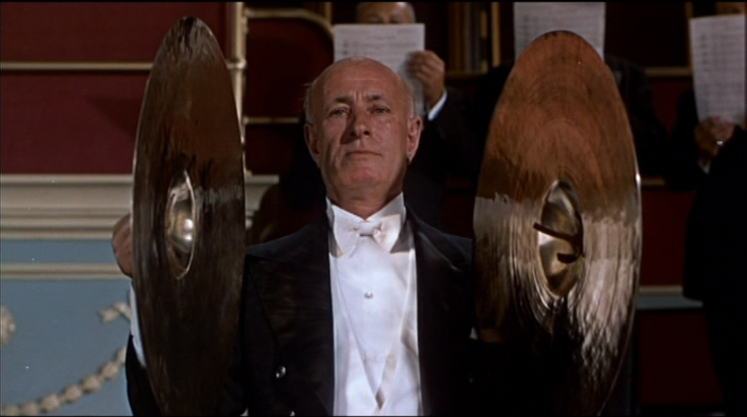
1. The Man Who Knew Too Much [above] (Tuesday, C4, 12.50pm)
2. Westworld (Saturday, BBC1, 12.30am)
3. The Breakfast Club (Friday, BBC2, 11.05pm)
4. The Others (Saturday, C4, 11.35pm)
5. The Man Who Shot Liberty Valance (Monday, C4, 12.45pm) 


"Come As You Are" (The Guardian 07/06/13)


Come As You Are (15) 115 mins ***

This Belgian romp heads south in the vein of countless post-Porky’s teenpics, with a trio of hopelessly horny young men keen to offload their virginities during a visit to a Spanish brothel. There’s a twist, though: paraplegic Philip (Robrecht vanden Thoren), blind Jozef (Tom Audenaert), and wheelchair-bound Lars (Gilles de Schryver) have very different relationships with their own bodies. Inspired by the story of Asta Philpot, the Leeds lad whose attempts to juggle sexual satisfaction with arthrogryposis were first set out in a BBC One documentary, Geoffrey Enthoven’s film doesn’t quite push the representational envelope in the way 2000’s Uneasy Riders or 2004’s Aaltra did: these boys’ frustrations and hang-ups get worked out with cinematic TLC. Still, it’s an unarguable crowdpleaser, gently nudging everybody on screen and in the audience along to a more enlightened, not to mention more relaxed, place. 

Come As You Are opens in selected cinemas from today.

Bad trip: "Yeh Jawaani Hai Deewani"


Last weekend, the flimsy and entirely overstretched globetrotter Yeh Jawaani Hai Deewani became one of the first Hindi films to enter the U.S. box-office Top 10: a breakthrough of sorts, for which we might blame shameless yoof appeal. For the longest time, Ayan Mukherjee's film resembles an extended advert for makemytrip.com, the Indian equivalent of STA Travel, whose logo - plastered as it has been all over the screen - comes to serve as both a visual motif and a plot marker. We're in flashback territory, with successful yet single twentysomething doctor Naina (Deepika Padukone) recalling the time when as a naive pre-med wallflower - decked out with some of those "no, I'm not sexy, really" glasses last sported by Rachael Leigh Cook in She's All That - she set out on her first trip overseas.

Heading the cosmopolitan buds Naina accrues en route - a zany bunch broadly familiar from old Doritos commercials who, over the course of two-and-a-half hours, do their very best to demonstrate that young Asians can be every bit as charmless and annoying as their Western contemporaries - is one Bunny, given name Kabir Thapar. Bunny is presumably meant to stand as the kind of leather-jacketed pseudo-badboy every girl remembers for the rest of their life, yet as embodied by Ranbir Kapoor, he's really no more than a prat with an offputting earring and an even more offputting resemblance to the broadcaster Tim Samuels.

The first of several credibility issues Mukherjee presents us with before dashing off again is that a generally sharp and sensitive soul like Naina should have spent the best part of eight years thinking about this herbert - and, furthermore, that she's seriously considering getting back together with him when he turns up late at a mutual friend's wedding and seizes all the attention meant for the bride by launching into a self-regarding dance number, shortly before throwing a chair through a carefully constructed pyramid of champagne glasses. (By which point, I would suggest, most viewers will be standing cross-armed on the sidelines with the caterers, thinking: what a dick.)

Another hour follows in which Bunny and the Doritos-people work through their Issues, giving us pause to consider many things, not least the itinerary of a Gap year that takes in inter-railing, camping, cross-country skiing and mountaineering as well as a stop-off at a powder-tossing Holi festival. (I mean, how would one pack for that?) Clearly, something about the film has struck a chord with its target audience of overseas students trying to climb out from beneath a Sunday hangover: perhaps the (underdramatised) yearning for home and stability, or possibly just Padukone's eyes, which somehow manage to beckon you in even from behind those ridiculous spectacles.

Yet with the exception of an early musical number that provides an energetic showcase for Bollywood veteran Madhuri Dixit - a bit like finding Shirley Bassey in the middle of a Fast & Furious movie - this is one of those ventures that doesn't even pretend to reach out to anybody over the age of 24. The only thing Mukherjee can bring himself to commit to is a glib ad-world aesthetic, of a kind that becomes increasingly tedious when a director has nothing much to say or sell with it, and which means all the film's breathless, obsessive location-scouting comes to register as blandly as two thousand of somebody else's Facebook photos.

Yeh Jawaani Hai Deewani is in cinemas nationwide. (With thanks to Sunny Malik for the correction.)

Thursday, 6 June 2013

1,001 Films: "The Masque of the Red Death" (1964)


As fine a film as Roger Corman ever directed for Samuel Z. Arkoff's American Independent Pictures, the Poe adaptation The Masque of the Red Death opens in high style, with an old crone, out collecting wood in the forest, confronted by a Death-type figure in a crimson cloak who predicts the arrival of a plague set to blossom through nearby towns and villages. Satanist prince Prospero (Vincent Price) holes up in his castle for the duration along with the local aristocrats, taking a particular interest in an innocent girl (Jane Asher), whom he's hoping to corrupt, or at least deflower, in the course of the titular masked ball.

It's the film that best demonstrates AIP's kinship with Britain's Hammer, both companies fostering - at their peak - a straight-ahead form of storytelling unencumbered by the frippery and excesses of a lavish budget. That said, Masque's depiction of a society founded on decadence remains wholly credible, conjuring up dwarves plotting against monkeys and trippy rites, and allowing Price to preside over the film's cruel and unusual punishments in such imperious fashion that evil starts to look considerably more intriguing - more seductive - than the virtue represented by Asher and her loved ones.

Director of photography Nic Roeg's lurid colour schemes, pushed to the very limit in the party scenes, are strikingly effective, while the screenplay (by Charles Beaumont and R. Wright Campbell) takes a particular care to preserve Poe's discourse on the existence (or otherwise) of God intact. The result provides a strong hint of the cross-fertilisation going on within film culture during the 1960s, a decade when even opportunist directors operating in the quote-unquote lowest of genres were playing with big ideas, or simply cribbing from their peers: you'd be hard-pushed to put your finger on the exact spot, but there's almost certainly something of Bergman in here.

The Masque of the Red Death is available on DVD through MGM Home Entertainment.
 

Wednesday, 5 June 2013

1,001 Films: "Shadows Of Our Forgotten Ancestors" (1964)


In all my adventures in world cinema, Sergei Paradjanov has been the most extraordinary discovery, and the director whose work requires the most explanation, the most context, lest it merely be reduced to a series of ravishing, exotic images. Shadows Of Our Forgotten Ancestors, the first of Paradjanov's films to reach Western audiences, takes as its pith the ancient legends and folklore of the snowy Carpathian region, yet shoots these tales in the manner of, say, Help! or A Hard Day's Night, all hand-held, charging camera and sped-up action, as though the characters it comes across were rockstars rather than more than faintly obscure national icons. As with Paradjanov's subsequent The Colour of Pomegranates, a template is being laid down for any number of modern pop videos: this was an imagemaker who knew how to make history newly youthful, vibrant, alive.

At its centre are Ivan and Marichka, childhood sweethearts possibly equivalent to the Devdas and Paro of Eastern lore. In their younger days, these two frolicked in Edenic woodland - there's a lot of berry-picking - but their relationship gets markedly tougher once Ivan is sent out into the world to earn his keep: there are fewer fruits of the forest, for one, and separated lovers can only stare at the same set of stars for so long. Soon they've lost all contact, leaving Ivan whirling round in a state of independence, nostalgia and confusion, and susceptible to more malign influences.

Even if we don't quite twig precisely what's going on from here on out, it would be impossible not to pick up on the energy and vast exhilaration Paradjanov puts into bringing even a flavour of this story, this culture, to the screen; his film has a freedom in its veins that you could very well imagine a straight-laced, desk-bound apparatchik taking firmly against. On display throughout is a proto-Herzogian view of nature: enormous rafts lashed together from logs, the tallest trees ever put on screen. Yet the symbolism adorning each scene like those ripening berries - the nailing of a horseshoe onto a mare, the pulling of a stone from a crotch-mounted holster, the better to keep the blade of one's scythe sharp - is lusty and earthy: unlike anything else going on in the cinema, East or West, at this time, and - for all one might stretch and reach to contextualise it - like very little else made since.

Shadows of Our Forgotten Ancestors is available on DVD through Artificial Eye.

Saturday, 1 June 2013

For what it's worth...


Top Ten Films at the UK Box Office    
for the weekend of May 24-26, 2013: 
       
 
1 (new) The Hangover Part III (15) **
2 (1) Fast & Furious 6 (12A) **
3 (new) Epic (U) **
4 (2) The Great Gatsby (12A) ***
 
5 (3) Star Trek: Into Darkness (12A) *** 
6 (4Iron Man 3 (12A) *** 
7 (new) The Moth Diaries (15)
8 (5) All Stars (U) ** 
9 (6) Mud (12A) ***  
10 (re) Oz The Great and Powerful (PG) **
 
 
(source: Guardian.co.uk)

My top five:
       
 
1. Grave of the Fireflies    
2. Populaire
3. My Neighbour Totoro  
4. Something in the Air  
5. The King of Marvin Gardens       
 

Top Ten DVD rentals: 
 
1 (1) Argo (15) ***    
2 (4) The Impossible (12) ***    
3 (2) Jack Reacher (12) **    
4 (8) Quartet (12) ***    
5 (new) Alex Cross (15)    
6 (6) Seven Psychopaths (15) **    
7 (5) Silver Linings Playbook (15) ****    
8 (3) Skyfall (12) ****    
9 (7) Taken 2 (15) *    
10 (9) Anna Karenina (12) ***    
 
 (source: lovefilm.com)


My top five:          
1. The Last Stand  
2. Bullet to the Head
3. Planet of Snail  
4. I Wish  
5. Aurora     
   

Top five films on terrestrial TV this week:    
1. Point Break [above] (Friday, BBC1, 11.55pm)
2. Ice Age (Sunday, C4, 5.50pm)
3. Dreamgirls (Sunday, C4, 11.15pm)
4. Austin Powers: International Man of Mystery (Sunday, five, 11.05pm)
5. The Night Listener (Monday, BBC1, 12.05am)