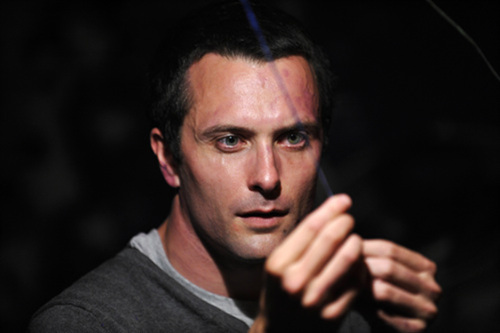
Sunday, 17 February 2013

1,001 Films: "The Young One/La Joven" (1960)


Luis Buñuel entered the 1960s - the decade that was to produce his most acclaimed works - with the very strange Mexican B-pic The Young One, this filmmaker's only English-language feature. From the opening burst of the song "Sinner Man", it's clear this is meant as a parable of sorts, with paradise and innocence tested, lost and regained, though I'm not sure the talky final act has the clarity of purpose required to drive the message of this particular sermon home. 

A fugitive (Bernie Hamilton) washes up on a private island where the gamekeeper (Zachary Scott) is shacked up with a teenage girl (Kay Meersman, who rather resembles a young Carole Bouquet) who he abuses verbally, physically and - it's implied - sexually. While the gamekeeper is away tying up some business on the mainland, the newcomer - a dark-skinned hipster who converses in a similar street lingo to that deployed by Sidney Poitier in The Defiant Ones, or the leads in later blaxsploitation movies - strikes up a playful, even protective bond with the girl ("see you at the top, gumdrop"). When the keeper returns, and learns this newcomer has made off with one of his shotguns - phallic symbol alert! - he's not best pleased.

As these three circle one another, the conflict between natural and unnatural urges is none too subtly pointed up: there are almost as many inserts of buzzing insects as there were in Buñuel's early Surrealist ventures, while a soundtrack of chirruping cicadas making play in the fields of the Lord gets cranked to the max at moments of high tension. For once, the director appears busy rather than merely amused, enlivening this already perverse material with clarinets and hand grenades, baptisms and rabbit traps, and seeking out inventive ways of circumventing the heightened censorship that followed from working in America, lowering his camera to the girl's feet while she takes a shower, and playing one early dialogue scene between the gamekeeper and his charge behind a closed window so we can't hear what, precisely, is being said - and consequently leading us to imagine the worst.

There's very little to overturn my suspicion that Buñuel was more interested in casting types than in the specifics of directing actors. These characters have descriptions (fugitive, girl, corrupt authority figure, priest) rather than names, and tend to interact as such, eventually pushing the film into the realms of the waffly abstract, though you could argue the remote setting excuses it from having to appear entirely realistic, and Scott attempts something brave (and potentially career-ending) in fleshing out a type - put bluntly, a pederast - that the movies, even at the start of the Swinging Sixties, still hadn't fully acknowledged.

The Young One is currently unavailable on DVD.

Friday, 15 February 2013

For what it's worth...


Top Ten Films at the UK Box Office
for the weekend of February 8-10, 2013:

1 (new) Wreck-It Ralph (PG) ***
2 (1) Les Misérables (12A) *
3 (new) I Give It A Year (15)
4 (2) Django Unchained (18) **
5 (3) Flight (15) **
6 (new) Warm Bodies (12A) ***
7 (4) Lincoln (12A) ****
8 (new) Hitchcock (12A) **
9 (5) Life of Pi (PG) ***
10 (6) The Impossible (12A) ***

(source: BFI)


My top five:
1. NO
2. A Place in the Sun
3. Madame de...

4. Mea Maxima Culpa: Silence in the House of God
5. Lincoln

      
Top Ten DVD rentals:

1 (2) Ted (15) ***
2 (3) The Bourne Legacy (12)
3 (1) Looper (15) ****
4 (new) The Dark Knight Rises (12) ***
5 (4) The Sweeney (15) *
6 (5) Lawless (18) **
7 (new) Untouchable (12) **
8 (7) Dredd (18) ***
9 (6) Total Recall (12) ** 
10 (new) Ice Age 4: Continental Drift (U)
 
(source: lovefilm.com)

My top five:
5. Elena
  
 
Top five films on terrestrial TV this week:
1. The Third Man [above] (Thursday, C4, 12.05pm)
2. The Magdalene Sisters (Thursday, BBC1, 11.35pm)
3. The Breakfast Club (Tuesday, BBC1, 12.05am)
4. Ghost Busters (Sunday, five, 7pm)
5. Three Kings (Friday, ITV1, 10.35pm)


Shades of madness: "Ollie Kepler's Expanding Purple World"


Ollie Kepler's Expanding Purple World serves as an elaborately quirky title for what's essentially a well-meaning passion project, attempting to do something worthwhile and watchable on the subject of male mental illness. The still somewhat underemployed Edward Hogg - think an affordable, less skeezy Fassbender - plays the eponymous Kepler, an astrophysics nut whose life takes a precipitous downturn upon the sudden death of his fiancee (Jodie Whittaker); soon he's hearing voices, making dark prognostications about the universe, painting his apartment an obsessive shade of purple, and giving lengthy thought to the matter of removing the microchip he believes has been implanted in his cerebral cortex.

There's a reason Viv Fongenie's film is only emerging a couple of years on from its production, via a distributor you've never heard of: it's almost entirely anti-commercial. With none of the emollient jokes of a Silver Linings Playbook, we're left to take a long, hard look at one man cracking up, and hoping someone comes along to place a hand on his shoulder before he goes too far. Yet unlike the bulk of Brit poverty-row fare, it's at least about something, and fairly accurate with it: Fongenie's scenes nail the variably embarrassed and baffled reactions of Ollie's colleagues to his condition, and those comforting tics (eating muesli for breakfast, dinner and tea) by which the protagonist hopes to regain control over his world.

Hogg, doing the thesp equivalent of pro bono work, turns in another laudably committed performance, taking the case notes left out for him in this script and mapping an entire headspace for Ollie to retreat to, and there's good support - in every sense - from Andrew Knott as the best friend trying to juggle his own stresses and strains with looking out for his pal. Reviewing it amid a round-up of the week's more pressing, money-minded releases requires a degree of sensitivity, and a belief in movie string theory: though it'll be gone from cinemas in a matter of mere days, you can imagine it having another, considerably more rewarding life in care homes and therapy sessions.

Ollie Kepler's Expanding Purple World opens in selected cinemas from Monday. 

Monday, 11 February 2013

From the archive: "Die Hard 4.0"


At last, some good news: the first of the summer's sequels to do the job expected of it. In the grand scheme of things, Die Hard 4.0 falls some way short of the middling Die Hard 2 (and may even be less entertaining than last year's Bruce Willis warm-up 16 Blocks). But it does feature a man propelling his car into an airborne helicopter, and if that prospect doesn't put a smile on your face, then you might as well go sit in the park with a book for the rest of the season. 

It's certainly possible to have doubts about this latest instalment going in. It's always the last refuge of desperate franchise to pair the established hero with a younger sidekick: a tactic that didn't work for TV's 24, when Jack Bauer was teamed with the Justin Timberlake lookalike Chase, so why should it work here? Fortunately, Willis's permanently fatigued cop John McClane is here well-matched with Justin Long, amiable star of Dodgeball, Jeepers Creepers and the teen comedy Accepted, as a computer hacker beset by low blood sugar and assassins who want him dead. 

The other potential glitch is signalled in the title: the bad guys this time round are johnny-come-lately cyber-terrorists. The first two Die Hards were most reminiscent of sturdy, Andy McNab-type airport novels, but 4.0 is inspired by one of those hysterical articles that keep popping up in the press insisting we're all under attack from malevolent mouse-clickers and radical modems. Compared to the Gruber brothers (Alan Rickman in Die Hard, Jeremy Irons in Die Hard with a Vengeance), these are literally colourless villains: nerdy palefaces who taunt McClane by accessing his pension scheme and sneer "Get ready for the downloads". Ooh, I'm scared.

McClane could just pull these hackers' plugs, rather than punch their lights out; I was reminded, not entirely helpfully, of 2005's Hostage, which again suffered from the imbalance of pitting Bruce Willis against a set of snivelling kids. Die Hard 4.0 has a hang-up on the hip and hi-tech: there's much business with PDAs, "e-bombs" and in-car recognition systems, and the script has to give McClane a big speech in an alleyway when the dust clears to help us grasp the grave threat cyber-terrorism poses to us all.

What the film has in its favour is old-fashioned stuntwork, and lots of it. Director Len Wiseman, of those hideous Underworld films, proves overly fond of the blue-green filters that have signified "modern" and "techno-savvy" ever since their deployment in the Matrix movies, but his set-pieces are pleasingly analogue: cars plunging into liftshafts, free runners leaping between buildings, McClane clinging onto the roofs of trucks and the wings of jumpjets.

You miss the wit that distinguished the earlier Die Hards - as the Gothy self-absorption of his breakthrough films demonstrated, Wiseman is a director with no obvious sense of humour - and there's something slightly sad in its wannabe trendiness; appeals to the MySpace generation include endless shots of monitors and a minor role for Kevin Smith as a hacker whose "command centre" the hero debunks as a common-or-garden basement. Not least as it changes the configuration of the central character: McClane, who's kicked both the swearing and smoking and kills without blood in a busted attempt to land a 12A/PG-13 certificate, is less the indomitable hero in Die Hard 4.0 than a befuddled dad who has to have the concept of email explained to him.

Accordingly, the film is at its most fun when it shies away from its idea of the cutting edge to run once more through the tropes and cliches of the late 80s/early 90s actioner. Familiar pleasures include: a wisecrack after every death; an FBI agent being informed, in no uncertain terms, that certain info is beyond his paygrade; a bit-part player who gets one line - "you can't go in there, this is a restricted area" - before being shot square between the eyes; and - a personal favourite - the police car that comes careening around a corner at high speed, causing an extra carrying a briefcase to stop dead in his tracks.

 (June 2007)

Die Hard 4.0 is available on DVD through 20th Century Fox Home Entertainment. A further sequel, A Good Day to Die Hard, opens in cinemas this Thursday.

Sunday, 10 February 2013

From the archive: "A Turtle's Tale: Sammy's Adventures"


The enterprising Belgian animator Ben Stassen was one of the first to exploit the possibilities of 3D computer animation with 2008's makeweight Fly Me to the Moon. Stassen's follow-up, A Turtle's Tale, proceeds in the same amiable, hands-across-Europe vein - it's a nice, easy payday for those actors brought in to dub the original script into English - but proves no more essential: its purpose is to fill idling 3D-enabled multiplex screens while we all wait for the next Disney-Pixar. Venerable old Sammy, a sea turtle with the voice of John Hurt, recounts the larks enjoyed over the years by himself and his old "mate" Ray - the term being employed not in the animal kingdom's usual sense, presumably, although the pair do spend a lot of time together on the same small raft, and will later be observed enjoying the attentions of those sucky-fish things during a spa day.

If Stassen's humans - notably the hippy commune Sammy and Ray stray into at one point - are oddly lifeless, his creatures are rounded and cute: though they probably wouldn't pass the plush-toy test, in that even the under-sixes won't emerge clamoring for Sammy merchandise, they're easy enough to look at for ninety minutes. Also in the film's favour: it is properly stereoscopic, using 3D in such a way that its oceanscapes convey a similar sense of suspension in space as the zero-gravity in Fly Me to the Moon; there's plenty of plankton and motes drifting into your field of vision, the kind of gimmicky detail the medium does rather well. 

Trouble is, Sammy's adventures are, in the main, terribly banal, and may just be actionable under the Trades Description Act. Sammy and Ray drift round and round the Pacific; they briefly encounter nefarious oil drillers, but that threat quickly subsides; Sammy is separated from his true love Shelly, all of which is rather too cutely anthropomorphised to be true. Run-ins with personality-free sharks and piranhas offer rather greater scope for action or dramatic development, but compared to Finding Nemo, which these visuals inevitably recall, it's all distinctly small-fry. One for the very young and easily pleased, then; grown-ups will have to put up with the bland voicing (thanks again, "rising stars" Dominic Cooper and Gemma Arterton) and songs so vapid of melody and lyric ("Destiny is a funny thing... 1, 2, 3, 4, you can count on me... Love always finds a way") that the pulse fair races when Mika comes on.

 (March 2011)

A Turtle's Tale: Sammy's Adventures is available on DVD through Optimum Home Entertainment. A sequel, Sammy's Great Escape, opens in cinemas from Friday.


Saturday, 9 February 2013

From the archive: "Knocked Up"


With 2005's The 40-Year-Old Virgin - in my book, one of the three best American comedies since the turn of the century (Stuck on You and Borat being the other two, in case you're wondering) - the writer-director Judd Apatow announced himself as a truly adult filmmaker: one terrifically funny and filthy of mind but pure of heart. His follow-up Knocked Up plots the circumstances leading up to - and the consequences of - one of the more unlikely hook-ups in recent screen history: that between chubby slacker Ben Stone (Seth Rogen) and eligible, Britney-esque blonde Alison (Katherine Heigl), who retire to the latter's place after a drunken encounter in an L.A. nightspot. 

It's no surprise to learn the pair part soon after, as a result of irreconciliable life differences: she's an ambitious producer-turned-director for the E! network, while he's a dyed-in-the-wool stoner who can't even get a celebrity porn website up-and-running; his idea of an appealing proposition is "I'll show you Meg Ryan's bush". (I'm guessing Apatow's research must have been an eye-opener.) One night, Ben gets a call out of the blue: it's Alison, and she's pregnant, a situation Ben doesn't take very well - a disbelieving "fuck off" is the precise term deployed - but comes to live with over the subsequent nine months.

From one shot of Rogen's flabby, spotty, hairy buttocks as observed on the morning after Ben and Alison's first tryst, it's possible to identify Knocked Up as a film with precious few illusions or preconceptions about modern love. The dramatis personae here include men who won't (or find it hard to) grow up; women who are held back from personal fulfilment by a unrelenting insecurity around other women; and a married couple (Leslie Mann and Paul Rudd) whose underlying resentment of Ben and Alison's first-flush happiness very nearly results in divorce.

From his first two films, it's become apparent that Apatow is at heart a traditionalist, interested in the ways men and women interact these days, but he's one forever careful to overwrite the conventional sex comedy's standard-issue scuzziness and cynicism with a pervasive and persuasive sweetness. His gift lies in finding new ways to tell the same old stories: tossing in dirty jokes, plentiful pop-cultural references (Rogen and Rudd's "you know how I know you're gay?" schtick from Virgin here morphs into a homoerotic reclamation of dialogue from Back to the Future: "I'll strap you into my DeLorean and get you up to 88") and moments of gross-out comedy (a prosthetic vagina features as the baby starts crowning).

Knocked Up's finale reverts to fairly conventional cooing at a newborn in swaddling clothes, but up until that point, it makes for a most enjoyable romantic comedy of unpredictable events, both at plot level (in the unexpected declaration of pregnancy that brings the two leads together) and on a scene-by-scene basis (in the spontaneity Apatow fosters in his performers). Rogen remains entirely convincing as both a fuzzy sleazeball jerk - the type of guy who accuses others of watching films without nudity as though it were the worst crime a red-blooded male could commit - and as the most redeemable figure among a set of bearded, grungy no-hopers who'd rather dash off to see Spider-Man 3 than do any work.

Heigl is game enough to play a young woman who is, at various points, at least ten years more mature than any of the men in her life, hormonally unreasonable, and all too willing to submit to her man's less perverse desires, helpfully enumerating the nude scenes in Carrie, which is one way for lovers to bond; her shake of the head when presented with faced with Neve Campbell and Denise Richards' swimming-pool liaison in Wild Things - a scene that has always played better with men than with women - is possibly the truest moment in the picture. Around them, Apatow has gathered a supporting cast whose asides and adlibs take the film, and its constituent relationships, off in entirely different directions.

It's here Knocked Up starts to suffer, because after The 40-Year-Old Virgin (two hours plus), Apatow appears a director unusually fond of his own deleted scenes. At 129 minutes, Knocked Up is a longer film than its predecessor, and a mushier film, when it finally gets round to it: Virgin climaxed with that wild and wonderfully wayward Hair pastiche, but this latest starts showing you baby photos, like an insistent parent. Too many sequences require Rogen to say something tactless and blokeish, and for Heigl to roll her eyes or storm out before taking her unlikely suitor back. (Wouldn't it have been more interesting if Alison had had a rival for her affections?)

Still, if there's a lot of Knocked Up, then a lot of it is a lot of fun, and it's hard to know what one would have left on the editing room floor. The inappropriately joshing gynaecologist? Rudd and Rogen's boys-night-out in Vegas, at the end of which the former ends up glassy-eyed in his appreciation of hotel-room chairs, while the latter is confronted by the sight of Steve Martin in Cheaper by the Dozen? A montage of sex scenes illustrating male fears about the pregnant female form, each one scored to a different Terence Trent d'Arby song? Even if there are sometimes problems with the delivery, Knocked Up is pregnant with wonderful comic ideas.

(July 2007)

Knocked Up screens on ITV1 tonight at 10.35pm. A semi-sequel, This is 40, opens in cinemas on Friday.

For what it's worth...


Top Ten Films at the UK Box Office
for the weekend of February 1-3, 2013:

1 (1) Les Misérables (12A) *
2 (2) Django Unchained (18) **
3 (new) Flight (15) **
4 (3) Lincoln (12A) ****
5 (4) Life of Pi (PG) ***
6 (6) The Impossible (12A) ***
7 (5) Zero Dark Thirty (15) ***
8 (8) Monsters, Inc. 3D (U) ***
9 (new) Bullet to the Head (15) ***
10 (7) Movie 43 (15)

(source: BFI)

My top five:
1. NO
2. A Place in the Sun
3. Lincoln
4. The Last Stand
5. This is 40
   
      
Top Ten DVD rentals:

1 (1) Looper (15) ****
2 (3) Ted (15) ***
3 (new) The Bourne Legacy (12)
4 (2) The Sweeney (15) *
5 (4) Lawless (18) **
6 (6) Total Recall (12) ** 
7 (5) Dredd (18) *** 
9 (new) The House at the End of the Street (15)
10 (10) Prometheus (15) *** 
(source: lovefilm.com)

My top five:
4. Elena
Top five films on terrestrial TV this week:
1. Rear Window [above] (Thursday, C4, 12.25pm)
2. Thirteen Days (Monday, BBC1, 12.20am)
3. While You Were Sleeping (Sunday, five, 3.05pm)
4. Milk (Saturday, BBC2, 11.35pm)
5. Changing Lanes (Sunday, C4, 11.35pm)