Tuesday, 10 September 2024

The peacemaker: "GOAT: The Greatest of All Time"


It takes real chutzpah - or colossal testes - to title your latest star vehicle (and penultimate film)
GOAT: The Greatest of All Time. Such self-confidence may, however, come naturally to Vijay, the Tamil megastar who's reliably delivered hit after hit for his industry, most recently Leo, last October's slaphappy remake of David Cronenberg's A History of Violence. The new title represents a steep promotion for a performer historically referred to by the nickname "Thalapathy" (or "Commander"); it is also, we might surmise, canny positioning for a public figure about to leave acting behind for a career in politics as the head of a party reportedly converted out of his own fanclub. The new film presents as scarcely less derivative than Leo, apparently born of its leading man's late-career desire to have his own Mission: Impossible, 24 and True Lies, or - closer to home - something like the Hindi TV hit The Family Man crossed with one of those blockbusters in which Shah Rukh Khan (this era's foremost GOAT contender) faces off against another version of himself. 

Vijay's anti-terror agent Gandhi (note the name; it matters) is already leading a dual life as we find him: a living legend in the ill-maintained offices he shares with varyingly slovenly and disreputable colleagues, he's yet to reveal his true identity to his wife (Sneha), pregnant with the couple's second child, leading her to take all her man's nocturnal creeping as evidence he must be straying elsewhere. This long-game deception quickly unravels, as Gandhi is forced to juggle a family getaway with state business: bad news for the Thai cab driver he gets gunned down in the line of duty, even worse for Gandhi's young son Jeevan (S.J. Akhilan), removed from the picture by ne'er-do-wells at the exact moment his new sister arrives into the world. (In a film this manic in its plotting, it suggests less the circle of life than drive-thru reincarnation.) Thereafter our guy must prove himself both the greatest agent and greatest father of all time; if you might hope the greatest movie star of all time would lay on a bit more originality for our troubles, the film's messaging - particularly for someone entering politics in opposition to Modi's BJP - is rarely less than on point. This Gandhi learns that in affairs of state, as with matters of the heart, honesty is forever the best policy.

The bulk of this three-hour film, co-written and directed by Venkat Prabhu, more or less represents what our multiplex-bound actioners now are: long, loud, faintly mechanical and exhausting in their insistence on an agitating setpiece every twenty minutes, and prone to sometimes questionable intelligence. ("Some random group is protesting the reopening of our embassy," Gandhi is told when he touches down in Moscow; you'd hope MI6 would do better for Bond.) Yet GOAT is also never dull, broadly likable, and elevated by those humanising touches its lead addends amid the mayhem: a dry heave after he guns down one baddie, an amused chuckle after he sets two more against one another, some awareness this is dirty or silly work for a grown man to be doing (and watching), and hidebound material that can only benefit from being loosened up. After Gandhi is relegated to desk work - necessary rite-of-passage for any screen maverick - he enters one fight scene with a schoolboy's satchel slung over his shoulder; and there follows the film's grandest, most intriguing humanising gesture, as amid the kerfuffle, he catches a glimpse of his younger self. Now we suddenly have not just two Vijays for the price of one ticket, but also find ourselves present at a standoff between the Vijay of the present and the Vijay of the past. "V squared for victory," as the lyrics of one of Yuvan Shankar Raja's thumping songs reframes it, doubtless echoing sentiments voiced in early script meetings.

It obviously helps that Vijay, fifty this year, is younger and fresher-faced than Robert De Niro was circa The Irishman, but the deaging tech here is so effective you may start to wonder whether the star is passing off his actual son in this secondary role, but no, apparently that is him in attentively airbrushed form, a microchip off the old block driven to malice by the sins of his fathers. The inclusion of this character's backstory - albeit in a film drunk on backstory, that constantly feels a need to be explaining itself - is not unpromising. For one thing, it indicates that should Vijay one day wind up becoming PM of India - not improbable, given GOAT's weekend box-office - he might well be given pause before, say, bombing Pakistan or the Middle East into near-oblivion. Where our hero differs slightly from a Bond, Bauer or Ethan Hunt is that he's not primarily driven by vengeance, rather a need to clean up after his own mistakes, whether his absentmindedness as a father or his unthinking brutality as a tool of the state. In a film that has some fun with names - minor characters adapt the codenames Bose and Nehru at various points - there is good reason Gandhi is called Gandhi: he's set to working towards the preservation of peace, be that around the family breakfast table or inside the nation's bustling cricket stadia. It is still largely a family matter, one in which we're invited to cheer the father over the son, and in which women have nothing much to do save gyrate in songs and play damsel in distress. (If SRK remains the true GOAT in this viewer's mind, that may be because he can play many selves, stock a movie this deep with references to his back catalogue, and still find room for his co-stars to shine.) Vijay, to his credit, handles each development with a brisk professionalism that itself bodes well: leave it with me, every gesture tells us, I'll clear this up and have you home in time for at least the conclusion of tonight's IPL fixture. That's not necessarily a guarantee of GOAT status, but party political broadcasts have been much less entertaining and made far worse propositions to the electorate.

GOAT: The Greatest of All Time is now showing in selected cinemas.

Monday, 9 September 2024

On demand: "American Dharma"


Another of Errol Morris's occasional feature-length studies of notable public figures, 2018's
American Dharma found itself mired in some controversy after its initial screenings, to the extent it barely travelled in the way last year's comparatively simpler The Pigeon Tunnel did. The controversy derived from Morris's choice of subject: Steve Bannon, the producer-director turned libertarian guru who had as much to do with the election of Donald Trump as anyone, and who has spent the years since roaming the globe preaching endless culture war. Here is one of those next-level bullshitters who, much like Jordan Peterson, Dominic Cummings and Andrew Tate, harnessed the power of the Internet to bolster his personal profile and briefly achieved notoriety in the mid-2010s before being comprehensively found out. (Bannon was sentenced to jail time in October 2022, having been found in contempt of a Congressional investigation into the events of January 6th; he is due to be released before November's election.) On the surface, Morris's film represents an effort to meet its subject in the middle: he sets Bannon, who must have entertained some suspicions, in a mock-up of Gregory Peck's briefing room from Twelve O'Clock High, a formative text of Bannon's youth, and invites him to talk about the notionally neutral subject of movies. Bannon, we learn, was for many years a regular at the Telluride film festival; he was inspired to go into filmmaking after seeing a Q&A Morris gave after a screening of 2003's The Fog of War; and the documentarist duly digs out clips from the cinematic hymn Bannon subsequently composed to Reaganism. (A more conventional Ronnie biopic starring Dennis Quaid has just opened in the US behind the Beetlejuice reboot: the undead walk among us anew.) Gradually, inevitably, the conversation expands beyond art to life, a sly process by which Morris begins to reveal something of Bannon's character and philosophy, and possibly how we all got to this fraught moment in history.

So who is Steve Bannon, exactly? The first of many contradictions: a garrulous lone wolf. A man on a perpetual war footing, who chiefly absorbed from mid-century American cinema not its romanticism or emotionality (he speaks neither of Sirk nor Doris Day), but its thick streaks of fatalism and paranoia. He has the down-and-dirty instincts of a tabloid muckraker - cf. his lipsmacking account of Anthony Weiner's downfall, which he helped engineer during his tenure at the right-wing website Breitbart - but sincerely regards himself as a latter-day Patton or MacArthur. (Even now, you suspect, he's probably sat in his cell, considering himself a prisoner-of-war: as Morris discovers, The Bridge on the River Kwai looms large in his mindset.) He has an armoury of stats to bolster his every argument, and could doubtless make up a few more if he were losing; in a pointed formal touch, Morris loads Bannon-derived headlines onto the screen like bullets in a chamber. Bannon even demonstrates blunt flashes of strategic brilliance, which collectively suggest how he outmanoeuvred the pinko-liberal snowflake Left in the summer and autumn of 2016. (Of course, dark arts and dirty money can only help.) The controversy resides in the extent to which Morris lets Bannon talk; the argument is that blowhards like this don't need another platform right now, and may be best left alone to blow themselves out. There is, certainly, material here that will be deeply discomfiting to liberal-minded viewers who've long since tagged Bannon as among the foremost boogeymen de nos jours. You may, for one, find yourself nodding in instinctive agreement with Bannon's anti-elite stance, and stirred by his calls for an urgent redistribution of wealth, for an end to pointless, costly overseas conflicts. (Even if you sense an innately bellicose individual starting to contradict himself once more.) At one point, Bannon declares a - granted, begrudging - respect for the support Bernie Sanders has drawn in recent years. His talk of dharma - interpreted here as duty or destiny - suggests this is not an entirely unspiritual man.

Yet in apparently allowing his subject to dictate the terms of this negotiation, Morris spots (and shows) how rapidly men of the libertarian stripe run out of niceties and pieties and drift towards far less appealing extremes. There is merit in letting Bannon get comfortable, to let him think he's winning the war of words, even as the words that then drop from his lips are enough to give anyone who hasn't swigged the MAGA Kool-Aid the most severe of pause and heartburn. When Morris sheepishly confesses he voted for Hillary, it's couched in a way Bannon can only ever hear as an admission of weakness - and yet it's also a palms-up show of honesty that lures Bannon into extending his generally contemptuous air into outright Islamophobia. Similarly, all Bannon's highfalutin talk of cryptocurrency - tool of a brave new world and a fully deregulated America - is finally revealed as a means of ripping off gamers with disposable income. There seems little point in taking the fight to Bannon in this context, because a) that's what he'd expect, and b) that's what he's spent his whole life training for. (The briefing room is his spiritual home.) Morris instead plays a longer, wilier game, exposing his subject as another grabby boomer who's constructed an elaborate ideology ("an apocalyptic rationalist," Bannon grandly dubs himself) to achieve his ends. We might still quibble with some of the archive on this particular project. Time and again, we have endure Trump's peacocking, which was insufferable at the time, and is barely less so now the candidate has descended into sub-Grampa Simpson, Hannibal Lecter-fetishising senility. Yet even this works towards a sense that what Bannon brought about back there wasn't the desired revolution so much as a short-term con job: a show of unimpeachable potency and will that needed smart(er) heads around - like Bannon, like Cummings - to spin and sell it to the masses. Bannon was still at it as Morris found him, insisting being cast out from the White House was a logical development so Trump could stand supreme on his own two feet; yet it seems equally plausible Trump was simply too dumb to realise what he was losing in banishing Bannon. (Hence 2020.) Morris, for his part, only succeeds in drawing his subject out of the dark and into the light. The Bannon he films is patently a dangerous man to have anywhere near a seat of public office - but that's why he was so effective in 2016, and that's why he's behind bars now. American Dharma is less the glowing portrait its fiercest critics insisted than it is the confessions of a pyromaniac.

American Dharma is currently available to stream here.

Saturday, 7 September 2024

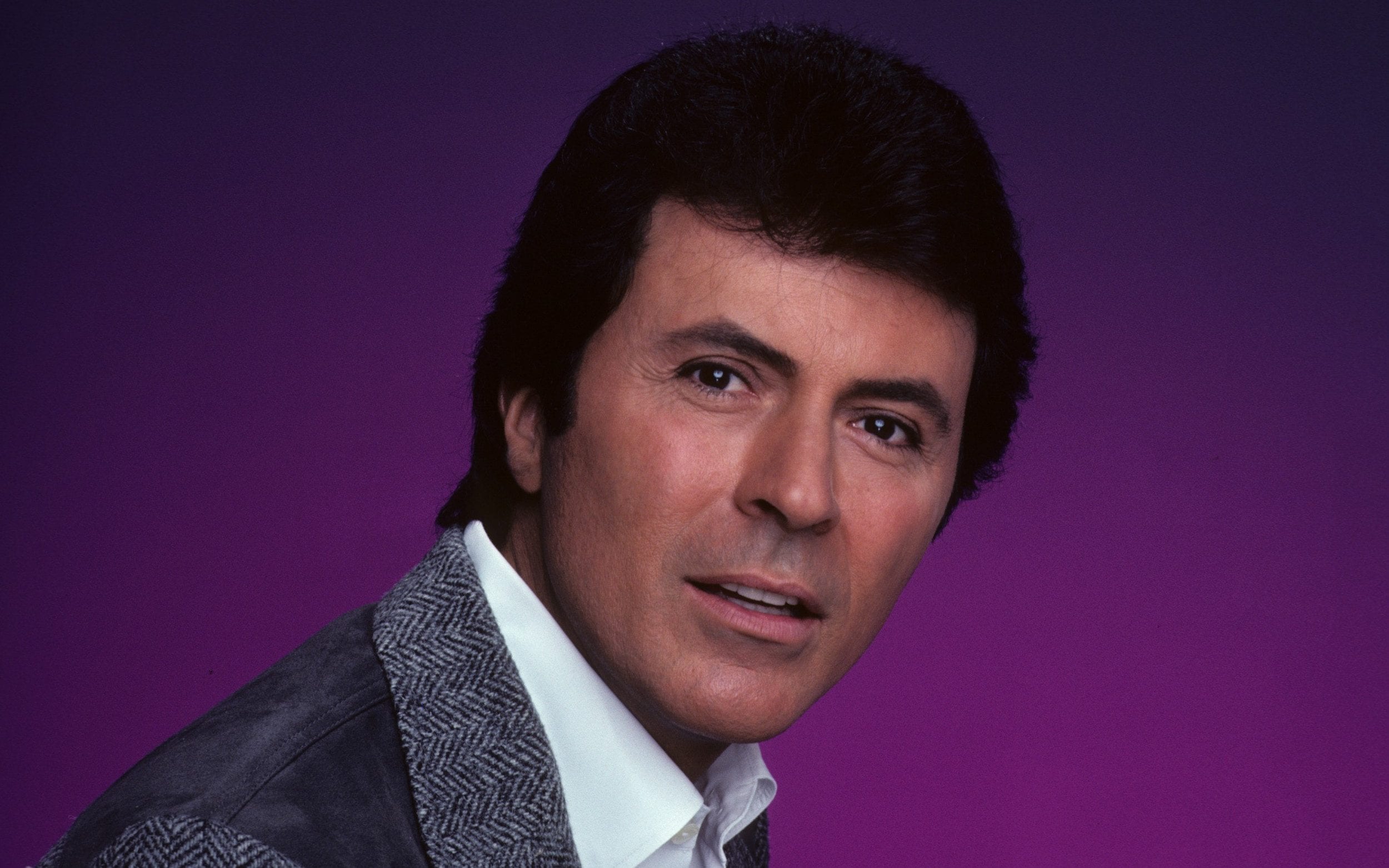
In memoriam: James Darren (Telegraph 06/09/24)


James Darren
, who has died aged 88, was an American actor and singer who became a teen idol in his early twenties; though he struggled to make the leap to fully-fledged leading man status, he nevertheless enjoyed a sixty-year career in showbusiness.

Tanned and toothsome, he won hearts as singing surfer Jeff “Moondoggie” Matthews in Gidget (1959), a beach-set coming-of-age comedy for youngsters who hadn’t seen themselves amid the angsty The Wild One (1953) and Rebel Without a Cause (1955). Studio Columbia had eyed Elvis Presley for the role, but shooting coincided with Presley’s military service; instead, they settled on Darren.

In many ways, this was unlikely casting: Darren couldn’t surf and was a poor swimmer. But he could carry a tune, which was enough to sway the execs. “They were thinking about having someone do the vocal and I would lip sync,” he recalled. “I told them I could do it, so we went into one of the sound stages and I sang ‘Gidget’. They said, ‘He sings fine’, then I did all the other songs.”

That theme song made #41 on the US Billboard chart, launching a secondary singing career, even if Darren’s subsequent singles – including 1959’s “Teenage Tears” and “Goodbye Cruel World”, a US top three hit in 1961 – sounded less like prime pop than coded cries for help. The attentions of screaming fans provided some consolation, but as Darren once admitted “at times, it was Chinese torture”.

More mature roles followed – a trumpet-playing best pal in The Gene Krupa Story (1959), opposite Sidney Poitier in the Korean War drama All the Young Men (1960), as Grecian scrapper Spyros Pappadimos in The Guns of Navarone (1961) – yet as Darren diplomatically phrased it “the people handling my career at that point didn’t really take advantage”.

Instead, he found himself pitched into Gidget sequels – Gidget Goes Hawaiian (1961), Gidget Goes to Rome (1963) – and providing Yogi Bear’s singing voice in the feature-length Hey There, Yogi Bear (1964). “They had me under contract,” Darren shrugged of his Columbia deal. “I was a prisoner. But with those lovely young ladies, it was the best prison I think I’ve ever been in.”

He was born James William Ercolani in Philadelphia on June 8, 1936, one of two sons to Catholic parents. A mildly troublesome child (“a Dennis the Menace sort, not a bad kid”), he dropped out of school aged 16 and began commuting to New York to study acting under the influential Stella Adler. Moving to L.A. in 1954, he was signed by Columbia and underwent a name change inspired by the Kaiser Darrin sports car. 

He was launched in Rumble on the Docks (1956), a knock-off of On the Waterfront (1954) bearing the tagline “Out of Their Teens… Into Big Time Crime!” He proved an instant hit with young cinemagoers, reportedly inspiring 400 to 500 fan letters per month to the studio, second only to Kim Novak.

Once liberated from studio servitude, he scuffed up his clean-cut screen persona with Jess Franco’s Eurosleaze thriller Venus in Furs (1969), then settled into regular, well-paying nightclub gigs and TV work. Playing the adventurous Dr. Tony Newman on Irwin Allen’s fondly remembered The Time Tunnel (1966-67) kept him in the public eye; a Vegas residency with comedian Buddy Hackett exercised the vocal cords.

Guest spots followed on Police Woman (1976), Charlie’s Angels (1977) and Hawaii Five-O (1978-79), and Darren eventually became a series regular on two primetime hits: as the genial Jim Corrigan on William Shatner vehicle TJ Hooker (1982-86) and as the crooning hologram Vic Fontaine on Star Trek: Deep Space Nine (1998-99). 

Modelled on old pal Frank Sinatra, that role led to a revival of interest in Darren’s singing career. He rerecorded the show’s songs in a big band style for his 1999 album “This One’s from the Heart”; 2001 follow-up “Because of You” featured arrangements Sinatra himself had turned down; while Steven Spielberg used “Goodbye Cruel World” as scene-setting in his autobiographical The Fabelmans (2022).

Interviewed in 1983, Darren revealed the practical mindset behind his longevity: “Every career has its hills and valleys. The most important thing is that you are happy with you. [Nobody]’s career… has always been climbing. It always levels out and you want to make sure you have good investments and financial security and bread on the table.”

He is survived by his second wife Evy Norland, a former Miss Denmark whom he married in 1960, and three sons, two by Norland and one, the CNN anchorman Jim Moret, by an earlier marriage to Gloria Terlitzsky.

James Darren, born June 8, 1936, died September 2, 2024.

On demand: "A Tale of the Wind/Une Histoire de Vent"


In a 1929 short, the Dutch filmmaker Joris Ivens
hymned rain in all its forms. Nearly sixty years later, with the climate changing and Ivens long established as the grand seigneur of the poetic documentary, he struck out for China in the hope of finding and filming fresh air. A circle had been fully turned in the meantime, and the resultant project, 1988's A Tale of the Wind, achieves a rare poignancy that goes beyond the fact this was, cinematically, its maker's last breath. (Ivens died the following year, aged 90.) What would appear the obvious images of wind (or the obvious images of wind to a Dutchman: the sails of a windmill, planes, washing billowing on a line) are dispensed with early on. Once production shifted East, Ivens resumed filming the kind of rapt, attentive non-fiction studies he'd been making since the silent era: tai chi practitioners using their hands to slice the air, helicopter sweeps over illuminated new towns, footage of kites and puffing steam trains. Yet he also folds in restaged or dramatised encounters that illustrate both the film's genesis - cf. Ivens sitting with headphones in the Gobi desert, listening to radio transmissions describing the rising number of freak weather events - and the toll of making a film in advanced old age in a place that slowly reveals itself as less than wholly welcoming. Throughout his stay, Ivens is stalked by a trickster figure who possibly represents death, scattering banana skins in its wake; at one point, he re-enacts his own collapse mid-filming; a fantasy sequence, intercut with the subsequent hospital stay, shows Ivens emerging from the mouth of a Méliès moon. A man who witnessed the birth of cinema is here observed approaching not just the movies' centenary, but the end of the world and line. There aren't many films with the vision, ambition and sheer life in them to show you that.

In many ways, A Tale of the Wind is unusual, in that the people and objects it records are less significant within the overall conceptual framework than the notionally blank space separating them, the channels, streams and air pockets Ivens determined to catch on camera and preserve on celluloid. (On-the-fly portraits of patterns in the sand dunes and uprooted trees themselves form an attempt to record that which has already long passed through.) "We are mad to be filming the wind," Ivens can be heard telling his crew at one stage. "But it's necessary all the same." A weary, wheezily asthmatic nonagenarian, never seen without his walking stick, apparently overheating in the jacket that would seem to have been his work attire for however many decades, the filmmaker is preserved on screen as a silver-maned, Vardaesque spirit: interested in everything around him (including that which is invisible and possibly unfilmable), propelled by a heightened sense of curiosity and discovery, a desire to see everything on this planet as though for the first time, or perhaps the last. He's given to a certain degree of self-romanticising, as Varda surely was in her dotage; he shoots himself posing at the top of a mountain, like a wanderer in a Caspar David Friedrich painting, to illustrate just how far he was prepared to go to pursue his theme. As a result, this Tale often has the feel less of conventional documentary practice than of one of those folk songs carried on the breeze from generation to generation: the legend of Joris Ivens, a man who went out into the world with a camera and microphone, showed us sights and wonders, and tried to bend nature to his will. In its cutesier stretches, the film merely ruffles the hair, as an old man might while telling children like you and I such stories. At its imaginative best, though - as in the stirring and elevating final sequence, in which a hardy veteran gets to determine the manner of his own leavetaking, as so few of us do - A Tale of the Wind truly, indelibly soars.

A Tale of the Wind is currently streaming via YouTube.

Friday, 6 September 2024

For what it's worth...


UK box office Top Ten (for the weekend of August 30-September 1, 2024):

1 (4) Despicable Me 4 (U)
2 (3) Deadpool & Wolverine (15) *
3 (2) It Ends with Us (15)
4 (1) Alien: Romulus (15) ***
5 (new) André Rieu's 2024 Maastricht Concert: Power of Love (U)
6 (7) Inside Out 2 (U) ****
7 (6) Blink Twice (15) **
8 (10) Twisters (12A) ***
9 (9) Coraline (PG) ****
10 (new) AfrAId (15)

(source: BFI)

My top five:
1. The Third Man [above]
2. Batman Forever


DVD/Blu-Ray/Download top ten: 

1 (1) Inside Out 2 (U) ****
2 (new) Despicable Me 4 (U)
3 (new) A Quiet Place: Day One (15) ***
4 (new) Longlegs (15) **
5 (new) The Silence of the Lambs (15) ****
6 (2Furiosa: a Mad Max Saga (15) ****
7 (17) Back to Black (15)
8 (4) The Fall Guy (12) **
9 (8) IF (PG)
10 (11) This Time Next Year (12)


My top five: 
1. Furiosa: a Mad Max Saga

 
Top five films on terrestrial TV this week:
1. The Lavender Hill Mob (Sunday, BBC2, 12.40pm)
2. Alien (Friday, BBC1, 10.40pm)
3. Beetlejuice (Saturday, Channel 5, 3.20pm and Friday, Channel 5, 11.55pm)
4. Gladiator (Saturday, ITV1, 10.40pm)
5. Once Upon a Time in Hollywood (Saturday, Channel 4, 11.35pm)

Thursday, 5 September 2024

On demand: "Night and Fog/Nuit et Brouillard"


I'm not sure it's still the case, but there was a time when French broadcasters routinely plugged
Night and Fog, Alain Resnais' half-hour short of 1955, into their TV schedules in the wake of large-scale hate crimes and terror attacks. Arriving a decade after the conclusion of the Second World War, this was always intended as a reminder (and warning) that there were places scattered across Central Europe where man once rounded up his fellow man and proceeded to do the most terrible things. In its form, the short is no more and no less than an example of classical film montage, briskly clipping together archive newsreel, varyingly distressing stills and newly shot footage of the concentration camps, and adorning the results with an authoritative voiceover (brilliantly written by Holocaust survivor Jean Cayrol, urgently spoken by Michel Bouquet) that lays out the cruelties of the Nazi masterplan (over a sequence illustrating camp design: "no-one need enter more than once") while confessing the limitations of the documentarist's approach ("no dimension, no angle, no shot can fully capture the fear"). There is no nonsense, no equivocation, no "well, there's been some dispute over the numbers"; the editorial line, as firm as any resistance movement needs to be, is that this is how it was, the intention to lift the obfuscations inscribed in the title and to counter the murkiness of the Nazi project with the non-fiction equivalent of disinfecting sunlight. It happened here (and here and here), Resnais states - and, if we're not careful, it could just as easily happen again.

I spent much of lockdown reading and revisiting the collected works of Clive James, and I was struck by just how forcefully the Holocaust was imprinted on the writing and thoughts of even an Australian who reached Europe relatively late in the 20th century. James, though, was of a generation that remembered, in large part because they were close enough to these atrocities - chronologically, psychically, spiritually - but also because they had texts like Resnais' film around to prompt and prod them into remembering. We, by contrast, exist in a strange, complex place and time where we are at every waking moment surrounded by all the information in the world, and are accordingly distracted to the point of forgetfulness. Seventy years later, Night and Fog still jolts, loaded as it was with imagery that cuts through our rather rote and childproofed comprehension of the camps: the gaze of a patient in a sick bay, half-desperate, half-crazed; the charred bodies left behind on pyres like firewood; a basket of severed heads. (Which is to say there are segments that go beyond documentation and into the realms of abject horror, that there are sights here you cannot forget and will take with you to your own grave.) Somewhere in the journey from there to here, Night and Fog fell out of circulation: after some thirty years of film-watching, I only stumbled across it in a far-flung corner of the Internet. The short is anti-commercial; our censor boards wouldn't know what to do with it; and there may not be a 21st century trigger warning big enough to cover the Holocaust. Yet it vividly haunts later texts made by those who did see it. Claude Lanzmann was to expand Resnais' field of study into Shoah and subsequent documentaries, striving to cover the same ground in as much nuts-and-bolts detail as he could, while Night and Fog's brief tour of a kapo's villa foresees The Zone of Interest, today's most provocative and sobering reminder of the evils of Nazism (and thus the evils of man). The usual caveat applies - how much importance you want to attach to something as trifling as mere moving pictures - but there may never have been a more important film in the entire history of cinema.

Night and Fog is now streaming via watchdocumentaries.com.

Wednesday, 4 September 2024

Inside stories: "Sing Sing"


Even the title of
Sing Sing represents an act of rehabilitation. In days gone by, you might reasonably have assumed a prison-set drama bearing that billing was referring solely to the grim institution James Cagney was trying to avoid in his crackerjack 1930s vehicles. In our post-Cowell, post-Glee world, however, anything labelled with such an urgent repetition of the one command surely also intends to speak to - hymn, even - our need for personal expression. We are all canaries now, especially those in cages. Greg Kwedar's film introduces us to the ever-foursquare Colman Domingo as one Divine G, serving a disputed sentence for murder in the second degree at the New York correctional facility, which presents as roughly as careworn and unloved as its residents. G has spent the bulk of his time establishing himself as the Welles or Branagh of the prison theatre society, using any lockdown to bash out plays of some description. We join him as his troupe triumph in A Midsummer Night's Dream; we then look in on the group's next project, an original time-travelling extravaganza featuring cameos from Hamlet and Egyptian mummies, rehearsals for which happen to coincide with G's latest clemency hearing. There is, we soon realise, a reason why Sing Sing is being positioned as a serious awards contender as we emerge from silly season and head up the red carpet anew: it would appear certain to garner votes just from the emphasis placed on the importance of putting on a show, and on the capacity of art to make a difference in the lives and hearts of man. Its optimism provides a rejoinder to the pessimistic final season of the generally despairing HBO series Oz, where one inmate swapped a prop knife being used in a prison production of Macbeth for an actual shank, with inevitably bloody, unhappy consequences.

That the film panders less and stirs much more than that synopsis suggests is down to how Kwedar approaches his material. Crucially, Domingo's co-stars are themselves actual and former prison residents, making Sing Sing a rehab project in itself, but also bringing new physiognomies, energies, rhythms and line readings to the screen. (The characters' auditions for the play appear to be the would-be performers' auditions for the film.) And rather than setting out a series of cliched, pre-ordained story beats, this screenplay - credited to Kwedar and Clint Bentley, drawing on John H. Richardson's non-fiction book "The Sing Sing Follies" and Brent Buell's play Breakin' the Mummy's Code - takes a note or two from 2017's powerful, Folsom-set documentary The Work. We're largely watching prisoners engaging in creative therapy sessions, finding a character's essence, and in so doing coming to transcend who they are and who they have been: the creation of a new self. Or at least that's the ennobling idea, but Sing Sing has it tested from an early stage via the character Divine Eye (Clarence Maclin), a truly mean-looking rec-yard drug dealer G has approached with a feeling his rages may be performative - or could be channelled towards playing Hamlet (a nice, pointed choice). Divine Eye poses a tougher than expected challenge for G and the troupe's hardy director (Sound of Metal's great Paul Raci, still constitutionally unable to strike a false note, in a performance all the funnier for seeming to tesselate with Henry Winkler's exasperated drama coach on TV's Barry), but as in most rehabilitation attempts the hard labour is rewarded; it elevates them, and all of us looking on.

Given that its personnel includes real-life prisoners, Sing Sing can't roam too far; accordingly, we're locked down, too. One consolation is a renewed understanding of Sing Sing as a place: the perverse calm of its exteriors (quiet because isolated in an upstate nowhere); the painful narrowness of its cells; and the latter as set against the freeing, cathedral-like space of the rehearsal room, a place in which one might scream, shout, charge around and even wield weapons without being baton-charged and thrown in the hole. (Here is the opposite of solitary.) All the same, Kwedar maintains a tight, attentive dramatic focus, following the contours of the new play from first conception to opening night; there's scant sense of who these men are in with and who lords over them, none of the usual shower-block squabbles. For most of its 107 minutes, Sing Sing is men telling stories - their own, or those others have conjured up - as a means of liberating something within them, taking a weight off their minds or creating a better reality for themselves, one that ends not in punishment but applause and approbation. It is, finally, men: if you had tissues enough in the house, you could usefully put the screener on a double-bill with the new Netflix doc Daughters, which offers a feminised take on the correctional experience. But Kwedar demonstrates an acute sensitivity to how these men are seen and heard - striving, dreaming, mourning, moving - and how performance can shape a drama around and away from the predictable, can redirect stories towards touching truths. Watching Sing Sing, you find yourself responding not just to its near-documentary reality - the understanding this project was beneficial for all those who passed before the camera - but the scene-by-scene skill of its players, the way these men convince absolutely as a troupe with inner tensions and the ability to resolve them without recourse to one of Oz's shanks. This movie's concealed weapon is that it's beneficial for us, too: if it doesn't win every ensemble award going between now and next March, there really is no justice.

Sing Sing is now playing in selected cinemas.