Friday, 5 January 2024

For what it's worth...


UK box office Top Ten
 (for the weekend of December 29-31, 2023):

1 (1) Wonka (PG) ***
2 (new) Ferrari (15)
3 (2) Aquaman and the Lost Kingdom (12A)
4 (new) The Boy and the Heron (12A) ***
5 (new) Anyone but You (15)
6 (4) Wish (U)
7 (new) Next Goal Wins (12A)
8 (7) The Hunger Games: The Ballad of Songbirds & Snakes (12A)
9 (12) Napoleon (15) **
10 (11) Godzilla Minus One (12A) ****

(source: BFI)

My top five:


DVD/Blu-Ray/Download top ten: 

1 (1) Love Actually (15) ***
2 (2) Elf (PG) **
3 (6) Barbie (12) ***
4 (5) The Polar Express (U)
5 (4) The Equalizer 3 (15)
6 (7) Violent Night (15)
7 (3) Oppenheimer (15) ****
9 (13) The Super Mario Bros. Movie (PG)


My top five: 
1. Oppenheimer

 
Top five films on terrestrial TV this week:
1. The Untouchables [above] (Saturday, Channel 4, 12.10am)
2. Nomadland (Saturday, Channel 4, 10pm)
3. Sound of Metal (Sunday, BBC2, 10.30pm)
4. While We Watched (Sunday, Channel 4, 12.30am)
5. She Wore a Yellow Ribbon (Saturday, BBC2, 1pm)

Thursday, 4 January 2024

My Top 40 TV Shows of 2023, 20-1


20.
Captains of the World (Netflix)
Why make one 90-minute official World Cup 2022 film when you can make a six-part, five-hour series, apparently drawing on every last scrap of footage in the known universe? Very much "in association with FIFA+": the phrase "human rights" is uttered just once, in association with a Danish team whose early exit is (perhaps unintentionally) linked with keeping too close an eye on off-the-pitch events. The compensation is vast reserves of human interest. The Turners are too experienced and too sly to fumble the spectacle this tournament dropped squarely in their laps, and the stories they sought out on the touchlines - making good on the unprecedented access this project afforded them to football's big shots - are scarcely less stirring. (They explain the mythos of Messi more economically than anyone has - often by images alone.) A fascinating formal development: digital shooting means documentary crews can apparently now afford to spend entire matches tracking a Messi or Mbappé around the pitch, regardless of the effect they have on the game in hand; it's as if Zidane: a 21st Century Portrait has burst out of the gallery to take up permanent-ish residence in your front room. Sport - and football in particular - remains the best metaphor we've got for the daily wins and losses of this world (stray thought: did the irrational fervour of Argentina's victory lead to Milei, in the same way the irrational fervour of London 2012 factored into Brexit?); the parallels are evoked here with such abundant love for the game - and in such an all-encompassing, all-embracing manner - that you may even come away with some small measure of sympathy for Cristiano Ronaldo. Almost. Possibly. Maybe. Look, I said small.

19. The Change S1 (Channel 4)
Bridget Christie’s six-part comedy aired amid a season devoted to the under-dramatised topic of the menopause, and part of its project was educational. Much as Christie’s flushing heroine Linda flees her family home with vague hopes of teaching her clueless husband a lesson, so too the show conveyed considerable insider knowledge on the turbulence facing women navigating middle age. Men will enter the woodland sanctuary Linda beds into bemused; they should emerge amused and enlightened. Yet with its ear for folky laments and eye for arcane ritual, The Change develops into something far stranger and more enchanting than a televised biology class. Merrily broaching a subject from which other creatives have shied away in terror, it’s finally a celebration of change in all its forms.

18. Colin from Accounts S1 (BBC2; iPlayer)
...which I raved about for Variety here

17. Trial by Fire (Netflix)
...which I also championed for Variety, and you can find that here.

16. Class Act/Tapie (Netflix)
Odd, funny, supremely watchable weighing up of a now almost entirely unimaginable figure: a Trump of the Left, a Duracell-bunny dreamer who went into business (from folk music!) seemingly with the express intent of - get this - improving things, clapped back against Le Pen's fascism, got drunk on power anyway, and still wound up behind bars. Thoughtfully constructed, each episode is its own diversification, some of which actually pay off financially, and the narrative throughline is bejewelled with events just distant enough in time to retain some element of surprise. It's anchored by versatile work from Laurent Lafitte De La Comédie-Française, essaying the Seven Ages of Tapie with tremendous brio; and while there's not finally enough Avec La Participation Exceptionelle De Fabrice Luchini (there rarely is), it's a feast of French character acting elsewhere. Special commendations for the dude playing the Mayor of Marseille (a droller Michael Caine), the prosecutor who finally brings Tapie down (a judicial Tweety Pie, slyly outmanoeuvring his artless foe) and the hair and make-up team for precision recreation of Rudi Völler's thinning moustache-and-mullet combo of 1993.

15. Taskmaster S15 (Channel 4)
We don't talk about S16 in this household, but one of its issues was surely that it was following one of the all-time great Taskmaster line-ups: Boyle, Graham, Eclair, Smith-Bynoe and Martin, folks who tessellated in fresh and funny ways week in week out.

14. Hijack S1 (Apple TV+)
Revives the best idea 24 ever had – telly in quasi-real time, tracking the turbulence aboard a seven-hour Dubai-London flight – while updating the look and logbooks of the 1970s disaster movie. Overseen by seasoned pros George Kay and Jim Field Smith (who between them have run Lupin and the UK arm of Netflix’s smart, underrated interview-room drama Criminal), the central standoff cues highly pressurised games of strategy, as Idris Elba’s “business negotiator” reasons midair with gun-toting disruptor Neil Maskell and a richly characterised roster of hostages. It’s surprising how rarely anyone needs the loo, but the suspense is well-marshalled and elevated by an exceptionally precise use of cabin space. We always know who’s where, even if twisty scripting means we’re less certain what everybody’s up to – save Elba, calmly underlining his status as among our most dependable small-screen stars.

13. Lupin S3 (Netflix)
Speaking of which... One of the smartest decisions Kay and his team made in hauling Maurice Leblanc into the 21st century: limiting themselves to smaller series runs so as to better channel their creative energies into top-drawer twists and only the finest close shaves. (Season 3 may arrive at the ultimate in narrow escapes, involving a coffin.) It remains a gift of a show, and one of the modern era’s great adaptations: literate yet nimble, and set to run and run, with any luck.

12. Poison (Netflix)
"One might creep discreetly through the gap beneath a small child's bedroom door." Roald Dahl, you cruel bastard. An absolute gift of a set-up for any short film, here given renewed impetus by Dev Patel, the best fast actor we have, and finished off in a ruthless manner that may actually be the single most impressive aspect of the entire your-man-does-Dahl side project. Certainly, these four shorts stood as my favourite Wes Anderson project of 2023, not least for suggesting how this house style might also accommodate elements of horror, thriller, mystery and social comment. Why, then, does he persist with whimsy? (See also: #9 on this list.)

11. Slow Horses S3 (Apple TV+)
How good is Slow Horses? This good: the plot of the hit spy show’s third series – torn from Mick Herron’s “Real Tigers” – is almost as dishevelled as Gary Oldman’s dissolute spymaster Jackson Lamb, an altogether rickety affair involving conspiracy theories, private security forces, internal MI5 power struggles and the shortest-lived guest star in recent TV history. It barely matters, so long as showrunner Will Smith (the stand-up turned Veep writer, not the disgraced Oscar-winner) sustains the cherishably, often pricelessly tetchy interactions between series regulars; indeed, this may now be the most characterful show around, funny in a dry, distinctively British way. (On being ambushed, one agent moans “I wish we’d stayed in the pub.”) First among equals: Oldman himself, having visible fun not just with the role, but with each fart and cigarette and every withering insult. Joyous.

10. No Activity S1/2 (BBC2; iPlayer)
An earlier work by Team Colin from Accounts, likely conceived as a send-up of The Wire, and drily observing detectives and police back-up staff as they talk the nonsense that doubtless gets actual lawmakers through their duller stakeouts. It’s often hilarious nonsense, though, and somehow doesn’t preclude character development or gratifying plotting. (The Nick Miller hive might also want to investigate.)

9. The Wonderful Story of Henry Sugar (Netflix)
39 minutes that, at long last, got Wes Anderson back in my good books. (It is a wonderful, transporting, genuinely imaginative story, however much anyone might fuss over and fiddle with it.) Do all Anderson's post-Rushmore films get funny when played at double speed? Is that the way to banish the airlessness and inertia that has set in elsewhere of late? Might it not be in everyone's best interests if this director carried on adapting short stories as if he were making deluxe pop videos?

8. We Need to Talk About Cosby (BBC2; iPlayer)
October's The Reckoning got all the media coverage, but this was the better example of television wrestling with itself. Over four hourlong parts, comedian and filmmaker W. Kamau Bell discusses the tarnished legacy of Bill Cosby with colleagues, academics, and those in Cosby’s orbit. Some methodically unpick the art from the artist; others highlight moments in the stand-up and sitcoms where the mask seemed to slip, and question why nobody cared to notice. Crucially, the survivors introduce their own testimony. If Bell’s show prompts extremely mixed emotions, well, that’s likely the point: Cosby brought joy to millions, while causing intolerable – indeed, belatedly actionable – pain to hundreds more. There’s much to talk about.

7. Still Up S1 (Apple TV+)
The best romantic comedy for some while, blessed as it was with a great hook: two insomniacs, connecting via telephone in the wee small hours. They’d be made for one another, were it not that journalist Danny (Craig Roberts) is an agoraphobic recluse, and his potential BFF Lisa (Antonia Thomas) is already partnered up. Each of the show’s eight episodes is an extended conversation, showcasing superior writing and playing. Lisa talks Danny through a date; Danny redirects Lisa across London after a drunken night out. In the home stretch, you realise how deeply these characters have got under your skin, and how close they are to your heart – but that’s what happens when you stay up past bedtime with folks you care about.

6. Fargo S5 (Prime Video)
A work in progress - we still have a handful of episodes left - but this 2019-set season is already evidently a major return to form for a show that has long been within touching distance of TV greatness. "We've got our own reality." "You can't-- that's not a thing." All the modern world's sins, devoured and digested week by week.

5. Jury Duty (Amazon FreeVee)
The American critics seemed perversely determined not to get this show (it's not cruel enough! It gets the judiciary wrong!); fortunately, the rest of the world embraced it for what it was, namely an appeal to the best in us. A clever hybrid of character comedy and hidden-cam prankery from those behind Borat and the US The Office - select the episode commentary option on FreeVee if you want to know how clever it needed to be to work - this hymn to the ensemble notionally brings us the highlights of a three-week civil case filed against a stumblebum worker accused of singlehandedly bringing down a printing company. The twist: everyone involved is an actor, bar Juror #6, sunny solar panel engineer Ronald Gladden, whose reactions to this three-ring legal circus are wholly unrehearsed. A potentially nasty gotcha was instead steered towards altogether genial entertainment: Gladden gains new playmates, acting lessons from fellow juror James Marsden (expertly playing a preening variation of himself), and finally to lead the jury like Hank Fonda in 12 Angry Men. “We all fell in love with you,” confesses one of his co-stars after the big reveal. You might be swayed, too.

4. How To with John Wilson S3 (HBO in the US; UK broadcast tbc; seasons 1&2 still on iPlayer)
I'm afraid I rather parted ways with Nathan Fielder this year: Jury Duty showed up The Rehearsal's lack of heart and overspills of narcissism, and wherever The Curse was headed, it became clear it could go there without me. (Seriously, you're all bananas for actively seeking more Safdie stress in your lives.) But I remain in synch with Fielder's travelling companion Wilson, who drew his wonderful series of half-hour essays to a close this year with diversions on public bathrooms, sports, working out and birds. Funny, distinctive because personal, and forever outward-looking.

3. Rain Dogs S1 (HBO in the US; BBC1, iPlayer)
Continuing the trend of one leftfield Daisy May Cooper vehicle in the upper echelons for the past seven years. (There may not be a better reader of scripts in the country right now.) A wildly unusual tone for a British set-and-shot comedy to adopt and sustain - the HBO influence is strong - and one epitomised by the mid-series makeover that comes care of a mortician’s make-up brush. Even at its funniest (which is scabrously funny), Cash Carraway’s eight-part riff on the material of her own memoirs never loses sight of the void its characters are circling. Not always comfortable viewing, granted; memorably potent television, nevertheless.

2. Exterior Night (Channel 4)
Serious television, sepulchral to look at. (You don't binge it so much as entomb yourself within it.) Yet it expands beyond the director Marco Bellocchio's excellent Good Morning, Night (a narrative effectively recapped in the course of Episode 4) to describe the death spiral the whole of Italian society seemed to be following at the start of 1978, and - more specifically - a form of self-preserving political theatre that might ultimately be the mortal enemy of any democracy. Forcefully dramatised and exceptionally well acted - forever getting the key personalities to loom up out of the darkness, like folks gasping for air - it should leave you in no doubt as to why this case has haunted Bellocchio (and Italy) for the better part of fifty years: if these men, with all the money and power in the world at their disposal, weren't even willing to save one of their own, what hope is there for the rest of us? Chilling, rather brilliant, and unmistakably the work of a master storyteller.

1. Jubilee (Prime Video) [above]
By some distance, the most gorgeous TV of the year: what happens when you put a streaming budget in the hands of an artist rather than an algorithm. (The lighting choices alone would qualify it as a thing of beauty; like chocolate truffles, the whole thing feels too deluxe to binge, which is why I came to eke it out so.) Has obvious appeal as a Golden Age of Movies melodrama, but the director-showrunner Vikramaditya Motwane refuses to succumb to the nostalgia and romance he evokes in passing: he's all too aware that the film business attracted crooks, cads, cranks, hucksters and stone-cold sociopaths (Madan Kumar, bhenchod) from the word go. (Equal parts film criticism and entertainment, it's also a rare - possibly unique? - Golden Age narrative that owes at least as much to Mulholland Dr. as it does Singin' in the Rain.) The good news is that, in the hands of the right storytellers, crooks, cads, cranks, hucksters and stone-cold sociopaths can make for tremendous, unforgettable characters; and with word, gesture and song, these actors, cast to perfection, sear themselves upon the imagination. Your move, Sanjay Leela Bhansali.

Wednesday, 3 January 2024

My Top 40 TV Shows of 2023, 40-21


40. 
Fleishman is in Trouble (Disney+) [above]
Such an odd, funny, but effectively strategised and peculiarly affecting series: I spent the first half of it convinced I was being lured into some terrible trap by the folks behind Little Miss Sunshine, led to empathise with a character who may or may not wind up unmasked as among the worst people on the planet, and wondering why one of the great actors of her generation (Claire Danes) was so prominently billed and so conspicuously sidelined. Some way into its closing hour, I sincerely started to believe it had started to circle the mysteries of the universe, and was this close to solving one or two of them. Terrifically acted by a handful of our best and brightest, with summery Tim Orr lensing that mitigates against this plot's harsher edges, it's one of the few shows of the streaming era to have fully absorbed the lessons of Six Feet Under, and possibly even something as notable as Transparent for heteros, with characters who get both messier and more interesting the closer this camera studies them.

39. It’s Always Sunny in Philadelphia S16 (Netflix)
A little rushed this year - they're all so busy with other things now! - but as funny as ever whenever it clicked; they remain undefeated as the best ensemble in the business.

38. Black Mirror: Beyond the Sea (Netflix)
Sometimes a streaming service affords a skilled director time and space enough to knuckle down with interesting actors, and you can think about forgiving the profligacy elsewhere. Brooker's script is a hotchpotch of nods and references (it's 2001 and Once Upon a Time in Hollywood and Face/Off, basically film-bro central), but John Crowley puts it on a low, careful simmer, metabolises some of the borrowing, and gets the drama to work on a human level. (He takes the nerd out of it, in other words.) Three nicely calibrated, unshowy performances help: with his plaid shirts and craggily all-American profile, MVP Aaron Paul bears a newfound resemblance to China Moon-era Ed Harris, which is a steadying boon. Maybe not one for the Broadcast Hall of Fame - I sort of guessed where it was heading, while enjoying watching these people puzzle it all out for themselves - but it earns a compliment that is increasingly hard to bestow on extended episodes of streaming TV drama: it justifies its own running time.

37. The Kemps: All Gold (BBC4; iPlayer)
"You can't have a Spandau Ballet movie without Spandau Ballet music."
"Some people might prefer it."
I was enjoying this even before Perry Benson recurred as Ross Kemp (not that one). Like the Bros doc that inspired them, these specials make you feel kindlier towards performers you may not necessarily have had time for back in their pouting pomp. You'd never catch Duran Duran doing this.

36. Last Week Tonight with John Oliver S10 (HBO Max; Sky Comedy, NOW TV)
Hilarious how much more relaxed this show has become since a grown-up was elected President again - while still doing everything it possibly can to avoid a rerun of 2016.

35. Platonic S1 (Apple TV+)
The year’s second couple-derived comedy, after the delightful BBC import Colin from Accounts, to namecheck When Harry Met Sally while centralising microbrewing. Especially genial example of hangout TV: an excuse for Seth Rogen to mistreat e-scooters while laughing that buoying, Fozzie Bear-like laugh of his, and for he and Rose Byrne to crease one another (and thereby us) up on a semi-regular basis. Sometimes TV is as simple as inviting people you like into your living room.

34. I Think You Should Leave S3 (Netflix)
Is it getting saner, or is it just that the world around it is slipping only further into the insanity it depicts?

33. Unstable S1 (Netflix)
One of the year's pleasant surprises: almost a model of the straight-down-the-line, enjoyably funny, three-and-a-bit-star sitcom. It's hardly breaking new ground - its set-up is dads-and-lads all over again - but the dad is played by one of the great comic actors of the past 30 years, and Rob Lowe's timing and hair alike remain aspirational. (Somewhat amazingly, Netflix have given it a second season.)

32. Reboot S1 (Hulu in the US; Disney+ here)
Came late to this - by the time the screeners arrived on this side of the Atlantic, Hulu had already pulled the plug - but it offered Episodes serious competition as the sharpest behind-the-TV-scenes comedy since The Larry Sanders Show. Of course it couldn't run longer than a season; it was giving too many secrets away.

31. The Power of Parker S1 (BBC1; iPlayer)
Sharply realised Britcom that regards the early 1990s as a hangover from the excesses of the 1980s, and boasts a superlative villain in Conleth Hill’s Martin Parker, a peacocking wheeler-dealer brought low by the sisters he’s been two-timing. Sian Gibson spars effectively with Rosie Cavaliero as the Silvikrinned avenging angels and – alongside co-writer Paul Coleman – distributes hearty laughs around an excellent ensemble: Sheila Reid as a lusty retiree and Abby Vicky-Russell as Parker’s underengaged secretary are among the beneficiaries.

30. Mortimer & Whitehouse: Gone Fishing S6 (BBC2; iPlayer)
In the 2004 motion picture Harold and Kumar Get the Munchies, David Krumholtz has a throwaway bit in which he posits Katie Holmes' nude scene in The Gift as the anti-Holocaust. Gone Fishing is, I think, the anti-Brexit: the best of us. Protect Bob Mortimer at all costs; wrap him in cotton wool and bubblewrap between series if you have to, but protect him at all costs.

29. The Gallows Pole S1 (BBC2; iPlayer)
Shane Meadows once made genial, knockabout big-screen comedies about dads and lads and blokes in chipshops, and then pivoted to making heavy-hitting state-of-the-nation addresses. A little of both, The Gallows Pole forms a characteristically lively riff on Ben Myers’ 2017 novel about the true-life misadventures of the Cragg Vale Coiners, 18th century weavers and farmhands who, lacking two pennies to rub together, collectivised to fashion knock-off currency. Meadows’ semi-improvised style shocked or alienated those expecting polished Downtonisms, but he is as ever tremendous on community, and how people rally round common causes. Between trippy glimpses of horned “stag men” (seen grooving in Bond-girl silhouette under the end credits), these three hours set the present in vibrant, funny, instructive conversation with the past. More please, BBC – even if you have to clip a few coins of your own to fund it.

28. Time S2 (BBC1; iPlayer)
Another BBC primetime offering that could have benefitted from an enhanced budget and a few more episodes - but which proved potent enough to seize the attention while it lasted. Jimmy McGovern gained a co-writer in Helen Black, and continued to balance conflict with supreme empathy, as proximity to others granted the show's heroines renewed insight into their own struggles. 

27. Disco: Soundtrack to a Revolution (PBS; BBC2, iPlayer)
Strikes several neat balances: it takes the phenomenon of disco more seriously than many did at the time, without losing sight of the fact many of these songs were fun, joyous, sources of both escape and – in certain cases – liberation. The soundtrack is all killer, no filler: “Rock Your Baby” and “Rock the Boat”, “Stayin’ Alive” and “I Will Survive”. And by pirouetting nimbly between the recollections of key acts and keen aficionados, the series begins to reposition disco as its own, short-lived civil rights movement: a million man (and woman) march, albeit one carried out on the spot, often shirtless and always under a gleaming mirrorball.

26. History of the World – Part II (Hulu in the US; Disney+ in the UK)
I Think You Should You Leave S3 was all well and good, but did it restage Judas's betrayal of Jesus as an episode of Curb Your Enthusiasm, complete with JB Smoove and Richard Kind cameos? No, it did not. That was by some distance the funniest comedy idea of 2023; among the runners-up would be having Trotsky come up with the 2005 motion picture Wedding Crashers; forcing Ike Barinholtz and Nick Stoll to spend eight episodes competing for the title of Mel Brooks' favourite son; and casting David Duchovny as Howard Cosell. I would also willingly watch a full season of the spoof Shirley Chisholm sitcom "Shirley!".

25. The Romantics (Netflix)
Caveats: yes, it's almost wholly authorised history. Yes, you have to be aware it's not a history of Indian cinema per se, rather a history of modern Bollywood, as reflected through the ups and downs of one studio and one dynastic family. In short: it's far from the whole picture. But it's a swooningly pretty, immensely engaging, superbly edited one, with most of, if not all, the right faces, clips and lines of inquiry. May all our authorised histories be this sharply composed - and this gorgeous to pore over.

24. Boom! Boom! The World vs. Boris Becker (Apple TV+)
The ever-industrious Alex Gibney interviews Boris Becker twice: first in 2019, as his subject’s financial woes became apparent, then in 2022, shortly before Becker was sentenced for breaching the Insolvency Act. In the former, Becker retains traces of the leonine golden boy of yore; in the latter, he appears pallid and fraying, like a tennis ball battered beyond recognition. Gibney argues that Becker, like many champions, believed in making life difficult for himself; in matters of money, however, he stretched himself too far. The road to HMP Wandsworth – as Gibney notes, not so far from Wimbledon – is enlivened by this filmmaker’s tremendous facility with archive. Many clips here you just won’t have seen, and even the familiar Centre Court action has been punched up for the purposes of stronger storytelling; those aces zip past us anew. But there are situations in life – cheating on loved ones, ducking fiscal responsibilities – where even a 100mph serve can’t rescue you.

23. Atlanta S4 (Disney+)
Its own thing to the last, and all the better for that.

22. The Good Fight S6 (CBS All Access; Paramount+)
Not the most explosive of send-offs, in the end: Covid and cast changes seemed to stall the show's momentum, and the post-Trump relaxation that has benefitted John Oliver gave the writers here slightly less to pick over and wrestle with. Always bold and intriguing, often surprising, and superbly played, nevertheless; a smart and witty companion in the midst of chaos. I fear we could be in for a reboot as soon as autumn 2024, reconvening exactly where the first season began.

21. Tour de France Unchained S1 (Netflix)
Man alive, the sports docs this year. Within the overarching yellow-jersey narrative of Le Tour's 2022 edition, the eight episodes of this French-produced series locate multiple smaller stories: individual stages and battles, the competition between and within teams, the generational shifts amid a mercilessly onrushing peloton. As viewers of ITV4’s expert daily coverage will know, this race has always provided great spectacle, but here it’s mined for multilayered, revealing, often bruising life experience. Marvel at the altitude these cyclists ascend to over each day’s racing – and brace for impact whenever they fly over their own handlebars.

Shows 20-1 can be found here.

Tuesday, 2 January 2024

In memoriam: David Leland (Telegraph 01/01/24)


David Leland, who has died aged 82, was an acclaimed writer and director who trained as an actor before reinventing himself as another of the British film industry’s quietly reliable storytellers. 

The pivot resulted in two fondly recalled 1987 films inspired by stories told to Leland by the defiantly unabashed suburban madam Cynthia Payne. Personal Services was written by Leland, directed by Terry Jones, and featured an ebullient Julie Walters in the lead; Wish You Were Here was directed by Leland himself, with a breakthrough performance from Emily Lloyd as Lydia, a surrogate for the teenage Payne.

Both films came about by chance, as Leland later explained: “I was in my agent Jenny Casarotto’s office one day and she said, ‘Look, you’ll have to go now, I’ve got Cynthia coming in,’ and I said, ‘Cynthia who?’ and she said, ‘Cynthia Payne’, and I said, ‘Who’s Cynthia Payne?’… I was introduced to Cynthia in passing as I left and she immediately said, ‘Oh look, here’s a shy one – they’re always the worst.’ And I thought: wonderful! This woman is a class act!”

The projects were several years in the making. Leland, a jobbing actor whose credits included episodes of Callan (1969) and Van der Valk (1972), had started working as a director and talent liaison at Sheffield’s emergent Crucible Theatre, where Jones and Michael Palin came to premiere their short plays Their Finest Hours in 1976. (Leland would later appear as the hapless football manager in the “Golden Gordon” episode of Palin’s Ripping Yarns.)

Among Leland’s Crucible discoveries was a then-unknown writer from Prestwich, one Victoria Wood: “She literally wrote the plot of this musical, Talent, on the back on an envelope and shoved it through my door and I said, ‘Right, you’re on. We’ve got to have this number of characters, you’ve got to perform and you’ve got to play the piano and I want it by such-and-such a date’, and she said, ‘Right’, and went away and delivered it bang on the dot.”

Around the same time, he began developing his own material as a screenwriter. He was among the last beneficiaries of the BBC’s Play for Today strand, forming an easy alliance with the rigorous, socially minded director Alan Clarke: Clarke’s Psy-Warriors (1981), about a brutal Army training drill, started as a play Leland had tested at the Crucible.

The pair defected to ITV for Made in Britain (1982), featuring an electrifying performance from the young Tim Roth as a rootless skinhead; it won the Prix Italia in 1984. It was the first of a loose quartet of TV films – R.H.I.N.O., Birth of a Nation and Flying into the Wind (all 1983) – in which Leland grappled with the British education system. (The four were issued on DVD under the umbrella title Tales Out of School.)

Having announced himself on the small screen, Leland then took a co-writer credit on Mona Lisa (1986), a contemporary London gangster saga that, elevated by Neil Jordan’s atmospheric direction, landed Oscar nominations and a BAFTA win for Bob Hoskins. Here, as elsewhere in his career, Leland saw his material being reshaped by others.

Yet where the Jones-directed Personal Services tottered towards farce, Wish You Were Here saw Leland striking a more measured tone, balancing crowdpleasing cheek (crystallised by its heroine’s catchphrase-taunt “Up yer bum!”) with scenes in which Lydia is nudged – and sometimes jostled roughly – towards formative experience.

In a rave review, Roger Ebert described Wish You Were Here as “a comedy with an angry undertone… Because the film sometimes doesn’t know whether to laugh or cry, it’s always interesting: we see a girl whistling on her way to possible tragedy.” Having beguiled the critics, it became a box-office hit and won Leland the BAFTA for Best Original Screenplay.

In 2011, Leland reflected on how his feature debut represented the culmination of a decade’s training: “By the time we got to Wish You Were Here, I’d really gone round the camera in practically every hat. I’d acted in front of cameras, I’d been on set as a writer, I’d directed in the theatre – and The Crucible is an arena theatre, so you are directing in 360 degrees, like in film. It really was time for me to direct a film.”

David Hugh Leland was born in Cambridge on April 20, 1941 and educated at Soham Grammar School. He trained as an actor at the Central School of Speech and Drama, and in 1963 joined the breakaway group of staff and students who formed the Drama Centre London; he headed north after a friend, fellow actor Peter James, was appointed to run the Crucible (which Leland described as “amazing… like the Starship Enterprise dropped into the middle of an industrial city”).

After Wish You Were Here’s success, Leland briefly ventured to the US, although the Joe Ezsterhas-scripted black comedy Checking Out (1988), with Jeff Daniels as an everyman confronted by his own mortality, found few admirers. (Ebert lamented “Leland seems to have lost his bearings”.)

He returned home to make The Big Man (1990), an adaptation of William McIlvanney’s novel about a miner (Liam Neeson) who turns to the fight game to make ends meet during the strikes of 1983. Despite a softened ending imposed by its producers the Weinsteins, it was met with respectful reviews: Time Out’s Geoff Andrew called it “tough, taut and intelligently critical of the man’s world it depicts”.

Leland returned to the theatre the following year, directing A Tribute to the Blues Brothers upon its West End debut. And he returned to FilmFour, who’d backed Wish You Were Here, for The Land Girls (1998), a genial WW2 anecdote starring Rachel Weisz, Anna Friel and Catherine McCormack. His final film was the sex comedy Virgin Territory (2007), an ill-fated attempt to update The Decameron.

A skilled banjo player, Leland found ways to occupy himself between projects. A close association with George Harrison’s HandMade Films – producers of Mona Lisa and Checking Out – led to gigs directing videos for Harrison’s supergroup The Travelling Wilburys; after the Beatle’s passing, he directed the documentary Concert for George (2003), which won the Grammy for Best Long-Form Music Video.

He returned to TV in 2001, directing the “Bastogne” episode of HBO’s Band of Brothers, and being amazed by the production’s scale: “There was a tank battle and I said, ‘How many tanks will I be able to have for that sequence?’ and I was taken to this huge hangar, and they said, ‘Here is every working tank in Europe – is that enough?’” And he rejoined Neil Jordan on Showtime’s The Borgias (2011-2013), writing and directing the final episodes of the show’s second season.

Often, though, he found himself writing projects that subsequently had their funding slashed or pulled altogether, a frustration he bore with characteristic good humour: “It swallows you up really. I was writing all manner of stuff for American studios, and earning a very good living doing so, and it took a long time to realise that [having scripts produced] doesn’t have anything to do with the quality of what you’re writing. It’s all down to the package they can put together – what actors you can get and so on – and that determines what is made, even if the script is crap.”

He is survived by his third wife Sabrina Canale, and five children; he was previously married to Stephanie Lenz and Ann Speight.

David Leland, born April 20, 1941, died December 24, 2023. 

Monday, 1 January 2024

On demand: "A Thousand And One"


A Thousand and One
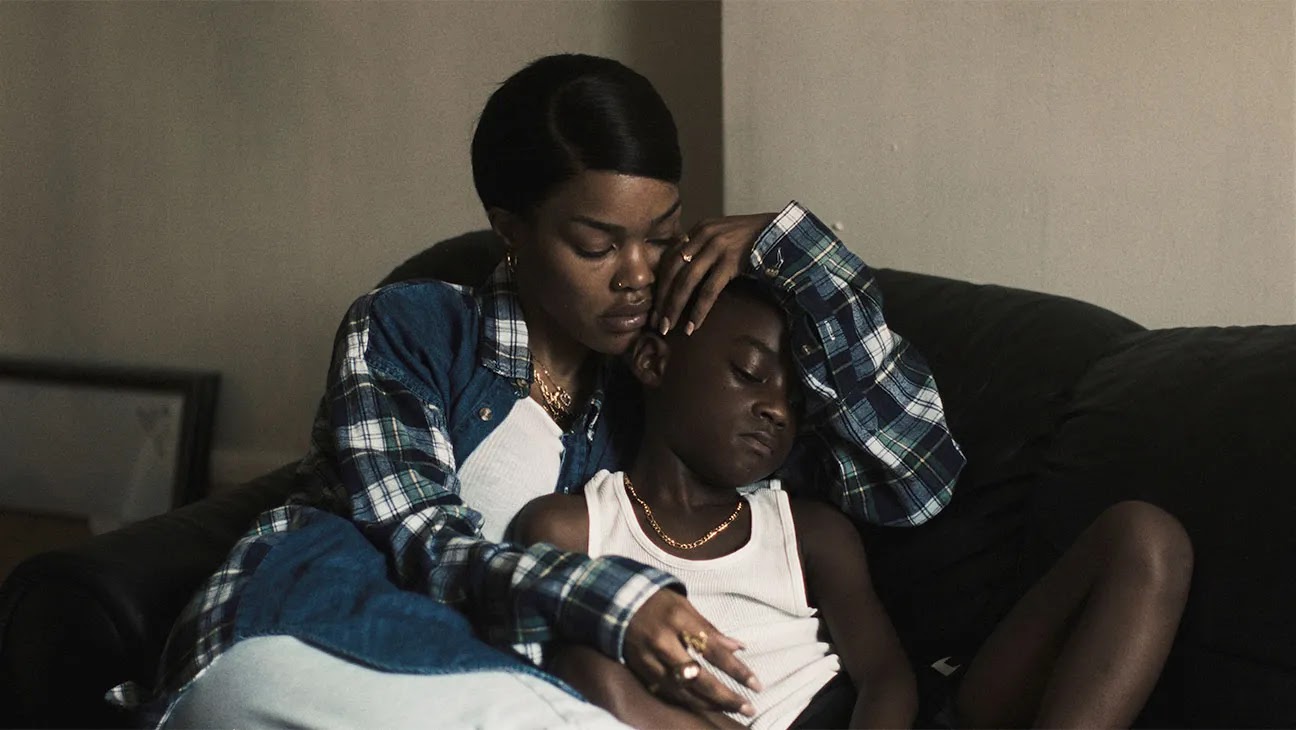
 takes place over a decade between the mid-1990s and the mid-2000s, and it feels very much like the kind of quietly, carefully observed indie feature that might well have slipped out around that period; indeed, the impression is so strong that I was moved to check whether its writer-director A.V. Rockwell was, in fact, the sometime Sundance hero Alexandre Rockwell (In the Soup) going under a new billing. (She isn't.) This Rockwell drops us right in the thick of life lived at the margins, from which two figures emerge: 22-year-old ex-con Inez (Teyana Taylor), attempting to go straight in a New York that is itself trying to clean itself up, and Terry (Aaron Kingsley Adetola), the six-year-old she previously gave up for adoption, found bouncing around the foster system. What follows is a long and mazy run for cover. Inez strides out of a women's shelter with vague hopes of making a new life, but not the immediate resources that would facilitate this; instead, she liberates Terry from the hospital soon after, under the noses of the authorities. It's a scramble that will have significant repercussions for both as time goes by. In the short term, though, we're set to wondering how much protection this city can provide to a young woman operating on or just under the breadline, and how much protection Inez can realistically provide for the boy, given that she spends the film's first half setting a new cinematic benchmark for characters who register as neither old nor mature enough to have ended up having children. Inez barely seems to have survived childhood herself.

She's a scrapper, though; you give her that at least. I hadn't seen Taylor in anything before this, but she is exceptionally convincing here, not just demographically, as a representative of a specific socioeconomic group, but emotionally, as a young woman feeling her way from trained tenderness - what a mother feels she ought to feel for her baby; it doesn't have to be much to be preferable to the indifference of the foster system as depicted - to something more genuine and affecting. Rockwell shows us a heroine who forever appears to be learning on the job - or two jobs: keeping a roof above her head, and becoming a guardian to a sensitive, awkward son. Around her, this filmmaker displays a particular gift for cutting through and around humdrum plot stuff that is both instinctive and interesting. You could be forgiven for not noticing Inez has effectively kidnapped this lad, until the story recurs in the newspaper and on the radio. (The fact the authorities don't respond with any great urgency tells you a lot about the strain the social-care system was under at the turn of the millennium: we're watching one broken home among many.) A fellow bearing the somewhat ironic name of Lucky (William Catlett) turns up unannounced in Inez's front room, having apparently gained her affections; we skip forward to 2001, before you know it, and then it's 2005, and everybody's circumstances have changed yet again.

It's clear Rockwell means to trade not in artful contrivance, but real-seeming (which is to say often arbitrary-seeming) life. She has a novelist's way of fully inhabiting and thereby expanding isolated moments in time: the excitement and boredom of a six-year-old left home alone all day, or a night Inez spends in on her own, cry-laughing into a Pot Noodle. (Like her characters, the writer-director is making the best possible use of the cards everybody's holding at any given turn.) So resistant is this screenplay to conventional narrative patterns that when something resembling a plot reveal barges in amid the final act, it seems like an interloper; you watch Rockwell herself trying to come to terms with it, and to finesse it as representative of her characters' questionable decision-making rather than her own. A universally excellent (though largely unfamiliar) cast work in her favour, though, and as a consequence, A Thousand and One feels unusually truthful about the myriad ways days, nights and lives drift away, people get ground down, and - even when entered into with the best intentions - relationships flounder and fall apart. Rockwell doesn't as yet have the pulsing commercial instincts of those 90s indie kids: one question her film floats is whether Terry might have been better off left within the system, and the answer to that isn't always obvious or reassuring. Yet she has an abundant sensitivity - something like Barry Jenkins without the romanticism - and applying that to this story results in something rare and precious: a modern American film that feels three-dimensional and lived-in, that bears the mark of actual human experience. Stealthily and skilfully, Rockwell nails these characters to the inside of your cranium. You'll think about them again from time to time; you may also worry about what they would be doing with their lives in the America of 2024, should they have made it this far.

A Thousand and One is currently streaming via NOW TV, and available to rent via Prime Video and YouTube.

For what it's worth...


UK box office Top Ten (for the weekend of December 22-24, 2023):

1 (1) Wonka (PG) ***
2 (new) Aquaman and the Lost Kingdom (12A)
3 (new) Dunki (15) **
4 (4) Wish (U)
5 (new) Salaar (18)
6 (9) Elf (PG) **
7 (3) The Hunger Games: The Ballad of Songbirds & Snakes (12A)
8 (10) Home Alone (PG)
9 (14) It's a Wonderful Life (U) *****
10 (12) The Polar Express (U)

(source: BFI)

My top five:
5. The Red Shoes


DVD/Blu-Ray/Download top ten: 

1 (2) Love Actually (15) ***
2 (4) Elf (PG) **
3 (1) Oppenheimer (15) ****
4 (3) The Equalizer 3 (15)
5 (8) The Polar Express (U)
6 (12) Barbie (12) ***
7 (9) Violent Night (15)
9 (13) Arthur Christmas (U) **


My top five: 
1. Oppenheimer

 
Top five films on terrestrial TV this week:
1. The Wizard of Oz (New Year's Day, Channel 5, 12noon)
2. Babe [above] (New Year's Day, ITV1, 10.30am)
3. The Lady Vanishes (Thursday, BBC2, 12.45pm)
4. Singin' in the Rain (New Year's Day, Channel 5, 2.10pm)
5. The Silence of the Lambs (Tuesday, ITV1, 10.45pm)

His house: "Raging Grace"


Paris Zarcilla's socially conscious chiller 
Raging Grace proves an apposite release for that slumpy week between Christmas and New Year: it's all rough edges, and its stronger scenes have the effect of a sudden snapping-to, a blast of ice-cold water to the face or a sharp poke under the ribs. It's been conceived in part as a reminder that there are those who don't have the luxury of spending the dog days of December - or, indeed, many days at all - conked out in front of World's Strongest Man with a tub of Celebrations to hand; that, for many, there is forever work to be done. Its heroine Joy (Max Eigenmann, from the lockdown-era Verdict) is an undocumented Filipina cleaner working the upmarket neighbourhoods of London with an eye to securing a visa, and having to do so while also keeping a close eye on her mischief-prone daughter Grace (Jaeden Boadilla). The strain involved becomes unignorable during what's effectively an extended game of hide-and-seek around the townhouse of an incapacitated servant of Empire - David Hayman's pointedly named Nigel - where Joy has to secrete Grace in her chambers, unbeknownst to her frowning employers. (A nice exchange here: asked to get ready for bed, Grace snaps "what bed?") There are, we gather, those who don't have the luxury of settling in and making plans for themselves - folks forced to live their lives on an entirely ad hoc, hand-to-mouth basis.

The film itself would bear that out whatever its subject: it's been somewhat patched together, and you sense Zarcilla straining to keep it intact the longer it goes on. Initially, Raging Grace feels out much the same territory Dirty Pretty Things passed through some twenty years ago - only it's even more pared down and cranked up, with an urgency befitting cutbacks in the real world. (Time is money there, and Zarcilla hasn't much of either.) After a few brisk strokes of characterisation, we're plunged neck-deep into Joy's predicament: being some part of a household, but also obliged to creep around in the shadows and out the servants' entrance rather than sharing in any wealth. It's the migrant experience in a nutshell: being there but not being there, and vulnerable at every turn. The cracks begin to show in Zarcilla's conception of the homesteaders. Hayman gives typically good growl as the master of the house, flipping the entire premise with one midfilm monologue, but further down the cast list, Raging Grace trades in dashed-off caricatures of privilege played by actors you've never seen before and will likely never see again. (They're like the Brits in Bollywood movies.) So the film isn't always convincing in its finer detail - its very title seems a garbled pun, given how jolly Boadilla is as the onscreen Grace - and it flatly falls apart amid its final movement, but it's oddly watchable for a long while; it's sort of fun seeing the drips and drabs of British poverty-row fare being rearranged by someone with a very different eye and ear. Tagalog music cues; dreamier plot logic than you'd get in a Rise of the Footsoldier film; effort to splice its editorial with more lurid, enthusiastically trashy elements. This is a film that doesn't work made by a debutant operating intriguingly close to the right lines - and who may end up surprising us yet.

Raging Grace is now showing in selected cinemas, and is available to rent via Curzon Home Cinema.