Saturday, 9 January 2021

From the archive: "The Dressmaker"

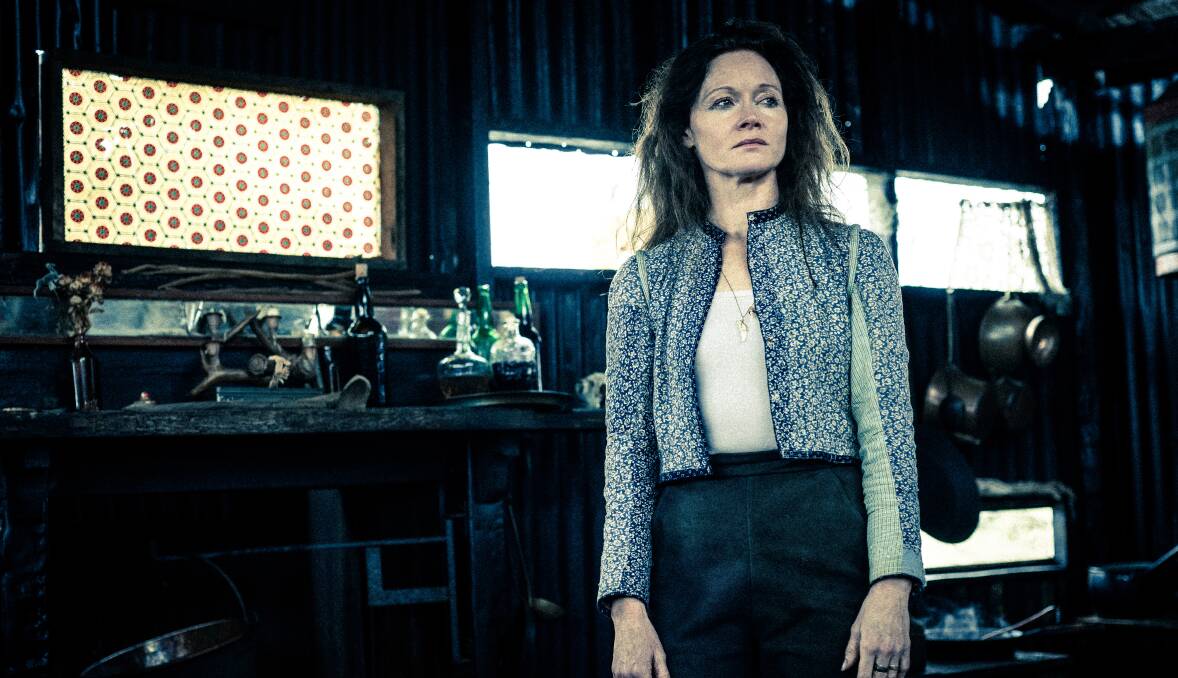
These are good times for fans of what used to be referred to as the “woman’s picture”. Hot on the heels of Brooklyn, this year’s Now, Voyager, and just ahead of next week’s Carol, a 21st century Brief Encounter (itself back in circulation) from the director who remade Mildred Pierce, we find ourselves confronted by The Dressmaker. Jocelyn Moorhouse’s adaptation of a 1950s-set Rosalie Ham novel may well go down as this cycle’s Johnny Guitar: this thoroughly eccentric melodrama attempts to stitch one genre (the revenge Western) within the lining of a conventional costume drama.

Consider, for one, the opening. Kate Winslet’s outsider Tilly Dunnage is returned by coach to her one-horse Outback hometown, trailing rumours she once killed a man, and carrying her weapon of choice: a Singer sewing machine. Soon, Tilly’s smartening up the place – beginning by taking out the decade’s worth of trash that has gathered in her absence around the shack of her single mother Molly (Judy Davis) – and taking potshots at all those who did her wrong, whether shifty mayor Shane Bourne, empathy-free chemist Barry Otto or vicious schoolmistress Kerry Fox.

Rather shamefully, this is Moorhouse’s first directorial outing since 1997’s A Thousand Acres, and both its vices and virtues reside in the fact the project is beholden to no contemporary trend whatsoever. As Tilly begins to work her magic on the community, The Dressmaker vaguely resembles those cosily middlebrow, ensemble-driven ventures that make up such a major part of the British film industry. Yet Moorhouse factors in more mischief than you’d find in a Kinky Boots, say, and a headstrong, hell-for-leather streak that sees her attempting to resolve a dozen subplots at once.

It would be an understatement to say The Dressmaker is a tad overstuffed: as well as the issue of Tilly’s past, and the various scores she has to settle in the present, the film will encompass, in no particular order, romance with a local Aussie rules hero (Liam Hemsworth, unusually charming), the makeover of the town’s plain Jane (Sarah Snook, chameleonic breakthrough star of February’s Predestination) and the arrival of a rival seamstress (Sacha Horler), not to mention the mystery of Molly’s errant possum. (Not a euphemism.)

That the whole holds together may be down to the credibly fraught mother-daughter bond, along which all these other fripperies can be hung out to dry. Even with this clutter, The Dressmaker proves a more than decent star vehicle: Winslet, granted a wardrobe change with every other scene, gets to play both fierceness and sensitivity as it turns out this chic avenger really needs a hug, and while Davis begins in amusing crone mode, heckling Gloria Swanson on a rare night out at the flicks, she, too, softens with maternal pride as her offspring puts the town to rights.

There will inevitably be those – particularly anyone allergic to that strain of frenetic, potentially fatiguing Aussie camp that powered Priscilla and Strictly Ballroom – who want the battiness taken in a little; even its admirers might concede that the most rewarding themes get concealed beneath an avalanche of frills and ruches. Yet as the fiery finale – less high fashion, more High Plains Drifter – demonstrates, Moorhouse still knows how to make a scene: equal parts dippily pleasurable and wholly absurd, The Dressmaker remains moderately, if not absolutely, fabulous.

(MovieMail, November 2015)

The Dressmaker screens on Channel 4 tomorrow night at 11.40pm.

Friday, 8 January 2021

For what it's worth...


T
op 10 films at the UK and Ireland box office (for December 25-27, 2020):

1 (1) Wonder Woman 1984 (12A) **
2 (3) Home Alone (PG)
3 (4) Come Away (PG)
4 (re) The Greatest Showman (PG)
5 (6) Superintelligence (PG)
6 (2) Elf (PG) **
7 (re) The Lion King [2019] (PG)
8 (15) Let Him Go (15) ***
9 (re) Honest Thief (15)
10 (8) The Muppet Christmas Carol (U) ****

(source: BFI)

My top five films currently on release:
1. Bloody Nose, Empty Pockets


DVD/Blu-Ray/Download top ten: 

1 (1) Tenet (12) **
2 (new) The New Mutants (15)
3 (2) Roald Dahl's The Witches (PG)
4 (4) Love, Actually (15) ***
5 (re) Spider-Man: Far from Home (12) ***
6 (25) Bad Boys for Life (15) ***
7 (18) Little Women (U) ****
8 (6) Last Christmas (12)
9 (40) Jumanji: The Next Level (PG)
10 (24) Birds of Prey: and... (15)


My top five: 
1. Shirley

 
Top five films on terrestrial TV this week:
1. Gladiator [above] (Thursday, five, 10pm)
2. The Two Faces of January (Thursday, C4, 1.50am)
3. Young Adult (Friday, BBC1, 11.30pm)
4. The Dressmaker (Sunday, C4, 11.40pm)
5. The Big Short (Saturday, BBC2, 11.30pm)

For your consideration: my Critics' Circle votes 2020


Director of the Year
1. Steve McQueen, Lovers Rock
2. Brandon Cronenberg, Possessor
3. Kiyoshi Kurosawa, To the Ends of the Earth

(Honourable mentions: Andrei Konchalovsky, Dear Comrades; Vikramaditya Motwane, AK vs AK; Pablo Larrain, Ema; Marie Kreutzer, The Ground Beneath My Feet; Kitty Green, The Assistant; Hlynur Palmason, A White, White Day; Celine Sciamma, Portrait of a Lady on Fire; Justin Kurzel, True History of the Kelly Gang.)


Screenwriter of the Year
2. Steve McQueen, Alastair Siddons and Courttia Newland, Small Axe
3. Lin-Manuel Miranda, Hamilton

(Honourable mentions: Chinonye Chukwu, Clemency; Harry Macqueen, Supernova; Amy Seimetz, She Dies Tomorrow; Channing Godfrey Peoples, Miss Juneteenth; Mart Crowley and Ned Martel, The Boys in the Band; Rita Kalnejais, Babyteeth; Kelly O'Sullivan, Saint Frances; Kitty Green, The Assistant.)


Actress of the Year
1. Alfre Woodard, Clemency
2. Yuliya Vysotskaya, Dear Comrades
3. Nicole Beharie, Miss Juneteenth

(Honourable mentions: Trine Dyrholm, Queen of Hearts; Viola Davis, Ma Rainey's Black Bottom; Valerie Pachner, The Ground Beneath My Feet; Elizabeth Moss, The Invisible Man and Shirley; Vidya Balan, Shakuntala Devi; Eva Green, Proxima; Arndís Hrönn Egilsdóttir, The County; Julia Garner, The Assistant.)


Actor of the Year
1. Lance Henriksen, Falling
2. Delroy Lindo, Da 5 Bloods
3. Anil Kapoor, AK vs AK

(Honourable mentions: Menashe Noy, The Day After I'm Gone; Fahadh Faasil, Trance; Ingvar Sigurdsson, A White, White Day; Kevin Janssens, Patrick; Jake Ryan, Savage.)


Supporting Actress of the Year
2. Danielle Brooks, Clemency
3. Gina Rodriguez, Kajillionaire

(Honourable mentions: Sanya Malhotra, Shakuntala Devi; Jennifer Lee Moon, Lynn + Lucy.)


Supporting Actor of the Year
1. Chadwick Boseman, Ma Rainey's Black Bottom
2. Michael Stuhlbarg, Shirley

(Honourable mentions: Anurag Kashyap, AK vs AK; Malachi Kirby, Mangrove; Richard Schiff, Clemency; Ben Mendelsohn, Babyteeth; Pankaj Tripathi, Gunjan Saxena: The Kargil Girl; Aldis Hodge, Clemency.)


British/Irish Actress of the Year
1. Sally Hawkins, Eternal Beauty
2. Nichola Burley, Lynn + Lucy
3. Roxanne Scrimshaw, Lynn + Lucy

(Honourable mentions: Sian Brooke, Body of Water; Monica Dolan, Days of the Bagnold Summer; Ashley Madekwe, County Lines; Andrea Riseborough, Possessor.)


British/Irish Actor of the Year
1. Colin Firth, Supernova
2. Riz Ahmed, Mogul Mowgli
3. John Boyega, Red, White and Blue

(Honourable mentions: Shaun Parkes, Mangrove; David Thewlis, Guest of Honour; Henry Golding, Monsoon; George Mackay, True History of the Kelly Gang.)


Breakthrough British/Irish Filmmaker of the Year
1. Henry Blake, writer-director, County Lines
2. Lanre Malaolu, writer-director, The Uncertain Kingdom
3. Fyzal Boulifa, writer-director, Lynn + Lucy

(Honourable mentions: Vicki Lesley, writer-director-producer, The Atom: A Love Story; Rebecca Lloyd-Evans, director, The Uncertain Kingdom.)


Young Actor of the Year:
1. Bukky Bakray, Rocks
2. Frankie Box, Perfect 10
3. D'angelou Osei Kissiedu, Rocks

(Honourable mentions: Alfie Deegan, Perfect 10; Kosar Ali, Rocks; Earl Cave, True History of the Kelly Gang and Days of the Bagnold Summer; Lola Petticrew, Dating Amber; Fionn O'Shea, Dating Amber.)

Thursday, 7 January 2021

Provincial blues: "The Basilisks"

Here's a filmography that could do with a lot more love. In the 1970s, the Italian writer-director Lina Wertmüller (born - I kid you not - Arcangela Felice Assunta Wertmüller von Elgg Spañol von Braueich) was arguably the world's most celebrated female director, becoming the first woman ever to be nominated for the Best Director Oscar for her work on 1975's Seven Beauties. In the half-century since, however, her work has fallen out of circulation and fashion. Rights issues may have played a part, and maybe the titles sounded offputtingly florid to some dunderheads: 1983's A Joke of Destiny, Lying in Wait Around the Corner Like a Bandit was followed by 1986's Summer Night with Greek Profile, Almond Eyes and Scent of Basil. But who could resist taking a peek at 1996's The Blue-Collar Worker and the Hairdresser in a Whirl of Sex and Politics, or 2004's Too Much Romance... It's Time for Stuffed Peppers? Either way, it speaks ill of our gatekeepers that it's now harder to access Wertmüller's 1974 Marxist desert-island movie Swept Away than it is Guy Ritchie-and-Madonna's far-less-Marxist rehash of 2002, one of the most notorious flops in cinema history. 

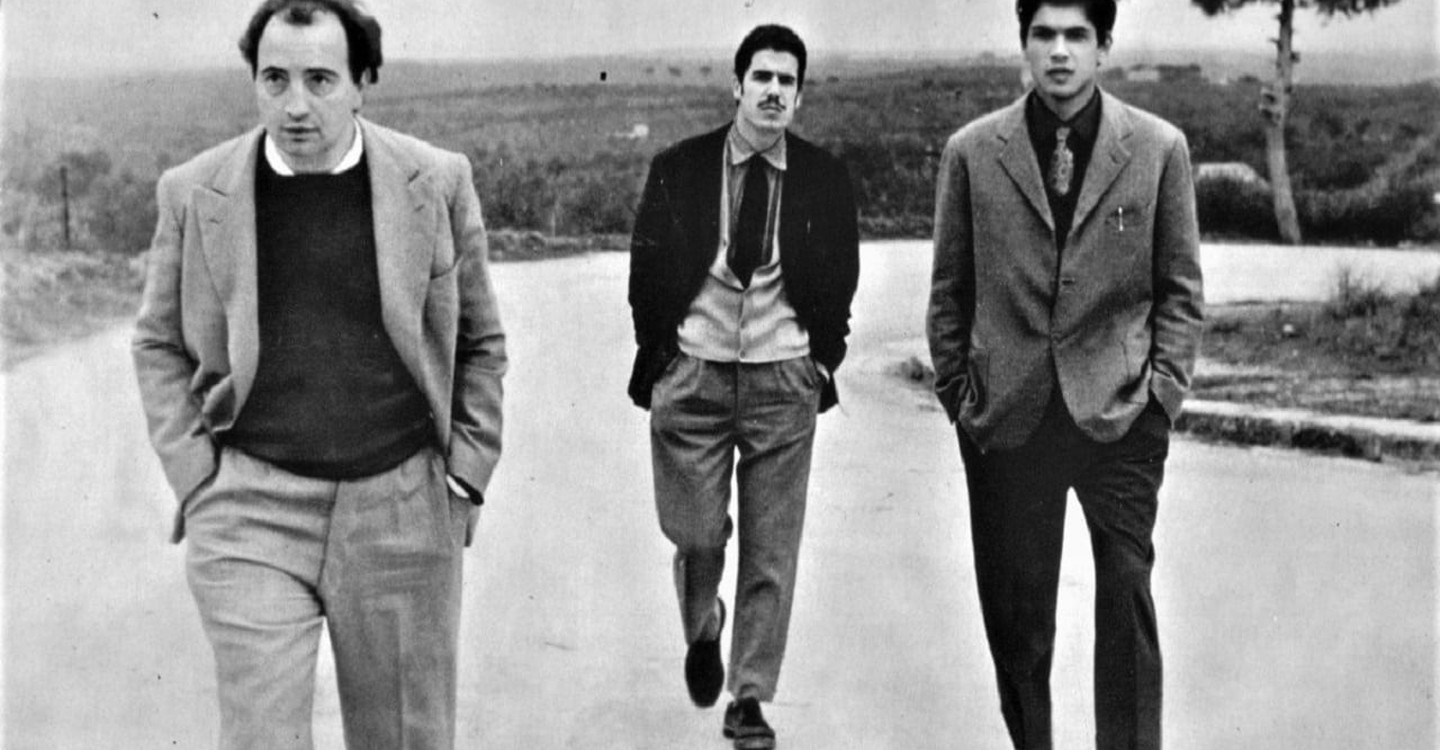
This week, MUBI issues a restoration of The Basilisks, Wertmüller's debut of 1963. This is a smalltown drama, of the kind the director's countrymen Fellini and Bellocchio began their careers with, but it's more than typically interested in structures, be that daily routines (the main characters are introduced taking a siesta) or wider societal frameworks. Our protagonists are identified at the launch of a social club set up by by a nascent arts collective: three loafers in their early twenties - two of them dandier than the hangdog, prematurely balding third - who see this institution as a springboard to the big time in neighbouring cities, but also a means to attract the girls they spend their afternoons ineffectually eyeing up. To some degree, what Wertmüller was filming was a stifled New Wave: what might have happened had cinephiles like Rivette and Rohmer never arrived in Paris, and never made the connections that enabled them to flourish creatively. It's a story of promise unfulfilled, and those are more common than tales of people escaping small towns alive.

The look is broadly familiar from Italian films of the period: dark-haired signors and signorinas caught against chalky, whitewashed backdrops. What's distinctive is the framing, and the tone. If early Fellini was above all else horny, and early Bellocchio puckishly satirical, early Wertmüller proves rather more fond and amused: she sees the effect girls have on these boys, how they tie themselves in knots or otherwise beat themselves up in the absence of any more constructive means of spending their days. There's a lot of aimless walking and talking, Wertmüller's method of flagging that her characters have nowhere else to be. (She was surely outlining an Italian equivalent of the French flâneur.) With no easy way out of this town, the boys' frustration becomes both funny and poignant: watch them latching onto anybody who sweeps in from the city. Wertmüller was getting at what it is to be young and try and make your way in a place people go to grow old, to want to make a loud noise in a deathly quiet spot. 

Yet The Basilisks is also a wise enough debut to spot that its protagonists occupy a unique position within their community, as lofty (and presumably lefty) observers: between gawping at the opposite sex, they see what their fellow townsfolk sweep under the carpet, don't discuss, refuse to acknowledge, be that an attack on a young woman, or why the local labourers have gone out on strike. The social club we enter at the beginning is notionally a cinema club, yet we never see the protagonists at the movies, as Fellini would doubtless have shown us; for Wertmüller, there's more than enough drama going on amid this small town's mazy backstreets. There are rough edges here - occasionally self-conscious supporting performances, the overdubbing that was such a blight on this period, a painful Europop cover of "Let's Twist Again" - but The Basilisks feels unusually comprehensive for an early miniature: Wertmüller gives us a panorama of this place before painting in the details, and then signing off with a metaphysical flourish. She, at least, was ready to set out into the wider world.

The Basilisks is now streaming via MUBI UK.

Tuesday, 5 January 2021

Catfish: "Sing Me A Song"

The French filmmaker Thomas Balmès is that rarest of creatures: a crowdpleasing documentarist. After his mid-length 1996 debut Bosnia Hotel, on UN peacekeepers, Balmès courted audience favour peddling a form of non-fiction engineered to cheer us all up. 2010's Babies, in which Balmès toured the globe going gaga over its newborns, was as close to an extended meme as the cinema has yet given us. His representatively titled 2013 film Happiness, meanwhile, charted the arrival of the Internet in Bhutan, and in particular its impact on one Peyangki, a rosy-cheeked seven-year-old in training to be a Buddhist monk. Balmès's sequel to the latter, Sing Me A Song, opens with a Previously-with-Peyangki recap for newcomers. Again, we see this softly-spoken soul skipping (yes, actually skipping) down a hillside so as to turn cartwheels and pick flowers in a field; again, we witness the lad's awe as a towering mast is raised on the outskirts of his village. Then a neat editing trick, the most effective thing in the new movie. When he turns in for the night, ten years pass: the next morning, Peyangki is a teenager, woken by the sound of his mobile going off. There was an outside chance that a decade of online access had radicalised Balmès's subject, turned this once robed believer into a full-on Proud Boy, angrily disseminating Pepe GIFs between fevered bouts of self-abuse. The reality, however, is milder and more humdrum. Peyangki's up the same mountain, and still praying - albeit off a tablet - and his teacher's only concern is that he's falling behind because he's "too busy playing with his mobile". The reason for that is that he's struck up an online relationship with a long-haired older girl, Ugyen, who lives in the capital Thimphu. Again: in another documentary, Ugyen might have been revealed as a 47-year-old trucker parked at the bottom of this hill with an eye to luring our boy into oblivion. The worst Balmès has to offer is that she's actually a single mother working in a hostess bar, and planning to jet off to Kuwait to earn a little extra money for herself.

Clearly some purity - whether that of the Bhutanese landscape, or Peyangki himself - is under threat. Yet we might also question the purity of Balmès's filmmaking, and the degree to which the non-fiction in Sing Me A Song is legitimately non-fiction. To this eye, it appeared as though the filmmaker had returned to this realm so as to invite his subjects to play versions of themselves in a dramatised narrative that may bear some relation to situations they found themselves in once upon a time. It feels suspicious - as though we're the ones being catfished - and Balmès hardly helps his cause by including such flagrantly contrived images as a cybercafe overrun by teenage monks. The goal isn't recording the reality of a place and its people so much as exporting "constructed reality" to the Far East, a process presumably made easier by the fact those monks can now dial up episodes of Keeping Up with the Kardashians on their smartphones. Truths, or ghosts of truths, might have survived that process: take last month's Bloody Nose, Empty Pockets, which manufactured a scenario to consistently compelling and revealing ends. Yet Sing Me A Song just isn't very satisfying as either non-fiction or fiction: it's a reel too long, and unfocused with it. Balmès has become hung up on the idea the Bhutanese now use the Internet just like Westerners do (to watch World Cup games, What's App, hook up), and amid stretches of that banality, there's an occasional sequence that comes over as very oddly framed, which could actually do with firmer editorial intervention, or clearer context. I'm not entirely sure what we're meant to take away from the bar girls' casual browsing of beheading videos, nor their interactions with drunken clients. Peyangki remains an easily bruised sweetie, as delicate as the posies he once plucked, but Ugyen's psychology - and quite why this woman has been pursuing a monk online - is left utterly opaque: compare and contrast with the way Sung-a Yoon evoked the inner lives of similar minimum-wage scrapers in her recent doc Overseas. There's something striking about the film's landscapes, which speak to how rapidly Bhutan is changing, and how the Internet has changed the way its people now look at themselves and one another. To draw that film out, however, you'd need a properly probing, judicious intelligence behind the camera - not someone who came this way to shoot B-roll for The Real Buddhists of Bhutan.

Sing Me A Song is now streaming via Curzon Home Cinema, Prime Video and Dogwoof On Demand.

Monday, 4 January 2021

The limits of control: "Mayor"

And you think you're going back to a tough job. The cinematic New Year begins with Mayor, David Osit's fly-on-the-wall portrait of Musa Hadid, under whose mayorship the historically Christian city of Ramallah has become a haven for Palestinians, despite frequent Israeli encroachments. A brisk, moustachioed public servant, Hadid is introduced taking his morning coffee at the Cafe de la Paix across the street from his office; his instinctive response, upon being greeted by one constituent, is a cheery "How can I help you today?". Osit joined Hadid as he went about his rounds in late 2017. Touring one local school, he expresses delight in the new pink walls, but bristles at the doors, establishing himself as someone with a keen eye for areas of potential improvement. The question hanging over the film is how much improvement the Mayor of Ramallah can currently make. Genially sidestepping one child's cheeky query about Hamas, Hadid presents as a cuddly centrist; but as Osit fills in the context around him, it becomes clear the Mayor is a functionary caught in the middle of a much bigger, ever-shifting, eternally complex picture. There's a certain tragicomedy in this. Hadid nixes the PR slogan "Gateway to Palestine", lest it be deemed inciting; the fallback option, the blander, hashtag-ready "WeRamallah", incites confusion over whether the text should be set out as "We, Ramallah" or "We-R-Ramallah". In the meantime, the car radio reports further Israeli incursions, and clouds of smoke can be observed pluming up both on the horizon, and in the foreground: Hadid spends much of the film vacillating between vape use and his emergency cigarettes (they "smell like farts", according to his kids). Being a people pleaser, and trying to keep everybody happy, is difficult at the best of times. It becomes all but impossible when you're looking out on the most bloodily contested region on the planet.

Osit sensed the situation was inherently dramatic, even before he stepped off the plane and sniffed the tension in the air. Throughout Mayor, he seems happy enough sneaking into the back of council chambers or the mayoral car to watch Hadid navigate the challenges and pitfalls of an average day in these parts. For a while, the most pressing issue looks to be whether or not to include a zeppelin as part of the city's Christmas celebrations, but then news breaks of the Trump administration's decision to relocate the US embassy in Israel to neighbouring Jerusalem. We grasp how low Hadid is on the official Palestinian chain of command from the fact he first hears about this from a visiting priest, and then has to haggle with his secretary to get access to cable news. Thereafter, we bear witness to the trickledown effects of a decision taken thousands of miles away by a man with far greater power than Musa Hadid. Unrest gathers. Soldiers start to appear in Ramallan backyards. More news breaks, of protestors being killed and injured in Gaza. The matter of what to put on the City Hall Christmas tree gets bumped way down the agenda. As Hadid points out during his occasional overseas speaking engagements, he's essentially reactive, a man in a position of authority who recognises the limitations of that authority better than most. (Surely no world leader will know more precisely where their jurisdiction ends.) He's shown working within that scope - getting lightbulbs changed, ensuring the streets are swept clear of debris - but Mayor's poignancy derives from its awareness that Hadid's vision of Ramallah as an all-embracing, modern, progressive destination will never be realised so long as there are Israelis with guns circling his beloved Cafe de la Paix. "David, do you think people in America know or hear about what's happening here?," Hadid asks the director one relatively quiet afternoon. Osit has no easy or reassuring answer in person, but his film may yet serve as its own response. Will President Biden be in a position to cut this guy and his fellow Ramallans a little more slack?

Mayor is now streaming via Curzon Home Cinema, Prime Video and Dogwoof on Demand.

Friday, 1 January 2021

For what it's worth...


T
op 10 films at the UK and Ireland box office (for December 18-20, 2020):

1 (new) Wonder Woman 1984 (12A) **
2 (1) Elf (PG) **
3 (2) Home Alone (PG)
4 (new) Come Away (PG)
5 (5) Love, Actually (15) ***
6 (4) Superintelligence (PG)
7 (re) It's a Wonderful Life (U) *****
8 (12) The Muppet Christmas Carol (U) ****
9 (7) The Polar Express (U)
10 (10) A Christmas Carol (PG) **

(source: BFI)

My top five films currently on release:
1. Bloody Nose, Empty Pockets


DVD/Blu-Ray/Download top ten: 

1 (new) Tenet (12) **
2 (17) Roald Dahl's The Witches (PG)
3 (3) The Grinch [2000] (PG) ***
4 (4) Love, Actually (15) ***
5 (1) Elf (PG) **
6 (2) Last Christmas (12)
7 (5) Home Alone (PG)
8 (6) The Polar Express (U)
9 (8) The Muppet Christmas Carol (U) ****
10 (11) The Grinch [2018] (U)


My top five: 
1. Shirley

 
Top five films on terrestrial TV this week:
1. Raiders of the Lost Ark (Sunday, C4, 5.30pm)
2. Notting Hill (Saturday, ITV, 10.20pm)
3. Escape from Alcatraz (Sunday, BBC1, 12.15am)
4. Cast Away [above] (Saturday, C4, 8.30pm)
5. The Fits (Saturday, BBC2, 12.05am)