Tuesday, 8 September 2020

1,001 Films: "Crumb" (1994)


There are plenty of interviewees on hand in the documentary Crumb to testify to how its subject, the underground cartoonist Robert Crumb, finds it hard to open up around strangers. It is, then, a testimony to the intimacy director Terry Zwigoff worked up with the man in front of him that the Crumb we see on camera - filmed over his final weeks in the U.S. before he left with his wife and daughter to live in France - is entirely garrulous, personable and unfazed when faced with autograph hunters, former lovers and Hollywood executives alike. Not that you'd want to invite him round for tea, exactly. As a cartoonist, Crumb's work forms an extension of his personality: even his straighter lines are jittery, warped by pent-up sexual tensions, packed with neurotic detail, and his comic books - most notoriously Fritz the Cat - are influenced as much by pornography and a lack of available women are they are by anything else. Zwigoff is anxious to position Crumb as a key countercultural figure, his camera following this lanky, bespectacled kook as he wanders around Haight-Ashbury, bemoaning the fact that people are becoming "walking advertisements". Robert Hughes, intellectualising furiously, compares Crumb to Brueghel and Goya. You and I might equally come away thinking of the cartoonist as a perv who lucked out with good draughtsmanship.

Two things strike you. Scenes with Crumb's relatives - which border on a late-20th century update of Grey Gardens in their all-American grotesquerie - suggest Robert is actually the best-adjusted one in a weirdly functional family unit that's capable of intelligent, open conversation so long as the topics under discussion are masturbation, bodily fluids and/or personal hygiene issues. Crumb's two brothers didn't get along, which was probably best for society's sake: one, prone to seizures, is a sex offender; the other, hooked on tranquilisers and living at home with the boys' paranoiac mother, came to fill notebooks with illegible scribbles (as with Ralph Fiennes' schizophrenic in the movie Spider) before committing suicide a year after filming was completed. I think we're meant to take relief, however scant, from the fact Robert Crumb had his drawings as an outlet. The second thing that strikes you is the extent to which this artist's aesthetic was set at an early age - adolescence - and how he's sustained a long and reasonably well-paying career out of this arrested emotional development. His new work is every bit as schoolboy-like as the cartoons Crumb bashed out as a young man: we even see him continuing to sketch girls from photos in his old high-school yearbook, while regaling us with their sexual characteristics. Crumb's women, Amazonian and untouchable, are always bigger in the frame than the men are, cause for either feminist celebration (these are women of power in their own universe) or concern (they're also impossibly objectified, raised on the highest possible pedestal).

You can tell the documentary's been made by a fan because although there is plenty of the former ("He made it OK for me to have a butt," gushes one female admirer), only belatedly, and then only briefly, does it get into the latter. This is typical of a very freeform study, with little of the narrative tautness the documentary developed in subsequent years, but Crumb's messiness is both subject-appropriate and never less than intriguing. Intriguing, in part, because it keeps generating problems. Flitting from one aspect of its subject's life to another, the film is characterised by an evasive quality, as though Zwigoff knew exactly where Crumb was at, but couldn't quite bring himself to admit it on celluloid. In one sequence, what looks a flagrantly racist comic strip - depicting a nude black woman duped into voyaging to the States, where a line of white men await to take a dump on her - is offered up without context, explanation or criticism. (Is it simply a crude take on the degradation lying in wait for the immigrant?) The film's thesis is that Crumb is what he is - on this evidence, a man-boy unable to filter out his psyche's less appealing aspects - and you're either hip to his work or you're not. The film itself, being compelling hagiography, a precursor to reality television and so much tabloidy tittle-tattle, is much the same. Perhaps the intimacy Zwigoff achieved here was finally too great; certainly, that seems the case in those moments where Crumb's ex, a female pornographer responsible for the publication of Big Butt magazine, lets on that the cartoonist masturbates four to five times a day, and that he's in possession of "one of the biggest penises in the world". Bear in mind much of Crumb's work deals in exaggeration of some form; yet whether these claims are true or not, you might wonder whether anyone really needed to hear them.

Crumb is not presently available in the UK.

Monday, 7 September 2020

From the archive: "Memories of Murder"


A satirical, tragicomic restaging of the hunt for Korea's most notorious serial killer, Bong Joon Ho's second film Memories of Murder focuses on a police department not so much corrupt as fundamentally inept, the worst crime of all as the country around it goes into anxious lockdown. The investigation is led by Detective Park (Song Kang-ho), whom we meet having bungled sex; he will introduce himself to his new partner by delivering a flying kick to the man's chest and then handcuffing him to his car. The film's signature moments are its telltale crime scenes, where a forensics team arrives late and promptly falls down a hill, and a reconstruction of one victim's last moments - staged as much for the benefit of the cameras as for any evidentiary purpose - unravels into chaos when one suspect's father shows up and exposes the whole process as a sham. Bong holds one of these desolate fields in long shot, and as the myriad uniformed searchers suddenly descend on the same spot, they start to resemble the parasites we've previously seen dining on one corpse. The two detectives - pursuing separate lines of inquiry - start hiding from one another. The fact that, all the while, the evidence is being compromised doesn't help, but these detectives are forever chasing the loosest of loose ends. Noticing the absence of pubic hair at the scenes of suspected rapes, Park is next seen in the locker rooms of his nearest sauna, looking in inappropriate areas; later, he'll turn to a shaman for guidance. A scarecrow is erected on the edge of one crime scene, bearing the legend "Turn yourself in, or else your limbs will rot and you will die". Imagine CSI reworked as a vehicle for The Three Stooges; the type of film where a heated discussion of the differences between American and Korean forensic techniques is interrupted when the Chief of Police vomits into a winecooler. Films about bad cops tend to rupture under the strain of having to insist their protagonists are finally as heroic as they have been irredeemable, but Memories of Murder proves altogether more supple and dynamic, playing its police brutality scenes for (very grim) laughs while finding melancholy ways to remind you of the bodies piling up in the morgue, and that there's still a killer on the loose.

(August 2004)

Memories of Murder returns to selected cinemas from Friday.

Sunday, 6 September 2020

Crazytown: "Wonders in the Suburbs"


Long-term observers of French cinema will already know what an unconventional presence the actress Jeanne Balibar can be: Jacques Rivette's 2001 film Va Savoir, arguably her finest two-and-a-half hours, might have seemed a wearying, academic slog without her. Wonders in the Suburbs, her third credit as a director, is very what we might call Balibarian: it's a film operating at its own rhythm some distance from reality, with long stretches that would appear completely away with the fairies. To a certain degree, it takes its methodology from the US cable hit Portlandia, taking a single location (here, the suddenly prominent Parisian suburb of Montfermeil) as a backdrop for a series of varyingly zany sketches. This week's releases include the sobering vision of Ladj Ly's Les Misérables, on what it is to be a young Black resident of this same part of the world. Balibar's Montfermeil, on the other hand, is seen to celebrate Harem Pants Day and Brioche Day, and its residents are the beneficiaries of a municipally sanctioned afternoon nap. (Like Portlandia, which deployed a perma-grinning Kyle MacLachlan as a political Pollyanna, Wonders in the Suburbs offers the kind of celebrity mayor you believe might well set these policies in place: Emmanuelle Béart, who is to the French cinema of the 21st century what Diana Dors was to the British film and television industry of the 1980s, a holdover from a more decadent era, someone whose cartoon voluptuousness can now be framed as in itself something of a joke.) Even that, however, doesn't bring us close enough to the essential barminess of Balibar's project: I'm not finally sure Wonders in the Suburbs ever gets close to being properly, laugh-out-loud funny, as Portlandia more often than not was.

What makes this such a confounding watch is that just when you think you know what it's going to be, it decides to be something else instead: its skittishness is ultra-Balibarian. The opening stretch goes out of its way to establish Montfermeil's all-star administrators (who include Mathieu Amalric and the comedian Ramzy) as supreme kooks and loons, but then these same kooks and loons are sent out to do exactly that social work (language teaching, housing provision) our actual administrators are most often occupied with, often in the presence of real-life Montfermeil locals. You wonder whether the production was conceived as a community enterprise, put on with assistance from the local authorities Balibar comes in part to send up - but even this rationale doesn't account for such oddball skits as the one in which two middle-aged men guide a younger couple through their lovemaking. There's no real punchline, it being just one quirky episode among many, and indeed Wonders in the Suburbs in its entirety comes to peter out by having the cast doing a "funny" dance. (Yes, it's one of those. Sorry, everyone.) Along with the eccentricity, then, there's a leaden dose of complacency: the editorial line is that, for all their quirks, those in charge of Montfermeil are basically good eggs trying to do the right things, and that this suburb would be as fine a place as any to make a life for yourself and your children. It's a cuckoo liberal fantasy version of the Parisian suburbs - one that asserts that, at worst, our leaders are well-meaning fools - and while it coaxed the occasional puzzled smile from this viewer, it's probably for the best that it opened before Les Misérables.

Wonders in the Suburbs is now streaming via MUBI UK.

Friday, 4 September 2020

For what it's worth...


Top 10 films at the UK and Ireland box office (for the weekend of August 28-30, 2020):

1 (new) Tenet (12A) **
2 (2) Onward (U) ***
3 (4) 100% Wolf (U)
4 (1) Unhinged (15)
5 (5) Pinocchio (PG) **
6 (6) Trolls World Tour (U)
7 (new) Hope Gap (12A)
8 (re) Bring the Soul: The Movie (PG)
9 (8) Dreambuilders (U) **
10 (12) Dirty Dancing (12A) ***

(source: BFI)

My top five films currently on release:
1. Away
2. Get Out
3. The Karate Kid
4. Mulan
5. Sócrates


DVD/Blu-Ray/Download top ten: 

1 (re) The Fifth Element (PG) **

2 (3) Sonic the Hedgehog (PG)
3 (1) Trolls World Tour (U)
4 (21917 (15) ***
5 (6) Joker (12) **
6 (7) Birds of Prey, or... (15)
7 (4) Dolittle (PG)
8 (19) Deep Blue Sea 3 (15)
9 (re) Black Panther (12) **
10 (33) Star Wars: The Rise of Skywalker (12)

(source: officialcharts.com)

My top five: 
1. 
Marriage Story
2. The County
3. Spaceship Earth
4. Beanpole
5. The Whistlers


Top five films on terrestrial TV this week:
1. A Matter of Life and Death (Monday, BBC2, 2.30pm)
2. Zodiac [above] (Friday, BBC1, 10.45pm)
3. The Life and Death of Colonel Blimp (Tuesday, BBC2, 2.30pm)
4. In Which We Serve (Friday, BBC2, 2.30pm)
5. Custody (Sunday, C4, 12midnight)

"Truth Makes Free/Zieja" (Guardian 04/09/20)


Truth Makes Free/Zieja ***
Dir: Robert Glinski. With: Andrzej Seweryn, Zbigniew Zamachowski, Mateusz Wieclawek. 110 mins. Cert: 15

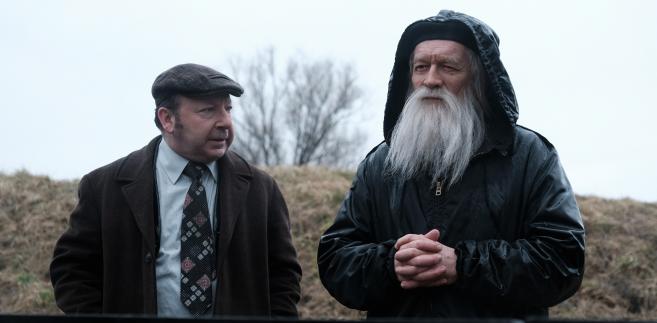
Robert Glinski’s foursquare historical drama extends the national self-examination through priests Polish cinema initiated with 2018’s Kler/Clergy and last year’s Oscar-nominated Corpus Christi. Under surveillance here: real-life greybeard Father Jan Zieja (Andrzej Seweryn), who in the mid-1970s found himself in the drab offices of Security Services major Adam Grosicki (Three Colours White’s Zbigniew Zamachowski), accused of preaching subversion while aiding anti-Government factions. (The title derives from Zieja’s most quoted sermon, delivered to a colloquy of bishops amid rising Polish nationalism.) Reviewing the facts, Grosicki ventures “it is enough for several biographies”; Glinski and screenwriter Wojciech Lepianka shoehorn roughly two volumes’ worth into a single, 110-minute sit.

The strongest scenes follow from the duel of wits between the slobby, complacent functionary, ladling sugar into his tea, and the in-every-sense upright cleric, constitutionally unable to rise to his interrogator’s bait. For a long while, however, the leads are employed almost as clip show hosts, their needling conversation cuing up flashbacks that find Young Zieja (Mateusz Wieclawek) negotiating the World Wars and then a divided post-War Poland. Narratively, these flashbacks intend to illustrate the ultimate test of faith, but they never quite attain that internal dramatic and spiritual weight: Glinski’s caught leaning a little too enthusiastically into their guns and explosions, knowing full well they’ll convert a small, intimate talkfest into a project ready for multiplex consumption.

Circling one another and unexpectedly finding patches of common ground, Zamachowski and Seweryn are on such wily form that I wished Glinski had made that structuring interrogation the whole picture, although the second half digs into Zieja’s theology in ways that may chime with observers of Poland in 2020: as one sermon puts it, “the truth is being severely insulted today”. UK viewers will have the pleasure of discovering a story barely told on these shores, and the part the theme to The Archers played in Zieja becoming such a totemic figure of liturgical liberalism. Handsomely austere, it’s the kind of production national film institutes typically finance so as to enter awards races, clinging doggedly to its truths, where (the admittedly fictional) Kler and Corpus Christi took the odd risk. 

Truth Makes Free/Zieja opens in cinemas nationwide today.

Thursday, 3 September 2020

1,001 Films: "The Wild Reeds/Les Roseaux Sauvages" (1994)


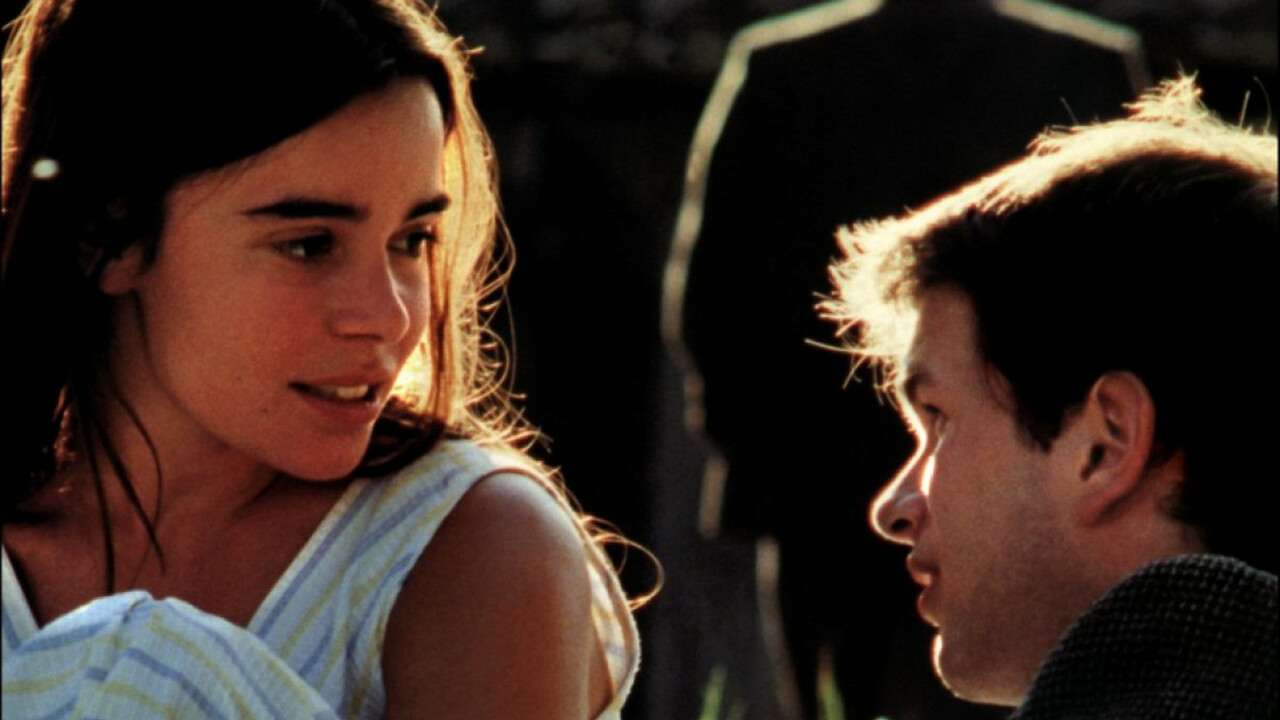
The Wild Reeds may be André Téchiné's most complete-seeming film, dramatising the impact French activity in Algeria had on an entire generation coming of age at the turn of the 1960s. At its centre is a love triangle between three teenage students at a provincial boarding school, and the young woman kept at its perimeter until she loses her innocence to one of this triangle's corners. The bright, mousy pansexual François (Gael Morel) already has local beauty Maïté (Élodie Bouchez) giving up her heart to him. He, however, is distracted - perhaps confused is the better word - by the proximity of two dark, brooding outsiders who collectively seem to reveal that Téchiné has a type: the rebellious, priapic farmer's son Serge (Stéphane Rideau), who has a brother fighting in Algeria, and the older, more serious Henri (Frédéric Gorny), rarely seen without a radio at his ear, who was born in Algeria, and proves more sensitive to what's happening back in his homeland than anybody else around him.

Later Téchiné films would succumb to grand gestures, but this one succeeds simply by paying close attention to the pivotal moments in the lives of its young leads: among other things, it's a memento of a time when you could walk home from a Bergman movie in the late afternoon sunlight and drop in at a party where everyone's doing the Twist. (Though the film's unofficial theme, in fact, is Del Shannon's "Runaway": it's nothing if not thorough in its pursuit of faces, places and temps perdus.) If Jeanne Lapoirie's cinematography serves as a working definition of the phrase "sunkissed", that's not solely for superficial reasons (though, yes, there's a fair bit of tops-off action); it also lends definition to the lengthening narrative shadows. The action's a mix of gorgeous lakeside days and sneaking in and out of dorms by night, and the film's vividness stems partly from that contrast, partly from the attuned young performers, who demonstrate a touching smalltown naivety, while handling Téchiné's reams of dialogue in a staggeringly mature fashion. These kids might now seem too reflective to convince as budding adolescents, more inclined as they are to talk about their hormones than they are to act upon them. (Then again, they were raised on Bergman.) Yet young or old, these characters keep having sneaking moments of realisation; from the masterly opening wedding setpiece (a formal introduction to lives on the brink of change) to the final afternoon at the river (with its skinnydipping for the psyche), Téchiné is alert to each and every one of them.

The Wild Reeds is not presently available in the UK.

Wednesday, 2 September 2020

1,001 Films: "Hoop Dreams" (1994)


Hailed upon its first release as a landmark documentary, ten years down the line Hoop Dreams seems less immediately striking, but then the documentary form has undergone a rapid development of its own over the past decade; the film's quietly observational methodology is almost bound to appear comparatively basic nowadays, even if what it describes is never less than compelling. It's the rise and fall and rise again of two contrasting black teenagers in late 20th century America, united by their love of basketball. Arthur Agee Jr. is a terrifically confident youngster from a tricky, troubled socioeconomic background: faced with a one-and-a-half-hour commute to high school every day, and a drifting father who shows up at an inner city basketball court to score crack from his dealers while his son looks on, it's perhaps no surprise his big-match temperament should prove so shaky. Agee's contemporary William Gates has the support of a loving, stable family, a high-school scholarship, and the President of the Encyclopaedia Britannica herself, but he's prone to recurring injuries and a deep-rooted personal insecurity apparently inherited from his father, which threatens his academic career ("Sometimes you have the right answer, and then you change your mind," a tutor tells him) as well as his progress on court.

Made originally for public television, Hoop Dreams' great virtue is a patience that allows director Steve James a time and space to choose from over five years of material that a work originated for the cinema probably wouldn't have. Playing the long game, in this instance, pays off in such striking developments as Agee's first transformation from combative, serious-faced street kid to a giggling slacker barely able to look people in the eye. What's interesting, from a cinematic perspective, is how the "circle of life" motif evident in such urban dramas as Menace II Society manifests itself (or is made to manifest itself) in the real life James films here. As the boys' high-school coach remarks, "One walks out the door, another one walks in the door"; at any given point, one of the boys is on the way up, while - on the other side of the American wheel of fortune - one is on the slide, an often painful dichotomy that makes you wonder how the filmmakers achieved such a clean and lucky break in the first place. While Gates and his illustrious teammates enjoy takeout pizza courtesy of the Nike summer camp, Agee is earning $3.35 per hour slinging slices at the Hut. Few films have better illustrated both sides of the coin via a single cut. A fascinating piece of evidence in the nature-vs-nurture debate, Hoop Dreams also offers a document of the changing face of ghetto fashion from the mid-80s onwards; a surprising, pointed cameo from Spike Lee, presumably invited to that summer camp to deliver a rousing speech, who instead reminds the players that they're no more than cogs in a machine (the American collegiate basketball system) designed to make money; and several moments of grace besides. It's there in James's filming of Gates's wife fast asleep, babe in arms, at one of the biggest games of her husband's season; in Agee's loafing about, shooting shadow hoops, as his mother does her hair ahead of a community-college graduation; and especially when Gates returns, alone, to his grammar-school gym - away from all the hoopla of coach, crowds and scouts, just a boy, a ball and a basket.

Hoop Dreams is available to stream via MUBI, Curzon Home Cinema and Prime Video.