Thursday, 6 August 2020

Wrong turn: "Young Ahmed"


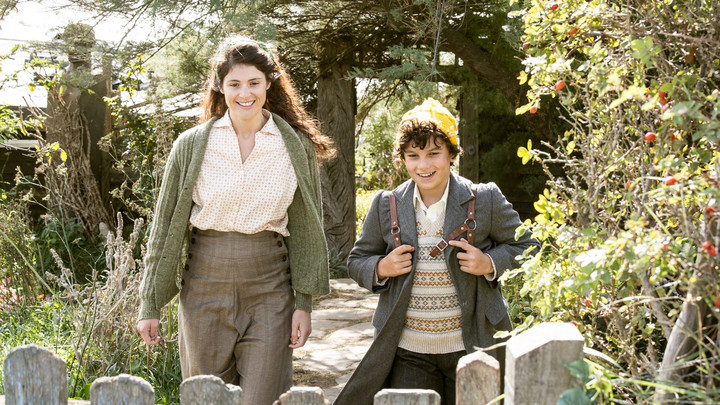
Although far less elaborate, the house style of Belgium's Dardenne brothers has by now become very nearly as recognisable as that of Wes Anderson: set a handheld camera to tailing a character's movements, and thereby quietly observe what those movements might tell us about the strengths and weaknesses of wider society. Their latest Young Ahmed represents by far the toughest, not to mention trickiest assignment the brothers have set for themselves. That camera is here set to tail the eponymous Ahmed (Idir Ben Addi), a rather withdrawn and sullen Muslim teen as he takes his first steps on the road to radicalisation; the observation that follows is undertaken in the hope he may be apprehended or rerouted. A film by sixtysomething white men about the rockiest extremes of a religion to which they do not belong, Young Ahmed is nothing if not a film surrounded by potential pitfalls: it's a tightrope walk, a tiptoe through a minefield, a high dive headfirst into a pool full of crocodiles. No wonder the critical first responders at last year's Cannes approached with extreme caution, and could then be seen holding the results at arm's length. I'll add to their reservations that it took me longer to get into this Dardennes film than it generally has in the past: where we usually hit the ground running, there are some dogmatic debates early on here that require patient negotiation. Yet even this carefully placed obstacle speaks to the duty of care Young Ahmed feels towards the world these directors are entering. The conclusion they draw there - both about this one mixed-up kid, and about films about mixed-up kids like this - is that it's really all a matter of handling.

Clearly, Ahmed makes for a very different study than the plucky heroine of Rosetta, or Marion Cotillard's wide-eyed waif in Two Days, One Night: for once, the Dardennes have chosen for a protagonist someone who doesn't want anyone on or at his side. Instead, we're struck by the contradictions inherent in this character; the film succeeds in making that mixed-upness physical, visible. There is the restlessness of this kid's movements: a tightly packed ball of energy, he pounds the streets, flails through an almost comically crap attempt at a terror attack, and then stalks the corridors of the juvenile detention centre to which he is referred, developing a fixation with toothbrushes that will unnerve anyone who suffered through all six seasons of HBO's Oz. Yet every time he opens his mouth, we can't help but notice the inflexibility of his headspace. Ahmed is a walking illustration of exactly that type research has shown jihadists specifically set out to recruit: a boy raised to do things a certain way, who regards any change to the status quo - be that a delay to his prayer time or an influx of other religions - as a grave existential threat. (That mindset, we should note, isn't limited to any one creed or colour: I think you can equally see it in the responses of those flagbearing social-media warriors taking up arms against the need to close the pubs and wear masks in public during a global pandemic. They, too, have been recruited online to make loud noises in the service of a dubious cause.)

To these eyes, it looks as though the Dardennes have opened up more space around Ahmed than they have around their previous protagonists. (Compare it to 2002's The Son, where the camera sat on Olivier Gourmet's broad shoulders much as spectacles do on the bridge of the nose, and the difference is clear.) Taking a step back allows other characters, offering other perspectives, to enter the frame. So yes, we see the older boys egging on their charge to carry out their murderous orders; but we also sit with the mother approaching her wits' end ("you must change, Ahmed"), notice the absence of a father figure in this household, and wonder how that connects to the son's search for validation and affirmation, and hear out the counsellors and psychologists doing their level best to rewire this brain before something blows. That distance also permits us to get a better read on Ahmed as a kid, one whose natural curiosity - the curiosity he displays around the detention centre's petting zoo, and around the female farmhand who kisses him in a cabbage patch - has been diverted to no good end. The suggestibility on which Chris Morris founded the comedy of Four Lions now becomes the basis of a minor-key tragedy. Minor may be the keyword here, and possibly viewer expectations will themselves need to be carefully handled; the Dardennes haven't worked with an explosives unit before, and they're not about to start doing so here. What's crucial is that theirs is a resolutely non-fundamentalist approach. The message of Young Ahmed, calmly enhanced and pushed forward scene by scene, is that nobody is ever stuck on this path: there are byroads and roundabouts and off-ramps besides.

It struck me around the time of 2011's The Kid with a Bike that certain Dardennes films display the simplicity of a children's picture book: they follow a single character as they move closer to their stated goal, rarely deviating from that A-to-B trajectory. At just 85 minutes, Young Ahmed risks seeming too simple in places for such a complex subject: on balance, there may be too much Ahmed in the final cut and not enough of the people and material that gave him these ideas in the first place. (Granted, it's far more cinematic to keep a character moving than to have him sat gawping in front of a computer screen.) Yet this constant paring-down to the essentials of Ahmed's case helps the film retain its clarity of purpose - this is a very different radicalisation story to, say, Bruno Dumont's Hadewijch, which deliberately inserted gaps and ambiguities for the viewer to interpret - and even lends it an instructional quality, no matter that the Dardennes are keen to teach us where not to set foot. The enduring strength of the brothers' work is that this is that rare form of art cinema one could screen to young audiences and have them engage with it from the get-go. These images simply show what they show, and require very little decoding; nothing is allowed to get between us, the characters and the story being told, which leads to one genuine heart-in-mouth moment amid Young Ahmed's final movements, as we realise how far this kid is prepared to go, and that there may not be a safety net big or durable enough to catch him. Certainly no-one exposed to the film is likely to come away thinking religious fundamentalism is a cool, thrilling or necessary pursuit; the simplicity that has proven such a strength in these directors' films could turn out to be a lifesaver here.

Young Ahmed opens in selected cinemas, and will be available to stream via Curzon Home Cinema, from tomorrow.

It's not so quiet: "Echo"


After being thrilled by the excellent A White, White Day the other week, a correspondent wrote to tell me she wished all films could be Icelandic from here on out. She should be happy enough with this week's MUBI premiere Echo, which is technically 56 Icelandic films in 76 minutes, snatching a value-for-money record previously contested by the 98-minute Thirty-Two Short Films About Glenn Gould and Michael Haneke's 100-minute 71 Fragments of a Chronology of Chance. (Also in the mix here: Ruben Östlund's early film Involuntary and the mordant tableaux of Roy Andersson.) Writer-director Rúnar Rúnarsson presents thin slivers of human activity (camera locked-off, no shot longer than a minute or two tops) extracted in the run-up to Christmas; these may be intended as contemporary nativity scenes - one does feature three wise junior-school men - or the movie equivalent of opening windows on an advent calendar. The vignettes vary (a few of them have the look of documentary, rather than staged drama): the first three, by way of example, show a car wash gearing up for the day's trade, a search-and-rescue team heading into the mountains, and a young mother nursing her child. Later postcards show a farmhouse going up in smoke, immigration officials storming a church, and emergency hotline operators taking a report of domestic violence. Still wish you were here?

A second question comes to mind: what does Echo amount to? Inevitably, anybody anticipating a straightahead narrative will be bashing their brains out circa clip nine or ten. (The film premiered at Locarno, a festival that tends not to trade in common-or-garden multiplex fare.) Still, certain themes, perhaps national obsessions recur: the coldness of the weather, farming snafus, the mixed fate of the country's overseas residents. Evidence, too, emerges of growing schisms between Iceland's men and women, its leisured youth and seniors burdened with one responsibility or another, between those who can afford to turn up their noses at whale meat and the damnably long queue stretching out of the foodbank on the night of Christmas Eve. The advantage with this approach is that it never allows the film to be boring. If one scene doesn't do it for you, another will be along any minute with a whole new set of characters in place. Yet there are equally limitations evident, stemming from the strict policy of editorial neutrality Rúnarsson sets in place from the opening frames.

Echo has been very carefully composed, cinematographer Sophia Olsson tweezering in isolated pockets of life in the corners of her every widescreen frame. Yet there are none of those pop-up surprises or funny gotchas Östlund and Andersson trade in: each tableau starts and finishes in more or less the same place. No one shot is allowed to assume greater weight than its neighbours; I included those earlier VFM calculations to flag up how Echo hails from that coolly conceptual, quasi-mathematical branch of contemporary arthouse filmmaking. Only belatedly does Rúnarsson allow any emotion to bleed through the images, as in an impromptu bus-stop reunion between a school bully and one of her victims, and a (apparently unfaked) minor miracle observed in passing towards the end. Still, however stimulating its cinema has been of late, there are surely minutes in modern Iceland that pass without undue incident, when the dramatic highpoint is - as the penultimate vignette depicts - the binmen showing up. Perhaps Echo is best approached as a cinematic field survey, gathering samples from various points and seeing what we might discern from them about the Icelandic national character. The conclusions you'll draw probably won't deviate wildly from those you'd have drawn from being exposed to a Sugarcubes video circa 1989: that this country remains restlessly eccentric. But there's so much energy, invention and life pulsing through Icelandic cinema at the minute that these snapshots may provide the basis for 56 separate features by the end of the decade. Watch this space.

Echo is now streaming via MUBI UK.

Wednesday, 5 August 2020

Cracks: "The Snow Queen: Mirrorlands"


The Snow Queen: Mirrorlands represents the fourth in a series of Russian digimations that once upon a time - back in the halcyon days of 2012 - was sort of based on Hans Christian Andersen, and can thus claim to have beaten Disney's Frozen to the punch in the animated space race. (It won that battle, while comprehensively losing the box-office war.) On this front, it's clear our Eastern friends remain ambitious and competitive: this sequel's visuals are actually more sweeping and dynamic than some minor British and American animation studios have managed for their launch projects. The issue is how those visuals connect up with every other element. Four films in, and we're getting tangled up in the mythology that has carried this series further and further away from Andersen's source material; this is made less persuasive in turn by flatly humourless English-language translation and a makeshift American redub. (One of the earlier instalments invited the unlikely pairing of Sean Bean and Bella Thorne into the voice booth, but no comparable expense has been spent on this one: if the film's Western handlers had recruited, let's say, Jedward and Darren Day, it would have been an improvement on the performers they've gone with.) You'd no longer know this tale had Scandinavian or Slavic origins from the film itself; that rootlessness is both why it's been imported, and also one of its chief failings.

As far as I could tell, the series now unfolds in parallel realities. This Snow Queen, a villainess we rejoin imprisoned in her kingdom of ice, spies an opportunity to regain her erstwhile powers by escaping into the film's Middle Ages equivalent and kidnapping our independent, adventurous heroine Gerda. Yet the storytelling is so manic - gabbling through its plot inside 80 minutes - that even this reading may be considered provisional and open to correction. The animators' energy has been diverted into the generation of crashing setpieces: a chase between flying steampunk galleons that would likely set Andersen to spinning in his grave, a hop-skip-jump over a fiery lake by way of contrast to all the snow, a last-reel punch-up between giant robots that suggests Andersen ultimately held far less sway here than the production's canny accountants. The one area in which those animators are still some way behind their Western rivals is having the patience to develop the emotional hook viewers can cling to amid this smashing spectacle; so the film generates light, colour and motion - but no greater stakes or jeopardy than one perceives in the average screensaver, and that screensaver wouldn't suffer from the philistinism that insists these characters be redubbed by no-name actors in the same blandly Californian cadences. If distributors can put in the time, money and effort to subtle the subtleties of Studio Ghibli releases for international audiences, could we not also caption a film like Mirrorlands? If it didn't help teach our kids to read, it might impress some other useful understanding upon them: that film has its own distinct languages, and that it can still be delicate, hand-tended art, rather than interchangeable content cranked out for quick bucks.

The Snow Queen: Mirrorlands opens in cinemas nationwide this Friday.

Tuesday, 4 August 2020

Shoot the moon: "Proxima"


Some films grab you with five words. Proxima is "Eva Green as an astronaut", a prospect to send the expectations of any sentient human being soaring towards the stratosphere. Ever since the conclusion of Showtime's Penny Dreadful, our movies and TV have taken Ms. Green's talents for granted: you'd only need to catch five minutes of the BBC's recent misbegotten adaptation of The Luminaries - which tossed her in the mud of the new New Zealand, an exotic question mark in a perilously silly hat - to recognise that. Proxima's promising writer-director Alice Winocour has the right idea, thankfully. She repositions Green front-and-centre; she allows her to speak in her native French tongue (no more wobbly accents); she gets her to do something that goes beyond looking good on the publicity materials. A big part of what director and star are doing is subverting the enduring screen cliché of the astronaut's wife, a type exemplified by Kathleen Quinlan in Apollo 13, but whose DNA has trickled down to such 21st century characterisations as Caitriona Balfe's Mollie Miles in Le Mans '66: the hausfrau who irons underpants and nervily eyes the telephone while the guys are off exhibiting what the movies have always deemed to be the right stuff. Winocour has troubled to separate these roles out. Green's Sarah is an astronaut and a wife (ex-wife, specifically), striving to square her intergalactic ambitions (as an engineer headed to training at a Russian space camp) with her earthly responsibilities as the mother to a young daughter, Stella (Zélie Boulant); she's a woman suspended between the vast embrace of her beloved universe and the smallness of the child she adores.

If nothing else, that ensures Proxima offers a balancing perspective to the boysiness of James Gray's Ad Astra, where that same universe provided a cosmic baseball field on which a distant father and son could toss their issues back-and-forth. (It seemed an especially long distance to travel, when one party could have simply picked up a phone.) Winocour doesn't have Gray's 21st Century Fox budget to work with, though she avails herself of the kind of sturdy supporting cast (Matt Dillon, Lars Eidinger, Sandra Hüller) that comes with international co-production money. Instead, she remains resolutely grounded, using those resources to expand the scope of the atmospheric, hummingbird-sensitive realism she set out in her 2015 breakthrough Disorder. She shoots in ordinary locations (well, ordinary if you're an astronaut), but her filters, and an ambient Ryuichi Sakamoto score, brings us within easy touching distance of sci-fi. What really interests Winocour about this story isn't up there in the galaxy, however, but right here on Earth, and it's a quandary you wouldn't have had to train long months at NASA to have pondered in your time. Is it possible to have it all, family and career, the moon and the stars? And if so, which sacrifices, if any, would be worth making to get there? Anyone expecting Proxima to pit Eva against space pirates or space chimps, as Brad Pitt squared up to in the course of Ad Astra, is bound to be disappointed. Winocour's film is at heart a workplace drama, albeit one with taller horizons than the conventional glass ceiling. This time, the sky's the limit.

Not having to deliver IMAX-ready spectacle frees Winocour to flesh out that thematic strand that connected the slambang aspects of Alfonso Cuarón's Gravity to its pulsing emotional core. She makes vivid, affecting connections between Sarah's work up there and her role down here, the better to suggest that bringing a rocket down safely requires much the same preparation and care as bringing a child up. To an extent, motherhood here means passing down what Sarah's learnt on the job, as in the advice she gives during a call home to the distraught Stella: "You know what happens. If you panic, it's worse. But if you focus, you can do it." Stranger parallels are established in a montage that cuts between children on a merry-go-round and astronauts spinning in a centrifuge; at one point, we see Sarah sitting in an upright foetal position in a womb-like capsule being filled with fluids, and describing the changes likely to happen to her body while she's up in space. Here, Winocour seems to be floating the idea that Sarah, like Stella, is herself a work-in-progress, someone being schooled to ascend to the next level. As any rock biographer could attest - and this is the source of the film's internal tensions, its tougher choices - wide-eyed naivety is rarely a reassuring quality in a parent, the people we tend to look to as our bedrocks, and as a source of established knowledge. How does anyone find time to pay attention to a child when they're still trying to make their own way in (and, in Sarah's case, out of) this world?

The way the film answers that - and it does, at the last, answer it affirmatively - has a lot to do with the way Winocour works her leading lady. Of late, directors have tended to leave Green to her own devices - they've cast her to play Eva Green - so it's barely a surprise that she should have been seen to drift away with the fairies in so many roles, resembling no earthly creature at all. Here, it's soon clear she's been very closely and precisely directed. (With good reason: the camera rarely leaves her side, whether she's up in the air or several fathoms underwater.) From the opening sequence, in which a harnessed-up Sarah pounds a vertical treadmill, this Green is tethered, monitored, switched-on, plugged-in; subject to such intense observation, her tics diminish, and some of her old needling, combative intelligence returns. (She forms a nicely spiky relationship with Dillon, in one of his self-mocking roles as the kind of meathead space movies have typically lionised.) She can still do girlish, which reminds us she was young when the movies discovered her in the first years of this century: she wears her hair in a sixth-former's ponytail, and cries when she hurts her leg. But she also exhibits a newfound warmth, which Winocour promptly uses to seal the case she's making: she demonstrates, almost scientifically, that Sarah has the right stuff to be a great explorer and a great mother. If Proxima takes a slight narrative stumble towards the end - bear in mind NASA reprimanded John Young for smuggling the possible contamination of a corned beef sandwich aboard Gemini 3 - it continually makes emotional sense. If we see astronauts as ambassadors of Earth - representatives of our best and brightest - then why wouldn't we send Eva Green up there eventually? The only concern right now would be whether she'd have any good reason to come back.

Proxima is now showing in cinemas nationwide.

Lost horizons: "Summerland"


With life returning to cinemas, however briefly, the British film industry gears up once again, like a backbench MP farting himself awake after a heavy lunch of kippers and port. Where Make Up could be said to represent the forward-facing avant-garde, Summerland issues from the same industry's fustier Downton branch: this is a sundappled WW2 caper, pie-eyed on homebrewed Blitz spirit, which features mild peril, milder swearing (Penelope Wilton tells some kids to bugger off) and Gemma "Hockey Sticks" Arterton in cosy knitwear sparing tousle-haired foundlings from the Nazis. Its structure of prettily shot, well-furnished flashbacks within prettily shot, well-furnished flashbacks may just make it ideal scheduling for this moment: after fifteen minutes of it, you may forget the whole 21st century was a thing, let alone the Coronavirus. Yet the more of these films I see - and there was one a week up to March 2020 - the more convinced I become that a sizeable part of this industry was frozen in time in 1945, one of the many reasons the country is in the shape it is today. Rather than interrogate the myths and legends of wartime heroism and sacrifice, as our French cousins have in a run of varied fictions and documentaries, British creatives keep surrendering meekly to them, determined not to kick up too much in the way of fuss. "Stories have to come from somewhere," reads the epigraph of the book the heroine compiles over the course of Summerland - to which I found myself retorting: yes, but so many in the same middling vein from the same damn period?

This time round, it's 1940, and we're on a picturesque stretch of the South Coast, where Arterton's resolutely single writer Alice Lamb is interrupted mid-composition of her latest opus (something about floating castles) by a knock at the door and a lady from the War Office insisting she take in a young boy, Frank (Lucas Bond), as a refugee - a development she had no prior knowledge of because she's the kind of maverick who doesn't read her own post. This being that kind of film, woman and boy spend the next hour or so bonding, and as Alice relaxes into renewed companionship, details emerge as to why she's been such a solitary grump. Here, at least, writer-director Jessica Swale begins to angle towards mild subversion. Firstly, it's typically been reclusive, miserly, soul-sick men - the descendants of Silas Marner - who've had their hearts and cockles warmed by an adorable kid: think Hugh Grant in About a Boy, Billy Bob Thornton in Bad Santa, or any of the central trio in Three Men and a Baby. Secondly, the reason for Alice's grumpiness is revealed in those prettily shot, well-furnished flashbacks: back in the Roaring Twenties, our heroine had a brief Sapphic encounter with Gugu Mbatha-Raw's socialite Vera - and I think we can both agree that if you had any version of Gugu Mbatha-Raw in your life, and then no longer had Gugu Mbatha-Raw in your life, you'd be grumpy, too. (I found myself getting grumpier the further away Summerland drifted from the flashbacks in which the actress appears.)

So, OK, you tell yourself, it's doing something a little bit different - but it's doing that within a fundamentally hidebound form, one that generally insists on watering everything down for optimal Sunday-teatime viewing. The most Swale carves out for herself here is maybe a toe's worth of wiggle room; my suspicion was that this project began life as a far tougher, pricklier story, and was gradually fed through the cookie cutter by producers keen to generate more of that Their Finest moolah. For starters, Alice and Vera's emerges as a very chaste love: it's swimming in underskirts, a kiss you don't see lest it scandalise somebody's Aunt Beryl, and some post-coital slumming in one of Theresa May's wheatfields. (Ninety minutes of this mooning couldn't match the charge of one glance in Portrait of a Lady on Fire.) It's brought to an end, almost as soon as it begins, not by prevailing attitudes, but a difference of opinion over parenting, intended to make the business with the refugee lad more poignant. The former would surely have been more credible, given the stakes Swale sets out (an interracial, same-sex relationship? In the Twenties' economy?); any such break-up could have provided timely comment on how conservatism stifles and shuts out at least as much as it sustains. Instead, Summerland encases a very 2020 relationship dilemma in a gleaming soap bubble and floats it backwards eighty years, hoping it won't pop along the way. Alice and Vera's story might have made for a British equivalent of Jeff Nichols' very fine Loving, an examination of the worst prejudices of the past that made the love at its centre appear all the more miraculous; perked up and jollied along as it has been, it becomes more or less entirely unbelievable.

The pity is that both Mbatha-Raw and Arterton (who, in all fairness, continues to grow on me as a performer: those St. Trinian's redos were an exceptionally bad first impression she managed to overcome) play the notes they've been handed with care and skill. But they're minor notes in the tweest of symphonies, and they get scattered to the wind as the film snuggles into the cushioned comfort of its 1940s. (The War itself is barely felt, save as a couple of headlines outside the village shop, and a near-miss during the Blitz: the film's been fine-tuned to prioritise escapism above all else.) Here, Summerland settles for being wholly pleasant, the ever-welcome Tom Courtenay shuffling by from time to time as the local schoolmaster, until a late twist that suddenly renders everyone frenetic in the extreme. Just from a pacing perspective, the film is patently cuckoo: nothing happens for an hour, and then everything happens at once. (Again, you wonder: was there a longer cut that better integrated this kerfuffle?) Well, perhaps audiences now feel so starved for signs of the outside world that they'll settle for a film that is almost all sightseeing - and we should credit the gifted DoP Laurie Rose on this point: it is an achievement to make a picture this pretty, and to have spent this much time on the Dover-Folkestone border without encountering Nigel Farage trying to shoo away waves of migrants singlehandedly like a Barbour-jacketed King C(a)nut(e). Yet that romanticised vision is Summerland's issue in a cnut-shell: any 2020 release that invites us to look upon Britain as a just, blossoming and fruitful land is as much optical illusion as Alice's castles in the sky.

Summerland is now playing in cinemas nationwide.

Monday, 3 August 2020

The thin blue line: "The Fight"


Josh Kriegman and Elyse Steinberg's 2016 documentary Weiner, on the rise and fall of disgraced congressman Anthony Weiner, will stand as one of the best records of the sorry states our political and media landscapes were getting in at the start of the last decade. No-one quite anticipated what was lurking around the corner. The pair's new film, which opens with the audio of the Trump inauguration, documents how it's been ever since - and the work of those tireless, overworked professionals attempting to provide some pushback. The Fight (co-directed with Eli Despres) takes us inside the American Civil Liberties Union, the oft-cited organisation relied upon to address the constitutional issues that keep coming up when you have a deranged dictator-wannabe as head of state. The filmmakers' methods remain much as they were in Weiner: a deft mix of fly-on-the-wall observation and third-party media coverage. Yet the stakes have been raised. Weiner was a silly boy who should have known better than to do what he did, and someone who'd banked enough personal and political capital to survive the storm his actions provoked. The actions of his political successors really are a matter of life and death; they're the difference between someone being allowed to stay on in what has traditionally been referred to as the land of the free - an idea already under threat from those hucksters who would put a price on everything, even liberty - and being snuffed out in the homelands to which they're being forcibly removed.

One way of looking at the ACLU's work would be as an attempt to provide clarity amid the chaos the incumbent President trades in. Kriegman, Steinberg and Despres - a formidable-sounding lawfirm-in-waiting - have taken this on board, and so The Fight sets out just four of the hundreds of cases the ACLU has taken on since 2016. We meet Jane, a pregnant migrant whose efforts to secure an abortion have been blocked by the current regime - the first sign that this President had his beady eyes on overturning the landmark Roe-vs-Wade ruling. We encounter Brock Stone, not a porn star as the name suggests, rather a trans officer directly affected by the President's proposed ban on transsexuals in the military. A third strand addresses the battles over voter suppression, this administration's efforts to strike names from the census; the fourth, headline strand, in part because it yields the most emotive footage, focuses on the class action suit the ACLU filed on behalf of those migrant parents who were separated from their children upon being taken into custody. From an editorial perspective, this lends The Fight variety: the filmmakers can cut back-and-forth between these battles, working towards a multiplicity of outcomes. Yet the approach also works towards a greater understanding of the current administration's methods, how Team Trump has sought to attack multiple branches of American democracy simultaneously, an artless carpetbombing of due process intended to overwhelm the body politic. Liberal hope is that said administration may have met its aggressive match in a virus doing much the same thing to the human body, but as anyone who's seen enough movies knows, monsters have a habit of coming back from the dead. 

The advantage the ACLU have in this respect is competency, but the film leaves us in no doubt that its lawyers are badly overstretched, and operating within a system that's started to wobble from the weight of the burdens placed upon it. On screen, that manifests as a certain fraught quality. When one lawyer forgets to bring his phone charger to work, his mid-afternoon quest for a replacement loses him minutes that could make all the difference to a client at risk of being buried within that system. Yet the filmmakers equally hone in on cheerier workplace details, those flickers of (often bleak) humour that help these lawyers get through the longer, more trying days. One interviewee with experience of both notes that the difference between ACLU HQ and the Department of Justice is the number of piercings and tattoos visible; Lee Gelernt, the foursquare Deputy Director of the Union's Immigrants' Rights Project, muses that there aren't all that many people around he can talk sports with. If they're heroes, they're constantly observed testing themselves, calibrating that heroism for greater impact: what the film's really getting at, you sense, is a form of self-regulation lacking in their opponents. (These guys barely have time to Tweet.) It's most evident in a conversation the cis lawyer handling the trans case has with the (trans) colleague he wonders might be better suited to making the argument; it's there in the internal schism that opened up in the wake of Charlottesville, where some within the ACLU felt they'd gone too far in defending the right to free speech of those white supremacists who killed Heather Heyer. When you're defending liberty, how much is too much?

The film knows its audience: it's that progressive crowd who gathered to warm their hearts and hands around the documentary form in the post-9/11 heyday of Michael Moore, and who've remained steadfastly in place over the long, cold, dark winters of the fake-news era. We get precisely the least flattering clips of Trump, his officials and his media lackeys - though you could only call this selective editing if you weren't aware the filmmakers would have had many hours of these foot-in-mouth howlers to choose between. Yet The Fight doesn't quite have the same immediacy and impact Weiner did before it. Partly, that's a matter of access: a lot of relevant testimony in these cases was heard behind closed doors, so much of the information has to be conveyed secondhand. (We're offered animated reconstructions of the Supreme Court hearings, which can't match the electric drama of the great trial documentaries; the ACLU lawyers are obliged to spend more time on the phone - hence the charger snafu - than they do at the bar.) Nevertheless, the closing round of verdicts is moving: what Kriegman, Steinberg and Despres have brought back is footage that illustrates the difference individuals can still make, even at a moment when so much hope would appear lost. In an ideal world, you could show The Fight to a MAGA type, and they would come away with an admiration (however begrudging) for the lawyers' eloquence and work ethic, their commitment to law and order, and their faith in an idea of America where the little guy might still catch a break. But I'm aware this is 2020, and that ideals in any form are a distant horizon. What The Fight shows above all else is that simply getting the system to function - or, less simply, getting it to function as fairly as we might want - is mighty hard work in itself.

The Fight is now playing at London's Genesis Cinema, and streaming via Curzon, Dogwoof and Amazon Prime.

Saturday, 1 August 2020

On demand: "7500"


Just shy of fifteen years on, they've remade United 93 without the sociopolitical context. Amazon's big summer streaming premiere 7500 starts with that old Gandhi quote about an eye for an eye leaving everyone blind, then unspools several minutes of grainy CCTV footage that captures a group of ethnically indeterminate men gathering at Berlin Airport. (One is seen picking up alcohol at duty free, so - whoa! - hold those prejudiced horses.) These will be your hijackers for the evening. Your hero - pointedly different from the doomed passenger collective of the Greengrass film - is a nice American pilot, Tobias, played by that nice Joseph Gordon-Levitt, and he's involved in a nice-sounding relationship with one of the stewardesses on his upcoming night flight to Paris. That flight is meant to be routine, a brisk hop; it becomes far less so after those hijackers attempt to storm the cockpit, forcing Tobias to seal himself in and engage in that most 21st century of themes: crisis management. A crucial moment, when that cockpit door is secured: it immediately shuts out any of that wider context - the whos and whys of this particular attack - and limits 7500 to a study of a small, square space. All that matters from this point on is what's left to be done from the cockpit, and where this plane is headed in the darkness of the night.

Does it still work? Absolutely. Though one of its subjects is uncertainty - the turbulence that follows any breach of the usual protocols - the film itself proves to be supremely well managed. Our flight director Patrick Vollrath spends his modest budget well: he's landed access to an actual flight deck in an actual aeroplane passing through an actual airport, which - combined with the early procedural (flightdeck checks, news of late-running passengers) - lends verisimilitude to the one set we spend the rest of the movie haring round. He marshals his soundtrack (the already eerie hum of a regulation flight, the screams behind the locked door) as effectively as he does the cranking-up of tension. Of course Tobias can turn something of a blind eye to the taking of a random hostage we haven't been introduced to, and of course it gets personal after the hijackers go after his gal, leading our boy to take his eye off a mooted emergency landing in Hanover. It's as though Vollrath himself is sitting at the pilot's side (which was likely the case, given the limited space of this shoot), consulting and tapping the dials, maintaining the desired levels of pressurisation, ensuring the plane hits a rainstorm at the optimal moment to heighten the inflight drama.

That tight control extends to the characterisation, Gordon-Levitt playing a smaller, quieter variation on that pent-up stoicism Greengrass coached into Tom Hanks to the benefit of 2013's Captain Phillips, while his director is operating with extreme caution around the hijackers. These are eventually revealed, with a shrug, as Islamic fundamentalists - well, who else has skin in the hijacking game these days? - though even here, 7500 strives to find a neat representational balance, to level its wings. The leader of the group, Kenan (Murathan Muslu), enters the cockpit hell-for-leather, while another, junior party, Vedat (Omid Memar), is revealed as having doubts. (The grain of that CCTV footage obscures him, but I think it may have been him who turned to alcohol to quell his nervousness.) Still, there are elements on the other side of that cockpit door that Vollrath can't get to, or doesn't want to look at, or much discuss otherwise. The sheer containment precludes the expansiveness and wildness of an airborne thriller in the mould of Executive Decision, Con Air or Turbulence (which, lest anyone forget, had Ray Liotta as a leering serial killer at 35,000ft). Just as we can no longer take fluids onto a flight post-9/11, so we can no longer have that kind of unbridled fun at the movies; our hijack dramas now have to be roughly as terse and humourless as commercial flying itself. Vollrath lands this one safely, having done much in the preceding 90 minutes to position himself on the Hollywood radar, yet with bigger budgets come bigger canvasses. It'll be intriguing to see how he fills them.

7500 is available to stream via Amazon Prime.