Thursday, 7 May 2020

Funny games: "Infinite Football"


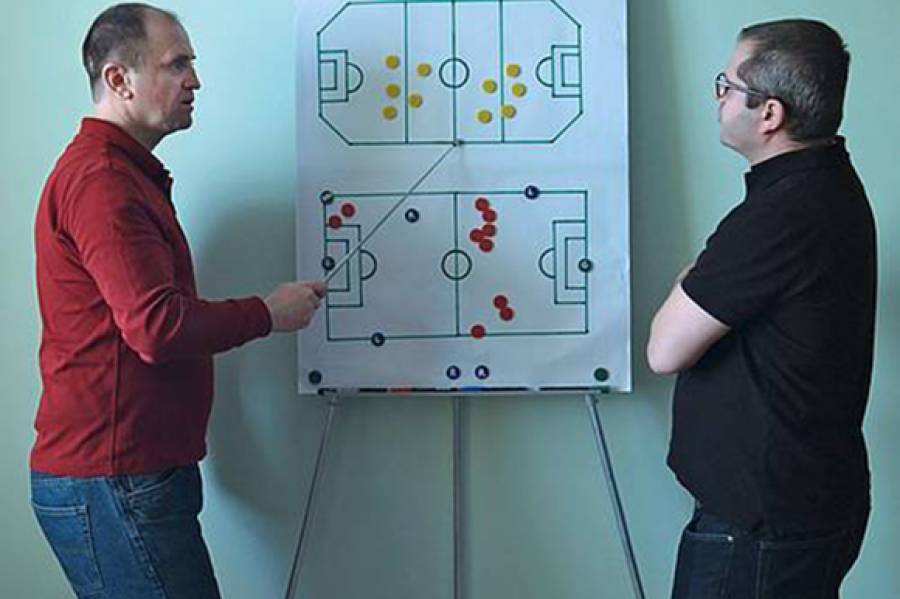
There's a long-overdue comeback on UK screens this week for Corneliu Porumboiu, the ideas man who came to prominence amid the Romanian New Wave with 2006's riotous 12:08 East of Bucharest, set during a live TV discussion of the Ceaucescu regime, and 2009's droll procedural Police, Adjective. Curzon are releasing Porumboiu's latest, the wonky genre offering The Whistlers; pleasingly, Anti-Worlds are supplementing it with a runout for the director's previous film, his 2018 documentary Infinite Football. Longtime devotees will already know the place soccer occupies in this filmography: 2014's The Second Game found this director and his father providing a retrospective commentary over a VHS tape of a match Porumboiu Sr. once refereed on. The new film, notionally more conventional non-fiction, captures a 70-minute conversation between the director and Laurentiu Ginghina, a middle-aged clerk with a story to tell. This starts out as a fairly conventional story - how Ginghina had his footballing career ended by a tackle that left him with a broken leg - only for a cut to director and subject standing at a whiteboard, Infinite Football's zero-budget effort to match the flashy touchscreen tech of Football Focus, to signal there's a little more going on. I'll let Ginghina himself explain what that is, but it literally falls under the definition of a gamechanger.

For much of its running time, Infinite Football strikes the eye as a route-one movie, marked by a recognisably Romanian matter-of-factness. No attempt has been made to mess around with or dress up this story: we really are just watching Ginghina lay out his working while Porumboiu, with his faint air of the young Adrian Chiles, plays the straight man, standing at his subject's side, arms folded across his chest in classic "bloke on the terraces" style. Something of Errol Morris's studies of American eccentrics becomes visible in the pair's match-up, although Porumboiu resists Morris's conceptual and stylistic flourishes - and Ginghina himself doesn't appear all that eccentric, his big idea aside. At the halfway mark, the film relocates to his office, where the pair's conversation gets interrupted by an elderly petitioner and Ginghina compares his double life (as a functionary who's also a dreamer) to that of Peter Parker and Clark Kent; then it's onto the five-a-side pitches, where the vision can be tested against the reality, leading to some dryly funny scenes wherein Porumboiu shakes his head as Ginghina explains the virtues of his system all over again.

The question hanging over the film is what it's really about, beyond the glib retort "an hour and ten minutes". The lightly satiric tone suggests Porumboiu could well be razzing the ability of men to talk endless bollocks and waste limitless time on projects that make no difference whatsoever. (Football is an ideal arena in which to highlight these futile gestures: I write as a Coventry City fan who's spent half a year watching his team ascend to the top of a league that may never be finished.) There may even be a political edge to this discussion. Ginghina talks of the "freedom" of the ball, yet his masterplan keeps the players in more or less the same space, and one of its main practical drawbacks is that it would require three times the number of linesmen to look out for any infringements - some kind of mass surveillance. Is it possible that, under the guise of opening up the pitch, increasing player efficiency and producing a better product, this amiable fellow is actually proposing a footballing form of fascism? (Is that how fascism takes hold?) That said, the film feels fond rather than forbidding; you never feel Porumboiu looking down or askance at his pal. At the very least, the clerk is looking for an improvement on what's gone before, and he emerges as a one-off in his own way. No-one else has had this idea, and Porumboiu appears as surprised as anyone that someone so outwardly unprepossessing should turn out to be so singular in his thinking. Here is a VAR portrait of the only person on the planet ready to make the offside rule more complicated; football politics being what they are, he'll probably be elected president of FIFA by the time the Euros finally kick off.

Infinite Football will be available to stream via Curzon from tomorrow.

Wednesday, 6 May 2020

Prelude to a kiss: "Romantic Comedy"


Chances are, at some point over the past few weeks-that-have-felt-like-months, you'll have considered sitting down to watch something fluffy and comforting - one of those films that remind us what it is to be close to another human being, or to meet a new person and feel your heart skip a beat. You'll find plentiful viewing suggestions of this kind in Elizabeth Sankey's new essay film Romantic Comedy: debuting on MUBI this week, here is a critical overview of recent developments in the titular form. Recent is the keyword. Though Sankey briefly casts an eye backwards over the established screwball canon, her chosen field of study is made up of those titles more commonly found on Netflix and the shelves of the Entertainment Exchange. So we revisit that late Eighties/early Nineties golden age, when Nora Ephron held sway, so bounteous for romcoms that even a classical example of the form like Ron Underwood's Speechless had to settle for a DTV release; and then bear witness to that mortifying dip in the Noughties, as established stars moved on, the studios retreated into sexless comic books, and the writers contracted to put any surviving romcoms together ran out of new and tenable ideas. Imagine getting your ideas about relationships from Failure to Launch, What's Your Number? or any of the Gerard Butler/Katherine Heigl vehicles that dragged their sorry behinds into the multiplex in the wake of 9/11. Sankey proceeds from the standpoint that we've all learnt a lot about love (more specifically, about attraction) from the movies, but equally - like Philip Larkin's mum and dad - that they can't half fuck us up. They may not mean to, but they do.

Romantic Comedy's strength is that capacity to see both sides of the equation: it's been compiled with obvious affection for this subgenre, but also a fan's frustration that real-life romantics haven't been better served by the creatives who spend a lot of time and get paid a whole lot of money to come up with these things. Sankey falls somewhere between aggrieved and sad at the fact romcoms aren't as critically respected as they once were, but she's perceptive enough to understand why, and the quarter-century that has elapsed since While You Were Sleeping gives her a considerable body of work to cherrypick while she and her interviewees set out their arguments. (Fully three-and-a-half minutes of the closing credits are devoted to listing the films excerpted.) Recurring tropes, both pleasurable and problematic, are identified: how these movies - oft overseen by men - have very strange ideas about women's bodies (consider the framing of Bridget Jones's fluctuating weight, or Sandra Bullock's ability to snack her way through the Miss Congeniality films without appearing to absorb any calories), how a certain screenwriting model turns these films' Prince Charmings into stalkers and predators, how the genre as a whole has routinely pushed minority groups to the margins, if not erased them altogether. (And don't get Sankey started on Film Twitter's eternal whipping boy Zach Braff, approached - via Garden State and The Last Kiss - as a phase pop culture had to pass through.)

The film makes a few omissions of its own. It views the romantic comedy as a predominantly English-language phenomenon (Kevin Kline's accent in French Kiss is as exotic as it gets), which means nothing of Christophe Honoré's Parisian bonbons or anything of Bollywood - and heaven alone knows Sankey could have found some questionable ideas to support her case there. And there are points where the film's sound and vision look themselves to be a little estranged - where the stock romcom visuals are no more than wallpaper, keeping the eye busy while we listen to the reading of a well-composed, well-spoken critical studies assignment. (Full disclosure: I count several of Sankey's interviewees as friends and colleagues, and their contributions are exactly why I count them as friends.) Still, either element would be enough in itself to engage the passing cinephile: the clips come to form the kind of scrapbook a fan might compose in their heads, while the commentary is an admirable attempt to take the romcom seriously again, the first step on the path to getting better films. In its final third, Romantic Comedy begins to address the positive changes Western filmmaking has been undergoing in recent years, allowing Sankey to throw out all manner of valuable home-viewing tips - you will likely emerge wanting to watch or rewatch 2008's I Love You, Man, which not enough people did at the time - while repopulating her images with those faces this genre hasn't spent anything like enough time adoring. Her own film loves widely and wholeheartedly, but not altogether blindly.

Romantic Comedy will be available to stream via MUBI UK from tomorrow.

Tuesday, 5 May 2020

Michigan witchery: "The Wretched"


The Wretched, the latest offshoot from America's apparently flourishing regional horror scene, first presents us with a puzzle of sorts. After an early Eighties-set prologue in which a guileless babysitter meets her doom at the hands of a child-munching creature stumbled across in the basement of an otherwise unremarkable suburban home, we shift ahead to the present day, where child-of-divorce Ben (John-Paul Howard) is shipping out to Michigan to stay with a dad who runs a marina. The puzzle lies in how and where that creature is going to recur, because we know a feature operating at this constrained budgetary level would be unlikely to shell out for creepy-crawly effects it isn't then going to reuse. Only after a full reel of lakeside coming-of-age medium-jinks (drinking, vomiting, nightswimming with bonus humiliation) do the writer-director siblings Brett and Drew Pierce provide us with an answer: the creature is a witch who's haunted this community and its surrounds for far longer than 35 years, and who's now re-emerged looking for a new form to take.

Anyone anticipating some lavish del Toroesque exercise in mythological reimagining from that synopsis should scroll on by; this is entry-level horror, meat-and-potatoes in its treatment, bordering on the basic. That the Pierces are chiefly interested in snaffling the allowances of sleepover guests with access to VOD is apparent from the casting of Howard, a resolutely vanilla Everyboi, and there's no real sign they intend to explore the notion that witches were containers for civilisation's worst suspicions and prejudices, as Robert Eggers' unnerving The Witch did. We get some suggestion this ancient evil's return is connected to the community's generally dismissive attitude to its women (Ben's father has folded a family photo to exclude his ex), but this witch is predominantly framed as a lank-haired bad mama, lurching out of darkened crawlspaces to cast a spell on the local daddies and gobble up their toddlers.

Accept its limitations, and the film is watchable enough, something like Disturbia with claws (Ben's the only one who can see the threat the witch poses) or an extended episode of Eerie, Indiana. (I suspect the Pierces have their heart set on overtaking the Duffer brothers as this moment's pre-eminent Spielbergian siblings.) It actually has a far stronger second half than first, as the evil starts to pass from host body to host body, cuing analogue-looking transformations that gesture in the direction of make-up great Rick Baker (An American Werewolf in London). Still, no-one over the age of fifteen is likely to come away too rattled by it: your correspondent was struck above all else by a (not un-Spielbergian) aside on the characters' favourite flavour of Starburst. Useful to know that cherry comes as a standard option in the US, but it may not speak altogether favourably of the horror element of your horror movie when its primary aftereffect is to prompt a temporary spike in confectionery sales.

The Wretched is available to rent via streaming platforms from Friday.

Monday, 4 May 2020

Hollywood scuttle: "Reborn"


You can't say we're not getting a varied cinematic diet in this lockdown moment: a week of two films by the cerebral Romanian auteur Corneliu Porumboiu also brings us Reborn, a splattery DTV throwback starring Re-Animator scream queen Barbara Crampton. We now find director Julian Richards - once seen scratching around on the margins of the UK film scene (Darklands, The Last Horror Movie) - out in L.A., telling the low-rent tale of an aging actress (Crampton) whose big career comeback is threatened by the reemergence of the daughter who arrived stillborn sixteen years previously, but (and here you'll just have to bear with it) was revived by a lightning strike in the morgue and grew up to become a wide-eyed teen (Kayleigh Gilbert) with murderously electrokinetic powers. Her first victim will be Chaz Bono, recently rediscovered on Curb Your Enthusiasm as the trans man with a catastrophically large tallywhacker, playing the gropey mortician who's kept the girl locked up since this rebirth specifically to have a go on her on the very day of her 16th birthday. (The character doesn't appear the type who would wait, to be perfectly honest with you.)

So, yeah, it's one of these types of things, and Richards gives it more or less the aesthetic it deserves: conspicuously underdressed and overlit sets, 15-certificate lurid deaths, nondescript or outright clunky dialogue given varyingly tentative readings by whichever local actors were willing to Uber in once the money started to run out. There are flickers of transgressive energy to be spotted here and there, and spots of disreputable pleasure to be had - it's a project that sets itself the lowish bar of replicating the look and feel of those down-at-heel video rentals we snickered and guffawed through as teenagers - but also a lot of dead air and wasted space. Today's youngsters will find themselves having to fast forward through a lot of tepid fringe-Hollywood psychodrama, possibly inserted at the behest of a leading lady who may feel she hasn't had the serious roles she deserves, to get to a cheap version of the good stuff, and the payoff doesn't really seem worth it: one of those artless shock-homages that only reminds you of the considerably better film that inspired it, and a random Peter Bogdanovich cameo that is very much not one for the teenagers.

Reborn is available to rent from today via Amazon Prime. 

Saturday, 2 May 2020

On demand: "Blade of the Immortal"


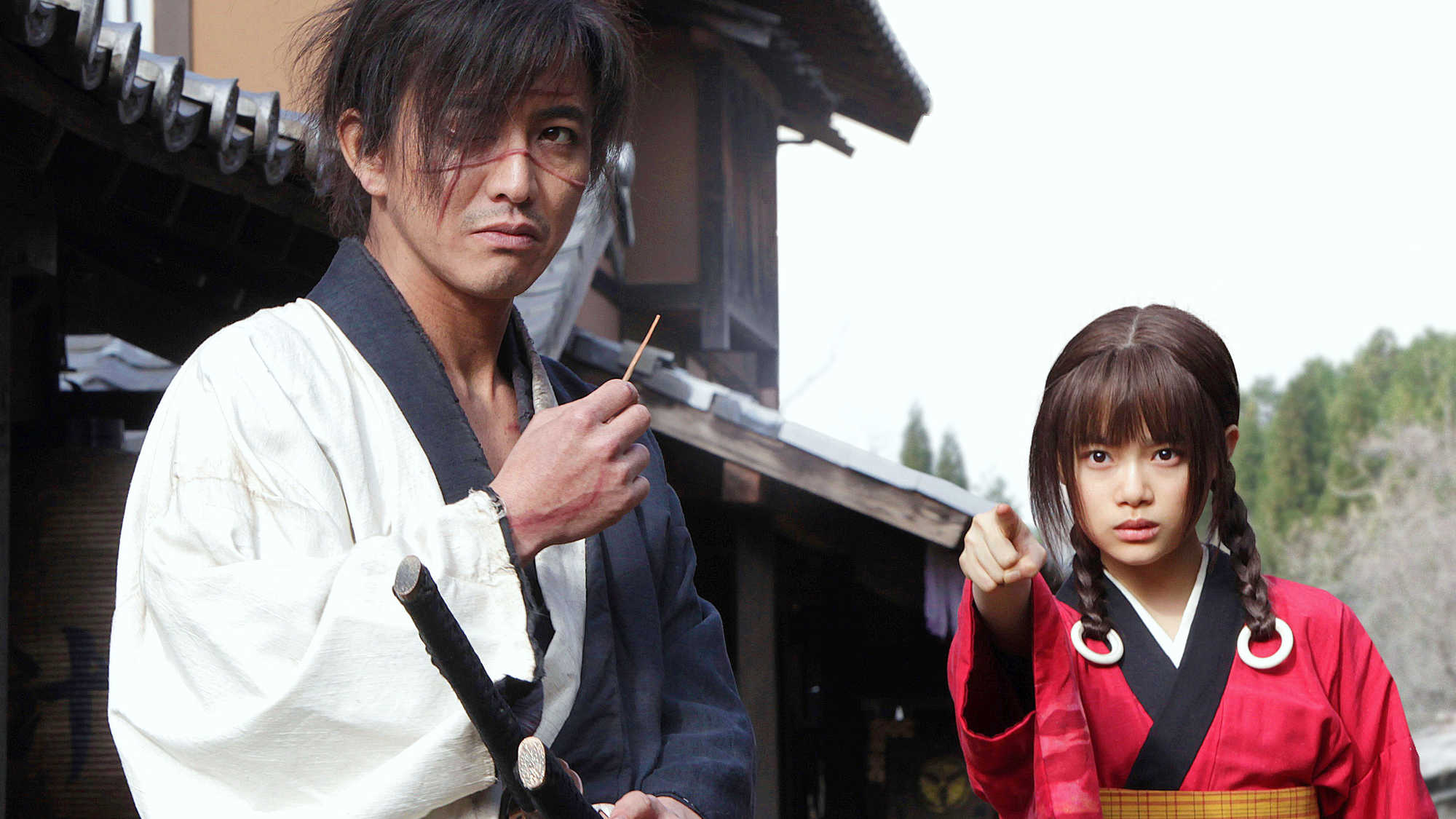
Blade of the Immortal finds Takashi Miike in maximalist mode, using Western money (care of Jeremy Thomas's Recorded Picture Company) to recruit - and kill off - what seems like every last Japanese extra standing, and building a samurai opus that wouldn't altogether embarrass itself if offered up in the same conversational breath as Kurosawa. In a typically Miikean twist, our master swordsman hero - Takuya Kimura's Manji - is literally indomitable, the result of an encounter with a sorceress who fills his body with magic bloodworms that helpfully reattach any limbs or extremities lopped off in the heat of battle, and thereby bestow some form of eternal life upon him. (He's a little like Wesley Snipes' undead avenger Blade then, yes, but also subject to body spasms that recall Shinya Tsukamoto's Tetsuo - and you should be warned, he's also not averse to lopping off his own extremities, safe in the knowledge these will eventually scuttle back to him.) With the narrative and existential problem of mortality taken care of, Miike is freed up to rewrite the code of the samurai movie and refocus his efforts on giving his audience the most carnage for their buck (or yen). This warrior cannot be stopped; his destination really is less important than his journey.

Would it be too much to discern some parallel between our hero and the apparently tireless, prolific filmmaker? When we rejoin Manji after the prologue, with immortality having long taken effect, he's become a jaded husk - someone who's seen too much action for his own good, including the slaying of his mentally frail sister. His arc necessitates finding a reason to live again, something he gains upon becoming a protector to young Rin (Hana Sugisaki), an aspirant samurai introduced being berated by her parents for not being ladylike; within moments, she finds herself orphaned by the tyrannical Anotsu (Sota Fukushi), a glib ponce who's been going around town forcing everyone to put down their big blades and take up fencing instead. (In the autobiographical reading of the movie, Anotsu represents those tastemakers who would insist enfants terribles such as Miike curb their wilder impulses and make nice.) While we wait for this big boss to show himself anew, Miike shuttles on character players to square off against our dashing heroes: a speedy sod who undoes himself by framing his fight with Manji as a series of lessons, a morose-seeming monk who has his own reasons for seeking the samurai out, a kimono-clad babe who leads Manji into a backalley and proceeds to do a lot of damage with a pivoted pike.

Drawn from Hiroaki Samura's manga series, it's episodic - as many of the most enduring samurai narratives, from the Lone Wolf and Cub series to Tarantino's Kill Bill, have been - but Miike makes each episode varied, vivid and visceral; they demand a different approach from hero and filmmaker alike. With the characters set in this holding pattern for some of the first and most of the second hour, a lot seems to be riding on the final showdown. Here, thankfully, the film rather thunderously delivers, with a tremendous dust-up that sees key players hack and slash their way through a crowd of pawns and patsies, and heads - not unlike Once Upon a Time in the West - towards the ushering-in of a new era: a grand setpiece for which Miike's years of restlessness have surely served as their own form of training. "Even killing should be done right!," yells Rin before the start of this spectacle, a creed to which Miike wholeheartedly subscribes, and at its sharpest, this Blade forms an effortless reminder of the sound and fury we've always responded to in our better genre movies. The Foleyed-up swoosh of bodies in motion, and swords slicing through the air to catch flesh: dubious though they might be, these pleasures remain very much immortal.

Blade of the Immortal is available to rent via Amazon Prime and the BFI.

Friday, 1 May 2020

For what it's worth...


My top ten streaming picks (for the week beginning May 1, 2020):

1 (new) The Assistant (15) **** (Curzon, BFI)
2 (new) Ema (15) **** (MUBI)
3. And Then We Danced (15) **** (Curzon, BFI)
4. Toni Morrison: The Pieces I Am (12A) **** (via Amazon Prime)
5. A Russian Youth (uncertificated) *** (MUBI)
6. Moffie (18) *** (Curzon)
7 (new) Why Don't You Just Die! (18) *** (Arrow TV, via Amazon Prime)
8. Ghost Town Anthology (uncertificated) *** (MUBI UK)
9. Who You Think I Am (15) *** (Curzon)
10. The Grand Bizarre (uncertificated) *** (MUBI UK)


DVD/Blu-Ray/Download top ten: 

1 (1) Star Wars: The Rise of Skywalker (12)

2 (2) Jumanji: The Next Level (12)
3 (new) Birds of Prey, or... (15)
4 (new) Spies in Disguise (PG)
5 (4) Frozen II (U) **
6 (3) Sonic the Hedgehog (PG)
7 (new) Star Wars: The Skywalker Saga (12) ***
8 (5) Blue Story (15) ***
9 (7) Knives Out (12) ***
10 (6) Trolls (U)

(source: officialcharts.com)

My top five: 
1. 
Be Natural: The Untold Story of Alice Guy-Blaché
2. 1917
3. Talking About Trees
4. Bacurau
5. Why Don't You Just Die!


Top five films on terrestrial television:
1. The Wooden Horse (BBC2, Thursday, 2.50pm)
2. Ruby Sparks (C4, Wednesday, 1.25am)
3. The King's Speech (BBC1, Sunday, 10.35pm)
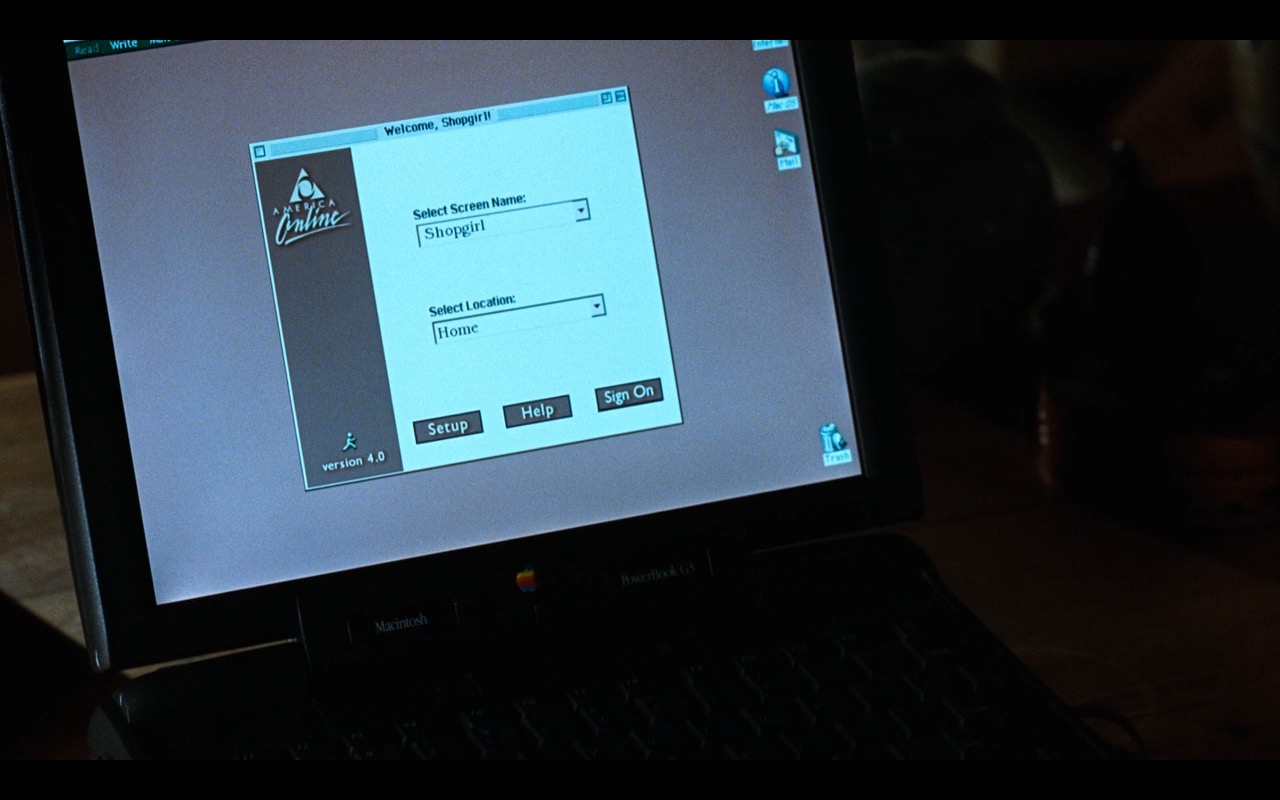
4. You've Got Mail [above] (five, Saturday, 2.10pm)
5. The Mask (five, Saturday, 12.05pm)

Trial: "The Assistant"


Kitty Green's The Assistant will doubtless be claimed as the first properly post-Weinsteinian film, in that it amplifies some of the cries and whispers heard in the run-up to and during the disgraced Miramax chief's recent trial. Yet as a film, it's far subtler and stealthier than that significance-bestowing pullquote would indicate, working - and damning - by implication alone. Quietly, naturistically, Green introduces us to Jane (Julia Garner), the most attentive of several junior staffers whose desks sit outside the office of an intemperate film industry figure. This gatekeeping position affords her an access and knowledge beyond most. She's among the first to hear the tantrums and hissy fits thrown behind closed doors; while tidying the boss's office, she turns up discarded earrings and syringes. Equally, though, the gig opens this young woman up to an uncommon level of stress. She knows she has to do what she does just so, because she's heard the consequences that come with getting it wrong; she's the first person her unseen employer calls to harangue if anything does go awry. The film's tight focus - never leaving this petite figure's side as she manoeuvres around company HQ - is specifically attuned to what this young woman has to absorb and internalise in the course of her daily duties. Its most damning aspect - what's likely to strike viewers who've never seen a Miramax production in their life - is that The Assistant doesn't need the film-biz trappings: the scripts, the production schedules, the passing starlets. This could be any workplace, if things got bad enough.

What Green's film chimes with, then, isn't The Devil Wears Prada or The Intern (movies that cooed: how great it is to be a young woman getting ahead in your chosen field), rather a run of varied new TV shows - as diverse in their methods as Devs, Mythic Quest: Raven's Banquet and Zoey's Extraordinary Playlist - which have arrived at the male-dominated workspace as a site of concern, tension and possible trauma. Green quickly establishes that the mundane Monday shift we're watching may be the one that determines whether Jane becomes a victim or a whistleblower, yet even that threatens to make The Assistant seem more of a conventional thriller than the experiential undertaking that plays out before us. In terms of overt action, there is as little as there is in most offices up and down the land. What we're mostly privy to is the menial work such a position requires: the photocopying and mailsorting, some momentary childcare, as a PA breezes in and sticks her with Their Master's kids, the printing out of headshots. (This is unmistakably a rare American film that bears the influence of Chantal Akerman's feminist landmark Jeanne Dielman...) Yet the subtext of each scene, every task, is overwhelming - we infer what Jane infers, and then have to carry that knowledge into the next fraught interaction. (Those headshots, by the way, are exclusively of twentysomething women.) This isn't a job, we understand, so much as a terrible burden for any conscientious person to have to bear.

In presenting its evidence - or, more specifically, situating it just to the left or right of frame, thereby obliging the engaged viewer to take the next step - The Assistant shapes up as by far the most formally interesting American release so far this year (and, perhaps not coincidentally, the most European-seeming American release since the heyday of the Sean Durkin group that gave us 2011's Martha Marcy May Marlene, in which Garner appeared). It works by a combination of Green's unblinking focus and a sparse, well-organised mise en scène (special shoutout to the company's poster art, immediately redolent of a recognisable variety of tasteful American indie, hung to conceal all manner of non-fictional sins) that allows this camera to drill through this office's closed doors and unsoundproofed walls to spy what's really going on here. 

That the film isn't quite as alienatingly chilly as certain films by Michael Haneke or his acolytes may well be attributable to the excellent Garner, a survivor of TV's Waco and Ozark. She gives us someone intuitive enough to have figured out how this system operates and the extent to which she's facilitating it, and who seems with every grim chore to be weighing up what, if anything, she can do to correct it. Yet Green never for a moment lets us forget what this one woman is up against. As if the condescending looks of the company higher-ups weren't enough to crush the spirit, she writes a painfully brilliant scene in which Jane arrives in the office of a blithe HR suit (Matthew McFadyen) and realises, mid-conversation, that they're coming at an unspoken topic from very different standpoints; worse still, that just in raising the subject, she's effectively placing herself under suspicion. (The scene concludes with the ghastliest of punchlines: the stomach lurches, and the heart sinks.) 

As Jane tentatively feels her way down these corridors looking for an exit strategy, it struck me that The Assistant's Europeanness may owe less to Haneke or Akerman than it does to Kafka - and there is something faintly absurd in the idea of a woman in an abusive relationship with someone who isn't even in the room. (As in any two-bit horror movie, you may start to question why our heroine doesn't just flee - even louder when the office starts to empty out at night, leaving only Him and her.) As recent events have underlined, however, that absence doesn't mean a threatening presence can't be felt, and Green's particularly acute use of offscreen space and sound - the ominous aircon hum that signals an industry functioning as usual, the distant thuds of power being wielded and abused - ensure we feel it, too. Weinstein is in the mix somewhere, certainly. But how many other horrible bosses remain out there, operating beyond oversight, yet to be named and shamed, still wreaking this kind of havoc?

The Assistant is now streaming via Curzon Home Cinema and the BFI.