Friday, 20 September 2019

On demand: "Seahorse: The Dad Who Gave Birth"


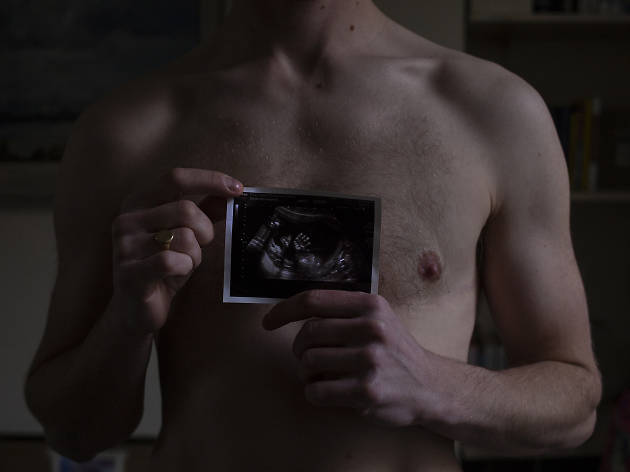
Changing times. Seahorse, the latest film by the British documentarist Jeanie Finlay, is on some basic level your common-or-garden pregnancy narrative, one that begins with great expectations and ends in new life. Yet the route it takes to get from one state to another is somewhat complicated. Freddy McConnell, the subject Finlay encounters getting broody on the seafront in his hometown of Deal, is a trans man, born with female sex organs, who's elected to abandon the course of testosterone he's been put on in order to push through with his life goal of becoming pregnant, and a parent. If that wasn't enough for retired Home Counties colonels to get their head and pipes around, Freddy's partner CJ is a Trinidadian immigrant who self-identifies as non-binary and gay. Everything about this Guardian Films production would seem custom-made to set Daily Mail readers to exploding in fits of spluttering rage. There are shapeshifters among us? Attempting to procreate? In the Garden of England, of all places? Stiff letters have been written to local MPs for less.

The film counteracts the complication, and any attendant consternation, via the straight-ahead simplicity of its approach. As her 2011 breakthrough Sound It Out indicated, Finlay ranks as one of our most empathetic observers: here, she sets us down gently next to a fellow human being going through a potentially fraught moment, and invites us to watch and perhaps learn. Seahorse is at root a study of a man trying to do two things simultaneously, which - as seasoned watchers of the world will be aware - is a tricky thing for a man to do, whatever the configuration of his internal organs. Finlay finds Freddy striving to remain female enough to bring a child into this world while still being the manly man he's wanted to be ever since his teenage self Pritt-Sticked images of Mel Gibson into a scrapbook. (You begin to understand his confusion.) His plight yields plentiful ironies, not least when Freddy sighs "if men had to do this [carry a child], you'd never hear the end of it", but also poignant moments of introspection: Freddy lets something slip when he confesses he hasn't spoken to cis males about his pregnancy, lest they think him "less of a man", not seeming to realise that this gestation period requires the strength of both sexes combined. The gender essentialism Freddy lapses into would be exhausting even without the hormonal ups-and-downs of the fertility process: the whole movie plays like an exhortation to just be who you are, and not worry too much about what others make of you, or about living up to the ideal in your head - though I'll concede this is obviously easier for a fortysomething cis bloke to type than for a younger trans man to put into practice.

At any rate, if it was a miracle that Finlay landed on this semi-miraculous story in the first place, it's as nothing compared to the exemplary sensitivity she displays as she inserts herself into Harley Street examination rooms, or adjacent to Freddy on the couch as someone he thought was an essential part of his support network recedes into the distance. She's always there, part-director, part-midwife, nudging both her subject and the viewer past any complications that may arise; you can't fail to notice the very great trust Finlay fostered with a subject who palpably fears ridicule, and most often seems pregnant with doubt, especially when he dips into the comments below online news stories about others in the same position. (You can imagine.) Another filmmaker might have come back with a more sensational retelling of this story, keeping an opportunistic eye on the heady heights of a Channel Five primetime slot. Finlay, for her part, contextualises Freddy's progress within an everyday reality of shonky washing machines and nappies from Aldi's Mamia line; she leaves in time and space to get our heads around anything we need to get our heads around; and it undeniably helps her cause that, one hormone-induced strop aside, Freddy presents as a total sweetheart who deserves whatever happiness he chooses for himself. It's a sign of how rapidly the world is changing that this exact premise was treated as an utterly inconceivable joke by an Arnold Schwarzenegger movie as recently as 25 years ago. (Did the young Freddy see it? Or was he too busy swooning over the same year's Maverick?) In Finlay's supremely careful hands, this story doesn't seem anything like as preposterous as it did there, or indeed beyond the reach of our understanding - just a couple more square feet of development in life's increasingly rich tapestry.

Seahorse: The Dad Who Gave Birth is now streaming on the BBC iPlayer.

Wednesday, 18 September 2019

North of Uranus: "Aniara"


The distinctively odd Aniara is something like the trash High Life, and I don't altogether mean that as a diss. Where Claire Denis quarantined a cross-section of Eurothesps in the furthest reaches of the galaxy so as to float an academia-ready thesis on the ways men and women interact in confined spaces, here the Swedish duo of Pella Kågerman and Hugo Lilja observe the breakdown of polite society that follows when a craft travelling from a dying Earth to the distant new hope of Mars is knocked irreversibly off-course by asteroids. Naturally, this breakdown will involve a certain loosening of collars and pants; Kågerman and Lilja's own thesis is that if you're heading towards a black hole, you may as well get your freak on. Had it emerged in the 1970s, Aniara would have had twenty minutes of sociology cut out of it by opportunistic distributors and been reissued to certain down-at-heel Soho cinemas under the gaudier title of Interstellar Love Boat or Scandie Swingers in Space. In the version we have, however, the sociology is still very much present, front and centre.

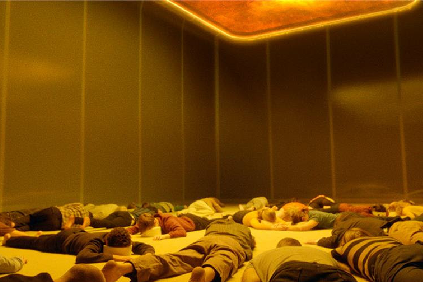
It has an unusual point of first contact in that the heroine observing the ship's drift into potential oblivion isn't some buff, can-do Ripley clone who might notionally steer everybody towards safety but a sensitive, redheaded mindfulness tutor (Emelie Jonsson), in charge of the Aniara's inflight entertainment: a VR room that allows passengers to revisualise their time on Earth, and would be useful pushback against the generally panicky air aboard were it not suddenly overloaded. One consequence of having a protagonist more New Agey than kick-ass is that, for at least an hour of Aniara's running time, there's some uncertainty about where we're headed; this may or may not chime with the filmmakers' existential doubts over where society might be going. Either way, for some while, the shape of the film is the shape of the ship. This is a movie that elects to go looking for a plot along these corridors, allowing the viewer time to note the filmmakers' not inconsiderable feat of logistics, production design and cinematography in getting gleaming yet presumably disparate airports, shopping malls, swimming pools and nightclubs to cohere and convince as the most upwardly mobile cruise liner Earth's finest minds could come up with. Once we're checked in, however, the main activity lies in watching that gleam come ever so gradually off, the roving camera noting the corridors filling up with junk and the guest rooms giving up slashed-wrist suicide attempts and victims, the living lying in their own filth.

There's undeniably an element of Scandinavian bleakness in the mix, but Kågerman and Lilja seem far keener to observe the consolations the remaining passengers take, be that in religion, booze or what those opportunistic distribs would doubtless refer to as how's your father. I suspect they'd cut much of the studied dilapidation to hasten us towards the woman-on-woman shower scene, and the introduction of the cult whose initiation ritual involves everybody stripping naked and holding mirrors over their midriffs. (Hey, whatever floats your spaceboat.) By this point, you'll either be baffled, tickled, turned on or some combination of all three, but you probably won't be bored, as you may have been by, say, Tarkovsky's Solaris. It helps that Kågerman and Lilja have a sense of humour: even the video messages the captain broadcasts to the ship are soon reduced to the production values of an old-school porno. The further out there the Aniara drifts, the more its rudderlessness becomes an issue for the film: there are several sidebars that really don't lead anywhere (and scream to be excised, opportunism or not), and I'm not entirely sure it has the gravity to fully position this ship as another Earth, despite the myriad reasons for despair and hope the camera lands upon. You will at least be diverted for a stretch, though, and you may come away admiring the quiet care and craft Kågerman and Lilja have taken over a film with no message more profound than: fuck it, we're fucked, let's fuck.

Aniara is still playing in selected cinemas, ahead of its DVD release on October 21.

Tuesday, 17 September 2019

1,001 Films: "Big" (1988)


Big is the one in which Brooklyn teenager Josh Baskin (where-are-they-now-file-resident David Moscow) suffers all manner of age- and size-related humiliations - learning the girl of his dreams has a boyfriend ("he drives"), being routinely embarrassed by his parents, and too small for a fairground ride - before an encounter with an unexplained (and unplugged) wish-granting machine turns him, overnight, into Tom Hanks. Hanks-as-Josh immediately absconds with his best friend to the big city, where he lands a job in a toy store and performs a duet on a floor-mounted keyboard with boss Robert Loggia, the bit everyone remembers from seeing it first time round. For all its much-cherished innocence, the film's screenwriters Gary Ross and Anne Spielberg actually locate their fantasy in the same world as kidnappers and pederasts (Mercedes Ruehl, as Josh's distraught mother, spends almost the entire film fearing the worst), and they're clever enough to write scenes that play two ways to two different audiences. At its cutest, this tactic is the exchange in which Hanks invites co-worker Elizabeth Perkins to sleep over, insisting he goes on top (he's talking about bunkbeds). At the opposite end of the spectrum, it's the scene where Hanks-as-Josh and his 13-year-old chum book themselves into a seedy Times Square hotel: a great adventure, if you're a kid yourself, but to more experienced eyes, the scene now looks disconcertingly as though the concierge renting the room does so in the knowledge a grown man will be spending the night with a young boy under his roof. Brrrr.

As a whole, Big is a cooler proposition than it might once have seemed, ranking alongside the same year's Scrooged (set at a TV network) and Who Framed Roger Rabbit? (set in the film business) as another of those Eighties studio productions that even if they weren't explicitly about office politics, as Wall Street, Working Girl and The Secret of My Success were, nevertheless came to reflect the era's steely corporate realities, unfolding as they did within institutions that the studio suits, closer in outlook to the grasping John Heard than the innocent Hanks, could more readily recognise. One caveat is Big's implicit special pleading on the part of creatives within that system (and there's a fair roster of talent gathered here: directed by Penny Marshall, the film was produced by James L. Brooks and Barry Sonnenfeld) for more childlike instinct with which to cut through endless marketing meetings and find other ways to connect with an audience. That it doesn't appear entirely without soul - and it's certainly less cynical than the knockoffs it spawned (Vice Versa, Like Father Like Son) - can be attributed to that, the performances, the not atypical zest in Marshall's direction, and a script that displays some insight into both what it means to be a kid all alone in a grown-up world (Hanks, sobbing in his hotel bed, eventually realises he can now stay up late to watch The French Connection) and what it is we lose as adults. At the scene of Josh's "abduction", two grown-ups can be heard speculating about the boy's predicament. "I bet he ran away," says one. "I wish I could," says the other.

Big is available on DVD through Twentieth Century Fox.

Sunday, 15 September 2019

The rainmakers: "Hustlers"


You pray to the movie gods, and sometimes they listen. I remember emerging from Crazy Rich Asians this time last year in a state of despair at seeing Constance Wu - an actress blessed with something close to the best comic timing in the business, if her participation in TV's marvellous Fresh Off The Boat was anything to go on - obliged by Hollywood to play a blandly aspirational heroine with nothing especially funny to say for herself. This weekend's true-crime drama Hustlers, a tart and unexpectedly substantial morality play from the writer-director Lorene Scafaria, arrives as genuine reassurance. As a struggling stripper known professionally as Destiny, Wu doesn't get material quite as sharp as her day job has habitually generated, but she's been handed an appreciably complex character who wrestles with her own choices; she's not just here for decoration, and there's no sense her talents are being wasted. As the early buzz suggests, Wu isn't the headline story here, however: that would be the return of Jennifer Lopez in the role of Ramona, imperious queen of the stripclub jungle. "Step inside my furs," purrs Ramona to Destiny as the two share a smoke on the roof of their downtown Manhattan establishment - it's the movie's spider/fly moment, yet you can't help but notice how well these two very different women tessellate. The bond forged in this moment is the basis of the scam documented in Jessica Pressler's 2015 New York magazine article "The Hustlers at Scores": how Ramona and Destiny, plus various thong-clad associates, doped a run of suits emerging from nearby financial hubs so as to relieve them of vast amounts of disposable income. Call it a penis tax, and you could probably pitch it to certain Democratic presidential candidates.

What grabs you first about Scafaria's film isn't the people, but the place. Hustlers is properly engaged with the inner workings of a medium-rent strip joint - as engaged, say, as Martin Scorsese was with the inner workings of the Vegas casino in 1995's Casino. Though this 15-rated film demonstrates some of the American mainstream's usual coyness around nudity - doubly odd in and around an environment where nudity is de rigueur - it absolutely nails the absurd tackiness of the girls' workplace: a space where grown women are forced into ridiculous costumes and poses, to the strains of Britney's worst song ("Gimme More", in case you were wondering), so as to fulfil the stunted fantasies of men with more money than sense. There's not a surface to be seen that hasn't been touched by one form of naffness or another. Ramona, notionally the wise elder of the troupe, has a tattoo on her left shoulder that looks like a bad case of necrotising fasciitis; the whole movie, indeed, merits an award for Best Worst Make-Up. The funniest line, laced with bathetic irony, follows from the sight of a visiting Usher and his entourage showing the girls with champagne and dollar bills. Destiny, narrating these events, dreamily trills "For one last time, everything was glamorous and cool", and we're struck by what a weird, lowly idea of glamour this is, even with the actual Usher gamely popping by to make it rain. Hustlers comes out of a school of feminism that recognises a stripper's life is pretty grim even before the market fluctuations that leave them vulnerable to doing an awful lot more for a whole lot less money. What Destiny's memories amount to is this: we saw worse men than Usher.

The scam central to the film gives these girls self-worth and a sense they're not alone in their plight - Hustlers is, among other things, a poppy unionisation fable - but the Scorsese comparisons that have trailed the movie since its premiere stem from Scafaria's ambivalence around her protagonists: she's not fully behind them. You could easily imagine a version of Hustlers that unspooled like a distaff Magic Mike: some uncritical celebration of sisterhood and girl power that would allow its doping divas to whoop and holler and sashay off into the sunset, leaving a trail of spent, pathetic men in their wake. The Hustlers on release is not that movie. True, Scafaria dresses her leads up, lavishes them with close-ups and lays out the circumstances that drove their characters to crime, but she never fully endorses their actions, and that distance allows a measure of useful ambiguity to hover around the narrative. It's embedded in the framing device, where we find Destiny being interviewed several years later by an unsmiling Pressler-surrogate journalist (Julia Stiles), who cuts her subject's feelgood montages short with such probing prompts as "So, getting back to the drugging...". The distance between these two women - the college-educated professional and the single mother taking desperate measures to drag herself up - is an oddly haunting note to inject into what's been positioned as the season's foremost campy-vampish party movie; it's a rare framing device to make a point as well as cue up exposition.

Elsewhere, Hustlers yields the connoisseurial pleasures of watching a film proceed in stacked heels along the contours of so much male-authored, male-centred crime drama. The scam stalls when Ramona recruits a junior employee - an Elisha Cook Jr. in lipstick - whom the circumspect could see is a jittery liability; cinephiles will note how the marked contrast in temperament between the essentially sensible Destiny - who does what she does to keep a roof over her ailing grandmother's head - and the fearless-bordering-on-reckless Ramona isn't all that far removed from that separating Johnny Boy and Charlie in Mean Streets. Though she curates a soundtrack that leaps dynamically from Scott Walker to Janet Jackson (and juxtaposes Big Sean's immortal "Dance (A$$)" with a lot of Chopin), Scafaria's filmmaking isn't quite as freewheeling and distinctive as Scorsese's has been allowed to be: she works the slo-mo settings as Ramona does the pole, but there isn't a single shot in the movie that will lose much in the eventual inflight version. And I wonder whether one of the reasons it got greenlit and given the push it's so far received is not specifically that it's about women, but that it's about money, a subject the suits more readily understand. Yet whatever the reasoning, a door was opened here, and something worthwhile has emerged: an atypically smart multiplex option, in which a promising director gets to do a workable stars-in-her-eyes impersonation of one of the great American filmmakers, while a terrific ensemble act admirably tough and salty. What's not to like?

Hustlers is now playing in cinemas nationwide. 

Friday, 13 September 2019

For what it's worth...


Top Ten Films at the UK Box Office 
for the weekend of September 6-8, 2019:

1 (new) It: Chapter Two (15) **

2 (1) Once Upon a Time... in Hollywood (18) ***
3 (3) Angel Has Fallen (15) **
4 (2) The Lion King (PG)
5 (new) Polityka (15)
6 (4) Dora and the Lost City of Gold (PG) ***
7 (6) Toy Story 4 (U) ***
8 (5) Fast & Furious: Hobbs & Shaw (12A) **
9 (8) Casino Royale - Secret Cinema (12A)
10 (9) Good Boys (15)

(source: BFI)

My top five: 
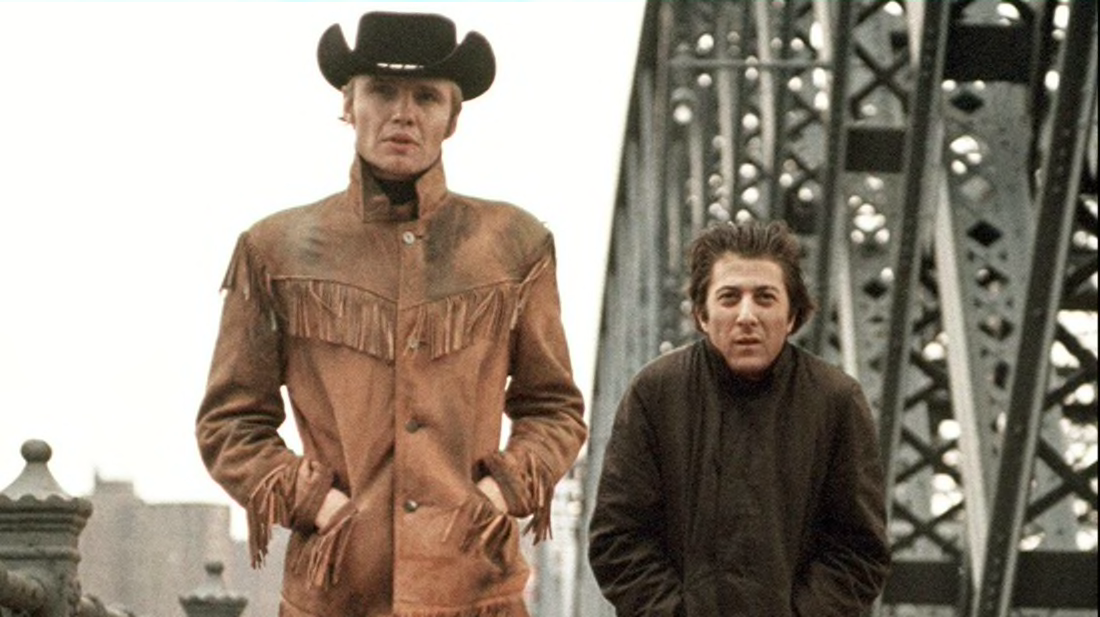
1. Midnight Cowboy [above]

2. For Sama
3. Bait
4. Inna de Yard: The Soul of Jamaica
5. Hustlers


Home entertainment Top Ten (DVD/Blu-Ray/Download): 

1 (1) Avengers: Endgame (12) **

2 (new) Pokemon: Detective Pikachu (PG)
3 (new) John Wick: Chapter 3 - Parabellum (15) ***
4 (6) It: Chapter One (15) ***
5 (new) The Avengers: Assembled (12) **
6 (4) Captain Marvel (12) ***
7 (new) The Hustle (12)
8 (2) Hellboy (15)
9 (3) Shazam! (12) **
10 (27) Long Shot (15) ***

(source: officialcharts.com)

My top five: 
1. Only You

2. Wild Rose
3. The Sisters Brothers
4. Benjamin
5. John Wick: Chapter 3 - Parabellum


Top five films on terrestrial TV:
1. King Kong (Saturday, five, 1.30pm)
2. Embrace of the Serpent (Monday, C4, 1.25am)
3. The Guest (Wednesday, C4, 1.55am)
4. Wallace & Gromit: The Curse of the Were-Rabbit (Saturday, BBC1, 5.20pm)
5. She Wore a Yellow Ribbon (Sunday, BBC2, 1.30pm)

"For Sama" (Guardian 13/09/19)


For Sama *****
Dirs: Waad al-Kateab, Edward Watts. Documentary with: Waad al-Kateab, Hamza al-Kateab, Sama al-Kateab. 100 mins. Cert: 18

Unconstrained by notions of balance, non-fiction cinema has actually done a more complete job of describing the devastation wrought by the Syrian conflict than swathes of the broadcast and print media. Sean McAllister’s A Syrian Love Story plotted the indelible ups and downs of a couple forced into European exile; Matthew Heineman’s City of Ghosts starkly laid out the agonies of those citizen journalists trying to break the story internationally.

Those films achieved their (powerful) effects through an awareness of distance, whether between director and subject or subject and homeland. Framed as a mother’s letter to her young daughter, and opening with footage of an airstrike as experienced from inside the target zone, this week’s exceptional For Sama drops us from the off into the very thick of things.

In form, the film resembles home video from a bombsite. Waad al-Kateab took up the camera in 2012 to document the protests of her fellow students against President Assad; she kept filming as Aleppo fell under siege, turning from the carnage only to record her growing affection for a doctor, Hamza, and the birth of their first child Sama.

These vignettes, now stitched together with the British filmmaker Edward Watts, comprise the most compelling screen study yet of how this conflict blitzed everyday life. The new mother struggles to put the youngster to bed as terrifyingly loud shells explode; she notes the insecurity that comes from seeing friends shot down and your block pummelled into craters. Sama derives from the Arabic for sky, yet here the name becomes synonymous with hope, a promise of better times to be protected at any cost.

That risks making For Sama sound more sentimental than its predecessors, yet the scared, often scarred children passing before the lens would indicate that Syria has scant place for sentimentality. Even the sleepy-eyed Sama seems to be living on borrowed time: “Lots of airstrikes today,” mum tells baby, in one striking normalisation of conflict, “but they didn’t hit us, yay!”

Sifting six years' worth of rubble, al-Kateab turns up beauty (snowfall offers a fleeting do-over) and one earthly miracle to set alongside the horrors, but horrors there are. If the extremes involved preclude easy viewing, it remains profoundly moving and unignorable, whether as proof of Assad's indiscriminate barbarism, or the unfailing ability of this world – and its most engaged cinema – to break your heart and sear your soul.

For Sama opens in selected cinemas from today. 

Kill your darlings: "It: Chapter Two"


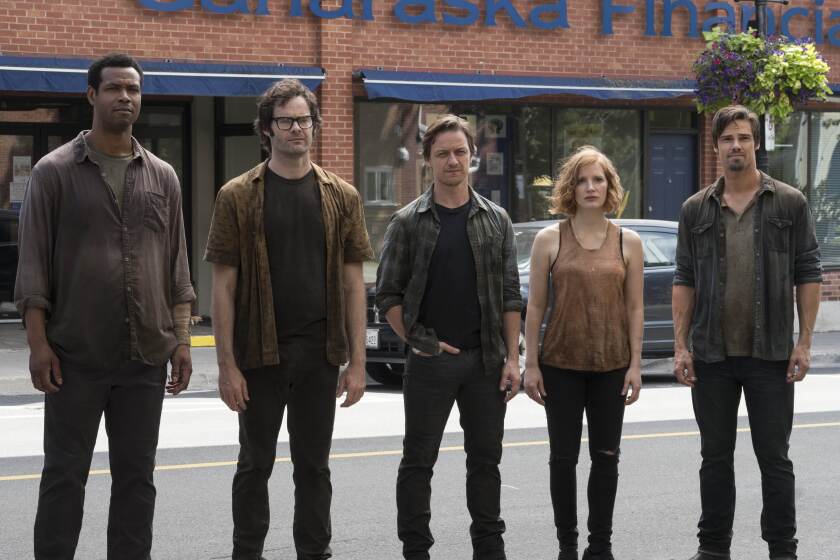
It became clear, upon the closing-credit revelation that 2017's first It movie was in fact to be known as It: Chapter One, that Warner Bros. were determined to milk Stephen King's cash clown for all it might be worth. It: Chapter One's $700m box-office haul was such that the studio has had precisely zero qualms about releasing It: Chapter Two at eleven minutes shy of three hours, and that fact alone would be enough to indicate that the system is still mired in a crisis of storytelling - that judiciousness and selectivity have been replaced by an idea of giving fans what they want at whatever length. (It enters the multiplex in the wake of extended cuts of Avengers: Endgame and Spider-Man: Far from Home, and a director's cut of Midsommar, which I wouldn't wish on my worst enemy.) It: Chapter One, set in 1989, was styled as a nostalgic coming-of-age tale, which explained why so much of it looked indistinguishable from teenage sleepover fare. It: Chapter Two shifts ahead to 2016, as the now grown-up Losers' Club return to small-town Maine, variously traumatised, to confront the ghoulish Pennywise and demons beside. It has its good points: returning director Andy Muschietti demonstrates a wacko skill for setpieces, and it's been very classily cast. It also, however, trails a lot of baggage that hasn't been especially well packed in the process of adaptation: it meanders into areas that don't feel particularly urgent or relevant, and feels terribly ungainly even when it isn't dragging its feet. It may all have played out far more elegantly on the page.

It is, in many ways, a film composed in the image of its inspiration. It's a doorstopper of a movie, assembled by fanboys who cannot bear to reach for the red pencil or the trimming shears; it has to sprawl in a bid to accommodate not just multiple characters but a variety of impulses that cannot finally be reconciled. It: Chapter Two wants to play to kids and grown-ups simultaneously; it gestures towards being a serious meditation on trauma, that motor for so many 21st century narratives, yet it can't resist covering the sites of that trauma in ooky-booky funhouses. It knows that long stretches of introspection where stunted, fragile human beings work through their issues aren't the kind of blockbuster escapism punters now gravitate towards on a Saturday night, so it keeps rerouting everybody towards setpieces that aim for the disturbing, sometimes get there, but which more often than not undercut their own effects with self-satisfied, smirking payoffs. (It seems significant that two of the Losers' Club have grown up to become a hack writer and a hack comic.) It occupies so much space that it even starts to tessellate with what I guess we now have to call the Marvelisation of Hollywood: the bloated running time born of indifferent exposition, the dispiriting air of thespwaste, the winking cameo from the creative prime mover, the final tag-team face-off against an apparently invincible big bad.

It has, however, none of the MCU's machine-tooled professionalism, and here's where It gets interesting and revealing. (It is, if nothing else, the film that explains why Warners' DC movies have been such a violently mixed bag.) Its uncertainty of tone - veering in the course of a single scene from Cronenbergian body horror to the stalest of comedy bits - is diverting for a while, confounding thereafter, and eventually somewhat exhausting; it's a big-budget horror movie that feels both postmodern and haphazard-bordering-on-hapless, like a Scream made by dumbos. It's certainly not much of a vehicle for the actors, who after their initial reunion (around a Chinese restaurant's lazy Susan that cleverly chimes with group-therapy circles) get split up and forgotten about in turn, and see their efforts to dig deeper into their characters' neuroses undermined by a camera keener to land upon the next punchline. It falls to Bill Hader, arguably the most versatile actor currently working, to make the most of these cheap yuks; he will have better writers in his career than Gary Dauberman (who's kept himself busy churning out WB's Annabelle bunkum), but here at least is someone with the flexibility to hang onto a malfunctioning fairground ride such as this as it threatens to break away from its moorings and careen through Screens Six, Seven and Eight. It is, however, a curious thing to witness performers of the calibre of James McAvoy and Jessica Chastain being yanked around by plot mechanics: here is the kind of passivity that only follows from the dangling of big paycheques.

It heads towards anticlimax, bolstered (as much of the film is) by Paul D. Austerberry's superior production design. Even when the Losers' Club reassert themselves, it involves not much more than namecalling in a spooky old property: Muschietti has basically spent two years chasing us a long way round some haunted houses with a combination of sticks and stones. It strikes me that, however many gazillions of dollars the new movie takes, it's the 1990 miniseries that will endure as the superior adaptation of the book: workmanlike and hobbled by the standards and practices of US network television as it was, it was far more self-contained, made for a clearly defined audience by creatives who'd been forced to resolve some of the tensions Muschietti's movies simply splurge across the screen. It wasn't caught pandering to teenagers, as these movies are, and might thus retain the illicit charge of a forbidden text. (It also had Tim Curry, a grown man who made Pennywise so much more unnerving than Bill Skarsgård's toothy goofball.) It: Chapters One and Two are closer to a carnival that pitches its tents in your backyard, and barely stops barking: even the most committed spectators are going to wind up too tired to run away with it. It may just stand as a prominent example of what happens when producers and executive producers turn their backs, offer no notes and cancel the test screenings, confident they have a hit on their hands, but it doesn't feel directed so much as catapulted into our line of vision. It generates a kind of energy that will just about sustain you through 170 minutes, but it is, finally, far too messy to be in any way commendable.

It: Chapter Two is now playing in cinemas nationwide.