Sunday, 4 August 2019

1,001 Films: "The Dead" (1987)


The NFT's John Huston retrospective draws to a close with a reissue of the director's 1987 swansong The Dead, an adaptation of James Joyce's short story, set in 1904 around the annual gathering of Dublin's well-to-do at the home of three sisters. Cracks are beginning to show in the social veneer: one guest copes with the event by getting tipsy, another leaves before dinner to hear the radical speaker James Connolly, and - as is evident from the looks on their faces during a recitation of the poem "Broken Vows" - all is not quite well in the marriage of society lady Gretta (Anjelica Huston) and husband Gabriel (Donal McCann), a journalist who's perceived as a sellout for writing for "that English rag", the Express. Everything is revealed in the final act's monologues, which speak of solitude in the face of the evening's surface bonhomie. Though far livelier than you'd expect from a period drama where the action is limited to a couple of twirls around the parlour and a walk to the dining room, it's clear this isn't the pugnacious Huston who made The Asphalt Jungle and The Treasure of the Sierra Madre. A sense of finality sits over The Dead from its title onwards: it's a last grasp at literary respectability, perhaps, from a creative who'd previously dabbled in pulp (The Maltese Falcon, Beat the Devil, Casino Royale) and more grandiose fictions (Moby Dick, The Bible), or Huston's attempt to reconnect with his Irish roots. However you approach it, it stands as one of the more successful adaptations of Joyce's prose for the screen: a melancholy, haunting and very fine send-off.

(Sunday Telegraph, December 2006)

The Dead is not currently available in the UK.

Saturday, 3 August 2019

On demand: "Ibiza: The Silent Movie"


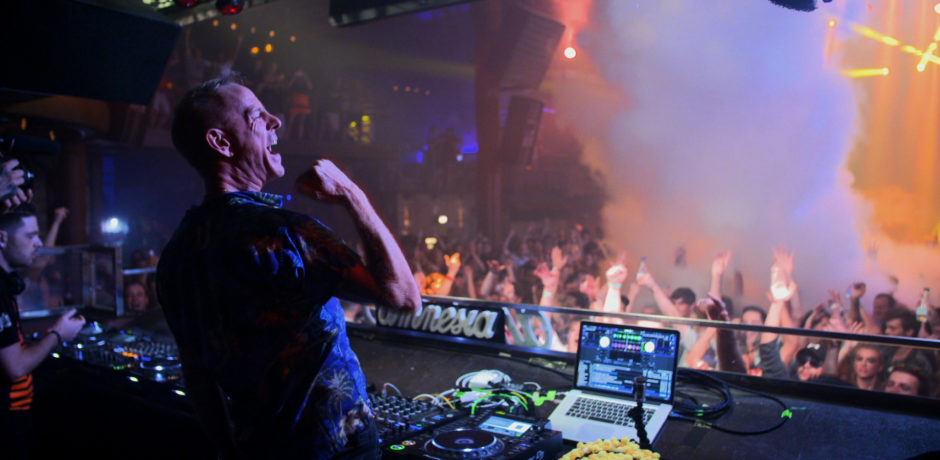
Julien Temple's latest collage-film, Ibiza: The Silent Movie, mixes and matches the methods of his earlier evocations of London (The Modern Babylon) and Glastonbury, plotting a course for a new Bohemia and, once there, attempting to ground its hedonism in some form of history. Here is a roughly chronological account of the so-called White Island's development, spanning the centuries that separate the Phoenicians from Phoenix, and the and the ancient Egyptian god of movement Bes from our very own god of movement Bez, and at every turn striving to sort proven Ibizan fact from those fuzzy-headed fictions brought back to the mainland by sunspotted holidaymakers who had a bit of a mad one at Amnesia. The naked hippies are present, yes, but we also get much more besides. It is, as the subtitle suggests, largely free from spoken words, with intertitles instead deployed to steer our gaze, and a playlist of club classics selected by Fatboy Slim placed over the top of those. Much of the fun stems from this cheeky commingling of sound and image: it's now apparent Temple, whose career was thought dead in the water after the expensive, high-profile flop of 1986's Absolute Beginners, has been comprehensively re-energised by three decades of postmodernism and the emergence of mash-up culture.

Thus, a Phoenician beset by demons and snakes in one Ibizan cave can be seen here waving his hands in the air to the strains of Mory Kante's mid-80s floorfiller "Yeke Yeke"; a Moorish king appears to cast an ambivalent eye over bikini-clad revellers in a megahotel's swimming pool; and the encroaching Spanish Civil War plays out, as did a nocturnal security patrol in Temple's Glastonbury, to a remix of Primal Scream's "Swastika Eyes". I say the film is roughly chronological, because Temple's position has always been that nothing ever quite disappears; in this worldview, the energies loosed by one generation come to be recycled or reappropriated by another, and so echoes of the past live on in the present, like the humming left behind in your ears at the end of a four-hour DJ set. If there's been an evolution in Temple's filmmaking, it's that, rather than working exclusively with found-footage, as he has done in his previous non-fiction, his latest sees him using a modest European arts-channel budget to stage cursory historical recreations of his own around contemporary Ibiza: he clearly amused himself in laying out the particulars of the island's first nightclub, set up in the Thirties by exiled Dadaists in an abandoned windmill, with an unknown DJ spinning banging 78s. These are folded into a relentless flow of imagery, where historical fact holds no greater weight than the emojis with with Temple dots his frames.

As some of the Tweets coming in during last night's terrestrial TV premiere made clear, the Temple touch risks accusations of glibness, especially when the story of Ibiza washes dead bodies onto these shores. Yet it also makes for substantially livelier viewing than the conventional talking-head school of historical documentary, edited to a propulsive, increasingly frenetic beat, and given to making unexpected, impulsive, provocative connections. A survivor of the punk wars, Temple never shies away from the island's underlying tensions, honing in on those points in time and space where these images smash up against one another - past versus present, rural against commercial, residents versus tourists - and he puts his finger on at least one properly chewy irony: that the dreamy paradise we now know as Ibiza was a construction of the generally repressive Franco, who visited the isle in the years immediately before the Civil War, and saw its potential as a pretty picture he could sell to the world. Perhaps only Temple, frantically cutting, sampling and juxtaposing, might have drawn a link between the Generalissimo and the later Ibizan resident Elmyr de Hory, the forger about whom Orson Welles made F for Fake; and the film's irreverently inventive speculation is such we might even wonder whether something of Franco's jackboot mentality has persisted into certain doormen perched outside Pacha today.

Ibiza: The Silent Movie is now streaming via the BBC iPlayer.

Friday, 2 August 2019

For what it's worth...


Top Ten Films at the UK Box Office 
for the weekend of July 26-28, 2019:

1 (1) The Lion King (PG)

2 (2) Toy Story 4 (U) ***
3 (3Spider-Man: Far from Home (12A) ***
4 (new) Andre Rieu's 2019 Maastricht Concert - Shall We Dance? (U)
5 (4) Yesterday (12A) **
6 (new) Horrible Histories: The Movie - Rotten Romans (PG)
7 (5) Annabelle Comes Home (15)
8 (new) The Current War (12A)
9 (7) Casino Royale - Secret Cinema (12A)
10 (8) Aladdin (PG)

(source: BFI)

My top five: 
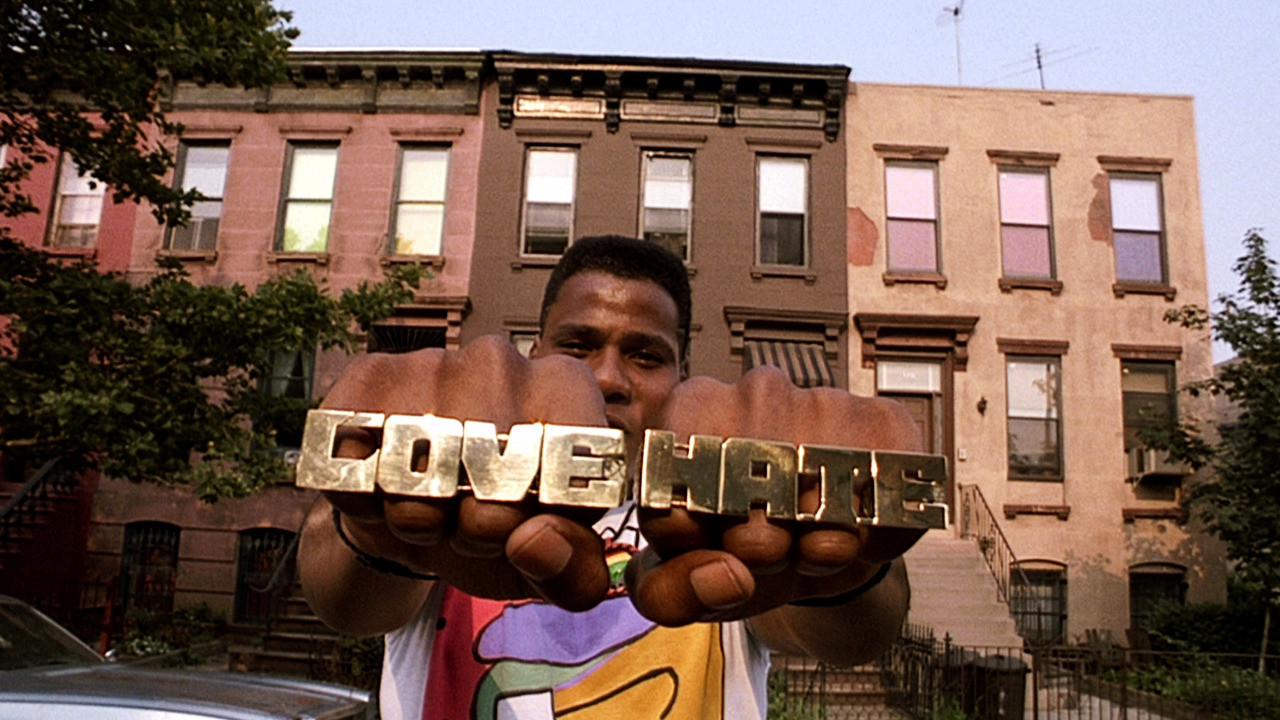
1. Do the Right Thing [above]

2. Oldboy
3. Photograph
4. The Chambermaid
5. Only You


Home entertainment Top Ten (DVD/Blu-Ray/Download): 

1 (2) 
Alita Battle Angel (12)
2 (1) Captain Marvel (12) ***
3 (new) Dumbo (PG) **
4 (3) Fisherman's Friends (12)
5 (6) Mary Poppins Returns (U) ***
6 (4) Spider-Man: Into the Spider-Verse (PG) ***
7 (12) The Lion King (U) ****
8 (9) How to Train Your Dragon: The Hidden World (PG)
9 (8) Bohemian Rhapsody (15)
10 (5) Us (15) ****

(source: officialcharts.com)

My top five: 
1. Us

2. Ash is Purest White
3. Birds of Passage
4. The Hole in the Ground
5. The Kindergarten Teacher


Top five films on terrestrial TV:
1. Heimat: Home from Home - Chronicle of a Vision Part Two (Saturday, BBC2, 12.25am)
2. Brooklyn (Saturday, BBC1, 10.20pm and Friday, BBC1, 12.15am) 
3. About a Boy (Sunday, ITV, 1.30pm)
4. A Most Violent Year (Friday, BBC2, 11.35pm)
5. Trance (Thursday, C4, 1.30am)

A vengeance sublime: "Oldboy"


To think back to Park Chan-wook's baroque triumph Oldboy, reissued this week to mark the fifteenth anniversary of its arrival in UK cinemas, the mind has first to overcome the obstacle of its leaden English-language remake, the one dull thing Spike Lee has done this millennium. (You feel he only did it to curry favour with the Universal suits who'd backed Do the Right Thing - itself returned to our screens today, on the occasion of its 30th anniversary - and would go on to back BlacKkKlansman.) That dud was doubly bizarre, as the original was nothing if not an eruption of dark, funny, transgressive energy, a self-contained metaphor for a film industry, and perhaps an entire filmmaking continent, coming out swinging after many decades of quietude. In these frames, and in this moment, anything seemed possible: a man could be plucked off the street and locked up for fifteen years, then released with a similar arbitrariness to wreak havoc first on live squid with his teeth, then on an entire corridor of ne'er-do-wells with a clawhammer. (British cinemagoers will recall that the movie first emerged under the late, lamented Tartan Films' Asia Extreme banner, the distribution strand that brought us Park's other Vengeance films, as well as the Ring movies and Takashi Miike's Audition. Here were movies to toughen us all up.)

Revisiting the film this week, I was reminded of how, for a while, around the time of Oldboy and 2002's Drunk on Women and Poetry, its spectacularly dishevelled leading man Choi Min-sik seemed just about the most dynamic actor in the world: an unkempt hairball acting on instinct alone, barrelling into and out of scenes, apparently as much a danger to himself as he was to others. I was reminded of Park's gift for pulling images out of nowhere - Choi's Dae-su unfolding out of a regular-sized suitcase, the giant ant riding the subway, the squid tendrils protruding from the comatose Dae-su's mouth - while spotting intriguing new details: the genteel windmill visible through the (trompe l'oeil?) window of Dae-su's cell, the mass surveillance system that suggests the protagonist isn't the only victim of these kidnappings. Part of Park's greatness is that he fills in this corroborating detail, then moves on - he may have resisted making sequels, but with the film business being what it is, you can bet others would have been tempted, as Lee was to remake it. Wit offsets the brutality, and a lithe sinuousness counteracts the blunt force trauma. An exhausted Dae-su fights his way to the end of that corridor, only for a lift door to ping open, revealing more thugs; Park then cuts to Dae-su exiting the same lift, pushing past his assailants' unconscious forms.

Such editorial brilliance helps to squeeze an awful lot of plot and action into just under two hours, and enables the revelations of the final half-hour to hit home with the power of Greek tragedy: one especially horrendous sound effect still made this viewer, jaded by fifteen subsequent years of screen violence, shrivel in his seat, though the film finishes on a grace note all the more moving for everything we've been through. (Can't resist: this is the vengeance opus the windily affectless Tarantino thinks he's been making these past twenty years.) Certain elements look a little dated in 2019 - the characters' use of chatrooms to track one another is comparable to the Ring movies' reliance on rattly old VHS tapes; and though the narrative makes a point about the ungallant ways in which men are prone to treating women, an eyebrow might now be raised at the film's own manhandling of its various damsels-in-distress - yet the whole remains one of the wildest rides the cinema has given us this century. Park has completed some very stylish and striking work in the years since - the terrific vampire romance Thirst, the underseen Stoker, in stretches of The Handmaiden, and most recently The Little Drummer Girl for TV - yet he's never ventured quite as far out there, nor matched Oldboy's intensity, simultaneously animal and poetic.

Oldboy returns to selected cinemas today, ahead of its DVD rerelease on August 26.

"The Angry Birds Movie 2" (Guardian 02/08/19)


The Angry Birds Movie 2 ***
Dir: Thurop van Orman. Animation with the voices of: Jason Sudeikis, Bill Hader, Awkwafina, Leslie Jones. 96 mins. Cert: U

Sony Animation’s The Angry Birds Movie surprised many three years ago by a) not being terrible, and b) actually being quite fun in a disposable way – the zappiest attempt at brand extension this side of The Lego Movie. The sequel tempts fate by pausing the innately funny (because wholly illogical) war between birds and pigs in order to pit both factions against new predators from the neighbouring Eagle Island. Yet incoming director Thurop van Orman approaches this expanded universe with something of the visual ambition of Pixar’s non-feathered Brad Bird, and a restless, playful spirit reminiscent of sometime Sony employees Lord and Miller’s Cloudy with a Chance of Meatballs films. The birds are no longer as irate as they once were, but the franchise appears to have levelled up.

The original itched to get past its origin story and onto pixelating the game’s parrot-slinging. Film two pushes further into action territory, diversifying its carnival of candy-coloured animals – again headed by fiery avian Red (voiced by Jason Sudeikis) and porcine blowhard Leonard (Bill Hader) – with such newcomers as Awkwafina’s clever bird Courtney, then staging a digimated Eiger Sanction as our heroes scale the eagles’ ice fortress to face the vengeful Zeta (Leslie Jones). Three credited writers have been let off the leash in truffling for gags, as evidenced by a B-plot that pitches three fledglings into space while recovering stray eggs: essentially a replay of the Ice Ages’ proven squirrel-and-nut business, but with ample scene-by-scene invention to distinguish it.

As in its predecessor, a lot gets thrown at the screen – Nicki Minaj is but the 19th billed voice artist – and not everything zings: there are some (perhaps knowingly) lame references to dabbing and “resting bird face”. Yet this is one sequel you can’t fault for trying, and the duds are outnumbered by many more jokes that are just cute, smart or screwy enough to nudge out a laugh. The budget licences at least a half-dozen of the choicest, funniest soundtrack cues of any recent animation: the use of Jimmy Buffett’s “Margaritaville” over a montage depicting frozen Eagle Island life is swiftly topped by a Paula Cole nod in a Nineties-set flashback. Still no word on why the pigs are green, but even that now looks intrinsic to how these loony toons have upturned convention and expectation.

The Angry Birds Movie 2 opens in cinemas nationwide today.

Tint necessarily so: "Hard Paint"


The Berlin Film Festival's annual Teddy awards have generally proven a reliable guide to worthwhile developments in LGBTQI+ cinema: such luminaries as Pedro Almodóvar, Todd Haynes and Derek Jarman took home prizes in the awards' earliest years, and over the past decade the Best Feature gong has gone to The Kids Are All Right, Keep the Lights On and A Fantastic Woman. Last year's winner Hard Paint has social significance to spare - it may be among the last queer-themed films to emerge from Brazil for a while, now that the would-be strongman Bolsonaro has put the nation's film industry on lockdown - yet in and of itself it suggests the 2018 competition was something less than fierce. You get a feel for its pros and cons from its first two shots. In the first, a young man lies spent and asleep on a live Internet feed, commented upon by those who've just seen him perform: welcome, the film says, to the wild new frontier of camming, that cash-for-flesh endeavour every bit as hung up on the pleasures of looking as the cinema itself. That's encouraging enough, but the second shot, perched on the back of our sleepy protagonist's head as he goes about his daily business offline - a perspective originated by the Dardenne brothers, and since worn thin through arthouse repetition - suggests we'll be entering this world in that ever-so-slightly academic, bloodless, secondhand fashion that tends to be better received at festivals than it ever is by real audiences. (The closing images, too, will be half-inched, this time from a prominent homoerotic release of 1999.)

The experience of watching Hard Paint is that of waiting for a showdown that never comes. The antagonists are in place: the whey-faced, socially awkward Pedro (Shico Menegat), a college dropout who reinvents himself after dark as Neon Boy, daubing his lithe torso in fluorescent paint for the benefit of onlooking strangers; and the older Leo (Bruno Fernandes), a trainee dancer who performs a more assured and gymnastic variation on the same routine, and has the energy to keep gyrating long after Pedro has nodded off. You can see the thriller lurking in this set-up, one that would deftly underline how, even in this relatively new and niche field of capitalist endeavour, the competition is ruthless. Instead, this pair fall into a tepid, lopsided friendship, which becomes more intimate away from the laptop's glare: some banally staged sex scenes feel like vengeance for a half-century of bland zipless fucks in straight movies. Though it yields one semi-clever sequence - when a rift in this relationship is accentuated by a punter paying for the boys to wrestle naked - the camming is but a salacious selling point, a zeitgeisty hook on which to hang yet another cautious coming-out narrative, and a means of lending visual oomph to some otherwise dourly naturalistic images. As a character study, it's sunk almost from the off by Menegat's infuriatingly mopey performance: Pedro is barely less passive once he's woken up. You wouldn't fork out to watch this dope cam for ten minutes, so why pay to see him in a two-hour movie?

Hard Paint opens in selected cinemas from today, ahead of its DVD release on August 26.

Thursday, 1 August 2019

From the archive: "The Diary of a Teenage Girl"


Adolescence is, as that early Tom Cruise vehicle grasped, a risky business. The Diary of a Teenage Girl has already stumbled while making that tightrope crossing separating the accessible, age-appropriate 15 certificate from the more restrictive 18 – a censorial ruling that seems a shade harsh, even if it allows Diary to continue the long and educative tradition of Films Curious Kids Will Just Have to Try and Sneak Into.

Writer-director Marielle Heller is altogether more poised in negotiating the fallout from 15-year-old Minnie Goetz’s decision to give up her virginity to her mother’s boyfriend. Adapting Phoebe Glockner’s in-every-sense graphic novel, Heller’s film actually provides more context for this act of transgression than Andrea Arnold did in 2009’s 15-rated Fish Tank, which proposed it was enough for a young girl to be in the same room as the apparently irresistible Michael Fassbender.

Here, we’re taken back to the San Francisco of 1976, where the ethos of free love is still hanging, albeit somewhat forlornly, in the air. With hippy-dippy mom Charlotte (Kristen Wiig) away sourcing coke with her progressive pals, Minnie (Bel Powley) can’t help but snuggle closer to Charlotte’s live-in lover Monroe (Alexander Skarsgard); driven by her growing curiosity with regards to her own form, their rough-housing and sofa-sharing soon develops into something more than PG-13.

Viewed objectively, what the film is depicting is statutory rape, which may have factored into the BBFC’s thinking; still, to do so would be to disregard Minnie’s perspective, and the fact this deeply subjective, empathetic film frames this life-altering experience as very much a choice made by its heroine. (I could also float into evidence my suspicion that a lot of teenage girls will have fantasised about losing it to Eric from True Blood.)

At any rate, as a coming-out platform for Brit actress Powley, Diary proves far more satisfying than May’s flimsy A Royal Night Out. With her vestigial puppy-fat and big blue eyes taking everything in, she has the look of a teenager rather than a catalogue model – and of the sensible one in a classroom of Farrah Fawcett wannabes, which makes her decision to take the plunge with her mom’s man, rather than any of her contemporaries, even more transgressive.

Heller’s particularly attuned to the consequences of this cherrypopping, when hormones are replaced by emotions, complications kick in, and the needy little girl emerges, naked and trembling, from behind the façade of the young urban sophisticate. Minnie’s “I think we need to talk about our relationship” gets a laugh because it sounds funny coming out of the mouth of one so immature, but the laughter dies on the lips with her lover’s dismissive response, as Monroe becomes the second father figure to cast this child away, and the first to have slept with her beforehand.

The emotions and experiences feel lived-through; perhaps it’s only the psychology that has been toned down for wider consumption. Heller certainly knows how to dramatise the power of female sexuality, and she wrestles with one of feminism’s core conflicts – that between girls and mothers held to different standards – without turning the spectacle into anything so crass as a knock-down, drag-out catfight. Still, I think the heroine breaks more rules than the movie.

Where Catherine Breillat – no stranger to this kind of material, as a CV that includes A Real Young Girl, 36 Fillette and A Ma Soeur! suggests – would work in some provocative pause for thought (or dreadful self-realisation), Heller cues up Mott the Hoople, among other period favourites, in a bid to reassure the Friday night crowd. (Could this be another reason that 18 certificate stung so – that the producers were aiming for warm and fuzzy?)

No matter: working even some of Breillat’s business into a multiplex crowdpleaser is no small achievement. Heller’s film affirms this writer-director and her young star as real talents to watch, while Skarsgard and Wiig’s performances quietly but forcefully back up the thesis on just how difficult it is to regulate (or, indeed, classify) desire – whatever your age, your gender or your standing in life.

(MovieMail, August 2015)

The Diary of a Teenage Girl screens on Channel 4 tonight at 1am.