Friday, 7 June 2019

For what it's worth...


Top Ten Films at the UK Box Office 
for the weekend of May 31-June 2, 2019:

1 (1) Aladdin (PG)

2 (new) Godzilla: King of the Monsters (12A)
3 (3) The Secret Life of Pets 2 (U)
4 (2) Rocketman (15) ***
5 (5) Pokemon Detective Pikachu (PG)
6 (4) John Wick: Chapter 3 - Parabellum (15) ***
7 (new) Ma (15)
8 (6Avengers: Endgame (12A) **
9 (8) Paw Patrol: Mighty Pups (U)
10 (7) The Hustle (12A)

(source: BFI)

My top five: 
1. 
Dr. Strangelove, or: How I Learnt to Stop Worrying and Love the Bomb
2. John McEnroe: In the Realm of Perfection
3. Birds of Paradise
4. The Adventures of Priscilla, Queen of the Desert [above]
5. Gloria Bell


Home entertainment Top Ten (DVD/Blu-Ray/Download): 

1 (3) 
How to Train Your Dragon: The Hidden World (PG)
2 (2) Bumblebee (PG) ***
3 (5) Bohemian Rhapsody (12)
4 (1) Glass (15)
5 (6) The Secret Life of Pets (U) **
6 (7) Mary Poppins Returns (U) ***
7 (4) Mary Queen of Scots (12) **
8 (9) Spider-Man: Into the Spider-Verse (PG) ***
9 (20) Green Book (12) **
10 (11) Aquaman (12)

(source: officialcharts.com)

My top five: 
1. Sauvage

2. Beautiful Boy
3. Liam Gallagher: As It Was
4. A Private War
5. Can You Ever Forgive Me?


Top five films on terrestrial TV:
1. Sexy Beast (Friday, C4, 12.10am)
2. The Lavender Hill Mob (Friday, BBC2, 3.15pm)
3. The Titfield Thunderbolt (Tuesday, BBC2, 3.05pm)
4. Robin Hood: Prince of Thieves (Saturday, five, 3.20pm)
5. Foxcatcher (Friday, BBC2, 11.05pm)

"Liam Gallagher: As It Was" (Guardian 07/06/19)


Liam Gallagher: As It Was ***
Dirs: Charlie Lightening, Gavin Fitzgerald. With: Liam Gallagher, Debbie Gwyther, Paul Gallagher, Lennon Gallagher. 85 mins. Cert: 15. Opens Jun 6

Bros raise the candid rockumentary bar, and it falls to Liam Gallagher to respond: strange days indeed. This disarming portrait of pop’s pre-eminent monobrow picks up where 2016’s Supersonic left off, with the sundering of the brothers Gallagher amid Oasis’s toxic 2009 tour, then follows Liam through a challenging transition period. The familiar braggadocio is still there – within five minutes, the film’s subject can be heard declaring “I know how great I am” – but the opening half-hour describes the failures of multiple projects close to the singer’s heart: rebound band Beady Eye, fashion line Pretty Green, the dissolution of his marriage to Nicole Appleton. A man installed as a rock god in his twenties is suddenly confronted by a question familiar to mere mortals of a certain age: what next?

The answer: an arguably long-overdue process of growing up. Directors Charlie Lightening and Gavin Fitzgerald offer some proofs of rock excess: video diaries from Palma (where Gallagher doused his demons with grog), an anecdote involving a confusion of psoriasis with cocaine that leaves Jo Whiley squirming. Yet much of these 85 minutes could be retitled The Re-Education of Liam Gallagher. He starts writing the songs Noel once brought to the table; he finds an ally in unflappable partner-manager Debbie Gwyther. This quest for maturity may have been conceived as a two-fingered riposte to those who said he’d be dead by 40, but our kid sets about it with the same unvarnished honesty that makes him good Twitter value. His first response to a Chris Martin email? “What does he fucking want?”.

Though one very sharp montage nails the bewilderment of touring, much of it resembles any other rock doc with an access-all-areas pass, and it has one of those contractual-obligation climaxes designed to dovetail with the wider promotion of new material. It benefits considerably from a subject who’s bolstered his charisma with a newfound humility, an awareness of the world beyond that Roman nose. This Liam remains a showman; what the directors reveal is the musician having to work doubly hard to win back those fans he mugged off a decade ago. Odds are this story has a third act: as Gwyther observes re. Liam-and-Noel: “He misses him. He’s his brother.” In the meantime, even for those of us who voted Blur in the Britpop referendum of 1995, these count as heartening developments.

Liam Gallagher: As It Was opens in selected cinemas today, ahead of its DVD release this Monday. 

Thursday, 6 June 2019

"Bharat" (Guardian 06/06/19)


Bharat **
Dir: Ali Abbas Zafar. With: Salman Khan, Katrina Kaif, Disha Patani, Tabu. 150 mins. Cert: 12A

Since 2015’s cornily effective Bajrangi Bhaijaan, Bollywood strongman Salman Khan has laid siege to the annual Eid holiday, and done much to restore both a once-tarnished reputation and his box-office clout. For his latest vehicle, he’s recalled writer-director Ali Abbas Zafar (who oversaw 2016’s Sultan) to rework the premise of a major East Asian hit: 2014’s Ode to My Father, in which an everyman endured sixty years of Korean history in something like a straitlaced Zelig or Forrest Gump. Star power holds sway here, however, and Khan’s atypically hefty grocer, roaming memory lane while awaiting a train, feels like a brother to Sultan’s wrestler-hero. Once more, we’re asked to cheer for Salman the survivor, whose bruised, battered, still-staggering bulk is somehow intended to stand for India itself. This time, alas, we struggle.

The film’s Achilles heel is its desire to pack so much in, at headspinning pace; tossing causality to the wind, Zafar reduces history to one damn thing after another, resulting in a 150-minute fire sale of period costumes and abandoned story beats. Separated from his father and sister during Partition, the Muslim-raised Bharat joins the circus, romances civil servant Katrina Kaif during a spell as a pipeline worker, expresses dreams of becoming a stationmaster that come out of (and go) nowhere, before dancing through a Maltese brothel while on Navy shore leave. Even by masala movie norms, it feels absurdly overstuffed: a recruitment centre pitstop finds Carry On-style humour in a flyaway pair of underpants, and concludes with Salman leading a rousing rendition of the national anthem, a pivot beyond Sid James or Bernard Bresslaw.

The better moments come when Zafar calms down and closes in on his leads’ well-tended chemistry. Kaif has remained one of maybe five people capable of taking her co-star entirely seriously, and the sincerity in her gaze encourages us to look more favourably upon a protagonist who gets yanked through the ages without making a single compelling choice or facing anything like dramatic consequences. The last half-hour neuters the most substantial idea – a TV show reuniting families split by Partition – by squashing it between a comical encounter with African pirates, and a fight scene intended to sate hardcore Khan devotees. It’s certainly spirited, and almost admirable in its determination to cover every conceivable base, but there’s a fine line between all-embracing and simply all-over-the-shop. Bharat needed rewrites, or some kind of breath test.

Bharat is now playing in cinemas nationwide.

On demand: "Nénette et Boni"


1996's Nénette et Boni hails from a moment when Claire Denis was both building a reputation in her native France, and building up the ensemble that would serve her so well in the decades to come; its tale of North Africans scraping by in latter-day Marseille now looks like something of a warm-up for the Paris-set 35 Shots of Rum. The focus is on a pair of teenage tearaways: posturing lad Boni (Grégoire Colin, a fixture of the director's early work), who spends his days shooting cats with an air rifle and tending masturbatory fantasies about the local baker's wife (Valeria Bruni-Tedeschi); and his sister, Antoinette a.k.a. Nénette (Alice Houri), who turns up on Boni's doorstep, having fled the broken home she'd previously been sharing with her father. Around this pair, we intuit Denis refining her MO, moving further and further away from narrative constraints and towards the kind of evanescent moments of intimacy that might well be set to a twinkly Tindersticks score - even if these involve, as here, no more than Boni knocking one out, or a slow, tantalising pan across the contents of a patisserie's front window, and the Bruni-Tedeschi décolletage.

That conjunction of self-love with baked goods might now see Nénette et Boni rebranded on DVD as some sort of French precursor to American Pie, but it's a teen sex comedy in slow-motion, guided by a filmmaker more concerned with character than anybody's instant gratification. The aggressively horny Boni finds family ties fettering his boner; taking in Nénette obliges him to co-exist with a flesh-and-blood female, and confront the consequences of sex. "Your mother was never a real woman to me," admits the boy's father (the peerlessly seedy Jacques Nolot) when he, too, shows up; yet Denis's quietly radical approach makes time and space for the film's women to register, and for Boni to soften to some degree, like the dough he kneads in the film's indelibly abstract sex-scene surrogate. This director's last truly playful film before she entered the pantheon reserved for Serious Artists, it's a real charmer, earning an attachment to these characters such that Denis can negotiate a broadly smooth last-reel shift into darker territory - which (speaking of teen sex comedies) may just hit the spot for those who found Juno evasive and candy-coated. Even the Vincent Gallo cameo - as a baker who loathes croissants - is oddly winning.

Nénette et Boni is now streaming on MUBI UK.

Wednesday, 5 June 2019

On demand: "Brawl in Cell Block 99"


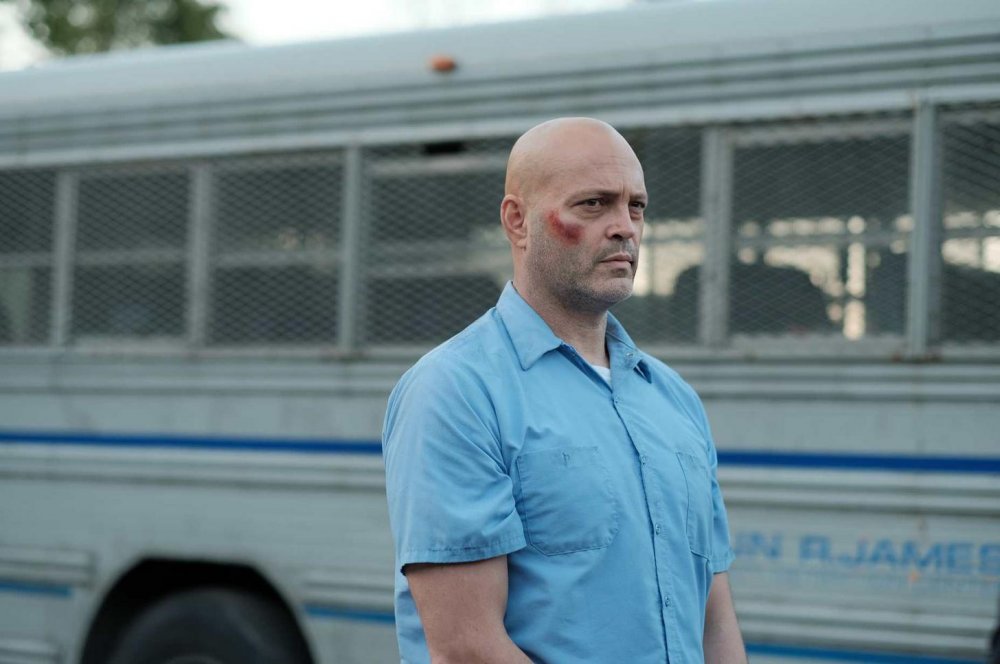
S. Craig Zahler is the Miami-born writer-director who's come stealthily to prominence by hard-boiling some of our less fashionable genres, giving the resultant pulp a brute force you might well choose to look away from, but which you cannot deny. He broke through with 2015's Bone Tomahawk, a splicing of Western and horror tropes that yielded one or two sequences unlike anything you'd ever previously winced through in a cinema. His evident rejection of the usual pieties and niceties is again on display in Brawl in Cell Block 99, a cautiously distributed hybrid of crime melodrama and prison flick following bullet-headed drug trafficker Vince Vaughn into a stylised idea of the U.S. detention system. That earlier film was a plunge into the abyss, and just perhaps a sly comment on the perils of manifest destiny. The new one plays like a nihilist fable of violence rerouted to no better end, from the moment Vaughn's Bradley returns home from the car repair job he's just lost to discover evidence wife Lauren (Jennifer Carpenter) has been having an affair. Calmly, he orders her to go inside, then he methodically tears the guts out of her car by hand. This leftfield instance of anger management isn't something we'd have witnessed in a Bogart or Cagney movie - but then Zahler's USP would seem to be an unexpected, ferocious perversity. What follows confirms him not as a dreamweaver, exactly, but a generator of sustained, unflinching nightmares. Here is a Tarantino with the reassuring ironic smirk forcibly removed, making films that feel as much like warning signs in a psychologist's report as they do entertainments in the conventional sense. Approach at your own risk.

Some have questioned this marked absence of PC from Zahler's CV; others have positioned him as a successor to the fascinatingly wayward likes of Sam Fuller and John Milius. I found Bone Tomahawk horribly compelling, in spite of its depiction of an indigenous people as bloodthirsty savages, which turned back forty-odd years of progressive thinking within the Western genre. (Dances with Wolves it was not.) That Bradley's once-ordered life goes completely off-course when his employer does a deal with some disreputable Mexicans threatens to mark Zahler as very much a filmmaker of the Trump era. Yet his interest in properly 18-rated, non-fantasy violence also makes him an interesting outlier at a time of blandly upbeat studio fare, and he's brutally honest and upfront with it, too. (The movie's first shot is of a can being crushed, cluing us in on anything that title might have left ambiguous; by the time of 2018's follow-up Dragged Across Concrete, pairing Vaughn with Mel Gibson, audiences couldn't say they didn't know what they were getting into.) The control evident in both the conflict-averse protagonist and the direction should be enough to hook you. After his DEA bust, Bradley's sent to The Fridge, a holding centre set out in a palette of light blues, where it becomes apparent Zahler is a cool cat dealing with characters who present as varyingly hot heads. He knows it will suffice to let the violence linger at the edge of shots, or just offscreen; that - contra Tarantino - it doesn't have to be front and centre for us to feel the tremor of threat, the lawlessness beneath society's surface civility. For an hour, Brawl exhibits a chilly calm, such that you might wonder why it's garnered the reputation it has. Yet as in his previous film, Zahler is simply luring us in before twisting our guts and smacking us around the head. Bad news is forthcoming when Udo Kier turns up as Bradley's first visitor behind bars - whereupon an oddly sedate melodrama becomes a far more urgent proposition, something akin to Prison Break with the network-TV inhibitor chip taken out. 

That's not the only element missing here. Bone Tomahawk - expansive beyond its horrors - evoked a consoling sense of community, of different personalities being drawn together in the mire. (It was part John Carpenter, part Howard Hawks.) The prison of Cell Block 99, by contrast, looks curiously underpopulated; there's none of that heaving Sadean chaos one found amid the film's closest equivalent, HBO's Oz. A consequence is that the fight scenes are strikingly odd: Zahler's going for close-up, no-holds-barred realism, but much of the film's action is taking place in a vacuum, requiring ramped-up Foley work - all arm-snaps and ribcracks - by way of compensation. If the effects here are way more OTT than those of its predecessor (there's a face stomp that stays with you), the reduction of Carpenter's Lauren to not much more than narrative collateral suggests a certain absence of heart. Zahler may turn out to be one of those sociopath-directors who needs to keep making films like this to avoid being put behind bars himself; that's where the debate comes from, though it might be healthier for us all if he gets others to act out these impulses than it would be if he himself acted upon them. Still, there's a real toughness and hard-to-shake resilience about the pulp he's peddling here, coupled to a give-no-fucks styling-out that immediately elevates Brawl over those terminally throwaway Escape Plan movies, for one. (It's rather like one of those "BAD TO THE BONE" tattoos that were once all the rage in our less reputable drinking establishments: ugly as sin, but you have to respect the commitment involved.) Vaughn, for one, begins the hard labour of transforming himself from Hollywood laughing stock in an unusual hero role, in no convincing way likable, and yet somehow the best hope we have. For the first time in years, the actor looks truly engaged, like the leading man he once promised to be; once the celldoors close, we're right there in this hell with him, whether we like it or not.

Brawl in Cell Block 99 is now streaming on Netflix.

Tuesday, 4 June 2019

Made in England: "Rocketman"


If I've got the chronology right, Dexter Fletcher had already begun work on his Elton John tribute Rocketman when he was called up to fill in for the suddenly shifty Bryan Singer on the set of last year's Bohemian Rhapsody. There was no real glory in the assignment: the grim business of Hollywood contract law meant Singer retained the director credit on a film that closed in on a billion dollars at the global box office before picking up multiple awards-season nominations, and gongs besides. What Fletcher may have taken away from the experience was a heightened sense of rhythm: what could be salvaged from the understandably distracted Singer's staccato set-ups, and what needed binning or reshooting in order for the finished feature to serve its purpose as a moneyspinning crowdpleaser. In Rocketman, you're never more than five minutes from the next tune you'll recall from golden-oldies radio, and maybe revere; as a delivery system for the Elton back catalogue, designed in part to send consumers scrabbling for the appropriate Spotify stream, it cannot be faulted. This isn't Fletcher's first jukebox musical, of course: he'd previously signed off on 2013's Sunshine on Leith, which constructed some kind of narrative from old Proclaimers songs, and benefitted from lower stakes. Rocketman demonstrates a greater flair than that (not unenjoyable) oddity, and greater competency than the irredeemable Mamma Mia!, the lowest of pop-cultural baselines. At no point, however, does it match the artistry and flamboyance of its subject, and there are places where it inadvertently resembles a director's cut of last Christmas's Elton-centric John Lewis advert.

Fletcher is hampered several times over: by a modest Britfilm budget, by the attendant desire not to alienate middlebrow sensibilities, and above all else by Lee Hall's script, which approaches the songs as pieces of a puzzle that require snapping into place to make a picture that will solve the mystery of all things John. The approach conflates the recording session with the therapy session; the film opens with the striking image of Elton (Taron Egerton), clad in a horned devil costume, striding offstage and into a group rehab meeting, whereupon we get the story of how he got here and what his issue is. (No-one else in the group will get a look in; it's very much His Song.) The music, then, serves as exposition and explanation rather than liberated creative expression; for a film called Rocketman, about a figure who in real life once seemed to have been beamed in from some outer galaxy, everything's oddly grounded. The soaring numbers have been rerecorded by Egerton at a notably lower (let's say John Lewis-y) tempo, with the edges taken off the higher notes and any period dirt removed by 21st century production methods. There is something of TV's Glee in the mix, in other words, opening up a bountiful back catalogue to teenagers who've been suckled on pop in its most overproduced state. While I'm reluctant to walk back my stated affection for that wayward but heartfelt entertainment, Rocketman again made me think about the manner in which our jukebox musicals are stocked deep with arrangements that aren't a patch on the idiosyncratic originals; their success says a lot to me about our willingness to accept the world in a somewhat reduced state. We used to demand and get art from our musicals; now we applaud the having a go.

Fletcher sometimes elevates the tunes via thoughtful staging. One early highlight comes with the repositioning of Late Elton's "I Want Love" as a Magnolia-style roundelay carrying us from person to person in the young Elton's unhappy household, and the film achieves something lovely with the generally lovely "Tiny Dancer" in having it emerge from a lovelorn Seventies Elton amid a Hollywood Hills party where everybody else is pairing off. (It's a reminder that most great pop songs, and many great artworks, were composed by outsiders looking on from the fringes, noticing what their more impulsive contemporaries couldn't, and expressing these observations with a certainty that would almost certainly be beyond them in the moment.) It's at least a little banal, though, that even these songs should merely serve as markers in an itinerary of the protagonist's quest for someone to stick around in his life a little longer than Kiki Dee did. To its credit, Rocketman doesn't gloss over Elton's sexuality. Hall's most interesting writing is tied up with ideas of (self-)control, picking over just how willing the singer was to deny himself that for which he apparently yearned. When the star's manager/lover John Reid (Richard Madden) floats the idea Elton should take a wife to disguise his true feelings, it's presented as a very weird request for anyone to acquiesce to. (Fletcher drops in some counterpoint via a fleeting glimpse of Liberace on the telly, going through his own form of piano-stool masochism.) Yet generally, the movie prefers motion to depth or emotion. The film's Renate (Celinde Schoenmaker) is ushered on for two scenes before she's sent packing without much of a conversation; the title number shuttles us from a suicide bid to a triumphant concert performance with nary a trace of emotional labour. Rocketman is interested in the star's suffering, but in the most superficial sense; it's honest, but only up to a point.

All these limitations stem from the attempt to fashion a coherent character arc out of decades of turbulent behaviour and wild mood swings. Turning Elton into a coke-snorting monster ahead of his final-act redemption (cued by a howl-for-help "Goodbye Yellow Brick Road") is laughably simplistic; and though "I'm Still Standing" provides an obvious note to finish on, one look at Elton's chart positions from the late 1980s and early 1990s (basically, between "Nikita" and "Candle in the Wind 1997") suggests a good deal more work stood between him and national treasure status. And so the film hops from bit to bit, track to track, supporting character to supporting character, forever staying just lively enough to get away with it. Stephen Graham consolidates his position as the new Bob Hoskins as Elton's first manager Dick James; Jamie Bell turns Bernie Taupin into the Sancho Panza to Elton's Quixote, and gives the film its one authentically touching non-sung moment; the perennially misused Bryce Dallas Howard resembles one of the housewives in Queen's "I Want to Break Free" video as Elton's disapproving ma - a role carrying a faint whiff of gay misogyny - and winds up stuck under old-age latex for her troubles. Egerton, game and committed, singlehandedly drags the film over the finish line: he nails Elton's stroppiness - the stamp of the platform boot on the floor of the well-stocked dressing room - and wears the costumes well, though it's hard to shake the sensation that Movie Elton actually makes most sense as a rapid series of costume changes. Never dull - which would have been a criminal offence - the movie confirms Fletcher as a very safe pair of hands, capable of getting a glittery ragbag like this to do a job on a Friday or Saturday night in much the same way he got Bohemian Rhapsody as close as anybody could to working. One final reservation: his directorial debut Wild Bill promised so much more.

Rocketman is now playing in cinemas nationwide.  

In memoriam: David Winters (Telegraph 10/05/19)


David Winters, who has died aged 80, was an energetic actor, dancer, choreographer, producer and director best known for his role as A-rab, one of the Jets feuding with teen rivals the Sharks in the 1961 film version of West Side Story. He had earlier played Baby John in the original 1957 Broadway production, composer Leonard Bernstein noting during auditions that the diminutive, boyish Winters was a “fine dancer. Real cute.” He was one of only six original cast members whose services were retained for Robert Wise’s big-screen adaptation, and Winters retained fond memories of his days as a Jet: “We were all wise guys… There was no controlling us.” The film became a landmark, topping the year’s box office and scooping ten Oscars, including Best Picture.

With comparable roles hard to come by, Winters launched a prolific second career as an off-camera mover-and-shaker, suddenly finding himself at the heart of pop culture. One of his dance students, Ann-Margret, enlisted him to choreograph Viva Las Vegas (1964), the liveliest Elvis Presley movie, where such numbers as “C’mon Everybody” shrugged towards a looser, more playful approach to filmed dance, distinct from Fred Astaire’s elegance or the forceful hoofing of Gene Kelly. Winters choreographed the Watusi and the limb-flailing Freddie of Freddie and the Dreamers’ “Do the Freddie” for TV’s Hullabaloo! (1965), before making his directorial debut on The Monkees (1967-68). That flexibility persisted into his later work with stars as diverse as Nancy Sinatra, Alice Cooper and Linda Lovelace.

He was born David Weizer in London on April 5, 1939 to Polish-Jewish émigrés Samuel and Sadie Weizer (née Gittelmacher). The young David developed a passion for dance during his childhood in Brooklyn, where his parents ran a sweet shop. Fearing his mother wouldn’t give him money for lessons, he began shining shoes on Coney Island’s piers to fund tap classes where his contemporaries included Elliott Gould and Christopher Walken. He was spotted by an NBC talent scout while dancing in a Manhattan restaurant and immediately deployed across the network’s radio and television output: he made his TV debut on The Big Story (1949), a popular re-enactment of recent headlines, before landing a higher profile role as the star’s nephew on The Red Buttons Show (1952).

His big-screen debut followed in The Kid Colossus (a.k.a. Roogie’s Bump, 1954), the baseball fantasy remade as Rookie of the Year (1993); he was then glimpsed among the teenyboppers grooving to Chuck Berry in Rock Rock Rock! (1956), one of several films rushed into production to capitalise on the emergence of the new musical idiom. Winters was himself drawn towards live performance, and though his pop side project David Winters and the West Siders proved a dead end for him (if not bandmate Paul Simon), theatreland provided a way forward. Jerome Robbins was so impressed by Winters’ turn in Shinbone Alley, an oddball flop co-authored by Mel Brooks, that he invited the young actor to appear in two productions he was choreographing: Gypsy and West Side Story.

Like many of the movie’s young cast, Winters struggled to convert that lightning-in-a-bottle success into recognisable career momentum. He booked more than his fair share of TV roles, appearing most prominently in Perry Mason (1963) and Burke’s Law (1965), and attempted to revive his musical career via the short-lived David Winters and the Parleys, knocking out 1964’s zeitgeist-pursuing “The London Jerk” with legendary session musicians The Wrecking Crew and 1966’s parodic “Anti-Protest Protest Song”. The hit parade went untroubled, however, and Winters all but abandoned acting in 1967 to teach and choreograph TV specials, earning his first Emmy nomination for that year’s Nancy Sinatra showcase Movin’ with Nancy and a second for Ann-Margret: From Hollywood with Love (1969).

Choreography sustained him through the 1970s – he worked on the Barbra Streisand remake of A Star is Born (1976) and the infamously gaudy Star Wars Holiday Special (1978) – but elsewhere Winters felt compelled to seek greater creative control. His first producer credit had come on Lucy in London (1966), a Lucille Ball venture that found room for his increasingly prominent signature troupe The David Winters Dancers; over the following decades, he was to build a small entertainment empire of his own. The theatrical success of his Alice Cooper concert movie Welcome to My Nightmare (1975), shot at Wembley Arena, enabled him to launch Action International Pictures (a.k.a. “West Side Stories”), a production house specialising in low-cost exploitation fare targeting the booming home video market.  

A bar of sorts was set by Linda Lovelace for President (1975), the risqué comedy Winters produced for his then-girlfriend, breakout star of the notorious Deep Throat. (One tagline was “A vote for Linda is a blow for democracy.”) Winters then put his name to the Cannes-set The Last Horror Film (1982); teen skateboarding drama Thrashin’ (1986), giving early career boosts to Josh Brolin and the band Red Hot Chili Peppers; Killer Workout (a.k.a. Aerobicide, 1987); and the Pamela Anderson potboiler Good Cop Bad Cop (a.k.a. Raw Justice, 1994). After living in Thailand for many years – where he trained in martial arts – Winters returned to the US to direct Dancin’: It’s On! (2015), a musical in the image of the Step Up series, and to complete a memoir, “Tough Guys Do Dance”, in 2018.

He was married three times, and is survived by four children: sons Alexander and Jonathan, stepson James Winters, and a daughter, Romé Bernstein.

David Winters, born April 5, 1939, died April 23, 2019.