Thursday, 28 December 2017

The force: "Star Wars: The Last Jedi"


Some mornings I think the problem is that we have too much escapism. Harder to push back against our present-day dystopias, to mobilise and organise, when there's a shiny new fantasy tempting us into the multiplex every second weekend; to those still clinging to the power of social realism or documentary to open eyes and win hearts and minds, I would say look at the listings for your local independent or arthouse cinema over the festive period, and ask yourself what the free market has ever done for you. Instead of revolutionary texts, great art, films to change the world for the better, we've ended up sitting credulous and uncritical before a run of movies that have continually paid lip service to our current struggles (alighting upon superheroes of both sexes, seeking out warriors of colour) while facilitating no lasting or meaningful real-world difference save to transfer a further ten-to-fifteen pounds or dollars from our pockets into the coffers of one corporate empire or another. Some of these diversions have passed the time entertainingly enough; many more have seemed like unfocused sound and fury, designed to keep us in a wide-eyed, infantilised state, so that we fall for their every trick - and keep returning to the same teat.

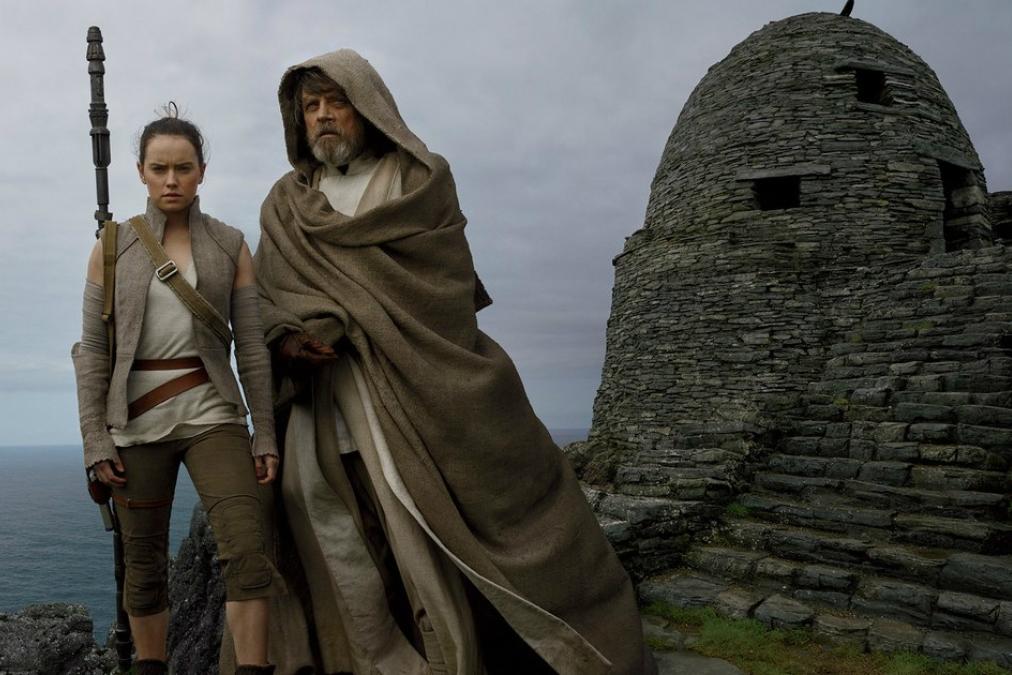
Of the 136 minutes of 2015's The Force Awakens, second (or third) coming of the Star Wars series, only three story beats - amounting to ten minutes of screen time tops - have persisted in the memory. Firstly, there was the touching reunion of old warriors Han (Harrison Ford) and Leia (Carrie Fisher); then, the unexpected death of one such oldtimer at the hands of Adam from Girls; then, the climactic meeting between young Rey (Daisy Ridley) and a late-arriving master of the Jedi form. The remainder of its two hours were filled with a variant of that playground runaround best left behind at the school gates, and while some of those doing the running (Ridley, John Boyega's Finn) displayed a vigour and newness that allowed them to distinguish themselves from all this frenetic make-believe, several more (most prominently, the usually sly and skilful Oscar Isaac) simply got lost behind the bike sheds. The Last Jedi runs to 150 minutes, which would be cause for renewed concern were it not quickly clear that incoming writer-director Rian Johnson is less of a slavish fanboy than his predecessor JJ Abrams - hence the deviations from canon, and the time wasted by furious virgins in the Internet's muskier corners - and, in fact, a far better storyteller. For two thirds of the new film's duration, scenes click together to form material that seems to be heading somewhere halfway interesting - a bonfire of this franchise's vanities.

Episode VIII, such as it is, is a complicated shot at simplification, setting out by telling two stories, one macro (the usual business of duelling spaceships in the sky), the other (Rey's personal journey to learn and use the Force) appreciably micro. The complications follow from the way Johnson himself uses the Force, to set up what appear to be interplanetary crossed lines: so Mark Hamill's Luke, grounded in exile on some rocky outcrop, can temporarily be reunited with Fisher's Leia, commanding one of those ships in space; and Rey can cut in on Adam Driver's Kylo Ren as he's pottering round the house with no top on. These connections, both unexpected and unexpectedly charged, register more forcefully than the explosions; throughout, Johnson has more skin in the scenes between the setpieces than Abrams ever did. One consequence is that the actors suddenly appear to have been directed, rather than moved into position like action figures. Isaac's Poe Dameron reemerges from the back of the toybox as a forceful, impulsive personality, straining at the leash; Hamill finds hidden depths within the cardboard cutout role of Luke Skywalker, a feat that becomes doubly impressive upon learning the actor is basically playing an idea; and Driver begins to do something oddly fascinating within the framework of series bogeyman, allowing vivid flickers of doubt and ambiguity to ripple across the widescreen frame. (Johnson here reveals himself as a far savvier imagemaker than George Lucas: when your bad guy has a face as compelling as Driver's, you don't stick it under a helmet.)

It's still recognisably a Star Wars movie, a statement I intend to wield as a double-edged sword (or lightsaber). For something with Saturday-morning serials in its DNA, The Last Jedi is way too long, with transitional patches you forget about even as you're sitting through them. (Hence the number of times you find yourself wondering "why's he going there?" or "where's she gone?") The dialogue remains Kryptonite to anything that might be taken entirely seriously by grown men and women: its pre-eminent casualty is the generally capable Domhnall Gleeson, stuck once again in the role of interstellar Gordon Brittas, an awkwardly uptight functionary most often found wrinkling his nose in impotent disgust whenever the Resistance sneak beneath the Empire's defences. And for all its new manifestations, the Force continues to resemble American cinema's waftiest get-out-of-jail-free card, as great an enemy to real jeopardy as the X-Men or Avengers' collected, base-covering superpowers. (Another reason for keeping us infantilised: to lull us into believing there's something - anything - at stake in these films beyond the successful delivery of stock bonuses.) Still, accept the limitations of Star Wars as an eternally two-sided coin - bland goodness on one side, 12A-rated evil on the other - and there are scenes in The Last Jedi that do stand up as drama, where you can't quite tell which way that coin is going to fall, or become aware of the element of chance or why-notness in Johnson's plotting.

Gambling is established as an organising principle the moment Finn diverts to an alien Monte Carlo to recruit a famed safecracker (Justin Theroux, left hanging in this instalment as a face at a casino table, Lily Cole on his arm: nice work, if you can get it). Big narrative punts here include Rey's decision to strike out alone in the hope of turning Kylo Ren away from the dark side; supporting imagery includes a jettisoned lightsaber that revolves on the floor mid-duel, like a roulette wheel, and a set of bronzed dice one character gifts to another. Johnson's most self-referential gambit, however, is Luke's second-act decision to torch a repository of old Jedi texts, the insinuation being that their essence can be crystallised and passed on to a new generation. I don't believe that knowledge is anything like as complex as fanboys insist, but in as much as anything associated with a Star Wars movie opening on a gazillion screens worldwide might be considered a risk, this mid-cycle attempt to rewrite and streamline the canon is it: it explains why those mewling shut-ins, who just want to experience the same reassuring emotions their seven-year-old selves had, have spent the holidays getting their Chewbacca underpants in such a knot. Despite this high-profile online griping, another example of social media amplifying entirely the wrong voices, The Last Jedi is - at time of writing - well on its way to surpassing one billion dollars at the international box-office, a landmark that suggests that, for all its travails over the past twelve months, the Hollywood idea of capitalism seems to be doing fine as we check in with it at year's end. The question we should ask ourselves - and make time to ask ourselves - is this: how are those of us in the cheap seats doing?

Star Wars: The Last Jedi is now playing in cinemas nationwide. 

Wednesday, 27 December 2017

From the archive: "Creep"


Creep, a superior, darkly comic late offshoot of the found-footage cycle, adds one distinctly 21st century element to the mix: Craigslist. The man holding the camera this time is Aaron (writer-director Patrick Brice), a videographer hired via that website to drive out to a small town and record the thoughts of the happily married Josef for an as yet unborn child in the event of his having a cancer relapse. This is, plainly, A Nice Thing to Do, yet we sense that something's a bit off when Josef starts raving about 1993's Michael Keaton tearjerker My Life as "a beautiful film"; also from the fact he's played by Mark Duplass as a habitually oversharing hugger, unduly keen to don a latex wolf's mask and lead the disconcerted Aaron out into the woods. He is, in short, the kind of character I'm told one might well meet on Craigslist in this day and age: possessed of the rough edges that can make somebody interesting to hang with but - in the worst case scenario - liable to poke your eyes out.

That aligns Creep not so much with the Blair Witch school, collating footage of easily harassed adults as it did, rather with those mumblecore experiments - in which Duplass has previously played such a part - geared towards scratching out a character or characters on the spot. What's crucial here isn't the relationship between the observed and some external force, but that between observer and observed, which builds from nervy circling to bro-ish camaraderie to something edgier as Josef inevitably crosses a line of intimacy; the genuinely surprising final act features the most effective what's-in-the-box moment since Se7en. I suspect this is how The Cable Guy and Chuck & Buck might have looked if they had emerged any later than 2000: what's being recorded, in the main, isn't aggression, rather the typical passive-aggression of men who'd rather talk to their equipment than deal with matters face-to-face. That's enough to make Brice's film a genuine novelty at this stage in the cycle: the bulk of Creep's footage isn't evidence of an atrocity - though, rest assured, there will be blood - but of a deeply awkward, entirely avoidable social situation.

(September 2016)

Creep is available on DVD through Kaleidoscope, and to stream on Netflix.

Friday, 22 December 2017

For what it's worth...


Top Ten Films at the UK Box Office 
for the weekend of December 15-17, 2017:

1 (new) Star Wars: The Last Jedi (12A) ***

2 (1) Paddington 2 (PG) ****
3 (2) Daddy's Home 2 (12A)
4 (3) Wonder (PG)
5 (4Justice League (12A)
6 (5) Murder on the Orient Express (12A)
7 (6) The Disaster Artist (15) ***
8 (8) A Bad Moms Christmas (15)
9 (11) The Star (U) **
10 (7Thor: Ragnarok (12A) ***

(source: theguardian.com)

My top five: 
1. A Matter of Life and Death

2. The Muppet Christmas Carol
3. Mountains May Depart
4. Mountain
5. The Big Heat


Top Ten DVD sales: 

1 (new) Game of Thrones: Season 7 (15)
2 (new) The Hitman's Bodyguard (15) **
3 (3) Micky Flanagan: An' Another Fing Live (15)
4 (6) Olaf's Frozen Adventure (U)
5 (2) Despicable Me 3 (U)
6 (1) War for the Planet of the Apes (12) ***
7 (5) The Emoji Movie (U)
8 (4) Spider-Man: Homecoming (12) **
9 (8) Beauty and the Beast (PG) ***
10 (9Paddington (PG) ****

(source: officialcharts.com)

My top five: 
1. Logan Lucky

2. An Inconvenient Sequel: Truth to Power
3. Patti Cake$
4. The Limehouse Golem
5. American Made


Top five films on terrestrial TV:
1. Gone with the Wind (Christmas Eve, five, 9.20am)
2. Babe [above] (Thursday, ITV1, 9.25am)
3. Back to the Future (Boxing Day, C4, 6pm)
4. E.T.: The Extra Terrestrial (Boxing Day, ITV1, 3.30pm)
5. Singin' in the Rain (Christmas Day, five, 1.05pm)

Peak cinema: "Mountain"


The Australian documentarist Jennifer Peedom is shaping up to be a little like Leni Riefenstahl before she got into all that tricky Nazism business. Peedom first made an impression on UK screens back in December 2015 with her film Sherpa, a gripping account of the tensions mounting between climbers and guides on the slopes of Everest; she has returned this Christmas with a film that all but does away with human focal points, reducing those people who pass before its gaze to tiny specks moving up and down vast hillsides. Mountain aims to compose a stirring hymn to the world's great peaks, "wild and ungovernable", as our suitably craggy narrator Willem Dafoe phrases it, yet captured here in close-ups, angles and light a starlet would die for. That Peedom is going for something more impressionistic than the usual David Attenborough/NatGeo treatment is evident as early as an overture that keeps its cameras indoors to witness the Australian Chamber Orchestra, source of the film's music, warming up; if any BBC influence can be felt here, it comes from those poetic flights of fancy (From the Sea to the Land Beyond, Atomic) which sought to traverse a given theme or subject with music and reels of archive footage in their backpacks.

The thesis is that mountain-climbing is a relatively recent pursuit, and one we're still collectively figuring out: if the peaks have been there for aeons, it's only during the past few centuries - during the formation of our towns and cities - that mankind has been minded to wonder what, if anything, lay beyond the foothills and above the cloudline, and whether it, too, may be reclaimed, tamed, civilised or commodified. The archive thus roams from genteel Pathe-era newsreel, following those adventurous souls who first went in search of the sublime, to the kind of yowser GoPro footage now routinely uploaded to YouTube; Peedom's field of inquiry extends beyond the mountains themselves to how they've come to be documented over the years. One minute, we're setting out among those formally suited ambassadors of Empire responsible for bringing back the images that went to make up the likes of 1924's recently rediscovered The Epic of Everest; the next, we're tearing after Red Bull-swigging latter-day Mallorys, clad in Lowe Alpine, who throw themselves off cliffs clutching onto youthful memories of Warren Miller snowboarding videos.

Peedom's film has been far better produced and packaged than any of the latter: with the possible exception of Werner Herzog, no director currently working has thought longer or harder about how to capture the majesty of mountains. Yes, there are familiar elements in the mix: helicopter flyovers of iridescent, unspoilt snow, some Koyaanisqatsi-like timelapse photography. Yet Peedom gets breathtaking effects from redirecting those self-same helicopters to fly in low and flat, like a plane approaching a runway, so as to emphasise the unbelievable scale of her subjects, and point up the distance separating summit from terra firma. This restless close-up/faraway variation brings us face-to-face with gorgeous textures (cooling lava, snow and ice sheets shearing off), but equally allows Peedom to yank the ground away from beneath our feet, pulling back to show some eager-beaver daredevil straining to climb a sheer rockface with no visible ropes or safety net (no!, your inner health-and-safety inspector screams, stop it!), and then pulling back once again to highlight how isolated and vulnerable these explorers are, how close they are to wiping out.

Danger lurks in sequence after sequence: spellbinding footage of a tightrope walk between rocky outcrops, an event apparently witnessed by Peedom's crew and no-one else, more hectic inserts of BMXers and basejumpers leaping into the void with an enthusiasm wussy mortals like you and I would consider unthinkable. Peedom frames these activities within the context of a cautionary tale: that narration (penned by the director with the author Robert Macfarlane) comes to note the narcissism, hubris and idiocy that result in the deaths of hundreds, if not thousands, each year, and the commercialisation that now ensures that, at any given time, something like half the world's population seems to be scaling Everest. As Dafoe solemnly intones: "This isn't climbing; it's queuing." In most cases, however, the response to Peedom's imagery is one of awe - awe, coupled with vertigo-induced collywobbles, and a more generalised regret that a film as essentially inorganic as The Last Jedi should have chosen this week to monopolise the world's IMAX screens. Despite its slender 74-minute running time, this is, doubtless because it had to be, a properly big picture. Mountainous, even.

Mountain is now showing in selected cinemas, and streaming online. 

Thursday, 21 December 2017

Tommy's war: "The Disaster Artist"


I haven't seen 2003's The Room - you have to pay me to watch bad movies, darling - so I'll have to take the word of my fellow travellers that it lurks among the worst films ever made, or is simply (as one colleague in particular framed it) "a narcissistic load of old toss". The Disaster Artist is the New American Comedy's attempt to spin a form of silk out of this cinematic sow's ear. Director-star James Franco, no stranger to narcissistic loads of old toss, casts himself as Tommy Wiseau, the curiously accented, deathly pallid, indeterminately aged auteur responsible for this abject folly, and fashions around the part an all-star revue that seeks to explain why a sub-bargain bin curio like this has come to hold such sway over sniggering metropolitan hipsters - perhaps, now, the only audience that can afford to knowingly watch bad movies - since it was adopted on the midnight-movie circuit at the turn of the last decade.

What the sharp screenwriting duo of Scott Neustadter and Michael H. Weber (The Spectacular Now) have pulled from actor Greg Sestero's on-set memoir is another of Franco's sporadic bromances. On one side of the screen, there is the special one (Franco-as-Wiseau), utterly unlike anybody else in his immediate vicinity (and quite possibly on the face of the planet), yet hamstrung by a lack of talent that is similarly beyond the pale; on the other, the normie (Sestero, as played by James' brother Dave) who has a measure of social skills and critical distance, but otherwise remains firmly, stubbornly unexceptional. Neustadter and Weber hone in on the leftfield ways this odd couple sustained each other, and sustained one another's dreams. Early on, during an impromptu acting lesson he gives Sestero in a crowded L.A. diner, Wiseau rather ironically barks "Don't be weird" - he means self-conscious, restrained or inward-looking; "normal", at a pinch - and then "just do it"; what follows holds to the line that there was something cherishable in the fact Wiseau followed his own advice. 

This double-act nudges The Disaster Artist away from becoming the glib exercise in sneering it might have been, and repositions it somewhere closer to the affectionate tribute of Tim Burton's Ed Wood. Sestero is plainly the only person who believes in Wiseau, other than Wiseau himself, which makes for an especially painful-seeming betrayal when the junior partner deigns to take a girlfriend (Alison Brie) and start pursuing more legitimate acting work - goals apparently beyond Wiseau's reach. The Room can hereby be interpreted as a last grab at the big brass ring after months of Tinseltown scrabbling and ritual humiliation, Wiseau's equivalent of the final heist in a crime movie: a shot in the dark, against overwhelming odds, that somehow both didn't pay off (Wiseau remains, in the final reckoning, a footnote or punchline) and did (he made a bad movie that's been seen by more people than many good ones).

Franco is smart enough to realise that while Wiseau was a lousy actor and not much of a director, he makes for a hell of a character: a grungy Florence Foster Jenkins, if you can believe such a thing. He nails this guy's burnt-out mien and futzing syntax, his tenuous grasp on film history and his own place within it; we frequently find ourselves chuckling at this Wiseau's sheer vagueness (introducing Sestero to the other passengers in his van: "That's Todd, friend of Todd, other friend of Todd..."). Yet The Disaster Artist is itself a little sketchy when it comes to describing who its protagonist is and what he actually achieved, instead preferring to play his antics and tantrums for broadly entertaining comedy. Absent is any real sense of where Tommy came from, how he got his money, whether or not his freakier-creepier behaviour could be interpreted as a sign of something more troubling, even - and more immediately significant - why he kept turning up late to the set of his own magnum opus: Franco approaches the part as if Wiseau were part-meme, part-mystery. 

Moreover, unlike current TV favourite Feud: Bette and Joan (a project from which neophytes can, I think, take away some idea of What Ever Happened to Baby Jane? as a deeply felt narrative), The Disaster Artist offers no substantial sense of The Room as a film, save as a curious cash-in-hand gig for all concerned. Franco-as-director is more interested in the collective behind-the-scenes endeavour that salvaged a sort-of functioning movie from Wiseau's wilder gestures. "Even the worst day on a movie set is better than the best day anywhere else," proclaims senior cast member Carolyn (Jacki Weaver) during a lunch break, which will come as news to anybody who's worked for Michael Bay or James Cameron. Here, you feel The Disaster Artist giving into the same kind of la-la-land narcissism that might be in The Room, offering yet another round of applause for the dreamers: it extends as far as the end credits, with their shot-by-shot comparison of Wiseau and Franco framings, just in case we'd missed how terribly clever and knowing these scenes were the first time around.

Those reenactments can't fail to satisfy the fanclub and expand the cult - as I write, news breaks that The Room is set to enter into wide theatrical distribution next month - and it's doubtless telling that the grand finale reconfigures The Room's premiere into a raucous rerun of every midnight screening since, with Seth Rogen among the wise-asses shouting back at the screen. Yet I'm not quite sure Franco's film makes the case as to why The Room matters, content as it is to let its creative prime mover float unchallenged across the frame. My feeling remains that life's too short to knowingly watch bad movies, and too damn expensive to pay to watch bad movies, although even as I write this, I am aware I have referred a dozen or more friends and loved ones to Netflix to goggle at the utterly perverse and scarcely fathomable spectacle that is Ray Cooney's Run for Your Wife. As Tommy Wiseau himself ventures, by way of an explanation for one of his more outré performance choices: "Human behaviour."

The Disaster Artist is now playing in cinemas nationwide. 

Tuesday, 19 December 2017

From the archive: "Pitch Perfect"


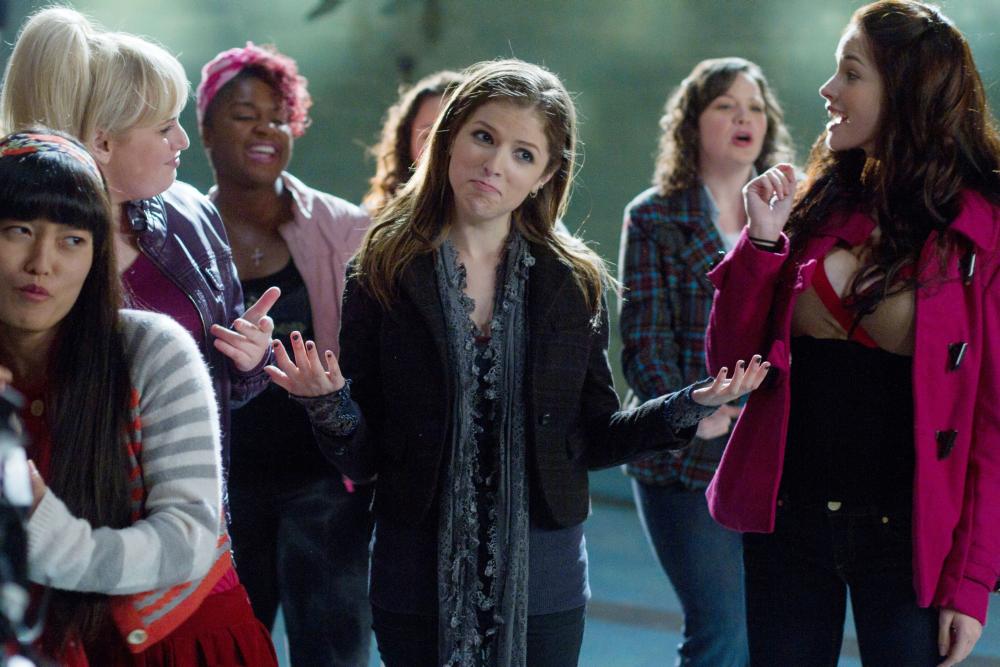
One of the judges of a collegiate acapella competition is addressing an auditorium-ful of auditionees, and laying down some hard truths. “If you think you can sing and dance your way through any issue, or your confused sexuality, think again. That’s high school. This is real life.” Well, kind of. In fact, Pitch Perfect offers but a minor tweak to a pre-existing formula: this is Glee gone to college, set amongst the misfits and outcasts of a fictional university, and charting the effect tattooed, pierced DJ Beca (Anna Kendrick) has on the uptight Barden Belles, an all-female vocal troupe so out of time and tunes their idea of a showstopper is Ace of Base’s “The Sign”. (If that reference means nothing to you, you’re probably not the target audience.) The enduring gag in Jason Moore’s likably daffy comedy is that everyone within this nerdy, bitchy yet essentially good-hearted community truly believes they’re the coolest, sexiest thing ever to have set foot on a stage; this even when the Belles’ all-male rivals the Treblemakers break into a rendition of Toni Basil’s deathless “Mickey”, and get into a post-competition smackdown with a cardigan-clad choir of oldtimers featuring Har Mar Superstar and Turk from TV’s Scrubs.

From his time working on Broadway sensation Avenue Q, Moore clearly knows how to put on a show, and he has very nearly as much raucous fun with the musical numbers as 2007’s fondly remembered Blades of Glory did with its ice-skating routines. These performers are fitted with sock puppets and gastrointestinal issues and ushered forth into the spotlight, only to be skewered by the merciless, post-Cowell commentary team of John Michael Higgins and Elizabeth Banks (“That was like an elephant dart to the public’s face”). Superior performances allow us to care about this ensemble of cartoonish kooks and loons. There’s further proof, after Up in the Air, of Kendrick’s uncommonly good timing, and of the added comic value the Australian actress Rebel Wilson (Bridesmaids, A Few Best Men) is capable of bringing to even the most unprepossessing of projects.

It’s true certain elements come as standard. Beca finds herself caught up in a half-hearted love triangle at the campus radio station involving her buff boss (Freddie Stroma) and a joshing, movie-obsessed colleague (Skylar Astin); in a nod to the John Hughes movies that serve as the film’s background noise, she’s also at the mercy of a hard-assed professor father (John Benjamin Hickey) who totes doesn’t understand her. Yet screenwriter Kay Cannon (30 Rock) is rightly less interested in these generic plot-props than in the bubblegum business of passing “Aguilerian” into circulation as a viable adjective, and making a case for the existence of Sisqo beyond “The Thong Song”. No-one’s singing anything out of the ordinary: this lot probably haven’t heard of Journey, and prefer Flo Rida to Scott Walker. Yet any film that seeks to mash up Azealia Banks’ “212” with Young MC’s “Bust a Move” – that has the attitude, but still wants to party – is all right with me.

(MovieMail, December 2012)

Pitch Perfect is available on DVD through Universal Pictures UK; a third film in the series, Pitch Perfect 3, opens in cinemas nationwide this Friday.

Sunday, 17 December 2017

For your consideration: my Critics' Circle votes 2017


Best Director
1. Pablo Larraín, Neruda
2. Katell Quillévéré, Heal the Living
3. James Gray, The Lost City of Z
4. Darren Aronofsky, mother!
5. SS Rajamouli, Baahubali 2: The Conclusion

(Honourable mentions: William Oldroyd, Lady Macbeth; Asghar Farhadi, The Salesman; Dee Rees, Mudbound; Juho Kuosmanen, The Happiest Day in the Life of Olli Maki; Jordan Peele, Get Out; Kelly Reichardt, Certain Women; Anna Biller, The Love Witch.)


Best Screenwriter
1. Guillermo Calderón, Neruda
2. Armando Iannucci, David Schneider, Ian Martin and Peter Fellows, The Death of Stalin
3. James Gray, The Lost City of Z
5. Asghar Farhadi, The Salesman

(Honourable mentions: Justine Triet, In Bed with Victoria; Kelly Reichardt, Certain Women; Sherry White, MaudieCéline Sciamma, My Life as a Courgette; Alice Birch, Lady Macbeth; Jordan Peele, Get Out.)


Best Actor
1. Luis Gnecco, Neruda
2. Jean-Pierre Léaud, The Death of Louis XIV
3. Gael Garcia Bernal, Neruda
4. Shabab Hosseini, The Salesman
5. Steve Carell, Battle of the Sexes

(Honourable mentions: Adam Sandler, The Meyerowitz Stories (New and Selected); Makis Papadimitriou, Suntan; Ethan Hawke, Maudie; Joel Edgerton, It Comes at Night.)


Best Actress
1. Brooklynn Prince, The Florida Project
2. Isabelle Huppert, Elle, Souvenir and Happy End
4. Judith Chemla, A Woman's Life
5. Zaira Wasim, Secret Superstar

(Honourable mentions: Virginie Efira, In Bed with Victoria; Danielle Macdonald, Patti Cake$; Jennifer Lawrence, mother!; Kim Min-hee, The Handmaiden; Sonia Braga, Aquarius; Gal Gadot, Wonder Woman.)


Best Supporting Actor
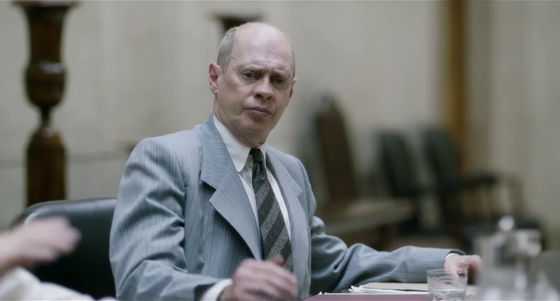
1. Steve Buscemi, The Death of Stalin
2. Willem Dafoe, The Florida Project
3. Hugh Grant, Paddington 2
4. Jason Mitchell, Mudbound
5. Ian Hart, God's Own Country

(Honourable mentions: Aamir Khan, Secret Superstar; Henry B.J. Phiri, I Am Not a Witch.)


Best Supporting Actress
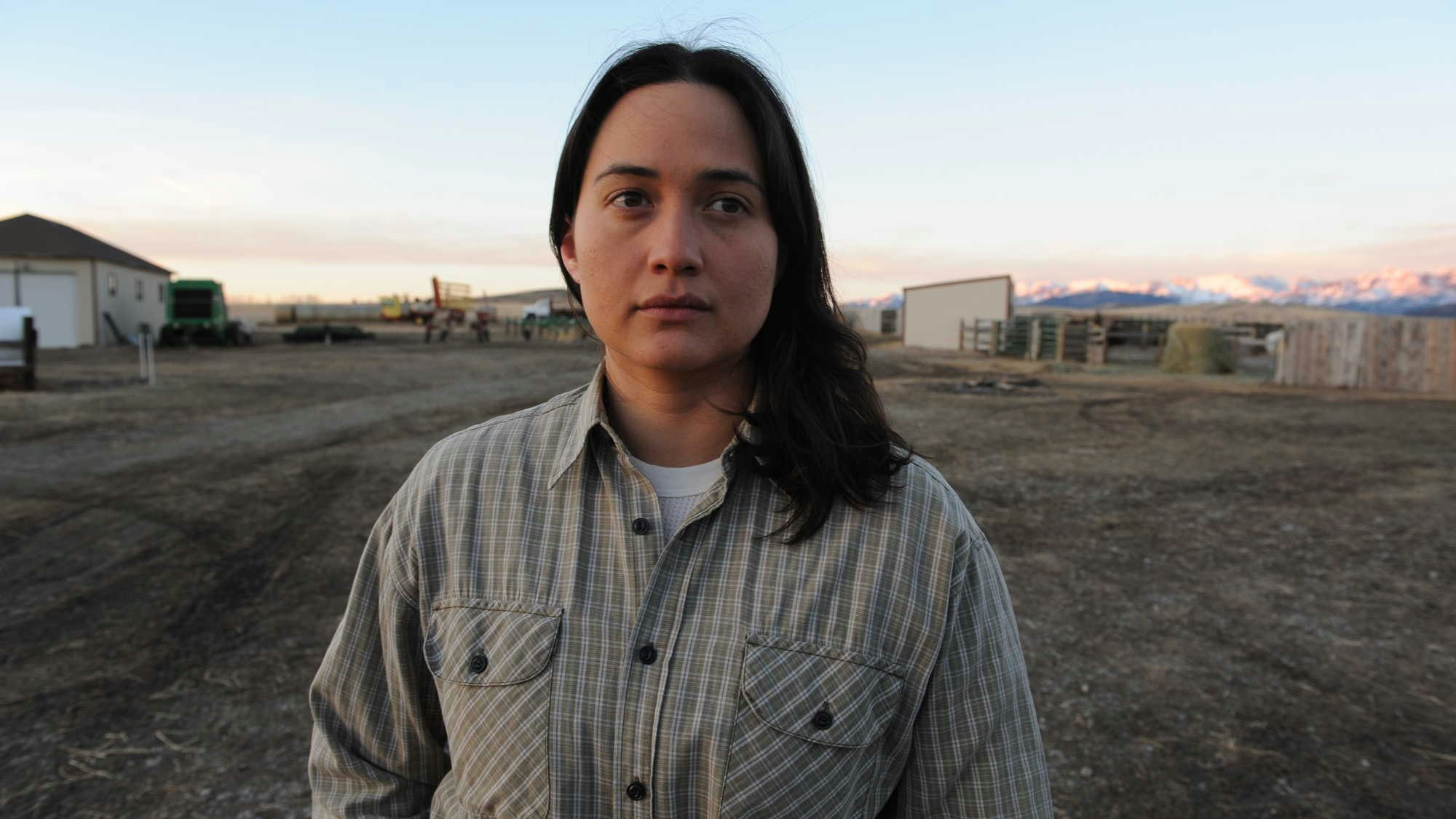
1. Lily Gladstone, Certain Women
2. Tiffany Haddish, Girls Trip
3. Holly Hunter, The Big Sick
4. Bria Vinaite, The Florida Project
5. Meher Vij, Secret Superstar

(Honourable mentions: Michelle Williams, Certain Women; Bridget Everett, Patti Cake$; Laura Dern, Certain Women; Kristen Stewart, Certain Women.)


Best British/Irish Actress
1. Sally Hawkins, Maudie and Paddington 2
2. Florence Pugh, Lady Macbeth
3. Ellie Kendrick, The Levelling
4. Emily Beecham, Daphne
5. Sienna Miller, The Lost City of Z


Best British/Irish Actor
1. Simon Russell Beale, The Death of Stalin
2. John Boyega, Detroit
3. Johnny Harris, Jawbone
4. Josh O'Connor, God's Own Country

(Honourable mentions: Timothy Spall, The Party; Daniel Kaluuya, Get Out.)


Young British/Irish Performer
1. Florence Pugh, Lady Macbeth
2. Harris Dickinson, Beach Rats
3. Anya Taylor-Joy, Split
4. Jack Parry-Jones, Moon Dogs

(Honourable mentions: Will Tilston, Goodbye Christopher Robin; Raffey Cassidy, The Killing of a Sacred Deer.)


Breakthrough British/Irish Filmmaker
1. Rungano Nyoni, writer-director, I Am Not a Witch
2. William Oldroyd, director, Lady Macbeth
3. Francis Lee, writer-director, God's Own Country
4. Thomas Napper, director, Jawbone
5. Hope Dickson Leach, writer-director, The Levelling

(Honourable mentions: Alice Birch, writer, Lady Macbeth; Peter Mackie Burns, director, Daphne; Shola Amoo, writer-director, A Moving Image.)

My Top 20 films of the year list will be published here on New Year's Day.