Sunday, 3 September 2017

On DVD: "Frankenstein"


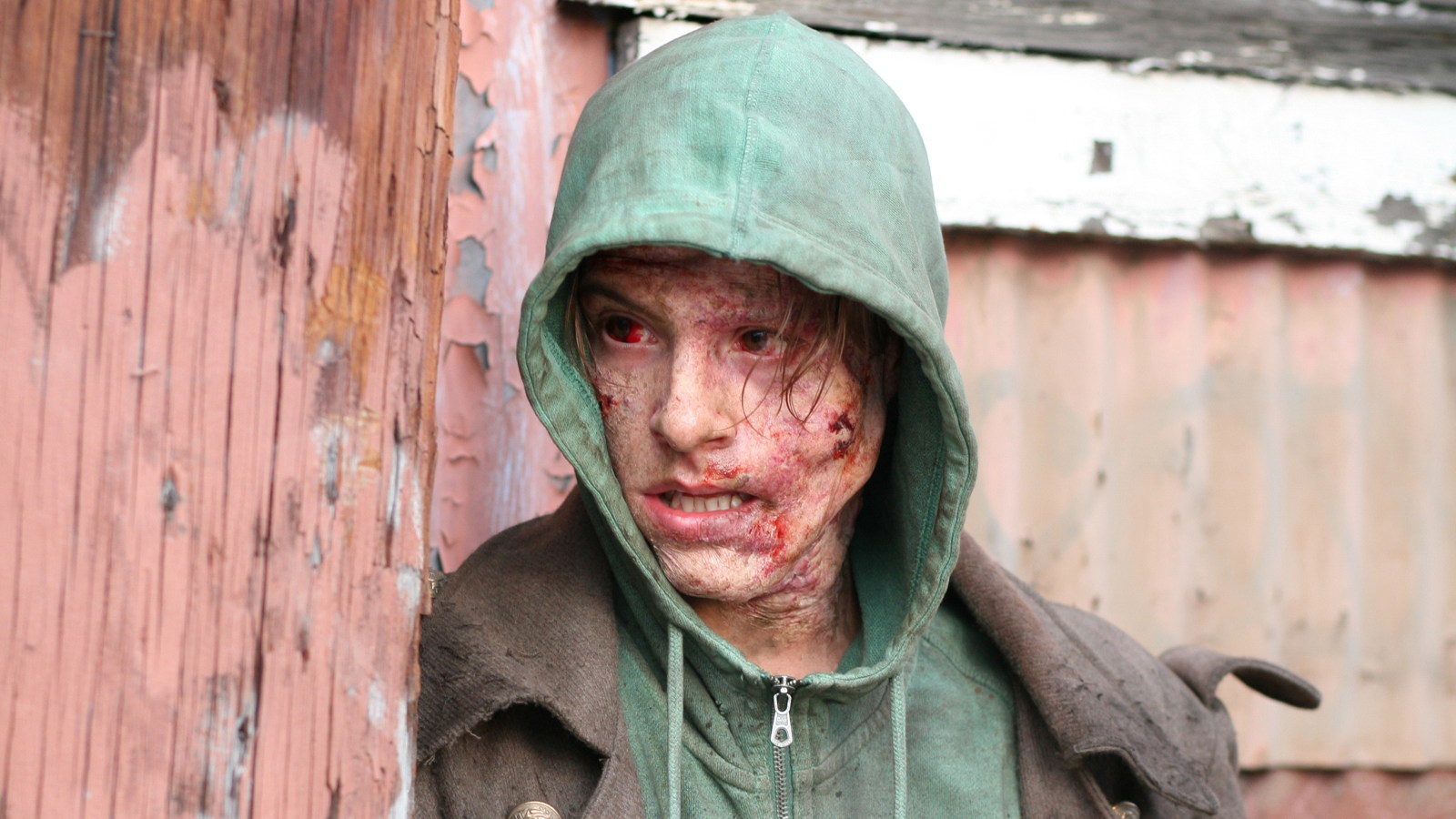
Frankenstein, the latest in writer-director Bernard Rose's one-man quest to update the classics, approaches Mary Shelley's creation fable as the basis for a warped, tragic coming-of-age story. Its Monster, referred to as Adam, is a young man (Xavier Samuel) who escapes from the bowels of the L.A. laboratory he's been artificially created in with the idea of reuniting with the research scientists (nurturing Carrie-Anne Moss, arrogant Danny Huston) whom he identified as his "parents". Adam's odyssey requires him to figure out how to walk, run, swim, feed himself and kill as he goes, but also how to navigate the myriad cruelties and injustices he witnesses at every turn of the mean Hollywood streets; Frankenhistory sometimes repeats itself - we worry when Adam encounters a small blonde girl so close to the water's edge - but Rose introduces new, Oedipal notes, such as his creation's evident desire to return to the bosom of his so-called mother. The outstretched arms that have been part of the traditional Frankenpose are here interpreted as those of a boy reaching out for a hug he can never receive, rendering this monster doubly poignant.

This quest for affection along the boulevards of Tinseltown also confers upon this version the standing of a self-reflexive showbusiness story. One is struck by the realisation that Rose's recent modernisation projects - a rich run, from 2000's ivansxtc. to 2012's Boxing Day, all showcasing the mischievous Huston in some shape or form - are a reaction to what the director himself learnt the previous decade, following the success of 1992's Candyman and the failure of 1994's Immortal Beloved and 1997's Anna Karenina, doomed attempts to push his cherished high culture into the same popcorn-littered multiplexes in which his previous film had been so enthusiastically gobbled up. The primary lesson Rose took away from those stinging faceslaps is the obvious yet oft-forgotten one that working with lower budgets and smaller crews affords any filmmaker greater artistic and creative control: here, he pares back the crackling spectacle of, say, the Branagh Frankenstein to better get to the philosophy - the big questions - underpinning Shelley's writing.

In what's proved to be his most mistreated work to date - not even a cursory theatrical release, dumped onto the DVD racks with scant fanfare - Rose goes, arms outstretched, after the biggest question of all: how we live. This adaptation makes explicit attempts to see the world through the Monster's eyes, and thus to make newly miraculous and heartbreaking all those aspects of existence you and I have come to take for granted. That, I'll concede, makes this Frankenstein a tough sell to the Conjuring crowd. Samuel, the Twilight alumnus so far eclipsed by Robert Pattinson's adventurous career choices, gives a laudably committed performance as the movies' first punchbag Monster, covered in deformities that align him closer to John Merrick than Boris Karloff, and only getting more and more beaten up with each scene (as you might, on gloomier nights, reckon we all do). When he finds temporary respite in the old storm drain under the wing of a blind, homeless jazzman (Tony Todd, the Candyman himself, representing any number of broken dreams), we're always aware it is just temporary, and can only end, as did the book, in the deaths of multitudes.

Speaking of death, with all the best liberal will in the world, I wonder whether a certain sentimentality has crept into our conception of Shelley's Monster over the years. Rose proceeds from the standpoint that as Adam does everything as a child, so we will forgive him his brattier, more uncomprehending outbursts; yet he racks up so much carnage in the course of this take - as Kim Newman points out, this is the goriest Frankenfilm since Udo Kier's days - that melting him down like a Terminator might not be the worst idea. Still, that's testament to the way Rose succeeds in getting us to think again - and think deeper - about this much-filmed text, and its wider implications: you'd perhaps believe there was nothing new left under this sun, but taking the source material outdoors and kicking it around for a few blocks does yield fresh ideas, scenes, configurations, and an adaptation very nearly as inventive and provocative as Michael Almereyda's New York-set Hamlet. And where did the marketing money go in 2015, year of its production? Towards plastering I, Frankenstein and Victor Frankenstein on the sides of buses. Cruel world indeed.

Frankenstein is now available on DVD through Signature Entertainment, and to stream via Amazon Prime.   

On demand: "Raees"


Faced with any suggestion his days as a leading man and box-office force may be nearing an end, Shah Rukh Khan's response has been to roll his sleeves up to his still-considerable biceps and put his unarguable versatility to use in any project that comes his way: a dual role in last summer's Fan, a funny cameo in Ae Dil Hai Mushkil, a touching supporting turn in Dear Zindagi, back to romantic lead duties (paired with a much younger actress) in the recent Jab Harry Met Sejal. Somewhere in this flurry of mid-life activity - seriously, does the dude ever sleep? - he found space and time to headline the crime story Raees, a Bollywood Roaring Twenties (albeit set during the Seventies and Eighties) about a scrawny kid who rises through the ranks of the underworld to become the dry state of Gujarat's number one bootlegger. 

With the possible exception of Fan, this is the first film in Khan's recent filmography where you sense the actor being challenged, most prominently in those scenes that pit his Raees against Nawazuddin Siddiqui as Majmudar, the no-nonsense cop on our antihero's tail. On one side of the frame, the star, projecting outwards, all megawatt charisma; on the other, the sly character actor, seemingly unfussed by the trappings of fame, burrowing deep down inside his role, knowing his contract will require him to lose a few scenes, but that he may just steal off with the picture, and plaudits besides. These battles-within-battles are always great fun to watch: the mind immediately goes towards Tom Cruise facing off against Philip Seymour Hoffman in Mission: Impossible III, although the criminal context means Raees is rather closer to Heat, had Pacino and de Niro swapped roles.

The director, Rahul Dholakia, is smart enough to know this is the good stuff: although we get a smattering of Ram Sampath songs, and scenes from Raees's romance with a local sweetheart (Mahira Khan, exactly the kind of slightly haughty, contemptuous beauty a street thug might aspire to), the main thrust of the movie is this cat-and-mouse affair. What's notable - and in this, Raees might just be claimed as having at least one foot in the camp of New Bollywood, a movement that tends not to think in easy black-and-white - is that the direction remains relatively neutral, allowing the actors to shift our allegiances around from scene to scene. Raees may cut a vaguely Robin Hood-ish figure through the first half, but becomes notably more thuggish upon inveigling himself in state politics; by the time he's witnessed beating a temperance campaigner round the head with a microphone at a rally, you may begin to forget the character is being played by a beloved performer.

Even so, the film betrays a flicker of sympathy as this outlaw - and the constituency he comes to represent - is screwed over, first by career politicians, then his shadier contacts. One of Dholakia's achievements here is completing a deft sketch of 20th century criminal activity, from the comparatively innocent, piss-up fun of bootlegging to the terrorism that has started to blight our cities; with his mane of hair and retro glasses, Khan's Raees may well remind British and Irish viewers of Gerry Adams, and - right through to his downbeat ending - Dholakia acknowledges his protagonist is a tricky individual to entirely lionise. Khan's workrate means it's becoming harder to identify which films he intends as the major, must-see, legacy projects, and which ones a star undertakes just to keep his investment portfolio ticking over. Nevertheless, Raees does feel in some small way significant: an attempt - within a multiplex-bound entertainment - to put forward a shaded, complex characterisation, and a vision of a bustling, colourful, in some ways impossibly corrupted corner of India.

Raees is now available to stream on Netflix.

Autumn film preview (Telegraph 02/09/17)


Mother! (Sep 15)
Wayward visionary Darren Aronofsky returns to Black Swan territory with a psychological thriller about a couple (the already eyebrow-raising pairing of Jennifer Lawrence and Javier Bardem) receiving unexpected houseguests. Trailers look promisingly batty, but if history teaches us anything, it’s that exclamation marks in movie titles can be awfully hard to live up to.

Victoria and Abdul (Sep 15)
Judi Dench has played Queen Victoria so often you’d think filmmakers were constructing some regal franchise around her. Wily veteran Stephen Frears (Philomena) here films Shrabani Basu’s non-fiction account of Victoria’s dealings with an Indian clerk (Ali Fazal) – not untopical subject matter, at a moment Britain starts renegotiating its relationship with the world.

Goodbye Christopher Robin (Sep 29)
The awards contenders keep coming. This one follows the Finding Neverland line in giving the full three-hanky treatment to the melancholy private life of a much-loved author – in this instance AA Milne, played by the suddenly ubiquitous Domhnall Gleeson. The dependable Frank Cottrell Boyce writes; Simon Curtis (of My Week with Marilyn) directs.

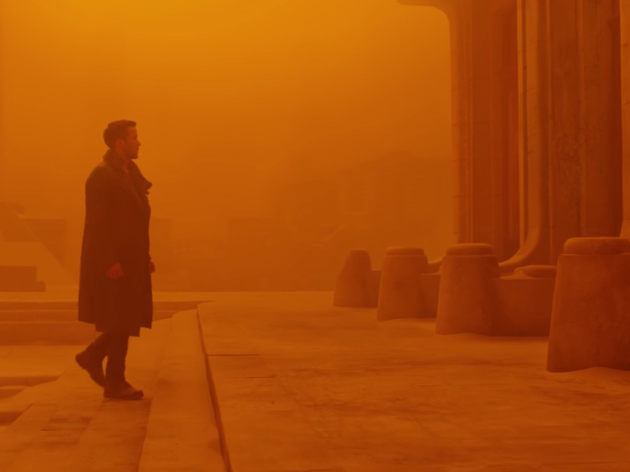
Blade Runner 2049 [above] (Oct 6)
Industrious French-Canadian director Denis Villeneuve has delivered solid hits in this slot two years running, following 2015’s Sicario with 2016’s Arrival. Now he has his highest-profile gig yet: a belated sequel to Ridley Scott’s 1982 sci-fi classic, with Ryan Gosling taking up the hunt for replicants. Harrison Ford awaits, scowling, somewhere in the smog.

The Snowman (Oct 13)
Nothing to do with Aled Jones, rather the first adaptation of Jo Nesbø’s Harry Hole bestsellers, with detective Michael Fassbender tracking a misogynist killer prone to leaving coal-eyed markers alongside the bodies. Tomas Alfredson – the Swede behind Let the Right One In and Tinker Tailor Soldier Spy – is the suitably Scandinavian director.

The Death of Stalin (Oct 20)
We’ve waited a while for Armando Iannucci to follow 2009’s In the Loop – he’s been busy with TV’s Veep, among other projects – but now he’s back, marshalling an expert comedy troupe (Jeffrey Tambor, Simon Russell Beale, Michael Palin, Paul Whitehouse) through a satirical account of the fallout from the Soviet leader’s sudden passing.

Breathe (Oct 27)
Andy Serkis pauses his mo-cap monkeying to make his directorial debut with a period drama about a society couple (stars du jour Andrew Garfield and Claire Foy) coming to terms with a polio diagnosis. Advance buzz is very good: writer William Nicholson’s last foray into similar hospital-bed territory was 1993’s enduring sob-inducer Shadowlands.    

Call Me by Your Name (Oct 27)
Trailing positively ecstatic reviews, Luca Guadagnino’s follow-up to A Bigger Splash repairs to early 80s Lombardia to observe a holiday romance between an American academic (The Social Network’s Armie Hammer) and a younger local (Timothée Chalamet). Sleeper success beckons: late October audiences will surely fork out for the sunshine alone. 

The Mercy (Oct 27)
The story of errant yachtsman Donald Crowhurst prompted one of the last decade’s most haunting documentaries in 2006’s Deep Water. Now the very capable James Marsh (Man on Wire, The Theory of Everything) offers a dramatised take on the same chilly facts. Colin Firth mans the tiller as Crowhurst; Rachel Weisz plays wife Claire.

Thor: Ragnarok (Oct 27)
Marvel Product #252 seems to have been trailered all year, promising a larkier take on the usual hammer-throwing – doubtless connected to What We Do in the Shadows joker Taika Waititi’s presence behind the camera. It’ll likely still climax with a city being stomped, but may benefit from arriving at the end of a superhero-light summer.

Murder on the Orient Express (Nov 3)
Retired from TV screens, Hercule Poirot reappears in cinemas care of Kenneth Branagh, director-star of this new version of Agatha Christie’s locomotive whodunnit. Obstacles lurk on the line – general plot familiarity, Branagh’s absurd sheepdog of a moustache – but with a first-class ensemble (here: Depp! Pfeiffer! Colman! Dench! Cruz!) Our Ken usually delivers.

Loveless (Nov 10)
Writer-director Andrey Zvyagintsev confirmed a mounting reputation as Russian cinema’s agonised conscience with 2014’s knockout Leviathan, looking on helplessly as his protagonist came to be crushed by the merciless forces of Putinland. His latest, premiered at Cannes, charts the impact a couple’s bitter divorce has on their young son: it’s reportedly no less bracing or essential.

Paddington 2 (Nov 10)
Paddington overcame production troubles to become the feelgood triumph of late 2014: a sweet, funny pantomime that also said something cheering about British hospitality. A follow-up was inevitable, but – promisingly – the services of original director Paul King have been retained, and welcome new arrivals include Hugh Grant and Brendan Gleeson. Ready the marmalade sandwiches.

The Killing of a Sacred Deer (Nov 17)
The surreal courtship rituals of 2015’s The Lobster provided Greek writer-director Yorgos Lanthimos with a surprise crossover hit: youngsters flocked to witness modern cinema’s oddest date movie. His follow-up looks just as bizarre, while evidently shading darker: Lobster survivor Colin Farrell plays a well-appointed surgeon whose life goes into dramatic freefall.         

Battle of the Sexes (Nov 24)
Tennis’s 1973 match-up between pioneering feminist Billie Jean King and shameless chauvinist Bobby Riggs – basis of a lively 2013 doc – now gets the Hollywood treatment, with a newly Oscared Emma Stone and the excellent Steve Carell smashing the still-topical issues back-and-forth. Little Miss Sunshine’s Jonathan Dayton and Valerie Faris – a happier pairing – direct.

Suburbicon (Nov 24)
George Clooney’s latest directorial offering – working from a script by his occasional paymasters the Coens – is a dark 50s-set comedy in which Matt Damon’s foursquare salaryman loses his grip on reality following his wife’s suspicious demise. The trailer suggests a cross between The ‘Burbs and Double Indemnity: let’s hope this marriage pays off.

Saturday, 2 September 2017

For what it's worth...


Top Ten Films at the UK Box Office 
for the weekend of August 25-27, 2017:

1 (new) American Made (15) ***

2 (2) Dunkirk (12A) ***
3 (1) The Hitman's Bodyguard (15) **
4 (new) Logan Lucky (12A) ****
5 (4) The Emoji Movie (U)
6 (3) Annabelle: Creation (15)
7 (new) Detroit (15) ***
8 (6) Despicable Me 3 (U)
9 (7) Girls Trip (15) ***
10 (5) The Dark Tower (12A)

(source: theguardian.com)

My top five: 
1. Logan Lucky

2. Hotel Salvation
3. In Bed with Victoria
4. An Inconvenient Sequel: Truth to Power
5. Patti Cake$


Top Ten DVD rentals: 

1 (2) John Wick: Chapter 2 (15) ***
2 (1) Beauty and the Beast (PG) ***
3 (new) Life (15) **
4 (4) Sing (U) ***
5 (3) Their Finest (12) ***
6 (5) The Lego Batman Movie (U) ***
7 (new) Fifty Shades Darker (18)
8 (6) The Great Wall (12)
9 (8) Split (15) ***
10 (7) T2: Trainspotting (18) **

(source: lovefilm.com)

My top five: 
1. I Am Not Your Negro

2. Lady Macbeth
3. Williams
4. Raw
5. Their Finest


Top five films on terrestrial TV:
1. The Full Monty [above] (Saturday, BBC1, 9pm)
2. The Tree of Life (Wednesday, C4, 1.30am)
3. Toy Story 3 (Sunday, BBC1, 5pm)
4. The Password is Courage (Saturday, BBC2, 1.25pm)
5. X-Men 2 (Saturday, C4, 10.50pm)

The beats: "Patti Cake$"


As a song cannily layered in just after its opening credits suggests, this year's Sundance sensation Patti Cake$ is, on some level, an appropriation of the Springsteen story: young New Jerseyan uses music to float themselves over the river into the world beyond. The very 21st century spin writer-director Geremy Jasper puts on it is to make this story about a girl, and one who would rather be a Missy or Queen Latifah than she would The Boss. The title is the stage name of one Patricia Dombrowski (Danielle Macdonald), a zaftig late teen living at home with a hard-drinking mother (Bridget Everett) and an ailing grandmother (Cathy Moriarty), and working two service jobs in a bid to alleviate the family debts; in her rare afternoons and nights off, she makes up rhymes with best pal Jheri (Siddharth Dhananjay), a pharmacy assistant who sees himself as the next Sean Paul, and dreams of a life apparently some distance beyond her reach. We're here to watch this young woman pay her dues, in other words, hoping against hope she may eventually earn that dollar sign at the end of her nom de guerre.

Jasper, a New Jersey native who's directed promos for the likes of Selena Gomez, evidently knows both these worlds - where his heroine's coming from, and where she aspires to be - shifting freely between Patti's fantasies and a blue-collar realism familiar from Curtis Hanson's Eminem vehicle 8 Mile. The slamdowns here come as offshoots of a macho culture, situating us deep in Soprano-land: pin-ups on dartboards, women rated as pieces of ass, kisses met with headbutts. Yet Jasper's is a comic sensibility, and he keeps undercutting his characters' aspirations in gentler, funnier ways than this life ever seems to. Walking to work, Patti daydreams of ascending to the musical pantheon, only to be jolted back to reality by a car beeping at her for straying into the road; a rare moment of connection, set to Heart's "These Dreams" - the moment Patti realises her mother once had similar hopes of escaping this town, and the moment Jasper proves he really does understand the power of pop music - is interrupted by a cut to our gal holding mom's hair back as she throws up some free shots. It is, as ever, a long way to the top if you want to rock 'n' roll.

The good news is that Patti Cake$ has a lot of fun getting us (some of the way) there. Presumably one of the reasons Fox swept in for international distribution rights is that the film's musical-triumph-over-adversity arc falls close to the contours of an established crowdpleaser like School of Rock. Yet the choices Jasper makes on a scene-by-scene basis venture substantially further out. For one thing, Patti and Jheri cut their first disc in a hut adjacent to a cemetery occupied by an amateur Satanist (Mamoudou Athie), with Patti's nan wheeled in to wheeze out some backing vocals; the group's big live break follows at an off-route stripjoint operating under the name Cheeters. These are the highs: the lows, come the second half, are properly low, such that you may start to doubt whether anybody on screen will be dropping a mic in victory at any point. Defeat and despair look to be the defaults in this harsh environment; here is a comedy that runs surprisingly close to depression, in both its mental and economic senses, which may explain why early audiences have clutched the film so closely to their hearts. (Again: we're very much in Springsteen territory.)

What keeps everybody going until the finale - in which, rest assured, music solves a lot of (if not all) problems, most touchingly the seemingly unbridgeable gap between mother and child - is the spirit of its heroine: Macdonald, in a breakthrough performance, positions Patti as a paler Precious, pissed off when she needs to be, yet finally too big of heart to fold or fail. This has been a summer in which American cinema - never more out of touch with its audience, as this year's dire box-office returns have demonstrated - has effectively thrown up its hands, tossing out a Baywatch one week, a Beguiled the next, in the desperate hope something, anything will please us. Yet there have been signs that more adventurous souls on the industry's fringes - Soderbergh with Logan Lucky, Jasper here, Sean Baker in the upcoming The Florida Project - have realised there are benefits to be gained from heading out into the country and reconnecting their art with people, as the cinema forever must. Patti Cake$ is daffy and goofy in doing this, but crucially never sneery: by the close, our heroine hasn't quite arrived on the VMA red carpet, but she has been heard out and invested with renewed hope. In 2017, we could all do with a little more of that.

Patti Cake$ is now playing in selected cinemas. 

"The Limehouse Golem" (Catholic Herald 01/09/17)


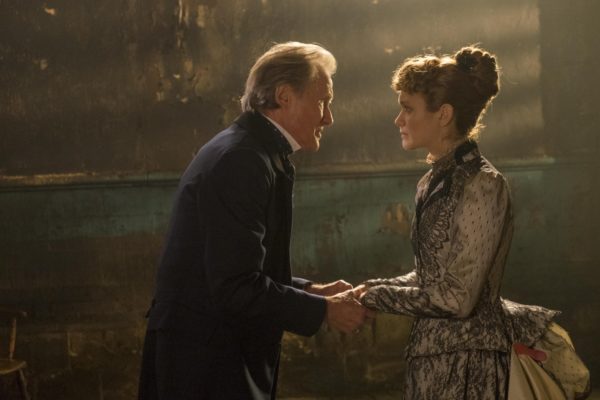
One upside of the recent Downtonisation of British cinema and TV – lacing-up history in pretty bows for easy export – has been the rediscovery of a counter-strain of period horror. 2011’s The Awakening, 2012’s The Woman in Black, and small-screen scream Penny Dreadful all cut a swathe through Empire’s underbelly, exposing the rot that lurked behind the hope and glory. Now there’s The Limehouse Golem (***, 15, 109 mins), a curious melange born of wildly diverse influences: turning Peter Ackroyd’s novel over to cackling Kick-Ass scribe Jane Goldman, Juan Carlos Medina’s film attempts an altogether grisly cross-section of late 19th century London. You might want to brace (or at least cross) yourself.

The year is 1880, and we find the eponymous East End murderer several kills into a reign of terror stirring press and public alike into a frenzy. Bill Nighy’s marginalised Scotland Yarder Kildare is on the case, yet he’s soon distracted by Lizzie Cree (Olivia Cooke), a doll-like music hall performer accused of poisoning her playwright husband. Ackroyd’s thesis is that, for pre-Netflix Britain, murder provided its own form of entertainment, bestowing celebrity upon an infamous few. Much as there was speculation Jack the Ripper had to have been well-connected, so too the Golem’s slayings throw up illustrious suspects: Karl Marx (Henry Goodman), George Gissing (Morgan Watkins) and Dan Leno (Douglas Booth).

Medina, meanwhile, gets starry-eyed over his glitziest set – understandably so, as it plays host to the only gaiety and warmth coming off the screen. Music hall (proto-cinema as it was) is here positioned as an affordable escape from a grim world indeed: dark, dank and crowded, shrouded in the noxious fumes of industry and intolerance, the film’s London forms a theatre of cruelty in which a Lizzie Cree’s fate is to be sold as trade or married off to brutes. (Death almost offers a relief.) This distinguishes The Limehouse Golem from the cosy Sunday-night telly that’s started sneaking into multiplexes: Medina’s bloody backstreet meanderings owe more to Hannibal Lecter than nice Hugh Bonneville.

It’s just a pity everybody’s locked into a plot that’s never quite as richly detailed as Ackroyd’s historical backdrop. Nighy aces a poignant coming-out scene with a young constable (Daniel Mays), only for Goldman to retreat from Kildare’s inner life. The whole winds up seeming both clever and strained: a race-to-the-gallows setpiece parallels an earlier staged execution but feels hackneyed, and it cues revelations that may provoke groans from the cheap seats. For all its literary trappings, the film’s finally a penny dreadful itself, one that hooks and diverts yet brooks no lasting scrutiny; still, given British cinema’s current, fustily perfumed state, a pungent whiff of sulphur like this might just count as a breath of fresh air.

The Limehouse Golem is now showing in cinemas nationwide.

On the high road: "Moon Dogs"


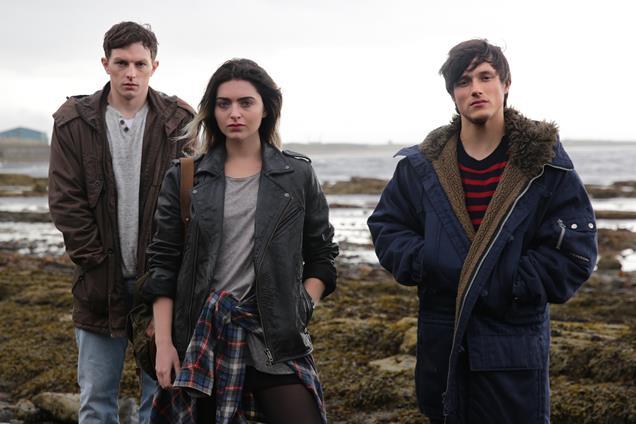
The modest Brit indie Moon Dogs is a peculiar mix of fresh, fun, very workable ideas and first-feature sloppiness that may present as an obstacle to full enjoyment. Much of the fun stuff resides in its close, Bill Forsyth-esque observation of two sensitive-awkward late-teenage stepbrothers growing up on an especially remote stretch of the Shetland coast: Thor (Christy O'Donnell), son of a Viking enthusiast, but otherwise an arty recluse who leaves his bedroom only to premiere his disastrous nu-folk noodlings for the beardily bemused patrons of the village watering hole; and Michael (Jack Parry-Jones), notionally the worldlier of the two - in that he's had occasion to sneak one girl into his room, not that anything much happens - yet left behind while his beloved drifts off to uni at Glasgow, growing increasingly frustrated and bored while working a dead-end job at the local fish factory. (His supervisor has one very Forsythian line: "Those prawns won't decapitate themselves.")

From the off, there are odd blips in continuity and logic. The stepbrother thing explains away some of the incongruity, but it's never properly understood why one of the leads is Scottish, the other Welsh, beyond the need to placate the funding organisations involved, and there's a bizarre episode where Michael falls into a lake the night before a big exam only to show up at school the next morning dripping wet. (Could he not have gone home in the meantime to towel down or change?) In theory, we could leave all these blips behind when the boys set off to Glasgow in the company of Caitlin (Tara Lee), a no-nonsense waitress who appears just the gal these local heroes need to bash or fuck some sense into them, yet even here, there's some confusion as to who initially commandeers the boat the boys set sail on, and exactly where it's headed. Again and again, you wish director Philip John and his writers Raymond Friel and Derek Boyle had taken a little extra time to polish their plot points.

The subsequent jaunt gains visually from being let loose in some verdant Scottish countryside, but feels a little diffuse dramatically. Friel and Boyle establish an endpoint, in the Celtic Connections festival Caitlin is due to perform at, but mostly you sense John and his leads making scenes up as they go along, much as David Mackenzie did with the performers in their festival movie You Instead: we're offered drinking games, absinthe fantasias, a tentative love triangle, lots of hitchhiking, and the destruction of a violin for no specifically defined reason. Lots to cheer along the way, not least several bright turns (Parry-Jones plies a hilarious line in sexually frustrated huffing and puffing), a rocking Anton Newcombe score, and - at the last - a Denis Lawson cameo, underlining the Forsyth connection; you'll likely come away hoping to see further ventures from the same team, but also that next time John and co. arm themselves with a carefully plotted routemap, as their inspiration generally did, rather than this rough, occasionally rewarding, back-of-an-envelope itinerary.

Moon Dogs is now playing in selected cinemas.