Sunday, 6 August 2017

1,001 Films: "The Shining" (1980)


The first time I saw The Shining, as a teenager looking for late-night chills on TV, it struck me as surprisingly dull: who in their right mind makes a horror movie that runs for over two hours? The second time, as a student with a cursory knowledge of Kubrick’s other work, I was a little more impressed, at least by its technical brio – but then this was the 115-minute version circulating on DVD, which cut from set-up to pay-off in a way the younger me had been expecting. Now the film has returned to the big screen in its original 144-minute US release cut, the week after the nitpickery of Room 237, a documentary that featured fans so hung up on the film’s details they lost track of the bigger picture.

Something often forgotten in the course of the film’s TV rotation is that this is a big picture. Kubrick evidently didn’t intend his films to be watched on TV or DVD; as their ceaseless Steadicam exploration of space – usually tied to a moving tricycle or a screaming madman – set out, the Overlook Hotel murders were always intended as a major movie construction project, overseen by Kubrick from blueprints by Stephen King. From the moment when the opening helicopter shot stops following Jack Torrance’s car as it winds its way through the mountains and veers off into the wilderness, The Shining is all about deviation: King, famously, was so narked by the results that he rebuilt the Overlook in his own image for TV.

The plot, for first-time visitors, remains the same. Jack Nicholson’s writer drags his family to the isolated Overlook for the winter months so he can start work on his latest tome. While the script parcels out exposition that has passed into cliché through repetition – the Hotel’s on an Indian burial ground, there’s a snowstorm blowing in, the phones stop working – Torrance retreats further into himself, drinking and having conversations with fictional characters, generally oblivious to his loved ones’ welfare. The cat-and-mouse game that follows becomes a strut on which Kubrick can hang his theses on the tyranny of the typewriter, and why it might be healthier for kids to have imaginary friends than it is for grown-ups.

Between the longueurs and auteur pretensions, it remains only patchily effective as straight horror, particularly one emerging in the wake of Halloween. Its gotcha moments – the naked woman in Room 237, the revelation of what Jack’s been typing – are generally outnumbered by arcane puns (Torrance’s “Caretaker” tries to chop his son into bits) and baroque flourishes of art direction. It’s one of the few horror movies to major in interior design: the carpets are more memorable than the killscenes. The Shining dates from a moment when even a highbrow like Kubrick was trying to get in on this once-reviled genre; it stands as the blue-chip alternative to those scuzzy video nasties flooding the market in multiple versions.

The vision is so of a piece that perhaps only Shining obsessives might spot the newly added scenes and moments. This cut feels a mite more generous towards Shelley Duvall’s Wendy Torrance – a casualty of earlier cuts, where she was reduced to shrieking hysteria rather too early – though a post-Exorcist moment with young Danny (Danny Lloyd, in one of the all-time great kid performances) and a doctor holds the film up with a rational, psychological grounding it perhaps didn’t really need. What’s newly spine-tingling is the sense that these scenes were there all along, waiting for a receptive audience. Like the ghosts of the Overlook, they never went away.

(MovieMail, October 2012)

The Shining is available on DVD and Blu-Ray through Warner Home Video.

Saturday, 5 August 2017

For what it's worth...


Top Ten Films at the UK Box Office 
for the weekend of July 28-30, 2017:

1 (1) Dunkirk (12A) ***

2 (new) Captain Underpants (U)
3 (2) Despicable Me 3 (U)
4 (3) War for the Planet of the Apes (12A) ***
5 (4Spider-Man: Homecoming (12A) **
6 (new) Girls Trip (15) ***
7 (5) Cars 3 (U)
8 (new) 47 Metres Down (15)
9 (7) Baby Driver (15) **
10 (new) The Big Sick (15) ***

(source: theguardian.com)

My top five: 
1. Howards End

2. Williams
3. "Prick Up Your Ears"
4. Jab Harry Met Sejal
5. The Ghoul


Top Ten DVD rentals: 

1 (1) Beauty and the Beast (PG) ***
2 (3) Passengers (12) **
3 (new) The Lego Batman Movie (U) ***
4 (4) T2: Trainspotting (18) **
5 (2) Sing (U) ***
6 (new) Power Rangers (12) **
7 (6) Patriots Day (15)
8 (7) Assassin's Creed (15)
9 (9) The Lost City of Z (15) *****
10 (8) The Founder (15) ***

(source: lovefilm.com)

My top five: 
1. The Lost City of Z

2. Neruda
3. Heal the Living
4. Get Out
5. Certain Women


Top five films on terrestrial TV:
1. Point Break (Sunday, five, 11.05pm)
2. Strictly Ballroom [above] (Friday, BBC1, 11.05pm)
3. In the House (Saturday, BBC2, 1am)
4. The King's Speech (Sunday, C4, 9.50pm)
5. Contraband (Friday, C4, 12midnight)

Cars and girls: "Williams"


What's in a name? For petrolheads, the title of the new doc Williams - like those of Senna and McLaren, its predecessors in this pack - will be immediately evocative, conjuring images of both the Formula 1 team's yellow-blue livery and its melancholy, wheelchair-bound proprietor, boy racer-turned-motoring megamind Frank Williams. Filmmaker Morgan Matthews is steering in a slightly different direction, however. From an early stage, his latest project acknowledges this is a surname Frank shares with his daughter Claire, who lets slip she's barely spoken with her dad about the accident that left him paralysed from the shoulders down, and equally a name Frank shared with his late wife Ginny, whose voice comes through loud and clear on the cassette tapes she recorded with writer Pamela Cockerill ahead of her 1991 memoir A Different Kind of Life. The soft-spoken Frank, by contrast, is drowned out by a revving engine in a prologue that establishes how the key theme of Williams isn't combustion but communication: it wants to have the kind of conversations that tend not to happen in the traditionally male refuge/preserve that is the garage.

Matthews, arriving at this blue-chip BBC Films assignment off the back of 2014's excellent X+Y and last month's remarkable Storyville film This Was My Dad, has the surest of feels for the human aspect of this story. On one side of the track, yes, there is Frank's narrative: that of the South Shields lad who tinkered his way up in what was, even back in the swinging 60s, a toff's pursuit, his trajectory described via the conjunction of expert talking heads and evocatively faded archive footage we now expect to encounter in documentaries such as these. Yet it's layered and counterpointed with Ginny's commentary, brought to further life by dramatised sequences that visualise her flowing front-parlour chats with Cockerill. Mrs. W concedes she "might have been looking for a bit of scruff" the first time she locked eyes on Frank, and that she finds racing folk "insular"; she speaks openly and frankly about her husband's indiscretions, and how she came to deal - in the wake of the (non-racing) car crash that deprived Frank of his mobility - with the fact she would never be able to sleep with her husband again. Motion and emotion, then: where Asif Kapadia had to make Amy to connect with that audience who weren't likely to show up for Senna, Matthews might just get both crowds in to see the same movie.

The tactic has other advantages. Not only does it limit the tech-talk and Top Gear-isms (young Frank's nickname among his fellow mechanics, gleaned in passing: "Wanks"), it allows Matthews to circumnavigate a subject schooled to swallow down his feelings by a sport that has forever prioritised speed over reflection. Every time Williams threatens to stall before its subject's mechanical thought processes and reflex deflections ("I'd rather not talk about that"), Matthews can cut away to the markedly more direct testimony pouring out of Ginny or the no-nonsense Claire, appointed deputy team principal in 2013. The latter has issues of her own to talk through: far less forgiving of dad's straying than her mother, she also found her unsought promotion through the F1 ranks estranged her from her brother Jonathan, who was expecting to take on the role as the family's sole male heir. If Senna was Formula 1 as Icarus myth, Williams unfolds before us as positively Shakespearian, with Frank making for an altogether poignant figure at the centre of this storm: a watery-eyed monomaniac, nowadays obliged to live vicariously through a passing parade of playboys, while overseeing what the current Constructors' Championship table would indicate is a crumbling empire. (The Williams team hasn't won a Drivers' Championship since Jacques Villeneuve, a name now nearly as dim and distant as Greg Rusedski.)

He can be funny and self-aware, never more so than when discussing the cars he's written off, but on almost every other subject, he resembles that breed of Englishman who remains as remote from his emotions as his country is from the continent. As onetime chief engineer Patrick Head puts it, "People think Frank's unusual because of the accident - but he was always like that." The miracle is that Matthews should bring us so close to him. Racing fans should emerge from these two hours satisfied: they'll learn how young Jonathan was terrified one morning by Nigel Mansell, of all people - and Matthews does a capable job of working the inter-team rivalry between Mansell and the easier-going Brazilian Nelson Piquet up into a second-row variation on Senna-Prost. (If someone turns this into a glossy dramatisation à la Rush, I insist that the intemperate Mansell be played by the actor David Haig.) Yet this director doesn't appear unduly dazzled or overwhelmed by the glamour of this sport, choosing not to linger on the Monaco sunlight glinting off the pristine chassis. Matthews' film, all the stronger for not sticking exclusively to the racing line, forsakes revs for revelations, and its candour yields a genuine champagne moment as we approach the chequered flag: the sight of a man seeing himself, at long last, through the eyes of the women who've loved him. Sometimes a film doesn't need mph to move us.

Williams opens in selected cinemas from today, and is also available to stream via Curzon Home Cinema. 

Friday, 4 August 2017

Report from the interior: "City of Ghosts"


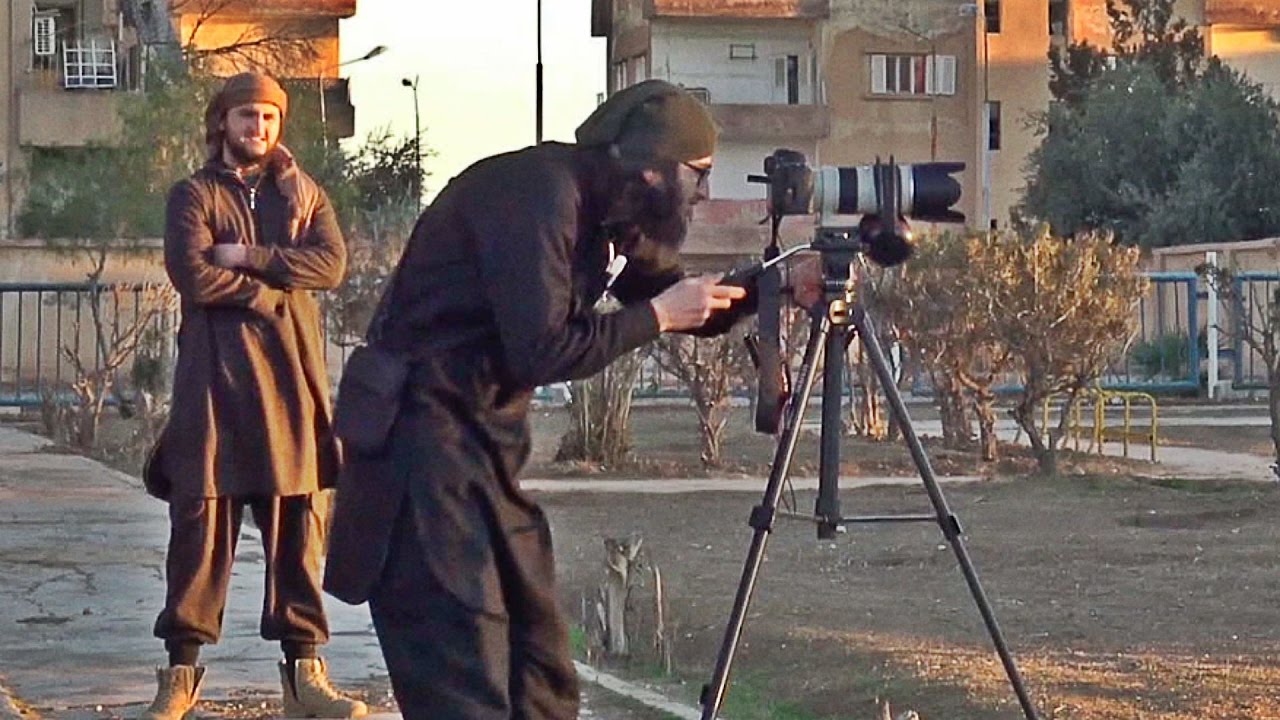
The documentarist Matthew Heineman first stormed cinemas with 2015's Cartel Land, an arresting, close-up study of the war on drugs, as experienced by the residents of one small Mexican town. A couple of years on, and perhaps Heineman now feels too old to be putting himself and his crew in the line of fire as he did, with alarming frequency, while making that breakthrough feature. His follow-up City of Ghosts tails behind others who've had cause to put themselves in a similar situation over the past half-decade - a small group of old friends who've spent that time witnessing their home, the Syrian city of Raqqa, fall into disarray, the result of first the failed uprising against the Assad regime, then the arrival of ISIS. 

Appalled by the propagandistic images their occupiers were dispatching to these rubble-strewn streets to the rest of the world, these young men snuck out their smartphones and began making covert, illicit recordings of life under the ISIS yoke, disseminating their footage via Facebook and Twitter. This people's news network - known online as RBSS, or Raqqa is Being Slaughtered Silently - quickly became a go-to source for Western news organisations looking to illustrate the Syrian crisis to their viewers, although broadcasting restrictions have meant the BBC, CNN et al. have had to blur or pixellate the worst of the atrocities the RBSS team caught on camera.

Heineman's film, bound by no such immediate restrictions, earns its 18 certificate very early on by including, uncensored, all the Syria footage you may have taken care to avoid on the Internet. Here are ISIS thugs mounting their victims on crosses and parading them through the streets; executing prisoners via gunshots to the back of the head or by throwing them off tall buildings; leaving corpses in the gutter and heads on spikes. It is nothing less than a horrorshow, medieval in its conception, but Heineman would doubtless argue we need to be confronted with such sights to fully understand the threat ISIS pose, both to civilisation in general and RBSS's reporters in particular.

Heineman actually comes to this story late: he joins the network's senior staff and leading lights after their cover was blown back home, a development that obliged them to flee - like many of their countrymen - across the border into Turkey and, from there, Germany. (As with Laura Poitras's recent whistleblowing diptych Citizenfour and Risk, it's a documentary where several of the most fraught scenes take place in anonymous hotel rooms and safehouses.) In exile, the RBSS journalists are welcomed as ambassadors for peace and championed as keepers of the free-speech flame - we first meet them accepting a Press Club gong - but they're subject to a terrible estrangement, aware the conflict they've been covering continues in their absence.

Certain commentators came away from Cartel Land wondering whether Heineman might be a lunatic hothead, forever racing towards the next hail of gunfire. Here, obliged to wait matters out with his subjects, he has greater time to analyse everything that passes over the wires and before his lens. Much of it is plainly alarming: Chris Morris would do well to come up with footage as disturbing as a "Caliphate Cubs" video, in which ISIS loyalists prompt toddlers to take knives to teddybears in preparation for bigger targets to come. The sophistry of the propaganda the RBSS team seek to counter is no less striking: watch the video that seemingly depicts the execution of one reporter's father - shot, cut and lit in a manner that wouldn't shame a superior B-movie - and wonder where these fanatics are getting their budgets.

Time similarly allows Heineman to note his subjects' conscience, troubled yet vast: when site editor Aziz is seen blurring out the faces of anybody whose life might be placed in danger before uploading a new clip, his action can be set in marked contrast with the publish-and-be-damned approach of one Julian Assange in the Wikileaks doc We Steal Secrets. Not that it helps these reporters themselves much. The assassination of a fellow traveller in Turkey is a mid-film reminder that the fundamentalists have come to move and operate some distance beyond their established strongholds. "The knife is at our necks," laments Aziz late on, and we feel the threat encroaching just as surely as we felt the bullets whizzing past our ears back in Cartel Land.

Even in exile, no-one seems especially secure. Heineman situates us at these refugees' shoulders as they attend a protest against a grunting right-wing rally at the Brandenburg Gate, and again as news breaks of terror attacks carried out by representatives of radical Islam elsewhere in mainland Europe; a quietly haunting final sequence makes all too clear the physical toll of having to counter such murderous hatred 24/7. What distinguished Cartel Land was Heineman's proximity to his subject, his willingness to put his body on the line to bring that story back; here, again, the closeness between Heineman the journalist and his journo subjects means there's very little distance between what the film describes - a determined, principled fightback - and what it is. Standing firm and refusing to cower, City of Ghosts packs a considerable punch as a work of defiance and resistance: every image these men retrieve is one ISIS would not want us to see, light with which to combat darkness.

City of Ghosts is now playing in selected cinemas, and is available to stream via Curzon Home Cinema. 

Thursday, 3 August 2017

On DVD: "The Handmaiden"


Although acclaimed in many quarters as a triumph, The Handmaiden is as much a retreat for Park Chan-wook, marking the director's return to his native Korea after the commercial underperformance of his US-set, English-language debut Stoker. However unhappy his time in the West may have been, Park clearly picked up something of note during his visit - a copy of Sarah Waters' much-admired novel Fingersmith - but his adaptation emerges as only loosely inspired by its source, a matter of the filmmaker wondering what might be gained from transferring the book's bizarre love triangle from Victorian Britain to the Japanese-occupied Korea of the 1930s. With its final act snaking out in an entirely new direction, The Handmaiden offers a lavish illustration of an auteur overwriting an author, a process that generates as many losses as gains.

This is very much the baroque handiwork of the Park who first unfolded the Vengeance trilogy - 2002's Sympathy for Mr. Vengeance, 2003's OldBoy and 2005's Lady Vengeance - before gobsmacked audiences. Within moments of the opening credits, we've been shown a butterfly-shaped hairpin that opens a locked drawer containing myriad antiquities, and taken inside a country house that meshes English and Japanese architecture and contains a bedroom that holds not one, not two, but a full five drawers of ladies' silk gloves. In essence, what Park has done is to further dress up Waters' penny-dreadful plot: that of a low-born girl (in this case Kim Tae-ri's Sookhee, a.k.a. Tamako), placed inside a well-to-do household as part of a planned robbery scam, who finds her head (and other parts) turned by the mistress of the house (Kim Min-hee's Lady Sadako).

In Park's hands, this becomes both an intricate and highly eroticised movement. It begins when Tamako files a snaggletooth in Sadako's mouth with a thimble; it proceeds through sleepover snuggling - Tamako teaching the apparently virginal Sadako how to kiss - to full-on scissoring with very evocative Foley work. In retrospect, it seems appropriate that the phrase Ha Jung-woo's scheming "Count" Fujiwara issues to Tamako to trigger their plan is "fully ripe", and that he should eventually deliver this password while biting into a peach that explodes on impact: The Handmaiden is fully, properly, knowingly ripe from first florid frame to its last. And yet, however absurd it might get, it grips us. There's a cherishable contrast between the considered elegance of Park's design and his cursing, spitting, rutting players, who've very clearly been instructed to act like horny, venal, recognisably 21st century types. 

Park has no interest in The Handmaiden becoming a genteel museum piece; instead, he applies his usual red-blooded, full-throttle approach to what is, at its dark and twisted heart, a best-laid-plans thriller, one that yields twists and other perversities at almost every turn. The entire second act is one such deviation, set primarily in a mechanised library of Oriental erotica that serves as an underground sex club for the country's occupiers (choice Parkian detail: the stone snake that marks "the bounds of [presumably carnal] knowledge"; screen doors that fold like labia); it goes on to offer a reverse angle on everything we've witnessed up to that point. All of which is to acknowledge the film's superlative construction. Seong-hie Ryu's exceptional, multifaceted production design keeps being reconfigured in much the same way as the central relationships come to be reconfigured, and the plot reshaped.

The off-colour activity those sets contain doubtless helped make The Handmaiden a rare succès de scandale, Park's biggest hit in the UK to date - a fine box-office return, all told. Yet while the squid that featured so memorably in OldBoy returns here - in a new, altogether kinkier context - the weird pain and grief sublimated in that film is entirely absent from the new one. We're simply set to watching characters playing games and screwing one another over, another Tinder-era powerplay unfolding on a theatre of cruelty overseen by an attentive, obsessive yet undeniably gifted puppetmaster who doesn't pause long enough for us to register any emotional hurt, and knows all too well the seductive power of girl-on-girl action. In the concluding moments, the outsized lovebeads strung up in Act One are finally deployed - like the gun in a Hitchcock movie - and the screen is flooded with an ocean of wetness: it's easy to be amused, tickled, perhaps even titillated by the cut, a little harder to fall in love with the sight and sound of a director so obviously amusing himself.

The Handmaiden is available on DVD and Blu-Ray this Monday through Curzon Artificial Eye. 

Wednesday, 2 August 2017

From the archive: "Arbitrage"


Arbitrage is one of those titles that requires some explanation. My online dictionary of choice describes it as the process of negotiation by which those in the financial sector can profit from any imbalance between markets, but stay with me: it fits Nicholas Jarecki’s snappy thriller, another offering from the emergent bankers-in-crisis subgenre that provided last year’s eye-catching Margin Call, more or less perfectly. Negotiation is at the heart of it: again, we’re watching someone who’s had it too easy for too long trying to worm their way out of a very deep and dark hole.

Richard Gere’s Robert Miller is a high-functioning alpha who has it all, except maybe the time to deal with it properly. A Wall Street mover-and-shaker, he slides along the surface of his world on a thin skein of meaningless, quickly reneged promises, pledging to spend more time with his wife (Susan Sarandon) and their family while sneaking away to tryst with his mistress (Laetitia Casta), a woman so irresistibly French she owns a gallery and gasps “oh, mon Dieu” when in the throes of passion.

Even Miller, though, is subject to nagging niggles: a contract that hasn’t been signed in a rare instance of someone holding out on him, the lurking threat of a financial audit, a vague sense he’s overdoing it for a man of his advancing years. One night, he takes his eye off the road, totalling his car – along with mademoiselle, dozing without seatbelt in the passenger seat – and leaving him bleeding on the inside and psychologically shaken everywhere else. Damage limitation becomes the order of the day.

The question Arbitrage poses is this: when did Richard Gere become so fascinating to watch? Sure, it helps that Jarecki has written a character with both money and power enough to try and manoeuvre himself out of this situation, whether trying to pass off a major fraud as “a bad bet” or sell out his accomplice in the subsequent cover-up. Yet it’s Gere who makes all this fly, spiking the glib slickness of his previous romantic heroes with the notes of moral ambiguity he traded on in his career-changing performance as Clifford Irving in 2006’s The Hoax, and selling us on a series of lies.

Jarecki’s film, set within a world not exactly overflowing with sympathetic characters, exerts a similar chilly grip to TV’s Damages: it’s unusually interested in those supporting and day players through whom the central character hopes to do his bidding, and superbly cast all the way down. Sound use is made of indie darling Brit Marling’s air of blonde privilege as Miller’s daughter, and of Whit Stillman regular Chris Eigeman’s smarts as Miller’s second-in-command. Sarandon continues a fine recent run of roles as a Brooklyn girl whom affluence has hardened into a formidably steely society wife; and Tim Roth is nicely prickly as the slouching detective whose lack of politesse seems designed to get right under his quarry’s skin.

One surprise is how this conventional line of inquiry – will the banker conceal his crimes from the eyes of the law? – is allowed to recede; instead, Arbitrage finds another, novel way of getting at Miller, and out of the snakepit of deals, hustles and negotiations it plunges us into. (Recent history would suggest bankers might just be beyond the law altogether.) Jarecki knows there’s an obvious narrative pleasure that comes with watching a swaggerer heading for a fall; what his film also possesses is the intelligence and rigour to shape this descent into a terrifically watchable and resonant parable of greed, corruption, and the way the world now appears to work.

(MovieMail, March 2013)

Arbitrage screens on C4 tonight at 1.30am.

Tuesday, 1 August 2017

From the archive: ""Prick Up Your Ears""


"Prick Up Your Ears", Stephen Frears' dramatisation of the Joe Orton murder case, drops us right into the thick of something, evoking from the get-go a thoroughly odd, if not entirely queer couple, trapped together in an Islington flat. Here is Orton's lover Kenneth Halliwell (Alfred Molina), a self-loathing middle-aged neatfreak - fair obsessed with dusting - whose life has been inclined towards tragedy ever since his mother dropped dead after being stung by a wasp over breakfast, and his father stuck his head in the gas oven. Gary Oldman's Orton, by contrast, is the up-and-coming provocateur of stage and urinal alike, unable to take a damn thing seriously, apt to flirt with the undertakers at his own mother's funeral. Flashbacks reveal how the two met as struggling actors at RADA, then - even within the confined space of their dank and dingy bedsit - started drifting apart, as Orton found the notoriety he always wanted through such West End hits as Entertaining Mr. Sloane and Loot, handing Halliwell only further miseries and insecurities with which to feed his underlying depression.

Although Frears directs with his usual restraint, keeping himself out of the way of two outstanding central turns, this is a very cleverly constructed film. Alan Bennett's screenplay is at least as interested in charting the repercussions this affair had on those in the present-day - Wallace Shawn making for a most personable framing device as Orton's biographer John Lahr - and is shot through with uniquely phrased fascinations. (On the gentrification of Islington, one character observes: "They turned the greengrocer's into an antiques shop, and the pub does salad." Plus ça change.) Bennett crafts a string of idiosyncratic set-pieces - Orton and Halliwell cruising public parks at a time when homosexuality was a criminal offence, the investigation by a nosy librarian that landed both parties in prison for leaving obscene graffiti on their books - but Frears knows when to hone in on cherishable moments in the performances: Molina-as-Halliwell knocking on the door of the conquest he's followed home and making small talk with a Moroccan rent boy ("So your sister's husband works in Epsom?"), and even at the last reprimanding himself for not using a more appropriately theatrical weapon to stove his lover's head in. Against him, Oldman brings a twisted sweetness to the sequence where Orton uses his first advance to pay for a wig and a john for Halliwell, but there's something tellingly cruel in the way he corrects his lover in the writing of a piss-taking letter to an officious adversary.

The look is never less than authentic in its seediness, forever leading us by the hand into the shadows that lay beyond the banners and bunting of the Festival of Britain, and thereby giving us cause to wonder what happened when the Sixties swung the other way. Frears recently won acclaim for his The Queen, but it's only with this re-release that I realised what his directorial project has been all along: to quietly stitch together an alternative or underground history of the nation, depicting what was going on behind the scenes or - as in a strange homoerotic ballet staged here in a subterranean WC - beneath our feet. Just as Frears' subsequent Dangerous Liaisons was a period piece that sought the last word on the greed and excess of the 1980s, "Prick Up Your Ears" now seems to unspool as a requiem composed in the AIDS decade: a reminder of how far the gay community had moved on, and how far it still had to travel for acceptance at the time of production, entirely sympathetic to its outsider heroes' lifestyle choices, even as it ruefully depicts how they came to destroy them both. Two decades down the line from its original release, the film also holds up as a repository for notable British character actors, of a kind Orton would surely have appreciated: alongside the frankly inspired casting of Frances Barber as Julie Walters' daughter, look sharp for Eric Richard, a.k.a. Bob Cryer from The Bill [and now Dunkirk!], as a talent scout, and Richard Wilson as a prison psychiatrist.

(July 2007)

"Prick Up Your Ears" returns to selected cinemas from Friday.