Sunday, 7 May 2017

Second album syndrome: "Guardians of the Galaxy Vol. 2"


2014's first "volume" of Guardians of the Galaxy was Disney-Marvel's Snarky Superhero Movie: the usual ratio of two-thirds worldbuilding to one-third planet-trashing, albeit composed to an ironic AM-radio soundtrack and with some inbuilt sense of its own ridiculousness. Since then, rival studios Fox and Warner Bros. have both enjoyed big hits with their own SSMs (Deadpool and Suicide Squad, both rather more aggressive in their insincerity, though apparently not enough to put off the fanboys), which means that Guardians Vol. 2 has in some way to address the problem of rapidly diminishing novelty. It does this, almost inevitably, by getting bigger. If there's one coherent pattern or project that can be discerned within the new film's industrial sound and fury, it concerns an extension of the Guardians family. Green alien Gamora (Zoe Saldana) embarks upon a titanic sibling rivalry with her blue, Borg-ish sister Nebula (Karen Gillan). Drax (Dave Bautista), the jolliest two-tone giant since Buster Bloodvessel, finds companionship of a joshing, non-committal sort with tentacled empath Mantis (Pom Klementieff). And upon crashlanding his ship, cocksure pilot Peter Quill (Chris Pratt) has an unexpected reunion with his father, the almost equally cocksure Ego (Kurt Russell), thereby initiating the origin story the first movie zoomed past. Subplots-a-go-go, then, though as several observers have pointed out, it doesn't matter whether you're gold, green, befurred or blue in this universe, your struggles will forever be secondary to those of two white guys working through long-deferred father-son issues.

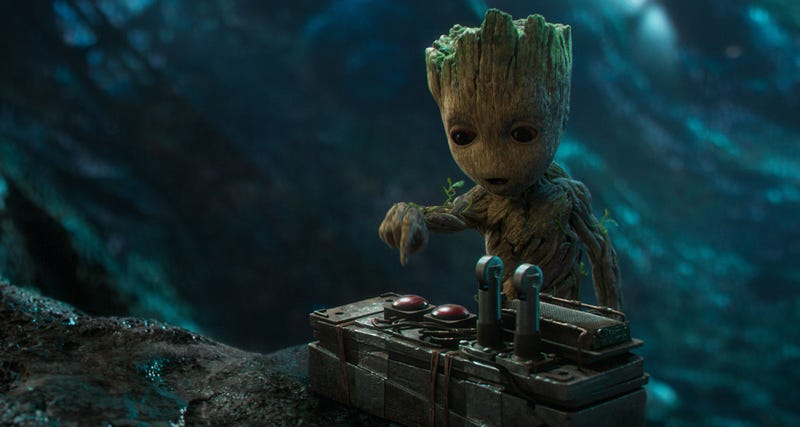
Vol. 2 thus proves heavier and more baggage-laden than its predecessor: we're zooming this time towards the death of one Guardian, which only slightly offsets the 47 new arrivals, and isn't much of a basis for a wild Friday night laughfest; indeed, it all ends with a tear, providing you're not inclined - after two-and-a-quarter hours - to stick around for the not one, not two, but three (count 'em) post-credit stings. Over that time, it should become apparent to all but the most mewling of fanboys that James Gunn has become a far less interesting and subversive filmmaker than we may first have taken him for: The Specials to Slither to Super and Sniggering Knock-Off of Every Space Saga Under the Sun represents a pretty precipitous decline, whatever that trajectory may have done for his personal savings account. Gunn now has more money and bigger names at his disposal, and limitless opportunities to magick up heavily digitised spectacle, but GOTGv2 is otherwise a mess of rewrites and test-screening feedback: more Baby Groot, the cards said, so Gunn duly follows through, no matter that this takes us several minutes further away from an already fraying narrative line. I can't even say he makes an awesome mixtape: he's limited to rummaging in the archives of whichever labels Disney has a stake in, and presumably forbidden from selecting anything too outré, lest it alienate the multiplexers. When Quill is handed a Zune to replace his once-trusty Walkman on his adventures, the first song he shuffles towards is - oh sweet Jesus, not this, anything but this - bloody Cat Stevens doing bloody "Father and Son".

Again, the sense is of material that is fundamentally and inescapably kids' stuff, juvenilia conceived to inspire easy credulity in the suckers whose pockets it's just picked, filling those 136 minutes with dialogue so throwaway it can only reasonably be delivered tongue-in-cheek. That's one get out, and Gunn has also realised he can further dress up any arrested development with heavyweight casting: here, we get not just Russell but Sylvester Stallone, although the pair's presence in the Fast & Furious and Expendables franchises rather betrays a fondness not for robust drama but late-life cheque-chasing. Of the other grown adults accepting money for their participation, there may be no sadder opening credit in recent movie history than "with Vin Diesel as Baby Groot" (dude survived The Pacifier for this?), while the American mainstream's project to whittle Pratt down to machine-tooled antihero remains frankly criminal; he's approximately one-fivehundredth as funny as here as he was on any single episode of Parks & Rec. In the end, the great triumph of this franchise, as with so many others, is one of packaging, and how Green Lantern-level nonsense can be rebranded and resold to us as a hot ticket: Vol. 2 certainly has the arched-brow framing of a joke, but with the exception of a few stray signs of life - Klementieff's spaciness, Bautista's throaty chuckle, those humdrum sidebars Gunn sporadically ducks into amid the setpieces - not the integral wit. First time round, I pegged this franchise as Pirates of the Caribbean in space, which now seems a touch unfair on Gunn's better instincts; on a second go, it suggested no more than Space Truckers with major corporate backing - and, call me perverse, but I find scrappy intergalactic underdogs easier to cheer for when they count Stephen Dorff among their number, and are busy fending off a straight-to-video black hole.

Guardians of the Galaxy vol. 2 is now playing in cinemas nationwide.    

Saturday, 6 May 2017

For what it's worth...


Top Ten Films at the UK Box Office   
for the weekend of April 28-30, 2017:
   
1 (new) Guardians of the Galaxy Vol. 2 (12A) **
2 (1) Fast & Furious 8 (12A) 
3 (2) The Boss Baby (U)
4 (3) Beauty and the Beast (PG) ***
5 (4) Their Finest (12A) ***
6 (new) Baahubali 2: The Conclusion (Hindi version, 15) ****
7 (re) Secret Cinema: Moulin Rouge! (12A)
8 (5) Smurfs: The Lost Village (U)
9 (new) Baahubali 2: The Conclusion (Tamil version, 15) ****
10 (new) Lady Macbeth (15)

(source: theguardian.com)

My top five:   
1. Heal the Living
2. Suntan
3. Baahubali 2: The Conclusion
4. Harmonium
5. Citizen Jane: Battle for the City


Top Ten DVD rentals:  

1 (1) Rogue One (12) **
2 (2) Moana (PG) ****
3 (4) Arrival (12) ***
4 (5) Ballerina (U) ***
5 (3) Doctor Strange (12) **
6 (6) Trolls (U)
7 (7) Bridget Jones's Baby (15) *
8 (re) Miss Peregrine's Home for Peculiar Children (12)
9 (8) The Accountant (15)
10 (9) Inferno (15) *

(source: lovefilm.com)

My top five:  
1. Silence [above]
2. Moana
3. The Eagle Huntress
4. Catfight
5. It's Only the End of the World


Top five films on terrestrial TV this week:
1. The 40-Year-Old Virgin (Saturday, ITV1, 9.45pm)
2. Robin Hood: Prince of Thieves (Saturday, five, 8.45pm)
3. Ghost (Saturday, C4, 11.35pm)
4. Prometheus (Sunday, C4, 10.25pm)
5. Nightcrawler (Saturday, BBC2, 9pm)

On TV: "Nightcrawler"


Nightcrawler works overtime to impress upon you just how weird Jake Gyllenhaal looks. Gone is the puppyish lead of Brokeback and Donnie Darko; farewell, too, the cub reporter of Zodiac, although something of the unhealthy, solitary obsession remains. As Lou Bloom, opportunist at large on the streets of L.A. after dark, the eyes are buggier than ever, the brows more beetling, the hair rather too assiduously slicked over, as though to cover something up. If this was the boy next door, you wouldn’t want to go looking in his basement. The one truly stinging gag in Dan Gilroy’s dark-comic satire is that even as Bloom gets more successful, he doesn’t become any less weird; rather, his weirdness merely has a greater legitimacy conferred upon it. What Gilroy has given us here is a peculiar American success story, charting Bloom’s progress from rootless drifter – introduced mugging a security guard for his watch – to roving newshound, flogging gonzo reportage of the dead and dying to a struggling 24-hour network: a gig that first generates chump change, later thousands of dollars a pop.

We’re in semi-familiar satirical territory here. Bloom could be the digital-era offspring of Powell’s Peeping Tom, the diary-keeping narcissist David Holzman or The King of Comedy’s Rupert Pupkin, if their voyeuristic impulses and rampant self-interest didn’t automatically disqualify any of these oddballs with cameras from spawning. The difference is that, emboldened with his pressed shirts and Web-sourced affirmation-speak, uglymug Bloom actually comes to seem like the respectable face of his ruthless business. Though a shameless hustler, Lou Bloom stays true to himself in having absolutely no ethical standards to betray; Gilroy’s real contempt is reserved for the networks, as represented here by producer Nina Romina (Rene Russo), desperate for the (literal) car-crash viewing that might pique channelsurfing viewers’ interest, thus bolstering both ratings and advertising revenue.

Some of Nightcrawler comes over as an illustrated rant – well-illustrated, certainly, long-time Paul Thomas Anderson collaborator Robert Elswit giving the image a nocturnal sheen not witnessed on this turf since Michael Mann’s Collateral. Yet it’s a rant nonetheless, and Gilroy’s ire at the way the industry works sits rather too close to the surface in certain scenes: that Lou and Nina should eventually end up in bed together, both figuratively and literally, feels more than a little on the nose. To make the leap from superior popcorn movie to great modern satire, Nightcrawler really needed to do more to implicate its audience: we’re the ones rubbernecking, after all. I don’t think Gilroy dares to, which is why, for all the hype, the film comes to resemble local news; it’s Hollywood reporting on its own lower levels. We know Lou Bloom’s a bottom-feeder, and the normals gathering at crime scenes to gawp or mourn regard him as somewhere between a nuisance and a parasite; it’s only the apparently intelligent Nina, and her himbo-bimbo anchors, who fall for what this guy’s peddling.

Gyllenhaal plays what he’s given to the hilt – it’s worth seeing for the crazed conviction he brings to such hushed, plain-spoken sociopathy – yet Lou only ever operates at the level of committed caricature. How much creepier would Nightcrawler have been had Lou Bloom walked and talked like one of us, rather than like some self-improving fairground ghoul? It would have been less of a comedy, I suspect, and – if still nothing to rival Henry: Portrait of a Serial Killer on the ways we consume violence – a far tougher, trickier film for that. This Nightcrawler is very watchable, and very much inside-L.A.: unless you happen to be a producer on a low-rating news channel, or one of those twerps who spend their days and nights pushing recording equipment into the faces of A-listers like Gyllenhaal, it’s media satire you can witness on a Friday night and have forgotten almost entirely about by Saturday teatime. Ace in the Hole can rest easy once more.

(MovieMail, November 2014)

Nightcrawler screens on BBC2 at 9pm tonight.

Friday, 5 May 2017

Mystery men: "Harmonium"


The Japanese writer-director Koji Fukada has been quietly carving a name for himself in the sidebars of the Cannes film festival, yet while UK distributors have understood he's someone they and we should take note of, they still seem a touch unsure as to who exactly they've got on their hands: he's neither the cuddly-accessible Hirokazu Kore-eda, nor an obvious genre fiend in the Kiyoshi Kurosawa mould, which may explain why it took two years for Fukada's broadly admired yet tricky-to-sell 2014 breakthrough Au revoir l'été to drift onto our screens. His latest Harmonium, which has taken but twelve months to reach us, ventures into territory previously charted by such provocations as Theorem and Brimstone and Treacle, albeit with a keynote of restraint: yet again, we witness an outsider-figure turning an altogether staid family unit on its head, but the twist - or is it a gag? - is that said family's constituent members at first appear far too timidly polite to do anything about it.

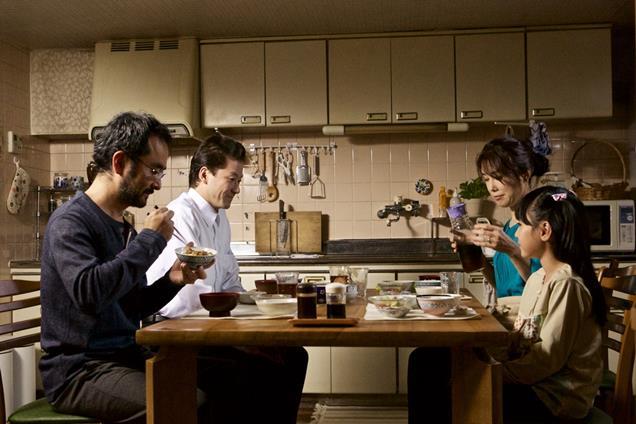
We immediately grasp that this house is divided from the way Fukada frames its inhabitants around the breakfast table: devout mum Akié (Mariko Tsutsui) saying grace with her young daughter on one side of the screen, distant patriarch Toshio (Kanji Furutachi) listlessly chowing down while parsing the newspaper on the other. The tumult, such as it is, begins when Yasaka (Tadanobu Asano), one of dad's old associates, shows up in the garage Toshio uses as an engineering workshop, fresh from serving a prison stretch for murder, and quickly wheedles his way into both a job and the family's spare room. From his upright bearing and permanently buttoned-down collar, we sense Yasaka is an odd fish - yet he pays more benign-seeming attention to Akié and the child than does the original man of the house, going so far as to talk to the former (which Yasaka, curmudgeon that he is, never does) and to teach the latter the instrument of the title.

Presumably Fukada chose the harmonium for its ability to leave notes of discordance hanging in the air: from an early point, we both see and hear that there are certain elements in this household (husband and wife; even the husband and his pal) which don't really chime. We could add one more pair to this list: Fukada's narrative and his handling of the narrative. The reason for Yasaka's reappearance, it transpires, is one which has sustained countless psychothrillers over the decades, but for at least its first half, the film presents as a sunny slowburn: the characters go fishing or to church, potter around the home and garage, make plans to attend a concert no-one finally gets to. (Later on, there will be a scene in which the action consists entirely of one character clipping their toenails; you begin to see why those distributors have been so jittery.) We're headed towards rupture, and a narrative elision of at least a decade, which reconfigures mealtimes and brings a new face to the table - raising the question of how he might connect to the events of the past.

As to whether we're any closer to knowing just what kind of filmmaker Fukada is, the answer is probably not. For much of its running time, Harmonium inhabits a serene backwater midway between Ozu-ish formal conservatism and the subversion Takeshi Miike displayed in Visitor Q; every time the film looks to be headed towards one of those poles, Fukada doubles back, taking viewer expectations with him. It's possible his aim was to cover as much ground as possible - to demonstrate to producers he can do anything, while proving to critics he's his own man - but some of it feels perilously familiar: the second half introduces a dynamic the Dardennes brought to Cannes a decade or so back. It remains intriguing, and that elision is a very bold piece of storytelling, demanding that the actors return (and convince anew) as deeply changed figures, which they do. Yet for all the elegant, tragic symmetries that second half generates, the overall project emerges as fundamentally elusive. It could be that, in twenty years' time, we'll come to regard Harmonium as a rich wellspring of auteurist motifs, but right now, Fukada looks to me a filmmaker more easily admired than embraced.

Harmonium opens in selected cinemas from today.

Thursday, 4 May 2017

Watching the wild life: "Lost in London"


In January of this year, Lost in London became the first film to be beamed live into cinemas worldwide - which is to say it was being filmed, in one single, uninterrupted, 103-minute take, as it was being watched, a landmark in cultural immediacy that spoke to the giant leaps forward made in outside broadcast and digital exhibition technology in recent times. Reviewers in situ on the night in question noted both the considerable logistical achievement involved and that this was a tightrope walk only a truly emboldened creative might attempt: in this case, the actor-turned-writer/director Woody Harrelson, channelling one of those Hunger Games paycheques into a passion project that strived to turn a small measure of true-life turmoil into spontaneous-seeming entertainment. 

In the summer of 2002, and in the middle of what was a comparatively fallow period for his career, Harrelson came to the UK to star in a West End production of John Kolvenbach's play On An Average Day; after one performance, he embarked upon a boozy night on the tiles in the company of Leonardo diCaprio and Tobey Maguire - then still very much in their "Pussy Posse" phase of development - and wound up in a police cell after an altercation with a taxi driver over a broken ashtray. In the retelling of the incident offered here, form and content come to align: as with last year's single-take sensation Victoria, this is a film about characters flying by the seat of their pants made by people flying by the seat of their pants.

I saw Lost in London this week at the first of a planned series of encore screenings, and the biggest compliment I can pay it is that there is a film up on screen to see: Harrelson, his cast and crew made it from their designated startpoint to the end of the script, and completed a project they could legitimately invite paying punters to shell out for. The film doesn't look markedly more rushed or impromptu than anything else around, and you soon forget about the novelty of watching a film composed in one go. What's been preserved is a particular moment in time, a long cold night in something like exile, and with the "liveness" reducing the level of mediation between director and audience, Lost in London does convey a mood of woozy disorientation: as the evening drags on, and the characters (and actors) start running on fumes, so too does the movie.

Ultimately, though, this energy-sap proves a mixed blessing: it worked rather better for a knife-edge drama like Victoria - where you were left wondering how on earth everybody involved was going to get through the night - than it does for a putative comedy such as this. Granted, Harrelson now has the distance to attempt sweetly funny, self-deprecating jokes about this/his midlife crisis: with diCaprio and Maguire otherwise engaged, he recruits Owen Wilson to serve as his own personal Jiminy Cricket/Sancho Panza, which occasions a few cinephile-friendly snipes at Wilson's regular employer Wes Anderson (Movie Woody finds Anderson's movies "precious", so we know he hasn't taken complete leave of his senses); the drinking prompts an instance of Farrellian projectile vomiting; and it's telling that Movie Woody is eventually arrested after a low-octane chase through a children's playground.

Viewed as a feature-length proposition and not merely some logistical caprice, however, the film proves at least as gruelling as it is amusing. Shooting around the capital's backstreets after dark may have been desirable for the producers - trying to dodge the traffic on the main thoroughfares, and get everybody into place to hit their marks - but it proves far less so for the audience. Even in the club scenes, there's never any brightness or warmth coming off the screen, so all the squabbling, bickering and meandering that plays within the half-hour chunks of Curb Your Enthusiasm and Louie just comes over as wearying here. (I stepped out of the cinema desperate for a good night's sleep - and that was after a 3pm screening.) 

Harrelson, for his part, comes out of Lost in London as a greatly more likable, versatile and ambitious (not to mention uxorious) figure than his participation in, say, Semi-Pro would suggest. (That he has grown as both a performer and a man over the past decade-and-a-half had already been evident from his fun turn in last year's The Edge of Seventeen, where he could play a teacher without it seeming like a stretch.) Yet you emerge from this long night's journey into day nagged by the thought its primary creative force may be asking for a little too much credit simply for having survived this walk on the wild side - both fifteen years ago, and in the rather draggy hundred-odd minutes here.

Lost in London plays in selected cinemas from tomorrow.     

Wednesday, 3 May 2017

1,001 Films: "The Hills Have Eyes" (1977)


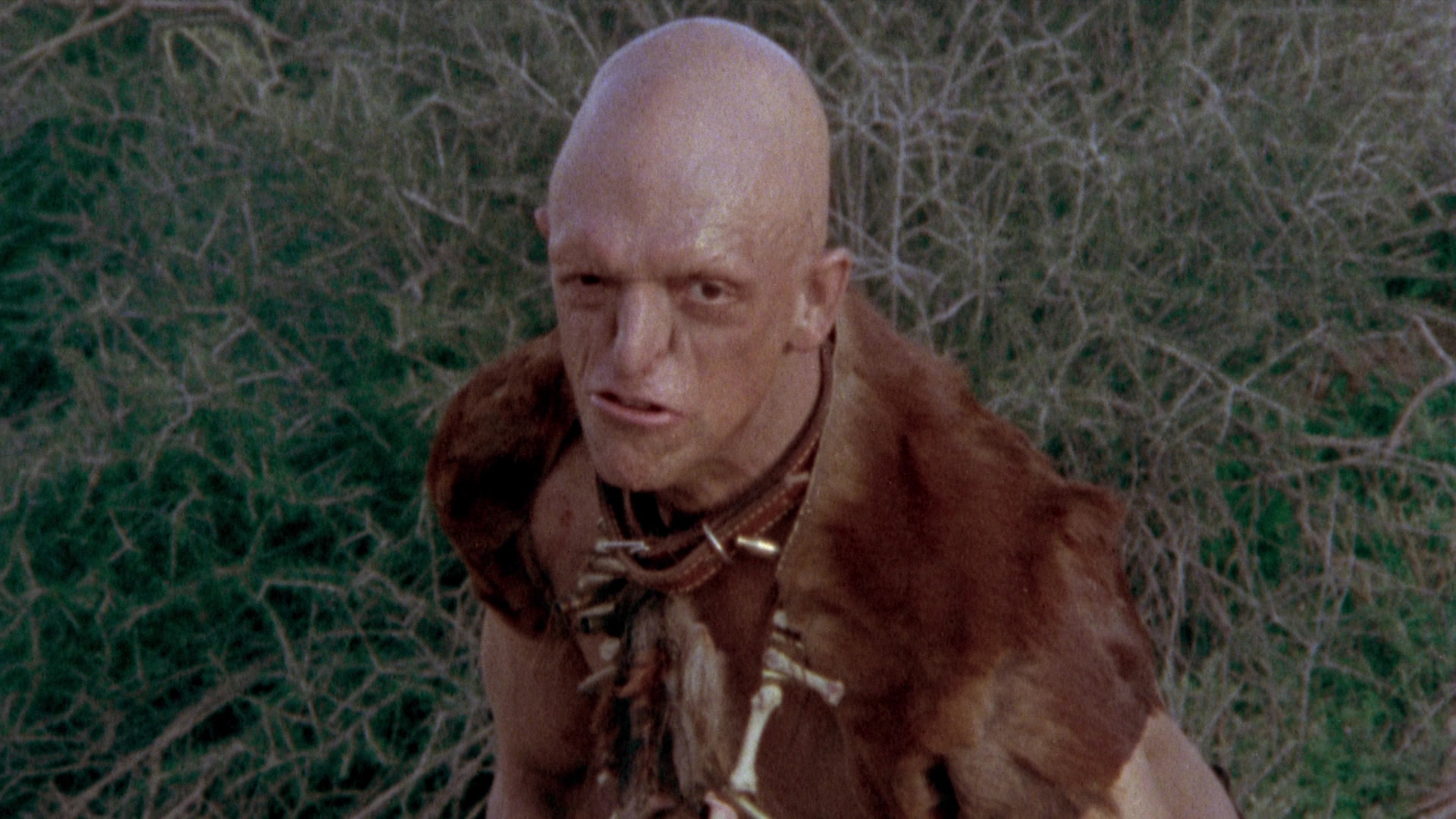
Five years on from The Last House on the Left, The Hills Have Eyes showed signs of a tightening-up in Wes Craven's technique. Gone were the wacky comedy interludes and jarring soundtrack choices, in favour of a comparatively taut narrative set-up: extended family heading to California crash in the middle of an Army test site in the New Mexico desert, and find themselves under attack from local residents who range from the purely unwelcoming to the openly feral. Us and them, then: like Last House, this was horror born of Vietnam, but Craven makes a point in conceiving the warring factions as mirror images of one another, with youngsters struggling under the yoke of sternly abusive or ineffectual patriarchs, and both sides proving liable to descend into murderous madness: the final shot, tellingly, is a slow fade to red. If the pacing still leaves something to be desired, Craven was getting better at suspense: he keeps his "monsters" offscreen for exactly a half-hour, instead wringing creepy, insinuating effects from shots that emphasise just how isolated his "heroes" are in this landscape, and from sound effects like the desert wind blowing through an oilcan. Crucially, he was learning when to tear the camera away and let his audience's vivid imagination do a good deal of the gruesome work for him. It now looks a little tatty - weirdly quaint, almost, many of its images having been mined for their potency by others working within the genre - and not quite fully articulated, but it scores something of a coup, in that of all the iconic titles the drive-ins and grindhouses of the 1970s threw up, this is one of the few that remain watchable: Alexandre Aja's Dubya-era remake had a studio budget and would be more technically accomplished, but it needed Craven's ideas to build on.

The Hills Have Eyes is available on DVD through Anchor Bay. 

Tuesday, 2 May 2017

Urban warfare: "Citizen Jane: Battle for the City"


Matt Tyrnauer's doc Citizen Jane: Battle for the City tells of a David-and-Goliath clash that took place midway through the last century, and gave rise to certain aftereffects you may still feel and see today on your walk to the nearest rep cinema. At its centre are two individuals making a tremendous if not outright thunderous song-and-dance about architecture: Robert Moses, the politico who became New York's construction co-ordinator in the years directly following World War II, and Jane Jacobs, the writer and theorist whose 1961 tome The Death and Life of Great American Cities became an essential text for anyone with even the slightest interest in 20th century urbanisation. These two arrived at their shared passion from markedly different positions: Moses representing the top-down, word-of-God approach to civic planning, illustrated here by the copious blueprints and maquettes he left behind, several storeys removed from reality; Jacobs the Greenwich Villager with the thick Edna Mode specs, keeping a sharp eye out for what all this renewal meant to the little guy at street level. The pair intersected most furiously in that post-War moment of reconstruction, over Moses' plans for several expressways - soaring flyovers that necessitated the demolition of social housing that had grown overpopulated in the wake of the Depression to allow the city's more mobile residents to get from A to B in record time.

Tyrnauer, a sometime New York Times and Vanity Fair correspondent, digs into his subjects' backgrounds to present a more rounded picture of this moment. He can't help but betray a sneaking admiration for Jacobs, who devoted her career as a columnist to poking her nose into the city's less considered nooks and crannies, developing fascinations with such topics as the sewer system that kept New York regular and the manhole covers that kept a lid on (some of) the stink; but he also takes care to note that Moses was initially acclaimed for sprucing up the city's parks and beaches, before he began serving more moneyed masters, and the still-extant spectre of gentrification entered the picture. Where Moses increasingly saw New York as a slate that badly needed wiping clean (publicly describing Harlem as "a cancerous threat", a term perhaps only a rich white dude might use), the worldlier, more inquisitive Jacobs clearly regarded it as an ecosystem whose rot and ruin nevertheless sustained diverse lifeforms. Her studies of New York's cramped social housing, poured across the screen in loveless concrete, suggests she was doing for NYC what Ken Loach did for London in Cathy Come Home: questioning the ways in which power had been inscribed in brickwork. The skyscraping superstructures Moses proposed as a cure for the city's ills, meanwhile, clearly point the way towards today's damnably ubiquitous luxury-flat developments: property as status symbol, intended to be traded rather than lived in, to serve the few, not the many.

I suspect many viewers will leave Citizen Jane wanting more of Moses and Jacobs going head-to-head. The film's middle half-hour tours the city and its experts, restating many of its initial points ahead of the expressway face-off; this was, it seems, always more of an ideological clash than a physical one, sustained through tersely typed communiques, which precludes the visual and verbal fireworks of a doc such as 2015's Best of Enemies. (Throughout, Tyrnauer can be seen adhering to a format - archive plus talking heads - certain American documentarists could surely now assemble in their sleep, afforded the right amount of public funding.) The ideas contained within these missives, however, still resonate: as a late, grim pan over the skyline of modern, industrialised China (described by one observer as "Moses on steroids") makes all too clear, comparable planning decisions are still being pushed through, un- or under-opposed, across the globe - and where Moses could be said to have had a vision for New York, loftily insupportable as it might have been, far too many of today's planners seem content to take any money and run. It stands as a notable story, and a notable contest: the master builder, keen to refashion the world in his own landed patrician image, and the plucky, bolshy dame who simply wasn't having any of it.

Citizen Jane: Battle for the City opens in selected cinemas from Friday, ahead of its DVD release on May 22.