Wednesday, 7 December 2016

"Jet Trash" (Guardian 02/12/16)


Jet Trash *
Dir: Charles Henri Belleville. With: Robert Sheehan, Sofia Boutella, Osy Ikhile, Craig Parkinson. 85 mins. Cert: 15
 
This Brit indie returns us kicking and screaming to that millennial moment when any passing Guy Ritchie wannabe might have pitched something along the lines of Danny Boyle’s The Beach. Here, it’s director Charles Henri Belleville, reducing Simon Lewis’s 1999 novel “Go” to a threadbare endeavour concerning the non-funny, non-sexy, non-thrilling misadventures of three charmless chancers – headed by a perma-chewing Robert Sheehan – fleeing violent sex traffickers on sandy South Indian shores. Belleville cranks up the colour saturation and ironic Yuletide soundtrack, but all his slo-mo hedonism can’t disguise an otherwise addled story treatment: we chop haphazardly between hemispheres, leaving characters and subplots treading crystal-blue water. Doubtless a nice holiday; shame about the movie. 

Jet Trash opens in selected cinemas from today.

Monday, 5 December 2016

The Driver: "Paterson"


Paterson is another of writer-director Jim Jarmusch's studies in stasis, though this time his subjects aren't the usual oddballs and outliers who have nothing better to do than scuff around at the margins, but a comfortably appointed couple who've settled into rewarding routine. Here is one week in the life of a bus driver (Adam Driver) who habitually rises between 6 and 6.30am each day before leaving the home he shares with his wife Laura (Golshifteh Farahani) and their bulldog Marvin to serve the commuters of the titular New Jersey suburb. The driver writes poetry, in his cab before his shift begins, and on his lunchbreak, yet despite Laura's pleas, he shrugs at the idea of making a paid career of it; he writes purely and simply for the pleasure of writing, and the process of converting a thought or sight or sound into words. There's a twist of sorts, though twist would seem too violent a word to describe anything in a film this becalmed and peaceable: our hero happens to be called Paterson, too, a coincidence presented as one of those things - or one thing among many, like the identical twins who keep popping up everywhere, or the way certain phrases recur in conversation, or even, I suppose, the fact that an actor whose name is Driver is playing an actual driver. Huh, the film goes, in its singularly laconic fashion: fancy that.

In the absence of any urgent narrative progression - Paterson gets up, goes to work, comes home, goes to bed - the movie Paterson reveals itself as a film about looking at and listening to the world in a particular way, a paean to keeping one's eyes and ears open. (In a recent Sight & Sound interview, Jarmusch decried the rise of so-called "phone zombies", that generation who, whether lost in Twitter or Tinder, never look up; his film is the antithesis of that mentality.) Rarely can a film have been so stuffed with POV shots: kids jiggling their legs on the bus, a box of matches, the photos of local celebrities framed behind the bar at Paterson's chosen watering hole - all are given due moment and attention. The soundtrack, too, brims with choice snippets: wannabe playas discussing their latest crushes, a man (in actual fact, Method Man) rapping while waiting for his clothes to dry at the laundromat, students picking over the finer points of anarchy. Who's looking and listening? Partly, it's Paterson himself, the big sponge, peering in his rear-view mirror, soaking up the details that will factor into his verse. Yet it's also, surely, Jarmusch himself, taking in the local scenery, pointing Frederick Elmes' camera and the boom mic towards whatever grabs him and feeds his muse. Through the figure of his creative protagonist - who is, in his own way, an independent, unfussed by finance, quietly committed to his art - Jarmusch would appear to be explaining to us how he arrives at his own works: it's in these very rhythms, the routines, and the raw material of everyday circumstance.

This is, it should be noted, a fairly male view of the world, which need not necessarily be a limitation, a failure or a crime: Jarmusch can make a haven out of Paterson's drinking spot, where men come to kick back, overcome heartbreak, or simply carve out a moment or two by themselves to pursue their own thoughts and interests. (We too need safe spaces such as these.) Yet I don't believe Jarmusch entirely knows what to do with Laura, save to observe the first rays of dawn sunshine breaking over Farahani's face, a sight that could, granted, inspire some pretty epic verse. Where Paterson goes out into the world, and sees his own scribblings (penned by poet Ron Padgett) elevated on screen as high-ish art, Laura is left behind at home, her own creative endeavours - fashioning monochrome curtains and dresses, baking cupcakes, striking out in the direction of country-and-western - treated as at best a sideline, at worst a punchline. (And cupcakes are better than haiku, as any fule kno.) Even the pair's physical relationship, arguably being held up as some kind of ideal, felt to me a little lopsided and one-way: where the Adam of TV's Girls gave Hannah Horvath as good as he got - elevating Driver to dreamboat status in the eyes of many - Paterson is an altogether too gnomic presence to let on what Laura gets from him, beyond the steady income that can keep a roof over cloud-filled heads. (He doesn't even read his love poems to her, and it's not as though there aren't plentiful gaps in the conversation within this household to be filled.)

As this week goes on, some form of catastrophe seems to beckon (the bus breaks down; there is, at the last, a loss of words), and yet it's typical of a generally Zen proposition - one that opens and closes with an image recycled from Only Lovers Left Alive, that of lovers in bed, configured in yin-yang position - that these challenges and setbacks come to be regarded with admirable equanimity: Jarmusch's aim here is no more and no less than to turn the world over in his hand like a pebble, and thus encourage us to go with the flow of words and images. The whole is possibly a little too shrugging to count as the best movie of 2016, but it may just stand as 2016's best comic strip movie, the kind of quasi-philosophical doodle - occupying territory somewhere between Peanuts and Andy Capp - that winds up gracing porches like Paterson's own seven days a week. Here are the same small handful of characters in the same setting, performing slightly different variations on the same essential schtick. (Driver's daily struggle to right his recalcitrant mailbox - and the reveal as to what causes it to slope so - is pure comic strip: set-up, continuation, pay-off.) Nobody here is going far beyond their little boxes, but no-one seems unduly unhappy about that fact: Jarmusch ensures they're all provided for one way or another, and each dawn serves to bring a new set of possibilities. It put a smile on my face in this bleakest of Decembers, and I'll take that right now.

Paterson is now playing in selected cinemas.    

Friday, 2 December 2016

For what it's worth...


Top Ten Films at the UK Box Office   
for the weekend of November 25-27, 2016:
   
1 (1) Fantastic Beasts and Where to Find Them (12A) ***
2 (new) Allied (15)
3 (3) Trolls (U)
4 (new) Bad Santa 2 (15) **
5 (1) Arrival (12A) ***
6 (new) A United Kingdom (15) ***
7 (5) Doctor Strange (12A) **
8 (4) Andre Rieu: Christmas with Andre (U)
9 (new) Dear Zindagi (PG) *** 
10 (new) Paterson (15) ***

(source: theguardian.com)

My top five:   
1. The Nightmare Before Christmas [above]
2. Blue Velvet
3. Moana
5. Bleed for This


Top Ten DVD rentals:  

1 (new) Finding Dory (PG) ***
2 (1) The BFG (PG)
4 (8) The Angry Birds Movie (U) 
5 (4) Me Before You (12) **
7 (2) Now You See Me 2 (12)
8 (6) Supersonic (15)
9 (7) Miss Saigon: 25th Anniversary Performance (15)
10 (9) Alice Through the Looking Glass (PG)
 
(source: lovefilm.com)

My top five:  
1. Napoleon  
5. Jason Bourne
 

Top five films on terrestrial TV this week:   
1. Rebecca (Saturday, BBC2, 1.30pm)
2. Miracle on 34th Street (Sunday, C4, 5.35pm)
3. School of Rock (Sunday, C4, 3.20pm)
4. Hellboy II: The Golden Army (Sunday, five, 7.40pm)
5. A Pigeon Sat on a Branch Reflecting on Existence (Sunday, C4, 1.50am)   

Island life: "Moana"


Moana is Disney repurposing Pacific island culture, in much the same way Pocahontas seized upon Native American lore, Mulan upon ancient Chinese legend, The Hunchback of Notre Dame upon Victor Hugo, The Aristocats on jazz. Why, then, hasn't there been more of an outcry, as there has been in the past? For one thing, the corporation has become far more adroit about selling these reappropriations to the wider world. Anyone looking for evidence of this development might point to the staggering success of 2013's Frozen, which surely repackaged Hans Christian Andersen, yet was claimed in turn as a notable work of 21st century feminism, and is even now being readied for sequels - and, I'm guessing, being converted into not just a Broadway extravaganza (Frozen on ice!), but a live-action prospect along the lines of the company's recent The Jungle Book and upcoming Beauty and the Beast. You might also point to the short that precedes Moana in cinemas, Leo Matsuda's Inner Workings, which takes a premise so close to that of last year's Pixar smash Inside Out as to feel actionable - office drone finds his motions and emotions governed by the independent actions of his brain, heart and stomach - and still succeeds in doing something reasonably fresh and funny with it over its six minutes.

At the same time, Disney have clearly learnt to tread far more softly and sensitively around this type of material, recruiting local voice and design talent, and setting out their storyworlds in shades that vary from flattering to outright glowing. More so than any other major studio, the Mouse House has figured out a strategy for keeping its erstwhile default mode of patrician conservatism at bay: by throwing open its doors and windows and inviting some fresh air in. Female directors. Non-princessy leads. Characters of colour. In the case of Moana, the studio's most outdoorsy and sundappled venture in some while, the title character - voiced by the Hawaiian-born Auli'i Cravalho, and introduced as an adorable, wide-roaming toddler - is the inquisitive brown daughter of a chieftain overseeing a rocky outcrop. Told as a young girl that "as long as we stay on our island, we'll be fine", she responds (in song, inevitably) with a crystallising "I wanna see"; instructed, definitively, as a teenager that "no-one goes beyond the reef", she immediately pops into the nearest coracle and sets off toward the horizon, singing a song of empowerment as she goes.

The new Disney songbook has been - and will likely continue to be - a liability for viewers of my vintage. Set against the terpsichorean variety of the original Jungle Book - or, more recently, Aladdin and The Lion King - there can be something a touch numbing about being obliged to endure one pseudo-inspirational post-Cowell belter after another. Rachel Platten's "Fight Song" and Katy Perry's "Roar" are perfectly workable battle anthems, designed to rally the spirits of any teenager who's just been turned down for show choir, but hearing their derivatives eight, nine or ten times in a row in the context of a ninety-minute feature can prove more wearying than stirring. Moana, to its credit, succeeds in mixing up the playlist rather better than Frozen did before it: I couldn't say whether it's the input of Broadway's man-of-the-moment Lin-Manuel Miranda, but the vocal range here extends beyond the usual, agonisingly sustained top notes to encompass such performers as Jemaine Clement, recalling his Flight of the Conchords work as a jewel-encrusted crustacean, and Dwayne "The Rock" Johnson, springing an unlikely yet very creditable Michael Bublé impression upon us in the course of his intro number "You're Welcome".

Johnson's here as Maui, a demigod Moana encounters (read: has to put up with) on her travels, and the relationship feels like a real selling point: the little girl paired with the big guy whose ever-shifting tattoos do a lot of his talking, feminine pluck and intuition matched against male vanity and pride. He's got the physical might that would have made him a protagonist back in Disney's Hercules days, but she's got the ocean on her side, the wind in her sails, and this shipbound back-and-forth propels this particular quest narrative far further than most. Granted, Moana's a throwback in many respects - the directors are John Musker and Ron Clements, veterans of the company's 90s golden age - and, as several critics have pointed out, it now plays like a glimmer from another timeline: one where island communities look out beyond their own shores, and strong female leaders can be hailed as the people's choice. Yet what a glimmer, quelle mirage: it's funny how pop culture can be a consolation and, just perhaps, a wayfinder in times of extreme turbulence. Not even Disney's marketing people could have predicted where we were going to be at the end of 2016, but with this latest, the studio has given us an early and unexpectedly welcome Christmas present: a heroine capable of overcoming defeatism, and healing all rifts and wounds besides.

Moana opens in cinemas nationwide today.

The doctor is in: "Dear Zindagi"


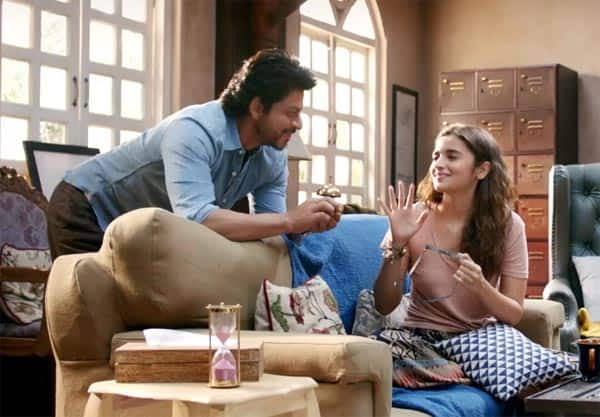
Should we be surprised that Hindi cinema has taken such a marked turn for the feminist in recent times? Or just relieved that after decades of stranding its actresses in pretty stock, often demeaning characterisations - damsels in distress, becoming decoration on our dashing hero's arm - the industry's leading lights should have started looking out for their daughters, or young women much like their daughters? Such were the plots of last year's Salman Khan megahit Bajrangi Bhaijaan and Amitabh Bachchan's recent Pink; such would appear to be the premise of Aamir Khan's Dangal, opening over Christmas. In days gone by, Dear Zindagi might have been sold on the participation of its resident superstar Shah Rukh Khan, but things change: Khan here cedes top billing, and the first hour-and-a-bit, to young Alia Bhatt, and the story of a female creative struggling to make her way in modern Mumbai.

Bhatt's Kaira is no stranger to discrimination within the local film industry: a director of photography, the images she composes are far clearer than her own future. Her ambitions to direct her own material have been well and truly squashed against the glass ceiling; she has an on-off relationship with Raghu (Kunal Kapoor), a male contemporary whose own directorial career is taking him places (New York, to be precise), while she's been left behind shooting music videos. It's in the midst of this personal and professional turmoil - with news breaking that Raghu has taken up with a producer ex - that Kaira beats a retreat, taking up a friend's offer to join her on holiday in Goa; here, like countless travellers and other pilgrims before her, she will come to find a measure of happiness and inner peace.

It sounds perilously Eat Pray Love, but it's soon clear that writer-director Gauri Shinde (English Vinglish) has a major asset in Bhatt, the emergent leading lady who's doing as much as, say, Jennifer Lawrence in Hollywood to drag her boys'-club of an industry into the 21st century. Throughout this first half, Bhatt gives credible, resolutely non-melodramatic responses to the situations she's placed into; she doesn't have that air of privilege that gets Indian actresses cast as princesses or in perfume commercials, but she laughs like a real woman, and cries like one, too - and these are disarming traits to observe in the figure of one elevated so rapidly to the standing of moviestar. (Dollars to doughnuts, you'll know at least one person in your immediate circle who bites their bottom lip the way Bhatt does - and it still seems instinctive, not imitated or forced.)

Via her dazzling lead, Shinde can address not just the position of women like her within latter-day Bollywood, but also those challenges faced by many other young urban professionals: Kaira's parents wonder why their girl doesn't just settle down and find herself sensible clerical work - and idly suspect, given her inability to keep a man, that she might just be Lebanese. (They mean lesbian, bless them.) What emerges is an unusually sharp depiction of that pronounced chasm that has opened up between dwellers of the cutthroat, post-capitalist city, subject on a daily basis to all manner of stresses and strains, and their more comfortably appointed elders, who've enjoyed all the benefits of an easier life, and can't quite fathom why on earth their offspring aren't as happy or secure as they are.

Enter Khan - or Dr. Khan, as he's introduced here, the shrink Kaira crosses paths with while reluctantly shooting a promo for a conference centre at her uncle's behest. It's in the safe space of the shrink's office that Kaira opens up, and the film reveals its true theme: the kind of mental health issues - be they stress or depression - that aren't spoken about in many Western homes, let alone Eastern households. Kaira's troubled state of mind is established in a striking pre-interval dream sequence that envisions our heroine tumbling backwards off the top of a building site; once we've emptied our bladders and retaken our seats, we watch Dr. Khan assisting his client to pick up the pieces and put herself back together again. Shinde does well to mix these vaguely theatrical encounters up a little: one beach-based session should send even non-neurotics racing from the multiplex to their nearest Thomas Cook.

Recruiting two very likable screen presences ensures this process is an engaging one, and Shinde's script covers a lot of ground: Kaira's complicated relationship with her distant mother, the pressures of being seen as a "good girl", the slurs that attach themselves to any young Indian woman who dares to see more than one guy simultaneously. (Dr. Khan eases our heroine's mind on the last point by comparing men to chairs: you wouldn't buy the first one you saw if it wasn't right for your room. Also: some are presumably nicer to sit on than others.) Moving away from Mumbai to the coast ensures the second half is a softer, more cushioned affair, granted. Kaira embarks upon a fling with a guitar-strumming lothario who, in chair terms, is pure balsa, with wonky legs; as a cinematographer, she of all people would spot how the light gets diffuse and the mise-en-scene fills up with wraps and throw pillows.

Yet Shinde intuits her heroine's dire need for a little time out; ours, too. In this respect, Dear Zindagi is not so unlike this year's Cannes favourite Toni Erdmann in its methods, and Bhatt, like that film's Sandra Hüller, is an actress you long to see smiling again. As for Khan, as Ae Dil Hai Mushkil suggested, he's made a felicitous mid-career transition to supporting and character parts, and the reaction shots that come with those - though he surely had the confidence of knowing that Shinde had written one of the few movie therapists who seems to have read more than The Big Book of Examination Room Homilies, and therefore has useful, actionable life-advice to impart when he does speak. Mostly, he's acknowledged that rather than shouting, walking or screwing over an actress, the most worthwhile and generous compliment he can now pay a co-star is to rearrange the furniture and simply listen - and this generally therapeutic experience rightly gives Bhatt its fullest attention.

Dear Zindagi is now playing in cinemas nationwide.    

Thursday, 1 December 2016

No direction home: "Half Way"


Possibly the sole cultural advantage of our present political situation - with the Right, in all its forms, ascendant and the Left in wounded disarray - would be a return to a more politicised and oppositional art and cinema, the work of individuals and collectives inspired to fight their causes on a bigger canvas, with the goal of winning hearts and minds, and thereby effectuating some form of change. Ken Loach may have laid some of the foundations with I, Daniel Blake, his Tory-baiting take on life as it is on benefits and in the food banks; this week's Half Way, a documentary timed to coincide with the fiftieth anniversary of the homeless charity Shelter, takes up the rallying cry.

We open in summer 2013, with video diary footage of Beverly Hudson, a single mother from Essex, attending her eldest daughter Daisy-May's graduation in Manchester: a proud day in the sun, occasioning plentiful smiles and tears. Yet the footage - shot by Daisy-May herself - becomes tearier still when the family disembarks at Euston and is obliged to trudge back to the lowly halfway house they've been obliged to inhabit ever since their former landlords Tesco kicked them out of their Epping Forest home. Welcome to the real world, kid. (You can bet that university education wasn't cheap, either.)

Over the course of a year, we'll see the Hudsons shuttled between waiting lists and makeshift hovels: single-room occupancies with no guaranteed lighting or curtains, where the tenants are expected to cough up a nominal fee to wash their clothes. "I was so excited," says Daisy-May, after one move proves especially disappointing. "I'm so sorry," is Beverly's only response. Her youngest, meanwhile, tearfully retreats under the covers on the evening of her fourteenth birthday, sobbing "to be honest, my birthday wasn't the best". They will be here until Christmas and beyond, and it doesn't get any easier.

Now, clearly this is far from a life on the streets, and sophists might argue that the film documents an extreme or unrepresentative case - one where the actions of a major corporation have had a direct impact on a housing market that has otherwise allowed many other good eggs and honest citizens to feather their nests two or three times over. The film's power derives from a sense this is what's happening day to day to even that aspirational lower-middle class our politicians used to court (and possibly care about) before they went doolally attempting to serve the quote-unquote will of the people.

Some of the bureaucratic snafus Hudson records help to corroborate what Daniel Blake was put through: the crucial letters sent to the wrong address (because of the endless moving), the long hours spent on the phone just to get a bulb changed (as Beverly points out, there's a joke in this, but it's a grim one), the template responses to heartfelt emails, the growing sensation this family has no choice but to grin and bear it. A system that just about functions for you and I is here shown to be of little-to-no help whatsoever to those in society who need it most. You've got a roof over your head (even though it sets your youngest's schooling arrangements entirely out of whack), what have you got to complain about?

As a film, Half Way should be depressing as all hell, yet it's shot with an eye for arresting, illuminating detail. (Daisy-May may yet find a career path out of this predicament.) A CCTV camera watches over the family from the corner of the room; we note the baseball bat Beverly keeps by her bed; the girls spend Christmas fashioning gingerbread houses, in the absence of the real thing. Being squashed into the tiniest spaces bonds this family together - as women, they support one another rather better than one suspects an all-male household might - but this in turn also creates its own tensions: they have no place to retreat to at the end of the bad days, and it turns out there are plenty of those.

There are omissions, doubtless to do with the director's relationship to her subjects: we never learn about Beverly's work situation, nor where the father of her children went - elements Daisy-May obviously takes as read, and doesn't feel the need to explain. Yet her gaze over what she actually shows us is honest and unflinching enough not to lessen the film's charge. As it is, we're left chewing over the telling and painful irony that a clan who evidently have money for laptops and flatscreens - luxuries beyond the means of a Daniel Blake - still can't get even a single foot up on the ladder. As a member of the so-called liberal elite who's frequently expressed howls of despair at London's housing situation, I found Hudson's film urgent and resonant - a work that may do for 2016 what Cathy Come Home did for 1966. The more the 1% take, the more the rest of us - middle-classes, lower-middle classes, working men and women, too - are going to have to suffer like this. At what point do we push back?

Half Way opens in selected cinemas from tomorrow.

Paris-Dacha: "The Heritage of Love"


Erm, this is a really odd one. Fresh from exerting some influence over the recent US Presidential election - and well done to them - the Russian authorities have clearly decided to push westwards into UK cinemas. September's pretty yet tame and thoroughly rubberstamped Turgenev adaptation Two Women looks like the highest of art when set against The Heritage of Love, the fanciful pan-historical drama serving as the flagship title of this year's Russian Film Week. A vehicle for former Eurovision Song Contest winner Dima Bilan - or oft-shirtless former Eurovision winner Dima Bilan, to give him his full title - Yuri Vasilev's film operates on two timelines. In latter-day Paris, Bilan's shirt-forsaking mechanic attempts to ascertain the value of a classic car for an elderly princess, becoming first distracted by, then besotted with, a winsome blonde (Svetlana Ivanova); meanwhile, in pre-Revolutionary St. Petersburg - I know, I know, but it's where the car originated, OK? - Bilan shows up with beard and shirt as a handsome Army lieutenant courting a winsome high-society brunette (Ivanova again) prone to running coquettishly through rainstorms.

Ah, you say to yourself, it's the old reincarnation plot (emphasis on the car in the middle); then you remember just how laughable that plot tends to be. For much of the duration, you're left pondering which is the film's realities is the flimsier. The period business is stiffly unconvincing, all moustaches in military garb spouting dictums ("Victory in war is the best way to raise a patriotic spirit"); the contemporary scenes are flatly eccentric, returning us to a handful of "colourful" ex-pats motoring around the usual tourist traps. Vasilev's aiming for melodramatic sweep, but at a paltry 78 minutes, the result looks to have been either heavily cut for wider international consumption or just plain dashed off in a hurry, skimping on characterisation, political debate and buttons for Bilan's shirts: every craning camera arc, every swell of the orchestral score, comes over as a hopelessly empty gesture.

One suspects there may be reasons why the revolutionaries in the historical strand are portrayed as book-burning brutes and would-be rapists, led by a glowering baldy who looks as though he might have had a hand in the Rettendon Range Rover murders (and who literally snatches our hero's sweetheart away from him at one crucial juncture). The narrative structure feels, at least in this cut, like an explicit attempt to forge a parallel between today's Russia and the Russia of the past, and to underline an idea of a pre-Revolutionary golden age when the homeland was strong and rich, and everybody that mattered (read: the aristocracy) could afford fancy-ass jalopies to drive past - and, who knows, quite possibly over - the grovelling peasants. This stuff makes Downton look like Dziga Vertov-era Godard; would that all our propaganda could be so easily and sniggeringly dismissed.

The Heritage of Love is now playing in selected cinemas.