Saturday, 21 May 2016
Outstanding returns: "Kiki's Delivery Service"
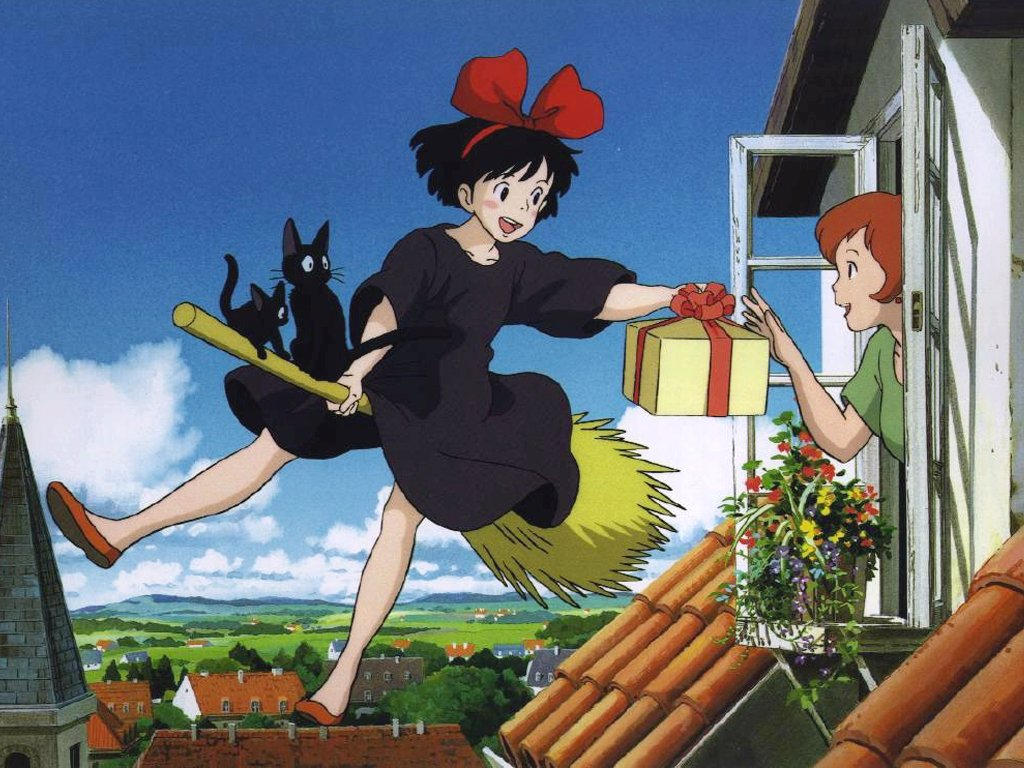
Kiki's Delivery Service, Hayao Miyazaki's animated parable of adolescent self-sufficiency from 1989, surely occupies the same cultural position in the East as The Worst Witch and Harry Potter do in the West. Reissued to UK cinemas this week as part of StudioCanal's summer Studio Ghibli season, this is the tale of 13-year-old witch Kiki, who leaves home - as all 13-year-old witches must - and heads for the big city, where she's taken in by a bakery and launches her own courier operation, the broomstick coming in especially handy. But what's a girl to do once her powers wear off? Once again, Miyazaki arrives at a story that could have been told by a parent improvising at bedtime, while managing, without the merest trace of condescension, to preach the virtues of hard work, due diligence, close care and attention; he makes sly points about the callousness of the privileged folk young Kiki bumps up against, and how obstructive other people can be when you're trying to get a job done.
The artistry is, as almost always with Ghibli, of the highest calibre: if Kiki is drawn in the now-recognisable Japanese style, the cityscapes she passes through are European in their gabled townhouses and cobbled streets, while the character detailing is exceptional. I don't quite know how it's possible for animators in this nervy day and age to observe children this closely (beyond, you know, having kids of their own), but this lot clearly have: witness the changing look on the face of the young boy our heroine's cat Jiji is delivered to as his parents shout for him to stop watching television and get changed, or the slumping posture Kiki adopts while bored on a slow afternoon in the baker's shop. Drifting in on an air of pine trees and freshly baked loaves, populated by the kindest of creatures, and set to another of Joe Hisaishi's charmingly simple, almost nursery rhyme-like scores, this really is a lovely world to spend some time within.
Kiki's Delivery Service opens in selected cinemas from Friday.
Friday, 20 May 2016
For what it's worth...
for the weekend of May 13-15, 2016:
1 (1) Captain America: Civil War (12A)
2 (new) The Angry Birds Movie (U)
3 (2) The Jungle Book (PG) **
4 (3) Bad Neighbours 2 (15)
5 (4) Florence Foster Jenkins (PG)
6 (new) Our Kind of Traitor (15) ***
7 (new) Everybody Wants Some!! (15) ***
8 (8) Secret Cinema: 28 Days Later... (18) ****
9 (6) Eye in the Sky (15) ***
10 (new) Green Room (18) **
(source: theguardian.com)
2 (new) The Angry Birds Movie (U)
3 (2) The Jungle Book (PG) **
4 (3) Bad Neighbours 2 (15)
5 (4) Florence Foster Jenkins (PG)
6 (new) Our Kind of Traitor (15) ***
7 (new) Everybody Wants Some!! (15) ***
8 (8) Secret Cinema: 28 Days Later... (18) ****
9 (6) Eye in the Sky (15) ***
10 (new) Green Room (18) **
(source: theguardian.com)
My top five:
1. Knight of Cups
2. 24
3. Arabian Nights vol. 3: The Enchanted One
4. The Sky Trembles and the Earth is Afraid and the Two Eyes Are Not Brothers
5. Sing Street
Top Ten DVD rentals:
2. 24
3. Arabian Nights vol. 3: The Enchanted One
4. The Sky Trembles and the Earth is Afraid and the Two Eyes Are Not Brothers
5. Sing Street
Top Ten DVD rentals:
1 (1) Star Wars: The Force Awakens (12) **
2 (2) The Hateful Eight (18) **
3 (3) SPECTRE (12) ***
4 (2) The Hunger Games: Mockingjay - Part 2 (12)
5 (6) Room (15) ****
6 (5) The Martian (12) ****
7 (7) The Lady in the Van (12) ***
8 (8) The Good Dinosaur (PG)
9 (re) The Intern (12)
10 (new) Suffragette (15) ***
(source: lovefilm.com)
2 (2) The Hateful Eight (18) **
3 (3) SPECTRE (12) ***
4 (2) The Hunger Games: Mockingjay - Part 2 (12)
5 (6) Room (15) ****
6 (5) The Martian (12) ****
7 (7) The Lady in the Van (12) ***
8 (8) The Good Dinosaur (PG)
9 (re) The Intern (12)
10 (new) Suffragette (15) ***
(source: lovefilm.com)
My top five:
1. Creed
2. Lawrence of Belgravia
3. Room
4. Spotlight
5. The Assassin
Top Ten Streaming:
1 (1) The Propaganda Game (15) ***
2 (3) A War (15) ***
3 (2) Like You Mean It (15)
4 (4) Mapplethorpe: Look at the Pictures (18) ***
5 (new) I Am Belfast (15)
6 (8) Hitchcock/Truffaut (12) ****
7 (7) Mr. Topaze (U)
8 (5) Ran (12) ****
9 (new) Iona (15)
10 (new) The Club (18) ****
(source: BFI)
Top five films on terrestrial TV this week:
2. Lawrence of Belgravia
3. Room
4. Spotlight
5. The Assassin
Top Ten Streaming:
1 (1) The Propaganda Game (15) ***
2 (3) A War (15) ***
3 (2) Like You Mean It (15)
4 (4) Mapplethorpe: Look at the Pictures (18) ***
5 (new) I Am Belfast (15)
6 (8) Hitchcock/Truffaut (12) ****
7 (7) Mr. Topaze (U)
8 (5) Ran (12) ****
9 (new) Iona (15)
10 (new) The Club (18) ****
(source: BFI)
Top five films on terrestrial TV this week:
1. Psycho [above] (Friday, C4, 12.35am)
2. The Wooden Horse (Saturday, BBC2, 8.30am)
3. I Love You, Man (Friday, BBC1, 11.50pm)
4. Elena (Saturday, BBC2, 12.40am)
5. Evolution (Sunday, C4, 2.30pm)
2. The Wooden Horse (Saturday, BBC2, 8.30am)
3. I Love You, Man (Friday, BBC1, 11.50pm)
4. Elena (Saturday, BBC2, 12.40am)
5. Evolution (Sunday, C4, 2.30pm)
New romantics: "Sing Street"
It's become apparent that John Carney is something of a single-issue filmmaker. This need not necessarily be a limitation: without the persistent, laser-beam focus of Claude Lanzmann, so many of the Holocaust's nuts and bolts might have been left unexamined, and - lest that seem an overly dramatic point of comparison - perhaps we need a Judd Apatow to pick over the pitfalls and occasional pleasures of modern love, ever-changing as they are. Carney's interest lies in music: a filmmaker for a moment when it often seems as though everyone you encounter is walking round with headphones on - either to keep something within themselves, or to shut the world out - he's thus far demonstrated a particular fascination with the ways songs can bring disparate people together, whether on the streets of Dublin (2007's Once) or the fringes of the American recording industry (2013's Begin Again).
His latest, Sing Street, is in one sense an origin story, one in which Carney mulls his own past, and how a young lad might develop an interest in music in the first place. Almost inevitably, a girl is involved. Teenage hero Conor (Ferdia Walsh-Peelo) is a newly arrived outsider at a Christian Brothers school in impoverished mid-80s Dublin who elects to form a band despite a total lack of prior musical experience; the reason is that he's on a promise to Raphina (Lucy Boynton), an older girl he's spied on the steps outside his school, and - with a producer's instincts - invited to appear in one of the group's videos. (Great albums have been composed for less.) What follows is a very simple, not unfamiliar tale. Conor auditions and assembles a close-knit core of fellow dropouts, pariahs and geeks; they start to put together a few riffs, a rudimentary image, even eventually a demo tape - building, in other words, where Keira Knightley's heartbroken twentysomething in Begin Again was obliged to rebuild.
Yet Carney succeeds in finding an entirely new context for this rock 'n' roll rise-and-fall-and-rise again, sketched in his first images here: news reports of Irishmen and women quitting their depressed homeland in droves for a new beginning on the English mainland. Music in Sing Street is less a catharsis than an escape from unhappy homes, institutionalised cruelty and poverty, adolescent awkwardness. For Conor and his cohorts, as yet too young to even consider moving out of their parents' place, those early Duran Duran videos, beamed into beigey-grey living rooms via the weekly Top of the Pops, are the height of aspirational glamour - and when you're faced with being punched on the nose and having your Mars Bar nicked off you by some mardy arse in the school tuckshop, why wouldn't you dream of getting to swank around on a yacht with Christy Turlington?
Certain shortcuts are visible, and audible. It's somewhat implausible that the band Sing Street - a play on Synge Street, the boys' alma mater - should sound so good so quickly, for one. The songs were written by Gary Clark, late of Danny Wilson ("Mary's Prayer"), and they strike the ear as very much the work of a fiftysomething musician with several Top 40 hits under his belt, not spoddy boys setting work-book poetry to half-inched guitar riffs. Carney's on surer ground when describing his hero's musical education: older brother Brendan (Jack Reynor) nudging his sibling in the direction of an idea of music-as-Art, the lazy afternoons spent in friends' bedrooms listening to their Jam and Joe Jackson LPs. What Sing Street nails in these sequences is the way we figure out what to listen to at a certain age, and in so doing figure out something of ourselves. (One might note that anybody exposed to Jackson's "Steppin' Out" at a formative moment is going to turn out just fine.)
More so than his breakthrough features, Sing Street is the film that best showcases Carney's assured comic touch: he elicits broad laughs from a local rogue's failed attempt at a three-point turn in a car blasting out Phil Collins, but also from such throwaway business as getting one of Conor's bandmates to open his front door while holding his pet bunny ("What you doin'?" "Just rabbit stuff.") And his great skill at accommodating different perspectives is again in evidence: one unshowy yet graceful cut reveals a late-night fraternal heart-to-heart in the kitchen is being observed by Conor's university-age sister Ann (Kelly Thornton), cutting through anything gooey by wondering whether this Raphina girl doesn't sound a tad pretentious. A lovely, genuinely lyrical scene finds the brothers observing their unhappy ma (Maria Doyle Kennedy, trailing echoes of The Commitments) through the backdoor, at which point we begin to grasp what a consolation music can be: it's what the siblings put on whenever their folks start arguing, hoping to muffle the harsher words.
There are points where the generosity of spirit gets too much, where Carney's (p)optimism becomes unmoored from anything so challenging as reality. Around the ninety-minute mark, it becomes apparent there is nothing this music cannot achieve. Get the girl! Heal the wounds left behind by divorce! Overthrow the tyranny of the Christian Brotherhood! Keeping one's headphones on too long risks turning the brain to mush, a caution that came to mind as Carney pushes his youthful leads out on the roughest-looking stretch of the Irish Sea (music can change the course of your life!) come the final movement. He means to leave us punching the air at this great escape, yet this viewer could only fear the worst: that these kids' corpses would wash up on a nearby shore within 24 hours. A song's one thing, adequate health-and-safety provision quite another. At its best, however, Sing Street serves - as did Once and Begin Again - to make music graspable for even those of us who've never been within ten feet of a Peavey amp, dramatising both how and why we're drawn to it, and what it comes to communicate about our fragile hopes and desires. Here's a film that knows a three-minute pop song often expresses something of the world, of ourselves and of others, far more succinctly and stirringly than any number of words on a page.
Sing Street opens in cinemas nationwide today.
"The Call Up" (Guardian 20/05/16)
The Call Up ***
Dir: Charles Barker.
With: Morfydd Clark, Max Deacon, Ali Cook, Tom Benedict Knight. 90 mins. Cert:
15
The Call Up opens in selected cinemas today, ahead of its DVD release on Monday.
"The Silent Storm" (Guardian 20/05/16)
The Silent Storm **
Dir: Corinna
McFarlane. With: Andrea Riseborough, Damian Lewis, Ross Anderson, John Sessions.
102 mins. Cert: 15
The Silent Storm opens in selected cinemas from today.
Wednesday, 18 May 2016
Good time: "24"
The current Tamil hit 24 has little to do with Kiefer Sutherland, although it's equally tangled up with time: it very quickly sets a Guinness world record for the number of clock faces per frame, and you lose track of the number of scenes where characters arrive at their destination with mere seconds to spare, or an instant too late. Writer-director Vikram K. Kumar has here constructed a meticulous fantasy premised on our ongoing desire to halt or otherwise control the sands that pass through the hourglass, centred on a star seeking to extend his own moment in the spotlight: Suriya - the host of the Tamil variant of Who Wants to be a Millionaire? - who herein outdoes Shah Rukh Khan in the recent Fan by essaying not two but three characters at different points in the film's frantic, ever-expanding continuum.
A prologue set in 1990 establishes a deadly rivalry between two brothers: happily married - if absent-minded - inventor Sethuraman (this being Suriya #1) and the brooding, homicidally jealous Athreya (Suriya #2). Shortly before Cain does for Abel, and Abel in turn plunges Cain into a decades-long coma, Sethuraman smuggles two cherished items out into the wider world: his infant son Mani, and a wrist-mounted time-travel device locked inside a hand-turned wooden box. Mani will grow up to become - you guessed it - Suriya #3, a rather aimless sort stuck behind the counter of a watch repair shop, where he cluelessly deploys said box to prop up a wonky chair leg. Its contents, however, become a matter of renewed urgency once Athreya emerges from sleep, more twisted than ever, and determined to claim back the machine, along with the 26 years he believes Mani's father has taken from him.
By their very nature, such manoeuvres demand a heightened level of contrivance, yet Kumar demonstrates a watchmaker's eye for engineering wormholes: at every stage, he tempers the rollercoaster preposterousness of the plot with a measure of on-the-ground precision. Reuniting the box with the curlicued key that might open it - thus making the device viable once more - involves a very carefully laid close-up of a gob of chewing gum being discarded outside Mani's shop; getting the device to function necessitates some clever business with a faulty lightswitch. To move us from here to there, Kumar has realised his script needs to function as a machine, and happily everything's plugged in and switched on and pulling in the right direction: the cause-and-effect of the film's first hour is a small marvel, and something the Hindi industry, in particular, could learn a huge amount from.
Once the pieces are lined up and the box is opened, 24 starts to have immense fun with the time-travelling conceit. Mani finds the device allows him to whizz the day back and forward as desired - correcting his mistakes, pre-empting others - and, thanks to a nifty, Sky+-like pause button, to suspend time altogether. There's a lovely visual effect here: having halted raindrops mid-descent, Mani begins to flick at them as though he were popping bubblewrap - just for the sheer heck of it - indirectly providing the opening beats for the film's first musical number after a solid hour of set-up. "A life beyond my dreams is at hand," our hero trills, and it's around this time that Suriya really does start to resemble a moviestar in the Gene Kelly tradition, one who's got rhythm, a girl in his sights, and - best of all - eternity literally at his fingertips.
24 places a lot of time on his side: at 163 minutes, it's a quarter of an hour longer than 2001, the film that famously took us from the Dawn of Man to the Final Frontier. Yet what's quasi-miraculous about it is that Kumar never runs out of good ideas: he always leaves us with something to be amused or gripped by. When we first see Mani's beloved Sathya (Samantha) signing to her parents, the assumption is of deafness on one side or another or both - a development a more sentimentally minded picture might have traded in; it turns out, however, that the elders have taken a monastic vow never to utter a harsh word (and therefore to utter no words) during daylight hours. Mani's attempts to woo her inevitably back up into Groundhog Day territory, as he uses his new-found powers to achieve a desired outcome - but then you never saw Bill Murray ducking out of his dates with Andie MacDowell to ensure Lasith Malinga drops a series-clinching catch. (In India, romantic success may come second to cricketing dominance.)
It's a sign of Kumar's confidence that he can hit the point of intermission (shockingly brutal, even with BBFC-advised cuts) comparatively late, safe in the knowledge he can always wind the clock back and start anew in the second half - although the second half complicates the set-up in ways that prove even more enjoyable. Throughout, this director appears blessed by the best toys and collaborators money can provide a modern Tamil filmmaker with: expansive production design (Sethuraman's cluttered lab is on a par with mid-range Hollywood), sophisticated visual effects, hundreds of extras prepared to strike limbo poses in mid-air whenever Mani pushes pause on his wristwatch, not to mention one of A.R. Rahman's lusher, more keening recent scores, which helps to take the edge off - and adds welcome notes of emotion - whenever matters threaten to become too mechanical.
If the whole suggests - after last summer's Baahubali: the Beginning - another quantum leap forward for Indian cinema (and that Tamil cinema may be harboring the best ideas, and the best ideas men, in this business), perhaps Kumar and co. still have some way to go in matters of psychology. There's no substantial explanation of why Athreya is so angry to begin with, save the understanding that every good story needs an antagonist to set the ball running. (I also suspect a Western movie would get into trouble for making a wheelchair such an essential part of this crooked figure's make-up - although, in Kumar's defence, Athreya has just taken an impromptu header off a viaduct and spent the best part of three decades in a medical coma. You'd have trouble standing up after that.) Whatever: this isn't to deny that 24 is a very good, imaginative, well-executed story - one for which it really would be worth setting aside some time.
24 is now playing in cinemas nationwide.
1,001 Films: "Straw Dogs" (1971)
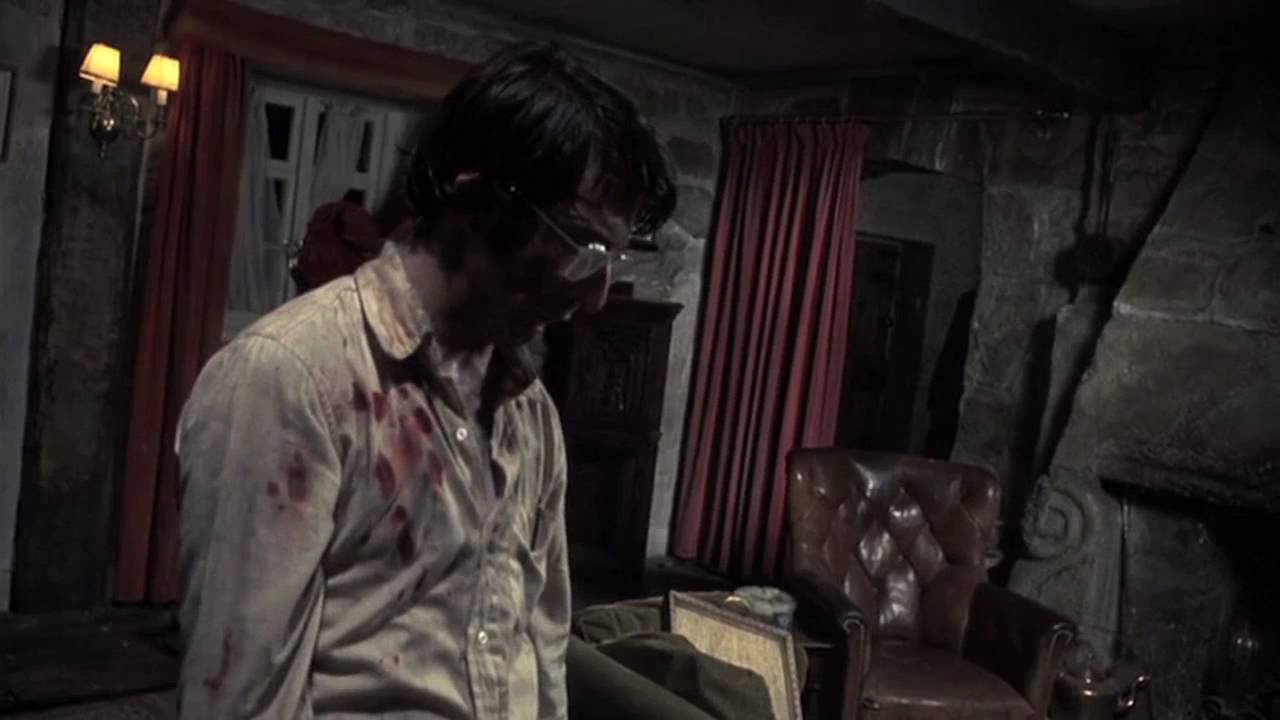
Straw Dogs remains one to rank alongside Salò and Irreversible in the pantheon of horribly effective features, films it's possible to admire viscerally and technically, even as you object to them on a dozen other levels, and come away feeling in need of a long hot shower. Bespectacled American mathematician Dustin Hoffman moves to a small, inward-looking Cornish village with his younger bride, landowner's daughter Susan George. An extended build-up involves David Warner as a paedophilic plot device, and a lingering emphasis on guns and the antique man-trap hanging over the couple's fireplace, but the general narrative thrust is that, while Hoffman's nerd busies himself with formulae, his wife, bored and braless, catches the eye of the local yahoos restoring their property. Suffice to say, it all ends unhappily.
It would have been particularly contentious for having arrived at the time of peace protests and women's lib: at best, the film can be understood as blunt mischief-making on the part of Peckinpah the provocateur; at worst, a load of reactionary macho codswallop. George, introduced as a pair of erect nipples, has remarkably little to do save sit around the house and wait for something bad to happen to her so as to kickstart the plot. As it currently stands - and the sequence has incurred extensive cuts and counter-cuts over the decades - the central rape scene appears poorly handled, allowed to become more ambiguous (and actually more of a sideshow) than it almost certainly should have been; the only simple thing about it is the shot of George seemingly enjoying a post-coital cigarette.
Elsewhere, while the Wild Bunch's demise in a hail of bullets proved unquestionably iconic, there's something far less heroic about applying a similar slow-motion fetishism to shots of a rapist slapping his victim around. The editing is, in the main, magnificently ruthless - as though the film were cut on the teeth of the man-trap itself - but it's let down by its rather sub-Roegian manner of intercutting the assault with images of Hoffman clutching a limp shotgun. This is, of course, all part of Peckinpah's Darwinist offensive: the underlying idea is that the violation (in which a second rapist "tops" the first's grim handiwork) should liberate this worm of a husband, and turn him into the wife-slapping monster he, too, needs to be to survive. You could claim it as the origin of today's ordeal cinema, but what it leads to isn't the rigorous moral intelligence of Henry: Portrait of a Serial Killer and Funny Games, the last words in home-invasion terror, but misdirected posturing like Straightheads, and Eli Roth sniggering over boobs, bloodshed and backwards foreigners in those Hostel movies.
Straw Dogs is available on DVD through Fremantle Home Entertainment.
Subscribe to:
Posts (Atom)