Sunday, 24 May 2015

"Dino Time" (Guardian 22/05/15)


Dino Time **
Dirs: Yoon-suk Choi, John Kafka. Animation with the voices of: Melanie Griffith, Pamela Adlon, Stephen Baldwin, William Baldwin. 75 mins. Cert: U

This week’s digimated chancer is a U.S.-Korean fossil dating from 2012 that features Melanie Griffith and William Baldwin as the voices of warring dinosaurs – remember when these things provoked actual anticipation? This one displays early flickers of wit in zapping squabbling kids back to their hometown as it was in the cretaceous era, before a drab quest narrative kicks in, cueing more plodding than any 70-minute feature should. Shameless, 3D-enabling camera pirouettes and tones ranging from “Sunny Delight” to “radioactive Haribo” provide a measure of visual compensation: it’s not one for the ages, but you’ll have likely shelled out for worse. 

Dino Time is now playing in cinemas nationwide.

Gender confusion: "The New Girlfriend"


In François Ozon's latest outing The New Girlfriend, everything is fluid. We fade in, to the strains of "The Wedding March", on the sight of a woman being made up, leading us to assume we're watching some blushing bride being prepared for her big day - not, as it turns out, a pallid corpse being readied for burial. The body is that of Laura (Isild Le Besco), the eulogy read by her BFF Claire (Anaïs Demoustier). In a brilliant, wordless flashback sequence, Ozon presents this friendship as an ongoing rivalry between two women who first meet as girls. The meek Claire experiences her first, awkward fumbles with the opposite sex just as the more daring Laura has started to jump on men; she's the bridesmaid at Laura's wedding to David (Romain Duris); when she marries herself - to successful, straight-laced Gilles (Raphaël Personnaz), a thoroughly sensible choice - Laura is at her side nursing a baby bump; at the christening, godmother Claire stands at the font, while a visibly sickening Laura is confined to a wheelchair. The race is now over, and Laura has won. What next? Well, spoilers await, so you may prefer to see it, as you should, before reading on.

Ozon adapted The New Girlfriend from a fifteen-page short story that counts as another of Ruth Rendell's inquiries into human behaviour and social norms, although it surely has to go down as one of the least typical. For starters, it's not Laura's death that provides the mystery and requires investigation; the mystery is how life goes on in the wake of her demise. Clearly both Claire and David are affected by her passing: Claire appears newly freed up to question her conventional bourgeois existence, and put herself first for a change; for David, perhaps inevitably, the change is even more dramatic. Forced to assume the role of stay-at-home mum, he's started wearing his late wife's dresses around the house, to console himself and the baby; Claire initially reacts to this revelation, as many viewers will, with shock, but soon finds the clothes confer some essential Lauraness upon David, which sends her into further disarray. History - or, rather, herstory - starts repeating itself.

In truth, everything about the film proves more complex than it first appears. To take the most obvious element, it's organised around what would surely, in other hands, have been no more than a sight gag: the six-foot, four-inch Duris, clad in lippy, heels and the hautiest of haute couture. (Ever since his 1996 short A Summer Dress, Ozon has always been unusually attentive to the interplay between costume and character: Laura bequeathes to her spouse the wardrobe of a 1950s matinee idol.) Certainly, there are comic asides here, in the form of what could be a beginners' guide to transvestism: as Claire gives David tips on applying mascara, and reminds him to shave to avoid five o'clock shadow, it's just possible Ozon intends to school his straight male viewers on how femininity is performance, and all that jazz. "You gotta suffer to be beautiful," winces David in the course of having his back hair waxed.

Nevertheless Ozon, an erstwhile enfant terrible who's grown only more sensitive with age, grants the character a psychological depth. David defines himself as a straight crossdresser who continues to desire women - in trans terms, more David Walliams than Danny La Rue - and one mortuary scene sets us to wondering whether his crossdressing isn't in some way pathological: a retreat under the skin of his dead sweetheart. Certain elements Claire can't help but find attractive: she inherits a gal pal with one change of clothes to haul in firewood, and another to hit the gay bar - presented here as just about the best party a guy, gay, straight or anything in between, might attend. Yet Ozon notes - sympathetically - that this is a lot of baggage for one individual to be carrying around: life gets doubly complicated when David and Claire start trysting at the Hotel Virginia, its very title redolent of a desire to start anew. 

Given the extreme sensitivity of these characters, the final round of lies do come to feel as though they could prove hurtful, if not deadly. Still, the film remains a quietly optimistic and progressive proposition, confident in the ability of its own flawed but decent characters to work through their issues and move towards a happier future for all concerned; it also helps that its writer-director is so acutely alert to the meaning and nuances of his own story that the camera can find elegant, consoling ironies and symmetries wherever it looks. As a result, The New Girlfriend may be the closest the movies have come in recent times to an entirely persuasive merging of the sexes: right through to a climactic sex scene of which many things can and will be made, you sense male and female viewers will take from it polymorphous, and surely numerous, pleasures. Whatever the underwear they're wearing.

The New Girlfriend is now playing in selected cinemas.

Saturday, 23 May 2015

Offkey: "Pitch Perfect 2"


2012's Pitch Perfect hit at the right moment: just as Glee was losing its mojo, thereby reminding us that it was still possible to broach the performative aspects of pop culture in sharp, funny, irreverent ways. With Pitch Perfect 2, this franchise - for franchise it has become - can no longer be taken for a plucky underdog, in so far as a Universal-sponsored multiplex product set in opposition to a Fox-sponsored primetime juggernaut could ever truly be claimed as an underdog; success, and savvy marketing, has placed it at the very heart of the mainstream. Returning screenwriter Kay Cannon has, then, to address an issue time-honoured within popular culture: how to deal with going, in just two years, from punky new kid on the block to reigning queen bee (or Bey) without losing some edge, or attracting claims of selling out? (And does a major studio's Glee clone have anything really to sell out?)

The solution Cannon has decides upon, which feels sorta evasive and far from satisfactory, is to shift everybody onto a bigger stage. Pitch Perfect 2 is the point where a sitcom rewards its cast for their loyalty by sending them off on holiday with not-exactly-hilarious consequences. As a sequel, it appears hamstrung rather than emboldened by the knowledge the first film eventually found its audience: it's too relaxed for its own good. Debutant director Elizabeth Banks - whose onscreen commentary partnership with John Michael Higgins remains a Chris Guest-like delight - plays denmother to her young performers in more or less the same way that her 40-Year-Old Virgin director Judd Apatow plays head bro: she creates a safe space within which the actors can spitball ideas around, and seems oblivious to the fact the running time is pushing on for two hours.

In and around the randomness that has latterly become American comedy's default position, there are occasional sharp lines: handed the category "Songs About Butts" in one sing-off, head Bella Beca (Anna Kendrick) suggests "So that's anything in the charts, right?" Yet set PP2 against 22 Jump Street, another comedy follow-up that seized upon its own essential sequelness, and the new film appears oddly bereft of purpose. The idea of exiling the Bellas to Europe after Fat Amy (Rebel Wilson) has a wardrobe mishap in front of the President is a workable one, and floated early, yet for some reason (budgetary stinginess?) there's a good eighty minutes before we get to Copenhagen, and 70 minutes of that - broadly, the time between a rare funny Snoop cameo and Fat Amy's triumphant reclamation of Pat Benatar's "We Belong" - are a comic and narrative dead zone.

Worse, the time the film spends shuffling around on home turf only reveals how limited these characters are as comic possibilities: that though they may harmonise well together, as individuals, they have only one note to play. Wilson can still work funny-strange, funny-ha ha variations on Amy's basic, spacey-libidinous theme, but the lesser Bellas have become predictable: we know that whenever Banks cuts to the Mexican Bella, she'll have something heated to say about the migrant's lot, and whenever she cuts to the Asian Bella, she'll be meekly whispering something weird. Mock it all you want, but Glee has done so much more to push its characters beyond stereotypes. 

In the sing-off sequences, you catch Pitch Perfect 2 regaining some of the earlier film's focus and choreography, yet even these are limited by the fact the sound of pop hasn't developed significantly in the past two years, not to mention by the Universal suits' insistence that Banks cross-promote the largely joy-sapping output of Ke$ha and Jason Derulo. She enters into more of a groove in the final stretch, it's true - Copenhagen has no place for mediocrity - yet relying upon the emotion and artistry of other artists' songs to elevate otherwise flagging material is a trick Glee has been relying upon for several seasons now. In the course of a two-hour, single-sitting experience, it just feels like the one potential hit buried away at the very end of a quickly forgotten second album.

Pitch Perfect 2 is now playing in cinemas nationwide.

Thursday, 21 May 2015

Veiled threat: "A Girl Walks Home Alone at Night"


For a film that arrives from the festival circuit trailed as "the Iranian feminist vampire movie", A Girl Walks Home Alone at Night initially appears reluctant to portray so much as a woman, let alone an undead bloodsucker. Writer-director Ana Lily Amirpour starts out by establishing the parameters of a small town that is also very much a man's world, lorded over by a brutal, tattooed pimp and drug dealer (Dominic Rains). By way of a hero, we're offered the handsome Arash (Arash Marandi), obliged to turn to this brute in order to score hits for his jonesing addict father. This is the system, and one might note a weary, compromised dependency in the way even the noble and honourable Arash - a man who spends his downtime rescuing stray pussycats - buys into it. Then The Girl (Sheila Vand) appears in the back of Amirpour's widescreen - glimpsed in a rear-view mirror as the pimp abuses one of his girls, her chador framing her as well as those capes once did Christopher Lee. The next night, back at the pimp's place, she will forcibly remove the finger he habitually obliges his conquests to suck on, a prelude to ripping out his throat. At last, some resistance.

In her debut feature, Amirpour is very savvy about the imagery she reaches for; as Marjane Satrapi did in Persepolis, she opens up this self-contained universe to far wider scrutiny than it might otherwise have received. Though its inhabitants speak subtitled Farsi, Amirpour's fictional Bad City - a composite construction along the lines of Frank Miller's Sin City - isn't the dusty, academic, grounded environment of a Makhmalbaf or Kiarostami film, doubtless as it was actually recreated in an abandoned oil town in the California desert. The film talks East, but looks West: here are roiling derricks, flat suburban houses, kids on skateboards, hamburgers, train tracks for outlaw lovers to meet on the wrong side of. Amirpour may possibly have been drawn to the US of the 1950s as an analogue for the Iran of today: a place where sex, drugs and rock 'n' roll are still taboo enough to seem fresh, exciting, dangerous, where simply to take someone you fancy behind a closed bedroom door to listen to music might have you branded as a rebel or troublemaker.

Having set out the physical geography of this universe, the film moves through it in mysterious, unpredictable ways: its non-conformism runs deep. Maybe it's a sign of my own ingrained, lazy prejudices, but I was expecting more of a romance to develop between the mortal Arash and the Girl; instead, Amirpour displays the same reluctance as her heroine to succumb to Twilighty melodrama. This may be deliberate. Since, in the wake of the pimp's demise, Arash has maintained the dope-slinging business (and even co-opted the pimp's convertible) out of familial duty, we might wonder whether Amirpour intends to confer upon him the standing of a tyrant-in-waiting: less hardline than his predecessor, granted, but a man like any other. (His use of a needle to pierce the Girl's ear - an image that provides a brilliant rhyme with his father's self-medication - only underlines this possibility: here's another prick, asserting control, messing everything up.) Yet the final image is more optimistic, settling upon its own form of equality - between boy, girl and cat - even as it wonders where they (and we) go from here.

En route, there's a lot of that studied languor by which certain Nineties indies (on a vampiric tip, think Abel Ferrara's The Addiction, or Michael Almereyda's Nadja) channelled the radical inertia of Jim Jarmusch's early work, yet Amirpour always finds something to fill the space: a song or a sound (here be the sizzliest cigarettes you'll hear smoked on a screen in 2015), an idea or an image, occasionally a short, sharp shock. Above all else, there hangs a very specifically nocturnal atmosphere: woozy and disconcerting, under the spell of which everything appears either too quiet or too loud, the colours are muted (Lyle Vincent's monochrome photography is a major plus), and it's enough to hear a single footstep on an otherwise empty street for a chill to descend along the spine. The effect is certainly striking, and guaranteed to be seized upon by anyone who ever displayed a fondness for drinking snakebite-and-black in the student union bar, although cinemagoers planning on taking in a matinee should tread carefully: step out from it into direct Bank Holiday sunshine, and you'll more than likely burn up on the spot.

A Girl Walks Home Alone at Night opens in selected cinemas from tomorrow.

Sunday, 17 May 2015

"Piku" (Guardian 16/05/15)


Piku ***
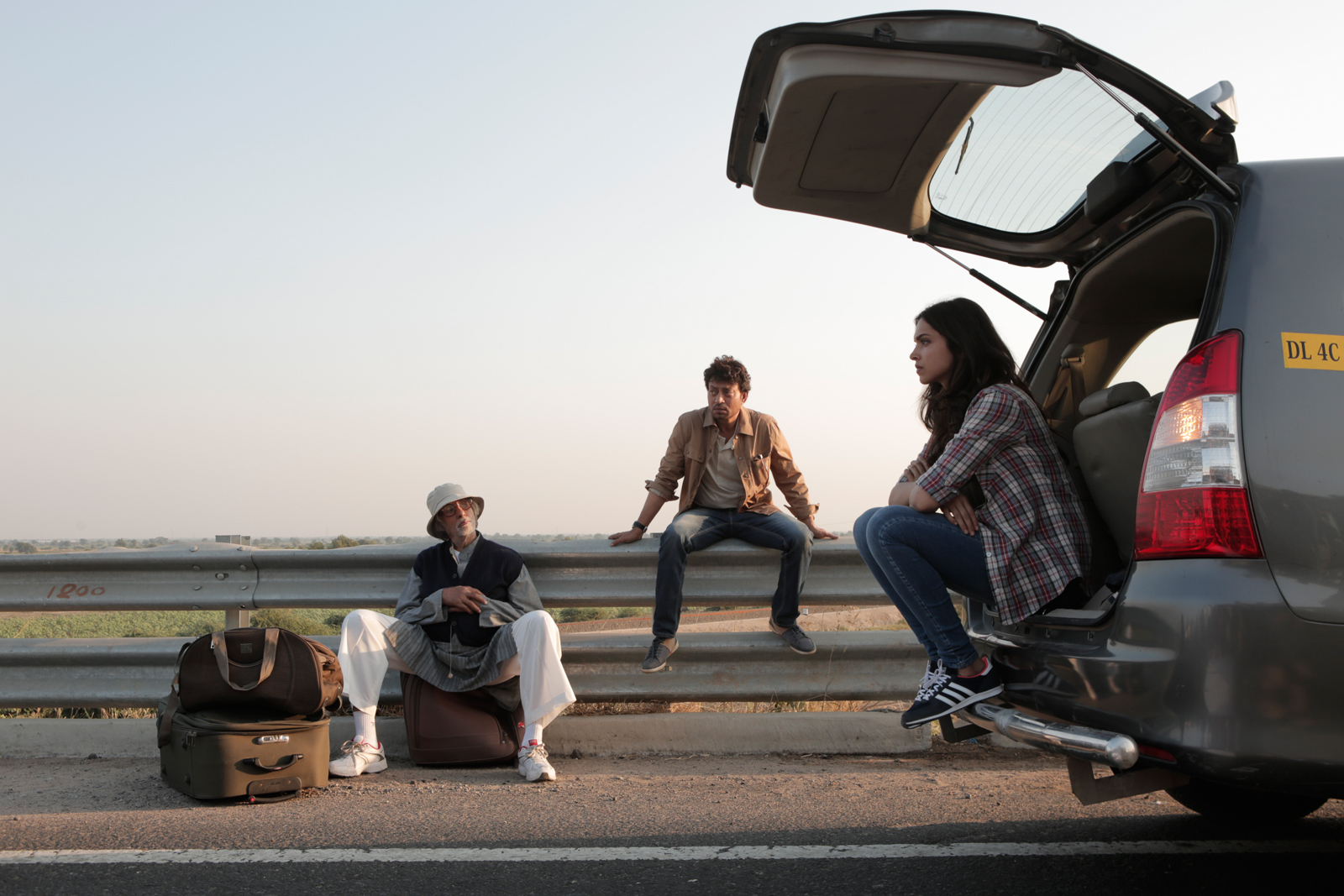
Dir: Shoojit Sircar. With: Amitabh Bachchan, Deepika Padukone, Irrfan Khan. 123 mins. Cert: PG

The subtitle of this current Bollywood hit, “From Motion Comes Emotion”, has the ring of a terse Godardian credo, so it’s a shock to learn exactly what kind of motion is meant: few movies have so tied themselves to a character’s bowel movements. Shoojit Sircar’s comedy-drama flouts cinematic loo taboo by organising itself around a figure, Amitabh Bachchan’s Bashkor Banerji, who – for constitutional reasons – rarely travels more than five feet from one. It sounds crazy, like a pitch from the Prune Marketing Board, yet Sircar makes of this constipation both a theme and a virtue: he takes an everyday set-up, and then, as it were, follows through on it.

In Bashkor’s Delhi household, everybody’s uptight for one reason or another; the dietary discomfort of this widowed hypochondriac is rivalled only by the burden borne by architect daughter Piku (Deepika Padukone). Sircar gleefully establishes how father’s bowels impact upon daughter’s career (pungent status updates disrupt her meetings) and love life (such potty talk repels potential suitors). She retains one unlikely admirer: Rana (Irrfan Khan), manager of a hire-car fleet with whom Piku has been involved in a legal tussle ever since her vehicle was rear-ended. Crude as this sounds, an idea is being developed here.

Much of the action takes place in small rooms, and what’s immediately striking is that these characters don’t inhabit the palatial outposts so beloved of Hindi cinema, but cramped middle- or working-class boltholes, obliging these characters to put up with one another’s BS (or just S). Even when the film contrives a reason for the principals to hit the road to Kolkata, we’re still essentially watching three people sharing a confined space, trying to hold their feelings in until the next pit stop – and that road, necessitating frequent twists and turns, is itself surely intended as in some way intestinal. Motion, again, leads to emotion.

Given the torrent of oversharing with which the film opens, it’s clear that Sircar isn’t afraid of nitty-gritty intimacy, and he works closely with his leads to locate the grace notes in this potentially cruddy material. You can feel the film loosening up, relaxing into their company: where Bachchan seizes upon his cranky character part, making Bashkor as garrulously funny in his theories on caste and marriage as his system is backed-up, a dressed-down Padukone, the sometime model traditionally cast as a living goddess, does as much here with a frazzled silence as her earlier showcases did with her dazzle.
 
Arguably, though, it’s the terrific Khan (Life of Pi) who steals it, working subtle comic wonders with wry looks, and delivering the easier-digestion editorial with greater charm than, say, Gillian McKeith ever managed. Star power aside, it’s a modest, reined-in entertainment, rejecting musical numbers for a simple whistled refrain, and clocking in at just two hours; its last-act crisis involves nothing more spectacular than blocked plumbing, inevitably. Yet given the bloated junk currently clogging both Hindi and American mainstreams, such human-sensitive fare provides its own restorative, oddly pleasurable form of release. It slips down nicely.

Piku is now playing in cinemas nationwide.

Friday, 15 May 2015

For what it's worth...


Top Ten Films at the UK Box Office   
for the weekend of May 8-10, 2015: 
 
 
1 (1) Avengers: Age of Ultron (12A) **
2 (new) Spooks: The Greater Good (15)
3 (2) Far From the Madding Crowd (12A) ***
4 (3) Unfriended (15)
5 (new) The Age of Adaline (12A)
6 (4) Fast & Furious 7 (12A) ***
7 (new) Big Game (12A)
8 (5) Home (U) **
9 (6) Cinderella (PG)
10 (7) Two by Two (PG) **

(source: theguardian.com)
 

My top five:   
1. The Tribe
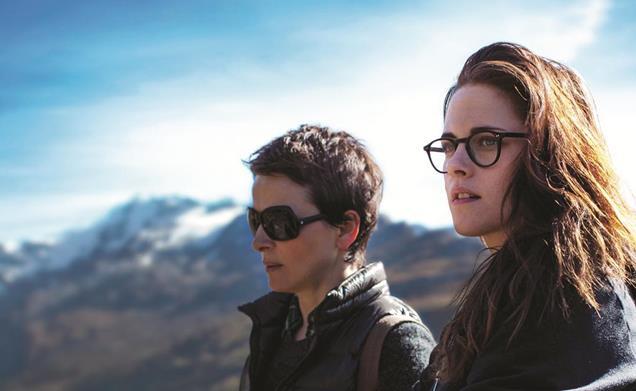
2. Clouds of Sils Maria [above]
3. Lambert & Stamp
4. Only Angels Have Wings
5. Girlhood


Top Ten DVD rentals:  
 
 
1 (1) Paddington (PG) ****
2 (3) The Hunger Games: Mockingjay - Part 1 (12)
3 (4) Gone Girl (18) **
4 (6) Pride (15) ***
5 (7) Fury (15) **
6 (5) Tinker Bell and the Legend of the Never Beast (U) **
7 (8) The Maze Runner (15)
8 (re) What We Do in the Shadows (15) ***
9 (new) Dracula Untold (15) **
10 (new) Automata (15)

(source: lovefilm.com)
                                 
 
My top five:  
1. Foxcatcher
2. A Most Violent Year
3. Altman
4. The Theory of Everything
5. The Last Five Years


Top five films on terrestrial TV this week:   
1. North by North-West (Saturday, BBC2, 3.05pm)
2. Rope (Saturday, BBC2, 1.05pm)
3. The Great Escape (Sunday, five, 5.40pm)
4. Weekend (Wednesday, C4, 2.15am)
5. Robot & Frank (Wednesday, BBC1, 11.15pm)

"The Tribe" (Telegraph 15/05/15)


The Tribe ****

Dir: Miroslav Slaboshpitsky. With: Grigoriy Fesenko, Yana Novikova, Rosa Babiy, Alexander Dsiadevich, Yaroslav Biletskiy. 18 cert, 132 min

From the beginning, there are no words – only a starkly forbidding title card, there to inform us the film we are about to watch is performed entirely in sign language: “There will be no subtitles, dialogue or voiceover.” Ukranian director Miroslav Slaboshpitsky’s deaf-school drama, a Cannes sensation last year, is a latter-day silent that commits absolutely to its own silence; for hearing audiences, it’ll make for a crash course in adaptation. A crowdpleaser like The Artist deployed intertitles to guide us through its trickier spells of exposition; here, we’re thrown right in at the deep end. You quickly hear your own ears go pop.

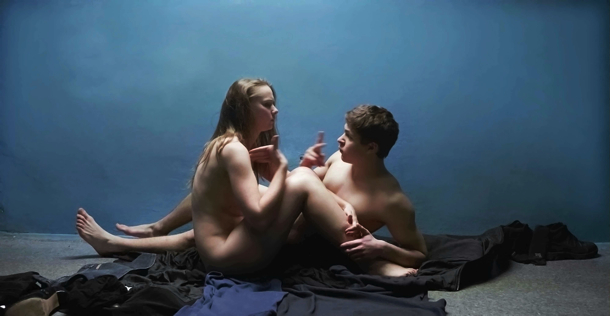
It helps that this sets us on an equal footing with new arrival Sergey (Grigoriy Fesenko), a blank-faced stray figuring out his place within this grim-looking institution. Long, wide Steadicam shots allow us time and space to read the movements of the bodies around him, distinguishing bullies from victims, and noting how the staff, faced with such rampant delinquency, have retreated into the background. No-one’s intervening to halt the school’s prostitution ring, for one: while Sergey experiences something akin to first love with working girl Anna (Yana Novikova), not-for-profit intimacy isn’t a value this market sets much stall in.

That this isn’t your average school for the deaf is obvious: Slaboshpitsky surely intends it as symbolic, to stand for all the evils of the post-Soviet institution. In this, the school resembles the church and council chambers of last year’s equally pointed Leviathan: they’re relics of Mother Russia, offering scant shelter to the country’s most vulnerable citizens. Slaboshpitsky has been accused of exploitation – when not being bashed around, his young, non-professional performers are frequently stripped bare – yet he’d doubtless argue these scenes aren’t anywhere near as cruel as the system he’s indicting.

It is true that The Tribe can feel oppressive in its virtuosity. Every now and again –notably in a protracted abortion sequence – the camera will linger a beat too long to impress upon us what these kids have been reduced to. Yet it drives its points home nevertheless, and with a visceral impact unmatched in recent world cinema. You emerge from this brutally unsentimental education with your chest pounding and your ears ringing – its radical empathy extends to putting us in not just the same room as its subjects, but the same helpless, despairing position. Some films are made to leave you speechless; for some experiences, there can be no words.

The Tribe opens in selected cinemas from today.