Friday, 15 May 2015

"A Royal Night Out" (Guardian 15/05/15)


A Royal Night Out **
Dir: Julian Jarrold. With: Sarah Gadon, Emily Watson, Rupert Everett, Jack Reynor. 97 mins. Cert: 12A

Politically speaking, this may be as totemic a film as The Full Monty was back in 1997. Another from this year’s pretty rote heritage cinema crop, Julian Jarrold’s costume romp takes the much-chewed titbit about the young Princesses Margaret and Elizabeth being let out of Buck House for a few hours on VE night as the basis for an essentially silly, trivial runaround. The result is 50% flagwaving, stocking its replica Trafalgar Square with by-the-yard bunting and extras, and 50% galumphing big band score, with a brass section that parps breathlessly whenever we’re meant to find something amusing.

Professional chaperone Jarrold lends it more mildness than wildness, his safe hands forever muffling any danger or sexiness. Where previous dusk-till-dawn narratives have wielded their timeframe as an index of change, here everything stays the same: Bel Powley’s Margaret remains resolute in her jolly-hockey-sticks snorting, while respectful supposition ensures Lilibet (Sarah Gadon, labouring to turn all her “off” into “orf”s) goes no further than Barnes with her disgruntled soldier consort. It’s a thin, trickledown sort of fun, broadly comparable to spending the afternoon in a mocked-up Lyons Corner House: the barrel is dutifully rolled out, but its contents prove no more intoxicating than ginger beer. 

A Royal Night Out opens today in cinemas nationwide.

Thursday, 14 May 2015

From the archive: "I Love You, Man"


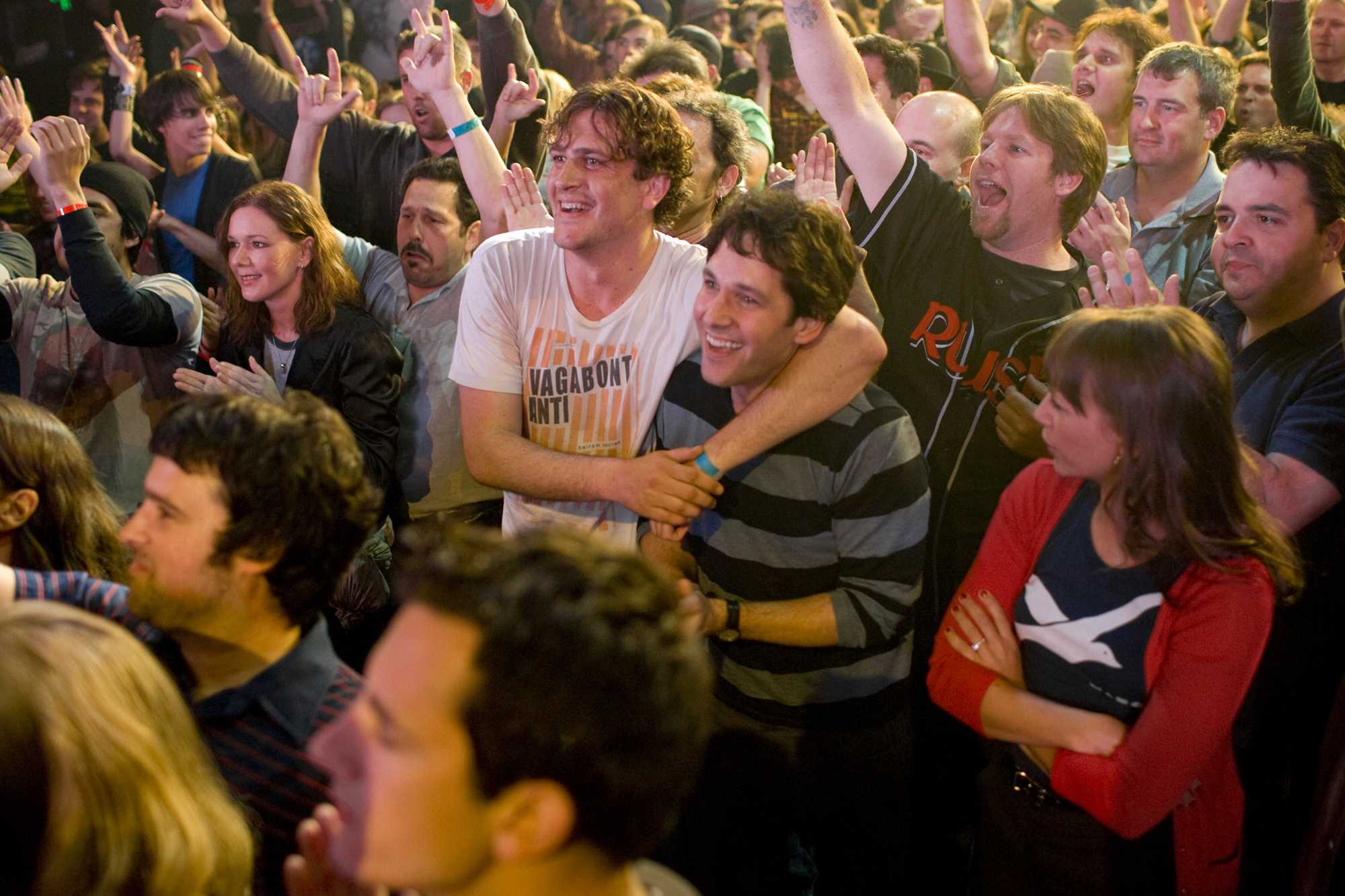
The New American Comedy, as established by Judd Apatow and his acolytes, has flirted so heavily with the notion of "bromance" - the love that dare speak its name between heterosexual men, and with such verbosity that it has been known to exclude the fairer sex from the conversation altogether - that a full-on bromantic comedy has long seemed inevitable. I Love You, Man continues the riffing on what's been this cycle's key theme - what it is to be a man these days - ever since Apatow's The 40-Year-Old Virgin: its subject is the growing relationship between two fully-grown (and demonstrably straight) men, pursuing them from their first tentative "man dates" to a last-reel declaration of lasting affection at the altar.

The set-up of John Hamberg's film isn't dissimilar to the recent French comedy My Best Friend, which cast Daniel Auteuil as a successful yet solitary businessman challenged to find a brand new buddy in order to win a bet. Here, we get Paul Rudd as Peter Kraven, a realtor whose wedding plans are hed up by a distinct lack of candidates for the role of best man. After some disastrous Internet matchmaking - and one misinterpreted shot at bonding with someone his mother sets him up with - he finally meets his Mr. Right in the form of Sydney Fife (Jason Segel), a cardigan-clad Zenmaster whom Peter encounters snaffling sandwiches and eyeing up the divorcees at an open house. Our hero finds himself being schooled in the ways of maleness - the potty talk, the guitar licks, the masturbatory rituals - in ways that soon impact upon his actual relationship.

More so than January's slipshod Role Models, this is the best vehicle yet for Rudd, the approachably nerdy breakthrough star of (and most gifted performer among) the Apatow set; in a string of set-pieces, he expertly charts Peter's progression from nervy first phone calls to awkward stabs at matey banter, usually followed by a lame attempt to come up with a casually cool leavetaking. For once, the adlibs and non-sequiturs with which these comedies have grown bloated serve some kind of thematic purpose - they go to the overarching thesis about just how difficult it can be to be hip, flip and off-the-cuff, even with someone of one's own sex. The jury's still out on whether Segel is the next Will Ferrell or merely the latest Vince Vaughn, and the supporting cast - as has become the comedy norm - is full of very funny people (Jamie Pressly, Andy Samberg, Jane Curtin, J.K. Simmons) huddled round waiting for something to do, refugees on the usual raft of throwaway ideas tossed in for a laugh and then left to float away: these extend here to the sport of fencing, a six-foot sandwich, and a dog named Anwar Sadat ("because he looks like him").

Still, Hamberg - writer of Meet the Parents, and director of Along Came Polly - keeps a lid on too much Apatovian indulgence, giving himself a structure, plot and character arcs to doodle within, and being upfront about his narrative's incontrovertible maleness means he's less dismissive of his women than many of his sniggering cohorts have been: as Rudd's fiancee Zooey, The Office's Rashida Jones is a rare non-whiny, unclingy, legitimately funny presence, and a welcome addition to the New American Comedy's female ranks, her last-reel intervention in l'affaire Rudd-Segel typical of a generally sweet-natured and generous comedy. Plenty of laughs for a Friday or Saturday night, plus an early contender for line of the year: "I don't see how having someone piss on my face is going to help me sell Lou Ferrigno's house."

(April 2009)

I Love You, Man screens on BBC1 tomorrow night at 11.50pm.

Friday, 8 May 2015

For what it's worth...


Top Ten Films at the UK Box Office   
for the weekend of May 1-3, 2015: 
 
 
1 (1) Avengers: Age of Ultron (12A) **
2 (new) Far From the Madding Crowd (12A) ***
3 (new) Unfriended (15)
4 (2) Fast & Furious 7 (12A) ***
5 (4) Home (U) **
6 (3) Cinderella (PG)
7 (new) Two by Two (PG) **
8 (7) The SpongeBob Movie: Sponge Out of Water (U)
9 (6) Woman in Gold (12A) *
10 (8) Child 44 (15)  

(source: launchingfilms.com)
 

My top five:   
1. Girlhood
2. Mad Max [above]
3. Honeytrap
4. Rosewater
5. The Canal


Top Ten DVD rentals:  
 
 
1 (1) Paddington (PG) ****
2 (2) The Imitation Game (12) ***
3 (3) The Hunger Games: Mockingjay - Part 1 (12)
4 (4) Gone Girl (18) **
5 (5) Tinker Bell and the Legend of the Never Beast (U) **
6 (6) Pride (15) ***
7 (7) Fury (15) **
8 (6) The Maze Runner (15)
9 (new) Lucy (15) **
10 (9) The Hundred-Foot Journey (PG) ***

(source: lovefilm.com)
                                 
 
My top five:  
1. Dreamcatcher
2. Kon-Tiki
3. Maidan
4. Predestination
5. The Theory of Everything


Top five films on terrestrial TV this week:   
1. Vertigo (Saturday, BBC2, 2.50pm)
2. Cape Fear (Friday, ITV1, 10.40pm)
3. Margin Call (Wednesday, BBC1, 11.15pm)
4. Prometheus (Sunday, C4, 9pm)
5. I Love You, Man (Friday, BBC1, 11.50pm)

"The Canal" (Guardian 08/05/15)


The Canal ***
Dir: Ivan Kavanagh. With: Rupert Evans, Antonia Campbell-Hughes, Hannah Hoekstra, Steve Oram. 92 mins. Cert: 15

There’s a fair bit floating around in this smart, slowburn creepout, which for a long while withholds the exact nature of the demons circling its central character: a film archivist (Rupert Evans, nicely rattled) haunted both by suspicions his wife is having an affair, and that their new canalside residence may have been the site of a bloody murder a century before. Traces of Europudding persist in its mishmash of accents (Dutch, Irish, Steve Oram as a slovenly Brummie detective), but writer-director Ivan Kavanagh and cinematographer Piers McGrail fashion something properly cinematic from their watery, nondescript locations: an overcast, portal-like towpath, a dilapidated public loo that provides an unusual and effective locus of fear. If it can’t quite match the full-pulp heft of its influences (2012’s Sinister, Hideo Nakata’s J-horrors), it does something not dissimilar with its protagonist’s mounting obsession, and has a genuinely unsettling manner of undercutting his – and our – certainties. 

The Canal opens in selected cinemas from today.

"Wyrmwood: Road of the Dead" (Guardian 08/05/15)


Wyrmwood: Road of the Dead **
Dir: Kiah Roache-Turner. With: Jay Gallagher, Bianca Bradey, Leon Burchill, Luke McKenzie. 98 mins. Cert: 18

The zombified landscape established by George A. Romero is being so rapidly and comprehensively mapped that we may soon pass through lay-bys, Welcome Breaks, even tourist information centres of the dead. This crowdfunded Aussie translation has some of Romero’s representational nous – it opens mid-apocalypse, with an Aborigine mulling over the chaos – but proceeds with more energy than inspiration, liberally splashing ketchup over genre clichés. Points for prominent use of KC and the Sunshine Band, and the zombie named Neville, but its haphazard tonal shifts, iffy performances and stretches of inertia suggest a post-pub DVD/VOD proposition rather than anything that merits a theatrical outing. 

Wyrmwood: Road of the Dead opens in selected cinemas from today, ahead of its DVD release on Monday.

Tuesday, 5 May 2015

Diamonds: "Girlhood"


The French writer-director Céline Sciamma has, in a matter of just three films, established herself as among our most sensitive and sympathetic observers of the young. 2007's Water Lilies and 2011's Tomboy found their protagonists at critical, formative junctures, and subtly nudged them towards some greater understanding of how the grown-up world works; her latest, Girlhood, expands this filmmaker's field of study in much the same way the inbound Eden does the canvas of Mia Hansen-Løve. We get some indication of Sciamma's increased confidence in her imagemaking from the opening scrimmage: schoolgirls in shoulderpads playing gridiron to the accompaniment of a blaring pop soundtrack. Given the generally quietist methods of Sciamma's previous work, this could be an American teen movie we're watching. (It's probably not coincidental that the film's distributors have selected an English-language title that rhymes with Richard Linklater's acclaimed history of growing up.)

If narratively Sciamma's film offers something relatively familiar, the story of a "good" girl who falls in with the wrong crowd, it's elevated by its heightened sense of time and place, its sure feel for those moments its teenage heroine - Marieme (Karidja Touré), the daughter of African immigrants living in the Parisian banlieue - must pass through to get to where she's going. We immediately understand Marieme's need to impose herself upon her surroundings and prove herself - against all socio-economic evidence to the contrary - no pushover: hence the football (a symbolic snapshot, never returned to), hence her decision to start carrying a knife, and to follow a gang of her contemporaries into pitched battle with local rivals. A generous, forgiving director, Sciamma sees the attraction in the pose. During a hotel-room singalong to Rihanna's "Diamonds", she punches up the blues in the frame - already something of a radical choice for a film about girls - and briefly turns Girlhood into a promo video with the slyest of editorial footnotes: in shining bright like a diamond, as the lyrics have it, these girls confer upon themselves a self-worth they aren't finding anywhere else.

What's especially sharp about Sciamma's gaze here is that she also spots the scared and vulnerable young things sheltering behind these poses. The daughter of a hotel cleaner (and expected to follow her mother into such work), Marieme sings about diamonds because she's unlikely to afford them herself; while her gangmates doll themselves up in pilfered evening gowns with the security tags still attached, she inherits a necklace rechristening her "Vic". It's supposedly short for "victory"; we're also inclined to believe it might be "victim". For even when this gang chooses to stand their ground and fight back, they risk humiliation: after being smacked down and forcibly stripped in one vicious playground brawl - her defeat inevitably recorded and uploaded to YouTube - gang frontwoman Lady (Assa Sylla) lapses into mute, wigless depression.

In its final third - charting Marieme's graduation from mean-girling to the (masculine) thug life - Sciamma's light touch begins to waver: events start to get just a mite conventional and melodramatic, overlapping with the themes and activity of any number of British crime dramas. Yet even this rough-and-tumble serves as a useful critique of Boyhood's hair-ruffling placidity: real shit happens to Marieme, beyond time passing. (Mason, by comparison, has it way too easy.) Putting in close, intimate work with her young, inexperienced performers - particularly with Touré, shown trying on personas like dresses in a makeover montage - Sciamma keeps generating fresh, unself-conscious displays and definitions of girlhood: singing into remote controls, posing for selfies, gossiping over rounds of crazy golf. 

Though Water Lilies and Tomboy were much admired, they felt tentative in their narratives and methodology, visibly the work of a gifted young writer-director still finding her feet. Girlhood again unfolds as a series of decisive moments, small yet significant steps forward, yet it's far more forceful and persuasive in how it presents its findings, and a good deal less clinical than this technique suggests: as that opening scrumdown establishes, it's both alert to and alive with the tumult of teenage life, resisting the temptation of holding its protagonist up as a role model or at arm's length as a mere subject - perhaps, in part, because this director has been here, or hereabouts, herself. You can well imagine packs of actual teenage girls hunting the film down in the artiplexes of the West, and for once emerging without feeling remotely condescended towards. In Sciamma, this demographic may just have found their closest ally since John Hughes or Amy Heckerling.

Girlhood opens in selected cinemas from Friday.

Sunday, 3 May 2015

Pressure: "Honeytrap"


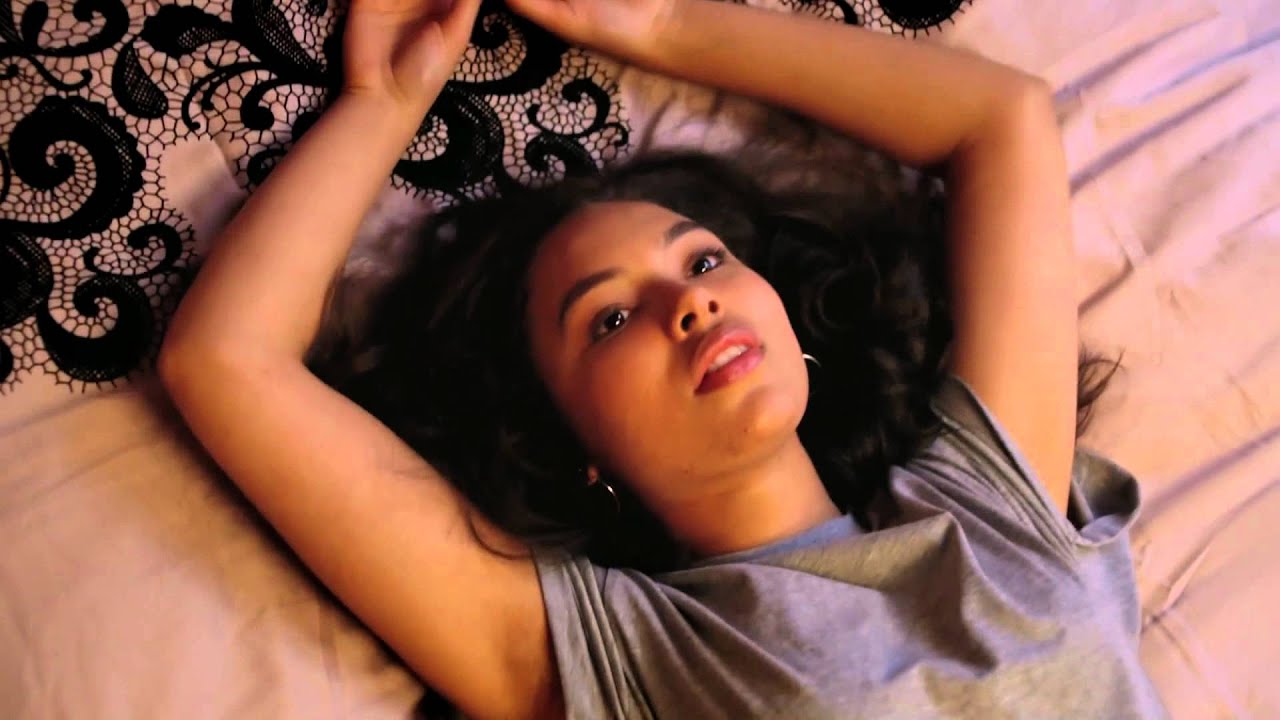
It's serendipity that Rebecca Johnson's feature debut Honeytrap should open in UK cinemas on the same day as Céline Sciamma's Girlhood: these are very much sister-films, equally deft in their dissection of the pressures faced by young women living in the inner city. Johnson's film concerns Layla (glowing newcomer Jessica Sula), a naive 15-year-old just relocated from Trinidad to Brixton to live with a mum who's busy living the self-involved life of a party girl even as her mid-thirties loom on the horizon. A Cinderella existence of cooking, cleaning and generally being downtrodden beckons our heroine; she even attracts her own Buttons in Shaun (Ntonga Mwanza), a mutely dependable sort obliged to look on, helpless, as his glamorous consort attracts the eye of neighborhood wrong 'uns. Chief among these would be emergent rapper Troy (Lucien Laviscount), who spirits Layla away from her drudgery to star in a music video, deflowers and defends her - yet experience tells us true Prince Charmings don't generally boast on record about the numerous girls they've fucked in nightclubs, and rarely disseminate clips of themselves getting blown by all and sundry.

That this fairytale has no happy ending has already been made evident from the film's pre-emptive opening, an unspecified but vicious episode of street violence. It's how we get there that's key, and Johnson makes for a patient and attentive observer. She notes, entirely non-judgementally, how the usual peer pressures associated with comings of age have only been heightened by social media and our celeb-fixated culture: Layla winds up comparing herself not just to her mother (whose response to the promo casting news is a tellingly blunt "don't get pregnant"), but the likes of Beyonce and RiRi, and inevitably finds she doesn't measure up to a multi-millionaire success story with a team of stylists at her disposal. (To any teenage girls similarly struggling with self-image, I would say: well, at least you didn't sink your pocket money into Tidal.)

Johnson makes the odd rookie error: a florid, overbearing score threatens to pull certain scenes into the realms of the afterschool movie, and her determination to contextualise her characters' actions means the honeytrap plot that leads to that pivotal kerfuffle feels rather squeezed into the closing fifteen minutes. Generally, though, she takes a rigorous approach to this unsentimental education: wisely resisting the hollow flash usually tossed upon low-budget urban dramas, she instead deploys choice location work and some very accomplished performances to give the film its nervy energy, everything crystallising in one banal yet horrifying image - that of a bloodied kid lying in a street and crying for his mother. By the look of things, Honeytrap just scraped theatrical distribution; it emerges in a week of some twenty-plus releases. Yet it bears comparison not just with the Sciamma film, but Andrea Arnold's Fish Tank and - in particular - Eliza Hittman's It Felt Like Love (itself awaiting a UK release after its London Film Festival appearance in 2013): it's a work of considerable promise, organised around a steely core of seriousness.

Honeytrap opens in selected cinemas from Friday.