Sunday, 6 October 2013
Driftwood: "Blue Jasmine"
Blue Jasmine, this year's Woody Allen Comeback Special, is a Princess-and-the-Pauper variant in which one actress gets to play both roles simultaneously and thereby chew up 99% of the movie, a feat for which she is apparently to be rewarded with all the gold and silver the upcoming award season has to offer. The princess in question is Jasmine (Cate Blanchett), formerly Jeannette, and very evidently a woman with a fragile sense of self. Jasmine was living in gilded luxury in uptown Manhattan until the Ponzi scheme set up by her financial advisor Hal (Alec Baldwin) came crashing down around her. As we join the film, Jasmine is going West, if not to regain her lost fortune, then perhaps to flee her creditors; upon landing, she installs herself in the modest San Francisco home of her adopted sister Ginger (Sally Hawkins), a single mom who just happens to be among those Hal and his pals ripped off.
The rash of four- and five-star reviews Blue Jasmine has so far prompted offer a vast collective sigh of relief that Allen - still a critics' darling, even after Hollywood Ending and Cassandra's Dream - has returned to surer ground after his spell in European exile, and it's true the director's feel for toney Upper East Side living here far outclasses, say, Match Point's pie-eyed vision of London's moneyed elite. This is the needling Allen of Crimes and Misdemeanors and Hannah and Her Sisters returning to prominence: after the comforting fantasias of Midnight in Paris, the flashbacks excavating Jasmine's past serve to bring us closer to the rot, hurt and betrayal.
Perhaps, too, there is relief at the fact that, when he turns his mind to it, Allen is still capable of writing a sustained character study. Jasmine is "on", as it were, from the very first scene (chewing the ear off a nice old lady on a plane) to the film's closing moments, giving Blanchett ample time to flaunt her theatrical virtuosity. Yet her triumph comes at the expense of almost everybody else around her. With the honorable exception of Andrew Dice Clay (the faded stand-up whose weariness and desperation fits his role as Ginger's duped and vengeful ex), Woody's San Francisco folk are unforgivably basic, salt-of-the-earth blue-collar caricatures, drawn from more or less the same condescending neighborhood as Mighty Aphrodite's dumb lugs and hookers, who convince as types more than they do as actual people.
Perhaps it's foolish to expect fine-honed naturalism from a director who's long expected nothing more from his actors than to show up and read his lines out, but Allen apparently has next to no idea how to shoot contemporary working-class life. Ginger's spacious walk-up is like a network sitcom production designer's idea of Where Poor People Might Live, while Javier Aguirresarobe's photography lends even San Francisco's supposedly dingier districts the same hazy, orangey glow he previously gave to Vicky Cristina Barcelona. You want to see a filmmaker romanticising penury? Well, here you go.
The narrowness of the supporting characterisation cuts across the classes: set Blue Jasmine against the filigreed depiction of America's social extremes in either Arbitrage or Warrior, and you surely see that everybody's praising Blanchett for making off with a movie only marginally less tissue-thin in its concerns than You Will Meet A Tall Dark Stranger. The film certainly looks of this particular moment, granted, yet as several recent interviews attest, Allen has no real interest in the widening gap between rich and poor: to him, this great divide is just a peg upon which to hang this year's movie script, and in applauding Blue Jasmine, it strikes me that we're applauding a director in decline for being hopelessly out of touch with reality.
The Woodyphiles have clung to that creaky old theatrical driftwood A Streetcar Named Desire as a way of explaining why everyone in a film notionally set in present-day America should be acting as though they were on stage in the Eisenhower era, yet even Jasmine's obvious resemblance to Blanche DuBois can't excuse Bobby Cannavale's cartoonishly second-rate Kowalski impersonation, or the way the film tails off into a babbling nothing the moment you emerge from the Odeon to find yourself once more confronted by the rather more vivid surrounds of Poundland and Booze Busters. You have to add Tennessee Williams to Blue Jasmine to make it seem less intrinsically flimsy or phoney - and I'd argue there's a gulf of difference between a performance that deserved a Tony in 1958 and one that merits the Oscar in 2013, between full creative recuperation and feebly piggybacking an overrated master.
Blue Jasmine is in cinemas nationwide.
Saturday, 5 October 2013
At the LFF: "A Spell to Ward Off the Darkness"
The British artist and filmmaker Ben Rivers has become a posterboy for what's been labelled "slow cinema": that arthouse strand, more prevalent at festivals than on the commercial circuit, in which a quasi-documentary authenticity, an adherence to the rhythms of everyday life, are offered up as a reaction or corrective to frenzied Hollywood posethrowing. In Rivers' cinema, patience - the desire to wait and watch - has been reclaimed as a virtue; inaction - and the contemplation that follows from that - is valued as much as action. These are films specifically intended to calm rather than quicken the pulse, and in today's hyper-accelerated, post-capitalist universe, there is something welcome, and possibly even defiant, about that.
A Spell to Ward Off the Darkness - compiled with the American artist Ben Russell and showing in the London Film Festival's Experimenta strand - doesn't feature demarcated scenes so much as extended spells of hanging out, allowing the camera (and the viewer) to poke round, say, a lake by dawn, or a woodland commune, or a mossy forest, and see what might be happening there for two, five or ten minutes at a time. Clearly, Rivers is clinging onto the back-to-nature line of his previous, theatrically released enterprise Two Years at Sea. The commune's tanned, relaxed and nurturing residents tend orchards by day before slipping out of the sauna to sip a cool beer in the last of the day's sun; from their ranks emerges a beardy black fellow (the musician Robert AA Lowe) who pushes on even further into the woods, in a second act that resembles Into the Wild removed of its narrative impulses.
Throughout, there's a commitment to capturing what it is to be living in the moment: to be the toddler taking great pleasure in running through the garden in the rain, or the grown-up taking a parental pride in watching the kid at play. I know, I know: it sounds impossibly hippy-dippy and head in the clouds, yet set against Terrence Malick's airier fantasias, or the thesis-bound juxtapositions of the Baraka/Samsara school, Rivers and Russell make these feel like graspable utopias: the pair's use of sound is particularly vivid and evocative, and while we're never told where we are exactly, we're lent a sense that we, too, could be there, and be this free, if we weren't all sitting in a cinema in the middle of the city surrounded by people trying to shake a cold and worrying, like us, whether they have enough money on their Travelcard to get back to the house on which the rent is about to be hiked.
One could still accuse the filmmakers of a certain naivety: there's something a little questionable - very Westwoodish, very Tarantinoid - in the film's positioning of a black man as the epitome of Zen cool; the film's underlying idea seems to be that this figure is more primal (given he's eventually seen painting his face, more aboriginal) than anybody else on screen, and thus more likely than anyone to be attuned to the call of the wild. Yet this guy's desire for solitude rings true, and serves as a reminder of something we risk losing at a time of constant virtual messaging and social networking: a recognition that our best creative urges come when we shut ourselves off for a while, and strive to forge our own paths through life.
This leads to the last-reel reconciliation with the world at a Finnish rock gig, where the screen becomes a sea of nodding, moshing faces: out of solitude, connection; out of tranquillity, noise. I suspect the beauty of this final act will depend heavily upon your tolerance for earsplitting death metal - though this, too, is a release of sorts, we understand. The action may have been minimal, but the journey has been epic: you really do feel as though you've been transported somewhere, albeit via the scenic route. Like commune life, or the music of Lordi, it won't be for everyone - one already has visions of sceptical viewers checking their texts, and plotting their own, literal-minded escape from the auditorium - but this eminently experimental, experiential venture may be the closest the cinema has come to matching Thoreau's Walden, outlining not just a retreat but a getaway, a manifesto for a whole other way of living.
A Spell to Ward Off the Darkness screens at the BFI Southbank on Saturday 12 and Friday 18; further details can be found here.
For what it's worth...
Top Ten Films at the UK Box Office
for the weekend of September 27-29, 2013:
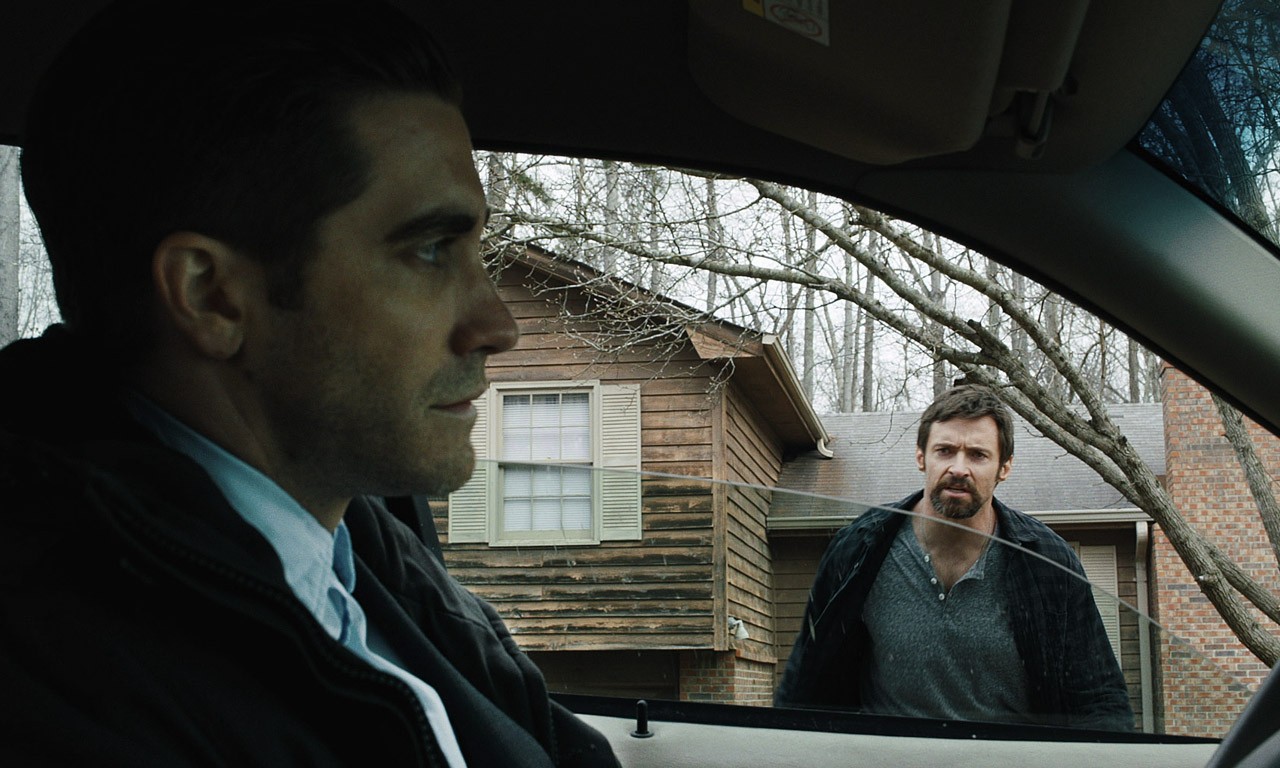
1 (new) Prisoners [above] (15)
2 (1) Rush (15) **
3 (new) Blue Jasmine (12A) **
4 (new) Runner Runner (15)
5 (2) Insidious: Chapter 2 (15) ***
6 (4) About Time (12A) **
7 (3) White House Down (12A)
8 (6) Justin and the Knights of Valour (PG)
9 (5) Diana (12A) *
10 (15) Monsters University (U) **
(source: Guardian.co.uk)
My top five:
1. Nothing But a Man
2. The Pervert's Guide to Ideology
3. The Wicker Man
4. Kelly + Victor
5. Metro Manila
Top Ten DVD rentals:
1 (new) Jack the Giant Slayer (12) **
2 (new) Identity Thief (12) *
3 (5) Iron Man 3 (12) ***
4 (4) Cloud Atlas (15) ****
5 (3) Olympus Has Fallen (15) ***
6 (1) Star Trek: Into Darkness (12) ***
7 (2) Mud (12) ***
8 (6) Lincoln (12) ****
9 (re) A Good Day to Die Hard (12)
10 (8) Zero Dark Thirty (15) ***
(source: lovefilm.com)
My top five:
1. We Steal Secrets: The Story of Wikileaks
2. Paradise: Love, Faith, Hope
3. Stories We Tell
4. Populaire
5. Our Children
Top five films on terrestrial TV this week:
1. The Magnificent Seven (Saturday, five, 1.30pm)
2. Reservoir Dogs (Monday, five, 10.55pm)
3. Precious (Saturday, BBC2, 11.10pm)
4. Easy A (Saturday, C4, 11.05pm)
5. The Bedford Incident (Friday, C4, 1.05pm)
A dirty mind: "The Pervert's Guide to Ideology"
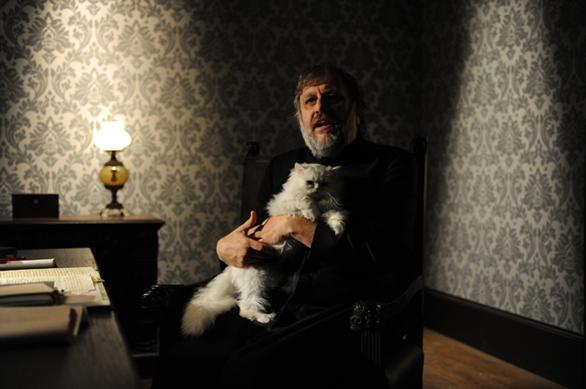
Slavoj Žižek is now such a superstar of pop philosophy that he can get movie sequels commissioned to showcase his ideas. The Pervert's Guide to Ideology forms a follow-up to 2006's The Pervert's Guide to Cinema, which picked its way through such key millennial texts as Fight Club and The Matrix in a stab at attempting to define our postmodern condition. At some point, it must have occurred to Žižek, the very model of a man who thinks too much, that he had more, much more to say - so this new film, again directed by Sophie Fiennes, roams wider still, using the cinema to describe a history of the entire 20th century, and of the individual's place within it.
In a typically leftfield gambit, Žižek uses as his touchstone movie not some worthy catch-all, but a trash classic: John Carpenter's satirical horror They Live (described as "one of the great masterpieces of the Hollywood Left"), in which ex-wrestler "Rowdy" Roddy Piper discovers a pair of glasses that - in Žižek's reading - allow him to see past the dominant ideology to view the world as it really is. The case - that, however they might reassure us, these ideologies (whether capitalism, communism or organised religion) actually do more lasting harm than good - is backed up with substantial textual analysis of movies both old (West Side Story, The Sound of Music, Nazi and Soviet propaganda reels) and new (I Am Legend, The Dark Knight).
It remains very easy to get lost amid Žižek's tics, thought patterns, the rhythms of his heavily accented speech: keeping up can be an issue, and often twenty minutes or so of screentime pass by before what he's getting at fully hits home. It took a detailed analysis of the crucifixion sequence from Scorsese's The Last Temptation of Christ for him to persuade me on his theory about leaders with God complexes sacrificing the lives of innocents in the name of some spurious "greater good": you realise this narrative has been inscribed in Western culture from the year dot, so it's no wonder our default setting is to buy it whole.
More frequently, however, an idea is conveyed in such a fashion as to set us thinking about a scene, a film, or indeed the world, in an entirely new way. One point that Žižek makes is perhaps obvious in retrospect - that, in Jaws, the shark represents capitalism, preying on small-town America the way fast-food franchises now do - but it nevertheless explains why Spielberg, having become one of the Hollywood ecosystem's bigger fish, never again got so close to matching that film's primal terror. (To pursue the point: if the horse in War Horse was a continuation of this anthropomorphised capitalism, then we were meant to admire its power, its indefatigability, its inhuman, inexpressive sleekness, and by handing over our money to marvel at it, we were in effect patting capitalism - and its ability to create such spectacles - on the head.)
Žižek has found a gifted acolyte in Fiennes, who's figured out how to give even her subject's more abstruse thinking framing and context: as in the earlier film, clever, attentive production design puts Žižek inside A Clockwork Orange's Milk Bar, or on Hitler's plane as it descends into Nuremberg at the beginning of Triumph of the Will, allowing him to better inhabit the worlds and concepts he's describing, and the film to bring these ideas alive for a cine-literate audience. Still, there's only ever one star here, and Fiennes knows what might prove philosophical box-office, whisking Žižek away to the desert just so he might riff on the ontological properties of Coca-Cola, and keeping the camera running long enough for him to polish off a Kinder Surprise (described, in one magnificent(ly) mental flourish, as a form of "anti-metaphysics", which is something to consider next time you pop down the sweet shop).
A fine advert for applied philosophy, the Pervert's Guide is also a project that demonstrates just how thrilling, liberating and catching original thought can be when presented on the screen. Žižek is bold in discussing the London riots, the Breivik murders and global terrorism, but he's brilliant when demythologising such guilty pleasures as Titanic and Starbucks coffee, items where we're being sold one thing and paying for another entirely. In these anti-intellectual times, where experts and thinkers have been bumped from our TV screens in favour of gurus, comedians and other smart-arses, the breadth and depth of Žižek's thought is both breathtaking - and something of a lesson.
The Pervert's Guide to Ideology is in selected cinemas, ahead of its DVD release on October 14.
Bad cop, worse cop: "Filth"
I wound up enjoying Filth - which struck me as the best film of its type since In Bruges - though it seems at first to illustrate a tendency peculiar to the British film industry: that inclination to snigger (and encourage sniggering) at the kind of material others have taken deadly seriously. The source is Irvine Welsh's 1998 novel, which emerged into that post-Trainspotting, Britpoppy dreamtime, and comprised this infamously profane author's take on the Bad Lieutenant figure; yet where Abel Ferrara went after the unholy trilogy of religion, sex and power with an unblinking, agonised, tough-to-watch sincerity, Jon S. Baird's adaptation serves these elements up as a Viz-level cartoon for broad-minded audiences, so hellbent on appearing non-PC that it pridefully reclaims the word "spastic" as an insult, and lays "Will You Still Love Me Tomorrow?" over an interlude of frenzied phone sex. All of which is to acknowledge that you'll either love it or want to leave after an hour, in need of a very hot shower - but then you can't say the title hasn't warned you.
Welsh's conceit was to take the kind of figure who would, in the real world, be terrifying - Detective Sergeant Bruce Robertson (here played by James McAvoy), a syphilitic sociopath angling for a promotion in the middle of a murder investigation - and submit him to a grilling from within and without, in the process revealing him as as much a Scottish archetype as the pregnant, deep-fried Mars Bar-scoffing alkies he stalks the mean streets of Edinburgh spitting and sneering at. One might wonder how much this pretty filthy, disreputable soul has been cleaned up for multiplex consumption; the answer, despite the presence on the sidelines of a friendly widow (Joanne Froggatt) and her adorable son, is admirably "not much", and - as with Danny Boyle's film of Trainspotting, the last truly notable Welsh adaptation - Baird has found ways of ushering us past the novel's episodic style and jarring tonal shifts.
Put simply: it would be very easy to get this wrong, as evidenced by that overstuffed bargain-bin of British black comedies that crashed and burned in the effort to be edgy or daring. Filth, for its part, gets by on an unshakeable energy and confidence. Though recognisably of Welsh's world, it's determined to be very much its own film: grungy, seedy, wiggy, confounding. Baird somehow makes coherent a Reeperbahn jolly that begins with a mashed-up Eddie Marsan voguing to electro and ends with McAvoy getting spooked by a pig-faced figure (apparently drawn after Matthew Barney) at the foot of his bed; he's also perfectly content to throw in a singing David Soul cameo that the kids getting off on all the cussing and shagging won't have a clue what to make of. (The cultural reference points are decidedly pre-millennial: while the world awaits Lenny Abrahamson's Frank, I suspect some viewers will take the bizarro-world presence of Frank Sidebottom as one of Baird's own inventions.)
Sometimes Baird appears to be having so much scabrous fun that he forgets about the niceties of plot, yet his shock tactics are forever modulated by an ensemble of emergent national treasures, who allow themselves to be mocked, splattered or otherwise tarnished, and busily set about creating characters that pop out of the screen: Jim Broadbent (with distended forehead) as an Australian psychiatrist who effectively takes the place of the novel's tapeworm, Marsan and Shirley Henderson - so indelibly numbed and raw as the grief-stricken parents in TV's Southcliffe - going to the opposite extreme as a patsy Freemason and his blowsy, hot-to-trot wife, John Sessions as Robertson's hemming-and-hawing, palpably impotent superior.
The chief selling point here, though, may lie in watching McAvoy shake off the last vestiges of his boy-next-door image: chipshop-haired, ratty and gingery of beard, sunken of eye, this is a performance commendably lacking in vanity, such that the actor can happily enter into a scene in which Robertson sexually disappoints the stationhouse's libidinous secretary (Pollyanna McIntosh), and another wherein a female colleague (Imogen Poots, increasingly impressive) further cuts through the character's swollen ego. If Filth attempts a bad-cop-worse-cop interrogation of the Scottish hardman, roughing delicate viewers up between its bouts of broad, popcorn-snorting knockabout, McAvoy places a critical intelligence at the centre of it - or, at least, enough of same to make Robertson's final mise en abîme oddly affecting. Sample dialogue: "Did you do her up the arse?" "Where else is there? Pussy's for faggots." Your grandmother might prefer Sunshine on Leith, all told.
Filth is in cinemas nationwide.
"Folie à Deux: Madness Made of Two" (The Guardian 04/10/13)
Folie à Deux (uncertificated) 101 mins ***
Though it bears the
unmistakable look of daytime-telly property porn, Kim Hopkins’ documentary
offers an eccentric and thoroughly English rejoinder to last year’s The Queen of Versailles. In 2007, Helen Heraty and husband John Edwards moved into York’s
historic Grays Court, staking their (sizeable) personal fortune on turning it
into a hotel. Though the crunch is coming, the film’s focus remains somewhat
narrow: with John away at work, we’re left pottering around the kitchen as
Helen juggles seven kids with increasingly fraught calls from her accountant.
It appears as though Hopkins might just be hanging the couple out to dry for
past excesses – then this war of financial attrition takes a melancholy turn.
Earlier, funnier confrontations counter Versailles’ faded glitz with twitching
curtains, tetchy boundary disputes and plentiful bathos: just when you think
the downturn can’t get any worse, somebody goes and tramps dog poo indoors.
Folie à Deux is playing in selected cinemas.
Thursday, 3 October 2013
Girl and ammo: "Bring Me The Head of the Machine Gun Woman"
It's always a sign of a healthy film culture when a country is not just making the kind of prestige ventures that pick up the top prizes at festivals, but cultivating that variety of genre filmmaking from which the next generation of prizewinners may yet emerge. The scrappy throwback Bring Me The Head of the Machine Gun Woman - which arrives in a deliberately worn and speckled print, as did the Grindhouse movies before it - doesn't in itself seal the argument that something of cinematic note is happening in Chile right now, but at the very least it offers an appreciable contrast with the Oscar-nominated NO, and a modicum of sniggering, brain-in-neutral fun. This may be the first film to be openly influenced by Grand Theft Auto, right down to the prevalence of camera shots tracking a car's movements from above and behind and the retro font in which its various "missions" (including that of the title) are flashed up on screen; its protagonist is a wimpy DJ (Matias Oviedo) who spends his days playing such games and his nights working at a club, where he overhears his mobster boss's bellowed demand for an ex-girlfriend's head, and comes to volunteer for the task, as a way of currying favour and extending his life.
Like many based-on-XBox movies, it might actually be more enjoyable to play than watch, and there's a sense that writer-director Ernesto Diaz Espinoza hasn't fully worked out whether he just wants to reproduce the vicarious thrills of violent video games (as per Crank), undercut the fantasy element with harsh reality (as per Special or Super), or simply play Kick-Ass's have-your-cake-and-eat-it card. Making the hero a lanky streak of piss who doesn't know how to get a gun, let alone fire it properly may suggest the second route, but his rapid-fire ascent to man of action, and the fact Fernanda Urrejola's heroine - decked out in Lara Croft-style hotpants and wholly impractical spiked-heel boots - acquiesces to a zipless fuck with him mere seconds after he's removed a bullet from her side pushes it closer to the latter's nerd fantasy. A streak of diverting weirdness - assassins styled as one-man bands, offbeat character names (Shadeline Soto, Don Che Sausage) of the kind Tarantino deals in, Rocco's ear-catchingly sleazy score - keeps you halfway interested, though, and in the end it's hard not to indulge it as a similar expression of tart, low-budget cheek to that Edgar Wright made with A Fistful of Fingers and Robert Rodriguez made with El Mariachi - and look what happened to them. Further missions may yet follow for Señor Espinoza.
Bring Me the Head of the Machine Gun Woman is in selected cinemas, ahead of its DVD release on October 14.
Subscribe to:
Posts (Atom)