Monday, 18 October 2010

At the LFF: "The Nine Muses"

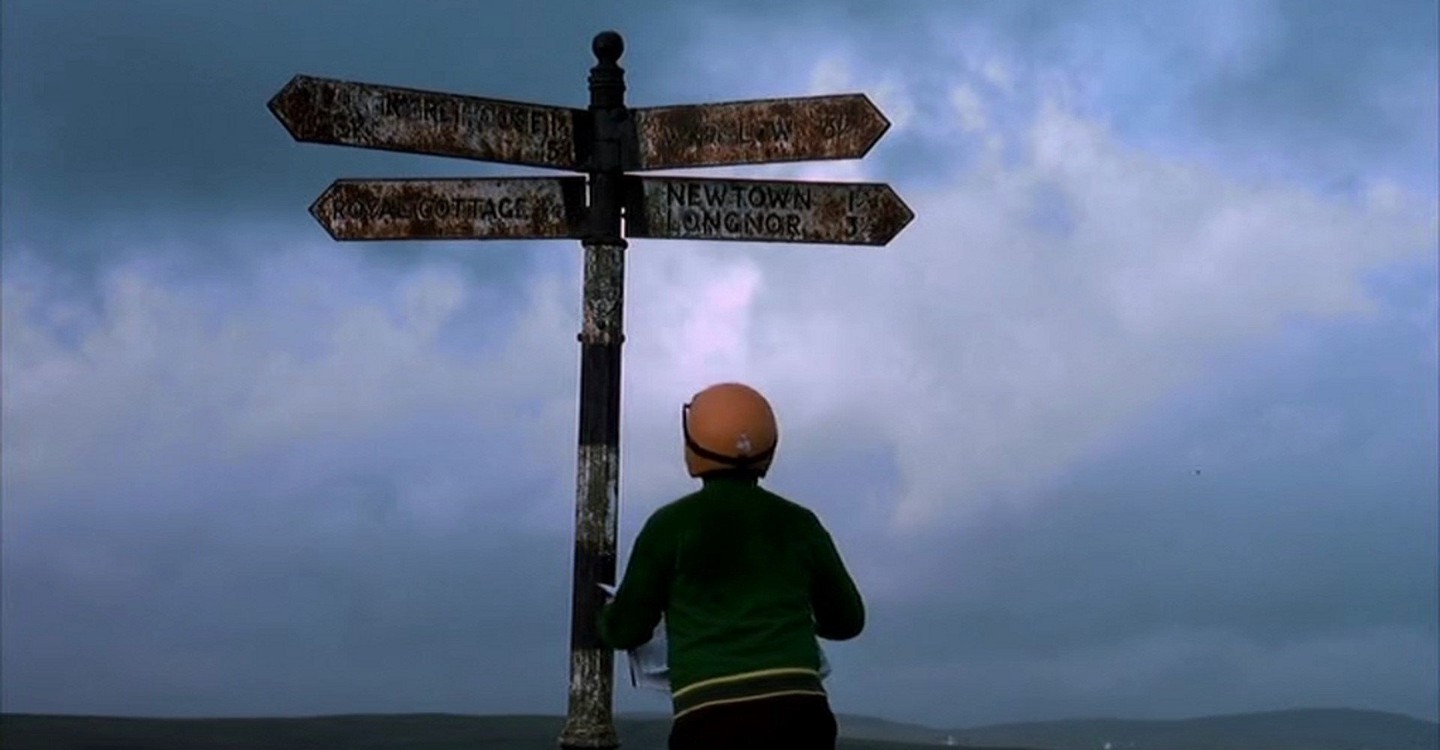
The filmmaker John Akomfrah's work typically centres on notions of place, from the nocturnal manoeuvrings of Handsworth Songs, his 1986 documentary (commissioned for the Black Audio Film Collective) about a Thatcher-era riot in Birmingham, to his recent installation piece Mnemosyne, which set foot into the snowy wildernesses of Alaska. Snow also proves a crucial element in Akomfrah's latest The Nine Muses, and it's a fascinating development that a director so concerned with the idea of what it is to be black should suddenly find himself preoccupied with whiteness - as a look, an idea, an organising principle; not least as these chilly landscapes must surely have been doubly cold for a child of Africa to work within.

A film-poem of sorts, The Nine Muses sets off archive footage of the black and migrant experience in Britain against stunningly mounted Alaskan tableaux (let's, in passing, say hats off to cinematographer Dewald Aukema, even if I'd advise everybody to keep their earmuffs on at the present time), in which figures in coloured kagoules assume places at the very edge of the frame. What joins these locations is that, in both, people came to live and work; and in both cases, it came to constitute a form of exile. The narration, along with occasional title cards, tell the tale of the Nine Muses, the children Mnemosyne gave birth to in Greek mythology after sleeping with Zeus over nine nights. (Beat that, Octomum.)

In backing the project, the UK Film Council may have had the crossover success of Terence Davies' Of Time and the City in mind, but that would seem unlikely here: Akomfrah's film - and this isn't necessarily a criticism - lacks a unifying perspective, that one voice as strong as Davies's coming through. This filmmaker's cinema has always been one of many voices; it deals in contrast and juxtaposition. Keening tabla music plays out over footage of boats bobbing in an icy harbour far from Mumbai; Akomfrah cuts freely and joltingly between two actors' separate renditions of Hamlet's "to be or not to be" speech. This patchwork, collagist approach isn't wholly removed from the aesthetic Akomfrah developed in his BAFC days, only now he has access to a greater selection of archive material - all of history's recent trends and turds - and can quote from epic verse and Emily Dickinson.

The politics may, perhaps, have become less fervent, eloquent art coming to replace ragged urgency; a work like The Nine Muses is, after all, made to be projected in galleries and mezzanines, not town halls and community centres. At times, it even drifts into abstraction, as though the director's concern was no longer plotting the progress of a civil-rights movement, but movement itself. (His imagery - horses, cars, kayaks in motion - seems to back up this semantic smudge.) Yet all the usual issues of identity, race and memory are still very much present, codified beneath the new film's crisply beautiful top layer: very moving in places, it's a gentle reminder of just how far we've come as a society, and - by way of evidence of a truly English sensibility behind the camera - a cautionary glance at what the weather's up to now we're here. Has the climate for migrants really changed all that much over time?

The Nine Muses screens for the final time tonight at the ICA.

Comment, Like, Share?: "The Social Network"

Until someone takes the inevitable step of greenlighting the Twitter movie, nothing is likely to trend more than Facebook, that online resource we modern information junkies feel compelled to check once (if not more times) a day; as subject matter for what we might call brand cinema - the study of those trademarked phenomena that have come to shape our day-to-day lives - it makes the Transformers and The A-Team seem like the relics of a pre-digital age they always were. A film about the origins of social networking need not, then, have been about anything more than rubbish kids at keyboards: imagine Channing Tatum beating away at a Commodore with his ham fists, a spectacle for which a certain audience would still, I'd wager, have been willing to turn out. All the more reason, then, to admire the intelligence and integrity with which The Social Network has been assembled; after the drearily platitudinous The Curious Case of Benjamin Button - for which someone badly needed a poke, ideally in their mushy brain with a sharp stick - we can all, at last, refriend its director David Fincher.

Adapted by The West Wing's Aaron Sorkin from Ben Mezrich's non-fiction tome The Accidental Billionaires, the film envisions the birth of Facebook as an American dream countermyth; a kick-bollock scramble of cease-and-desist letters, hollered accusation and non-stop legal activity, resulting from an attempt to superimpose a business model upon the conventions of friendship. (In a typical Fincher spike, only after a certain while does it become apparent these still-recent events are being viewed in flashback, from the perspective of yet another deposition.) At the centre of this maelstrom sits Mark Zuckerberg (Jesse Eisenberg), the brilliant, borderline-autistic Harvard sophomore whose programming nous converted local dating site Facemash into Thefacebook.com, and eventually Facebook itself; identical twins Cameron and Tyler Winklevoss (Armie Hammer, doubled up with computers), Olympic rowers and representatives of the Harvard elite, who claimed the idea as their own; and Eduardo Saverin (Andrew Garfield), Zuckerberg's best - some might say only - friend, who stumped up the cash, and ended up purged from Facebook history.

Between them, there exists a dense, complex mesh of claims and betrayals, put across in this screenwriter's trademark zingy dialogue. Even Sorkin can't fully fathom out who was responsible for what in this matter of virtual paternity - much of the film takes place behind insistently closed doors, or firewalls - but it may just boil down to something like this: that where the alpha-male Winklevosses - or "Winklevi", as Zuckerberg dubbed them - gave the Facebook project its brash, toothy entrepreneurial veneer, its appealing facade, it was the just-dumped Zuckerberg whose code gave the site its inner workings, its heart; that only the latter truly understood what made its users tick, why we seek a closer connection to others, and why Facebook might be a success because of it. The beginnings of this argument are set out in the film's brilliant opening sequence, briskly and distinctively delineating Harvard's haves and have-nots: while the university elite bus girls in from neighboring colleges in customised "fuck trucks", Zuckerberg sits in his dorm lovelorn and drunk-blogging, and inadvertently changing the Face of the world as we know it.

Neither Fincher nor Sorkin has a Facebook page - no time for it, presumably - and The Social Network does rather propose the site in question as, in its own bright and user-friendly fashion, an alternative to or substitute for actual lived experience: it's one of the reasons why photos of parties posted on Facebook often seem more vivid than the parties themselves, where the camera-touting guests are too busy thinking of posterity (of presenting an image of themselves to the world) to live in the moment, to be in the room. (We are all control freaks now, even as we give up the details of our private lives to the gaze of strangers, colleagues and the vaguest of acquaintances.) The details of the case will be familiar to some, yet the film derives its knife-edge tensions, its dramatic ironies, from the ambiguous stance it adopts towards both its popular subject matter and a still-extant protagonist who, as The Social Network amply demonstrates, has amassed resources enough to fight several expensive legal actions simultaneously.

The real Zuckerberg reportedly saw Fincher's film upon its opening weekend, and commented he "liked the bits that were true" - a back-handed compliment perhaps even Sorkin himself would have struggled to come up with. In the role, Eisenberg - a performer who, like his close contemporary Michael Cera, looked to have settled into a rut of familiar, dweeby tics - is little short of a revelation. Cera, in the recent Scott Pilgrim vs. the World, went overboard trying to get us to like a character whose head was similarly full of bitmaps, and failed miserably. Ditching his puppyish mannerisms, Eisenberg here goes to the exact opposite extreme, and it's by making Zuckerberg utterly uningratiating - pallid, snarky, passive-aggressive; distractible and calculating - that he somehow gets us to root for him, or at least his expertise, his tenacity, his vision. Like Josh Harris, the Web 2.0 pioneer deconstructed in Ondi Timoner's excellent documentary We Live in Public, Zuckerberg is a figure at once hopeless, hateful and heartbreaking; he is a funny little character, which doesn't preclude us taking to him as an underdog - particularly when set against the buff superiority of the Winklevi - and which is why the casting of a young actor previously known for his comic roles is as apt as it is.

More so than Fight Club or Zodiac, indeed, The Social Network is the film that reveals Fincher as a director turned on by concepts and actors alike: everybody raises their game in this company. The erratic Garfield - so promising on television (Kid A, Red Riding), so resistable on film (The Imaginarium of Doctor Parnassus) - brings appreciable warmth to a story otherwise told through the rather clinical prisms of bright young men and their modems: his Saverin, a Brazilian in snowy Massachusetts, is the real outsider here. (Away from the digitised Winklevosses, Fincher reserves his most prominent effect for the character's breath condensing in the cold wintry air.) And Justin Timberlake - as the sometime Napster boss Sean Parker, who gave Zuckerberg his final leg up the digital ladder - is note-perfect as the kind of slick superstar programmer a couple of terminal geeks might well be taken in by.

Fincher, for his part, is back on his favoured thematic stomping grounds, networks of information and communication - the nuts and bolts of human connectivity that so helped to dramatise the formation of an underground resistance movement in Fight Club, or highlighted where the pieces and players of the mystery in Zodiac both did, and didn't, come together. This, possibly, was one more reason why Benjamin Button felt so disappointingly flabby: it had nothing to say except the obvious, had nowhere to go save up and down the one linear timeline. Here, Sorkin's fluent script provides the vehicle for the director to further move between worlds: if the film is ultimately critical of the Winklevoss's privilege, it also can't fail to spot the incontrovertible lameness of a Jewish fraternity's Caribbean theme night. The new film is hungry, leaner, as whippet-thin and excitable as its characters: whenever Trent Reznor and Atticus Ross's RAM-heavy score strikes up, it's as though a server (or some other mega-brain somewhere) has started processing data at top speed, and editors Kirk Baxter and Angus Wall excel themselves, underlining the rhythms of Sorkin's dialogue while meeting the needs of its attention-deficient consumers. (I saw the film with a young, paying crowd who appeared genuinely gripped by the drama unfolding before them; enough, at least, not to feel obliged to renew their status updates every five minutes.)

In short, then, The Social Network is as plugged-in and switched-on as mainstream cinema gets in 2010; a rare instance of Hollywood chasing the zeitgeist and catching it. Indeed, what may be so satisfying about the Facebook story is that everybody does, sort of, get what they deserve. The Winklevi cash another large cheque, and bow (or row) gracefully out of history, like the gentlemen scholars they are; Savelin has his supporting credit restored to the Facebook masthead; we get to throw endless sheep at one another; Parker gets busted on a drugs charge, emptying his pockets at the scene to reveal an asthma inhaler and an epi pen. (At moments of stress, the nerd will always out.) As for Zuckerberg, we leave him caught in a loop of his own making, the youngest billionaire in history repeatedly hitting refresh on his ex-girlfriend's own profile page in the hope she might, belatedly, have friended him. At this moment, the creative impulse that lies behind this great technological leap forwards is revealed to be exactly that behind every other eureka moment since time immemorial; and we see that what began for Zuckerberg as a cutting-edge fuck-you, a way of getting even, has instead mutated into a platform for getting girls - in this instance, just one girl - to like him more.

The Social Network is on nationwide release.

Saturday, 16 October 2010

For what it's worth...

Top Ten Films at the UK Box Office
for the weekend of October 8-10, 2010:

1 (new) Wall Street: Money Never Sleeps (12A) **
2 (new) Life As We Know It (12A) [above]
3 (new) The Death and Life of Charlie St. Cloud (12A)
4 (1) The Other Guys (12A) ***
5 (2) The Town (15) ****
6 (5) The Hole (12A) ***
7 (6) Made in Dagenham (15)
8 (4) Eat Pray Love (12A) **
9 (3) Buried (15) ***
10 (8) Toy Story 3 (U) ****

(source: UK Film Council)

My top five:
1. A Town Called Panic
2. Back to the Future
3. From Here to Eternity
4. The Social Network
5. Collapse


Top Ten DVD rentals:

1 (new) The Disappearance of Alice Creed (18)
2 (3) The Girl with the Dragon Tattoo (18) ***
3 (2) The Blind Side (12) **
4 (1) Prince of Persia: The Sands of Time (12) **
5 (new) Frozen (15) ****
6 (4) Shutter Island (15) ***
7 (new) Letters to Juliet (12) **
8 (5) The Bounty Hunter (12) *
9 (new) The Back-Up Plan (12) **
10 (8) The Ghost (15) **

(source: lovefilm.com)

My top five:
1. Frozen
2. Skeletons
3. Black Death
4. The Time That Remains
5. 37 Uses for a Dead Sheep


Top five films on terrestrial TV this week:
1. Sweet Smell of Success (Saturday, BBC2, 11.30pm)
2. From Russia with Love (Saturday, ITV1, 3.15pm)
3. Master and Commander: The Far Side of the World (Saturday, C4, 6.30pm)
4. A Mighty Wind (Friday, ITV1, 2.55am)
5. The Dam Busters (Sunday, BBC2, 11.30pm)

Tuesday, 12 October 2010

At the LFF: "Amigo"

"Get these people up out of the dirt - we're supposed to be winning their hearts and minds," barks Chris Cooper's Colonel Hardacre at the beginning of John Sayles' Amigo, riding into the small village his troops have just invaded and occupied. The backdrop is an uprising during the Philippine-American War in 1900, but it's clear from this line of dialogue alone that the writer-director has more contemporary matters on his agenda. Amigo's theme is the community under attack, a line you could argue Sayles first set out in his script for 1978's Piranha (reworked to far less pointed ends earlier this year) and politically finessed in the likes of Matewan and Limbo. Here, the natives of Luzon are busy repairing their roofs, tilling the fields and making their own moonshine out of bark when the yanquis ride in, spitting and syphilitic, and on the hunt for a notorious bandit - who just so happens to be hiding out in those self-same fields.

Monsoon conditions replace those of the desert, but the similarities to events in the Gulf are otherwise plentiful. The young American troops don't speak the lingo, and suffer for it - professionally, romantically; proposed democratic elections don't go as planned (or as the occupying forces want); civilian women and children take hits when battle eventually breaks out. Even the torture methods - pouring water down a prisoner's throat down a long tube, with the aim of literally flushing the bandit's whereabouts out - come to look awfully familiar. Yet one of the leftist subtexts is that communities where individuals are regarded as equals are better suited in their innate flexibility and adaptability to outwit systems where order is imposed from the top down. (Which, as the recent World Cup amply demonstrated, is applicable beyond warfare: it may be the reason Spain and Holland made the final, and the likes of England didn't.)

It's been five years since a Sayles movie reached UK screens - the comparatively starry Silver City - and Amigo is a noticeably sparer, rougher-hewn production, an enforced move back in the direction of grass-roots filmmaking that aligns the director closer to his artisan subjects. His use of actors is unexpected, resembling a cut-price Malick: with Cooper having scarcely more screen time than he did in The Town, and the (long-awaited?) re-emergence of DJ Qualls postponed until the halfway mark, it's down to non-professionals and only semi-recognisable faces - chiefly Garret Dillahunt's clenched Lt. Compton - to hold the fort. Without the dramatic finish of, say, Men With Guns, Sayles's previous excursion into jungle warfare, its earnestness threatens to become monotonous - how many indigenous weaving interludes does one film need? - yet Amigo grows in weight over its two hours, helped by the sparky performances of the film's non-English speakers. Sayles remains a keen, attentive student of the lessons to be gleaned from history - keener, you might say, than many at the top level of his government - and this latest restates his already considerable claim to being America's cinematic conscience.

Amigo screens on Friday 15 at 9pm and Saturday 16 at 1pm at the Vue West End, and on Sunday 17 at 3.30pm in NFT2.

At the LFF: "The Arbor"

If the writer Andrea Dunbar is known at all today outside her native Bradford, it's for the play that provided the basis for Alan Clarke's Rita Sue and Bob Too, a piece of tatty 80s arcana from a once-serious director that bequeathed Black Lace's atrocious "Gang Bang" to the world. The artist Clio Barnard's Dunbar biopic The Arbor employs the device of having actors lipsynch to the recorded memories of the writer's nearest and dearest, an unnerving sight I seem to remember from a couple of old ad campaigns (in its form, what the film resembles most, if anything, is a live-action episode of Aardman's Creature Comforts), but which I think must be unprecedented on the big screen, with the possible exception of certain songs in musicals.

All this miming raises the question of interpretation - when Barnard comes to addressing Dunbar's theatrical career, we're offered the sight of actors lipsynching to the words of other actors - and blurs the line between fiction and reality in much the same way the subject's own plays did. The Arbor is both a document about Dunbar's life and a feature inspired by her accomplishments, although I use that last word guardedly, because her legacies were ambiguous, to say the least. Barnard is wholly honest about the writer's being a product of her environment - Dunbar ended up dead (of a brain haemorrhage, aged 29) in a pub toilet, after all. As a playwright, she conjured tangy, salty dialogue drawn from a close attention to the world around her; but as a mother, Dunbar's gifts were, shall we say, less obvious, as the mournful, depressive testimony of her mixed-race daughter Lorraine only goes to show.

Among the producers of The Arbor are Artangel, the collective whose projects typically centre on issues of place: it was they who commissioned Rachel Whiteread's "House", her plaster cast of the inside of an empty townhouse, and more recently Roger Hiorns' extraordinary "Seizure", which applied copper sulphate crystals to a disused council flat in Elephant and Castle, and arrived at something magical in one of South London's grimmer corners. Barnard's film, as with its inspiration, attempts no such alchemy: it plays out on scrappy estates where dogs, horses and single mothers roam free, and - like Dunbar's characters - is too busy searching for flickers of hope, reasons to live, to pin down much in the way of beauty.

Dunbar's most personal work, 1980's The Arbor - concerning a scrappy teenager (a forerunner to Mia in last year's Fish Tank) trying to cope with an alcoholic father, unexpected pregnancy, and having a Pakistani boyfriend in prime BNP territory - took its title from the road on which the young writer (then 15) lived. Barnard gives this play another airing by staging key scenes in the middle of the (now relatively gentrified) Braffington Arbor on Bradford's Buttershaw estate, a reminder - not least to the locals, who look on from the fringes - of the miserable lives that once played out here, just as the film is constructed as a monument of sorts to the writer who sprang from these parts.

Barnard's choices are bold - challenging, even. For a start, how do we discuss the lipsynchers' participation - as performers, or mere pose-throwers? If Danny Webb strikes one as too slight to embody Royal Court boss Max Stafford-Clark (one of Dunbar's champions) - the actor is better speaking his own lines as the bibulous pa in the restaged Arbor, where Natalie Gavin is a punchy standout as the heroine - it would be hard to imagine how Manjinder Virk could be any more expressive as the sorry-eyed Lorraine. She, perhaps, comes across as a more vivid presence than her own mother: a young woman who didn't get off the estate (where Andrea - through her words - did in a way), and ended up spiralling into crime, drugs, prostitution and repeated sexual abuse. (One of the film's grimmer conclusions is that Andrea may have been lucky to get out when she did - even if it was in the back of a mortician's van.)

And presence is the key word here, after all: we're dealing with spectres, half-humans, ghouls, developments arrested at a formative stage. Dead babies and abortions litter the biographical narrative; fruitless, squandered, wasted labours. Ole Birkeland's crisp photography - as it did in last year's art-cinema crossover Helen - lends a further uncanny edge to the kind of cramped and squashed domestic arrangements such have been an essential part of the British cinema, and of British theatre, over the past half-century. If the tale The Arbor tells is pure kitchen-sink (and thus slightly removed from the livelier idiom of Dunbar's own writing), it's a sink stained with blood, and with several vital components missing; one that has its own heavy, toxic psychic energy, sucking everyone around down the plughole.

No easy watch, then: with its disembodied voices, its inbuilt sense of channeling, this is a ghost story that appears to haunt each successive generation, not to mention all those it passes through, whether that means the actors Barnard has employed, or the audience looking on. Part of me thinks we really ought to look, however. Whether she herself grasped it or not, Dunbar was a fiercely oppositional writer, and her plays were as reflective and descriptive of the broken homes of Thatcher's Britain as Barnard's film is relevant to the child-welfare cuts that have come with Dave "Dave" Cameron's purportedly kinder Conservatism. It's a jolting experience, but it prompts you to remember that while our arbors and alleyways may look a good deal nicer these days, there is still much to be addressed behind closed doors.

The Arbor screens in NFT1 on Friday at 8.45pm, and on Monday at 1.15pm, before opening in selected cinemas from October 22.

Saturday, 9 October 2010

50 Un(der)seen Gems (ST FilmLife 10/10/10)


50. The Gigolos (2006, below)


It took two years to reach UK cinemas, two more to reach DVD, but Richard Bracewell’s comedy-drama has slowly emerged as among the most assured recent British debuts. An unexpectedly funny and touching tale of a Mayfair escort and his clueless pimp, it boasts a superlative cast of veteran actresses (Susannah York, Sian Phillips, Anna Massey), and an inspired deployment of Ian Dury’s “Clever Trever”.

49. Resurrected (1989)

Where it all began for Bourne supremo Paul Greengrass: a punchy Film on Four drama marking traumatised soldier David Thewlis’s less-than-triumphant return from the Falklands.

48. Meet the Applegates (1990)

Bugs fleeing the destruction of their rainforest habitat seek sanctuary in suburbia in this witty, green-tinged satire from writer-director Michael Lehmann, a specialist in zippy cult items (Heathers, Hudson Hawk).

47. Adam and Paul (2004)

Few films could live up to the billing “Trainspotting meets Beckett”, but this deadpan gem from promising Irish director Lenny Abrahamson – about two addicts shambling towards their next fix – does exactly that.

46. Innocent Moves (1993)

Producer Scott Rudin (There Will Be Blood, No Country for Old Men) has named this taut, unsentimental drama about a chess prodigy as the one film of his he wished had found a wider audience.

45. The Dead Girl (2006)

This clever moodpiece links the experiences of several women leading up to a murder – a tough sell, and accordingly direct-to-DVD in the UK, but writer-director Karen Moncrieff is developing as a sharp dramatist of female trouble.

44. P.S. (2004)

Laura Linney has been terrific in almost everything up to new TV drama The Big C, but she’s never been more radiant than as the admissions officer enjoying a fling with a student in Dylan Kidd’s commendably mature romance.

43. Signs and Wonders (2000)

Director Jonathan Nossiter is best known for 2004’s wine doc Mondovino, yet this earlier globalisation fable – with Stellan Skarsgard as a paranoid commodities trader – is as much a “modern” film as Antonioni’s must have seemed in the mid-Sixties.

42. The Passion of Darkly Noon (1995)

Even Philip Ridley’s better films – see this year’s Heartless – tend to slip through the cracks; Darkly Noon’s typically atmospheric American Gothic, featuring a pre-Mummy Brendan Fraser, underlines the talents of this gifted fabulist.

41. Osmosis Jones (2001)

Zookeeper Bill Murray scoffs a germ-covered egg; Chris Rock cracks wise as the white blood cell keeping infection at bay. A rare animation to both entertain and educate: young viewers may even start washing their hands.

40. Les Revenants/They Came Back (2004)

A zombie movie that prioritises conscience over carnage. The undead here suffer not from bloodlust, but homesickness; Robin Campillo’s unsettling debut wonders what we’d do faced with the sudden population increase.

39. Max (2002)

Menno Meyjes’ admirably chancy and provocative portrait of Hitler as a young artist has John Cusack as the Jewish dealer giving Noah Taylor’s Führer his first break. Sample dialogue: “You’re an awfully hard man to like, Hitler.”

38. Goodbye Dragon Inn (2003)

Taiwanese maestro Tsai Ming-Liang’s mosaic drama charts the final hours of a faded picture palace in what feels like real (or reel) time: it’s an engrossing evocation of the cinema as living, breathing organism.

37. Alferd Packer: The Musical [sic]/Cannibal! The Musical (1993)


Most first-time filmmakers with ideas above their budgets make generic horror movies (heavy on the ketchup), so give South Park’s Trey Parker and Matt Stone credit for electing to make a musical Western about cannibalism. With some interpretative dance in the middle. Part-Troma, part-Python, entirely good-hearted, Alferd Packer sustains its momentum and invention past the point at which most micro-budgeted pastiches give out.

36. The Mighty (1998)

Brit director Peter Chelsom has multiple cult faves on his CV (Hear My Song, Funny Bones), but this stirring family film boasts the unlikeliest ensemble, including Meat Loaf and Gillian Anderson – together at last.

35. Judge Priest (1934)

Much of John Ford’s prolific early output has gone unheralded: this lyrical adaptation of Irvin S. Cobb’s short stories about a good-natured lawman (played on screen by Will Rogers) urgently needs rediscovering.

34. Wet Hot American Summer (2001)

Riotous spoof of 1980s summer-camp movies showcases several key Apatow players, Janeane Garofalo flirting ineptly with astrophysicist David Hyde Pierce, plus the cancellation of a potentially redemptive last-reel softball game upon the grounds of triteness.

33. Haze (2005)

Tetsuo creator Shinya Tsukamoto’s abstract nightmare tops The Vanishing for claustrophobia by sealing its hero within a concrete chamber for its entire length. It runs to 47 minutes – breathtaking as it is, few viewers can endure much more.

32. Better Off Dead... (1985)

One of Hollywood’s darkest, funniest teenpics: John Cusack’s troubled high-schooler is distracted from thoughts of self-sacrifice by demonic paperboys and obsessive Howard Cosell impersonators, to cite but two of cartoonist-turned-director “Savage” Steve Holland’s myriad comic doodlings.

31. Comfort and Joy (1984)

Everybody recalls Gregory’s Girl and Local Hero, but Bill Forsyth’s no-less-wonderful follow-up - with Bill Paterson’s DJ embroiled in Glasgow’s ice-cream wars – has apparently vanished with little trace from our collective cinematic memory.

30. Brain Dead (1990)

Neurological researcher Bill Pullman is hired by corporate bigwig Bill Paxton to extract crucial data from the mind of a sectioned accountant in a sparky, unpredictable B-movie that predates Inception by two decades.

29. waydowntown (2000)

Gary Burns’ wry take on modern hermitism finds young professionals on Day 28 of a bet to see if they can survive one month without setting foot outside their combination apartment-office-shopping block. Who needs Big Brother?

28. Session 9 (2001)

Director Brad Anderson is widest known for 2005’s The Machinist; far better is this creepy latter-day haunted-house movie, in which David Caruso’s clean-up crew finds the asbestos in an old mental institution easier to process than the lingering psychic detritus.

27. Perfect Blue (1998)

The socially attuned Japanese animator Satoshi Kon died in August: among his legacies was this affecting, Hitchcock-influenced psychodrama that probed the entertainment industry’s darker recesses and foresaw the crash-and-burn fate of certain contemporary starlets.

26. Handsworth Songs (1986)

The Black Audio Film Collective’s rarely-screened documentary stitches together exceptionally evocative images from the previous year’s Handsworth riots. Police scuttle past Visionhire under cover of night in both a warning from history and genuine film noir.

25. L'Effrontée/An Impudent Girl (1985)

A sulky Charlotte Gainsbourg steals the show in loose adaptation of Carson McCullers’ The Member of the Wedding; Ricchi e Poveri’s happy-making Euro hit “Sara Perche Ti Amo” provides the icing on the cake.

24. Kafka (1991)

This loopy literary homage almost killed Steven Soderbergh’s career stone dead: Jeremy Irons’ grim-faced insurance man Franz K. stalks the streets of Prague, wondering who - or what - is making his colleagues vanish.

23. Stir of Echoes (1999)

Buried as another post-Sixth Sense chiller, this is the richer film, writer-director David Koepp delineating a blue-collar community in which the apparitions everyman Kevin Bacon sees are as much projections of frustrated ambition.

22. River's Edge (1986)

A young girl lies dead on a riverbed, and her mixed-up contemporaries can’t quite comprehend the sight. Tim Hunter’s anti-Stand By Me offered a compellingly grungy portrait of screwed-up Americana; Dennis Hopper provides the enfeebled voice of parental wisdom.

21. Fearless (1993)

Jeff Bridges only won the Oscar this year, but he was equally rock-solid as the plane crash survivor who believes himself immortal in Peter Weir’s haunting metaphysical drama.

20. Heartlands (2002)


This adorably modest latter-day folktale – in which Michael Sheen’s natural born doormat Colin ventures to Blackpool in pursuit of his true love – opened to a sniffy reception; it’s certainly a parochial film, but in the best possible sense, and Sheen envisions his ordinary-bloke-in-the-pub with the same keen eye he would later bring to more public figures. The best film ever made about darts, right down to its surprise last-reel cameo.

19. The City of Lost Children (1995)

Jean-Pierre Jeunet’s post-Amélie output suggests he’s badly missing the creative rigour of Marc Caro, his co-director on Delicatessen and this genuine one-of-a-kind about a mad, Santa-impersonating scientist kidnapping youngsters to harvest their dreams.

18. Suddenly (1954)

Not so much unseen as long-suppressed: following events in Dallas nine years later, Frank Sinatra attempted to buy up all extant prints of this gripping B-movie in which he plays an assassin plotting to kill the President.

17. Lagaan (2001)

If you only watch one three-hour Bollywood extravaganza, make it this one, dotted with many of composer A.R. Rahman’s finest songs: peasant farmers challenge their British governors to a nail-biting cricket match over a controversial land tax.

16. Body Snatchers (1993)

For a third screen adaptation of Jack Finney’s science-fiction touchstone, skip the Nicole Kidman plod The Invasion and pick up Abel Ferrara’s pulsating variant, located on a military base where the conformism Finney was critiquing is the norm.

15. Ace in the Hole (1951)

Even admirers of The Apartment and Some Like It Hot bow before Billy Wilder’s still-savage satire of modern media mores – yet rights issues have kept it from wider UK circulation.

14. Kagaaz Ke Phool (1959)

The mercurial, pipe-smoking Guru Dutt was the Hindi cinema’s Orson Welles, and this strikingly expressionist drama was his Citizen Kane, charting the downfall of a prominent director – played by Dutt himself, natch.

13. Last Night (1998)

What if the last night on earth was the same as any other? Just reissued on DVD, this droll pre-millennial supposition finds criss-crossing Canadians – including David Cronenberg – tying up loose ends ahead of the final countdown.

12. The Secret Adventures of Tom Thumb (1993)

Not for the very young, this weirdly devastating stopmotion rendition of a familiar tale – creeping out of Bristol’s bolexbrothers studio during the region’s animation boom – stands as Wallace and Gromit’s begrimed secret sibling.

11. What's Up Doc? (1972)

Barbra Streisand and Ryan O’Neal bicker in another act of cinematic homage from The Last Picture Show’s Peter Bogdanovich; one of the few screwball comedies made outside the studio era to fully deserve the term.

10. Cube (1997)

Astounding sci-fi, plotting six characters’ attempts to escape from a killer Rubik’s Cube. Writer-director Vincenzo Natali continued with 2002’s similarly underrated Cypher and this year’s enjoyable Splice.

9. Simple Men (1992)

Few directors’ stocks have fallen faster than Hal Hartley, once a frontrunner in the American independent movement: time to reassess this wryly funny account of two brothers searching for their missing anarchist father.

8. Alice Doesn't Live Here Anymore (1974)

Taxi Driver and Raging Bull are re-released every other year; we need a new print of Scorsese’s heartrending road movie, in which the director proves as attentive to Ellen Burstyn’s heroine as he usually is to bad fellas.

7. Xala (1975)

Too much African cinema has been allowed to pass British audiences by; this ripsnorting comedy from Senegalese master Ousmane Sembene, concerning a bureaucrat struck down by impotence, is the best place to start catching up.

6. Grave of the Fireflies (1988)


Isao Takahari’s exceptionally moving anti-War fable remains one of the few Studio Ghibli animations to tackle historical, rather than fantastical, forces: the collapse of Japanese society towards the end of World War II, observed through the eyes of a young brother and sister. A spiritual sibling to Raymond Briggs’s When the Wind Blows, it’s a deeply committed work of art – tender, humane and distressing in exactly the right way.

5. Clean, Shaven (1994)

Indie director Lodge Kerrigan specialises in studies of the mentally troubled: his astonishingly accomplished debut does more than any other film to put us inside the head of a paranoid schizophrenic.

4. Before the Devil Knows You're Dead (2007)

Granted a nervy theatrical release in anticipation of awards that never followed, octogenarian Sidney Lumet’s perfectly realised, magnificently acted thriller gave the heist movie a contemporary white-collar twist.

3. Satantango (1994)

There’s a reason this has largely gone unseen: Hungarian miserablist Béla Tarr’s eight-hour mystical-agricultural drama might qualify as the least commercial film ever made. It’s also one of the most immersive narrative experiences you’ll have outside of a great novel.

2. Open Your Eyes (1997)

The template for the botched Vanilla Sky, Alejandro Amenábar’s dreamy futurescape remains one for head and heart alike; and the Spanish Penélope Cruz remains approximately a dozen times cuter than the American Penelope Cruz.

1. The Fountainhead (1949)


Ayn Rand’s doorstopping tract on architecture and morality was a fairly rum proposition already; the movie - with Gary Cooper as master builder Howard Roark and Patricia Neal in her finest role as a whipcracking heiress - is a masterpiece of modernist design, and its eccentricity feels entirely right: oddly true to Rand’s no-compromise ethos in its rejection of studio-era conformity, it’s a film hellbent on going its own way.

An edited version of this list can be found here, and in the FilmLife supplement, free with tomorrow's Sunday Telegraph.

For what it's worth...

Top Ten Films at the UK Box Office
for the weekend of October 1-3, 2010:

1 (1) The Other Guys (12A) ***
2 (3) The Town (15) ****
3 (new) Buried (15) ***
4 (2) Eat Pray Love (12A) **
5 (4) The Hole (12A) ***
6 (new) Made in Dagenham (15)
7 (re) Back to the Future (PG) ****
8 (6) Toy Story 3 (U) ****
9 (5) Devil (15)
10 (7) Grown Ups (12A)

(source: UK Film Council)

My top five:
1. A Town Called Panic
2. Back to the Future
3. From Here to Eternity
4. Collapse
5. The Town


Top Ten DVD rentals:

1 (6) Prince of Persia: The Sands of Time (12) **
2 (1) The Blind Side (12) **
3 (2) The Girl with the Dragon Tattoo (18) ***
4 (3) Shutter Island (15) ***
5 (4) The Bounty Hunter (12) *
6 (new) Date Night (12) ***
7 (5) Cemetery Junction (15) ****
8 (new) The Ghost (15) **
9 (9) Clash of the Titans (12) **
10 (10) Valentine's Day (12) *

(source: lovefilm.com)

My top five:
1. Skeletons
2. The Time That Remains
3. 37 Uses for a Dead Sheep
4. Villa Amalia
5. The Brothers Bloom


Top five films on terrestrial TV this week:
1. Metropolitan [above] (Friday, BBC2, 12.50am)
2. Spider-Man 2 (Sunday, five, 6.30pm)
3. Looking for Eric (Sunday, C4, 9pm)
4. Calamity Jane (Saturday, five, 1.30pm)
5. Small Time Crooks (Saturday, BBC2, 11.30pm)