Friday, 19 April 2019

Geezers by gaslight: "Once Upon a Time in London"


Promotional material for the grandiosely titled, micro-budgeted period crime opus Once Upon a Time in London would suggest its ultimate destiny lies in the 24-hour garage bargain bin alongside hardman perennials about the fall of the Krays and the rise of the Footsoldiers: it's written and produced by (and evidently conceived as a star vehicle for) Terry Stone, an actor who's lent his sturdy, poundland-Gandolfini presence to more than one movie about the Rettendon Range Rover murders. Look a little closer at the poster, however, and there's a surprise: OUATIL has been directed by the inventive and enterprising Simon Rumley, who - from 2000's Strong Language through to last year's Crowhurst - has completed a run of varied, generally interesting films without the benefit of a single BBC Films or Film4 payday. It's an unexpected match-up - a filmmaker who's exhibited some style and vision wrestling to bring order to the kind of hastily developed material typically worked into post-pub DVD fodder - but the result is a dispiriting bore. OUATIL has the advantage of a someone behind the camera who knows how to frame a shot, but conspicuous budgetary constraints mean very few of these set-ups thrill or really convince; as an exercise in coherent storytelling, the film is more or less dead in the water.

Stone's USP is to set this latest round of ducking and diving in the middle of the last century, against a backdrop of rising fascism. (We know this, because a honking voiceover says as much before the opening credits.) A dozen or so cyphers are suited, booted and set charging into a bewildering rash of local and international incident, choppily hacked into two numbing hours: Jamie Foreman and the ever-crafty Geoff Bell find something better to do, and get to duck out around the half-hour mark, leaving Stone's hubristic Jack Comer and Leo Gregory's marginally humbler Billy Hill to show up mobhanded in underlit East End boozers and duke it out for the title of "King of the Underworld". That we have no emotional connection to these terminal wrong'uns would be less of an issue if they were stronger, more colourful characters, but the film is only ever interested in them as hatchet-faced thugs and killers. Roland Manookian's quietly sociopathic Frankie Fraser, throwing darts at one of his victims like a contestant trying to win a hi-fi system on Bullseye, briefly catches the eye, but he's mostly there to connect OUATIL to the Krays Cinematic Universe; most scenes end with Stone bellowing himself gammon-pink and then lamping some unfortunate. Bereft of any truly involving human drama, Rumley is reduced to a joyless working through of backstreet tropes: grim doggy-style sex reflecting a wider indifference to women, much bluff talk of "honourable men" giving way to inevitable aggro. A surprisingly high number of Once Upon a Time... movies have turned out to be great: even Robert Rodriguez's Once Upon a Time in Mexico proved to be everything one might want from an all-star custard-pie fight. Slithering beneath the middling bar set by Shane Meadows' one outright misfire Once Upon a Time in the Midlands, OUATIL is, as perhaps befits this Brexit moment, ever so slightly cringeworthy.

Once Upon a Time in London opens in selected cinemas from today, ahead of its DVD release on June 10.

Cowgirl dreams: "Wild Rose"


The first time Jessie Buckley walked onto cinema screens, in last year's Beast, she did so as a yearning blank, a fast-learning fairytale princess, a characterisation which allowed that blindsiding film to take us on the wild ride it did. In Wild Rose, the country music odyssey that plays something like a distaff Crocodile Shoes, Buckley presents from the off as altogether more lived-in, a line of history tattooed along the outside of one arm, and a crowd of concerned onlookers - a mum, two kids, a boyfriend of sorts - trailing in her wake. Her Rose-Lynn Harlan is quick to temper and possessed (if that's the right word) of questionable impulse control; within minutes of making her acquaintance, we sort of know why this young woman ended up behind the prison gates from which she first emerges, and that she's plenty capable of making rash or downright regrettable decisions. When she reveals her dream of parlaying her interest in all things country into a full-time Nashville career, however, we recognise she equally has the grit and self-determination, not to mention the name, to make that a reality. The film that organises itself around this flighty cowgirl is a character study that, slyly and cannily, reveals itself as a potential crowdpleaser, premised as it is on the sight of a woman of lowly means making something more of herself. Getting Rose from A to B entails a certain predictability, but it's the time-honoured predictability of an old standard like "Jolene": we have some idea how this narrative's going to play out from its opening bars, but that's not to say that we don't enjoy the playing out. 

Much of that can be attributed to the cast director Tom Harper has assembled to nudge his heroine forward. The script, by Nicole Taylor, insists no woman - not even a Dolly, but especially not a Rose-Lynn Harlan - is an island; Harper and casting director Kahleen Crawford surround Rose with individuals ready at a moment's notice to provide emergency child care, an injection of cash, or a kick up the arse. (All three will be essential to our girl's progress.) The presence of Julie Walters as Rose's mum suggests at least one person behind the camera had their eyes on Billy Elliot numbers, but Walters comes through with a smart, grounding performance as a sensible woman who's lived through far more than Rose-Lynn, and worries what her daughter's leaving behind in chasing rhinestone rainbows: her resolutely unimpressed face upon learning Rose has secured a meeting with Radio 2's country nabob Bob Harris is a particular thing of joy. Sophie Okonedo is tremendously sympathetic in what could have been a snide characterisation, that of a well-to-do architect's wife (lots of wafty fabrics) whose house Rose arrives at as a cleaner, and leaves with money, contacts and self-belief in her back pocket; and Harris proves rather charming as himself, drafted in both as an index of the film's authenticity and to ask the one question that should be asked of anybody making art several thousand miles away from their intended destination: "Why not?" (I was reminded of John Peel's bemused cameo in the otherwise long-forgotten Max Beesley/Ray Winstone vehicle Five Seconds to Spare; one suspects Harris will now be bombarded with demo tapes from real-life Rose-Lynns.)

Part of the film's quiet, creeping charm is that those mistakes Rose makes are believable, like overdoing it on the Tennants while travelling first-class from Glasgow to London and leaving her bag and phone behind en route. Taylor never downplays the character's wilfulness - Rose leaves an injured son behind in hospital to sing at a party that might boost her prospects, a choice even non-parents in the creative sector might find eyebrow-raising - and, as anybody who witnessed her flinty writing on the BBC's Rochdale child-grooming drama Three Girls last year will already know, she's not unduly keen on cutting corners. The one outright shortcut in this script - involving the handing-over of an envelope full of cash, and a perhaps surprisingly easy passage through the U.S. visa system for someone who spends much of the film electronically tagged - is earned emotionally on screen by having Buckley and Walters sit at opposite ends of the kitchen table to thrash out matters long-deferred. There, as elsewhere, Harper - who's surely done enough in a run of interesting, distinct projects (The Scouting Book for Boys, TV's This is England and War & Peace, 2014's nifty War Book) not to be muddled up with Les Miserables' far less reliable Tom Hooper - keeps matters as real as he can: here's a Glasgow of drizzly doorsteps and booze-soaked pub carpets, where there's just the right amount of washing-up upon the draining board in Walters' kitchen to tell us something of the house she keeps.

Only when Rose breaks into song does the sun come out - literally so, in the course of opener "Peace in This House" - although every number sheds some new light on the film's protagonist. When she defies security to storm the stage of the Govan Road's Grand Ole Opry, it's dazzlingly apparent she's here for a good time, and not necessarily a long time. Responsibility and discipline will come late to her, but throughout Harper wisely insists - much as Bradley Cooper did in last year's A Star is Born remake - on treating the musical sequences as proper live events, with a bunch of beardy Zydeco types in single, double or in one case triple denim plucking at guitars and lending the drama even greater amplitude, and Buckley front and centre, singing her heart out. You may, as I do, prefer your country a little more rueful and saddlesore - a little more Eric Church singing "Springsteen" - than Rose-Lynn's inspirational anthems, which may yet end up being revived on the soundstages of The X Factor or The Voice. And you may observe, as I did, that Taylor and Harper have merely fashioned a very savvy and, in the month the C2C Festival concluded and a new digital country music station went live, very timely cover version of a narrative that has provided recent British cinema with many of its greatest hits. You cannot, however, deny that Wild Rose has been composed and performed with heart, soul and unusual integrity.

Wild Rose is now playing in selected cinemas.  

Thursday, 18 April 2019

From the archive: "Robot & Frank"


Ideas and issues of real substance are being floated beneath the toplayer of quirk applied to the oddly, winningly human sci-fi comedy Robot & Frank. Frank Langella is Frank, an ageing, increasingly befuddled catburglar farmed out to a leafy backwater in upstate New York, where he’s been reduced to shoplifting tchotchkes from chintzy tourist traps. To combat his “periods of disorientation”, as they’re euphemistically referred to, Frank’s mostly absent son (James Marsden) buys him a robot butler to give pop’s life structure, and to ensure he holds to a healthier diet than the cereal and chocolate biscuits he’s been subsisting on.

When Frank learns the robot can be reprogrammed, however, one last, late-in-life masterplan begins to take form: to thwart two snarky big-city content developers, who’ve arrived in town with an eye to digitising the local library, and throwing out the librarians – including Frank’s longtime sweetheart Jennifer (Susan Sarandon) – along with the books.

Writer Christopher Ford and director Jake Schreier aren't blind to the comedy potential inherent in robots – Jennifer’s even renamed her workplace help Mr. Darcy (“it's a very reliable model”) – but crucially Robot & Frank unfolds in a near-future reality that, mechanised underlings aside, really isn’t that different from our own: its points, satirical and sincere, are allowed to land that much closer to home.

Ford’s interest here lies in the difference between men and the machines that have come to dominate our lives. (I’m assuming you’re reading this review on a phone or laptop.) The automaton records memories as cold, hard data, compressed into rudimentary ones and zeroes, where Frank’s recollections are more vivid, colourful and emotional – and yet slipping away from him all the while.

While insisting on a distinction between the two, Schreier’s film is never allowed to drift into Luddism: Frank and his robot, brought to quasi-life by Peter Sarsgaard’s sterling voicework, are instead proposed as a model of the old and the new, working effectively together. As Frank concludes, surveying his new-found resources and pondering the task ahead of him, “it would be a crime not to do it”.

Post-Looper – and with budgets being slashed across the board – we may now be in for a run of SF films more interested in characters than concepts, which obviously benefits actors. Here, Langella gets to play out what’s effectively the Alzheimer’s arc, without omitting the notes of vigour and humour worthier Oscar bait would traditionally tamp down. (Yes, it’s Amour with laughs.)

Sarandon – as in the recent Arbitrage and Jeff, Who Lives at Home – herself gets to blossom anew; we get a very welcome comeback from Liv Tyler and her thousand-megawatt smile as Frank’s travel-writer daughter; and there’s a nice bit for Jeremy Sisto as the town sheriff, who can’t see how anyone as old as Frank would be able to pull off a heist as meticulous as this one.

Schreier offers a nod to the future over the end credits, with footage of the developments in robotics that have come to improve our quality of life (and late-life care, in particular), yet the preceding 89 minutes are nothing if not a respectful, very likeable tribute to the values of old age and experience – while also quietly and persuasively pushing the importance of libraries to any properly functioning culture. Complimentary tickets for Maria Miller, perhaps?

(MovieMail, March 2013)

Robot & Frank screens on BBC1 tomorrow night at 12.05am.

In memoriam: Seymour Cassel (Telegraph 11/04/19)


Seymour Cassel, who has died aged 84, was a talismanic character actor who provided a bridge between successive generations of American independent filmmakers. He emerged from the ensemble of the writer-director-performer John Cassavetes, who handed Cassel an uncredited cameo in jazz-scene melodrama Shadows (1958), before coaching him to an Oscar nomination as Chet, the blond hippie sundering a married couple in Faces (1968). Born of the countercultural turbulence, the Cassavetes films were a new way of doing cinema, self-funded and shot on the fly. “We had a crew of seven,” Cassel later reflected. “I did it all. I shot, I loaded magazines, moved lights... That way of making a film was so much fun. No unions to deal with, no time schedule.”

Such ready flexibility made him a boon for those cash-strapped creatives attempting to rebuild the independent sector as the blockbuster-heavy 1980s closed out, and Cassel enjoyed a renaissance in the 1990s as both an on- and offscreen mentor. His voice remained recognisably raspy, yet he assumed a newly avuncular air, his puckish features reframed by a shock of white hair and matching moustache, in a run of leftfield films overseen by Alexandre Rockwell (In the Soup, 1992), Steve Buscemi (Trees Lounge, 1996) and Wes Anderson (Rushmore, 1998). He delighted in the company of emergent talent – giving his son’s guitarist friend Saul Hudson the nickname Slash after observing his dashing around – and once vowed he’d do any indie film for the price of airfare if he liked the script.

He was born Seymour Joseph Cassel in Detroit on January 22, 1935, and thrust instantly into the business’s lower ranks: his mother Pancretia Ann Cassel (née Kearney) danced on the burlesque circuit, while his stepfather, also named Seymour, owned a New York nightclub that he claimed to have won playing craps. (His biological father, whom Cassel never met, was a beer salesman.) He adapted well to the itinerant life: “I got to get on stage when I was about three-and-a-half, and I’d do the matinees in the little chequered suit with the baggy-pants comics… When I had to go to school, I was not very happy.” After a stint in the Navy, he moved to New York to resume his first passion, studying at the Actors Studio, before meeting Cassavetes (“the best friend I ever had”) at the latter’s workshop on 46th Street.

With Method acting inspiring a flood of Brando wannabes, the laidback Cassel struggled to make an impression: he followed Shadows with uncredited work in Mob drama Murder, Inc. (1960) and The Nutty Professor (1963). Though there were minor roles in Cassavetes’s Too Late Blues (1961) and Don Siegel’s remake of The Killers (1964), Cassel spent his early years in L.A. doing TV fare: a Cassavetes-directed episode of The Lloyd Bridges Show (1962), The Twilight Zone (uncredited, 1964), one henchman among many on Batman (1967). Faces was a breakthrough in that it was the first time anybody had paid sustained attention to Cassel’s blithe presence – yet his first appearance after the Oscar nomination, in Fox’s modish melodrama The Sweet Ride, again went unbilled.

More prominent work followed: among the hoods plaguing Clint Eastwood in Siegel’s Coogan’s Bluff (1968), as another hippie in campus curio The Revolutionary (1970), as a seal trainer in the Fitzgerald adaptation The Last Tycoon (1976), and as the Governor in Sam Peckinpah’s Convoy (1978). Yet only Cassavetes seemed to know what to do with Cassel, and the four films they subsequently completed together – Minnie and Moskowitz (1971), The Killing of a Chinese Bookie (1976), Opening Night (1977) and Love Streams (1984) – represented a quantum-leap forwards for American acting. It was within the Cassavetes circle that Cassel met the actress Elizabeth Deering, who had made her screen debut in Faces. The couple married in 1964, and remained together until their divorce in 1983.

That separation came as Cassel entered a midlife slump. No stranger to revelry – he boasted of growing the best cannabis in Hollywood – he was sentenced to six months’ jailtime in 1981 for possession and intent to distribute cocaine. Upon release, however, he entered rehab, and after Cassavetes’ death in 1989, he could even be seen on studio backlots, lending his now-weathered presence to the roles of old friend Warren Beatty’s partner in Dick Tracy (1990), mobster Tony Cataracts in Nic Cage romcom Honeymoon in Vegas (1992), and Robert Redford’s chauffeur in Indecent Proposal (1993). Yet he retained an independent spirit, winning the Sundance Festival’s Special Jury Prize for Acting in 1992 for his role as Joe, the kindly, dickie-bowed shyster of Rockwell’s In the Soup.

That film became a touchstone for the resurgent indie movement, not least for its fond, funny account of the struggles endured by Steve Buscemi’s filmmaker-surrogate Aldolpho Rollo. Cassel later appeared in Buscemi’s own directorial projects, and became something of a mascot for Wes Anderson, proving poignant as the father of Rushmore’s prodigal hero Max Fischer, Gene Hackman’s pal Dusty in The Royal Tenenbaums (2001) and doomed diver Esteban du Plantier in The Life Aquatic (2004). He racked up multiple credits per year, sometimes in multiplex fare – he was the hilariously disreputable agent shopping the conjoined twins of the Farrellys’ Stuck on You (2003) – but more generally in lowish-budget works, few of which travelled beyond the festival circuit.

In his final years, Cassel was diagnosed with Alzheimer’s, yet adventurous cinemagoers were reminded of his glory days in 2011, when the experimental filmmaker James Benning, in a typically thoughtful act of homage, recut Faces to shift its emphasis back onto Cassavetes’s searching close-ups. Asked why he had been drawn repeatedly to independent directors, Cassel replied: “Simply because they don’t have the money to make a big-budget film, they’re forced to make a story that’s important to them, that they would like to see on screen… a personal story that people can relate to, about people, where you can see the love of the characters.”

He is survived by his son Matthew Cassel and daughters Lisa Papciak and Dilyn Cassel Murphy.

Seymour Cassel, born January 22, 1935, died April 7, 2019.

Tuesday, 16 April 2019

On demand: "The Burial of Kojo"


As has long been observed, African cinema has received reprehensibly short shrift in non-Francophone countries, which is one reason why The Burial of Kojo - the Ghanaian coming-of-age drama recently elevated to Netflix via the support of Ava duVernay's Array Releasing - presents as a special case. Unusual would be the right word for the film itself. With its wobbly digital camerawork and occasionally hesitant performance style, there are scenes here that wouldn't look entirely out of place on one of those Nollywood movie channels that have sprung up on the furthest reaches of the cable box, yet director Sam Blitz Bazawule is equally capable of plucking an arresting, screenfilling or simply flat-out gorgeous image out of the ether. It's not the most consistent viewing experience anybody will have in 2019, but it does finally transport us somewhere, and demonstrates huge promise along the way. You're left wondering how many African filmmakers over the decades would have benefited from a Netflix-duVernay boost, and whether the recent passing of the great Mauritanian director Med Hondo would have been noted in more Western media outlets had his films been readily available in our editors' front rooms.

In a hazy first-person voiceover, the adult version of our asthmatic young heroine Esi (Cynthia Dankwa) recalls details of her childhood as though it were some dim and distant dream, this despite the fact the images we see appear to be coming to us from the present-day: a troubled, unsettled family unit; a father, the eponymous Kojo (Joseph Otsiman), at odds with his brother after the death of the latter's wife; an illegal mining operation with which both siblings become involved, and which precipitates the formative incident enshrined in the title. A portal is thereby opened up onto everyday Ghanaian life, allowing us a sense of the country's work (there are rival Chinese and Arabic mineowners/exploiters), religion, television scheduling (Esi and her grandmother are hooked on a Brazilian telenovela about warring siblings, suggesting that Bazawule is at least self-aware about the soap he's peddling) and law enforcement. Yet a good percentage of The Burial of Kojo would seem to be taking place on a higher plane, closer to magic realism - Esi finds herself stalked, both in her nightmares and actuality, by a crow-headed figure on horseback - and these sequences serve as notice of the director's intent to live up to his name.

Blitz takes any opportunity to shake up those banal digital images: reversing the footage, shooting upside-down, deploying a drone to substitute for the perspective of a dove. When Kojo falls (or is he pushed?) down a mineshaft, the camera tumbles alongside him. That initial dreaminess proves to be as much a shield as the fog that shrouded Black Panther's Wakanda from the wider world: some way of keeping out the closed-of-mind, yes, but also a generator of signs and signifiers - like that cowboy crow - which require active interpretation. One reason non-African viewers may feel at sea for at least some of the running time is that Bazawule holds to a tradition of storytelling that is very different from the Syd Field-Robert McKee templates the rest of us have been nursed on, one where rational explanation is at all times secondary to vivid illustration, and it's okay to leave elements hanging in the air. You feel the drama snapping into something like focus as Esi realises she may be the only person capable of rescuing her father, and even if Bazawule doesn't come up with much in the way of a grand finale - relying instead on a long credit scroll of grandees (not just duVernay, but Ryan Coogler, Terence Nance and many others) to nudge that running time up to full feature length - in some respects his work has already been completed, setting these often extraordinary visions free to float into homes around the globe.

The Burial of Kojo is now streaming via Netflix.

Monday, 15 April 2019

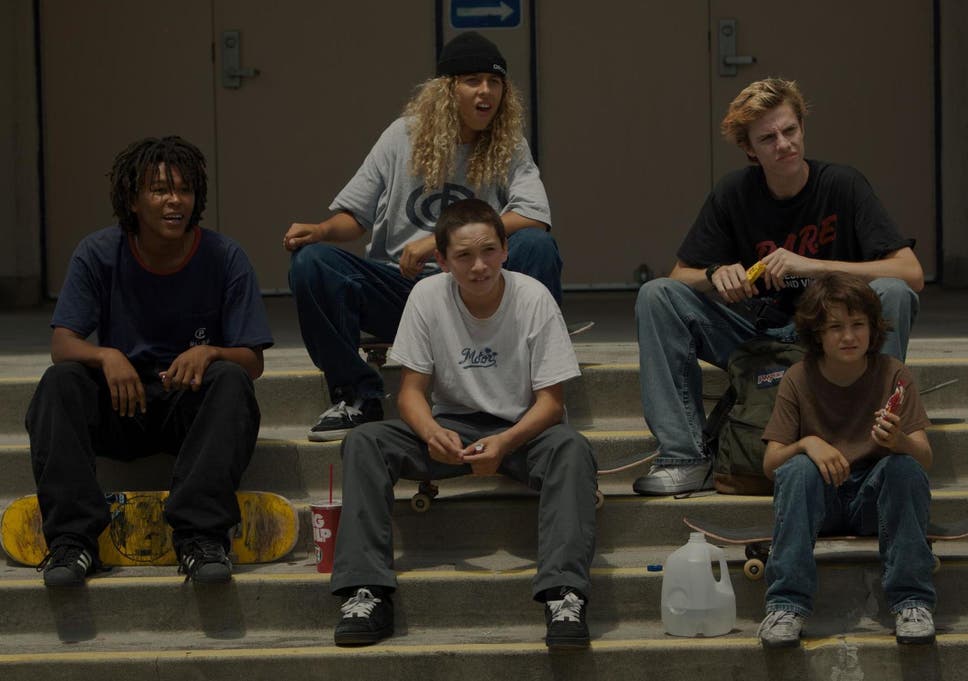
Forever young: "Mid90s"


With the title of his directorial debut Mid90s, the actor Jonah Hill pins down exactly where pop culture has got up to in the process of devouring itself, the result of creatives nursed on grunge and Britpop reaching an age where they might be rewarded handsomely for regurgitating their experiences and influences. Captain Marvel, directed by the 42-year-old pair of Anna Boden and Ryan Fleck, parachuted its heroine into a world of True Lies standees and Smashing Pumpkins flyposters; with last year's Bad Times at the El Royale, 44-year-old Drew Goddard returned us to the realms of the twisty Tarantinoid fresco. Hill, a touch younger at 35, has come up with a hanging-out movie of the kind Richard Linklater once made his own with the mid-Nineties double-bill of Dazed and Confused and SubUrbia, adding a dash - but only a dash - of that nitty-gritty out of which Larry Clark fashioned Kids, his notable controversy-magnet of 1995. The film's protagonist Stevie (newcomer Sunny Suljic, nicely serious) emerges from a lopsided if not entirely broken home - single mother (Katherine Waterston), bullying older brother (Lucas Hedges) - to fall in with L.A.'s skater community, but at the tender age of thirteen, he remains just too young for the hard stuff of the Clark movie; despite the brutal pile-ons his brother subjects him to, the innocence hasn't entirely been knocked out of him. As a slightly older girl at a party puts it: "You're at that age before guys become dicks." Still, rough-and-tumble of one form or another stands between Stevie and the closing credits, and this bruising rite-of-passage forms the dramatic meat of a solid but slender picture.

It may have been the case that Hill undertook this project merely to revisit some choice period soundtrack cuts while whipping a bunch of spotty, smartmouthing kids into a surrogate gang. He's a good deal less skeezy than Clark in his talentspotting, though, and in fact something of Hill's sweet-natured work for Judd Apatow persists in those scenes that find these credibly immature skater boys slumping on beat-up sofas in the skate store one of them tends, discussing such arcane matters as which of their parents they'd rather go down on, and whether black people get sunburn. Having all the time in the world, Hill proposes, allows a boy to sit round talking shit such as this. Within this framework - which arguably stretches back beyond Linklater to the big Wednesdays and endless summers of the Hollywood surf movie - Hill proves himself a keen observer of teenage mores. I liked the montage-description of a party that consists of awkward teens shuffling red solo cups from one part of a suburban kitchen to another (we've all surely been there), and the time and space Hill marks out around Stevie's development allows the film to note small hierarchical shifts within the peer group: how Stevie's arrival on the scene suddenly leaves the group's second youngest Ruben (Gio Galicia) feeling less special, and how group elder Ray (Na-kel Smith) begins to drift away towards kids who can hold their liquor. We're always aware these are characters in transition, feeling out their place in the world.

The film around them itself feels a touch self-conscious. For some reason, Mid90s has been shot in a 4:3 ratio that wasn't, as far as this viewer can remember, a major feature of mid-Nineties cinema, not even the mid-Nineties indie cinema Hill is throwing back to. (TV, maybe.) And, as is so often the case with first- or second-time directors, there's an over-reliance on soundtrack to carry certain sequences. Despite the logo for catnip-for-Film-Twitter producers A24 (lovingly spelt out in discarded boards), Mid90s is dealing in the same juvenilia as Marvel and DC's superhero movies, the work of a creative striving to preserve or recreate some thin sliver of their childhood for the benefit of an audience who wants to feel young again. I found myself wondering why the film couldn't quite process the rage of these boys into either comedy or tragedy; why it's so jarring when the Hedges character puts the smackdown on his younger sibling (shot, cut and Foleyed to suggest something far more traumatising than Wonder Years-y roughhousing) or when Stevie screams at and over his mother. The answer, I think, is that Hill has no answer or explanation for this behaviour; it's just a phase his characters are going through, ergo the film has to see them through, too, no matter that they result in wrenching tonal shifts. In some ways, Hill has been outmanoeuvred by the recent doc Minding the Gap, which joins its skater protagonists at the upper age range of Stevie's crew, and follows them into their first decade as standalone adults, using a similar running time to draw a detailed, affecting portrait of young male lives, rather than the Polaroid-shaped snapshot we're offered here. What Hill captures, with modest assurance, are just the beginnings of that story, the baby steps and schoolboy errors. The real twists and flips of life are yet to come.

Mid90s is now playing in selected cinemas.

The man who rescued Bigfoot: "Missing Link"


At risk of massively downplaying the many hours of labour-intensive stopmotion required in its production, Missing Link feels like animation upstarts Laika goofing off a little. This is a far lighter proposition than those films (2009's Coraline, 2012's ParaNorman and 2014's The Boxtrolls) with which this studio first established itself as Pixar's closest rivals in terms of quality; after the commercial underperformance of 2016's beautiful, doomed Kubo and the Two Strings - doomed because it dared to tell a story that required attention, rather than just whizzing its characters around the screen for ninety minutes - it has the air of a winding down, if not yet a complete capitulation. Its tale of plucky English explorer Sir Lionel Frost (voiced by Hugh Jackman) and his efforts to prove the existence of the Bigfoot carries Laika into territory previously occupied by those blithely larky Aardman fellows: it's an odd-couple comedy at plasticine base, dependent on the sasquatch in question being a chatty Cathy named Susan (and voiced, or rather yammered, by The Hangover's Zack Galifianakis) who actively wants to be discovered and brought in from the wilds.

Watching Kubo, one was aware of its writer-director Travis Knight having to take great care, whether around the fragile objects and emotions at the film's centre, or the wider issue of cultural appropriation. Missing Link, conceived as robust entertainment, opens with a gentleman's bet being made in one of those stuffy Pall Mall clubs familiar from Around the World in Eighty Days, proceeds through a frontier bar brawl, entails Frost dragging up as a nun at one point, and ends with the blowing of a loud raspberry. The delicacies that have long been a Laika signature are still there, but they've been geared towards comedy above all else: the barkeep in that rather fractious establishment has had his knuckles tattooed with the legend "CASH ONLY". There's a degree of playing safe that follows from that - writer-director Chris Butler has made an American urban legend the basis of a Bing-and-Bob Road movie - alongside elements that strike the eye and ear as somehow familiar, whether as the result of an overcrowded animation market (Susan's desire to meet his Yeti brethren recalls last year's equally fun Smallfoot) or rote voice casting (Zoe Saldana as the kind of spitfire adventuress Salma Hayek voiced in Aardman's The Pirates!). The end credit number is a very Randy Newmanesque thing burbling on about having "a friend like you".

Those early Laika fables may have been parables about the dangers of conformity in part because they were the work of creatives fearful they'd end up doing the same work as everybody else; animators who sensed that, in this increasingly crowded field, it would get harder and harder to generate truly original work, and thereby avoid resting on any laurels. (Pixar's big 2019 project, lest we forget, is Toy Story 4.) There's still wit in this screenplay, thankfully - Susan, caught in his feelings, confesses he has something inside him "like gas, but sadder" - and art evident in the design. This road carries Sir Lionel and Susan (even the names are funny) from the blue-green forests of Washington, and over an ocean in the midst of one almighty squall, to the Himalayas, where we are greeted by some light editorial on communities who try to keep outsiders at bay (as we were in Smallfoot) and a genuinely clever and suspenseful setpiece on and around an ice bridge linking two worlds. Even when they're just consolidating their achievements, Laika are still pushing themselves and putting their characters out there: perhaps the game has now changed, but one hopes the half-term crowd resists Wonder Park's superficial lures and tags along with Lionel and Susan instead.

Missing Link is now playing in cinemas nationwide.